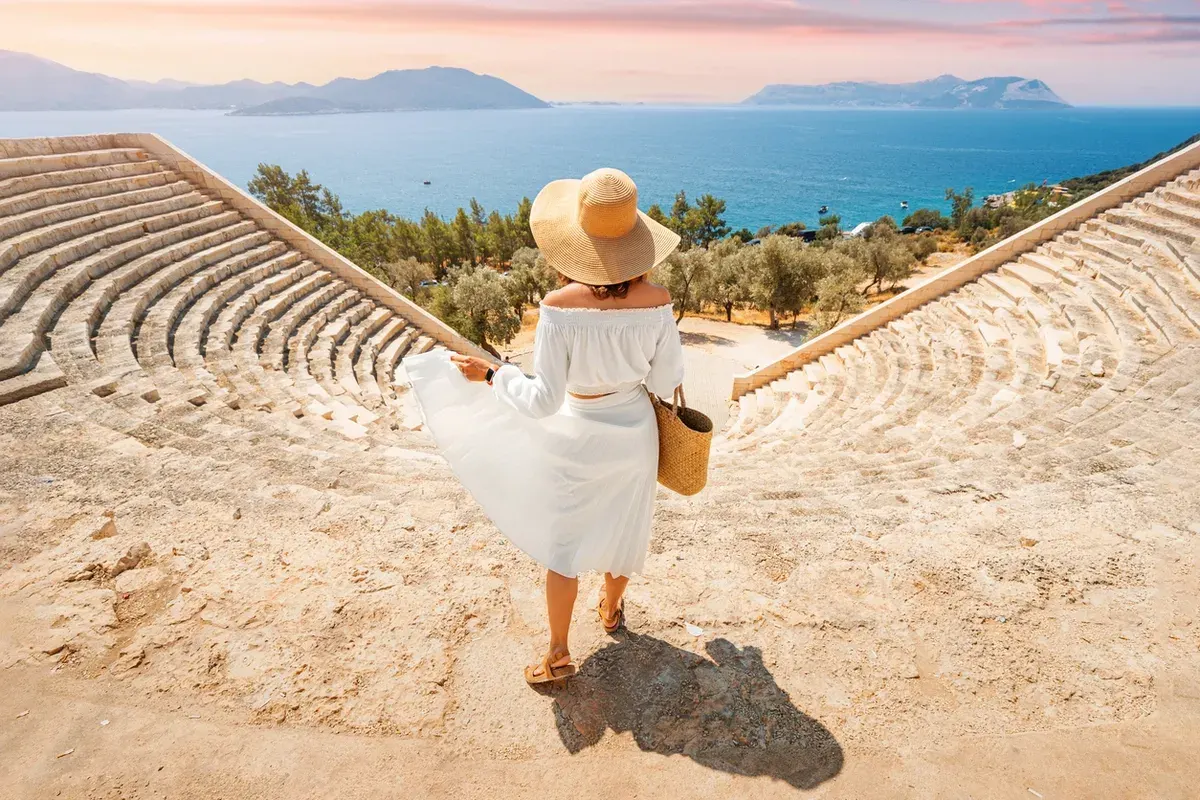
Ten days in Turkey is the sweet spot.
It is long enough to experience the country without rushing. Long enough to let Istanbul settle into you properly, to spend two mornings in Cappadocia instead of one, and to add the Aegean coast — the ancient cities, the turquoise water, the Pamukkale terraces — that most six-day itineraries have to leave out.
It is also long enough to begin to understand what Turkey actually is. Not just a collection of impressive sites but a country with a depth and a variety that consistently surprises even well-traveled visitors. Turkey tour packages covering Istanbul, Cappadocia, and the Aegean consistently receive the highest traveler satisfaction ratings of any Turkey itinerary — because this combination covers the full range of what makes the country extraordinary.
This is how to use ten days in Turkey well.
Why This Combination Works
Before the day-by-day breakdown, it is worth understanding the logic of this itinerary.
Istanbul is where Turkey's history reaches its greatest intensity — layers of Byzantine, Ottoman, and modern civilization stacked on top of each other in one of the world's great cities. Three days is the minimum to do it justice.
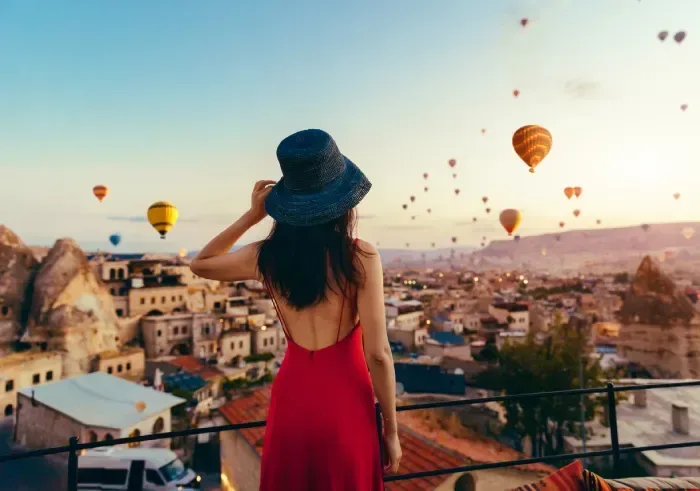
Cappadocia is the natural and geological counterpoint — volcanic valleys, fairy chimneys, underground cities, and the hot air balloon experience that redefines what a landscape can look like. Two full days here, arriving the evening before, gives you enough time.
The Aegean coast adds to the classical world. Ephesus — the best-preserved ancient Roman city in the Mediterranean. Pamukkale — white travertine terraces and the ruins of Hierapolis above them. The turquoise sea. The kind of ancient history that makes the Roman period feel recent. Three days here, ending at a coastal town, gives you history and beach in the right balance.
The sequence matters: fly between each section to preserve time. The bus is cheaper and slower. In a ten-day itinerary, flying is almost always the right decision.
Customize Your Dream Vacation!
Get in touch with our local experts for an unforgettable journey.
Plan Your TripDay 1: Arrive in Istanbul
Arrive | Sultanahmet | Orientation
Most international flights arrive in Istanbul in the morning or early afternoon. Day 1 is an arrival and orientation day — resist the temptation to overplan it.
Check into your hotel. Sultanahmet is the recommended neighborhood for first-time Istanbul visitors, placing you within walking distance of every major historical landmark. Beyoğlu — across the Golden Horn — is the better choice for travelers who want a more local, contemporary atmosphere.
Once settled, walk to Sultanahmet Square. Stand between the Hagia Sophia Grand Mosque and the Blue Mosque without going inside either. You are saving the interiors for tomorrow. Let the scale of what you are looking at register slowly.
Find a restaurant two streets back from the tourist main road and eat your first Turkish meal. Order mezze — hummus, baba ghanoush, stuffed vine leaves, white cheese, olive oil bread — and follow it with something grilled. Finish with Turkish tea and baklava.
Go to bed early. The next three days are full ones.
Where to stay: Sultanahmet hotels put the major sites within walking distance. Look for a rooftop terrace. Istanbul's skyline at dusk — minarets, the Bosphorus, the distant hills of the Asian shore — is a specific and extraordinary thing to watch from above.
Day 2: The Historic Heart of Istanbul
Hagia Sophia | Blue Mosque | Basilica Cistern | Topkapi Palace | Grand Bazaar
This is the day most visitors describe as the moment Turkey changed how they think about history.
Morning: Hagia Sophia Grand Mosque
Arrive at 8 am — the first hour before tour groups arrive is categorically different from any other time of day. The Hagia Sophia was completed in 537 AD and has been standing for nearly 1,500 years. The dome rises 55 metres and appears to float — a deliberate architectural illusion, with the support hidden from the floor below.
The building has been a Byzantine cathedral, an Ottoman mosque, a secular museum, and is now a functioning mosque again. Each identity has left layers visible in the building — Byzantine mosaics alongside Ottoman calligraphy, Christian iconography beside Islamic geometric patterns. It is one of the most complex and beautiful buildings on earth.
Note: The Hagia Sophia is currently undergoing earthquake-proofing renovations. Scaffolding is visible in parts of the interior, but the site remains fully open, and the experience is not significantly diminished.
Practical tip: Cover shoulders and knees. Women should bring a scarf. Remove shoes before entering the prayer hall. Coverings are available at the entrance if needed.
Mid-Morning: Blue Mosque and Basilica Cistern
The Sultan Ahmed Mosque — the Blue Mosque — sits five minutes' walk from the Hagia Sophia. Its interior is lined with 21,000 hand-painted Iznik tiles in blue and white that give the building its popular name. Visit between prayer times when entry is unrestricted.
Walk from the Blue Mosque to the Basilica Cistern — a 6th-century underground reservoir that held 80,000 cubic metres of water for Byzantine Constantinople, supported by 336 marble columns in twelve rows. Recently renovated and now better presented than at any previous point, it is atmospheric, cool, and hauntingly beautiful.
Afternoon: Topkapi Palace
The administrative heart of the Ottoman Empire for nearly four centuries. Topkapi is not a single building but a complex of courtyards, pavilions, kitchens, a treasury, a harem, and gardens spread across a promontory with extraordinary views over the Bosphorus and the Golden Horn.
The treasury contains the Topkapi Dagger and the Spoonmaker's Diamond — one of the largest diamonds in the world. The harem reveals the extraordinary complexity of Ottoman royal domestic life. The view from the fourth courtyard terrace, across the Bosphorus toward the Asian shore, is one of the great urban views in the world.
Allow two to three hours. A guide makes a significant difference here — Topkapi without context is impressive; Topkapi with context is extraordinary.
Late Afternoon: Grand Bazaar
End the day at the Grand Bazaar — one of the oldest and largest covered markets in the world, with over 4,000 shops across 61 covered streets. On Day 2, go to orient yourself rather than to shop seriously. Find the carpet section, the jewelry section, and the ceramics section. Identify the vendors who know their products from the ones who are simply persistent. Save the serious shopping for Day 3.
Day 3: The Bosphorus and Modern Istanbul
Spice Bazaar | Bosphorus Cruise | Galata Tower | Beyoğlu
Day 3 moves from the ancient to the living — from monuments to the city as it actually functions today.
Morning: Spice Bazaar
The Egyptian Bazaar — known as the Spice Bazaar — is smaller, more fragrant, and more manageable than the Grand Bazaar. Built in 1664 and originally funded by trade from Egypt, it sells spices, teas, Turkish delight, dried fruits, nuts, and food products that make excellent gifts. The vendors are generally more relaxed than in the Grand Bazaar and more willing to let you taste and smell before committing to a purchase.
Buy karkadeh (hibiscus tea), a selection of spice blends, and a box of quality Turkish delight. These are lightweight, genuinely authentic, and available at fair prices in the Spice Bazaar rather than at the inflated prices of hotel gift shops.
Mid-Morning: Bosphorus Cruise
Walk to the Eminönü waterfront and take a ferry up the Bosphorus. The strait separating Europe from Asia is 31 kilometres long and at its narrowest point less than 700 metres wide — and the history visible from the water is extraordinary. Yalı (wooden Ottoman waterfront mansions), Rumeli Fortress (built by Mehmed II in 1452 to control passage to Constantinople before the Ottoman conquest), fishing villages, suspension bridges connecting two continents.
The short Bosphorus cruise (90 minutes) is sufficient for a ten-day itinerary. Take the upper deck. Bring your camera.
Afternoon: Galata Tower and Beyoğlu
The 14th-century Genoese Galata Tower offers the best panoramic view of Istanbul available from ground level — a 360-degree perspective over the Golden Horn, the old city, the Bosphorus, and the Asian shore. The climb is steep but entirely manageable.
From Galata, walk into Beyoğlu — Istanbul's most contemporary and most energetic district. Spend the afternoon wandering the side streets off İstiklal Caddesi — the bookshops, coffee roasters, art galleries, and restaurants that reveal Istanbul as a genuinely modern European city as well as an ancient imperial one.
Day 3 evening: Eat in Beyoğlu — the restaurant scene is excellent and significantly more varied than Sultanahmet. Then return to your hotel, pack for Cappadocia, and get to bed early.
Day 4: Fly to Cappadocia — Arrive and Settle
Morning Istanbul | Afternoon Flight | Cappadocia Evening
Morning flights from Istanbul to Kayseri or Nevşehir Kapadokya Airport take approximately 90 minutes. Book as early as possible — the Istanbul-Cappadocia route is popular, and prices rise significantly close to departure.
Afternoon: First Impressions of Cappadocia
Arrive, transfer to Göreme (the recommended base), and check into your cave hotel. Then spend the afternoon exploring the town on foot — Göreme is small, manageable, and full of restaurants, cafes, and pottery shops that reward slow wandering.
Walk to the edge of the Göreme valley as the light changes in the late afternoon. The fairy chimneys — tall volcanic rock formations eroded into cones and columns — begin to glow amber and orange as the sun drops. Nothing quite prepares you for seeing them in person for the first time.
Tonight is critical: Set your alarm for 4:30 am.
Why Göreme Is the Best Base
Göreme sits at the centre of the Cappadocia region, within easy reach of every major valley, open-air museum, and underground city. It has the highest concentration of cave hotels — rooms literally carved into the volcanic rock, many with terraces overlooking the valleys. It has excellent restaurants and a well-developed infrastructure for day tours and individual exploration.
Book your cave hotel early — the best properties fill months ahead in peak season (April–October).
Day 5: Cappadocia — The Balloon, the Museum, the Valley
Hot Air Balloon | Göreme Open Air Museum | Rose Valley Sunset
Dawn: Hot Air Balloon Over Cappadocia
The hot air balloon over Cappadocia at sunrise is the experience that people who have done it find impossible to describe adequately to people who have not.
You rise in the dark from a field on the edge of Göreme. The burner flares. The valley opens below as the sun clears the horizon — the fairy chimneys emerging from darkness, other balloons drifting in every direction, the entire landscape turning from grey to gold to deep rose. The silence, broken only by the occasional burst of the burner and the occasional exclamation from someone in your basket, is extraordinary.
Flights last 60–75 minutes. Most reputable operators include a celebration at landing — certificate, sparkling wine or juice, the particular contentment of having done something genuinely wonderful before 8 am.
Book in advance: The balloon must be booked weeks ahead in peak season. Reputable operators include Butterfly Balloons, Royal Balloon, and Voyager Balloons. Weather cancellations are common — most operators will rebook for the following morning at no extra charge.
Morning: Göreme Open Air Museum
After breakfast, walk or take a short taxi to the Göreme Open Air Museum — a UNESCO World Heritage Site containing a complex of cave churches carved into the volcanic rock between the 10th and 13th centuries. The frescoes inside are remarkable — some of the finest Byzantine paintings surviving anywhere in the world.
The Dark Church (Karanlık Kilise) has the best-preserved frescoes in the entire complex — an additional entry fee is required, but entirely worth it. Allow two hours and use a guide or audio guide — the historical context transforms the experience dramatically.
Afternoon: Rose Valley
Walk the Rose Valley (Güllüdere Vadisi) in the late afternoon. The valley takes its name from the pink and rose hues the rock assumes at sunset — a colour that starts subtle and deepens into something extraordinary as the light falls. The trail is well-marked and takes approximately 90 minutes at a relaxed pace.
Position yourself at the viewpoint above Çavuşin village as the sun drops. This is one of the great sunsets in Turkey and a perfect end to one of the best days available anywhere on this continent.
Day 5 dinner: Cave restaurant in Göreme. Order testi kebabı — meat slow-cooked in a sealed clay pot that is cracked at your table. Order it for the theatre as much as the taste.
Day 6: Cappadocia — Underground Cities and Viewpoints
Derinkuyu | Uchisar Castle | Devrent Valley | Avanos
Day 6 goes deeper — literally — into Cappadocia.
Morning: Derinkuyu Underground City
Early Christian communities carved entire cities into the soft volcanic rock beneath Cappadocia's surface — multi-level underground complexes designed to shelter thousands of people from persecution. Derinkuyu, the largest, extends eight levels below ground and could shelter approximately 20,000 people along with their animals, food stores, and water supply.
The rolling stone doors that could seal tunnels from the inside are among the most ingenious defensive features in the ancient world. Walking through the narrow, low-ceilinged passages with a guide explaining the history — who built this, when, and under what circumstances — is one of the most affecting historical experiences in Turkey.
Hire a car and driver for Day 6 — Derinkuyu is 40 minutes from Göreme and the day's sites are best accessed with private transport.
Late Morning: Uchisar Castle
The highest natural point in Cappadocia is a volcanic rock pinnacle riddled with cave dwellings, tunnels, and storage chambers that rises 60 metres above the surrounding landscape. From the summit, the entire region spreads in every direction: the valleys, the fairy chimneys, the village rooftops, and on clear days, the snow-capped peak of Mount Erciyes on the horizon.
The climb is steep but manageable. The view from the top is the best panoramic view of Cappadocia available from ground level.
Afternoon: Devrent Valley and Avanos
Devrent Valley — Imagination Valley — contains fairy chimneys eroded into shapes that suggest animals, human figures, and abstract forms. Walk slowly and let the landscape speak. A camel, a resting figure, a Napoleon hat. Everyone sees something slightly different.
End the afternoon in Avanos — a small town on the Kizilirmak River famous for its pottery tradition dating to the Hittite period. Watch a master potter demonstrate wheel-throwing in red clay from the riverbed. Many workshops allow visitors to try. Take a small piece home as the most genuinely traditional Cappadocian souvenir available.
Day 7: Fly to Kusadasi — Ephesus in the Afternoon
Morning Cappadocia | Afternoon Flight | Kusadasi Arrival | Ephesus
Morning: Final Cappadocia Hours
Use the morning for anything missed — Love Valley for a final walk among the fairy chimneys, a slow breakfast at your hotel terrace, a pottery purchase in Göreme. Then transfer to Kayseri or Nevşehir airport.
Flights from Cappadocia to Izmir (for the Aegean coast) take approximately 90 minutes. Transfer from Izmir Airport to Kusadasi takes about 90 minutes — the drive follows the coast and is genuinely beautiful.
Late Afternoon: Arrival in Kusadasi
Kusadasi is the recommended base for the Aegean portion of this itinerary. It is a well-developed coastal resort town with a broad range of accommodation, good restaurants, and a central location from which Ephesus and Pamukkale are both accessible.
If you arrive in the early afternoon and energy levels are reasonable, drive the 18 kilometres to Ephesus and visit in the late afternoon — the golden hour light on the ancient marble is extraordinary and the crowds have thinned considerably from the midday peak.
Ephesus: Late Afternoon Visit
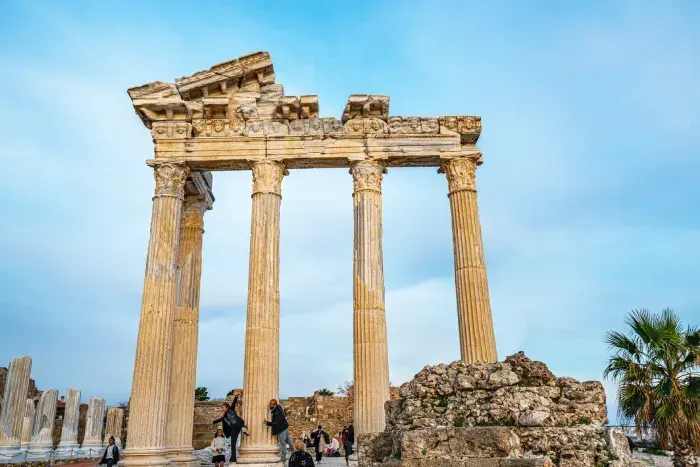
Ephesus was one of the great cities of the ancient Mediterranean world — at its peak in the 1st and 2nd centuries AD, it had a population of approximately 250,000 people and was the capital of the Roman province of Asia. The Library of Celsus — its two-storey marble facade remarkably intact — is one of the most photographed ancient structures in the world. The Great Theatre could seat 25,000 spectators. The Terrace Houses, covered by a climate-controlled structure, contain private Roman villas with intact mosaics, frescoes, and marble floors that reveal daily life in the ancient city with extraordinary intimacy.
A licensed guide is strongly recommended. Ephesus, without context, is visually impressive. Ephesus with a guide who knows the stories — the political drama of the Roman period, the engineering achievements, the ordinary lives revealed by the archaeological evidence — is genuinely extraordinary.
Practical note: Go early in the morning or late in the afternoon. Midday at Ephesus in summer is extremely hot, and the site has almost no shade.
Day 8: Pamukkale and Hierapolis
Day Trip | Pamukkale Terraces | Hierapolis | Cleopatra's Pool
Pamukkale is approximately 2.5 hours from Kusadasi by road — a full day trip that is one of the highlights of the entire itinerary.
What Is Pamukkale?
Pamukkale — "Cotton Castle" in Turkish — is a UNESCO World Heritage Site where calcium-rich thermal springs have flowed down a hillside for millennia, depositing calcium carbonate in a series of brilliant white terraces and natural pools. The result is a landscape that appears to be made of snow or cotton — a vast white staircase of mineral formations descending the hillside with turquoise thermal water pooling at each level.
Critical update for visitors: Swimming freely in the travertine terraces has been prohibited for many years to protect the fragile calcium formations. Visitors can wade barefoot in designated shallow sections — ankle to knee depth — but full swimming is only available at the Cleopatra's Antique Pool within the Hierapolis complex, which requires an additional entry fee. Shoes must be removed before stepping onto the terraces.
The Terraces
Enter from the South Gate and walk up through the terraces barefoot. The surface varies from smooth and polished to rough and pitted — walk slowly and carefully, as the mineral surface is unexpectedly slippery in places. The views from the top of the terraces, over the valley below, are remarkable.
Hierapolis
Directly above the terraces sits the ancient Greco-Roman spa city of Hierapolis — founded around 190 BC and continuously occupied through the Byzantine period. The city grew around the thermal springs, which were believed to have healing properties, and attracted visitors from across the ancient world.
The highlights:
- The Theatre — one of the best-preserved Roman theatres in Turkey, seating 12,000, with extraordinary stage decoration
- The Necropolis — one of the largest ancient cemeteries in the world, with hundreds of sarcophagi, tomb houses, and burial monuments stretching across the hillside
- The Martyrium of Philip the Apostle — where Saint Philip is believed to have been martyred in 80 AD, an octagonal structure of considerable archaeological significance
- The Hierapolis Archaeology Museum — housed in a former Roman bath, containing impressive sculptures and artefacts from the site
Cleopatra's Pool
End the Pamukkale visit with a swim in the Antique Pool — thermal spring water at approximately 36°C, swimming over and among submerged ancient Roman columns that fell into the pool during an earthquake in 1334. The water is slightly effervescent near the source — warm, mineral-rich, and unique. The experience of floating in a Roman pool surrounded by ancient column fragments is unlike anything available anywhere else in Turkey.
An additional entry fee applies. Bring a swimsuit.
Day 9: Kusadasi — Beach, Castle, and the Aegean
Pigeon Island | Ladies Beach | Aegean Afternoon
After two intense days of ancient sites, Day 9 is deliberately slower.
Morning: Pigeon Island and the Harbour
Kusadasi's most distinctive landmark is Pigeon Island — Güvercin Adası — a small island connected to the mainland by a narrow causeway, topped by a Byzantine fortress and surrounded by turquoise Aegean water. Walk across the causeway in the morning when the light is best, explore the fortress walls, and watch the fishing boats preparing for the day.
The harbour promenade that extends from the island along the waterfront is one of the most pleasant morning walks in the Aegean coast towns — cafes, fishing boats, views across to the Greek islands in the distance.
Afternoon: Swimming and Rest
Ladies Beach — Kadinlar Denizi — is Kusadasi's main beach, approximately 2.5 kilometres from the town centre and accessible by a pleasant seafront walking path. The water is clear, the beach is well-equipped with sunbeds, and the views across the bay are excellent.
After nine intense days, an afternoon of swimming and sitting in the sun with nothing scheduled is not laziness. It is trip management — the rest that allows the previous days to settle and the final day to begin with energy rather than exhaustion.
Day 9 evening: Eat at a harbour-side fish restaurant in Kusadasi. Order whatever is freshest — the fish here comes in from the Aegean daily, and the quality is exceptional. Watch the sun set over the water.
Day 10: Final Morning — Then Home
Morning at Leisure | Transfer to Izmir | Departure
Day 10 belongs to you.
If there are things on the itinerary that deserve more time — another hour at Ephesus before the crowds arrive, a morning walk in the Kusadasi hills above the town, a return to the Pamukkale terraces at sunrise — use this morning for them.
If you have done everything and simply want to sit at a waterfront café with a final glass of Turkish tea and watch the Aegean before the journey home, that is equally right.
The transfer from Kusadasi to Izmir Airport takes approximately 90 minutes. Allow plenty of time for international departures — Izmir Airport is efficient, but international connections through Istanbul require careful timing.
Practical Information: Planning Your 10-Day Turkey Trip
Flight Overview
| Leg | Route | Duration | When to Book |
|---|---|---|---|
| International arrival | Home → Istanbul | Varies | As early as possible |
| Istanbul → Cappadocia | Istanbul → Kayseri or Nevşehir | 90 min | 4–8 weeks ahead |
| Cappadocia → Aegean | Kayseri → Izmir | 90 min | 4–8 weeks ahead |
| Departure | Izmir → Home (via Istanbul) | Varies | As early as possible |
Where to Stay
| Destination | Recommended Area | Why |
|---|---|---|
| Istanbul | Sultanahmet | Walking distance to all major sites |
| Cappadocia | Göreme | Central is the best cave hotel selection |
| Aegean coast | Kusadasi | Best location for Ephesus and Pamukkale |
Best Time to Visit
| Season | Istanbul | Cappadocia | Aegean Coast | Overall |
|---|---|---|---|---|
| Apr–May | ✅ Perfect | ✅ Ideal | ✅ Warm, manageable | ⭐ Best |
| Jun–Aug | ⚠️ Hot & busy | ⚠️ Very hot | ✅ Peak beach season | ⚠️ Plan carefully |
| Sep–Oct | ✅ Excellent | ✅ Ideal | ✅ Still warm | ⭐ Second best |
| Nov–Mar | ✅ Quiet & beautiful | ❄️ Cold, possible snow | ⚠️ Cooler, some sites reduced hours | Good for city focus |
Budget Guide (Per Person)
| Category | Budget | Mid-Range | Luxury |
|---|---|---|---|
| Accommodation (9 nights) | $400–$700 | $900–$1,800 | $2,500–$6,000+ |
| Internal flights (3 legs) | $120–$200 | $120–$200 | $120–$200 |
| Hot air balloon | $150–$200 | $150–$200 | $150–$200 |
| Entry fees (all sites) | $100–$140 | $100–$140 | $100–$140 |
| Food (10 days) | $200–$350 | $400–$800 | $1,000–$2,500+ |
| Estimated total | $1,000–$1,600 | $1,700–$3,200 | $4,000–$10,000+ |
Complete Day-by-Day Summary
| Day | Location | Main Activities |
|---|---|---|
| Day 1 | Istanbul arrival | Sultanahmet walk, first Turkish meal, rest |
| Day 2 | Istanbul — historic | Hagia Sophia, Blue Mosque, Basilica Cistern, Topkapi Palace, Grand Bazaar |
| Day 3 | Istanbul — modern | Spice Bazaar, Bosphorus cruise, Galata Tower, Beyoğlu |
| Day 4 | Fly to Cappadocia | Morning Istanbul, afternoon flight, Göreme arrival, early night |
| Day 5 | Cappadocia | Hot air balloon, Göreme Open Air Museum, Rose Valley sunset |
| Day 6 | Cappadocia | Derinkuyu Underground City, Uchisar Castle, Devrent Valley, Avanos pottery |
| Day 7 | Fly to Kusadasi | Morning Cappadocia, afternoon flight, Kusadasi arrival, Ephesus late afternoon |
| Day 8 | Pamukkale day trip | Travertine terraces, Hierapolis ruins, Cleopatra's Pool |
| Day 9 | Kusadasi | Pigeon Island, Ladies Beach, harbour dinner |
| Day 10 | Departure | Final morning, transfer to Izmir, departure |
Why Ten Days Is the Right Length
Six days give you Istanbul and Cappadocia. Fourteen days gives you everything, including the Mediterranean coast, the Black Sea, and Eastern Anatolia. Ten days sit in the middle — long enough to add the Aegean and the depth it brings, short enough to maintain momentum and focus.
The Aegean coast is what transforms this from a highlight reel of Turkey into something more complete. Ephesus — the best-preserved ancient Roman city in the Mediterranean — adds a layer of classical history that Istanbul and Cappadocia, for all their richness, do not cover in the same way. Pamukkale adds a natural wonder of a completely different character from Cappadocia's volcanic landscape. The Aegean Sea, at the end, provides the decompression that every good trip deserves.
Ten days in Turkey is not an exhaustive introduction. Turkey is too large and too varied for that. But it is a genuinely comprehensive one — enough to understand what this country is and why people who visit it once are already planning the return before they land back home.
Go. Use the days well. Come back for the parts this itinerary could not fit.
Turkey will be here.
Ten days covers all three destinations properly without feeling rushed. Three days in Istanbul gives you the major landmarks, plus the Bosphorus and the modern city. Two full days in Cappadocia include the balloon and the underground cities. Three days on the Aegean coast cover Ephesus, Pamukkale, and a beach day. The key is using internal flights between each section — Istanbul to Cappadocia and Cappadocia to Izmir — rather than overland transport, which would consume entire days of the itinerary. Travelers who want a more relaxed pace should extend to 12–14 days.
Both work well. Kusadasi is larger, better equipped for accommodation, and a more comfortable base for the full Aegean section of the itinerary, including Pamukkale. Selçuk is a smaller, more characterful town located directly adjacent to the Ephesus site — ideal for travelers who want to visit Ephesus at opening time before the tour buses arrive, and who prioritise proximity over amenity. For a 10-day itinerary that includes a Pamukkale day trip, Kusadasi's central position makes it the more practical choice.
Not recommended. Both sites deserve a full day each — Ephesus requires at least three hours and is best visited in the early morning before the heat and crowds build; Pamukkale requires at least four to five hours, including the terraces, Hierapolis, and the Cleopatra Pool. Attempting both in a single day results in rushed visits to both, with the least enjoyable part of each site — midday heat and peak crowds — coinciding with your time there. Separate days allow proper exploration of both.
At Ephesus, a guide makes a profound difference. The site is extraordinarily large, and the historical significance of what you are looking at — the scale of the Roman world it represents, the individual stories of the people who lived and worked here — is simply not accessible from signage alone. At Pamukkale, a guide is helpful but less essential — the terraces and Hierapolis are more visually self-explanatory, though a guide adds value particularly at the theatre, the necropolis, and the Martyrium of Philip. For Ephesus specifically, a licensed Egyptologist or classical historian guide is one of the best investments on the entire itinerary.
The three destinations have noticeably different requirements. For Istanbul: comfortable walking shoes broken in before the trip (you will cover enormous distances on cobblestones and marble), a light scarf or shawl for mosque visits, and smart-casual clothing for evening restaurants. For Cappadocia: a warm layer for the balloon ride (temperatures at altitude can be considerably cooler than on the ground, particularly in spring and autumn), comfortable hiking shoes for the valley walks, and sunscreen. For the Aegean coast: swimwear, sandals, light clothing, and sun protection. A versatile daypack, a reusable water bottle, SPF 50+ sunscreen, and a portable phone charger are useful across all three sections.