Brazil is not one destination — it's a dozen. The thunder of Iguazu, the rainforest silence of the Amazon, the wildlife-rich wetlands of the Pantanal, and Rio de Janeiro, where mountains fall straight into the sea. Our Brazil trips bring these together into journeys that actually work, with private guides, handpicked hotels, and someone on the ground in every destination. Find yours below, or let us build one around you.
Why Brazil?
Brazil is the fifth-largest country on earth, and it behaves like one. You can spend a week here and see almost nothing; you can spend a month and still be planning your return. What makes it extraordinary is the range — a country that holds the world's largest rainforest, the world's largest tropical wetland, one of its greatest waterfall systems, 7,000 km of Atlantic coastline, and a city so beautiful it earned UNESCO's first-ever World Heritage listing for an urban landscape.
The people are the other half of it. Brazilians are warm in a way that catches first-time visitors off guard, and the culture — samba, capoeira, Bahian food, the Afro-Brazilian traditions of Salvador — is lived rather than performed.
Brazil's regions: where to go?
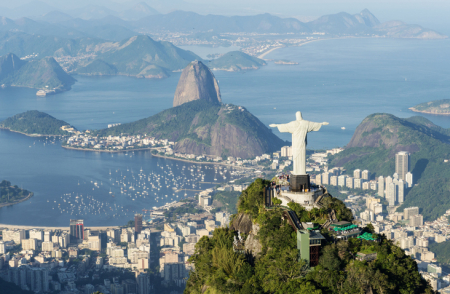
Rio de Janeiro. The Marvelous City, and the one nearly every trip opens with. Christ the Redeemer atop Corcovado, the twin cable cars up Sugarloaf, the beaches of Copacabana and Ipanema, and the bohemian hillside streets of Santa Teresa. Most travellers spend three nights; you could easily justify more.
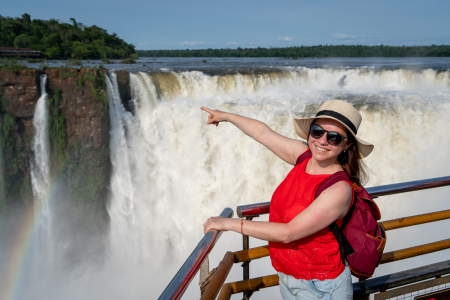
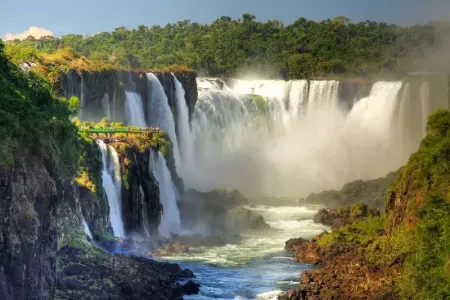
Iguazu Falls. 275 waterfalls spread across the Brazil–Argentina border, and the rare sight that outperforms its photographs. The Brazilian side gives you the panorama; the Argentinian side puts you on a walkway at the lip of the Devil's Throat. Ideally, see both — two nights are enough.
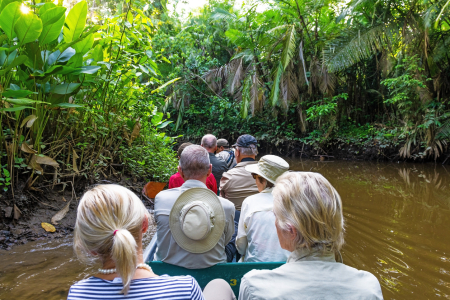
The Amazon. Reached via Manaus, where the rubber boom left behind an opera house in the middle of the jungle. From there, a lodge deep in the rainforest: canoe trips through flooded forest, night walks, piranha fishing, pink river dolphins. Three nights is the practical minimum.
The Pantanal. Less famous than the Amazon and, for wildlife, considerably better. The open wetland means you actually see animals — jaguars, giant otters, capybaras, caiman, and several hundred bird species. Dry season (roughly June–October) is prime.
Salvador & Bahia. Brazil's first capital and the heart of its Afro-Brazilian culture. The UNESCO-listed Pelourinho district, the Lacerda Elevator, the food, the drumming. It feels like a different country from Rio, in the best way.
The Atlantic Coast. Ilha Grande's car-free beaches and Blue Lagoon; Paraty's colonial cobblestones and cachaça distilleries. The counterweight to a busy itinerary.
Minas Gerais. Inland and often skipped — which is a shame, given Inhotim, an open-air contemporary art museum set in a botanical garden that has no real equivalent anywhere.
When is the best time to visit Brazil?
Seasons are reversed between Europe and North America.
December–March is Brazilian summer: hot, humid, lively, and the season for Carnival and beaches. It's also peak, so book early.
April–June and September–November are the shoulder seasons and, for most travellers, the best compromise — pleasant temperatures, thinner crowds, better rates.
June–October is the dry season in the Pantanal and the single best window for jaguar sightings.
Iguazu runs year-round; higher water in summer means more drama, but also more mist.
Rio averages around 25°C in May and June — walkable, swimmable, comfortable.
Why book your Brazil trip with Memphis Tours?
We've been building journeys since 1955, and we run Brazil the way we run everywhere else: private guides who know their patch, hotels we've actually stayed in, transfers that show up, and a real person reachable in every destination if anything wobbles. We're ISO 9001:2015 certified and rated 4.9/5 on TripAdvisor.
Every trip on this page can be adjusted — extra nights, different hotels, a beach extension, a private departure instead of a group one. If nothing here fits, tell us what you want, and we'll build it.













 Ready for your next adventure? Discover new tours and exclusive deals!