Brazilian Art & Culture: São Paulo Tour Package
A cultural tour of São Paulo led by locals — world-class museums, modernist architecture, street art, and live music. See the city Brazilians actually live in.
Countries
One Country
Type
Private Tour
Duration
14 days / 13 nights
Run
Everyday
The Soul of Brazil
14 days / 13 nights
São Paulo holds Latin America's finest art collection and its boldest street art, blocks apart. Explore Brazil's cultural capital with guides who know both. See more.
Itinerary Journey
14 days / 13 nights
Day 1 — São Paulo: Arrival & Panoramic City Tour
Arrival transfer. A private transfer picks you up at São Paulo airport and takes you to your hotel. Your guide uses the drive to orient you — background on the city, plus the kind of detail only residents have about daily life in São Paulo and the district you'll be staying in.
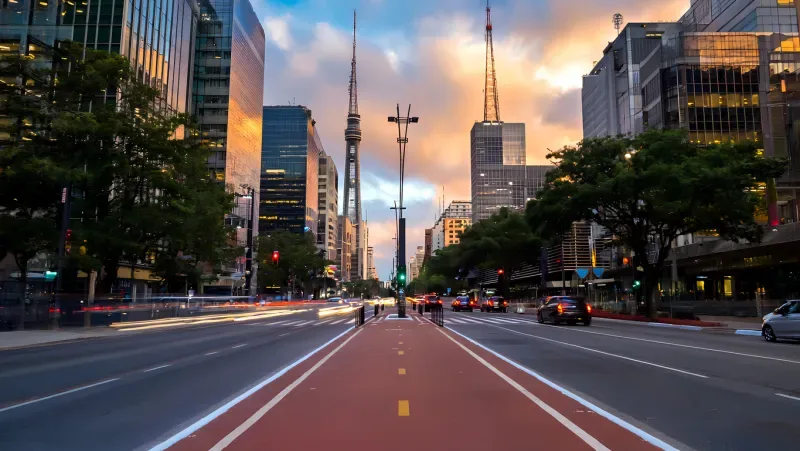
Afternoon: City Tour. Your introduction to one of the world's most energetic metropolises. This panoramic route shows you the shape of São Paulo and its enormous urban sprawl—where the city began and how it went on to define Brazil's cultural, economic, and architectural life. The itinerary takes in Paulista Avenue with its banks, parks and museums, the Luz train station, the historic downtown buildings, the Japanese quarter of Liberdade, and Ibirapuera Park, with photo stops along the way.
Day 2 — São Paulo: A Day Inside Brazilian Art
São Paulo holds a concentration of world-class museums devoted to Brazilian art, many offering educational tours led by a curator or in-house specialist. Your day is built from a selection of the following:
Museum of Modern Art (MAM) — Inside Ibirapuera Park, with part of its exhibition halls opening onto the Sculpture Garden. Around 5,000 works from the late 19th to mid-20th century, mostly Brazilian with some international pieces.
Museum of Contemporary Art (MAC-SP) — Housed in a 1950 modernist building by Oscar Niemeyer, created to hold the portion of the collection MAM transferred after 1960. Today it shows work by many of Brazil's most significant artists.
Pinacoteca de São Paulo — The city's oldest art museum, founded in 1905, with a major holding of late 19th-century Brazilian impressionists. Alongside the permanent collection, temporary exhibits spotlight Brazilian production, particularly work tied to São Paulo's own history.
Brazilian Museum of Sculpture and Ecology (MuBE) — The building is an architectural landmark in its own right; the great hall holds work by a broad range of Brazilian sculptors.
Maria Luisa & Oscar Americano Foundation — Built by celebrated arts patrons, the Braziliana collection runs from the colonial period through to the modern era. Their modernist home, now the museum, is a striking piece of Brazilian architecture.
Museu AfroBrasil — Dedicated to the recognition of Black history and culture in Brazil. More than 70% of its 6,000-piece collection is by Brazilian Black artists.
Sacred Art Museum — Five centuries of religious art in Brazil, set inside one of the few colonial buildings still standing in São Paulo.
Itaú Cultural — The Setúbal family's important Braziliana collection, shown at the cultural center founded by the bank they control. Nearly 2,000 paintings and drawings that tell the country's story through its own depictions.
SESC Pompeia — An icon of São Paulo brutalism and a multi-purpose space for art, literature, theater, cinema, dance and sport, open to students of every background.
MASP (Museum of Art of São Paulo) — Widely regarded as the most important art museum in the Southern Hemisphere. Roughly 10,000 works from Africa, Asia, Europe and the Americas, antiquity through the 21st century, across painting, sculpture, drawing, photography, clothing and other media.
Instituto Moreira Salles (IMS) — Brazil's largest collector of photography, both historical and artistic, and custodian of a precious archive of Brazilian iconography and music.
Instituto Tomie Ohtake — Devoted to art, architecture and design of the last sixty years, with a permanent exhibition dedicated to the Japanese-Brazilian artist it's named for.
Day 3 — São Paulo: Street Art in Vila Madalena
Morning: Urban Art Tour. São Paulo's street art scene is among the most prolific anywhere, and Vila Madalena is its heart. Beyond the artistic interventions covering the streets themselves, the neighborhood is dense with galleries where those same artists show finished work. A guided walk takes you through both sides of it.
Afternoon at leisure. Time to return to whatever caught you first — another museum, a place you heard about, or the shops. Galeria do Rock and Rua Augusta, in the stretch between Rua Estados Unidos and Paulista Avenue, are where you'll find Brazilian designers and the city's better independent retail.
Day 4 — São Paulo to Rio de Janeiro: The Artists of Santa Teresa
Departure transfer. Private transfer from your hotel to Congonhas airport, with guide assistance at check-in.
Arrival in Rio. Your uniformed bilingual guide meets you just past the restricted baggage claim area for the private transfer to your hotel, sharing stories, curiosities and general recommendations about Rio de Janeiro along the way. (Standard check-in from 15:00.)
Santa Teresa artists' studios. Santa Teresa is the idyllic Rio neighborhood a generation of artists chose as the place to expand their work, and the best way to feel it is through them. You'll visit artists who live and work here, see the art itself, step into their studios, and talk directly about process, technique, the market and whatever else the conversation opens up. Seen through that lens, both the neighborhood and the wider Brazilian art scene come into much sharper focus.
Not available on Sundays.
Day 5 — Rio de Janeiro: Two Centuries of Brazilian Art
As the country's capital for more than two hundred years, Rio was the center of Brazilian artistic life. It started with religious art in the churches and convents; then the Portuguese Royal Family arrived, and European artists were invited to depict the land for other royal courts — the moment Brazil's first Fine Arts School was founded. After independence, the Brazilian royals became patrons themselves, encouraging and buying from national and international artists alike. The republic brought a nationalist turn that culminated in the Modernist Week of 1922, a rupture that swept every artistic discipline into a new style and still shapes artists working today.
That entire history sits across Rio's institutions, and a full day is given to visiting several of them, curated tours included:
São Bento Monastery and Church — One of the oldest religious orders in Rio; the Montserrat Church is a fine example of devotional artistry.
Museu de Arte do Rio (MAR) — Part art school, part museum, typically running parallel exhibitions: one contemporary, one drawn from a period of Rio's own history.
Reference Center for Brazilian Craft (CRAB) — One of Rio's newest art centers, focused on Brazilian popular art, with temporary shows ranging from handicraft to folkloric ceremonial dress.
Museum of Modern Art (MAM Rio) — The most comprehensive collection of Brazilian modern art in the country, some 16,000 works.
National Museum of Fine Arts — Holder of the largest and most important collection of 19th-century Brazilian art anywhere, exceeding 70,000 items.
Day 6 — Rio's Outskirts: Burle Marx, Prainha & Popular Art
Sítio Roberto Burle Marx. On the edge of the city stands the house museum of Brazil's most renowned landscape architect and artist. The complex holds a colonial house and chapel, extraordinary tropical gardens, a greenhouse and a modernist living area. Inside are drawings by Braque and Le Corbusier, Nordic crystal, ceramics from the Vale do Jequitinhonha, baroque saints, indigenous pottery, and Burle Marx's own drawings and photographs.
Prainha & picnic. From there to some of Rio's finest beaches, where sky-blue water meets pure white sand. Prainha sits inside an Environmental Protection Area, which is precisely why the scenery has stayed the way it is. Beach time and a picnic here.
Casa do Pontal Museum. The final stop holds one of the most complete surveys of Brazilian popular art anywhere — the result of forty years of research by the designer Jacques Van de Beuque, gathering work by more than 200 artists from every region of the country. It functions less as a museum than as an anthropological window onto the roots of Brazilian culture.
Day 7 — Rio de Janeiro to Belo Horizonte: Graffiti Tour & Workshop
Morning: Graffiti tour and workshop with an artist. Rio is fertile ground for street artists — the city went as far as passing a law encouraging local grafiteiros to occupy public space with their work. You'll be joined by one of these artists and a graffiti specialist, walking through their colleagues' pieces in the renovated port district, one of the most transformed areas of the city. Afterward, the group collaborates with the artist directly, learning the techniques hands-on.
Transfers. Guided transfer from your hotel to the airport with an English-speaking guide. On arrival in Belo Horizonte, a bilingual guide meets you and takes you straight to your hotel.
Dinner on your own at the hotel.
Day 8 — Brumadinho: Inhotim Contemporary Art Center
Inhotim, with lunch. Seventy kilometers from Belo Horizonte, in the municipality of Brumadinho in Minas Gerais, Inhotim spreads across 87 acres of gardens — part of them designed by Roberto Burle Marx — with art displayed both indoors and out. It was conceived as an institution committed to education and to the cultural development of its community, and it functions equally as a place for learning, reflection and pleasure.
The collection runs to roughly 500 works by more than 100 artists of 30 nationalities. The focus is contemporary production from the 1960s to today: sculpture, installation, painting, drawing, photography, film and video.
What sets Inhotim apart is how it uses space. Works sit outdoors in the gardens, deep in the woods, on a mountaintop, on water. Others are indoors — some in pavilions purpose-built around a single piece, others in large group galleries. The institution partners with museums internationally to exchange collections and to introduce new plant species into its grounds; the botanical garden holds what is believed to be the world's largest palm collection, around 1,500 species, hybrids and varieties.
There is no predetermined path, no obvious order and no dominant perspective. The trails simply run through the park, and you move freely between the works and the open-air galleries. That coexistence of enclosed and open space is what makes the experience singular.
Day 9 — Inhotim to Ouro Preto via Congonhas & Itatiaia
Congonhas. Leaving Brumadinho in the morning, you travel to Congonhas, a town holding important works from Brazil's Golden Age. The high point is Aleijadinho's sculptural masterwork — the Twelve Prophets, carved in soapstone — together with his Via Crucis, the Stations of the Cross, rendered in polychrome woodwork. Adjoining this World Heritage Site is a museum telling the story of how the work came to be and how it went on to shape art across Minas Gerais.
Itatiaia, with lunch. Continuing toward Ouro Preto, you stop in Itatiaia, one of the oldest settlements in Minas Gerais. The village serves as the canvas for a project involving local children, a Belo Horizonte gallery and guest artists from across the state: every four months a new artist is invited to paint the houses of the tiny town, turning the whole place into a living museum.
Lunch is included at a local restaurant serving the flavors of mineira cooking. (Open Thursday to Sunday.)
Day 10 — Ouro Preto: Birthplace of Brazilian Baroque
Morning: Walking city tour. Brazilian baroque was born here, and Ouro Preto's churches hold one of the country's most valuable collections of religious art. Frescoes, oil paintings, stone and wood carving turn the colonial buildings themselves into works of art — a very different proposition from the modernist collections that opened your tour in São Paulo. This walking tour gives you the measure of a World Heritage Site that is also a working university town. Stops include the churches of São Francisco and Pilar, the Independence Museum, and a number of historic houses.
Afternoon at leisure. Ouro Preto is compact and simple to explore alone. Don't skip the crafts market facing São Francisco church, the shops selling traditional Minas sweets — the doce de leite in particular — and the specialty coffees, since Minas Gerais is one of Brazil's leading producers.
Day 11 — Ouro Preto to Salvador: Pelourinho on Foot
Transfer to Belo Horizonte airport. The guided drive back doubles as a chance to take in the mountain landscape of Minas Gerais.
Arrival in Salvador. An English-speaking guide meets you on arrival and transfers you to your hotel. (Standard check-in from 15:00.)
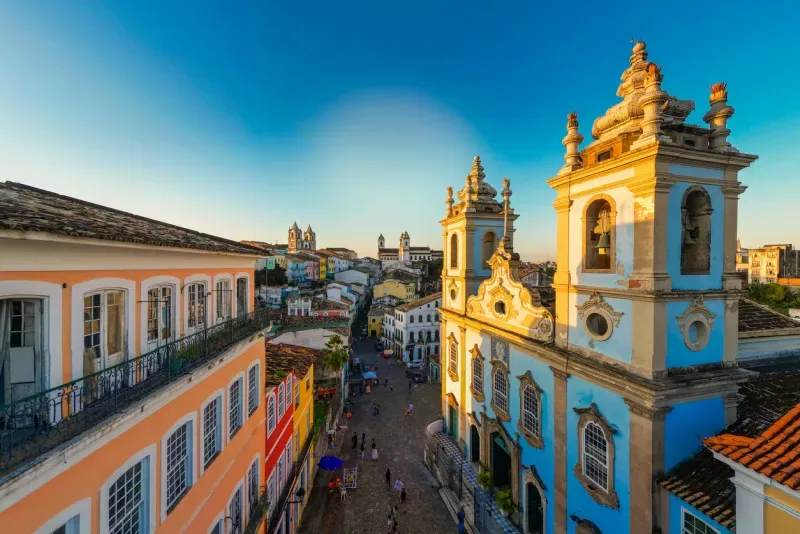
Afternoon: Walking tour of Pelourinho. Setting out on foot from the hotel, you're introduced to the historic center of Salvador — the Pelourinho, the largest concentration of colonial architecture in Latin America and a UNESCO World Heritage Site. You'll walk the cobbled streets between pastel-painted houses to the São Francisco Church, the most ornately decorated baroque church in Brazil, and on to the far larger Cathedral nearby, where the tropical baroque can be traced from its earliest expressions through to the refinement of the rococo. The route ends at the Municipal Square, set high above the Lower City with views across the Bay of All Saints. Your guide walks you back to the hotel.
Day 12 — Salvador: African Heritage & the Bahia of Amado, Carybé and Verger
African-oriented tour. You'll visit the Church of Our Lady of the Rosary — the celebrated Black church, built with scarce means over nearly a century — and Casa do Benin, which exists to strengthen the ties between Bahia and West African nations through cultural exchange. It holds a rich collection of objects and artworks from the Gulf of Benin, the region most of Bahia's Black population was taken from. You'll also meet artists working in Salvador today, who carry that heritage forward through painting, craft and fashion.
The Afro-Brazilian Museum and Casa do Benin are closed Saturdays and Sundays. Duration approximately 4 hours.
Bahia through the eyes of Amado, Carybé and Verger. The novelist Jorge Amado, the artist Carybé and the photographer Pierre Verger formed a remarkable trio in Bahia from the 1950s until their deaths. Each documented daily life in Salvador and across the state — the markets, the street scenes, the religiosity, the full range of cultural and ethnic traditions that make up the Bahian mosaic. All three now have permanent exhibition centers devoted to their work.
Amado's legendary home in Rio Vermelho, where he received so many of the world's literary figures, is now an affecting museum of his life and writing.
The 17th-century Fort of São Diogo at Porto da Barra beach houses an interactive audiovisual exhibition of Carybé's work — the master sculptor and painter who moved freely across watercolor, oil and acrylic.
Also at Porto da Barra, Santa Maria Fort holds a permanent interactive digital exhibition of Pierre Verger's photography. A French ethnologist granted rare access to sacred rituals, Verger, like his two friends, documented everyday Salvador — its markets and streets — in black and white. The fort also shows work by other leading local photographers.
Work by each artist is projected onto the façade of his respective fort at 18:30 and 19:00 during opening hours.
Day 13 — Praia do Forte & the Coconut Coast
Your last full day in Bahia is given to the coast. The scenic Coconut Highway runs north to Praia do Forte, a fishing village 80km from Salvador with some of the finest beaches in the state. As you continue north, the sparse restinga vegetation and its distinctive white sand signals you're close.
At Praia do Forte you'll walk through the village, with the option of visiting the headquarters of Projeto TAMAR (entrance fee not included), Brazil's national sea turtle conservation program and one of the country's most successful ecological projects. The visitor center brings you remarkably close to the animals.
From there you double back south to Guarajuba beach for time on the sand, a swim in the warm, calm waters of the South Atlantic, or lunch at one of the local restaurants (not included), before the return drive to Salvador.
Day 14 — Departure from Salvador
Transfer to the airport for your connecting flight home, with your guide assisting through check-in.
Your Tour Details
A cultural tour of São Paulo led by locals — world-class museums, modernist architecture, street art, and live music. See the city Brazilians ac…
Included
Everything you need, covered.
-
check_circle
Accommodation for 03 nights in São Paulo including breakfast
-
check_circle
Accommodation for 04 nights in Rio de Janeiro including breakfast
-
check_circle
Accommodation for 01 night in Belo Horizonte including breakfast
-
check_circle
Accommodation for 02 nights in Ouro Preto including breakfast
-
check_circle
Accommodation for 03 nights in Salvador including breakfast
-
check_circle
Meals: Daily breakfast at hotels, plus specified lunches or dinners mentioned in the detailed itinerary
-
check_circle
Transfers: All airport transfers and inter-city ground transportation in private air-conditioned vehicles
-
check_circle
Guided Tours & Sightseeing: Fully guided tours with local English-speaking expert art & culture guides
-
check_circle
Entrance Fees: Entrance fees for the visits, museums, and galleries mentioned in the itinerary
-
check_circle
Support: 24/7 local operational support throughout the trip
Not Included
Available as custom add-ons.
-
remove_circle
International and domestic flights
-
remove_circle
Entry visa and Travel Insurance
-
remove_circle
Drinks during meals, optional tours, and extras not mentioned in the itinerary
-
remove_circle
Tips for local drivers, tour guides, hotel staff, and restaurant waiters
-
remove_circle
Personal Expenses
Pro Tip
Optional add-ons and upgrades are available for this brazil program. Speak with our travel specialists to tailor your package.
Multicultural Brazil
Discover four completely different sides of Brazil in 9 days — the iconic landmarks of Rio, the royal legacy of Petrópolis, the extraordinary art of Inhotim, and the living UNESCO heritage of Salvador de Bahia.
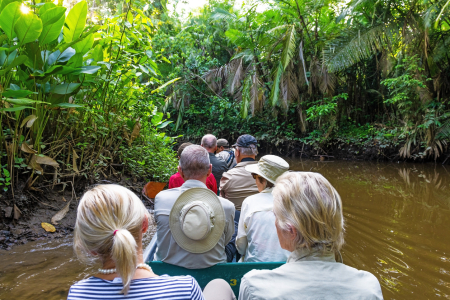
Brazil Highlights
Discover Brazil's three most iconic destinations in 11 days — the thundering waterfalls of Iguazu, the iconic landmarks of Rio de Janeiro, and three immersive days deep in the Amazon jungle from $3,490.
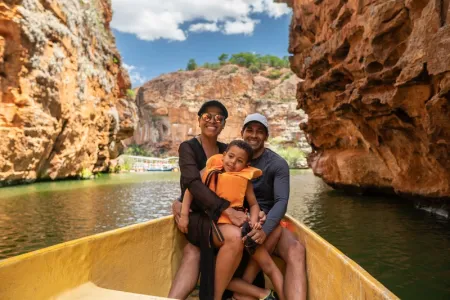
Atlantic Coast: Rio, Ilha Grande & Paraty Tour
Experience Rio's icons, Ilha Grande's crystal waters, and Paraty's colonial streets on this 10-day escape along Brazil's breathtaking Atlantic coast.
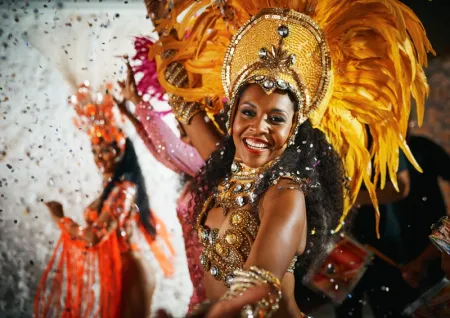
Uncovered Brazil: Rio & Pantanal
Discover Brazil's wildest and most wonderful sides in 9 days, pairing dawn wildlife expeditions in the Pantanal with the iconic sights of Rio de Janeiro.
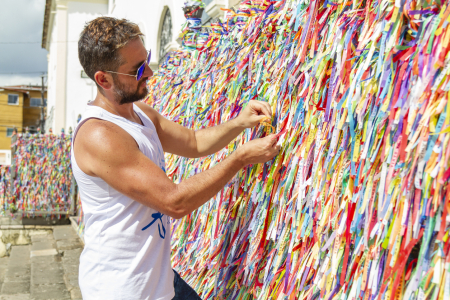
Colors of Brazil: Iguazu, Rio & Salvador
Iguassu's thundering falls, Rio's unmistakable icons, and Salvador's Afro-Brazilian rhythm — all in 9 days.
Brazilian Art & Culture
A cultural tour of São Paulo led by locals — world-class museums, modernist architecture, street art, and live music. See the city Brazilians actually live in.