I've been to Peru three times, and every single time it leaves me speechless. Mountains that touch the clouds, jungles alive with sound, food that rewrites what you think "delicious" can be, this country does everything big. If you're asking yourself what the best things to do in Peru are, I've got you covered.
This guide is written the way I'd explain it to a friend over coffee. No fluff, no filler, just honest advice on the places, experiences, and moments that will make your Peru trip truly unforgettable.
Table of Contents:
#Why Peru Should Be Your Next Big Trip
#The Best Things to Do in Peru: My Top Picks
#Summer in Lima, Peru: What You Need to Know
#Practical Tips Before You Go
#FAQ'S About the Best Things to Do in Peru
Peru sits in a sweet spot that few countries can match. In a single trip, you can stand in the ruins of one of the world's greatest ancient civilizations, hike into one of the deepest canyons on the planet, and then finish the week eating at one of the world's top-ranked restaurants, all without crossing a border.
What really got me, though, was how alive everything feels. The markets are buzzing, the streets of Cusco smell like woodsmoke and fresh bread, and the people are some of the warmest I've ever encountered on my travels. Whether you're a first-timer or coming back for more, Peru keeps surprising you.
Quick Planning Tip
Peru has two main seasons. The dry season (May to October) is ideal for trekking in the Andes and visiting Machu Picchu. Summer in Peru (December to March) is when the coast shines, especially summer in Lima, Peru, with warm sunny days, beach energy, and a very lively social scene.
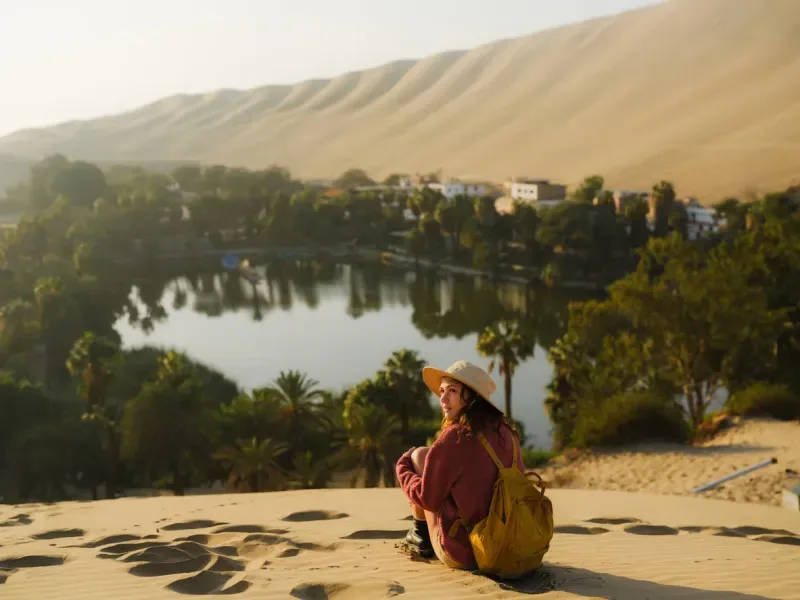
Woman exploring Huacachina oasis during trip to Peru
What is the food like in Peru, and what should I try?
Peruvian cuisine is genuinely world-class. Lima regularly produces restaurants ranked among the global top 50. Must-try dishes include ceviche (fresh raw fish cured in lime juice with chilli), lomo saltado (a beef stir-fry with rice and chips), causa (a layered potato dish), anticuchos (grilled beef heart skewers, far better than they sound), and ají de gallina (creamy chicken stew). For drinks, try a pisco sour and chicha morada (a purple corn drink). Don't leave without eating as much as possible.
How bad is altitude sickness in Peru, and how do I deal with it?
Altitude sickness is a real concern in Peru. Cusco sits at 3,400m, Lake Titicaca at 3,800m, and Rainbow Mountain at over 5,000m. Symptoms include headaches, nausea, dizziness, and fatigue. To manage it: arrive in Cusco and rest for the first day, drink plenty of water, avoid alcohol for the first 24–48 hours, try coca leaf tea (widely available and genuinely helpful), and consider talking to your doctor about acetazolamide (Diamox) before you travel. Most people acclimatize within two to three days.
What is the Inca Trail, and is it worth it?
The Inca Trail is a famous four-day trekking route through the Andes that ends at Machu Picchu via the Sun Gate. It's widely considered one of the world's great treks; you pass through cloud forest, alpine tundra, and several smaller Inca ruins along the way. It is physically demanding, with long hiking days and high altitude. But arriving at Machu Picchu on foot after four days in the mountains is an experience unlike any other. If the full trail isn't for you, the two-day Inca Trail (Km 104) is a great alternative.
Let me walk you through the highlights, the ones I'd put on anyone's itinerary without hesitation.
01 Visit Machu Picchu, the Crown Jewel
No list of the best things to do in Peru would be complete without Machu Picchu. I know, I know everyone says it. But there's a reason. Standing among those ancient Inca stone terraces, with clouds rolling through the valley below, is genuinely one of the most powerful things I've ever experienced. It's a UNESCO World Heritage Site and one of the New Seven Wonders of the World, and it absolutely lives up to the hype. Get there at sunrise if you can. Book your tickets well in advance because daily visitor numbers are strictly capped.
02 Hike the Inca Trail
If Machu Picchu is the destination, the Inca Trail is the journey. This legendary four-day trek takes you through breathtaking Andean scenery, past smaller Inca ruins, and through cloud forests before delivering you to Machu Picchu through the Sun Gate at dawn. It's one of the most iconic treks in the world. Permits sell out months in advance for the high season (June to September), so plan early. If the full trail feels like too much, the shorter two-day version via Km 104 is also spectacular.
03 Explore Cusco, The Heart of the Inca Empire
Cusco was the capital of the Inca Empire, and walking its cobblestone streets still feels electric with history. You'll see massive Inca stonework fused with Spanish colonial churches, a fascinating collision of two worlds. Spend time at the Plaza de Armas, wander through the San Pedro Market, and visit Sacsayhuamán, the fortress on the hill above the city. Give yourself at least two or three days to soak it all in. And please acclimatise slowly. At over 3,400 metres, altitude sickness is real.
04 Trek to Rainbow Mountain (Vinicunca)
Rainbow Mountain only opened to tourists around 2015 when melting snow revealed its extraordinary multicoloured striped peaks. It sits at over 5,000 metres, and the hike is challenging, but the views are absolutely mind-blowing. Vivid bands of red, yellow, green, and purple striped across the mountain like something from another planet. Most people do this as a day trip from Cusco. Go early, dress warmly, and take it slow.
05 Spend Time in Lima, especially in the summer
Lima often gets treated as just a layover city, and that's a huge mistake. Summer in Lima, Peru (December to April) is when the city truly comes alive. Clear blue skies, warm temperatures hovering around 24–29°C (75–85°F), and a buzzing coastal energy that's completely addictive. Head to the Miraflores cliffside for Pacific Ocean views, explore the bohemian Barranco district, and essential eat as much ceviche as humanly possible. Lima's food scene is world-class; it regularly produces restaurants ranked among the best on Earth.
06 Fly Over the Mysterious Nazca Lines
Deep in the desert of southern Peru, enormous geoglyphs of animals, plants, and geometric shapes stretch across the dry earth for kilometres. Made by the ancient Nazca culture over 2,000 years ago, these lines are truly baffling; they can only be fully appreciated from the air. Taking a small-plane flight over the Nazca Lines is one of those experiences that stays with you long after the trip ends. It's a UNESCO World Heritage Site, and unlike anything else you'll see on your journey through Peru.
07 Explore the Sacred Valley
Between Cusco and Machu Picchu lies the Sacred Valley, a lush, wide valley dotted with Inca ruins, traditional villages, and colourful markets. The market at Pisac on market days is one of my favourite places in all of Peru, stalls piled high with textiles, ceramics, and fresh produce. The fortress of Ollantaytambo is also not to be missed; it's one of the best-preserved Inca sites in the country. The Sacred Valley is more than just a transit route; it's a destination in itself.
08 Visit Lake Titicaca and the Floating Islands
Lake Titicaca sits on the Peru-Bolivia border at over 3,800 metres, the highest navigable lake in the world. What makes it extraordinary are the Uros Floating Islands, hand-made entirely from totora reeds by the indigenous Uros people, who have lived on the water for centuries. Visiting these islands and meeting the families who call them home is a genuinely humbling experience. From the town of Puno, you can also take trips to Taquile Island, famous for its UNESCO-recognised weaving traditions.
09 Adventure into the Amazon Rainforest
About 60% of Peru is covered by the Amazon jungle, and venturing into it is unlike anything else. Whether you go through Iquitos in the north or visit the Manu National Park from Cusco, the biodiversity is staggering, with over 16,000 tree species and millions of insects, birds, and mammals. For the best wildlife sightings, visit between June and September during the dry season in Peru. Stay in an eco-lodge deep in the jungle for the full immersive experience.
10 Watch Condors Soar Over Colca Canyon
Colca Canyon, near Arequipa in southern Peru, is one of the deepest canyons in the world, nearly twice as deep as the Grand Canyon. But what draws people here is the early morning spectacle at Cruz del Condor, where Andean condors with wingspans of over three metres rise on thermal currents right before your eyes. It's one of the most moving wildlife experiences I've had anywhere in the world. Take a tour from Arequipa and consider staying overnight to beat the crowds.
Ready to experience it all? Browse our handpicked Peru tours and let us build your perfect adventure from Machu Picchu to Lima's summer beaches!
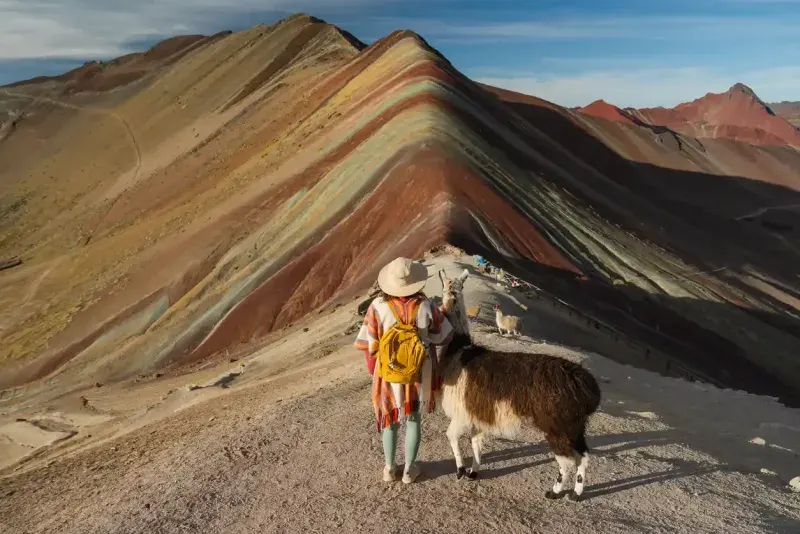
Woman with alpacas on the background of Rainbow mountain in Peru
What is the best way to get from Lima to Machu Picchu?
The most common route is: fly from Lima to Cusco (about 1.5 hours), spend a day or two acclimatizing in Cusco, then take a train from Ollantaytambo or Poroy station to Aguas Calientes (the town below Machu Picchu), and from there a bus up to the site. The whole journey from Cusco to Machu Picchu takes most of a day. There is no road to Aguas Calientes; the train is the only motorized option unless you're trekking.
Can I visit Peru on a budget?
Yes, Peru is very accessible for a range of budgets. Budget travellers can find comfortable hostels for $15–25 per night, eat excellent set lunches (menú del día) for $3–6, and use public buses between cities. The major costs to budget for are Machu Picchu tickets, the Inca Trail permit if you're trekking, and domestic flights. Even a mid-range Peru trip is significantly more affordable than comparable destinations in Europe or North America.
What is Rainbow Mountain, and how do I visit it?
Rainbow Mountain (Vinicunca) is a mountain near Cusco whose slopes display extraordinary multicoloured stripes of red, green, yellow, and purple mineral sediment revealed as glacier ice has melted. It sits at around 5,200 metres above sea level. Most visitors do it as a day trip from Cusco with a guided tour that departs very early in the morning. The hike itself takes about 2–3 hours each way and is quite challenging at that altitude. It's one of the most visually stunning things in all of Peru.
Customize Your Dream Vacation!
Get in touch with our local experts for an unforgettable journey.
Plan Your Trip
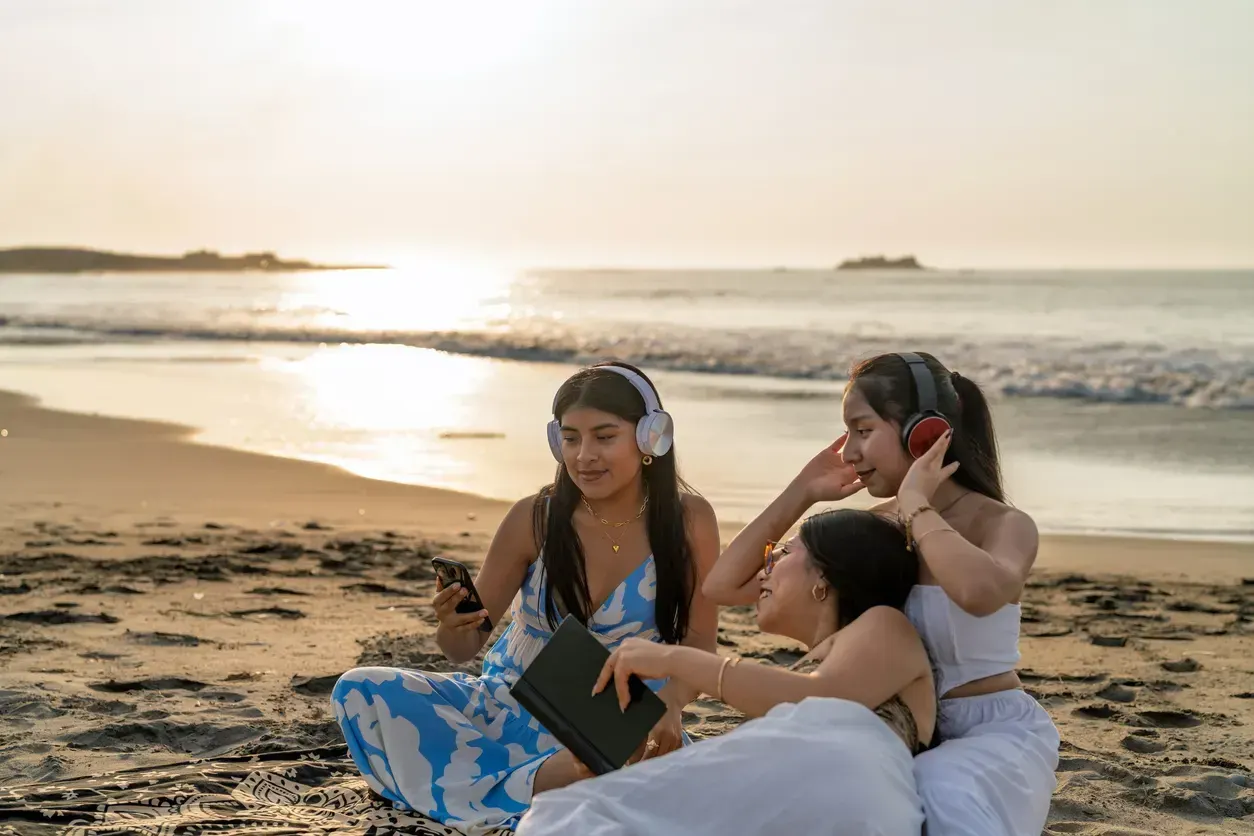
If you're planning to visit Peru during the summer in Peru, that's December through March for this Southern Hemisphere country, then Lima deserves serious attention on your itinerary, not just a quick stopover.
What Makes Summer in Lima Special
During summer, Lima sheds its famous grey coastal fog (called garúa) and transforms into a sun-drenched city bursting with energy. The sky is blue, the Pacific is warm, and the whole city seems to move outdoors. Locals pack the beaches, restaurants spill onto terraces, and the cliffside walkways of Miraflores become some of the best people-watching spots I've ever found.
Top Summer Activities in Lima
Surfing along the Costa Verde coastline is fantastic in summer, with warmer waters and reliable swells. Walk the Malecón de Miraflores, a gorgeous clifftop promenade with jaw-dropping Pacific views, and visit the Parque del Amor for sunset. Don't skip the Barranco neighbourhood: this is Lima's creative heart, filled with street art, independent cafés, and one of the city's most vibrant nightlife scenes. And of course eat. Visit Museo Larco in the afternoon and then spend your evenings working through Lima's legendary food scene.
Pro Tip: January to March is peak season for Lima's cevicherías. Fresh local fish is at its best, and the coastal restaurants of Miraflores and Barranco are absolutely buzzing. This is THE time to eat the best ceviche of your life.
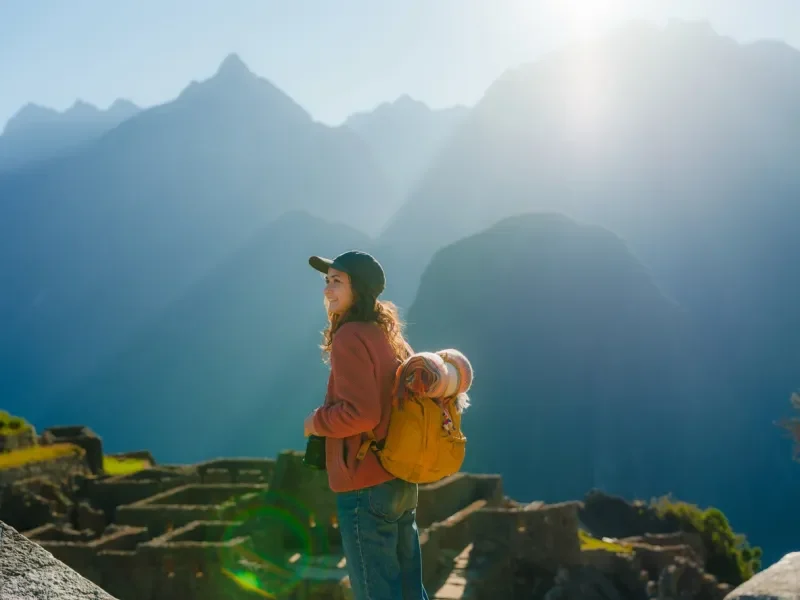
Woman looking at scenic view of Machu Picchu in Peru
What are the Nazca Lines, and how do I see them?
The Nazca Lines are enormous ancient geoglyphs etched into the desert floor of southern Peru, depicting animals, plants, and geometric shapes that can only be properly seen from the air. Created by the Nazca culture roughly 2,000 years ago, they remain one of archaeology's great mysteries. The best (and essentially only) way to see them properly is by taking a 30-minute sightseeing flight from Nazca town. The nearest major city is Ica, and Nazca is commonly visited as part of a Lima-to-Cusco overland journey.
What should I pack for a trip to Peru?
Peru's diverse geography means layering is key. Pack: light, breathable clothing for Lima and coastal areas; warm layers and a waterproof jacket for the Andes (even in dry season, nights in Cusco are cold); comfortable, broken-in hiking boots; sunscreen and a hat (the UV is intense at altitude); a good reusable water bottle; and altitude sickness medication if recommended by your doctor. If travelling in summer in Peru, add beach essentials for the Lima coast.
What currency does Peru use, and can I use cards?
Peru uses the Peruvian Sol (PEN). Major credit and debit cards (Visa, Mastercard) are accepted in most hotels, restaurants, and larger shops in Lima, Cusco, and tourist areas. However, local markets, small restaurants, rural areas, and transport between cities are often cash-only. Withdraw cash at ATMs in major cities (they are widely available), and always carry small denomination soles for day-to-day purchases.
Best Time to Visit Peru
The dry season (May to October) is best for trekking and visiting Machu Picchu. Summer in Peru (December to March) is ideal for the coast, Lima's beaches, and enjoying the country in a more relaxed, sun-soaked way. The good news? Peru's geographic diversity means there's always somewhere that has great weather, no matter when you visit.
Getting Around Peru
Domestic flights save a lot of time. Peru is bigger than it looks on a map. For the Inca Trail, you'll need to book permits months in advance. Trains connect Cusco to Aguas Calientes (for Machu Picchu), and comfortable tourist buses link many major cities.
Altitude and Acclimatization
Cusco sits at 3,400m, Lake Titicaca at 3,800m, and Rainbow Mountain at over 5,000m. Take your first day at altitude slowly, drink plenty of water, avoid alcohol, and consider coca leaf tea, the local remedy that actually works.
Quick Essentials
Book Machu Picchu tickets and Inca Trail permits as far in advance as possible; they sell out. Carry small change (soles) for local markets. Travel insurance is essential. Most museums in Lima and Cusco accept credit cards, but smaller towns and markets are cash-only.
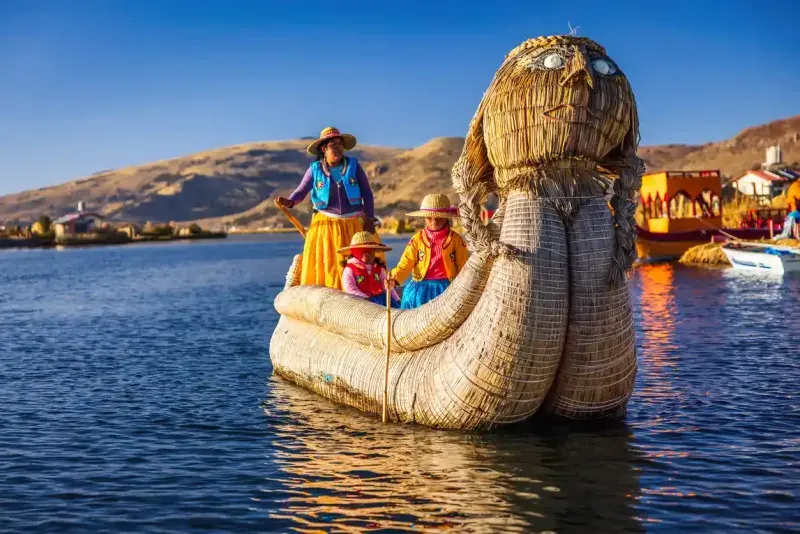
Peruvian young woman sailing between Uros floating islands, Lake Titicaca
Is summer in Peru a good time to trek to Machu Picchu?
Summer in Peru (December to March) is actually the rainy season in the highlands, which means trekking conditions on the Inca Trail can be muddy and wet, and the trail officially closes every February for maintenance. Machu Picchu itself remains open year-round, but the best trekking season is the dry season (May to October). If you're visiting in summer, focus on Lima and the coast, and consider a train journey to Machu Picchu rather than hiking.
What is there to do in Lima beyond the food scene?
Plenty. Lima's historic centre is a UNESCO World Heritage Site. Don't miss the Plaza Mayor, the Monastery of San Francisco (with its eerie catacombs), and the colonial architecture. Museo Larco is one of South America's finest pre-Columbian art museums. The Miraflores district has stunning cliffside parks with Pacific views, and Barranco is the city's bohemian neighbourhood packed with galleries, street art, and live music. During summer in Lima, the beaches and the clifftop Malecón promenades are the places to be.
Do I need a visa to visit Peru?
Citizens of most Western countries, including the US, UK, EU nations, Canada, and Australia, do not need a visa to visit Peru for tourism. You can generally stay for up to 90 days as a tourist on arrival. Always check the current visa requirements for your specific nationality before travelling, as policies can change. A valid passport with at least six months of validity is required.
Peru is one of those rare places that changes you a little bit every time you go. Whether you're standing at the Sun Gate as the mist clears over Machu Picchu, eating a perfect ceviche in Lima during a warm summer afternoon, or watching a condor spread its enormous wings over Colca Canyon, these are the moments that make travel worth it.
Ready to start planning? Our team specialises in tailor-made Peru itineraries built around what you actually want to experience. Reach out and let's make it happen.
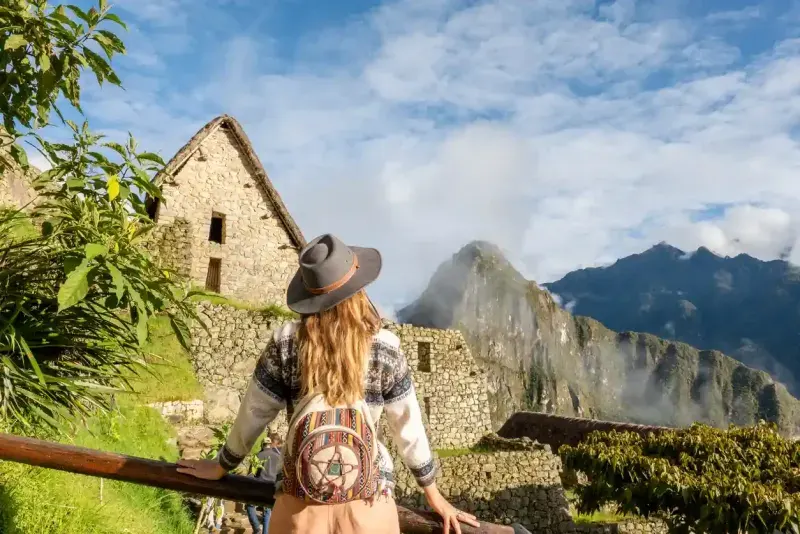
Traveler admiring Machu Picchu ruins on a sunny day
What makes Peru different from other South American destinations?
Peru combines ancient history, extreme natural diversity, and a world-class food culture in a way that no other South American country quite matches. In a single trip, you can stand among the ruins of one of the greatest empires in human history, trek through the world's most biodiverse rainforest, and eat at restaurants consistently ranked among the best on the planet. The contrast between the Andes, the Amazon, and the Pacific coast, all within one country, makes Peru a genuinely extraordinary destination.
How do I choose between going in the summer vs. the dry season in Peru?
It comes down to what you want to prioritize. If trekking the Inca Trail, hiking Rainbow Mountain, or exploring Machu Picchu in ideal conditions is your priority, go during the dry season (May to October). If you want to experience summer in Lima, Peru, with sunny beach days, coastal dining, and the city at its most vibrant, go between December and April. Many experienced travellers split the difference with shoulder months like May or October, getting decent conditions in both the highlands and the coast.
What are the absolute must-do things in Peru?
The top experiences most travellers agree on are: visiting Machu Picchu (ideally at sunrise), exploring Cusco and the Sacred Valley, hiking Rainbow Mountain, seeing the Nazca Lines from above, visiting Lake Titicaca's floating islands, and spending time in Lima's world-class food scene. If you have two weeks, you can comfortably hit all of these highlights.
When is the best time to visit Peru?
It depends on where you're going. The dry season (May to October) is the best time for trekking in the Andes and visiting Machu Picchu; you'll have clear skies and minimal rain. Summer in Peru (December to March) is the best time for the Pacific coast and Lima, with warm sunny weather perfect for beaches and outdoor dining. The shoulder months (April, May, September, October) offer a great balance of decent weather and fewer crowds.
What is summer like in Lima, Peru?
Summer in Lima runs from December to April, and it's the city at its absolute best. Temperatures hover between 24–29°C (75–85°F), skies are clear and blue, and the whole city buzzes with energy. Beaches fill up, restaurants move outdoors, and the cliffside promenades of Miraflores become some of the best places to spend an afternoon. It's also peak season for ceviche, and fresh local seafood is at its finest from January to March.
How many days do I need to visit Peru?
A minimum of 10 to 14 days lets you cover Lima, Cusco, Machu Picchu, and one or two more experiences (Rainbow Mountain, Sacred Valley, Colca Canyon, etc.). For a more relaxed trip that includes Lake Titicaca and the Amazon, plan for three weeks. Peru is much larger than it looks on a map, considering travel time between destinations.
Do I need to book Machu Picchu tickets in advance?
Yes, absolutely, and as early as possible. Daily visitor numbers at Machu Picchu are strictly capped, and tickets sell out weeks or even months ahead during peak season (June to September). You also need to book a specific entry time slot. The same applies to Inca Trail trekking permits, which often sell out six months in advance for the dry season. Book through Peru's official ticketing platform or your travel agency.
Is Peru safe for tourists?
Peru is generally safe for tourists who take standard precautions. The main tourist areas, Cusco, Machu Picchu, Miraflores and Barranco in Lima, and the Sacred Valley, are well-travelled and well-patrolled. As in any destination, be mindful of pickpocketing in crowded markets and on public transport, avoid displaying expensive jewellery or electronics, and use registered taxis or ride-hailing apps in Lima rather than hailing random cabs on the street.
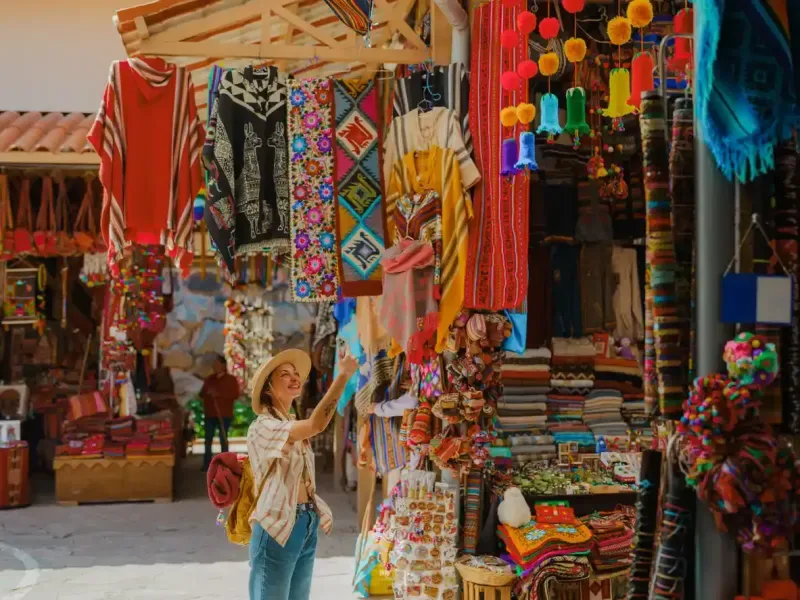
Woman photographing with smartphone on Pisac Market in Peru
How do I choose between going in the summer vs. the dry season in Peru?
It comes down to what you want to prioritize. If trekking the Inca Trail, hiking Rainbow Mountain, or exploring Machu Picchu in ideal conditions is your priority, go during the dry season (May to October). If you want to experience summer in Lima, Peru, with sunny beach days, coastal dining, and the city at its most vibrant, go between December and April. Many experienced travellers split the difference with shoulder months like May or October, getting decent conditions in both the highlands and the coast.