So you've decided to go to Greece. Good decision. Possibly one of the best decisions you will make this year.
But now comes the part that nobody warns you about: the planning. Because Greece, for all its sun-drenched simplicity, is a destination that rewards a little preparation and punishes a little carelessness. Book the wrong ferry, visit the wrong island in the wrong month, or skip the wrong site — and you will come home feeling like you missed something. Book your first-time Greece tours thoughtfully, plan your days with intention, and Greece will deliver one of the most richly layered, deeply satisfying travel experiences available anywhere in the world.
This is everything you need to know before you go.
Check the best Greece Tours Now!
Start With Athens. Always Start With Athens.
A lot of first-time visitors make the mistake of treating Athens like a layover — a day or two before the "real" trip begins on the islands. This is a mistake.
Athens is one of the most extraordinary cities in the world. Not just historically, though the history alone is enough to justify several days, but as a living, breathing, genuinely exciting city with great food, great neighborhoods, and an energy that surprises almost everyone who arrives expecting a tired museum town.
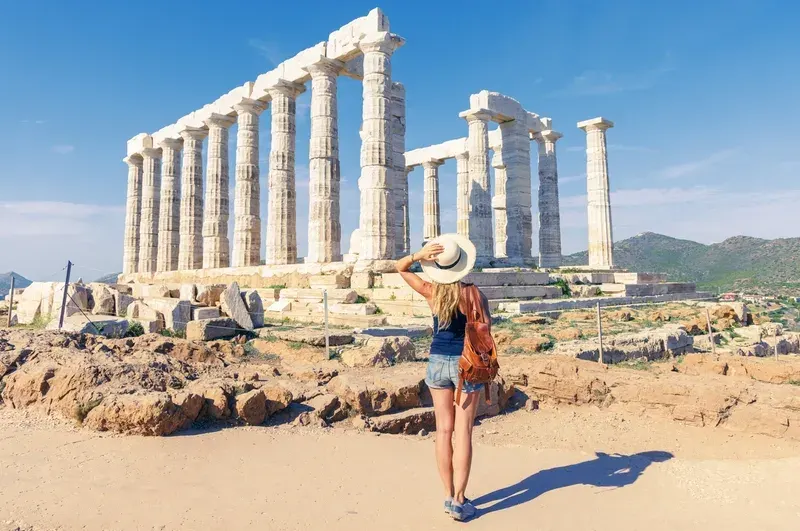
Give Athens at least two full days. First, do the obvious thing: go to the Acropolis. Go early — the site opens at 8 am, and the difference between arriving at 8:15 and 10:30 is the difference between a magical experience and a crowded one. The Parthenon, even after everything you've seen in photographs, will still take your breath away in person. The scale of it defeats every expectation.
Then walk down through the Plaka neighborhood — the old town at the foot of the Acropolis, full of narrow lanes, bougainvillea-draped walls, and tavernas that have been feeding visitors for generations. Find one that's slightly off the main tourist street. Sit outside. Order the mezze. Order the wine. Take your time.
On Day 2, visit the Acropolis Museum — genuinely one of the best museums in the world, and a must for anyone who wants to understand what they were looking at the day before. Then spend the afternoon in Monastiraki, Athens' most atmospheric market neighborhood, and the evening in Exarcheia or Koukaki, where the locals eat, and the prices drop.
Athens will surprise you. Let it.
Customize Your Dream Vacation!
Get in touch with our local experts for an unforgettable journey.
Plan Your Trip
Choose Your Island Carefully
Here is the question every first-time visitor to Greece has to answer: which island?
Greece has over 200 inhabited islands. The good news is that you cannot make a truly bad choice. The complicated news is that each island has a genuinely different character, and matching the right island to the right traveler makes a big difference.
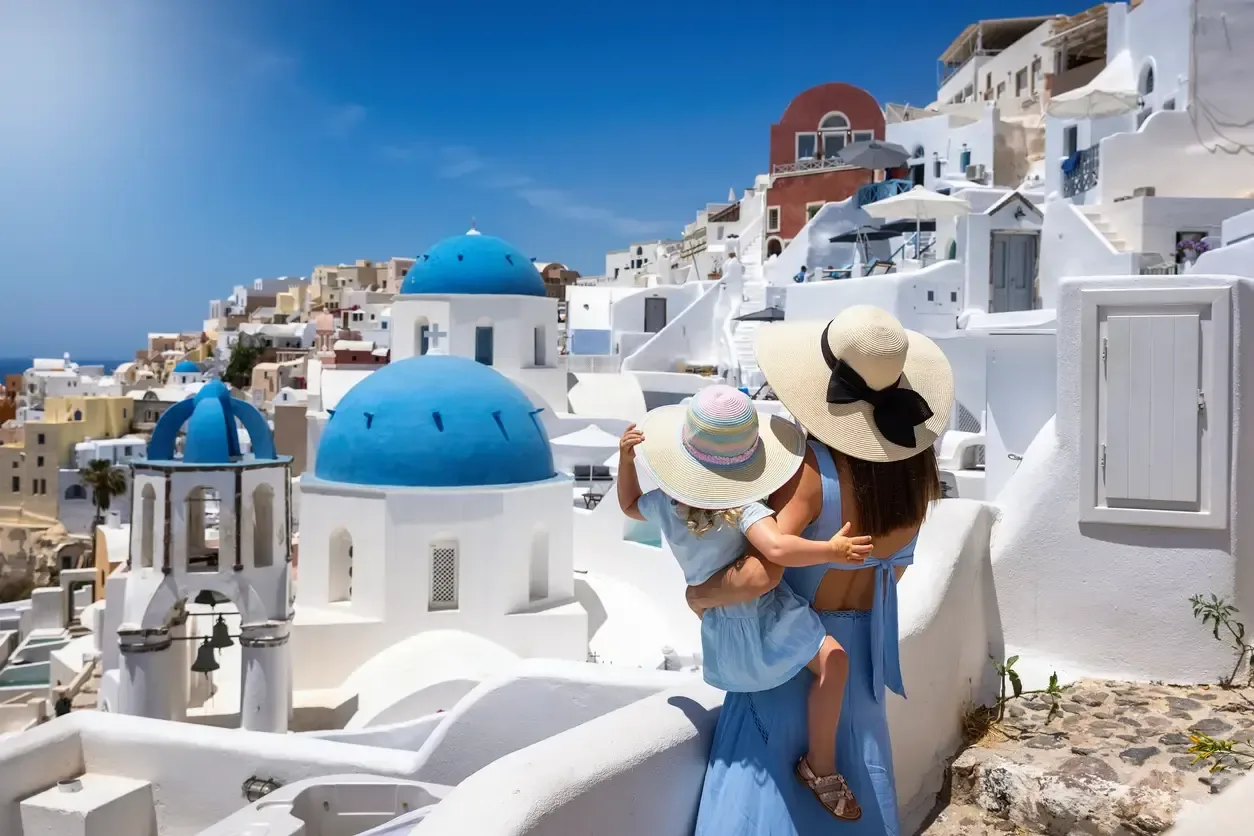
Santorini is the one everyone recognizes — the white-washed buildings, the blue-domed churches, the sunsets from Oia that have been photographed approximately four million times. It is genuinely beautiful and genuinely worth visiting. It is also genuinely crowded in July and August. If you want Santorini, go in May, early June, or September. The island is calmer, the prices are lower, and the sunsets look the same.
Mykonos is glamorous, cosmopolitan, and very lively. It is the island for beach clubs, nightlife, and a particular kind of effortlessly stylish holiday. If that sounds like you, go. If it doesn't, go to Naxos instead — bigger, quieter, with better beaches and food that most travelers agree outperforms both Santorini and Mykonos.
Crete is for travelers who want everything. It is the largest Greek island by a significant margin and contains within it more history, more landscape variety, more food culture, and more beach diversity than many entire countries. Give it at least four or five days.
Zakynthos has Shipwreck Beach — one of the most photographed beaches in the world, a rusting ship sitting on white sand inside a cove of sheer limestone cliffs. If dramatic natural beauty is your priority, go.
First-time recommendation? Athens plus Santorini or Naxos covers the two things Greece is most famous for — ancient history and island beauty — in a week that flows naturally and doesn't involve any stressful logistics.
The Ferry Question
At some point, you will need to get between islands, and at some point, you will need to decide: ferry or flight?
For most routes, the ferry is the right answer. Not just for cost — though ferries are significantly cheaper than domestic flights — but for the experience. Arriving at a Greek island by sea, watching it rise out of the Aegean as the boat approaches, is one of the great simple pleasures of Greek travel. Don't skip it.
Book ferries in advance, especially in peak season. The popular routes — Athens (Piraeus) to Santorini, Santorini to Mykonos — sell out faster than most people expect. Book as soon as your dates are confirmed.
For longer distances — Athens to Crete, for example — a night ferry on a comfortable cabin is a perfectly reasonable way to save a night's accommodation and arrive rested in the morning.
What to Eat (And Where to Find It)
Greek food is better than you expect. Much better.
The version most people know from Greek restaurants abroad — slightly tired moussaka, generic tzatziki, the obligatory Greek salad — bears almost no resemblance to what you eat in Greece itself.
The Greek salad in Greece is made with tomatoes that actually taste like tomatoes. The feta is creamy and sharp and nothing like the crumbled version in supermarkets. The olive oil is extraordinary — Greece produces some of the finest in the world and uses it with magnificent confidence.
Beyond the salad: souvlaki (grilled meat skewers, eaten wrapped in pita with tzatziki and tomato) is the great everyday food of Greece — cheap, everywhere, consistently excellent. Spanakopita (spinach and feta in flaky pastry) eaten warm from a bakery is one of the great breakfast foods anywhere. Fresh grilled fish at a harbor taverna, wherever you are, is almost always worth ordering.
One rule: find a restaurant where the locals eat. In Athens, walk two streets away from any major tourist site. On the islands, look for the taverna where the tables don't have laminated photographs of the food on the menu. That is the one you want.
Practical Things Worth Knowing
Best time to visit: May, June, and September are the sweet spots — warm enough for swimming, not so hot that sightseeing becomes an endurance test, and noticeably less crowded than July and August. October is beautiful for mainland travel and city exploration.
Getting around Athens: The Athens Metro is clean, cheap, and efficient. Get a day pass and use it without thinking. Taxis and ride-hailing apps work well for airport transfers.
Cash vs. card: Most places in Athens and on the major islands accept cards. On smaller islands and in traditional tavernas, carry cash. ATMs are widely available but have fees — withdraw enough to last a few days rather than making frequent small withdrawals.
Dress code at religious sites: Shoulders and knees should be covered when entering churches and monasteries. This applies to everyone regardless of the weather. Most sites provide coverings if you forget.
Tipping: Not obligatory but appreciated. Around 10% in restaurants is the norm. Round up taxi fares. Leave something for hotel housekeeping.
Language: English is spoken widely in tourist areas. Learning a few words of Greek — efharisto (thank you), kalimera (good morning) — is always appreciated and occasionally rewarded with better service and warmer smiles.
The Thing Nobody Tells You About Greece
Everyone tells you about the history. The beaches. The food. The light.
Nobody tells you about the pace.
Greece operates on a different relationship with time than most places. Lunch is not something you eat quickly before moving on. It is an event that lasts two hours and involves sitting in the shade and not particularly caring what time it is. The evening meal starts late — 9 pm is early; 10 pm is normal — and ends when it ends.
Resist the urge to fill every hour. Built in an afternoon with nowhere to be. Sit at a café with a coffee that you do not rush. Watch the water. Watch the people. Let the place do what it does best.
Greece has been welcoming visitors for a very long time. It knows what it's doing. The best thing a first-time traveler can do is arrive, put the itinerary down for a moment, and let it.
You will come home different. Slower, in a good way. Already thinking about when to go back.
A minimum of seven days gives you a solid first experience — two days in Athens and four or five days on one or two islands. Ten days is the sweet spot for most first-time visitors, allowing you to explore Athens properly, see two islands at a relaxed pace, and still have a day or two with nothing planned. If you only have five days, skip the second island and go deeper on Athens and one island instead of rushing between three places.
Greece sits in the middle of the European price range — more affordable than France, Italy, or Scandinavia, but not as cheap as Southeast Asia or Eastern Europe. The biggest variable is accommodation: Santorini in peak season can be eye-wateringly expensive, while Naxos or Crete in shoulder season is very reasonable. Food is generally excellent value — a full meal at a local taverna with wine rarely breaks the bank. Getting around by ferry is cheap. The main costs to plan for are accommodation, inter-island flights if you use them, and entrance fees to major sites like the Acropolis.
Not at all. English is spoken widely across Athens and all major tourist destinations. On smaller, more remote islands you may encounter less English, but basic communication is almost always manageable. That said, learning a handful of Greek words goes a long way — locals genuinely appreciate the effort, and a simple kalimera (good morning) or efharisto (thank you) tends to open doors that staying strictly in English does not.
It depends on what you are looking for — but if pushed, Santorini and Naxos together make the ideal first-time combination. Santorini delivers the iconic Greece that most people picture: the white-washed buildings, the caldera views, the legendary sunsets. Naxos, just a short ferry ride away, is larger, more affordable, has better beaches, and gives you a taste of a more authentic, less tourist-heavy Greek island life. Together they cover both sides of what Greece does best.
Greece is one of the safest destinations in Europe for solo travelers, including solo female travelers. Violent crime is rare. Greeks are famously hospitable and will go out of their way to help a traveler who looks lost or confused. Standard precautions apply — watch your belongings in crowded areas like the Athens flea market and Monastiraki, be aware of your surroundings late at night, and use registered taxis or ride-hailing apps rather than unlicensed drivers. Beyond that, Greece is a welcoming, well-organized destination that handles solo visitors exceptionally well.