Article Indexes:
#1. AL FAHIDI DISTRICT: Where Dubai's History Actually Lives
#2. DEIRA SPICE SOUK: Not Your Instagram Souk
#3. THE DUBAI DESIGN DISTRICT: Where Locals Work (And Create)
#4. MUSHRIF NATIONAL PARK: Desert Without the Instagram
#5. AL SEEF: The Waterfront That's Becoming Authentic Again
#6. STREET ART IN AL QUOZ: Dubai's Underground Art Scene
#7. AJMAN: The Overlooked Coastal Town
#8. BIKE RIDES ALONG THE CREEK PATH: Free and Genuine
#WHY THESE GEMS ARE HIDDEN (And Why That's Okay)
#THE HIDDEN GEM SURVIVAL GUIDE
I spent three days doing the Burj Khalifa, the malls, and the Instagram spots. But here's the confession: I saw absolutely nothing real. Dubai has a marketing problem—most tourists only see the postcard version: tallest building, biggest mall, most expensive everything. But beneath that glossy surface is a completely different city where locals actually live, work, create, and find meaning.
This isn't a guide to famous attractions. This is a guide to real Dubai. The authentic neighborhoods, underground art scenes, and genuine experiences that locals know but tourists miss. If you're coming to Dubai, you can follow the typical itinerary, or you can do what I'm about to share. Either way, you'll see the city. But one version will actually change you.
The Problem with Dubai Tourism
Before we talk about hidden gems, let's talk about why they're hidden.
Dubai has a reputation problem. The city has spent decades (well, decades in human years—Dubai is only about 50 years old as a modern city) building an image of excess: the tallest building, the biggest mall, the most expensive everything.
This marketing worked so well that the actual city got buried.
Real Dubai is:
- A major port city with centuries of trading history
- A place where 85% of the population is expatriate
- A hub of regional art, design, and innovation
- A city with stunning desert geography
- A place with complex, interesting communities
But none of that made it into the tourist brochures. So travelers show up expecting golden skyscrapers and luxury shopping. They get that. And then they leave, thinking they've seen Dubai, not realizing they've only seen a theme park version of it.
The hidden gems aren't hidden because they're difficult to find. They're hidden because nobody's marketing them as "must-dos." That's actually why they're so good.
The Hidden Gems: A Local's Real Guide
#1. AL FAHIDI DISTRICT: Where Dubai's History Actually Lives
Al Fahidi is Dubai's answer to authenticity. In the 1800s, this was the main commercial district with traditional wind tower architecture—an ingenious cooling system that worked before air conditioning. Most tourists spend 45 minutes here taking photos, but if you start early (before 10 AM) and get lost intentionally in the 6-foot-wide lanes, you'll find artist studios, galleries, and actual local culture. The restored buildings house contemporary artists who actually talk to you because tourists are rare. This is real Dubai.
Skip the main tourist path and explore deeper: visit small galleries hidden in restored buildings where Emirati and expatriate artists work, take a traditional abra (water taxi) across the creek for less than a dollar, and eat at Al Reef Bakery where construction workers and office staff gather for breakfast shawarmas. The experience isn't packaged or polished—it's genuine daily life. Go on Friday mornings when local families explore together, and you'll see three generations navigating narrow streets authentically.
Time Required: 3-4 hours | Cost: €3-8 total | Best For: History lovers, photographers, people-watchers
Customize Your Dream Vacation!
Get in touch with our local experts for an unforgettable journey.
Plan Your Trip#2. DEIRA SPICE SOUK: Not Your Instagram Souk
The Deira Spice Souk isn't a souk for tourists—it's for people who actually need to buy spices. The smell hits first: cardamom, saffron, cumin, oud, dried limes, and things you can't name. It's overwhelming. Skip the front stalls where vendors charge tourist prices; go deeper where real spice merchants deal with restaurant owners and home cooks. Arrive at 6-7 AM before the day gets hot, when serious buyers show up. Ask intelligent questions like "I'm making biryani—how much saffron would you recommend?" instead of "Is this the best?" Vendors respect people who care, and might even give price breaks.
Buy things you don't know. Yes, there's cardamom and cumin, but also amchur (dried mango) and asafoetida. Ask what's popular and grab random small bags for AED 10-20 (€3-5). Eat breakfast at a small café in the souk where locals gather for fresh pastries and strong Arabic coffee. Sit at a shared table. This is where the real energy is. The souk is overwhelming—crowded, hot, high-pressure—but that's the authenticity. It exists for itself, not softened for tourists.
Time Required: 2-3 hours | Cost: €10-25 total | Best For: Foodies, sensory experiences, comfortable-with-crowds types
#3. THE DUBAI DESIGN DISTRICT: Where Locals Work (And Create)
The Dubai Design District (D3) is a 1.5-square-kilometer creative hub where designers, architects, and artists have studios, workshops, and galleries. This isn't a curated museum; it's where Dubai's actual creative class works. Unlike polished galleries, D3 is messy and real. You'll find independent design studios where you can watch furniture designers crafting bespoke pieces, fashion designers fitting clients, and graphic artists working on packaging. Many have open-door policies. The Alserkal Avenue main street is beautifully raw—industrial buildings hosting cutting-edge art, a graffiti wall that changes weekly, and artists often working live.
The restaurants and cafés here are genuinely interesting. There's Slow Roasted Coffee run by an Australian barista who cares about coffee quality, a Brazilian restaurant where families cook for themselves, and a Lebanese place sourcing vegetables from specific trusted farmers. The galleries feature young, experimental artists creating work that challenges rather than commodifies. On some Fridays, there are free guided walks with artists themselves explaining their pieces. Go on weekday mornings to avoid crowds and potentially have galleries to yourself.
Time Required: 3-4 hours | Cost: €10-40 (mainly food) | Best For: Artists, creatives, contemporary culture enthusiasts
#4. MUSHRIF NATIONAL PARK: Desert Without the Instagram
Unlike packaged desert safaris with loud tours and sunset barbecues, Mushrif National Park is what the desert actually is—quiet, contemplative, and genuinely beautiful. There are several hiking trails (2-8 km) winding through natural desert with native vegetation, showing the landscape before air conditioning and skyscrapers. You can camp overnight under real stars (not Instagram-perfect, but genuinely remarkable), visit a small recreated Bedouin heritage village, or birdwatch. Over 60 bird species live here. In January-February, migratory birds from Central Asia arrive, and because it's not marketed to tourists, you'll likely have trails to yourself.
You can just sit and do nothing—radical in Dubai. Look at the landscape, think, exist without agenda. Most tourists never experience this in Dubai. The park isn't dramatic or famous. It's subtle and contemplative. If you want "wow" moments, skip it. If you want understanding, space, and genuine desert experience, you'll find everything here.
Time Required: Half day to full day | Cost: €8 entry, €17/night camping | Best For: Hikers, photographers, solitude-seekers, birdwatchers
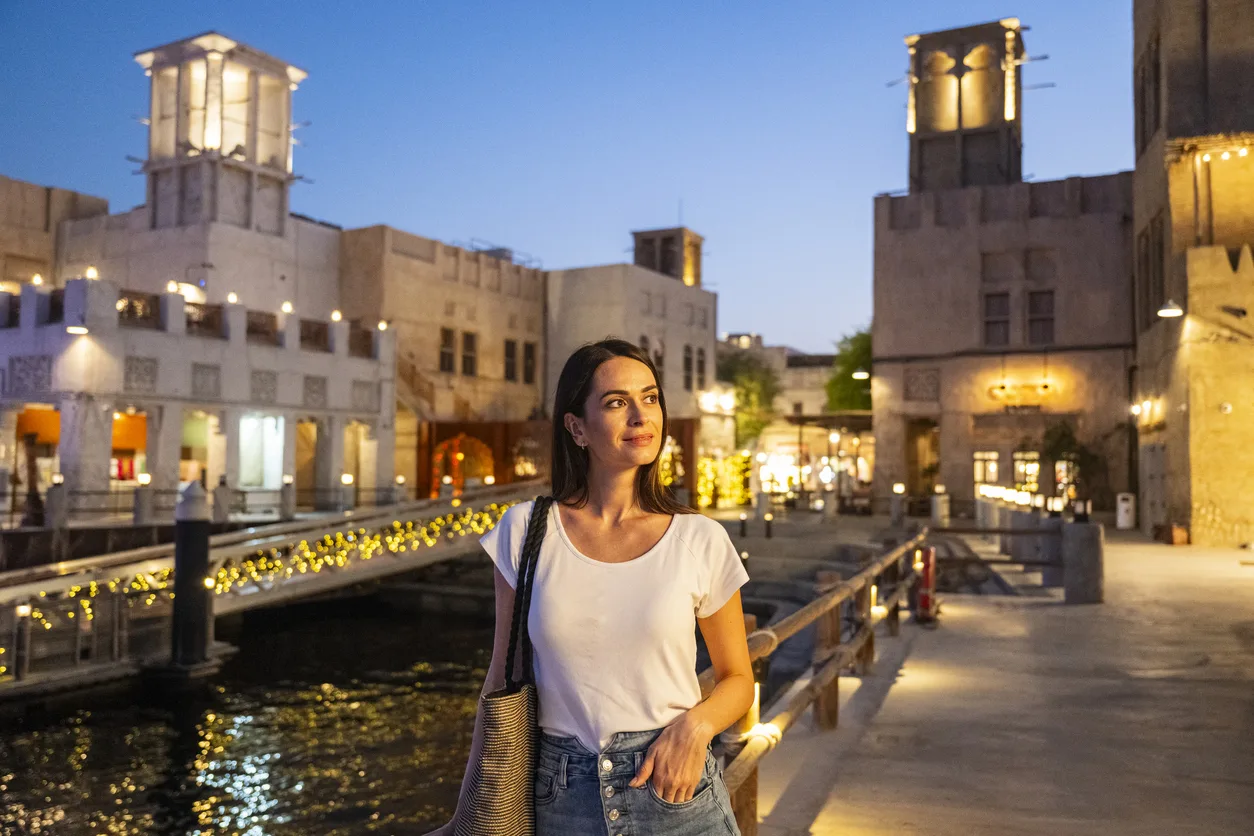
#5. AL SEEF: The Waterfront That's Becoming Authentic Again
Al Seef is Dubai's attempt to reclaim its relationship with water. For decades, the coastline was developed into private beaches and tourist zones. Locals were pushed away. Al Seef reverses this—creating a waterfront actually for people, not cameras. The waterfront walk has locals moving at their own pace: families pushing strollers, joggers running, young couples sitting on benches. It's genuine, not staged. Restaurants and cafés are filled with local families, office workers, and expat groups, with no tourist markup on prices. You'll find everything from high-end restaurants to casual shawarma joints.
Take a traditional dhow ride along the creek for AED 50 (€13)—an authentic wooden boat used for centuries of trading. The guides explain Dubai's maritime history while you glide past old and new city. Al Seef hosts regular cultural events (film screenings, art installations, live music) that are free or cheap (AED 20-40), with local crowds, not tourist masses. Visit early morning (6-7 AM) or late evening (after 8 PM) to experience Al Seef as it's meant to be—a place for people who live here.
Time Required: 2-3 hours | Cost: Free to walk, €5-20 activities/food | Best For: Water lovers, sunset seekers, families
#6. STREET ART IN AL QUOZ: Dubai's Underground Art Scene
In the industrial area of Al Quoz, there's a thriving street art and graffiti scene that authorities tolerate and artists embrace. This is where Dubai's rebellious, underground creative culture lives. 1916 Alley has large-scale murals by multiple artists that change regularly—one week hyperrealistic portraits, next week abstract geometry. Artists are often working; watch them create. Warehouse 78 is an independent art space hosting grassroots exhibitions and performances with experimental work intentionally not mainstream. Throughout Al Quoz, warehouse walls are covered organically with ever-changing art.
There are independent galleries scattered in warehouses run by artists or art enthusiasts—not commercial gallery owners. The work is more interesting because there's less pressure to sell. Street art and graffiti are technically illegal in Dubai, so the fact they exist means artists create without permission or approval purely for creativity's sake. This is radical in a controlled, planned city. Go on weekday mornings to explore slowly, or bring a local who knows the constantly-changing scene. Talk to people creating; most artists love explaining their work.
Time Required: 2-3 hours | Cost: Free | Best For: Artists, photographers, counterculture-seekers, creative minds
#7. AJMAN: The Overlooked Coastal Town
Ajman is a neighboring emirate 45 minutes from Dubai where locals go to escape tourist infrastructure. Most tourists don't go here—exactly why you should. Ajman has a beautiful free public beach (not a resort beach) where families swim, fishermen head out, and people just sit. It's real, not Instagram-perfect. The souk is smaller and less commercial than Dubai's; locals shop for everyday #7. AJMAN: The Overlooked Coastal Townitems and tourists are so rare that vendors are genuinely curious about you. There are incredible seafood restaurants along the waterfront, not famous but existing for people living here. Prices are 30-40% lower than Dubai with fresher local catches.
Inside Ajman's heritage area is a small but meaningful heritage museum and traditional architecture. It's not polished or touristy—it's real. Ajman represents what the UAE is outside the tourism machine. It's less wealthy than Dubai and Abu Dhabi, meaning it's more authentic. People work hard, live simply, and are friendlier because unused to tourists optimizing photo ops. You'll understand the human reality beneath Dubai's marketing machine.
Time Required: Half day | Cost: Free (beach) to €30 (meal) | Best For: Beach lovers, culture seekers, authentic UAE experience
#8. BIKE RIDES ALONG THE CREEK PATH: Free and Genuine
There's an extensive cycling path along both sides of the creek connecting several neighborhoods. Rent a bike for AED 50 (€13) for the day and explore at your own pace. Starting from Al Fahidi, the path winds through Bur Dubai (old city), Downtown (modern beginning), Business Bay (less touristy), and Deira (commercial hub). Make it a full loop or stop where interests you. This is how locals move around—at community speed, not tourist time. Families bike together, office workers ride to work, joggers run alongside. When biking, you move at neighborhood pace, not tourist-time.
You see Dubai ground-level without filters. It's the opposite of Burj Khalifa observation decks where you observe from above. You're moving through the city, not observing it. The experience is completely different. Start early (6-7 AM) to avoid heat and enjoy morning energy. Bring water (2 liters). The path is flat and easy, even for casual cyclists. You'll hear sounds, smell local life, and interact with neighborhoods authentically.
Time Required: 2-4 hours | Cost: €13 bike rental + €5 food/water | Best For: Casual cyclists, slow-pace explorers, families
#WHY THESE GEMS ARE HIDDEN (And Why That's Okay)
- Here's the thing about hidden gems: they're not hidden because they're bad. They're hidden because they don't fit the Dubai narrative.
- Dubai's tourism strategy is built on superlatives: tallest, biggest, most luxurious. These places don't superlative. They're just... good. Authentic. Real.
- A place is more itself when tourists aren't performing for the Instagram algorithm around it. The moment you put a hidden gem on "top 10 list," it becomes less hidden and less genuine.
So by visiting these places, you're not discovering something. You're participating in something that's already there. You're joining the actual city, not observing it.
#THE HIDDEN GEM SURVIVAL GUIDE
Getting Around Without a Car Tour
- Use Uber/Careem: The ride-hailing apps work perfectly. You don't need a tour guide; you need a driver. Costs are reasonable (€5-15 per ride).
- Use Public Transport: Dubai's metro and buses are clean, efficient, and cheap (AED 2-5 per ride / €0.50-1.30). Locals use them. You'll see real Dubai.
- Walk When Possible: Some areas (Al Fahidi, Al Seef, parts of Deira) are best explored on foot. Bring water. Dress appropriately. Respect the heat.
Best Times to Visit
October-April: Comfortable temperature (25-30°C). This is when locals also explore outdoor spaces.
Avoid May-September: Heat is extreme (40-50°C). Even locals avoid being outside. Most of Dubai shifts to indoor activities.
Weekday vs. Weekend:
- Weekdays: Fewer tourists, more locals, more authentic
- Fridays/Saturdays: More crowded, more families, different energy
Budget Breakdown for Hidden Gems
Daily Budget for Hidden Gems Only:
- Transportation: €10-20
- Food: €15-30
- Activities: €5-20
- Total: €30-70 per day
This is WAY cheaper than tourist attractions. You can do real Dubai for less than you'd pay for the Burj Khalifa.
What to Bring
- Water (2 liters minimum)
- Sunscreen (SPF 50+)
- Hat
- Comfortable walking shoes
- Camera (phone is fine)
- Cash (some small vendors don't take cards)
- Respectful clothing (especially when visiting mosques or cultural areas)
Safety Notes
Dubai is one of the safest cities in the world. Real talk:
- The neighborhoods mentioned above are safe at any time of day
- Petty theft exists but is rare
- Respect local customs (dress modestly, don't photograph people without permission, avoid PDA)
- Police are present but polite
- Emergency number is 999
Dubai is developing rapidly. The hidden gems of today might not be hidden tomorrow. The underground art scene could be discovered and packaged. The quiet neighborhoods could be gentrified. The authentic restaurants could go viral. This isn't sad—it's just the nature of cities. They change.
But here's the beautiful part: the moment one gem becomes famous, new ones emerge. There are always authentic spaces in any city if you know where to look. The hidden gems aren't about finding something perfect. They're about experiencing something real. And real is always changing, always alive, always becoming something new.
These aren't hidden from locals—just not marketed to tourists. Blogs, social media, and guidebooks promote Burj Khalifa instead. A place becomes "hidden" when you must intentionally seek it. These neighborhoods exist for locals; tourists aren't the priority. That's why they're authentic.
Dubai is genuinely safe. Deira and Al Quoz are working neighborhoods, not dangerous. Crowded and less polished, yes. Unsafe, no. Go during daylight, tell someone your location, use common sense. You won't be unsafe; you'll experience authentic Dubai.
Both work. Solo exploration gives freedom and ownership. A local guide provides context and reveals hidden spots constantly changing. Do major areas alone (Al Fahidi, Al Seef, Deira) for discovery satisfaction. For street art in Al Quoz, hire a local guide—the scene changes constantly.
Depends on your priorities. One week? Skip Burj Khalifa, spend everything on hidden gems. 2-3 days? Quick tourist stop (Burj Khalifa, one mall), then hidden gems. 24 hours? Choose hidden gems entirely. Burj Khalifa teaches nothing about Dubai. Hidden gems teach everything.
English is widely spoken in Dubai, especially in tourist areas and businesses. In traditional souks or with elderly locals, it's less common. People generally want to communicate. Use Google Translate, point, smile, be patient. You'll communicate fine and appreciate the effort.
Depends on values. Burj Khalifa wins for impressive engineering and superlatives. Hidden gems win for understanding people and places. Neither is objectively better—they serve different purposes. The issue: tourists think Burj Khalifa is Dubai, missing the actual city.
Technically yes, practically hard. Burj Khalifa needs 2-3 hours (including waits). Quality hidden gems need 3-4 hours. One day rushing both is exhausting. Better: dedicate one day to tourist attractions, one day to hidden gems. Go deep into one for richer experience.
Street art is for photography. For people: always ask permission. In traditional areas like Deira, some like being photographed; others prefer privacy. Mosques and heritage sites: be respectful. Don't photograph during prayer. Basic courtesy applies everywhere.