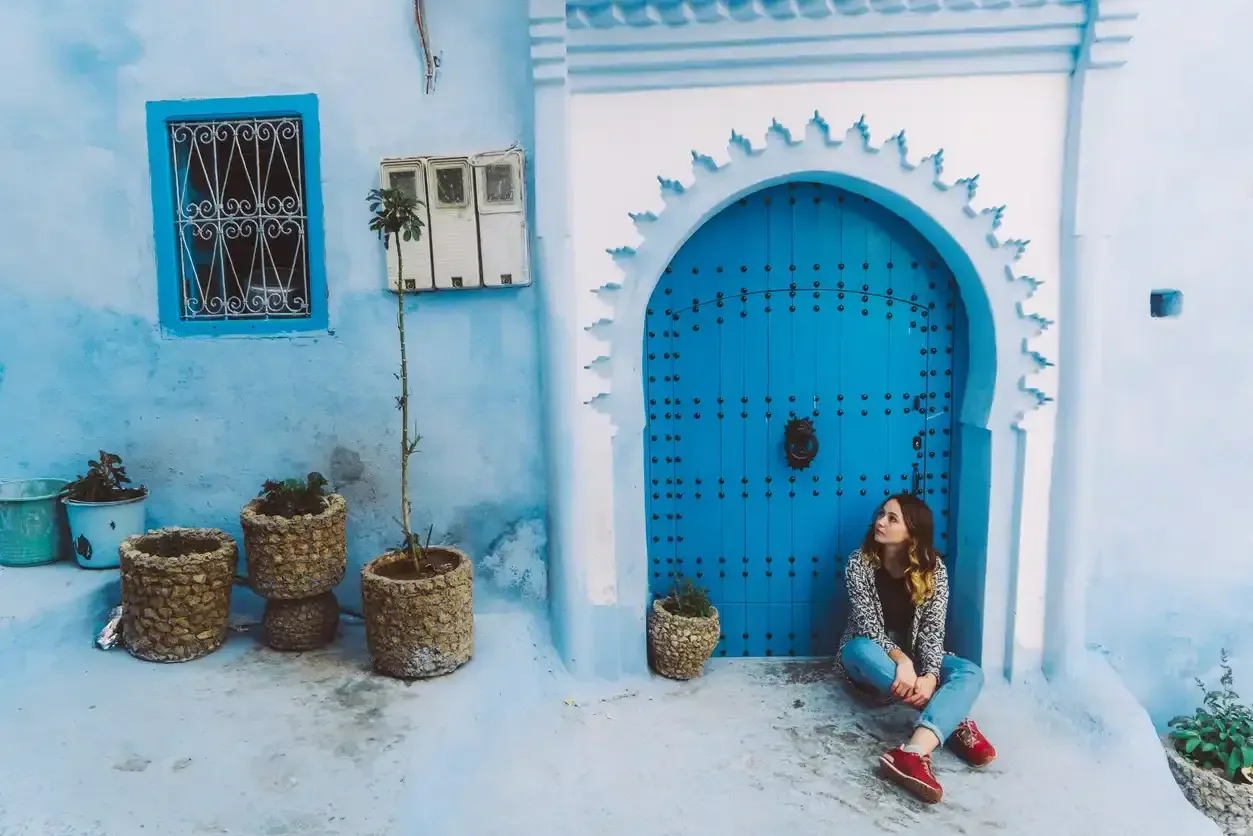
Planning a trip to Morocco and wondering about safety? You're not alone "Is Morocco safe for tourists?" is one of the most common questions travelers ask before booking their North African adventure. Let me give you the honest answer: Yes, Morocco is safe for tourists, but like any destination, it requires smart preparation and awareness.
Here's the deal: Morocco ranks 24th globally on the World Safety Index, ahead of countries like Portugal, Sweden, and the Netherlands. Over 18 million tourists visited in 2025 without major incidents. But those impressive stats don't tell the whole story. You need practical, real-world Morocco safety advice to travel confidently.
Let me walk you through everything you need to know about staying safe in Morocco, from petty crime hotspots to essential safety tips that'll make your trip smooth and worry-free.
Table of Contents:
#The Real Morocco Safety Picture: What Rankings Actually Mean
#Real Safety Risks: What You'll Actually Encounter
#Essential Morocco Safety Tips: Practical Advice That Works
#Where to Go & Where to Avoid: Location-Specific Morocco Safety
#Best Time to Visit for Safety
#Solo Travelers & Women: Special Considerations
#Accommodations: Where to Stay Safely
#Final Verdict: Is Morocco Safe for Tourists?
Official Safety Rankings Explained
Morocco's safety credentials are actually pretty impressive when you dig into the data:
- 24th safest country globally (Global Finance Safety Index)
- 5th safest tourist destination (Which? Travel magazine - rated 6.1/10)
- Safer than France, Italy, and Greece, according to international rankings
- 78th out of 163 countries (Global Peace Index 2024)
What does this mean for you? Morocco is statistically safer than many popular European destinations you've probably already visited!
Government Travel Advisories: Reading Between the Lines
Here's where it gets interesting. The U.S. State Department issues a Level 2 advisory for Morocco (exercise increased caution)—the same level as France, Germany, and the UK. Canada and Britain have similar warnings, primarily citing terrorism concerns.
But here's the reality check: Morocco hasn't experienced a significant terrorist incident since 2011, except for the tragic 2018 killing of two Scandinavian hikers in the Imlil Mountains. That's one major incident in 15+ years while hosting millions of tourists.
The disconnect? Government advisories reflect potential threats based on intelligence, not day-to-day reality. They're cautious by design. The actual Moroccan safety experience for tourists focuses more on petty crime than serious violence.
Ready to experience Morocco with total peace of mind? Our expertly designed Morocco travel packages take care of every detail from safe accommodations and trusted local guides to seamless transportation, so you can focus on exploring with confidence. Discover the magic of Marrakech, wander through the blue streets of Chefchaouen, and embrace the adventure knowing you’re in safe hands. Start planning your unforgettable Morocco journey today!
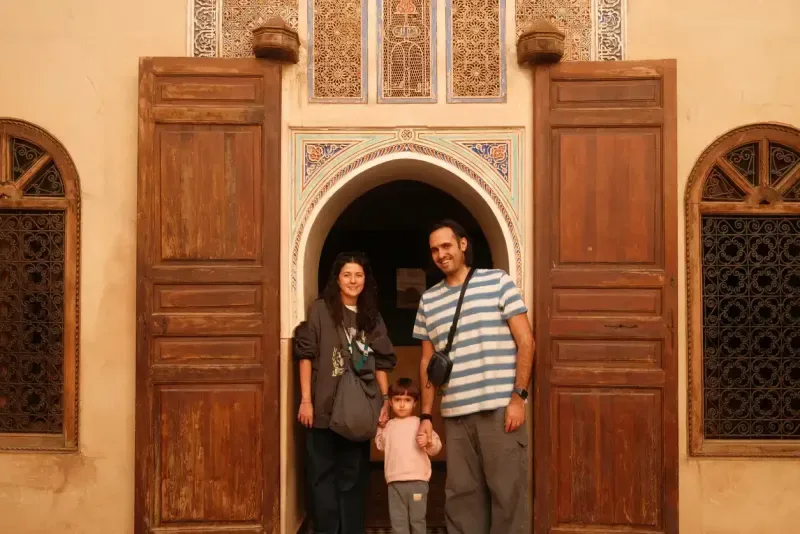
Family traveling in Morocco standing in traditional doorway
Let's get practical. Forget abstract terrorism warnings, here are the actual Morocco safety issues you're likely to face:
1. Petty Theft & Pickpocketing (Most Common Issue)
Where it happens:
- Jemaa el-Fnaa square in Marrakech (crowded, chaotic, prime pickpocket territory)
- Fez medina souks (narrow alleyways, easy distractions)
- Coastal promenades (motorcycle thieves targeting bags/jewelry)
- Train stations and bus terminals
How they operate:
Team-based scams where one person distracts you ("Hey, want to see my shop?" or "Your jacket is dirty!") while an accomplice swipes your wallet, phone, or bag. Motorcycle thieves snatch bags from pedestrians in quick drive-bys.
Your defense:
- Keep valuables in front-facing crossbody bags or money belts
- Avoid displaying expensive jewelry, watches, and cameras
- Stay alert in crowded markets if someone gets unusually close or chatty, and check your belongings
- Hold bags tightly on busy streets
Bottom line: Pickpocketing is annoying but preventable. It's the #1 Morocco safety concern, but it won't ruin your trip if you're careful.
2. Common Tourist Scams (Know Before You Go)
The "Closed Attraction" Scam: Fake guides approach, saying "Sorry, the palace/mosque/museum is closed today for prayer/cleaning/holiday," then offer to take you shopping instead (where they earn commissions). Reality: Most attractions have posted hours; verify closures yourself!
The Aggressive Henna Scam: Artists grab your hand/arm without permission, quickly apply henna, then demand 200+ dirhams (~$20). Worse: some use black henna containing chemicals, causing severe allergic reactions and permanent scarring.
Defense: Firmly say "La, shukran" (No, thank you) and keep walking. Don't stop to explain or be polite; engagement encourages persistence.
The Taxi Meter "Broken" Scam: Drivers claim meters don't work and propose inflated fixed prices. Airport taxis to Marrakech should cost 250-300 MAD daytime (300-350 MAD at night), not the 500-600 MAD some drivers quote.
Defense: Insist on the meter or agree on price BEFORE entering. Walk away if they refuse; another taxi will come.
3. Street Harassment (Especially for Women)
Is Morocco safe for tourists traveling solo as women? Mostly yes, but with caveats.
What to expect:
- Persistent verbal comments ("Beautiful!" "Hello!" "Where are you from?")
- Following behavior in medinas
- Unwanted personal approaches
- Commercial harassment disguised as friendliness
Regional variations:
- Fez: Most intense, sometimes intimidating
- Marrakech: Often commercially motivated (leading to shops)
- Essaouira, Chefchaouen: Much more relaxed
- Rural areas: More conservative expectations
Women's Morocco safety strategies:
- Dress modestly (covered shoulders/knees, see section below)
- Wear sunglasses (avoid eye contact with harassers)
- Walk confidently and purposefully
- Join group tours in major cities
- Consider hiring official guides for Medina exploration
- Say "La" (No) firmly without explanation
- Fake phone calls, if followed: "I'm almost at the hotel, see you in 2 minutes."
Reality check: Most harassment is verbal and annoying rather than dangerous. Physical assault against tourists is extremely rare. But the constant attention can be exhausting; mental preparation helps!
4. Road Safety (Morocco's Biggest Actual Danger)
Here's an uncomfortable truth: Morocco's roads are statistically more dangerous than its crime rate.
The numbers:
- 4,024 traffic deaths in 2024 (5.37% increase)
- 1,624 deaths in first 5 months of 2025 (20.9% surge)
- Pedestrians and motorcyclists: 70% of fatalities
Why roads are risky:
- Aggressive driving culture
- Poor lighting on rural roads
- Malfunctioning traffic lights
- Pedestrians crossing highways
- Livestock on roads
- Motorcycles weaving through traffic
Your Morocco safety approach:
- Hire professional drivers for long trips (included in most tours)
- Avoid driving yourself unless experienced with chaotic traffic
- Use seatbelts always (even in taxis, insist!)
- Skip night driving on rural roads
- Be extremely cautious crossing streets (drivers don't always stop)
Bottom line: The biggest risk to your Morocco safety is traffic accidents, not crime or terrorism. Book tours with professional drivers!
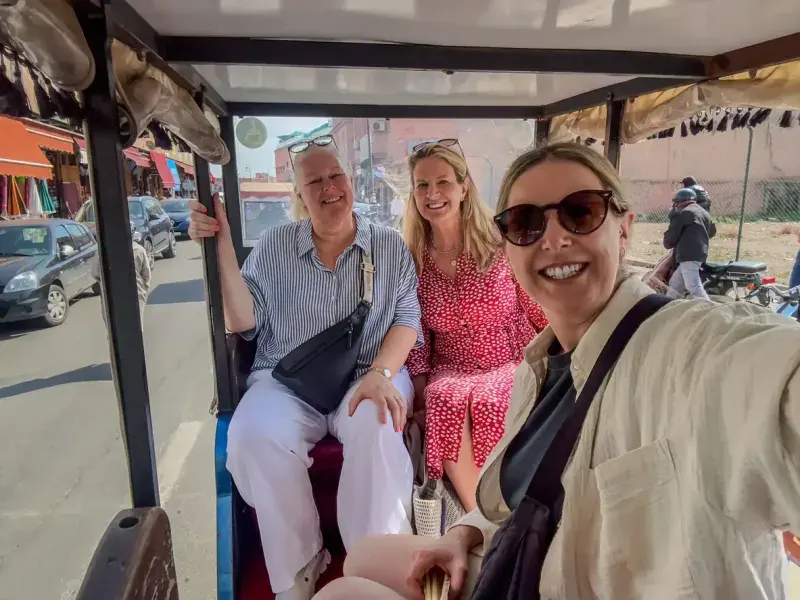
Selfie While Exploring The City
Customize Your Dream Vacation!
Get in touch with our local experts for an unforgettable journey.
Plan Your Trip
Dress Code: Looking the Part
Is Morocco safe for tourists wearing Western clothes? Yes, but modest clothing dramatically improves your experience.
What to pack:
Women:
- Loose pants or long skirts (below knees)
- Tunics or shirts covering the shoulders
- Lightweight scarf (mosques, conservative areas)
- Avoid: tight clothing, shorts, tank tops, low-cut tops
Men:
- Long pants (shorts okay in beach towns)
- T-shirts are fine, but avoid sleeveless ones
- Conservative in rural areas
Why it matters: Modest dress ≠ is a legal requirement, but it:
- Reduces harassment significantly
- Shows cultural respect
- Helps you blend in (less obvious tourist target)
- Required for mosque visits
Climate consideration: Morocco gets HOT (100°F+ in summer) but also COLD in the mountains (50°F winter nights). Pack layers! Moisture-wicking athletic fabrics beat cotton.
Money & Scams: Financial Safety
Cash is king: 70%+ of Moroccan transactions are cash. You'll need dirhams (MAD).
ATM safety (avoid skimmers):
- Use ATMs inside bank branches during business hours
- Cover your PIN with your other hand
- Check for loose card slots or cameras
- Scan for suspicious people watching
- Notify your bank of travel dates
Credit card tips:
- Visa/Mastercard is widely accepted at hotels/restaurants
- Always watch the card during transactions (the switching scam exists)
- Decline dynamic currency conversion (bad rates)
- Keep small bills for markets, taxis, and tips
Emergency contacts (save immediately):
- Police: 19
- Ambulance: 150
- Fire: 15
- Gendarmerie: 177
Health & Insurance Essentials
Is Morocco safe for tourists' health-wise? Generally, yes, but preparation is key.
Before you go (4-6 weeks ahead):
- Hepatitis A vaccine (recommended)
- Typhoid vaccine (recommended)
- Routine vaccines current (MMR, tetanus, etc.)
- Consult the travel clinic
In Morocco:
- Drink only bottled water (tap water is unsafe)
- Avoid ice in street cafés
- Eat at busy restaurants (high turnover = fresh food)
- Peel your own fruit
- Skip raw salads at street vendors
Travel insurance is ESSENTIAL: Why? Moroccan public hospitals lack resources. Private clinics require cash deposits upfront. US Medicare/Medicaid don't work internationally. You need coverage including:
- Medical emergencies
- Emergency evacuation (to Europe if serious)
- Trip cancellation
- Lost luggage
Cost: $50-150 for a typical trip, with cheap insurance for peace of mind!
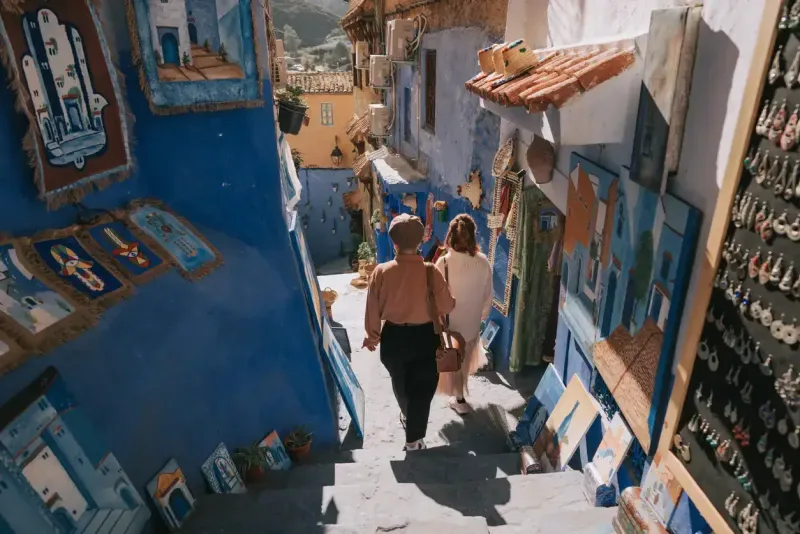
2 Asian Chinese female tourist shopping in souk market in Chefchaouen
Safest Cities & Areas
Top Safe Destinations:
Marrakech: Despite its reputation for hassle, it's actually very safe with undercover police throughout the medina. Stick to the main squares and tourist areas.
Rabat: Capital city = government presence = excellent safety. Very low crime against tourists.
Essaouira: Laid-back coastal town, relaxed vibe, minimal aggressive selling. Great for first-time Morocco visitors.
Chefchaouen: The peaceful "Blue Pearl" of the Rif Mountains. Low crime, friendly locals, safe wandering.
Agadir: Modern beach resort city. Western-style safety standards.
Meknes: Underrated imperial city. Less touristy than Marrakech/Fez = less hassle.
Cities Requiring Extra Caution
Casablanca: Morocco's largest city has higher crime rates. Avoid:
- Bernoussi industrial district
- Derb Ghallef area
- Around the central train station at night
- Old Medina after dark
Safe areas: Hassan II Mosque, Corniche waterfront, Maarif neighborhood
Fez: Crime index 63.54 (moderate-high). Expect:
- Very aggressive vendors
- Persistent fake guides
- Maze-like medina (easy to get lost)
- Hire an official guide for Medina navigation
Regions to AVOID
Western Sahara disputed territory:
- Stay 30+ km from the Berm militarized zone
- Ongoing political tensions
- Not worth the risk
Algerian border areas:
- 20+ km radius off-limits
- Unexploded ordnance
- Military installations
At night:
- Marrakech/Fez medina alleyways (get lost easily, sketchy)
- Casablanca Old Medina
- Poorly lit downtown areas
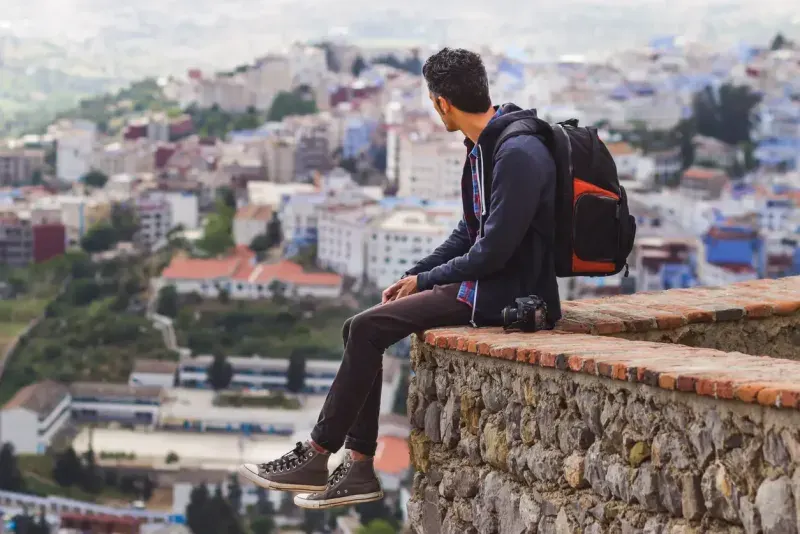
Tourist Looking At City View
Optimal seasons:
Spring (March-May): Perfect weather, comfortable exploration, manageable crowds
Fall (September-November): Ideal temperatures, sea still warm, fewer tourists
Avoid if possible:
Summer (June-August): Brutal heat (100°F+) compromises judgment, increases dehydration risks
Winter (December-February): Cold mountains, some attractions closed
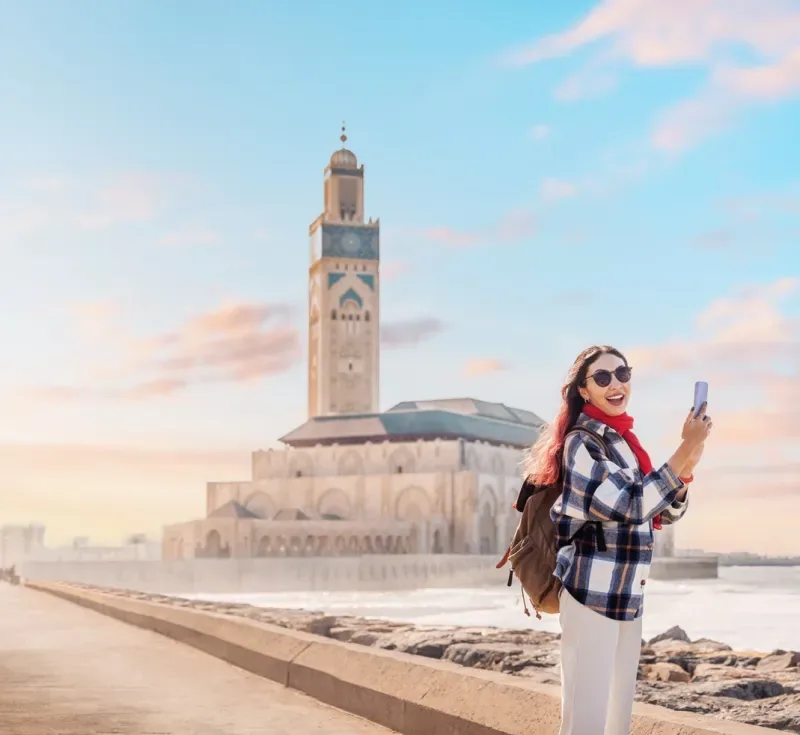
Smiling tourist capturing the stunning Hassan II Mosque by phone at sunset
Is Morocco safe for tourists traveling alone?
Solo men: Very safe. Expect minimal issues beyond typical scams.
Solo women: Generally safe but requires extra awareness:
Do:
- Join group tours in major cities
- Stay in reputable accommodations with reviews
- Dress modestly
- Carry a phone with a local SIM
- Share the itinerary with someone
- Walk confidently
- Visit popular attractions during busy hours
Don't:
- Walk alone in medinas at night
- Accept random "help" from strangers
- Get in unmarked taxis
- Drink excessively in public
- Wear flashy jewelry
Reality: Many solo female travelers visit Morocco successfully every year. It's doable, just requires more vigilance than traveling in Europe or North America.
Safest options:
International hotels: Familiar Western standards, security, and reliable inspections. Best for nervous first-timers.
Established riads: Authentic Moroccan experience with vetted safety standards. Book through reputable platforms (Booking.com, Airbnb, with many reviews).
Avoid:
- Unlicensed guesthouses in remote areas
- Properties with no reviews
- Extremely cheap deals (too good to be true)
What to check:
- Working locks on doors/windows
- Safe for valuables
- 24-hour reception/staff
- Emergency exits
- Location in a safe neighborhood
The honest answer: YES, Morocco is safe for tourists who prepare properly.
What the data shows:
- 18+ million tourists visited safely in 2025
- Ranked 24th safest country globally
- Violent crime against tourists is rare
- No major terrorist incidents since 2011
- Safer than many European destinations statistically
What you'll actually face:
- Petty theft in tourist areas (preventable)
- Aggressive vendors and scammers (annoying but harmless)
- Street harassment, especially for women (exhausting but rarely dangerous)
- Traffic dangers (use professional drivers)
- Cultural differences require modest dress and awareness
Morocco's safety boils down to:
1- Dress modestly (shoulders/knees covered)
2- Stay alert in crowded markets
3- Secure your valuables (crossbody bags, money belts)
4- Avoid isolated areas at night
5- Use official guides/drivers in unfamiliar areas
6- Trust your instincts (if something feels off, leave)
7- Buy travel insurance (non-negotiable!)
Bottom line: Morocco offers incredible experiences, ancient medinas, the Sahara Desert, stunning architecture, delicious food, and warm hospitality (despite the hassle). The rewards far outweigh the risks when you travel smart.
Millions of tourists explore Morocco safely every year. With proper preparation and awareness, you'll be one of them!
Ready to Explore Morocco Safely?
Book Your Morocco Adventure with Confidence!
Now that you know Morocco is safe for tourists with the right preparation, it's time to start planning your incredible North African journey!
Why Book Expert-Guided Morocco Tours:
- Professional local guides navigate medinas safely and handle scammers
- Vetted accommodations meeting international safety standards
- Private transportation with experienced drivers (avoid road risks)
- 24/7 support in English throughout your journey
- Insider knowledge of safe neighborhoods and times to visit
- Scam protection - guides prevent tourist traps and overcharging
- Cultural mediation - respectful interactions without harassment
Our Morocco Tour Packages Include:
- Safe, comfortable transportation
- Licensed English-speaking guides
- Quality riads and hotels (inspected, secure)
- Comprehensive travel insurance assistance
- Emergency contact support
- Entrance fees to major attractions
- Most meals included
- Airport transfers
Is Morocco safe right now for tourists?
Yes, Morocco is safe for tourists. It ranks 24th globally for safety and welcomed 18+ million visitors in 2025 without major incidents. My main concerns are petty theft in medinas, taxi scams, and traffic, not violent crime. Morocco hasn't had a significant terrorist incident since 2011. I'll stay safe by avoiding isolated areas at night, securing valuables, and staying alert in crowded markets.
What are the major risks in Morocco?
Major risks: 1) Petty theft/pickpocketing in Marrakech and Fes medinas. 2) Tourist scams (fake guides, taxi meter tricks, henna scams). 3) Street harassment for women travelers. 4) Traffic accidents (Morocco's biggest danger—hire professional drivers). 5) Food/water safety (bottled water only). Violent crime against tourists is extremely rare.
What to avoid doing in Morocco?
I should avoid: drinking tap water, walking medinas alone at night, displaying expensive items, accepting unsolicited "help," photographing people without permission, using the left hand for eating/greeting, wearing revealing clothing, getting in unmarked taxis, street money changers, visiting Western Sahara/Algerian borders, driving at night on rural roads, and black henna tattoos.
What is safer, Morocco or Egypt?
Morocco is slightly safer than Egypt. Morocco ranks higher globally (24th vs. Egypt's lower ranking), has less aggressive harassment, better road safety, and no current political instability. Both have similar petty crime in tourist areas. For solo female travelers, Morocco is moderately easier. Neither has significant violent crime against tourists; both are safe with proper awareness.
Can females wear shorts in Morocco?
Yes, but context matters. Shorts are fine in beach resorts (Agadir, Essaouira). In cities like Marrakech, knee-length shorts are acceptable in tourist areas. In conservative areas (Fes medina, rural villages) and mosques, I must wear long pants/skirts. Modest clothing reduces harassment significantly. I'll pack both shorts for beaches and long pants for cities.
Is Morocco as cheap as Egypt?
Morocco is slightly more expensive than Egypt, but both are budget-friendly. Morocco: $40-120/day vs. Egypt: $30-100/day. Morocco offers better quality for the price; Egypt has the absolute lowest costs. Restaurant meals: Morocco $5-15 vs. Egypt $3-10. Hotels: Morocco $30-100/night vs. Egypt $20-80/night. Both offer excellent value compared to Europe/North America.
Why can't you use your left hand in Morocco?
The left hand is traditionally associated with bathroom hygiene and considered unclean. I should use my right hand only for eating, giving/receiving items, shaking hands, and gesturing. This custom has historical hygiene origins. Using my right hand shows cultural respect, even if I'm left-handed. Locals appreciate the effort.
Can you drink alcohol in Morocco?
Yes, alcohol is legal in Morocco. I can buy it at licensed hotels, tourist restaurants, bars, and supermarkets (Carrefour has alcohol sections). Moroccan wines and local beers are available. I should drink respectfully: only in appropriate venues (not streets), never publicly during Ramadan, and avoid drunkenness. Traditional medina restaurants don't serve alcohol. Prices: beer 25-40 MAD, wine from 60 MAD.