Article Indexes:
#First Things: When Should You Go?
#Getting There and Getting Around
#Tokyo: Three Days That Will Ruin Other Cities for You
#Kyoto: Where Japan Gets Quiet
#The Food: An Honest Conversation
#Budget: What Does Japan Actually Cost?
#Practical Stuff Nobody Remembers to Tell You
Okay, let's be honest. Japan is one of those countries that genuinely breaks your brain — in the best possible way. You land expecting something interesting and you leave completely unable to stop thinking about going back. The food. The trains. The way people treat strangers. The vending machines on every corner selling things you didn't know you needed. The silence inside a 1,200-year-old temple while a city of 14 million people hums just outside its walls.
Japan is a lot. And that's exactly why you need a plan.
This guide covers everything, Tokyo, Kyoto, how to get between them, what to eat, how much to budget, and the honest stuff that most travel blogs skip over. Let's get into it.
#First Things: When Should You Go?
Timing your Japan trip matters more than almost anywhere else on earth. Here's the honest breakdown:
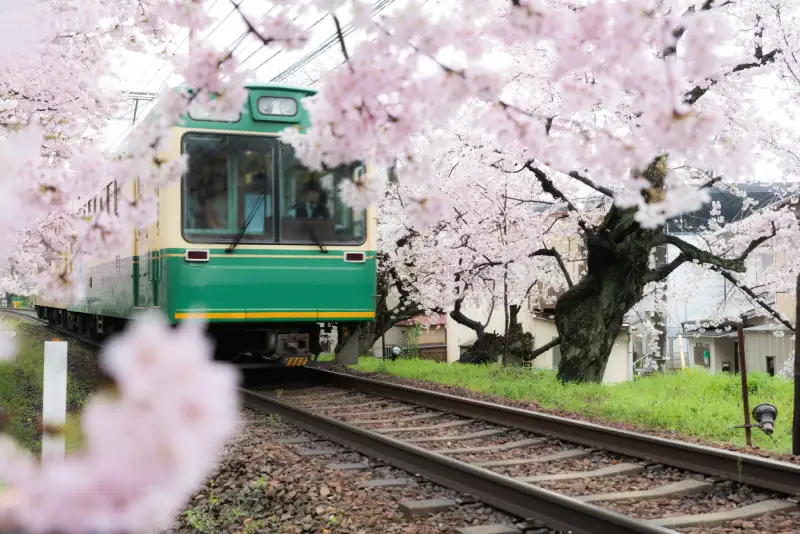
- Cherry Blossom Season (late March to mid-April) is the most popular time to visit, and for good reason — the country looks genuinely unreal. Pink petals everywhere, hanami picnic parties in every park, and the kind of light that makes your phone camera feel like a professional one. The catch? Everyone knows this. Hotels book up six months in advance, prices spike, and popular spots get crowded. Book early or accept that you'll be fighting for elbow room at Maruyama Park.
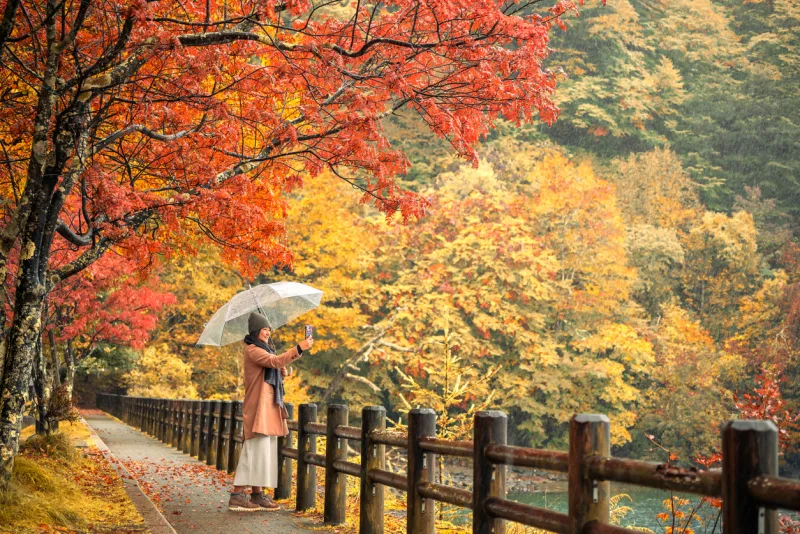
- Autumn (mid-October to mid-November) is arguably even more beautiful and significantly less crowded. The maple leaves turn deep red, orange, and gold — especially in Kyoto — and the weather is cool and comfortable. This is the insider favourite for a reason.
- Summer (July to August) is hot, humid, and festival season. If you want to experience Obon festivals, fireworks displays, and summer matsuri, this is your window — just pack light, breathable clothes and accept that you will sweat.
- Winter (December to February) is underrated. Fewer tourists, lower prices, and if you head north to places like Hokkaido, you get some of the best powder skiing on the planet. Kyoto in winter has a quiet, almost melancholy beauty that's completely different from its spring self.
#Getting There and Getting Around
1. Flying in: Most international travellers land at either Narita Airport or Haneda Airport in Tokyo, or Kansai International Airport if you're starting in Osaka or Kyoto. Haneda is closer to central Tokyo and increasingly popular with international carriers, so check both when you're booking.
2. The JR Pass — should you get one? This is the question every Japan traveller argues about online, so let's settle it simply. If you're travelling between Tokyo, Kyoto, Osaka, and Hiroshima within a two-week window, a 14-day JR Pass will likely save you money. If you're mostly staying in one city, skip it and buy individual tickets. Calculate your specific route on Hyperdia or Google Maps before you decide.
3. The bullet train (Shinkansen) is not just transport — it's an experience. The Tokyo to Kyoto journey takes about two hours and fifteen minutes on the Nozomi, and the moment Mt. Fuji slides into view on your right side (sit on the right heading westbound), you'll understand why people take this train specifically to see it. Bring snacks. Buy an ekiben — a train station bento box — before you board. This is not optional.
4. Getting around cities: Tokyo's subway system is enormous and initially terrifying, but it is genuinely one of the easiest metro systems in the world once you've done it once. Get a Suica or Pasmo IC card, load it up with yen, and tap in and out of every train, bus, and even most convenience stores. Kyoto is better explored by bus and bicycle — the city has a flat, grid-like layout that makes cycling genuinely pleasant.
Customize Your Dream Vacation!
Get in touch with our local experts for an unforgettable journey.
Plan Your Trip#Tokyo: Three Days That Will Ruin Other Cities for You
Let's be clear: you can't "do" Tokyo in three days. You can't do Tokyo in three weeks. But three days gives you enough to understand why people never want to leave.
Day One: East Tokyo | Asakusa, Akihabara, Ueno
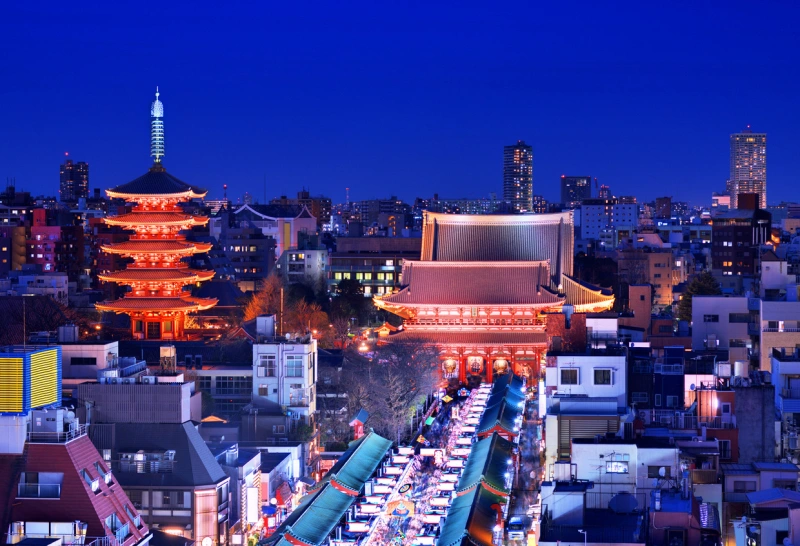
Start in Asakusa at Senso-ji Temple, Tokyo's oldest temple and the city's most visited site. Go before 8am if you can — the crowds thin dramatically and the incense smoke rising in the morning light is genuinely beautiful. Walk the Nakamise shopping street for traditional snacks (ningyo-yaki, sweet bean cakes, are the move), then head to the Sumida River for a view of the Tokyo Skytree.
From there, jump on the metro to Akihabara — electric town, gaming district, anime wonderland, and one of the most gloriously chaotic places on earth. Even if you're not into gaming or anime, the multi-floor electronics stores and the sheer density of blinking screens and sound effects are worth experiencing as a cultural phenomenon.
Finish the day at Ueno Park, which has more museums per square kilometre than almost anywhere in Tokyo, and a free outdoor area that turns into one of the best cherry blossom spots in the city come spring.
Day Two: West Tokyo | Shinjuku, Harajuku, Shibuya
Shinjuku in the morning: wander through Shinjuku Gyoen, one of the most beautiful urban parks in the world. It costs ¥500 to enter and is worth every yen. In the evening, Shinjuku transforms — the neon lights of Kabukicho switch on, the tiny bars of Golden Gai open their doors (some with room for literally five people), and the energy of the city shifts into something you genuinely can't find anywhere else.
Harajuku at midday: walk Takeshita Street for the outfits and energy, then escape to the quiet of Meiji Jingu Shrine just five minutes away. The contrast — chaotic teen fashion street to ancient Shinto forest — is pure Tokyo.
Shibuya crossing at rush hour is exactly as overwhelming and iconic as you've heard. Stand on the second floor of the Starbucks opposite the crossing, order something, and watch. Then cross it yourself. Then cross it again, because you'll want to.
Day Three: Odaiba, Yanaka, and a neighbourhood you haven't planned
Odaiba is Tokyo's artificial island — futuristic, strange, and home to teamLab Planets, one of the most mind-bending art experiences you'll ever have. Book tickets in advance; they sell out consistently.
Yanaka is old Tokyo — narrow streets, wooden temples, independent shops, cats sitting in doorways. It survived the Second World War and the 1923 earthquake and somehow still feels like the city from a hundred years ago. Spend a slow morning here before anything else crowds your brain.
And leave one afternoon genuinely unplanned. Walk in a direction that looks interesting. Duck into a basement restaurant. Sit in a park. The best Tokyo memories almost always happen when the itinerary is abandoned.
#Kyoto: Where Japan Gets Quiet
After Tokyo's intensity, Kyoto feels like someone turned the volume down. It's a city of 1.5 million people that still manages to feel composed, deliberate, and deeply, strangely peaceful — even at its most crowded.
- Fushimi Inari | go at 6am or not at all. The thousands of torii gates winding up the mountain are one of the most photographed sights in Japan, and for good reason. But by 9am the selfie sticks are out in full force and the atmosphere gets lost. Arrive at dawn, walk the full two-hour trail to the summit, and you'll have entire sections of vermillion gates entirely to yourself. Worth every lost hour of sleep.
- Arashiyama Bamboo Grove has the same timing problem. Before 8am it's genuinely magical — the bamboo stalks creak and sway, the light comes through in slivers, and it feels completely otherworldly. After 10am it's a traffic jam. Go early, then wander into the Tenryu-ji garden next door and spend an hour there instead.
- Kinkaku-ji (The Golden Pavilion) is always busy. There's no early-morning trick here — it opens at 9am and the queues build fast. Go anyway. The gold-leaf pavilion reflected in the mirror pond is one of those things that somehow exceeds the photographs. Allow 45 minutes, then leave before the crowds make you irritable.
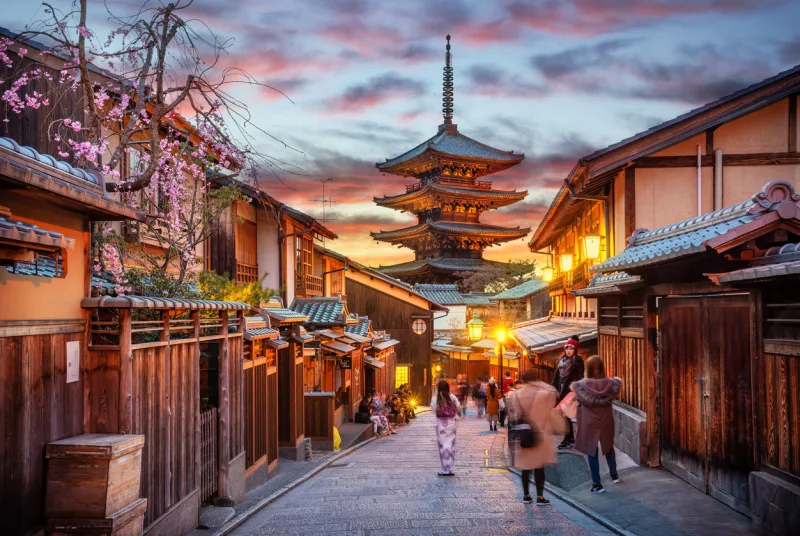
- Gion district is best explored in the late afternoon into evening. This is Kyoto's geisha district — wooden machiya townhouses, stone-paved lanes, lantern light, and if you're very lucky and very quiet near Hanamikoji Street around 5pm, you might see a geiko or maiko moving between engagements. Don't shout. Don't grab. Don't point a camera in their face. Watch, appreciate, and let them pass.
- Nishiki Market is Kyoto's "kitchen" — a narrow five-block covered market that's been feeding the city for 400 years. Try everything. The pickled vegetables, the fresh tofu, the grilled octopus balls, the matcha soft-serve that seems to appear every ten metres. Arrive hungry. Leave extremely full.
#The Food: An Honest Conversation
Japan has arguably the best food culture on earth. Here's what you need to know:
- Ramen is regional. Tokyo ramen tends toward soy-based broths (shoyu), rich and slightly salty. Kyoto ramen is typically lighter, often chicken-based. Sapporo is the home of miso ramen. Fukuoka owns tonkotsu — thick, milky pork bone broth that will make everything else feel thin. If you have the chance to travel further afield, eat ramen locally. It tastes different everywhere.
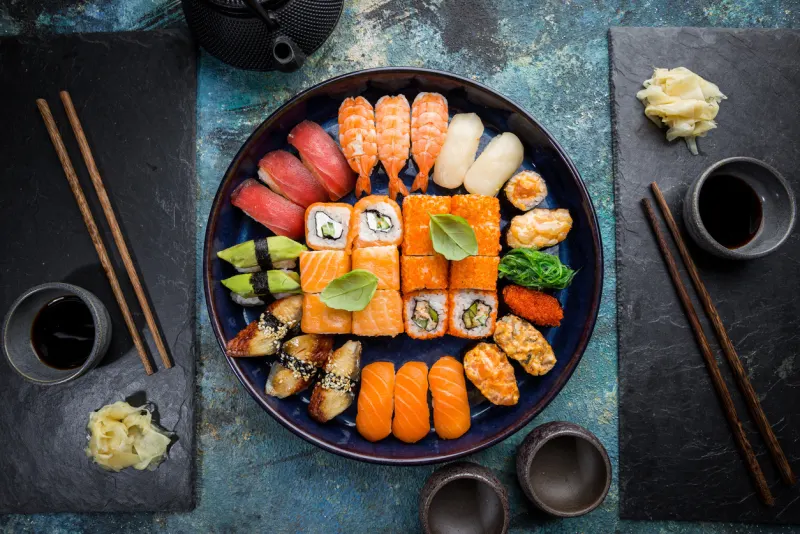
- Sushi — please eat at the counter if you can. The conveyor belt (kaiten-zushi) spots are fun and cheap and excellent for a quick lunch, but sitting at a proper sushi counter and letting the chef make decisions for you is a completely different experience. In Tokyo, you don't need to spend a fortune — a mid-range omakase can cost ¥5,000 to ¥8,000 (around $35–55) and will be extraordinary.
- Convenience store food is genuinely good. This surprises people every time. The onigiri (rice balls) at 7-Eleven, FamilyMart, and Lawson are fresh, cheap, and delicious. The egg salad sandwiches have a devoted global following for a reason. Nikuman (steamed pork buns) are sold from a little hot case near the register. Eat them. You're welcome.
- Izakayas are Japanese gastropubs and the best way to eat like a local in the evening. You order lots of small plates, drink cold beer or highballs, and the food comes out slowly over the course of a long, loud, relaxed evening. Look for packed ones with handwritten menus. If you can't read the menu, point at what the table next to you is having. This strategy works 100% of the time.
#Budget: What Does Japan Actually Cost?
Japan has a reputation for being expensive. That reputation is somewhat outdated.
Here's a realistic daily budget breakdown:
- Budget traveller (hostel, convenience store meals, local transport): ¥6,000–¥9,000 per day / roughly $40–60
- Mid-range traveller (business hotel, sit-down restaurants, some attractions): ¥15,000–¥25,000 per day / roughly $100–165
- Comfortable traveller (ryokan nights, omakase dinners, taxis): ¥40,000+ per day / $265+
The biggest costs are accommodation and the JR Pass if you're using it. Food, transport within cities, and most temple entry fees are genuinely affordable. A bowl of ramen at a local spot costs ¥900–¥1,200. A temple entrance is usually ¥500–¥800. A cold beer from a vending machine is ¥130.
#Practical Stuff Nobody Remembers to Tell You
1. Cash still matters. Japan is modernising rapidly but many smaller restaurants, temples, and rural businesses are cash-only. Keep ¥10,000–¥20,000 in cash on you at all times. ATMs at 7-Eleven and Japan Post accept foreign cards reliably.
2. Pocket Wi-Fi or a data SIM is essential. Google Maps with downloaded offline maps will save your life repeatedly. Rent a pocket Wi-Fi at the airport on arrival or order a SIM card before you leave home.
3. Take off your shoes without being asked. If there's a step up at a doorway and you see shoes lined up, that's your signal. Socks with no holes, please.
4. Queuing is a religion. Stand in line. Don't push. Let people off the train before you get on. Stand on the correct side of the escalator (left side in Tokyo, right side in Osaka — yes, really).
5. Tipping is not a thing. At all. Anywhere. Putting money on the table after a meal is genuinely confusing and sometimes offensive to staff. The service is exceptional because it's a point of professional pride, not because of a financial incentive. Just say "gochisosama deshita" when you leave — it means "thank you for the meal" and servers will love you for it.
6. Learn three phrases: Sumimasen (excuse me/sorry), Arigatou gozaimasu (thank you very much), and Eigo no menyu wa arimasu ka? (do you have a menu in English?). These three phrases will get you surprisingly far.
#A Simple Two-Week Itinerary
Days 1–4: Tokyo (arrive, recover from jet lag, explore neighbourhoods)
Day 5: Day trip to Nikko or Kamakura
Day 6: Bullet train to Kyoto via Mt. Fuji view
Days 7–9: Kyoto (temples, Gion, Arashiyama, Nishiki Market)
Day 10: Day trip to Nara (deer park, Todai-ji temple)
Day 11: Osaka (street food capital of Japan — takoyaki, okonomiyaki, kushikatsu)
Day 12: Day trip to Hiroshima and Miyajima Island
Day 13: Return to Tokyo or fly home from Osaka/Kansai
Day 14: Buffer day — because Japan will make you want one more day, always
Ready to Plan Your Trip?
Turn this itinerary into a seamless experience with expertly designed Japan travel packages.
Citizens of most Western countries including the US, UK, EU nations, and Australia can enter Japan visa-free for up to 90 days for tourism. Always check your specific country's requirements on the Japanese Ministry of Foreign Affairs website before booking.
Japan is consistently ranked among the safest countries in the world for tourists, including solo female travellers. Violent crime is extremely rare, people are helpful even with a language barrier, and getting genuinely lost is more of an adventure than a danger.
Honestly? Very little. Major cities have excellent English signage, most train stations have English announcements, and young Japanese people especially often speak conversational English. A few basic phrases go a long way and are always appreciated.
Ten days is the minimum to feel like you've scratched the surface. Two weeks is the sweet spot for a first visit. Three weeks lets you breathe and explore beyond the Golden Route into places like Hokkaido, Hiroshima, Kanazawa, or the Japanese Alps.
The Shinkansen bullet train is the answer — specifically the Hikari or Nozomi services from Tokyo Station to Kyoto Station. The journey takes between 2 hours 15 minutes and 2 hours 40 minutes depending on the service. Comfortable, fast, reliable, and genuinely thrilling the first time.
More places accept cards now than five years ago, but Japan remains significantly more cash-reliant than Europe or North America. Carry cash as a backup, especially for smaller restaurants, temples, local markets, and rural areas.
Comfortable walking shoes you can slip on and off easily, a portable umbrella (weather changes fast), a money belt or secure bag for cash, and — genuinely — less luggage than you think you need. Laundromats are everywhere, cheap, and easy to use. Pack light and buy the things you forgot at a 100-yen shop when you arrive.
It's improving, especially in cities. Tokyo and Kyoto both have dedicated vegetarian and vegan restaurants. The challenge is that many broths and sauces contain fish stock (dashi) even in dishes that appear vegetarian. Apps like HappyCow help find suitable restaurants, and showing a dietary card written in Japanese to restaurant staff works well.