Table of Contents:
#Why Moroccan Myths Are Unlike Anything You've Heard
#The Two Storytelling Worlds You Can Enter
#Cracking the Symbol Code (So You Know What You're Seeing)
#How These Ancient Stories Survive in Modern Morocco
#Your Step-by-Step Guide to Experiencing Moroccan Storytelling
#Why This Should Matter to You (The Real Talk)
#FAQ'S
Picture this: You're standing in Marrakech's Jemaa el-Fnaa square as the sun dips below the Atlas Mountains, casting everything in golden light. Around you, crowds form circles around various performers, snake charmers, acrobats, and musicians. However, one circle catches your attention differently.
An elderly man in a traditional djellaba stands at the center, speaking rapidly in Arabic. His hands move like they're painting the air. His voice shifts from a whisper to a roar. And the crowd? They're completely mesmerized, leaning forward, gasping, laughing in perfect unison.
You've just stumbled upon something ancient: Moroccan storytelling in its purest form. What you don't know yet is how rare this moment has become, or how these stories have shaped Moroccan culture for over a thousand years.
Let me take you on a journey into Morocco's myths and the incredible traditions that keep them alive.
Here's what blows most travelers' minds: Moroccan myths aren't just bedtime stories or folklore. They're Morocco's original Google, Netflix, and school system rolled into one.
For over 1,000 years before books, before schools, definitely before smartphones, these stories taught kids right from wrong, preserved history that nobody wrote down, and kept Morocco's unique identity alive through empires, invasions, and massive social change.
But here's the cool part: Moroccan stories are completely different from Middle Eastern tales, European fairy tales, or African folklore. Why? Because they're a cultural smoothie blending three distinct traditions you won't find mixed anywhere else on Earth.
The Three Cultural Rivers That Created What You're About to Experience
1. Berber Foundation - The Original Storytellers
The Amazigh (Berber) people lived in Morocco thousands of years before Arabs, Islam, or anyone else showed up. When you meet Moroccans today, about 70% can trace their roots back to Berber ancestry. That's huge.
What Berbers gave Moroccan myths:
- Stories about nature spirits living in mountains and rivers you'll hike through
- Animal characters teach survival wisdom
- Deep oral tradition where memory was everything
- Connection between land and identity
- Mind-blowing fact: The Atlas Mountains you'll see are named after the mythological titan Atlas
2. Arab Literary Tradition - The 7th Century Mix
When Arabs arrived in 700 CE, bringing Islam, something fascinating happened. Instead of erasing Berber culture, they merged with it. Magic happened.
What Arabs added to the stories you'll hear:
- Sophisticated narrative structures that keep you hooked
- Jinn (supernatural beings you'll hear about everywhere)
- Mektoub, the concept that fate is written by GodThe The
- Arabic language is creating a new storytelling vocabulary
- Connection to the broader Islamic world
- Result: Stories that feel familiar to other Arabs but contain unique Berber elements
3. African Spice - The Trans-Saharan Secret Ingredient
Morocco sits at the northern end of ancient trans-Saharan trade routes. For centuries, merchants from Mali, Senegal, and across West Africa brought not just gold and salt, but storytelling styles, rhythms, and characters.
What African traditions contributed:
- Performance styles with call-and-response, you can participate in
- Rhythmic elements that make stories almost musical
- Character types you won't find in Middle Eastern or European stories
- Musical accompaniment traditions
- Why it matters: This makes the myths you'll encounter truly unique, not Arab, not Berber, not African, but Moroccan
Explore our carefully designed Morocco travel packages and step into a journey where history, culture, and living stories unfold around you. Your place in Morocco’s timeless narrative is waiting.
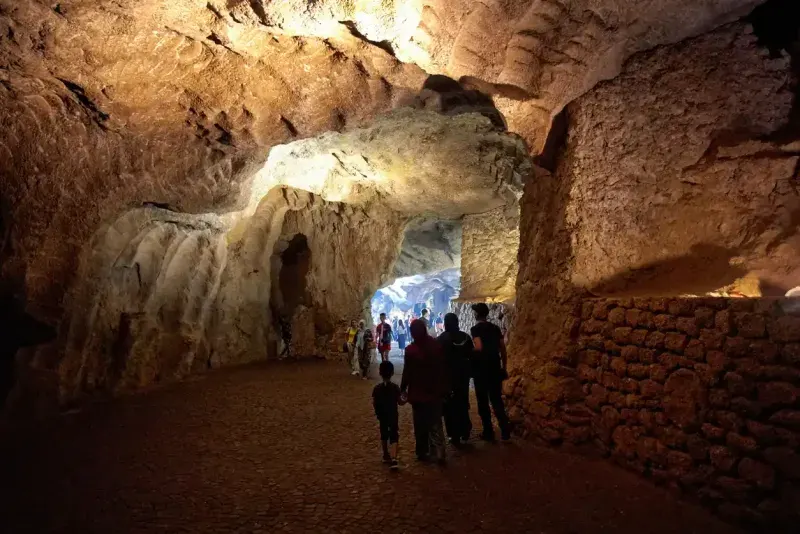
Grotto Hercules, Tangier, Morocco
Does Morocco have mythology?
Yes, Morocco has a rich mythology blending Berber, Arab, Islamic, and African traditions. You'll find stories about jinn (supernatural beings), Aicha Kandicha (female demon), ancient Berber deities, and protective spirits. These myths influence daily life through Hand of Fatima symbols, evil eye beliefs, and cultural practices across Morocco.
What are some famous myth stories?
Famous stories include: Aicha Kandicha (demon seducing men near water), Seven Sleepers of Ephesus (cave sleepers waking centuries later), Hercules and Antaeus (Hercules defeating giant in Tangier), and Sahara jinn (desert spirits granting wishes). These teach moral lessons and explain natural phenomena.
What is the mythical creature of Morocco?
Aicha Kandicha (Aisha Qandisha) is Morocco's most famous creature—a powerful female jinn appearing as a beautiful woman near water, then revealing monstrous form to seduce men. Other creatures include shapeshifting jinn, ghouls in cemeteries, and protective spirits guarding kasbahs.
Here's what makes Moroccan storytelling fascinating: it exists in two parallel universes that rarely overlap. And you can experience both if you're lucky.
The Halqa: Your Ticket to Ancient Performance Art
Remember that circle in Jemaa el-Fnaa? That's called a halqa, literally "circle" in Arabic. This is public, theatrical, male-dominated storytelling at its finest.
What you'll see when you find one:
The storyteller (hakawati) isn't just talking. He's performing. Watch his hands, they're literally drawing mountains, rivers, and palaces in the air. Listen as his voice transforms:
- Deep and menacing for the villain
- High and sweet for the princess
- Growling and snarling for animals
- Whispering for secrets
- Shouting for battles
The audience participates too:
- They respond in unison to certain phrases (you can learn these!)
- They gasp at dramatic reveals
- Kids bounce with excitement in the front row
- Everyone leans forward during suspenseful parts
- People genuinely cry at sad moments
These performances last 30 minutes to 2 hours. You'll hear historical battles, moral fables, supernatural adventures with jinn and magic, all performed with zero props, just pure storytelling skill.
Here's the heartbreaking truth you need to know:
A decade ago, Jemaa el-Fnaa had 10-20 active storytellers. Today? Only 3 remain.
If you meet Mohamed, 73 years old, who learned from his father, who learned from his grandfather, consider yourself incredibly privileged. "Young people don't want to learn anymore," he tells visitors through translators. "They watch Turkish TV series on their phones. Why memorize 100 stories when you can scroll?"
You're witnessing a dying art. Go. Now. While you still can.
Bedtime Tales: The Secret Tradition You Might Experience
While halqa dies in public squares, another tradition thrives every single night in Moroccan homes, and if you stay in the right place, you might get invited in.
Picture this: You're a guest at a family home in Fes. After an incredible dinner of tagine and couscous, a 6-year-old gets ready for bed. Her grandmother settles into the room. The lights dim. She begins speaking softly in Darija (Moroccan Arabic).
You won't understand the words, but watch that little girl's face. Eyes wide. Hanging on every syllable. This nightly ritual is as important as dinner, as sacred as prayer.
"My grandmother told me these same stories," your host whispers. "My mother is now telling them to my daughter. It's how we pass down who we are."
Key differences from halqa:
- Duration: 10-15 minutes (versus hours)
- Delivery: Gentle and intimate (versus theatrical)
- Purpose: Clear moral lesson for a specific child
- Characters: Usually animals with human traits
- Setting: Bedroom or family room (versus public square)
- Status: Still thriving (versus nearly extinct)
While you're sleeping in your riad, in homes all around Morocco, grandmothers are keeping Moroccan myths alive one bedtime story at a time.
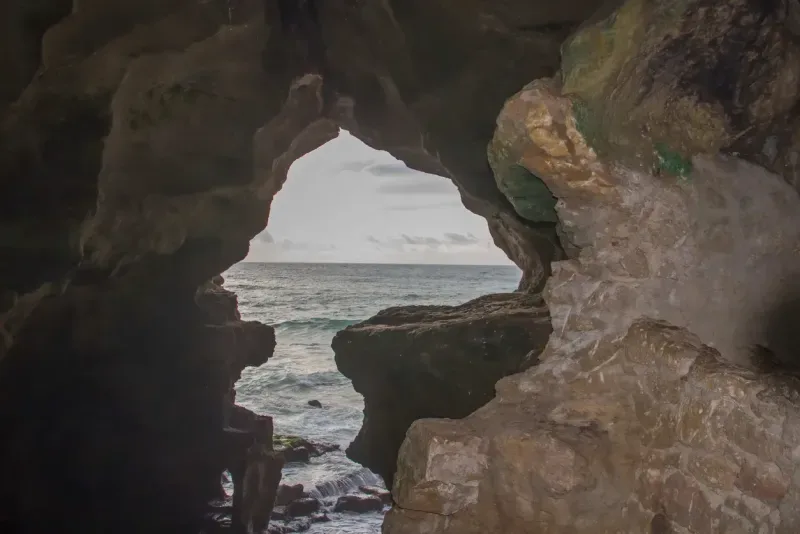
Caves of Hercules Cape Spartel, Tangier
What are the traditional tales of Morocco?
Traditional tales include: Joha/Goha (wise trickster stories), Lalla Mira (generous woman blessed), Sidi Rahal (saint controlling storms), Atlas Mountain shepherd tales, Saharan jinn encounters, Berber origin myths, and One Thousand and One Nights stories teaching hospitality and cleverness.
What is the most famous folktale?
Cinderella is the most famous globally, with 500+ versions across cultures. Other famous folktales include Little Red Riding Hood, Snow White, Sleeping Beauty, Hansel and Gretel, and Beauty and the Beast. In Morocco, Joha the Wise Fool stories are most beloved.
Customize Your Dream Vacation!
Get in touch with our local experts for an unforgettable journey.
Plan Your Trip
Once you know what to look for, every animal, spirit, and symbol in Moroccan myths tells a story within the story. Here's your decoder ring:
The Animal Kingdom's Secret Language
| Animal |
What It Really Means |
Where You'll See It |
Why It Matters |
| Scarab Beetle |
Protection from evil spirits |
Jewelry in every souk |
Moroccans wear these for actual protection |
| Butterfly |
Feminine beauty & grace |
Henna designs at weddings |
Represents transformation |
| Camel |
Endurance through hardship |
Throughout desert stories |
Ultimate survival symbol |
| Lion |
Courage & leadership |
Heroes and kings |
Always the noble character |
| Hedgehog |
Cleverness beats strength |
Trickster tales |
Your favorite character, guaranteed |
| Dove |
Peace & fertility |
Released at celebrations |
Brings divine blessings |
When you hear a story featuring these animals, you're not just hearing entertainment; you're learning a moral lesson that Moroccan kids have absorbed for centuries.
Meeting the Jinn: Morocco's Supernatural Neighbors
Okay, forget everything Disney taught you about genies. In Morocco, jinn are serious business.
What you absolutely need to know:
Most Moroccans you meet are educated doctors, modern business people, and young university students who believe jinn are 100% real. Not metaphorical. Not symbolic. Real spiritual beings are mentioned in the Quran.
The basics:
- Created by Allah from "smokeless fire."
- Live parallel lives alongside humans
- Usually invisible, but can appear in various forms
- Inhabit natural places: wells, caves, old trees, crossroads
- Can be Muslim, Christian, Jewish, or non-religious
- Some help humans, some ignore us, some actively harm us
Why this matters to you as a traveler:
You'll notice Moroccans avoiding certain locations after dark. You'll hear warnings about specific wells or caves. You'll see protective rituals. This isn't quaint folklore; this is active belief shaping daily behavior around you.
Aisha Kandisha: The Spirit You'll Hear About Everywhere
Every culture has that one supernatural figure everyone knows. For Morocco, it's Aisha Kandisha, and her story reveals how powerful these beliefs remain.
Who/what she is:
- Female jinn living near water sources (rivers, wells, springs)
- Sometimes appears as a stunningly beautiful woman
- Other times, as a creature with goat legs (terrifying)
- Seduces men who come to the water alone
- Can drive people mad or drown them
- Represents the danger of following temptation
Real-world impact you'll see:
Parents genuinely warn their sons: "Don't be like the man who followed Aisha Kandisha, "meaning don't be stupid enough to chase temptation.
Many Moroccans won't visit certain rivers after dark because "that's where Aisha Kandisha lives." You'll hear her referenced in conversations, movies, TV shows, and even jokes.
Modern Moroccan horror films feature her as the antagonist. Feminists debate whether she represents female power or male fear of women. Artists use her image in contemporary work.
She's not just a story; she's a living part of Moroccan culture you'll encounter repeatedly.
Mektoub: The Concept You'll Hear 100 Times a Day
Get ready to hear one word constantly during your Morocco trip: Mektoub (pronounced "mek-TOOB"). It means "it is written," and it's absolutely central to understanding Moroccan storytelling and Moroccan life.
What it means:
God has already written your fate. Everything that happens to you, good, bad, tragic, or wonderful, was predetermined before you were born. You can't change it. You can only accept it.
How it shows up in every story you'll hear:
- Character receives prophecy of doom → tries to avoid it → actions cause it to happen anyway
- Poor person becomes wealthy "because it was written."
- Tragedy strikes despite precautions "because it was written."
- Lovers separated, then reunited "because it was written."
- Hero succeeds against impossible odds "because it was written."
How you'll hear it in daily life:
Someone's shop floods: "Mektoub."
Someone gets a great job: "Mektoub, it was written for me."
Someone misses a flight that later crashes: "Mektoub saved me."
Someone loses a loved one: "Mektoub. It was their time."
The fascinating debate you'll witness:
Ask older, traditional Moroccans, and they'll say: "Mektoub gives me peace. When bad things happen, I know it's part of a divine plan. When good things happen, I'm grateful."
Ask younger, educated Moroccans, and some will say: "Mektoub makes people passive. It's an excuse not to try, not to change things, not to fight injustice."
You're watching a culture grapple with an ancient belief in real-time. It's fascinating.
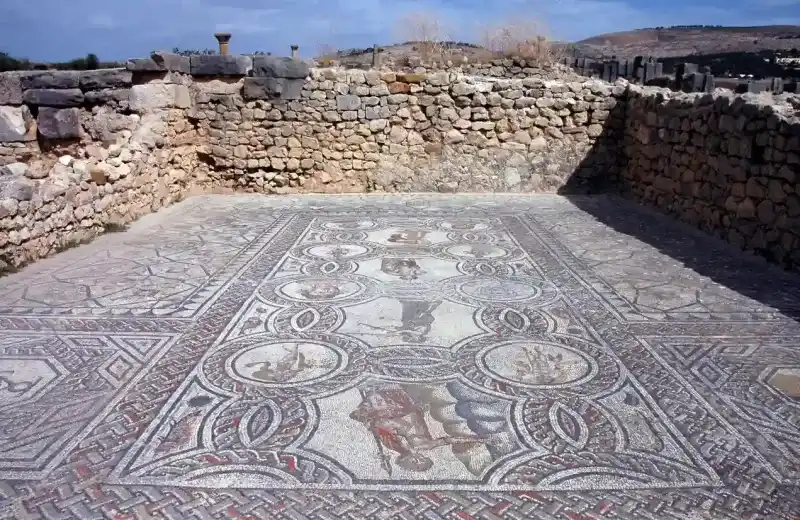
Archaeological site of Volubilis in Morocco
What is the 13th fairy story?
The 13th fairy appears in Sleeping Beauty. Parents invite 12 fairies but forget the 13th. The uninvited 13th fairy curses the baby to die on her 15th birthday by pricking her finger. The 12th fairy softens it to 100-year sleep instead.
What is the most popular mythology?
Greek mythology is most popular globally (Zeus, Athena, Hercules). Other popular mythologies include: Norse (Thor, Odin), Egyptian (Ra, Osiris), Roman (Jupiter, Mars), Hindu (Brahma, Vishnu), Japanese (Amaterasu), and Celtic (Dagda, Morrigan).
You might think Moroccan myths are dusty museum pieces you'll only read about. Wrong. They're alive, evolving, and you can experience their modern forms everywhere.
From Street Circles to Cinema Screens
What you'll find in Moroccan movies and TV:
When you browse Moroccan Netflix or catch local TV, you'll discover directors weaving folklore into contemporary plots. Nabil Ayouch is the master at this. Horror films feature Aisha Kandisha as the villain (and they're genuinely creepy). Children's animated films bring animal fables to life with gorgeous visuals.
"Hikayat Biladi" (Stories of My Country) is an animated TV series using modern animation to bring classic Moroccan myths to life. You'll see Moroccan kids glued to it in cafes, kids who'd never sit through a two-hour halqa performance.
Historical dramas recreate traditional storytelling scenes. Documentary series races to preserve aging hakawatis on film before they die.
Where to watch:
- Moroccan Netflix section has a folklore category
- YouTube channels dedicated to animated myths
- Some videos have millions of views
- Subtitles are usually available in French and English
The Digital Revolution You Can Participate In
Here's something that might surprise you: the last traditional storytellers are on YouTube, Instagram, and TikTok.
What you'll find online:
Search for Mohamed the storyteller, and you'll find his performances with millions of views. Young Moroccan creators adapt thousand-year-old tales into 60-second TikToks. Instagram accounts share beautifully illustrated versions of classic stories.
The "Hikayat Morocco" project has digitally cataloged hundreds of regional story variations. You can search them, listen to recordings, and watch videos. Publications of traditional Berber oral stories have increased 15% over the last three years.
How you can help:
When you attend performances, ask permission to film and share online (always tip first). Follow Moroccan folklore accounts and share their content. The tag Morocco tourism accounts for raising awareness.
You're not just consuming, you're participating in digital preservation.
Festivals Where You Can Experience Living Tradition
The Marrakech Popular Arts Festival (Your Best Bet):
Every summer, entire stages are dedicated to traditional storytellers. Here's what you'll experience:
- Multiple hakawatis performing throughout the day
- Young performers competing for prizes
- Workshops where you can learn basic techniques
- Explanations in multiple languages
- A mix of Moroccan families and international tourists
- Deliberate, organized cultural preservation
What you'll witness:
Moroccan parents bring their children specifically to watch storytellers, explaining, "This is your heritage. This is who we are." You're not just observing culture, you're watching it being actively passed to the next generation.
Other festivals featuring storytelling:
- Fes Festival of World Sacred Music (June)
- Village festivals throughout Morocco (year-round)
- School cultural days (if you know a teacher, ask about attending)
- Museum exhibitions with live demonstrations
Education System Keeping It Alive
Here's something hopeful: Morocco's Ministry of Education now requires folklore in the school curriculum.
What this means for you:
When you chat with young Moroccans, they're learning famous tales in school. They're taking field trips to see live storytellers. They're interviewing their grandparents about childhood stories as school projects.
The government finally recognized: let these stories die in schools, and they die everywhere.
You're visiting Morocco at a turning point, where old traditions meet modern preservation efforts. It's a privilege to witness.
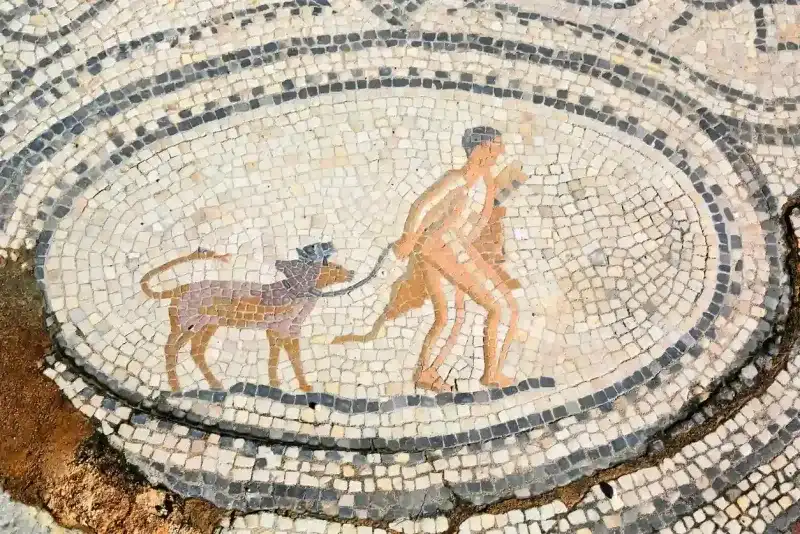
Twelfth Labour of Hercules, mosaic in Volubilis, Morocco
What are the 10 classic fairy tales?
The 10 classics are: Cinderella, Little Red Riding Hood, Snow White, Sleeping Beauty, Hansel and Gretel, Beauty and the Beast, Rapunzel, The Little Mermaid, Rumpelstiltskin, and Jack and the Beanstalk.
What is the oldest fairy tale ever?
The Smith and the Devil is the oldest, dating back 6,000 years to the Bronze Age. Other ancient tales include Beauty and the Beast (4,000 years) and Rumpelstiltskin (4,000 years). Many fairy tales have prehistoric oral tradition roots.
Okay, you're sold. You want to experience this before it disappears. Here's exactly how to make it happen:
Step 1: Hunt for Halqa in Jemaa el-Fnaa
When to go:
Late afternoon into evening (5 pm-10 pm works best). Storytellers prefer cooler temperatures and larger crowds.
How to find them:
Walk around the square. Look for the largest circles of people sitting on the ground. You'll know it when you see it. The crowd's body language is unmistakable.
What to do:
- Approach quietly if a story's already in progress
- Sit at the outer edge of the circle
- Get comfortable, you might be there a while
- Watch the storyteller's hands painting scenes
- Observe the audience's faces for cues
- Let yourself get absorbed even without understanding words
Cultural etiquette (please follow this):
- Arrive quietly if the story is in progress
- Sit in the outer circle if you're late
- Absolutely no talking during performance
- Turn phone to silent (seriously)
- Tip 10-20 dirhams at the end ($1-2 USD)
- Ask before filming close-ups
- Don't leave mid-story (incredibly rude)
- Applaud at natural breaks
Reality check you need:
With only 2-3 active storytellers left, they're not always performing. Ask your riad/hotel to call ahead if possible. Some days you'll find them, some days you won't. That's part of the experience, you're chasing something rare.
Step 2: Arrange a Private Family Storytelling Experience
How to make this happen:
When you're booking your riad or hotel, specifically ask: "Can you arrange a traditional grandmother storytelling session?" Some traditional guesthouses have connections with local families who'll welcome you (for a modest fee).
What you're asking for:
- Private session with Moroccan grandmother
- Translation provided
- Usually 30-45 minutes total
- Often includes mint tea
- Sometimes in the family home, sometimes at the riad
Why it's worth the effort:
This is intimate, authentic, and increasingly rare. You'll sit with a woman who learned these stories from her grandmother, who learned from hers. You're entering a tradition that goes back centuries, experiencing it exactly as Moroccan children do.
Cost: Negotiable, usually modest (100-200 dirhams plus tip). Always bring a small gift for the grandmother; dates, pastries, or tea are perfect.
Step 3: Time Your Visit for Festivals
The Marrakech Popular Arts Festival:
- When: Usually June-August (check exact dates)
- What: Organized storytelling performances with multiple languages
- Why: Much more tourist-friendly than spontaneous halqa
- How: Buy tickets in advance online or at the venue
- Bonus: Other cultural performances, crafts, and music all in one place
Planning tip: If storytelling is important to you, plan your entire Morocco trip around this festival. It's that good.
Step 4: Book a Cultural Tour That Includes Storytelling
What to look for:
When you're researching Morocco tours, specifically search for:
- "Cultural immersion tours"
- "Traditional storytelling experiences"
- "Moroccan folklore tours"
- "Authentic local experiences"
What you get:
- Transportation to/from storytelling locations
- Expert guide providing cultural context
- Translation during performances
- No stress about finding locations or navigating language barriers
- Often combined with other cultural experiences (cooking classes, artisan workshops, etc.)
Best for: Travelers who want guaranteed storytelling access without the uncertainty of hunting for random halqa performances.
What is the number 7 in fairy tales?
The number 7 symbolizes completeness and magic: Seven Dwarfs (Snow White), seven-league boots, seven brothers, seventh son, seven years (curses), seven trials, and seven seas. In many cultures, 7 represents spiritual perfection.
Do fairy tales still exist?
Yes! You'll find them in modern books, Disney/Pixar movies, Netflix shows, video games, and theater. New fairy tales are constantly created (Frozen, Shrek), while classics get reimagined. Cultures worldwide continue passing down traditional stories to children through oral storytelling.
Look, you could visit Morocco, hit the famous spots, take Instagram photos at blue doors, eat some tagine, and call it a day. Thousands of tourists do exactly that.
But when you sit in that storytelling circle, even not understanding a word, something shifts.
Here's what clicked for me (and what might click for you):
These stories explain everything you're seeing around you:
Why do Moroccans approach fate with such grace? Mektoub teaches acceptance.
Why do family bonds seem deeper here? Stories reinforce collective identity over individualism.
Why is respect for elders absolute? Grandmothers are the keepers of cultural wisdom.
Why does hospitality to a stranger feel sacred? Stories teach that helping travelers brings blessings.
Why are natural spaces treated with reverence? Jinn might live there, and you don't mess with jinn.
You're not just hearing stories. You're getting a master class in Moroccan cultural DNA.
What's Actually at Stake
When Mohamed the storyteller finishes a performance, he always states the moral explicitly: "This story teaches us that cleverness beats strength." "This story shows that generosity is always rewarded." "This story reminds us that we cannot escape our fate."
In the rapidly modernizing Morocco, you're visiting smartphones everywhere, Turkish TV dominating, young people looking West, these stories anchor people to something older and deeper than trends.
A 6-year-old girl told me (through her mother's translation, in surprisingly good English): "When my grandmother tells me stories, I feel like I'm part of something really, really old."
That thread connecting modern Moroccans to 1,000+ years of ancestors who found meaning in identical tales is what's at risk.
And you have the chance to witness it, support it, and be part of keeping it alive.
When you tip that storyteller, you're not just being polite. You're voting with your wallet that this matters. When you share videos online (with permission), you're creating awareness. When you bring your kids to watch (if you have them), you're teaching them that culture is valuable.
Every tourist who seeks out storytelling sends a message: this is worth preserving.
Q: Are these stories really over 1,000 years old?
Yes. When you hear Moroccan myths, you connect with Berber traditions that predate written history. The blended form you experience today has evolved over 1,000 years since the 7th century.
Q: Do Moroccans you meet actually believe in jinn?
Yes, many do. You’ll notice people avoiding certain places at night or respecting jinn-related warnings. Since jinn appear in the Quran, they’re viewed as real spiritual beings, not folklore.
Q: Why are there only three storytellers left in Marrakech?
Because modern entertainment replaced traditional arts. TV, smartphones, low income, and long apprenticeships pushed storytelling to the edge, making you witness one of its final generations.
Q: Can you understand storytelling without speaking Arabic?
Absolutely. You follow the story through gestures, facial expressions, voice changes, and audience reactions. Many tours also provide translation, making it easy to understand.
Q: What’s the best time to see traditional storytelling?
Visit Jemaa el-Fnaa between 5 and 10 pm. Summer festivals like the Marrakech Popular Arts Festival offer organized performances, while private storytelling requires advance arrangements.
Q: How can I support this dying art?
- Attend performances and tip generously (20+ dirhams minimum)
- Ask permission to film, then share online to raise awareness
- Book tours that include storytelling (vote with your wallet)
- Tell your riad/hotel you specifically want storytelling experiences
- Follow and share Moroccan folklore social media accounts
- Bring your children if you have them (show demand for family experiences)
- Most importantly: GO. Experience it. While you still can.
Q: Will you keep hearing about “Mektoub”?
Yes, constantly. Mektoub means “it is written,” and you’ll hear it used to accept fate in daily life and storytelling. It’s central to understanding Moroccan culture.
Q: Are Moroccan myths different from those of other Arab countries?
Completely. You experience a unique blend of Berber, Arab, and African traditions that exists only in Morocco, creating a storytelling style you won’t find anywhere else.
Ready to Step Into Morocco's Living Mythology?
Here's the truth: some of your most powerful travel memories won't come from famous monuments or Instagram-perfect views. They'll come from moments like sitting in a storytelling circle as the sun sets, watching an ancient art that might not survive another decade.
You could visit Morocco and never know this world exists. Alternatively, you could seek it out, ask your riad to arrange a grandmother's tale session, hunt for the last hakawatis in Jemaa el-Fnaa, or time your trip to coincide with the storytelling festival.
These stories survived empires, invasions, colonization, independence, modernization, and globalization. They've adapted from pure oral tradition to written form, from market squares to YouTube, from halqa circles to cinema screens.
But the heart remains unchanged: humans gathering to share tales teaching us how to live well, love deeply, and face our fates with grace.
That's worth experiencing before it disappears.
Begin planning your journey into Morocco's rich storytelling heritage. The last chapter is being written now. Be part of it.