Table of Contents:
#Are There Any Special Holidays in Morocco?
#Understanding Morocco's Two Holiday Systems
#Fixed Morocco National Holidays: Month by Month
#Islamic Holidays: The Movable Celebrations
#Best Times to Visit Morocco: Holiday Strategy
#Morocco Holiday Travel Tips: Making It Work
#Planning Your Perfect Morocco Holidays
#Final Thoughts: Morocco Holidays Enhance Your Trip!
Planning Morocco holidays and wondering when Moroccans celebrate? Curious whether public holidays in Morocco will affect your trip? You're in exactly the right place!
Morocco's calendar is FASCINATING, a vibrant tapestry weaving together Islamic religious observances, royal celebrations, independence commemorations, and even Indigenous Berber traditions. Understanding Morocco's national holidays isn't just about knowing when banks close; it's about experiencing the country when culture shines brightest, streets fill with celebrations, and Moroccan heritage comes alive.
But here's what travel guides won't tell you. Some holidays create AMAZING cultural experiences worth planning your entire trip around, while others can seriously disrupt your travel plans if you're unprepared.
Let me walk you through EVERY significant holiday you'll encounter during your Moroccan holidays, what they mean, how Moroccans celebrate, and, most importantly, how to plan smartly so holidays enhance rather than complicate your Moroccan adventure.
Ready? Let's dive into Morocco's incredible holiday calendar!
Yes, Morocco has numerous special holidays blending cultural, historical, and religious traditions.
Morocco's holiday calendar operates on TWO systems simultaneously, creating a complex but fascinating mix:
Fixed National Holidays:
- January 1: New Year's Day
- January 11: Proclamation of Independence Day (1944 manifesto)
- January 14: Amazigh New Year (Yennayer Indigenous Berber calendar)
- May 1: Labour Day
- July 30: Throne Day (King's enthronement celebration)
- August 14: Oued Ed-Dahab Day
- August 20: Revolution Day (King and People's Revolution)
- August 21: Youth Day (King Mohammed VI's birthday)
- October 31: Unity Day
- November 6: Green March Day (1975 Green March)
- November 18: Independence Day (from France)
Islamic Holidays (dates change yearly, lunar calendar):
- Eid al-Fitr (end of Ramadan)
- Eid al-Adha (Feast of Sacrifice)
- Islamic New Year
- Mawlid (Prophet Muhammad's birthday)
Islamic holidays are the most culturally vibrant, with family gatherings, feasts, traditional clothing, and celebrations throughout Morocco.
Why this dual calendar matters: You can plan around fixed Moroccan national holidays easily, but Islamic celebrations shift approximately 11 days earlier each year, sometimes landing in completely different seasons!
Plan Perfect Morocco Holidays with Expert Guidance!
Ready to experience Morocco's vibrant celebrations? Our Morocco travel packages include expert timing advice, cultural holiday experiences, and seamless logistics even during festival periods. Let us help you plan around public holidays for authentic, unforgettable adventures!
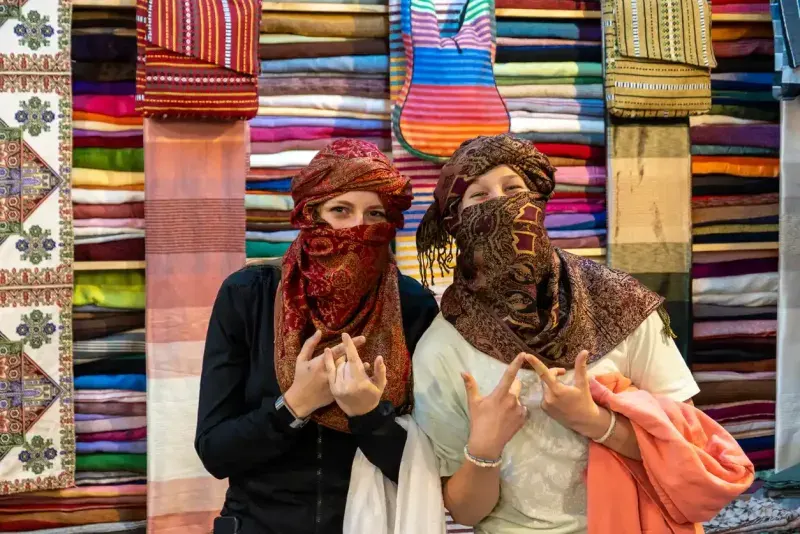
Shopping in the media of Fez
Let me explain why Morocco's holiday calendar seems complicated (and how to navigate it successfully):
Fixed Holidays: Same Date Every Year
These public holidays in Morocco follow the Gregorian calendar (the regular calendar you use). They commemorate:
- Morocco's journey to independence
- The monarchy and royal milestones
- Historical turning points
- Cultural heritage (like the Amazigh New Year)
Planning advantage: You can look at a calendar right now and know EXACTLY when these occur. Easy!
Islamic Holidays: Dates Change Yearly
These follow the Islamic lunar calendar (Hijri calendar), which is about 11 days shorter than the Gregorian calendar.
What this means: Islamic Morocco holidays move earlier each year. Ramadan might be in June one year, May the next, then April, gradually cycling through all seasons over about 33 years.
Planning challenge: You CANNOT assume last year's dates apply! Always check current-year Islamic holiday dates before booking.
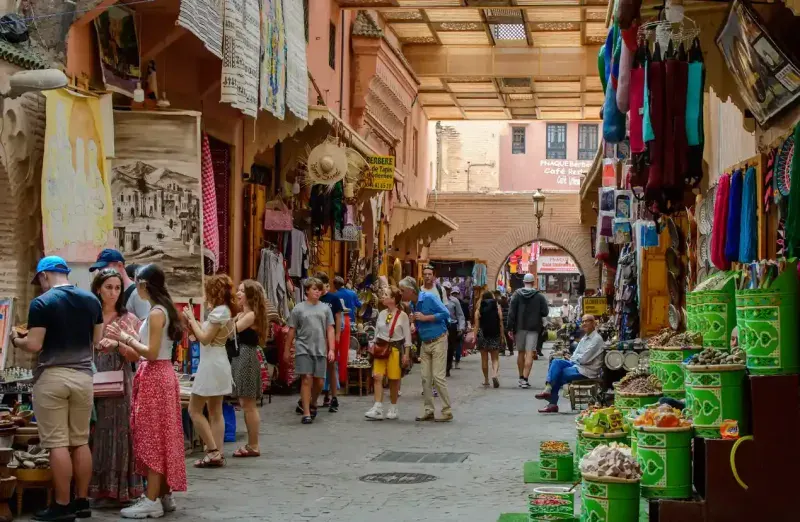
Tourists visiting Marrakech medina souks in a sunny day
Customize Your Dream Vacation!
Get in touch with our local experts for an unforgettable journey.
Plan Your Trip
Let me break down each fixed Moroccan national holiday, what it celebrates, and how it affects your travel:
January 1: New Year's Day
What it is: Morocco joins the world in celebrating the Gregorian New Year.
What happens:
- Banks and government offices closed
- Urban areas (Marrakech, Casablanca, Rabat) have celebrations
- More subdued than Western New Year's (Muslim-majority country)
- Hotels often host special New Year's Eve dinners
Traveler impact:
- Hotels and tourist restaurants remain open
- Major attractions operate normally
- Government services unavailable
- Higher hotel prices in major cities
My take: A manageable holiday with a festive atmosphere, but expect premium pricing for accommodations!
January 11: Proclamation of Independence Day
What it commemorates: The 1944 Independence Manifesto, which demanded Morocco's freedom from French and Spanish colonial rule. This document launched Morocco's organized independence movement.
What happens:
- Official ceremonies
- Patriotic displays
- Some government offices are closed
- Moroccan flags were displayed prominently
Traveler impact:
- Tourist sites remain open
- Minimal disruption to travel plans
- Great photo opportunities (flags everywhere!)
- Some government services closed
My take: Adds cultural flavor without causing problems, actually enhances the experience!
January 14: Amazigh New Year (Yennayer)
What it celebrates: The Indigenous Berber/Amazigh people's New Year, marking the start of their traditional calendar.
Cultural significance: Morocco officially recognized this recently, honoring the country's Berber heritage (Berbers are North Africa's indigenous population, predating Arab arrival by thousands of years).
What happens:
- Berber communities celebrate with traditional foods
- Special music and cultural performances
- Family gatherings
- Traditional clothing displayed
- In Berber regions (Atlas Mountains, southern Morocco): vibrant cultural celebrations
Traveler impact:
- AMAZING cultural immersion opportunity!
- Witness authentic Berber celebrations
- Traditional dishes prepared specially
- Some Berber riads/hotels host special Yennayer events
- Minimal service disruption
My take: INCREDIBLE time to visit Berber villages and Atlas Mountains! You'll experience authentic cultural celebrations rarely accessible to tourists.
May 1: Labour Day
What it is: International Workers' Day, celebrated worldwide.
What happens:
- Most businesses closed
- Banks closed
- Government offices closed
- Some tourist sites reduced hours
Traveler impact:
- Hotels and major tourist attractions typically open
- Banking services unavailable
- Some restaurants closed
- Reduced public transportation
My take: Plan if you need banking or government services. Otherwise, manageable!
July 30: Throne Day
What it commemorates: King Mohammed VI's ascension to the throne (July 30, 1999).
Why it's HUGE: The monarchy is central to Moroccan identity. Throne Day celebrates the king's leadership and Morocco's stability.
What happens:
- MAJOR national celebration (one of Morocco's BIGGEST holidays!)
- Official ceremonies in Rabat (capital)
- Royal speeches broadcast nationwide
- Parades and cultural events
- Fireworks in major cities
- Decorative lights throughout cities
- Moroccan flags EVERYWHERE
- Festive atmosphere nationwide
Traveler impact:
- Incredible cultural experience!
- Beautiful decorations (amazing photos!)
- Hotels/restaurants remain open (often with special menus)
- Celebratory atmosphere throughout the country
- Government offices and banks are closed
- Some businesses closed/reduced hours
- Higher accommodation demand
My take: One of the BEST times to experience Morocco holidays! The celebration is genuine, vibrant, and welcoming to visitors. BUT book accommodations 2-3 months ahead Moroccans travel during this holiday, creating high demand!
August 14: Oued Ed-Dahab Day
What it commemorates: The 1979 reintegration of the Oued Ed-Dahab region (southern Morocco/Western Sahara).
Political context: Relates to Morocco's claim over Western Sahara (disputed territory).
What happens:
- More significant in southern Morocco
- National recognition, but smaller-scale than major holidays
- Some official ceremonies
Traveler impact:
- Minimal impact on tourism activities
- Life continues normally in tourist areas
My take: Unless you're in southern Morocco, you'll barely notice this holiday.
August 20: Revolution Day (King and People's Revolution)
What it commemorates: The 1953 exile of King Mohammed V by French colonial authorities and the Moroccan people's resistance that followed.
Historical significance: When France exiled the beloved king, Moroccans protested massively, demonstrating the unity between the monarchy and citizens that eventually led to independence.
What happens:
- National holiday
- Ceremonies honoring the independence struggle
- Patriotic displays
- Some closures
Traveler impact:
- Tourist activities are largely unaffected
- Government offices closed
My take: Adds historical context without major disruptions.
August 21: Youth Day
What it celebrates: King Mohammed VI's birthday (born August 21, 1963).
What happens:
- Celebratory atmosphere
- Youth-focused events
- Official ceremonies
- National recognition
Traveler impact:
- Festive atmosphere
- Tourist services continue
- Some government services closed
IMPORTANT NOTE: Coming immediately after Revolution Day, these consecutive public holidays in Morocco create an extended celebration period. Many Moroccans take vacation time to expect higher domestic tourism and book accommodations early!
October 31: Unity Day
What it commemorates: UN Resolution 2797 related to Western Sahara and national unity themes.
What happens:
- National observance
- Official events
- Government closures
Traveler impact: Limited impact on tourism.
My take: Won't significantly affect your Morocco holidays.
November 6: Green March Day
What it commemorates: The 1975 Green March, when 350,000 unarmed Moroccan civilians marched into Western Sahara to reclaim the territory from Spanish control.
Why "Green March"? Participants carried Moroccan flags and Qurans, making it a "green" (Islamic) peaceful march rather than a military invasion.
What happens:
- MAJOR patriotic celebration!
- Parades throughout the country
- Speeches and historical programming
- National pride displays
- Moroccan flags everywhere
- Historical documentaries on TV
Traveler impact:
- Tourist sites remain open
- Strong patriotic atmosphere (culturally interesting!)
- Beautiful flag displays
- Government services closed
- Some transportation affected
My take: Fascinating historical commemoration with visible national pride worth experiencing!
November 18: Independence Day
What it commemorates: Morocco's official independence from France (November 18, 1956).
Why it's HUGE: This is THE independence celebration of Morocco's birthday as a modern nation!
What happens:
- MASSIVE national celebration (rivals Throne Day!)
- Official ceremonies nationwide
- Parades and cultural events
- Fireworks in major cities
- Schools closed
- Government offices closed
- Festive decorations everywhere
- Street celebrations
- Patriotic music and displays
Traveler impact:
- WONDERFUL cultural experience!
- Streets are beautifully decorated
- Celebratory atmosphere
- Special cultural events
- Tourist restaurants/hotels remain open (special offerings)
- Some business closures
- Higher accommodation demand
- Premium pricing
My take: One of the BEST times to experience Moroccan patriotism and national pride! However, book accommodations 2-3 months ahead—this is a major domestic travel period. The festive atmosphere makes it totally worth planning Morocco holidays around this date!
Woman enjoying in coffee outside Mediterranean house
Now let's tackle the holidays that shift each year. These public holidays in Morocco follow the Islamic lunar calendar:
Islamic New Year (Hijri New Year)
What it is: First day of Muharram, the first month in the Islamic calendar.
What happens:
- Religious observance
- More contemplative than celebratory
- Some people fast
- Mosque visits
- Reflection on the year ahead
Traveler impact:
- Minimal disruption
- Most tourist activities continue normally
- Interesting cultural observation opportunity
2026 approximate date: June (confirmed by moon sighting closer to date)
Mawlid (Prophet Muhammad's Birthday)
What it celebrates: The birth of Prophet Muhammad, one of Islam's most joyous celebrations!
What happens:
- Special prayers at mosques
- Quran recitations
- Charity giving (important Islamic principle)
- Traditional sweets are shared among families/neighbors
- Children receive gifts
- Community gatherings
- Festive meals
Cultural significance: Deeply meaningful religious holiday combining devotion with joy.
Traveler impact:
- Festive, welcoming atmosphere
- You might receive traditional sweets from locals!
- Beautiful cultural experience
- Tourist services continue
- Some businesses may close early
- Respectful behavior around mosques is essential
Pro tip: If locals offer you traditional sweets, accept graciously; it's a gesture of hospitality and cultural sharing!
2026 approximate date: September (confirmed by lunar calendar)
Eid al-Fitr (Festival of Breaking the Fast)
What it celebrates: The END of Ramadan (the month-long dawn-to-sunset fasting)!
Why it's MASSIVE: After 30 days of fasting, Eid al-Fitr is like Christmas, Thanksgiving, and New Year's rolled into ONE! It's Morocco's most joyous celebration.
What happens:
- Special morning prayers at mosques
- Families gather for elaborate celebratory meals
- New clothes purchased (especially for children)
- Gifts exchanged among family members
- Charity given to the poor (Zakat al-Fitr religious obligation)
- Three-day official celebration (festivities extend longer)
- Traditional sweets and special dishes are prepared
- Visiting relatives and friends
- Children playing in new clothes
- General joy and celebration!
Traveler considerations:
PROS:
- Incredible cultural experience
- Festive atmosphere throughout Morocco
- Special traditional foods available
- Genuine celebration and happiness
- Amazing if invited to family celebrations
CONS:
- Many businesses close 2-3 days
- Transportation PACKED (everyone traveling to family)
- Hotels book up FAST
- Reduced restaurant hours (staff celebrating with families)
- Tourist sites may have irregular hours
- Airports/train stations are crowded
Planning advice for Eid al-Fitr:
- Book accommodations 3-4 MONTHS ahead
- Confirm your hotel provides meals during the closure period
- Expect some service limitations
- Accept transportation delays
- Embrace the cultural atmosphere
- Be flexible with plans
My take: Eid al-Fitr offers AMAZING cultural immersion IF you prepare properly. Not ideal for first-time visitors wanting everything to run smoothly, but incredible for culturally curious travelers!
2026 approximate dates: Late March/Early April (confirmed after Ramadan ends)
Eid al-Adha (Festival of Sacrifice)
What it commemorates: Prophet Ibrahim's willingness to sacrifice his son in obedience to God (parallel to Abraham's story in Judaism/Christianity).
Let me be BRUTALLY honest: Eid al-Adha is the most challenging time to visit Morocco unless you specifically want that cultural experience and accept major inconveniences.
What happens:
Weeks BEFORE Eid:
- Livestock markets pop up EVERYWHERE (including historic medinas)
- Families purchase live sheep (sometimes keeping them at home)
- Streets accumulate animal waste
- Sanitation systems become strained
- The "romantic medina" experience? Temporarily replaced by sheep bleating
DURING Eid (2-4 days):
- Families sacrifice sheep/goats/cows (Islamic tradition)
- Meat is distributed among family, friends, and the poor
- Nearly ALL restaurants close (staff celebrate with families)
- Hotels operate with skeleton crews
- Tourist attractions modify schedules (often without warning)
- Transportation becomes unreliable
- Municipal waste systems are overwhelmed
Cultural significance: This is Morocco's BIGGEST, most sacred religious holiday. Themes of sacrifice, charity, family unity, and faith. Incredibly meaningful to Moroccans.
Traveler impact:
PROS (if you're prepared):
- Witnessing Morocco's most important cultural celebration
- Unprecedented hospitality if invited to celebrate with locals
- Deep cultural understanding
CONS (the reality):
- Nearly EVERYTHING closes for 2-4 days
- Restaurants unavailable (stock up on food beforehand!)
- Transportation limited
- Services extremely reduced
- Potential discomfort seeing animal sacrifice preparation
- Sanitation challenges in the weeks leading up
My HONEST advice:
AVOID Morocco entirely during Eid al-Adha UNLESS:
- You're specifically invited to celebrate with a Moroccan family (a great honor!).
- You've booked accommodation with guaranteed meal service
- You're prepared for 3-4 days of very limited services
- You respect this as a sacred religious observance, not tourist entertainment
If you DO visit during Eid al-Adha:
- Book accommodations with meal plans
- Stock up on snacks/water beforehand
- Have cash on hand (ATMs may run out)
- Accept major service limitations
- Approach with cultural respect and curiosity
2026 approximate dates: Early June (confirmed 70 days after Eid al-Fitr)
Bottom line: The entire month leading to Eid al-Adha becomes complicated. If possible, plan your Morocco holidays around this period!
Ramadan: Not a Holiday, But CRUCIAL to Understand
What is Ramadan? The holy month when Muslims fast from dawn to sunset (no food, water, or smoking). It's one of Islam's Five Pillars, profoundly sacred.
Why it matters: Ramadan isn't a Moroccan holiday per se (businesses operate), but it DRAMATICALLY changes daily rhythms.
During daylight hours:
- Slower pace (people fasting, tired, less energetic)
- Many restaurants closed (some serve tourists discreetly)
- Reduced business hours in some sectors
- More conservative atmosphere
- Respectful behavior is expected from visitors
RESPECTFUL BEHAVIOR REQUIRED:
- Don't eat/drink/smoke publicly during daylight
- Dress more modestly than usual
- Keep voices down during prayer times
- Show awareness, this is a sacred month
After sunset (Iftar breaking fast):
- Streets TRANSFORM into celebrations!
- Everyone rushes home at sunset
- Special Ramadan atmosphere emerges
- Traditional foods prepared
- Families gather for special meals
- After Iftar, streets come ALIVE
- Night markets open (especially Fes and Salé)
- Cafés are bustling until late at night
- Festive, communal, vibrant atmosphere
- Special Ramadan pastries (chebakia, sellou)
Traveler experience:
Tourist services MOSTLY operate:
- Hotels function fully
- Major attractions maintain hours
- Tourist restaurants remain open (serving discreetly during the day)
- Transportation runs
What changes:
- Alcohol is less available (especially in smaller towns)
- Some businesses reduce hours
- Must respect fasting publicly
- Services are slower during the day
UNIQUE OPPORTUNITIES:
- Join Iftar meals (some riads/restaurants host communal breaking-fast)
- Experience special Ramadan night markets
- Witness authentic cultural traditions
- Generous Moroccan hospitality shines
- Special foods are only made during Ramadan
My take: Ramadan offers UNIQUE cultural experiences many travelers LOVE! The evening iftar atmosphere is magical, nothing like it during other months.
Best for: Culturally curious travelers comfortable with adjustments
Skip if: You need everything operating at 100% tourist efficiency
2026 Ramadan dates: Approximately February 18 - March 19
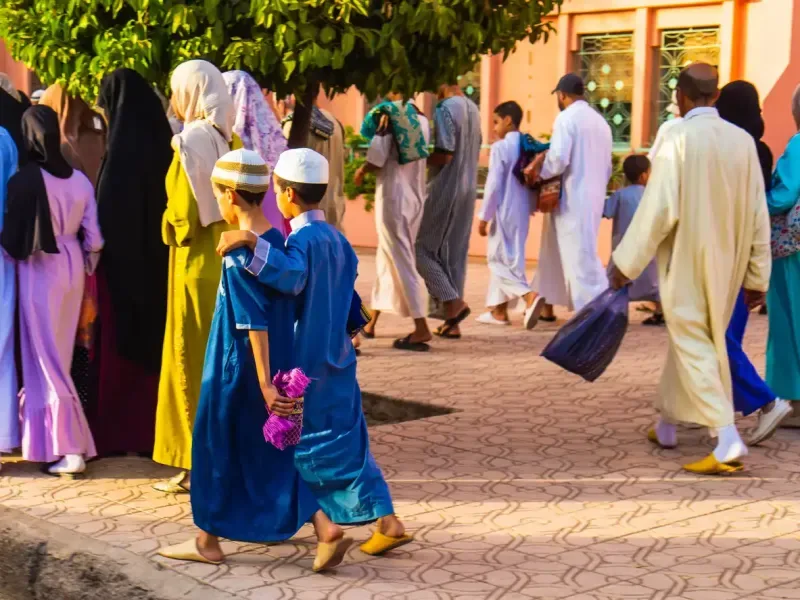
Two kids going to the prayer of Aid Al Adha in Marrakech, Morocco
Based on all these public holidays in Morocco, here's my strategic advice:
IDEAL Months (Avoiding Major Disruptions):
April-May:
- Post-Ramadan freshness
- Pleasant spring weather
- Fewer major holidays
- Wildflowers blooming
- Comfortable temperatures
September-October:
- After the summer heat
- Before major fall holidays
- Perfect weather
- Harvest season beauty
- Moderate crowds
December-January:
- Cooler season (but comfortable for sightseeing!)
- Fewer crowds
- Lower prices
- Authentic local experiences
- Only the New Year's holiday affects plans
MOST FESTIVE (Cultural Immersion Seekers):
Late July:
- Throne Day celebrations
- Summer energy
- Beautiful decorations
- National pride on display
Mid-November:
- Independence Day festivities
- Patriotic atmosphere
- Cultural events
Ramadan evenings:
- Unique cultural atmosphere
- Special foods and traditions
- Requires flexibility but is incredibly rewarding
AVOID (If You Need Reliable Services):
Eid al-Adha period:
- Plan for 3-4 day closures
- The weeks leading up were also complicated
- Major service disruptions
Eid al-Fitr:
- Major crowds
- Limited availability
- Transportation packed
- Book WAY ahead if visiting
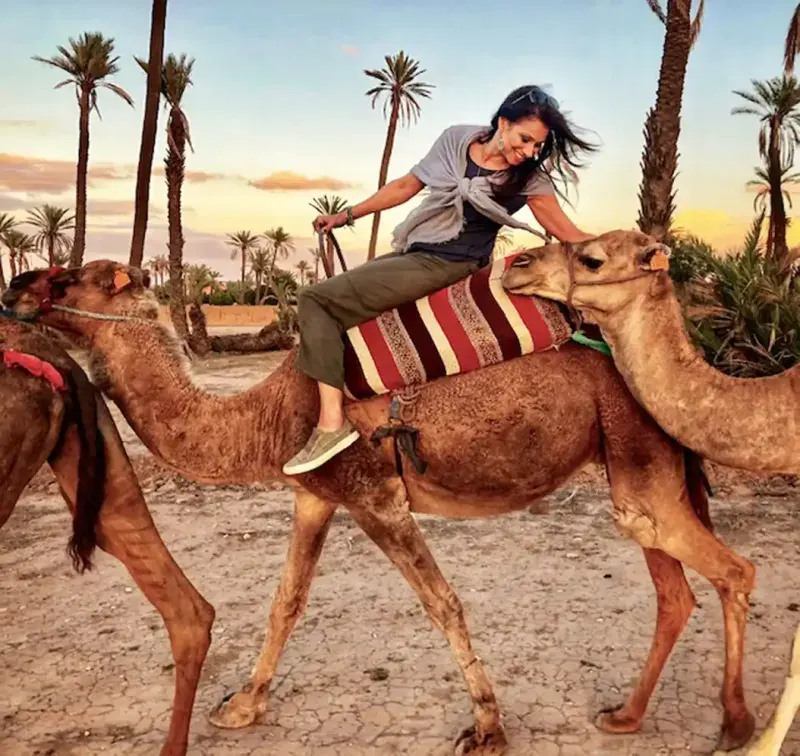
A smiling woman rides a camel at sunset in a desert outside of Marrakech, Morocco
1. Book Accommodations Early
Morocco national holidays = Moroccans travel domestically!
Book 2-3 months ahead for:
- Throne Day
- Independence Day
Book 4-6 months ahead for:
- Eid al-Fitr
- Eid al-Adha
- Major festivals (Gnaoua, Fez Sacred Music)
2. Verify Islamic Holiday Dates
Don't assume! Check specific 2026 dates before booking a Morocco travel package.
3. Embrace Cultural Experiences
Morocco holidays offer insights you won't get during regular travel:
- Traditional foods
- Festive clothing
- Decorations
- Community celebrations
- Authentic hospitality
4. Stock Up Before Major Islamic Holidays
Before Eid al-Adha, especially:
- Buy snacks, water, and essentials
- Confirm hotel meal service
- Download offline maps
- Have cash ready
5. Respect Religious Observances
During Ramadan:
- No public eating/drinking during the day
- Dress modestly
- Lower music during prayers
- Ask before photographing breaking-fast
During Islamic holidays:
- Understand mosque closures
- Appreciate sacred nature
- Accept hospitality graciously
6. Adjust Expectations
Public holidays in Morocco mean:
- Slower service
- Some delays
- Potential crowds
- Higher prices
But also:
- Incredible atmosphere
- Generous hospitality
- Unique experiences
- Beautiful celebrations
Worth it? ABSOLUTELY with proper preparation!
Quick Reference Checklist:
- Check 2026 Islamic holiday dates (they shift yearly!)
- Book accommodations early for major Moroccan national holidays
- Research which services close during your dates
- Embrace cultural experiences vs. avoiding holidays
- Pack appropriately for religious observances
- Budget extra for holiday period increases
- Confirm tour/activity availability
- Learn basic Arabic greetings ("Eid Mubarak" during Eid!)
Here's my honest take: Morocco holidays aren't obstacles to avoid, they're opportunities to experience this incredible country at its most authentic!
Yes, some services close. Yes, you need planning. Yes, there are challenges.
But the trade-off?
You'll witness:
- Moroccan families celebrate centuries-old traditions
- Streets are transformed with decorations
- Traditional foods prepared with love
- Community spirit at its peak
- Cultural depth, regular tourism never reveals
The secret? Research, plan, stay flexible, and approach public holidays in Morocco with curiosity rather than frustration.
Morocco's holiday calendar reflects the country's soul, Islamic faith, royal heritage, Berber culture, and independence pride woven together into celebrations defining Moroccan identity.
Don't let holidays scare you. Let them draw you in!
With proper preparation, experiencing Morocco's national holidays becomes your trip's highlight, not a complication.
Ready to experience Morocco at its most vibrant?
What is the best month to travel in Morocco?
April is the best month to travel in Morocco. You'll get perfect 20-24°C (68-75°F) temperatures, the Atlas Mountains covered in wildflowers, and comfortable weather for exploring Marrakech, Fez, and the Sahara. October is a close second with similar conditions, plus harvest season. I always recommend April to first-time visitors, it's Morocco at peak beauty with manageable crowds and ideal weather for cities, desert, and mountains all in one trip.
What are the important holidays in Morocco?
Morocco's important holidays include Islamic holidays (dates change yearly): Eid al-Fitr (end of Ramadan), Eid al-Adha (biggest celebration), Islamic New Year, and Mawlid (Prophet's birthday). Fixed holidays: Independence Day (November 18), Throne Day (July 30), Green March Day (November 6), Labour Day (May 1), New Year's Day (January 1). During Ramadan (month-long, dates vary), restaurants close during daytime and travel patterns change—plan accordingly or embrace the unique iftar evening atmosphere.
What is the nicest part of Morocco to visit?
Chefchaouen (the Blue Pearl) is Morocco's nicest part to visit for sheer beauty, blue-painted medina streets, relaxed mountain atmosphere, and stunning Rif Mountain backdrop. For overall experience, I'd say the Fes medina is UNESCO-listed, most authentic, and culturally rich. Honorable mentions: Ait Benhaddou (stunning kasbah), Merzouga Sahara dunes (unforgettable desert experience), Essaouira (charming coastal town). "Nicest" depends on preference, but Chefchaouen wins for postcard-perfect beauty while Fez wins for cultural immersion.
What are the top 3 cities in Morocco?
The top 3 cities in Morocco are:
1- Marrakech - Most popular, vibrant Jemaa el-Fnaa square, beautiful riads, best food scene, gateway to Atlas Mountains and Sahara
2- Fez - Most authentic, UNESCO medina, cultural heart of Morocco, less touristy than Marrakech, world's oldest university
3- Chefchaouen - Most photogenic, blue-painted streets, relaxed vibe, Rif Mountains setting, perfect for 2-3 days
Casablanca is the largest but least interesting for tourists. These three offer the best Morocco experience.
Can females wear shorts in Marrakesh?
Yes, females can wear shorts in Marrakesh, but I recommend knee-length or longer for comfort and respect. You'll see tourists in short shorts, especially in Gueliz (new city) and around major hotels, but you'll get stares and occasional comments in the medina. Moroccan women don't wear shorts, so standing out attracts attention. I've found knee-length shorts or cropped pants work perfectly comfortably in the heat while showing cultural awareness. Save short shorts for your riad pool. Shoulders covered are more important than legs.
Is Morocco more Arab or French?
Morocco is more Arab than French, but both influences are strong. Ethnically: 99% Arab-Berber (indigenous Berber + Arab). Language: Arabic is the official and primary language; French is widely spoken as a second language in business, tourism, and education. Culture: Islamic/Arab identity dominates food, religion, and customs, which are Arab-Berber in nature. French influence: Architecture, café culture, bureaucracy, and some cuisine (croissants everywhere). Think of it as: fundamentally Arab-Berber with a French colonial overlay that affects daily life but not core identity. In cities, you'll need French more than English.