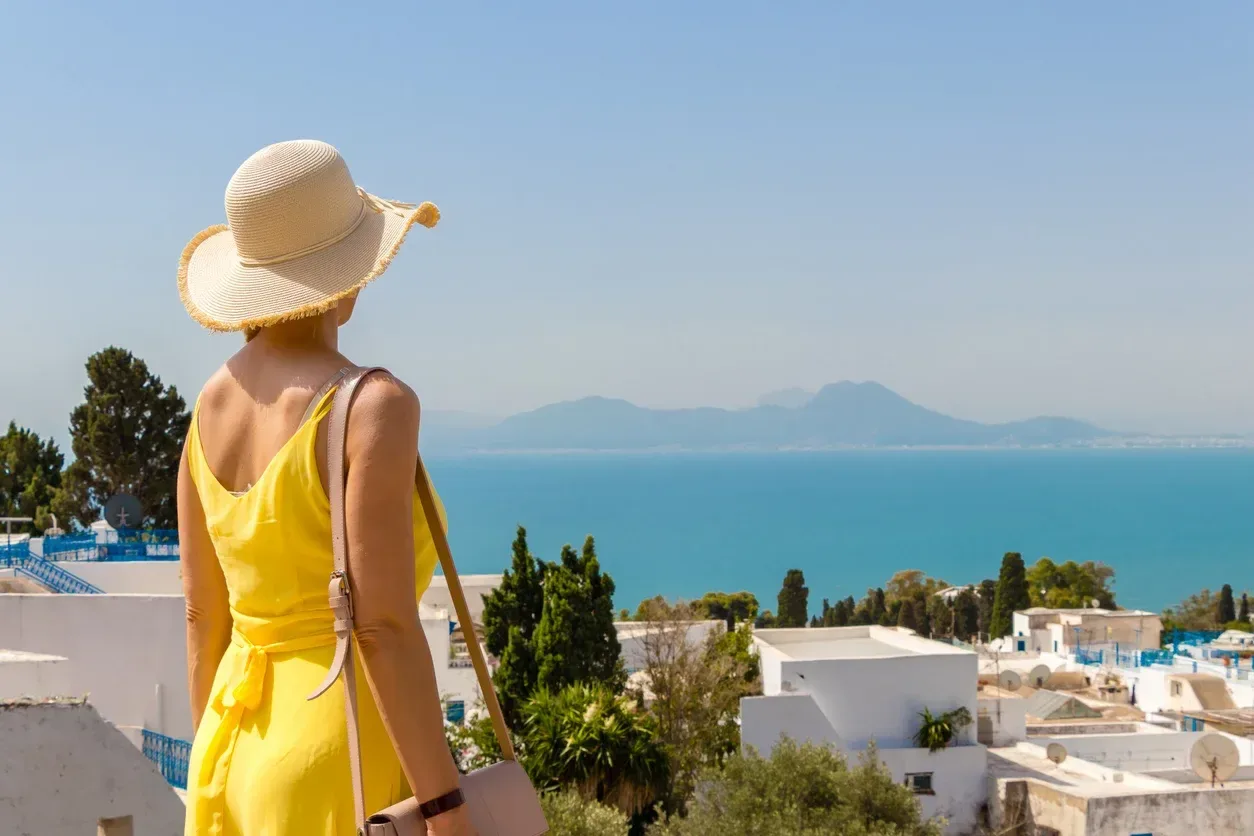
Why Tunisia Should Be Your Next Travel Destination
Looking for a destination that delivers ancient Roman ruins rivaling Italy, Mediterranean beaches matching Greece, Sahara Desert adventures like Morocco, and Star Wars filming locations found nowhere else, all at half the price? Welcome to Tunisia, North Africa's best-kept secret!
I've compiled this definitive guide to 17 stunning Tunisia attractions that combine 3,000 years of history with diverse landscapes stretching from turquoise coastlines to golden desert dunes. These places to visit in Tunisia offer something extraordinary: you can explore world-class archaeological sites without massive crowds, wander authentic medinas still buzzing with daily life, and experience genuine cultural exchanges that mass tourism hasn't yet commercialized.
Let's dive into the incredible experiences waiting for you in this compact Mediterranean nation where Phoenician traders, Roman emperors, Islamic scholars, and Berber communities left their marks across centuries!
Table of Contents:
1. El Jem Amphitheater: Africa's Colosseum (But Way Less Crowded!)
The Quick Facts:
- Built: 238-250 AD
- Entry Fee: 12 Dinars (~$4 USD)
- Time Needed: 2 hours
- Best Time: April-May or October-November
Why It's Incredible:
Picture this: You're standing in the world's 3rd largest Roman amphitheater (seats 35,000!), and there are maybe 20 other tourists total. That's El Jem, one of the best-preserved Roman monuments anywhere, minus the Roman Colosseum's crushing crowds and expensive entry fees.
What Makes It Special:
This golden sandstone marvel stands entirely without foundations. Roman engineering genius at its finest! Unlike Rome's partially ruined Colosseum, El Jem's underground chambers remain virtually intact. I can walk through the same passages where gladiators prepared for combat 1,800 years ago, examine the pulley systems that lifted wild animals through trapdoors, and climb to upper tiers for sweeping desert views.
Pro Tip: Visit early morning (7:00 AM opening) for magical lighting and zero crowds. The annual International Festival of Symphonic Music (July-August) hosts concerts, and experiencing classical music in this ancient space is absolutely breathtaking!
Ready to Explore These Incredible Tunisia Attractions?
Don't miss out on North Africa's best-kept secret! These 17 stunning places to visit in Tunisia Tours offer once-in-a-lifetime experiences combining ancient history, diverse landscapes, and authentic culture at unbeatable prices.
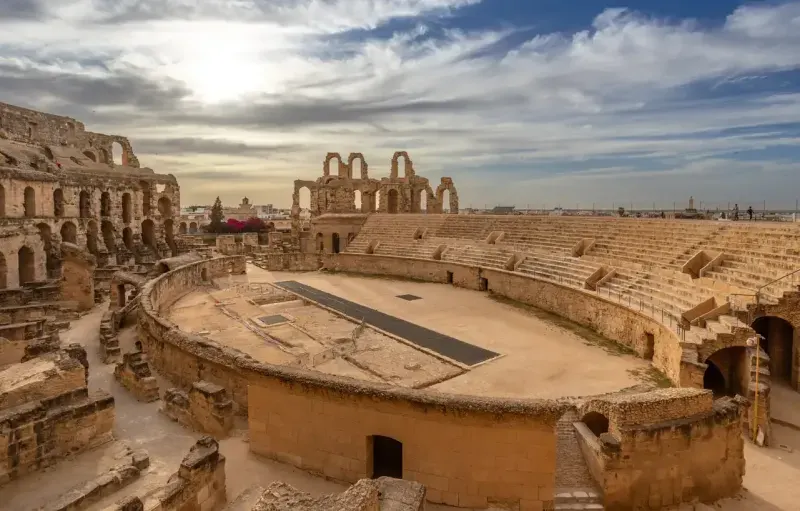
Ancient african Roman Colosseum amphitheatre arena, ruins and columns, El Jem, Mahdia, Tunis
2. Ancient Carthage: Walk Where Hannibal Walked
The Quick Facts:
- Founded: 9th century BC
- Entry Fee: 12 Dinars (combined ticket for 10 sites)
- Time Needed: Full day
- Best Time: March-May or September-November
Why History Buffs Go Crazy:
Carthage once rivaled Rome as the Mediterranean's greatest superpower. Although Romans destroyed it so thoroughly in 146 BC that little Punic architecture survived, the ruins reveal fascinating layers: Phoenician ports, Roman reconstruction, Byzantine churches, all scattered across Tunis's most upscale suburbs.
Top 3 Can't-Miss Sites:
1- Antonine Baths: Imagine a bathing complex SO massive it was the Roman Empire's largest outside Rome itself! One reconstructed column stands 15 meters tall; originally, there were eight holding up the frigidarium.
2- Byrsa Hill: Climb here for panoramic Gulf of Tunis views and visit the excellent Carthage Museum, housing 4th-century BC sarcophagi and stunning mosaics.
3- Tophet Sanctuary: This site is home to over 20,000 urns containing cremated infant remains, sparking debates about ancient Carthaginian practices that continue today.
Insider Secret: Poor signage between sites is frustrating. Hiring a knowledgeable local guide (30-50 Dinars for half a day) transforms scattered ruins into compelling stories. The TGM train from Tunis costs just $1 and stops near major sites!
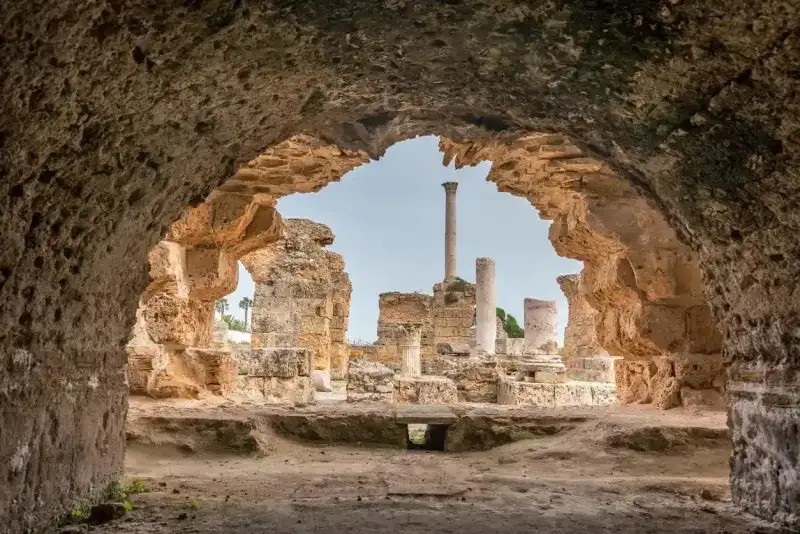
Antonine Baths in Carthage, Tunisia
Customize Your Dream Vacation!
Get in touch with our local experts for an unforgettable journey.
Plan Your Trip
3. Dougga: Tunisia's Best-Kept Archaeological Secret
The Quick Facts:
- Founded: 6th century BC (Berber), Roman from the 2nd century AD
- Entry Fee: 5-8 Dinars
- Time Needed: 2-3 hours
- Best Time: April-May or September-October (avoid 40°C+ summer!)
Why It Beats the Competition:
Dougga is what Pompeii would be like if only 50,000 people visited annually instead of 2.5 million. This 75-hectare site showcases North Africa's finest example of a small Roman town, remarkably preserved because modern development never disturbed it.
The Wow Moments:
- Capitol Temple: Majestic Corinthian columns beneath reliefs showing Emperor Antonius Pius's divine ascension carried by eagles
- Roman Theater: Seats 3,500 (impressive for a 5,000-person town!), with an ingenious "whispering gallery" where unseen directors cued performers
- Licinian Baths: Underground slave tunnels that circulated heated air—Roman HVAC system!
- Temple of Juno Caelestis: Soaring columns and graceful semi-circular walls against a dramatic hillside backdrop
Real Talk: Limited English signage and no direct public transport from Tunis (110km away) means renting a car or joining organized tours works best. But the effort pays off, you'll practically have these stunning ruins to yourself!
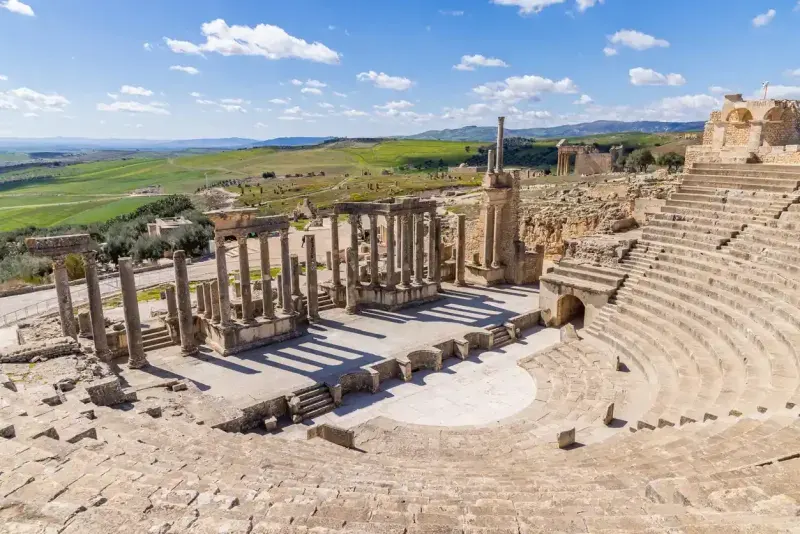
The theater at the Roman ruins. in Dougga, Tunisia.
4. Medina of Tunis: Living History Since 698 AD
The Quick Facts:
- Founded: 698 AD
- UNESCO Status: Since 1979
- Size: 280 hectares with 700+ monuments
- Time Needed: Half day minimum
Why It's Special:
Unlike museum-ified "old towns" elsewhere, Tunis medina is HOME to 20,000 residents living much as ancestors did for 1,300+ years. Jasmine scent mingles with cardamom and cinnamon while craftsmen hammer away in shadowed workshops, goldsmiths shaping filigree, herbalists grinding remedies, hatmakers crafting traditional chechia caps.
Don't Miss:
- Zitouna Mosque: The spiritual heart, first built in 732 AD, and reconstructed in 864 AD
- Souq el Blat: Seven centuries of medicinal herb trading create a natural pharmacy atmosphere
- Dar Lasram & Dar Ben Abdallah: Peek inside aristocratic life at these noble residences
- Tourbet el Bey: Mausoleum with architectural influences from Istanbul's Topkapi Palace
Wandering Tips: The medina's magic reveals itself to those who wander without rigid plans. Get deliberately lost in alleyways, follow intriguing scents, chat with artisans. Spring (March-May) and fall (September-November) offer comfortable mid-20s Celsius temperatures.
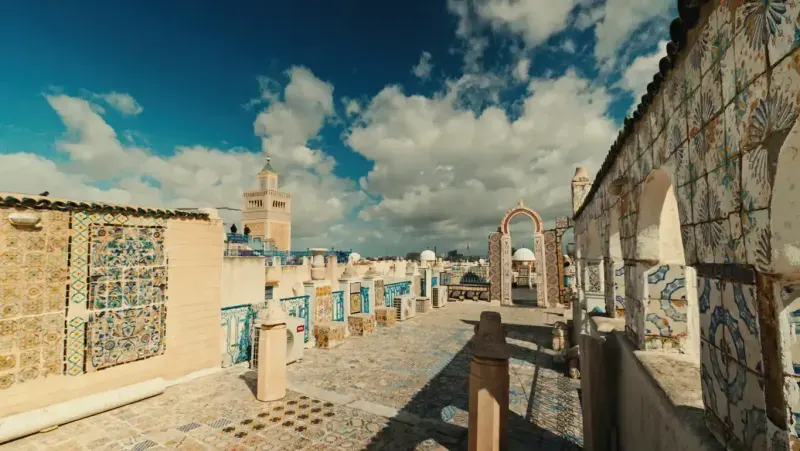
Exploring Historic Tunisian Rooftop With Ornate Tiles and Archways.
5. Kairouan: Islam's 4th Holiest City
The Quick Facts:
- Founded: 670 AD
- UNESCO Status: Since 1988
- Spiritual Significance: Seven pilgrimages here = one hajj to Mecca
- Time Needed: Half day
The Sacred Experience:
Fourteen centuries of continuous devotion echo through Kairouan's streets. As the most ancient Arab-Muslim stronghold in North Africa, this holy city draws pilgrims and history enthusiasts to magnificent monuments enclosed by 3-kilometer ancient ramparts.
Must-See Highlights:
1- Great Mosque: Spanning a 405-meter perimeter with a soaring 115-foot minaret, supported by 414 distinctive pillars forming graceful horseshoe arches
2- Aghlabid Basins: 9th-century circular reservoirs showcasing medieval Islamic engineering genius
3- Zawiya of Sidi Sahab: Sacred tomb of another companion of Prophet Muhammad
Cultural Respect: Scarves are provided at mosque entrances for covering shoulders, legs, or hair. Dress modestly throughout the city. The spiritual atmosphere is profound; even non-religious visitors feel the historical weight.
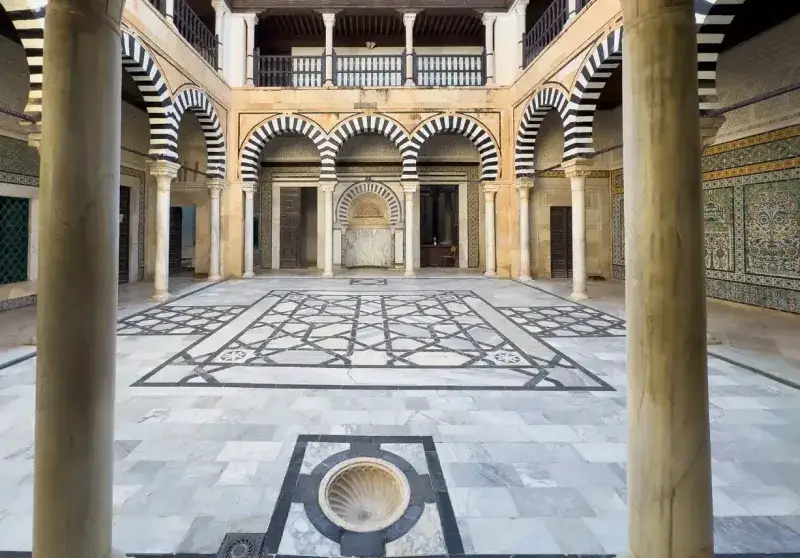
Sidi Abid el Ghariani Mausoleum, Kairouan, Tunisia
6. Sidi Bou Said: The Blue-and-White Dream Village
The Quick Facts:
- Location: 20km from Tunis (40-min TGM train ride)
- UNESCO: Nomination pending (January 2025)
- Time Needed: Half day
- Best Visiting: Morning (8:00-11:00) or late afternoon (16:00-19:00)
Instagram Heaven, But Better:
Perched on cliffs overlooking the Gulf of Tunis, every building here follows a mandatory blue-and-white color scheme (enforced since 1920!). But Sidi Bou Said isn't just pretty, it's where artists like Matisse, Simone de Beauvoir, and Michel Foucault found inspiration.
What Makes It Magical:
Cascading bougainvillea adorns terraced balconies, jasmine fragrance drifts through cobblestone passages, and intricate moucharabiehs (wooden lattice screens) cool Mediterranean interiors while allowing gentle breezes. The whole village feels like stepping into a painting!
Top Experiences:
- Café des Nattes: Sit on traditional rush mats, sipping mint tea with pine nuts
- Café des Délices: Cliff-top sunset views over the Gulf are legendary
- Palais Ennejma Ezzahra: Baron d'Erlanger's palace, now the Center for Arab-Mediterranean Music
- Dar El Annabi: Fifty-room mansion showcasing traditional Tunisian arts
Photographer's Tip: Soft morning or late afternoon light creates the most stunning photos. Weekdays are significantly less crowded than weekends!
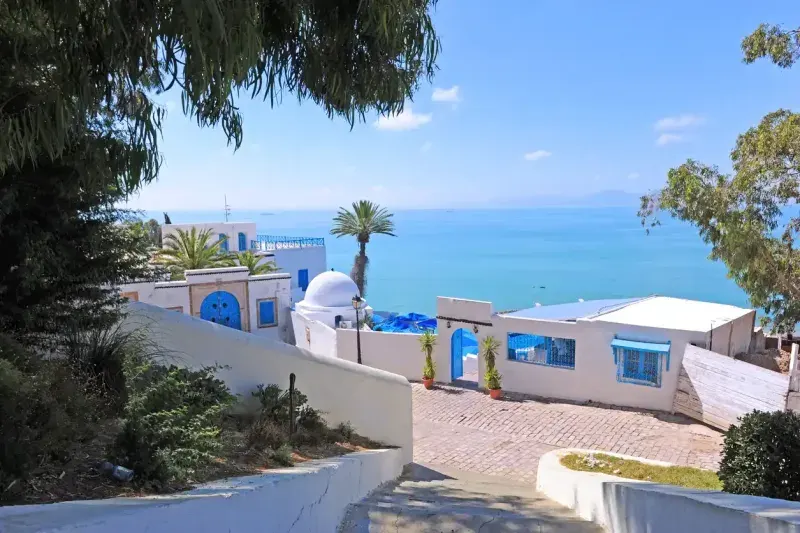
Sidi Bou Said
7. Djerba Island: Where Three Faiths Harmonize
The Quick Facts:
- Location: North Africa's largest island
- Famous For: Africa's oldest synagogue (El Ghriba)
- Best Time: May-October for swimming
- Time Needed: 2-3 days
The Unique Story:
Muslim, Berber, and Jewish communities have coexisted peacefully on Djerba for over 2,000 years, one of the region's most remarkable examples of interfaith harmony. El Ghriba Synagogue has hosted continuous worship since possibly 500 BC (or 70 AD, historians debate, but either way, it's ancient!).
Beyond Religion:
- Djerbahood Project: 250 colorful murals by artists from 30 nations transformed Erriadh village into an open-air gallery (2014)
- Houmt Souk: Bustling marketplace with aromatic spices, handwoven textiles, and distinctive pottery
- Guellala Pottery Village: Watch artisans using techniques passed through family generations
- Beaches: Pristine Mediterranean swimming, water sports, resort relaxation
Cultural Insight: The island's synagogue features blue-tiled prayer spaces with crystal chandeliers, floors covered with prayer mats crafted by neighboring Muslim artisans. This collaboration embodies Djerba's unique spirit!
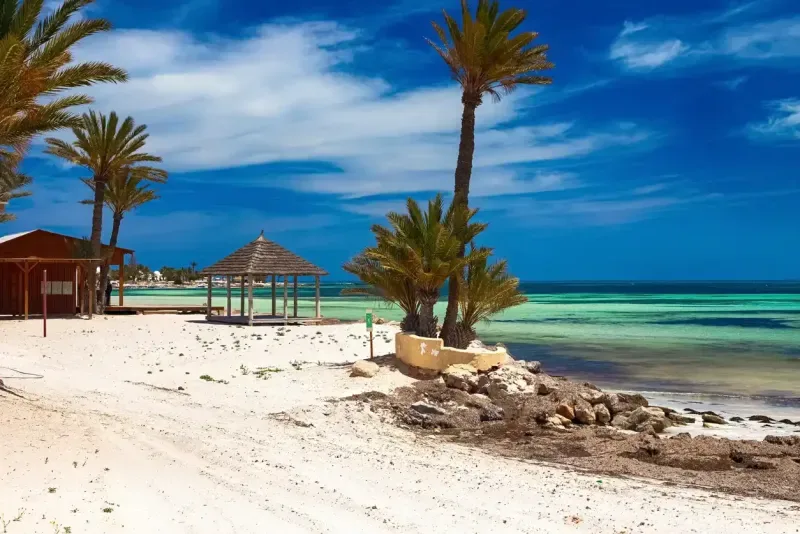
a beach with white sand and a green palm tree. Djerba Island, Tunisia
8. Sahara Desert & Tozeur: Gateway to Golden Dunes
The Quick Facts:
- Flight from Tunis: 1 hour
- Best Time: October-April (avoid brutal summer 40°C+)
- Recommended Stay: 3 days minimum
- Famous For: Deglet Noor dates, Star Wars locations
Desert Magic:
Tozeur stands at the threshold of the world's largest hot desert, where hundreds of thousands of date palms create an emerald oasis. The distinctive yellow-brownish architecture features geometric patterns borrowed from ancient Mesopotamia, while 195 natural springs sustain this desert miracle.
Must-Do Experiences:
1- Medina of Ouled El Hadef: Traditional brickwork neighborhoods where Muslim and Jewish communities coexisted for centuries
2- Chott el Djerid: Over 2,500 square miles of salt flats create mirror-like reflections and surreal mirages
3- Mountain Oases: Chebika, Tamerza, and Mides reveal unexpected waterfalls cascading through palm-fringed canyons
4- Ong Jemel: Star Wars filming location preserving movie magic against an authentic Sahara backdrop
Camel Trekking Reality Check: Those "romantic" multi-day camel treks? They're uncomfortable! Most travelers prefer 1-2 hour camel rides to desert camps, then overnight in Berber tents (ranging from basic to luxury with en-suite bathrooms). Desert nights get COLD even in summer, pack warm layers!
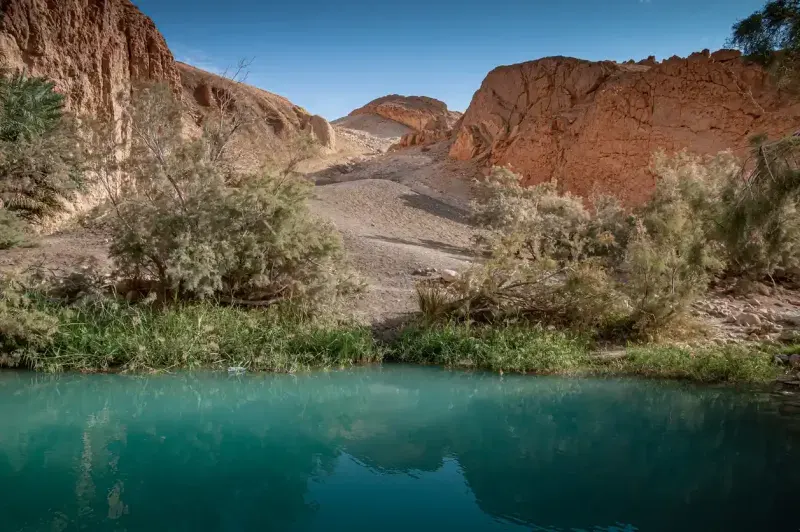
Oasis in the middle of Sahara Desert close to the town of Tozeur, Tunisia
9. Matmata Underground Houses: Luke Skywalker Slept Here!
The Quick Facts:
- Location: 40km from Gabes
- Famous For: Star Wars filming location (Hotel Sidi Driss)
- Unique Feature: 1,200 troglodyte homes carved into the earth
- Time Needed: Half day
Berber Genius:
These sunken courtyard homes descend 5-10 meters deep, carved directly into soft sandstone. The ingenious clay-gypsum geology maintains consistent 20°C temperatures year-round despite brutal desert heat. Approximately 1,200 underground homes still preserve this centuries-old architectural tradition!
The Star Wars Connection:
Hotel Sidi Driss served as Luke Skywalker's childhood home on Tatooine in BOTH the original trilogy AND prequels! You can actually stay overnight in rooms distributed among four excavated caverns, dining surrounded by original film set decorations. How cool is that?
What to See:
- Hotel Sidi Driss: Intact Star Wars sets, accommodates 145 guests across 20 rooms
- Local Family Homes: Gracious families offer tours demonstrating clay oven bread-baking and traditional construction methods
- Haddej Village: Remarkably preserved underground olive press nearby
Getting There: Specify "Matmata Ancienne" to louage/bus drivers to avoid the newer settlement 15km away. Regular shared taxis run from Gabes.
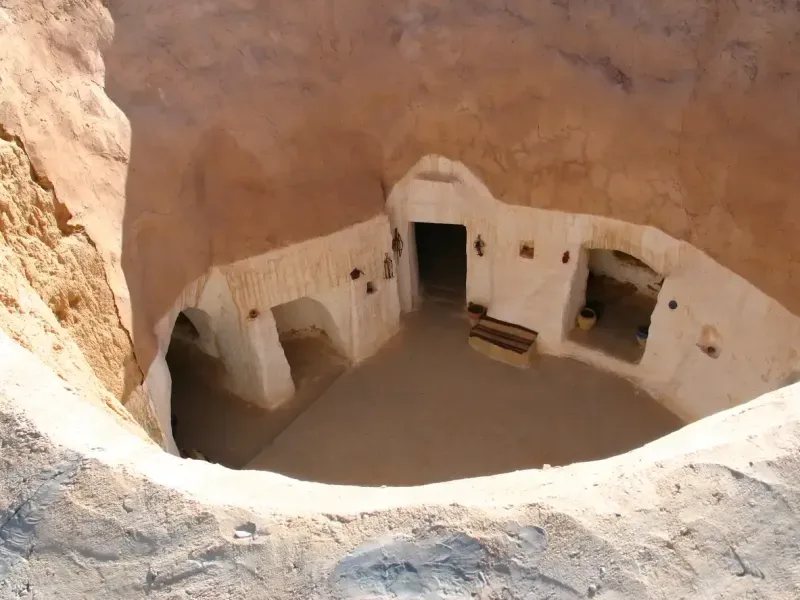
Matmata underground house in Tunisia
10. Chott el Djerid: The Sahara's Surreal Salt Lake
The Quick Facts:
- Size: 7,000 km² (Sahara's largest salt pan!)
- Name Meaning: "Lagoon of the Land of Palms" (Berber)
- Entry: €3-€5
- Best Time: November-March for colorful reflections
Otherworldly Beauty:
This massive endorheic salt lake stretches 250km long, its crystalline surface painted in whites, greens, and purples. Atmospheric conditions create shimmering mirages, transforming the blindingly bright crust into liquid mercury. Winter brings shallow waters mirroring the sky in intense pink and blue from minerals and algae!
What Makes It Special:
- Seasonal Pink Pools: Flamingo flocks and migratory birds flock to mineral-rich waters
- Natural Hot Springs: Therapeutic springs punctuate the salt flats
- Star Wars Connection: Northwestern tip near Nefta served as the Lars Family Homestead location
Safety Warning: Exercise EXTREME caution on the salt crust stability, which varies dramatically and can pose serious risks. Stay on established paths, hire local guides for salt flat exploration, and avoid summer when temperatures exceed 45°C!
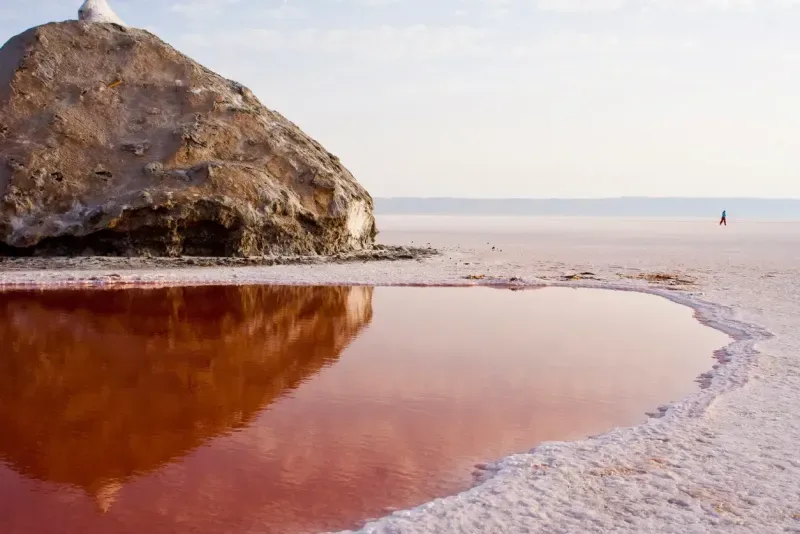
Chott El Jerid
11. Star Wars Filming Locations: 12 Sites Across 500+ Kilometers
The Epic Scale:
- Films: 4 movies (original trilogy + prequels)
- Filming Periods: March/April 1976, July/August 1997, September 2000
- Geographic Spread: Over 500km of southern desert terrain
- Global Ranking: 2nd largest concentration of Star Wars sites worldwide
Why George Lucas Chose Tunisia:
The Berber town of Tataouine literally inspired planet Tatooine's name! Lucas discovered that authentic Berber architecture, centuries-old granaries, underground homes, and desert landscapes integrated seamlessly with his galactic storytelling vision.
Top Star Wars Sites:
1- Hotel Sidi Driss (Matmata): Luke's home across both trilogies stays overnight!
2- Mos Espa Set (near Tozeur): Preserved podrace arena and marketplace facades
3- Sidi Bouhlel Canyon: Multiple pivotal A New Hope sequences
4- Ksar Ouled Soltane, Ksar Hadada, Medenine: Berber granaries as slave quarters
5- Djerba Island: Mos Eisley Cantina and Obi-Wan's hermit dwelling
Planning Your Pilgrimage:
Specialized tours from Tozeur access remote Ong Jemel and Mos Espa (4WD required). Most sites are accessible by rental car except Ong Jemel. Spring and autumn provide optimal photography lighting. Die-hard fans should allocate 3-4 days covering all locations!
12. Bardo National Museum: World's Best Roman Mosaics
The Treasures:
- Collection: 8,000+ exhibits spanning prehistory to the Islamic era
- Global Fame: World's most extensive Roman mosaic collection
- Entry: 13 Dinars (~$4.20)
- Time Needed: 3-4 hours
Masterpiece Alert:
The 3rd-century Virgil Mosaic presents the sole surviving contemporary portrait of Rome's greatest poet! The magnificent Triumph of Neptune spreads across 100+ square meters in intricate tesserae. Exquisite Hellenistic Greek sculptures from the Mahdia shipwreck and the celebrated Blue Koran of Kairouan represent medieval Islamic calligraphy's pinnacle.
13. Sousse Medina: The Peaceful Alternative
The Vibe:
- UNESCO: Since 1988
- Founded: 821 AD
- Character: Contemplative atmosphere, authentic daily life
- Entry (Ribat): 8 TND
Why It's Different:
While Tunis medina bustles commercially, Sousse maintains a calm that lets you observe genuine rhythms. The architectural ensemble of the Kasbah, defensive ramparts, Great Mosque, and ribat demonstrates sophisticated 9th-century Islamic military architecture adapted for maritime defense.
Highlights:
- Ribat Watchtower: Commanding Mediterranean and medina rooftop vistas
- Archaeological Museum: Tunisia's 2nd-most-significant Roman mosaic collection (10 TND, closed Mondays)
- Dar Essid Museum: Traditional Tunisian domestic life insights (5 TND, closed Sundays)
14. Chebika Mountain Oasis: Desert's Hidden Waterfall
The Journey:
- From Tozeur: 40-50km (~€20-30 taxi)
- Hike Duration: 40 minutes
- Best Time: March-May or September-November (20-30°C)
- Combine With: Tamerza and Mides Canyon (full day)
The Surprise:
Where dramatic rock formations meet the Algerian frontier, emerald palm groves defy surrounding desolation through natural springs! Crystalline pools cascade down canyon walls while ancient Berber dwelling ruins dot hillsides, creating an almost mystical atmosphere.
What Happened:
The 1969 floods persisting five weeks, devastated the region, forcing families to abandon their ancestral homes. These abandoned structures now contribute to Chebika's haunting beauty, a silent testimony to both resilience and nature's power.
15. Kerkouane: The Only Surviving Punic City
The Rarity:
- UNESCO: Since 1985
- Founded: 6th century BC
- Unique Feature: Only the Punic city escaped Roman reconstruction!
- Time Needed: 2-3 hours
Why Archaeologists Love It:
When the Romans destroyed Kerkouane around 255 BC during the First Punic War, they unknowingly preserved a perfect snapshot of 6th-3rd century BC Phoenician-Punic urban life. Each house features private bathing facilities with distinctive red concrete personal hygiene held paramount importance in Punic society!
Don't Miss:
- House of Tanit: Floor mosaics with protective Carthaginian goddess symbols
- Grid Street Layout: Exceptional urban planning is visible throughout
- Museum Collection: Pottery, jewelry, and domestic artifacts illuminating ancient daily life
16. Bulla Regia: Romans Living Underground
The Ingenuity:
- Location: 37km south of Tabarka
- Built: 2nd-3rd centuries CE
- Innovation: Semi-subterranean villa construction!
- Time Needed: 2-3 hours
The Genius Idea:
Roman architects pioneered underground domestic spaces carved into the earth to escape North Africa's brutal heat. These chambers maintain original splendor, intricate mosaics still carpet floors, columns frame courtyards, and room divisions remain precisely as Roman families knew them!
Why So Well-Preserved:
Seismic forces reduced Bulla Regia to rubble, but desert sands completely buried ruins, creating a natural vault protecting delicate artworks until French archaeologists arrived in 1906!
Top Villas:
- House of the Hunt: Hunting scenes depicting gazelles, wild boars, lions, and panthers in mosaic detail
- House of Amphitrite: Exceptional sea goddess mosaic
- Memmian Baths: Colossal Roman bathing architecture
17. Monastir Ribat: Where Monty Python Met Islamic History
The Fortress:
- Built: 796 AD
- Famous Films: Monty Python's Life of Brian, Jesus of Nazareth
- Entry: 7-8 Dinars
- Time Needed: 1-2 hours
The Double Feature:
This coastal fortress represents the earliest ribat established by Arab military commanders, with defensive walls rising directly from Mediterranean waters. But it's also a Hollywood star! Cinema history meets ancient stones, where both Monty Python and Franco Zeffirelli filmed iconic scenes.
What to See:
- Watchtower: 100-step spiral staircase rewards climbers with Gulf panoramas
- Museum of Islamic Art: Medieval artifacts and early Arab coinage
- Bourguiba Mausoleum: Golden dome with 25-meter twin minarets honoring Tunisia's founding president
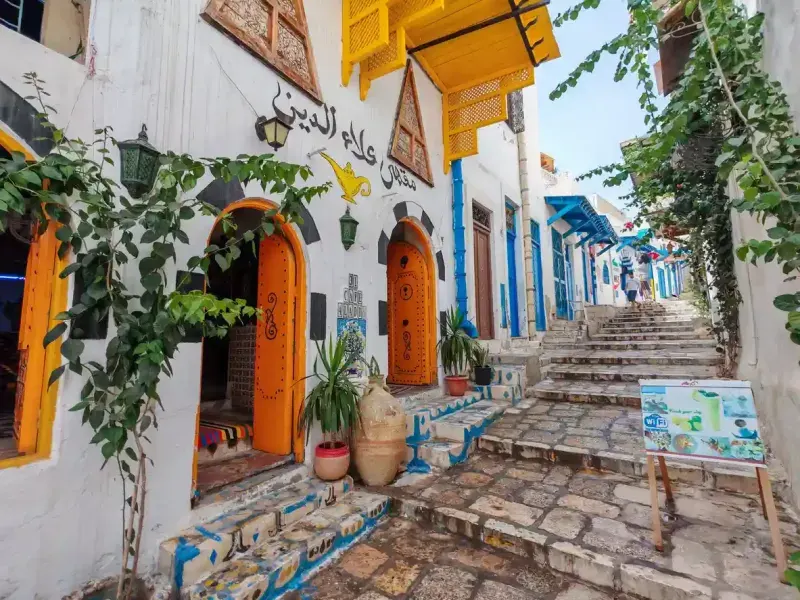
Vibrant Sidi Bou Said-Style Alleyway in Sousse Medina, Tunisia
Tunisia Attractions: Complete Planning Overview
| Attraction |
Location/Distance |
Founded/Built |
Entry Fee |
Optimal Visit Period |
Duration Required |
Distinguishing Feature |
| Medina of Tunis |
Tunis city center |
698 AD |
Not specified |
Spring (Mar-May) or Fall (Sep-Nov) |
Half a day minimum |
700 monuments across 280 hectares, 20,000 residents |
| El Jem Amphitheater |
Central Tunisia |
238-250 AD |
12 Dinars (non-residents), 8 Dinars (residents) |
Spring (Apr-May) or Autumn (Oct-early Nov) |
2 hours |
3rd/4th largest Roman amphitheater, seats 35,000 |
| Ancient Carthage |
20 min from Tunis center |
9th century BC |
12 Dinars (combined ticket) |
Spring (Mar-May) or Fall (Sep-Nov) |
Not specified |
10 separate archeological sites |
| Sidi Bou Saïd |
20 km from Tunis |
13th century (zawiya) |
Not specified |
Morning (8:00-11:00) or late afternoon (16:00-19:00) |
Half a day |
Blue and white village, mandatory color scheme since 1920 |
| Dougga Roman Ruins |
110 km from Tunis |
6th century BC (Berber settlement) |
5-8 Dinars |
Spring (Apr-May) or Autumn (Sep-Oct) |
2-3 hours |
The best-preserved Roman small town in North Africa, 75 hectares |
| Sahara Desert and Tozeur |
1-hour flight from Tunis |
~2,000 years ago (Roman) |
Not specified |
October to April |
3 days |
Gateway to the Sahara, hundreds of thousands of date palms |
| Djerba Island |
North Africa |
Antiquity (Jewish presence) |
Not specified |
May to October (swimming) |
Not specified |
Africa's oldest synagogue, on the largest North African island |
| Bardo National Museum |
Tunis (Bardo suburb) |
The museum opened in 1888 |
13 Dinars (non-residents), 8 Dinars (residents) |
Early morning or noon |
3-4 hours |
World's largest Roman mosaic collection, 8,000+ exhibits |
| Kairouan Holy City |
Not specified |
670 AD |
Not specified |
Not specified |
Not specified |
4th holiest city in Islam, with ramparts over 3 km |
| Chott el Djerid Salt Lake |
Near Tozeur |
Natural formation |
€3 to €5 |
Winter (Nov-Mar) for colors |
Not specified |
Sahara's largest salt pan, over 7,000 km² |
| Matmata Underground Houses |
40 km from Gabes |
Possibly 264-146 BC (legend) |
Not specified |
Not specified |
Not specified |
1,200 troglodyte homes, Star Wars filming location |
| Monastir Ribat and Mausoleum |
Monastir (coastal) |
796 AD (Ribat) |
7-8 Dinars |
Not specified |
Not specified |
Oldest ribat by Arab conquerors, film location |
| Sousse Medina |
Sousse (coastal) |
821 AD |
8 TND (Ribat) |
Avoid Fridays |
Not specified |
Early Islamic military architecture was quieter than that of Tunis |
| Bulla Regia Archeological Site |
37 km south of Tabarka |
203 BC (Roman control) |
Not specified |
Spring (Mar-May) or Fall (Sep-Nov) |
2-3 hours |
Underground Roman villas, 60 hectares |
| Kerkouane Punic City |
Cap Bon (clifftop) |
6th century BC |
Not specified |
Spring or Fall |
2-3 hours |
Only surviving Phoenician-Punic city, ~1,200 residents |
| Chebika Mountain Oasis |
40-50 km from Tozeur |
Roman era (Ad Speculum) |
€20-€30 (taxi from Tozeur) |
Spring (Mar-May) or Autumn (Sep-Nov) |
40-minute hike |
Mountain oasis with waterfalls, abandoned Berber village |
| Star Wars Film Locations |
Southern Tunisia (500+ km spread) |
Filmed 1976, 1997, 2000 |
Varies by location |
Spring or Autumn |
Not specified |
12 filming locations across 4 Star Wars films |
The seventeen destinations presented here represent far more than tourist attractions; they constitute a master class in Mediterranean civilization, where each site contributes to an extraordinary narrative spanning three millennia. Your exploration of Tunisia offers something increasingly rare in our modern world: the opportunity to witness authentic historical continuity in landscapes where Phoenician merchants, Roman senators, Islamic scholars, and Berber craftsmen have left indelible marks.
What distinguishes Tunisia from other Mediterranean destinations is this remarkable preservation of cultural layers without the overwhelming commercialization that often diminishes historical authenticity. The medinas still pulse with daily life, the amphitheaters echo with genuine history rather than mere spectacle, and the desert landscapes maintain their timeless character despite their cinematic fame.
The practical advantages enhance this cultural richness considerably. These UNESCO World Heritage sites and archaeological treasures remain refreshingly accessible, with entry fees that rarely exceed the cost of a modest meal and crowds that allow for genuine contemplation and discovery. The seasonal timing recommended throughout this guide ensures comfortable exploration while revealing each destination at its most photogenic and climatically pleasant.
Your journey through these seventeen attractions creates a comprehensive understanding of North African civilization that few destinations can match. From the underground ingenuity of Matmata's troglodyte architecture to the sophisticated urban planning of ancient Dougga, from the interfaith harmony of Djerba to the architectural synthesis visible in Kairouan's Islamic monuments, Tunisia presents a living textbook of human adaptation, creativity, and cultural exchange.
The time has arrived to transform this educational foundation into personal experience, selecting those sites that resonate most strongly with your interests and weaving them into an itinerary that honors both historical significance and travel practicality.
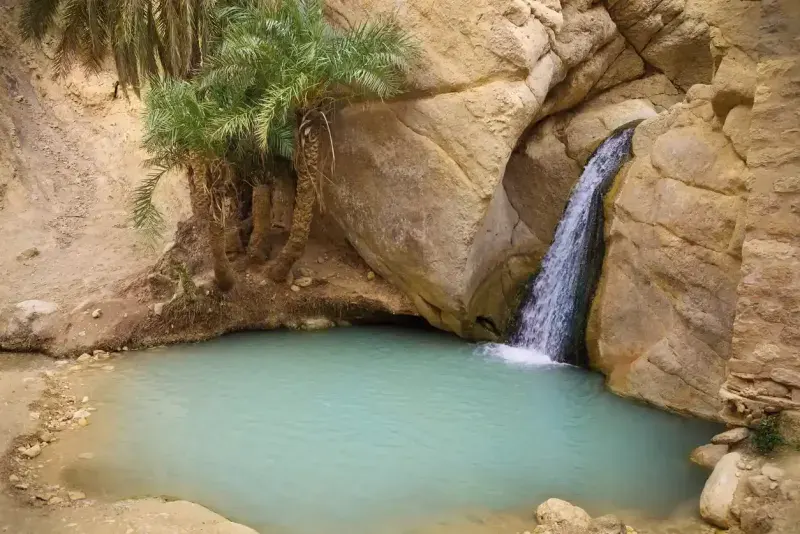
Waterfall in mountain oasis Chebika, Tunisia.
What is Tunisia best known for?
Tunisia is best known for Roman ruins (El Jem amphitheater, Carthage, Dougga), the Sahara Desert, Star Wars filming locations, and UNESCO medinas. I'll find world-class archaeology at affordable prices with minimal crowds compared to Europe.
What is the best destination in Tunisia?
Best destination depends on interests: El Jem for Roman ruins, the Sahara Desert for adventure, Tunis medina for culture, Sidi Bou Said for coastal beauty, and Carthage for ancient history. Most visitors combine multiple sites since Tunisia is compact.
Is Tunisia worth visiting for tourists?
Yes! I get world-class Roman sites, Mediterranean beaches, the Sahara Desert, and authentic culture at 40-60% less than Europe. Fewer crowds, safe travel, incredible value. Tunisia is the Mediterranean's best-kept secret.
What to see in Tunisia in 5 days?
Day 1: Tunis medina + Bardo Museum. Day 2: Carthage + Sidi Bou Said. Day 3: El Jem amphitheater + Kairouan. Day 4-5: Sahara Desert (Tozeur, Matmata, camel trekking, desert camp). This covers Roman ruins, Islamic heritage, the coast, and the desert.
Which month is best to visit Tunisia?
April-May and September-October are best. Perfect 20-28°C temperatures for sightseeing and beaches. Avoid July-August (too hot for ruins, 35-40°C) unless doing a beach-only trip. Winter (December-February) offers budget prices and good Sahara weather.
What are the 7 wonders of the world in Tunisia?
Tunisia has no official "7 Wonders" but has 6 UNESCO World Heritage Sites: El Jem amphitheater, Carthage, Dougga, Tunis medina, Kairouan, Kerkouane Punic city, and Sousse medina. These are Tunisia's true wonders.