Table of Contents:
#Understanding Tunisian Cuisine: Flavors and Influences
#Must-Try Traditional Tunisian Food and National Dishes
#Tunisia Street Food and Local Specialties for Adventurous Eaters
#Regional Food Experiences and Where to Find Authentic Dishes
#Conclusion
Tunisia's culinary landscape defies expectations at every turn. Behind what might appear as straightforward grain-based fare lies an intricate tapestry of flavors, where a mere handful of essential ingredients creates extraordinary diversity. The fiery harissa paste, which earned prestigious recognition on UNESCO's Intangible Heritage list in 2022, exemplifies this complexity, transforming simple peppers and spices into the very soul of Tunisian cooking. Even couscous, the nation's most celebrated dish, challenges assumptions; these golden granules represent pasta craftsmanship rather than grain processing, contributing to Tunisia's remarkable position as the world's second-largest pasta consumer.
Food culture weaves through every aspect of Tunisian life, from bustling medina markets to remote desert settlements. The nation's culinary identity spans beloved classics like the national couscous preparations, alongside vibrant street food traditions, the warming lablabi chickpea soup, and golden bambalouni donuts that punctuate daily rhythms. Mediterranean sunshine meets Arab heritage in Tunisia's kitchens, where aromatic spice combinations and time-honored preparations create dishes that have earned international recognition.
This exploration delves into authentic flavors and regional treasures, mapping culinary adventures across Tunisia's diverse landscapes. From coastal fishing villages serving daily catches to ancient market squares where vendors perfect centuries-old recipes, discover where memorable food experiences await throughout this remarkable North African destination.
The role of harissa in traditional Tunisian food
Harissa stands as Tunisia's culinary ambassador, a fiery paste that embodies the nation's gastronomic soul. This scarlet condiment weaves together roasted red peppers, the prized Baklouti peppers, garlic paste, caraway seeds, coriander seeds, cumin, and golden olive oil, creating a complex symphony that carries oil-soluble flavors throughout countless dishes. The numbers tell their own compelling story: Tunisia dedicates 22,000 tons of annual harissa production, requiring approximately 40,000 tons of peppers. The coveted Baklouti peppers, cultivated around Nabeul and Gabès, deliver their distinctive heat at 4,000–5,000 Scoville units.
Every Tunisian kitchen bears witness to harissa's daily presence. The paste elevates meat and fish stews enriched with seasonal vegetables, transforms humble lablabi chickpea soup into comfort food excellence, and provides the essential fire that makes fricassée sandwiches irresistible. Family recipes pass down through generations, each household guarding its particular blend, some enriched with fermented onions, others brightened with fresh lemon juice. Tunisians approach harissa with the reverence reserved for essential seasonings, incorporating it into virtually every dish that demands depth and warmth.
Key ingredients that define Tunisian cuisine
Tunisia's culinary genius emerges from restraint rather than abundance. Six fundamental ingredients eggs, tuna, olives, tomatoes, potatoes, and bread form the backbone of both elaborate traditional preparations and humble street food offerings. Garlic and olive oil reign supreme as the indispensable duo; Tunisian cooks consider any meal lacking these elements fundamentally incomplete. This devotion to olive oil stems from practical abundance. Tunisia holds the distinction of being the world's fourth-largest olive oil producer, making this liquid gold the preferred cooking medium.
Traditional cooking techniques favor grilling, frying, and braising, all performed with generous olive oil applications, while butter and cream remain exclusively reserved for dessert preparations. The spice cabinet extends beyond harissa to include cumin's earthiness, coriander's brightness, caraway's distinctive bite, saffron's luxury, and paprika's warmth. Tunisia's extensive Mediterranean coastline naturally influences ingredient selection, placing fresh seasonal produce and abundant seafood at the center of culinary traditions. Potatoes represent a relatively recent addition, introduced by European settlers during the early twentieth century, yet they integrated so seamlessly that traditional salads, sauces, and couscous preparations now seem incomplete without them.
How Mediterranean and Arab cultures shaped Tunisia's food scene
Tunisia's geographic position created a culinary crossroads where diverse traditions merged into something unique. Indigenous Berber foundations provided the original framework, which Arab influences from the Islamic conquest of the Maghreb subsequently enriched and expanded. Ottoman rule introduced additional layers of complexity, while Italian influence, particularly from Sicily, fundamentally shaped the pasta consumption patterns that continue today. The French protectorate period contributed refined techniques and specific preparations that remain embedded in contemporary Tunisian cooking.
Mediterranean dietary principles dominate the landscape, emphasizing plant-based foods, seasonally driven ingredients, abundant seafood, and moderate meat consumption patterns. These characteristics align Tunisia with seventeen other Mediterranean countries, yet the distinctive spiciness that permeates Tunisian cuisine creates a clear separation from neighboring culinary traditions. The remarkable fusion of Berber heritage, Arab sophistication, Mediterranean abundance, and French refinement, combined with time-honored cooking methods, produces flavors that remain authentically and uniquely Tunisian.
Taste Tunisia with Culinary Tours!
Experience authentic harissa, street food, and coastal specialties with expert guides. Book Tunisia tours featuring cooking classes, market visits, and traditional meals.
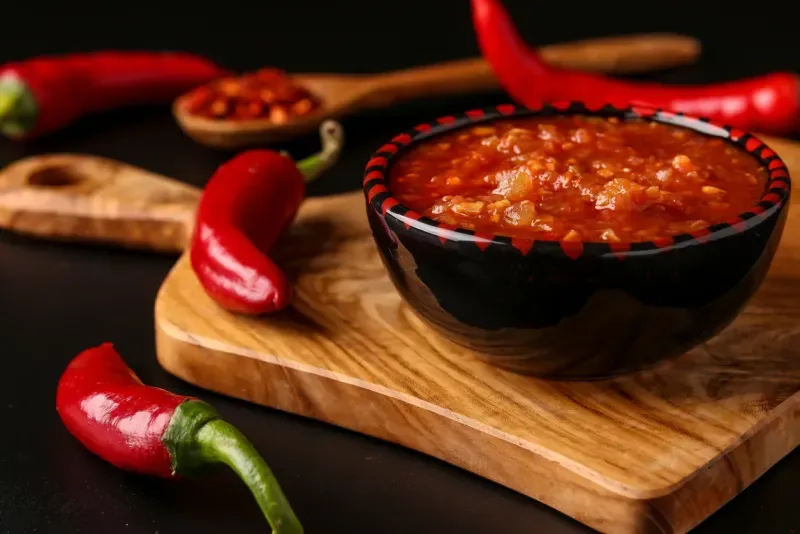
Traditional hot chili pepper sauce paste harissa on dark background, Tunisia and Arabic cuisin
Couscous: The national dish of Tunisia
Couscous transcends mere sustenance to become a cultural cornerstone of Tunisian identity. The preparation ritual involves steaming delicate semolina granules above bubbling stew, allowing each grain to absorb aromatic essences while achieving perfect fluffiness. Tunisian cooks distinguish their version through a distinctive technique, bathing the couscous in rich, tomato-tinted broth that creates a hearty foundation quite unlike Moroccan preparations that eschew this method. Royal couscous represents the pinnacle of this art, adorning the grain base with succulent chicken, spiced meatballs, and robust merguez sausages that transform a simple meal into a celebration. Family gatherings center around enormous platters where colorful vegetables, carrots, turnips, zucchini, pumpkin, and tender chickpeas form a vibrant crown around the central meat arrangement.
Brik and other fried pastries
Ottoman culinary heritage lives on through brik, the golden triangular pastries that grace every Ramadan iftar gathering. Master cooks work with paper-thin malsouka sheets or delicate filo dough, creating pockets filled with flaked tuna, creamy mashed potatoes, fresh parsley, briny capers, and most crucially a whole egg before sealing and frying to crispy perfection. The true artistry emerges in maintaining a molten yolk center while achieving that coveted golden exterior crunch. Cultural tradition adds romantic drama to this dish: prospective grooms must demonstrate their worthiness through the delicate task of consuming brik without allowing precious yolk to escape.
Mechouia salad and traditional appetizers
Despite its translation as "grilled salad," mechouia functions more accurately as Tunisia's signature smoky condiment. The preparation involves charring tomatoes, bell peppers, onions, and garlic directly over glowing charcoal until their skins blacken and blister, then carefully peeling away the burnt exterior to reveal sweet, caramelized flesh beneath. Skilled hands chop these ingredients together with fragrant coriander, earthy caraway, and abundant olive oil until achieving a chunky, paste-like texture ideal for scooping with warm bread. Traditional garnishes of preserved tuna, glossy olives, sharp capers, and quartered hard-boiled eggs complete this Mediterranean masterpiece.
Ojja and egg-based dishes
Ojja claims historical precedence over the more widely recognized "shakshuka," representing Tunisia's original interpretation of eggs nestled within spiced tomato sauce. Local variations often incorporate sliced merguez lamb sausage, creating a substantial breakfast that satisfies the heartiest appetite, though vegetarian preparations offer equally satisfying results. Coastal preparations might feature flaked tuna or sardines, their saltiness providing a perfect counterpoint to the rich, creamy eggs.
Tunisian tajine vs Moroccan tajine
Tunisian tajine defies all expectations shaped by its Moroccan namesake. Rather than a slow-simmered stew, this dish presents as a substantial baked casserole where beaten eggs bind together chunks of meat, melted cheese, diced potatoes, and warming spices into a frittata-inspired creation. Versatility defines its appeal, served chilled as elegant finger food for gatherings or warm as a satisfying main course, this completely liquid-free dish slices cleanly like quiche.
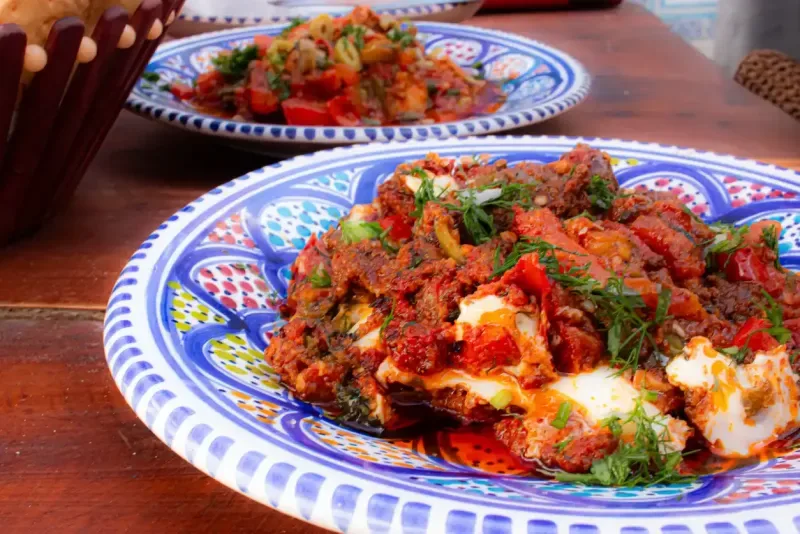
Ojja Merguez, a traditional Tunisian dish
Customize Your Dream Vacation!
Get in touch with our local experts for an unforgettable journey.
Plan Your Trip
Tunisia's street corners tell stories through food, where skilled vendors craft authentic meals for less than a dollar, making the nation's culinary heritage accessible to every passerby. These bustling food stalls represent democracy in its purest form, no reservations required, just genuine appetite and curiosity.
Makloub and fricassée sandwiches
Makloub showcases the art of portable dining, where msemen flatbread becomes a canvas for mayonnaise, harissa, ricotta-style cheese, onion, lettuce, tomato, cucumber, bell pepper, and perfectly grilled or fried meat. Sandwich artisans work with practiced efficiency, preparing these fresh flatbreads for under a dollar.
The fricassée carries a more poignant history, born in La Goulette in the 19th century, when a resourceful woman in Tunisia's Jewish port suburb transformed unsweetened fried dough into sustenance using whatever ingredients were at hand. Today's vendors honor this legacy, slicing open fluffy, deep-fried dough balls and generously stuffing them with mashed potato, tuna, olives, hard-boiled chopped egg, and the ever-present harissa. Watch these masters work their lightning-fast assembly line to create one of Tunisia's most beloved street-food experiences.
Lablabi: The chickpea soup locals love
Humble origins often produce the most satisfying dishes. Lablabi emerged from necessity, providing nourishment for the poor and working class who needed filling meals from day-old baguettes and simple ingredients. The ritual remains unchanged: stale bread gets shredded into your bowl before receiving steaming broth enriched with garlic and cumin, tender chickpeas, a carefully poached egg, capers, fresh parsley, and harissa according to your heat tolerance. Cold weather transforms this economical combination into genuine comfort, proving that simple ingredients can deliver profound satisfaction.
Kafteji: Spicy vegetable scramble
Kafteji demonstrates culinary precision disguised as rustic simplicity. Eggplants, bell peppers, potatoes, tomatoes, zucchinis, and pumpkins each receive individual frying treatment to preserve their distinct flavors before being chopped and combined with fried eggs and aromatic seasonings. This methodical approach to frying each vegetable separately ensures every component maintains its character within the harmonious whole. Street vendors typically serve kafteji stuffed into fresh baguettes, creating portable satisfaction that exemplifies Tunisia's street food mastery.
Merguez sausages and grilled meats
Proper merguez demands respect for tradition and technique. These lamb sausages require at least 30% fat content to achieve their signature juiciness. Ground lamb shoulder receives careful spicing with harissa, cumin, coriander, fennel, and paprika before being stuffed into natural sheep casings. The harissa performs double duty here, imparting both the characteristic red color and the warming heat that makes merguez instantly recognizable.
Bambalouni and sweet street treats
Sidi Bou Said's azure and white streets echo with the sizzle of bambalouni, yeast-based fried donuts that emerge golden and perfect, destined for sugar sprinkling or honey drizzling. These treats achieve their peak when consumed immediately crispy exterior giving way to a warm, tender interior. Coastal vendors position themselves strategically near the sea, understanding that bambalouni serves equally well as morning fuel or evening indulgence.
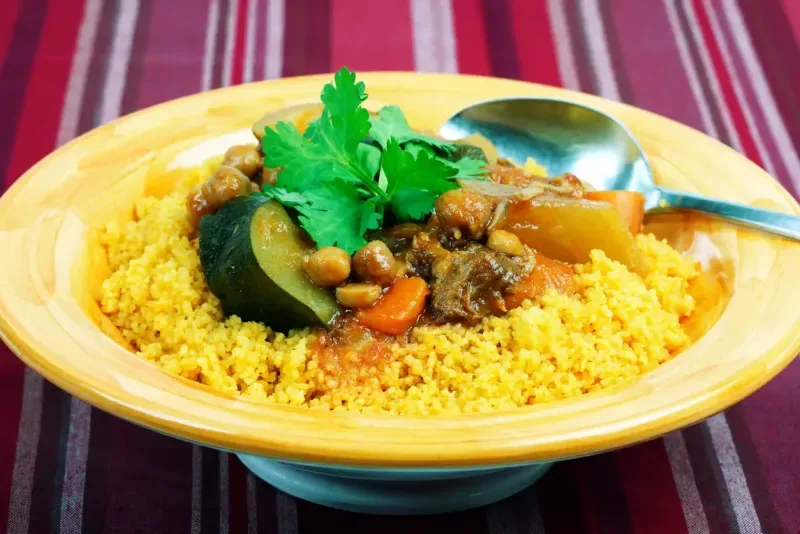
Lamb Couscous
Tunisia's extensive 1,300-kilometer Mediterranean coastline fosters culinary traditions that echo those found across Southern Italy, Spain, and France. Local markets burst with seasonal abundance, vibrant fruits, garden vegetables, fragrant herbs, and exceptional seafood ranging from delicate red mullet to impressive giant cuttlefish.
Coastal seafood specialties
Couscous bel hout represents the coastal communities' masterful adaptation of their national dish. These fluffy steamed semolina grains absorb a richly spiced broth infused with tomatoes, garlic, and aromatic herbs, creating a foundation for the sea's bounty: fresh fish, plump shrimp, tender squid, or briny mussels. Fishing villages along Tunisia's Mediterranean shores perfected this variation to celebrate their daily catch. The Kerkennah Islands maintain centuries-old charfia fishing traditions, producing grilled octopus preparations that showcase this ancient technique. Restaurant La Siréne à La Goulette exemplifies coastal dining, where diners select from displays of freshly caught local fish and seafood.
Desert and Saharan dishes
Mountain towns like Le Kef preserve distinctive culinary traditions born from their inland geography. Bourzguen showcases this regional character, lamb slowly cooked with aromatic rosemary, served over steamed semolina and crowned with sweet dates alongside nuts such as almonds, hazelnuts, walnuts, pine nuts, or pistachios. Mountain homestays offer another regional treasure: traditional cheeses infused with wild mountain herbs that reflect their highland terroir.
Djerba's unique food culture
The island of Djerba maintains culinary customs that distinguish it from mainland Tunisia. Couscous Djerbien breaks conventional preparation rules by thoroughly mixing vegetables, aromatic herbs, and fresh fish or lamb throughout the grain, rather than the traditional layered presentation. During Ramadan, the preparation of mloukhia demonstrates time-honored island cooking techniques. Houmt Souk's bustling markets and Midoun's seaside establishments serve authentic Djerbian specialties that reflect the island's unique cultural heritage.
Best markets and food stalls to visit
Tunis Central Market creates a feast for the senses, where fresh produce mingles with aromatic spices, specialty pantry ingredients, and handmade pasta crafted by local artisans. Nabeul's central market houses Chahida Boufaied's celebrated stall, where visitors can savor freshly prepared slata mechouia accompanied by warm tabouna bread. Hidden within medina quarters, modest roadside stalls, and intimate family-run cafés often serve Tunisia's most exceptional flavors, preserving recipes passed down through generations.
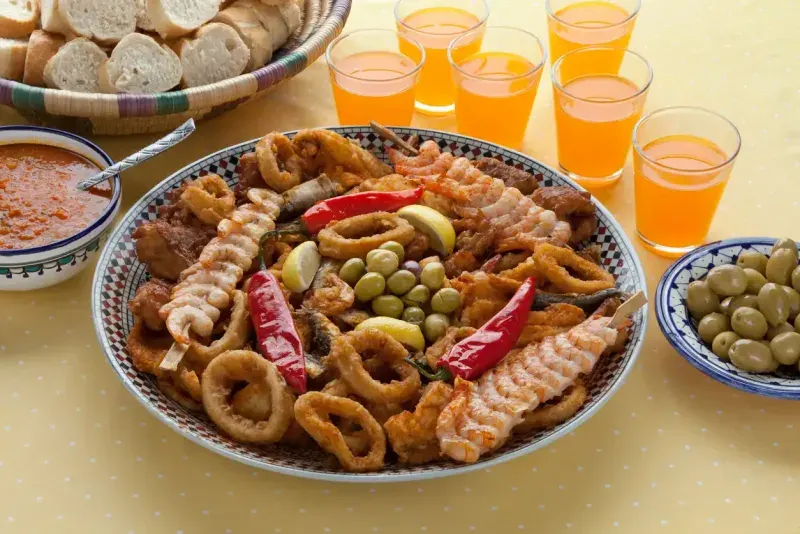
Tunisian fish dish
Tunisia's culinary heritage reveals extraordinary complexity within apparent simplicity, a testament to centuries of cultural exchange and adaptation. The nation's kitchens demonstrate how limited ingredients can yield infinite possibilities when guided by tradition and technique. Each dish carries stories of maritime trade routes, desert caravans, and family recipes passed through generations, creating a food culture that extends far beyond mere sustenance.
The democratization of authentic flavors stands as perhaps Tunisia's greatest culinary achievement. Street vendors masterfully prepare time-honored recipes at prices that make genuine culinary exploration accessible to every traveler. This affordability never compromises quality; instead, it reflects a culture where food represents community rather than exclusivity.
Culinary adventurers will find that their most rewarding experiences often occur in unexpected places, a roadside stall perfecting centuries-old techniques, a family-run café tucked within medina walls, or a coastal market where fishermen display the morning's catch. These encounters provide authentic insights into Tunisian life that extend well beyond the plate.
Begin your exploration with foundational dishes like couscous and brik, then allow curiosity to guide you toward regional specialties and seasonal variations. Tunisia's food landscape rewards those who venture beyond familiar territory, offering discoveries that transform understanding of North African cuisine. Each meal becomes a cultural lesson, each flavor a connection to this remarkable Mediterranean crossroads where every culinary tradition tells its own compelling story.
What are traditional Tunisian foods?
Traditional Tunisian foods: Couscous (national dish), Brik (crispy egg-filled pastry), Harissa (spicy chili paste), Lablabi (chickpea soup), Mechouia salad (grilled vegetables), Ojja (eggs with peppers/merguez), Chorba (hearty soup), Makroudh (date cookies), Fricassé (fried sandwiches), Bambalouni (fried doughnuts). Heavy use of olive oil, harissa, cumin, and fresh Mediterranean ingredients.
What is Tunisia's best dish?
Couscous is Tunisia's best dish, the undisputed national dish eaten weekly (especially on Fridays). Served with lamb, chicken, fish, or vegetables in tomato-based sauce. Brik à l'oeuf (crispy pastry with runny egg) is equally iconic. Both are must-try authentic Tunisian experiences.
Is Tunisian food similar to Moroccan food?
Similar but distinct. Similarities: Both use couscous, tagines, merguez, mint tea, and similar spices. Key differences: Tunisian food is much spicier (harissa everywhere), has stronger Italian/Mediterranean influence (pasta, brik, seafood), and features unique dishes like lablabi. Tunisian cuisine is spicier and more Mediterranean than Moroccan.
What do Tunisians have for breakfast?
Tunisians eat: Lablabi (chickpea soup with egg popular street breakfast), Brik, Fricassé (fried sandwiches), French breakfast (croissants, baguette, coffee), Bambalouni (fried doughnuts), Dates/figs, Olive oil with bread, Mint tea or coffee. The working class prefers lablabi; urban areas lean towards French-style.
Do they drink alcohol in Tunisia?
Yes, alcohol is legal. I can buy it at licensed hotels, restaurants, bars, and supermarkets (Carrefour, Monoprix). Tunisian wines (especially rosé), Celtia beer, and spirits are available. Drink respectfully: only in appropriate venues, not publicly during Ramadan, and avoid drunkenness. Traditional areas don't serve alcohol. Tunisia is liberal regarding alcohol. Prices: beer 3-5 TND, wine from 15 TND.
What are the top 10 dishes in Tunisia?
- Couscous (national dish)
- Brik à l'œuf (egg-filled pastry)
- Lablabi (chickpea soup)
- Harissa (spicy paste)
- Mechouia salad (grilled vegetables)
- Ojja (eggs with peppers)
- Fricassé (fried sandwiches)
- Chorba (soup)
- Couscous au poisson (fish couscous)
- Makroudh (date cookies)
What are the top 5 most popular cuisines in Tunisia?
- Traditional Tunisian (couscous, brik, lablabi most common)
- Mediterranean/Italian (pasta, pizza, seafood, coastal influence)
- French (croissants, pastries, café culture, colonial legacy)
- Middle Eastern (shawarma, falafel available in cities)
- International (burgers, Asian growing in urban areas)
Tunisian dominates; French breakfast widespread; Italian influence coastal.