Some moments feel bigger than travel itself. Bigger than borders, itineraries, or photographs. They become the kind of memories people replay for the rest of their lives, the kind that make the world suddenly feel vast, mysterious, and beautifully small all at once.
This is not just another eclipse.
The 2027 solar eclipse is expected to be one of the most extraordinary astronomical events of the century, the longest land-visible totality the world will see until 2114. For eclipse chasers, astronomers, photographers, and travelers alike, this is the event people plan years, sometimes decades, around.
Hotels across the eclipse path are already seeing rising demand. Flights will become more limited. Prime viewing locations will sell out long before 2027 arrives. The closer the date gets, the fewer choices travelers will have, and the more expensive the journey becomes.
This guide is your complete resource, the science, the destinations, the trip planning, the photography, the packing lists, and the one thing nobody wants to hear but everyone needs to know: why booking now isn't just smart, it's essential.
In this Guide:
#2027 Solar Eclipse at a Glance
##Why It's Called the "Eclipse of the Century"?
#Total vs. Annular vs. Partial: What's the Difference?
#What Actually Happens During Totality?
#Path of the 2027 Solar Eclipse
#Eclipse Timeline Across the Path (Approximate Local/UTC Times)
#Best Countries to Experience the 2027 Solar Eclipse
#Comparing the Eclipse Experience by Destination
#Places That Will See a Partial Solar Eclipse in 2027
#How to Prepare for the 2027 Solar Eclipse
#Best Photography Tips for the 2027 Solar Eclipse
#2027 Solar Eclipse at a Glance
- Date of Eclipse: August 2, 2027
- Longest Totality: Approximately 6 minutes and 23 seconds
- Why It’s Historic: The longest land-visible total solar eclipse until the year 2114
- Path of Totality: Crosses parts of Europe, North Africa, and the Middle East
#Why It's Called the "Eclipse of the Century"?
The 2027 eclipse isn't just another solar eclipse. Here's what separates it from every other eclipse event in the coming century:
- Longest land-viewable totality of the 21st century: up to 6 minutes 23 seconds in parts of Egypt, more than double most total eclipses
- Ideal geographic path: crossing historically and culturally rich regions of southern Europe, North Africa, and the Middle East, giving travelers extraordinary backdrops
- Near-perfect weather statistics: the path cuts through some of the driest, most reliably clear-sky territory on the planet, particularly Upper Egypt where cloud probability in August is under 5%
- Rare lunar geometry: the Moon will be at an unusually close point in its elliptical orbit (near perigee), making it appear notably larger than average against the Sun, ensuring a deep and dramatic corona reveal
- Accessible path: unlike some historic eclipses that crossed remote oceans or polar regions, the 2027 path passes over countries with established tourism infrastructure
The previous eclipse with a comparable duration was in 1991 over Hawaii and Baja California, Mexico, 6 minutes 53 seconds at maximum, largely over the Pacific Ocean. The 2027 eclipse is the greatest land-accessible totality event of the entire century.
Customize Your Dream Vacation!
Get in touch with our local experts for an unforgettable journey.
Plan Your Trip
#Total vs. Annular vs. Partial: What's the Difference?
If you're new to eclipse travel, understanding the types matters enormously, because the difference between a total and partial eclipse is not just a matter of degree. It's the difference between watching a sunset and standing inside one.
- Total solar eclipse: the Moon completely covers the Sun. This is the one that causes daylight to disappear and reveals the Sun's corona. Totality only happens within a narrow path (usually 100–200 km wide).
- Annular solar eclipse: the Moon is slightly farther from Earth, so it doesn't fully cover the Sun. You get a "ring of fire" effect, but no true darkness.
- Partial solar eclipse: the Moon covers only part of the Sun. Impressive, but nowhere near the total experience. Visible from a much wider area.
#What Actually Happens During Totality?
Here is what happens, minute by minute, as totality approaches:
- 60–90 minutes before: The partial eclipse begins as the Moon slowly covers the Sun. The daylight starts to feel strangely dim and silvery.
- 15–20 minutes before: Colors shift, shadows sharpen, and the atmosphere becomes noticeably surreal.
- 3–5 minutes before: Temperatures drop quickly, animals grow quiet, and a glowing 360° sunset appears around the horizon as the Moon’s shadow races toward Earth.
- 60–90 seconds before: The famous Diamond Ring and Baily’s Beads effects appear, brilliant flashes of sunlight just before darkness.
- Totality: Day turns to twilight. Stars and planets become visible, and the Sun’s glowing corona surrounds the Moon in one of the most breathtaking sights on Earth.
#Path of the 2027 Solar Eclipse
The path of totality sweeps eastward from the Atlantic Ocean across the Mediterranean Sea and into East Africa, covering approximately 250 km in width at its broadest point across central Egypt.
- Spain: Western entry point; Cádiz, Tarifa, Málaga
- Gibraltar: Small territory, full totality
- Morocco: Tangier, northern coast, cultural richness
- Algeria: Northern regions; less tourism infrastructure
- Tunisia: Sfax, Kerkennah Islands; Mediterranean atmosphere
- Libya: In the path but limited tourism access
- Egypt: Longest totality on the path. Luxor, Qena, Aswan
- Sudan: Northern regions
- Saudi Arabia: Jeddah region, Red Sea coast
- Yemen: In the path; travel restrictions apply
- Somalia: Southern tip of the path
#Eclipse Timeline Across the Path (Approximate Local/UTC Times)
The 2027 solar eclipse will move across multiple regions within a short time window, creating a sweeping path of totality:
- ~10:45–10:55 UTC: Southern Spain (Cádiz, Tarifa, Andalusia)
- ~10:55–11:05 UTC: Northern Morocco and the Strait of Gibraltar
- ~11:00–11:10 UTC: Algeria and Tunisia
- ~11:00–11:10 UTC: Egypt (Luxor, Qena, Aswan, peak duration zone)
- ~11:15–11:25 UTC: Red Sea coast of Saudi Arabia (including Jeddah region)
- ~11:20–11:30 UTC: Western Yemen
- ~11:30–11:40 UTC: Exit over the Indian Ocean
#Best Countries to Experience the 2027 Solar Eclipse
1- Spain: The European Gateway
Spain is the first major country the eclipse touches, and it's going to be one of the busiest. Travelers from across Europe and North America will converge on southern Andalusia for the eclipse, drawn by familiar infrastructure, excellent beaches, and the excitement of a major European event.
Best Viewing Locations:
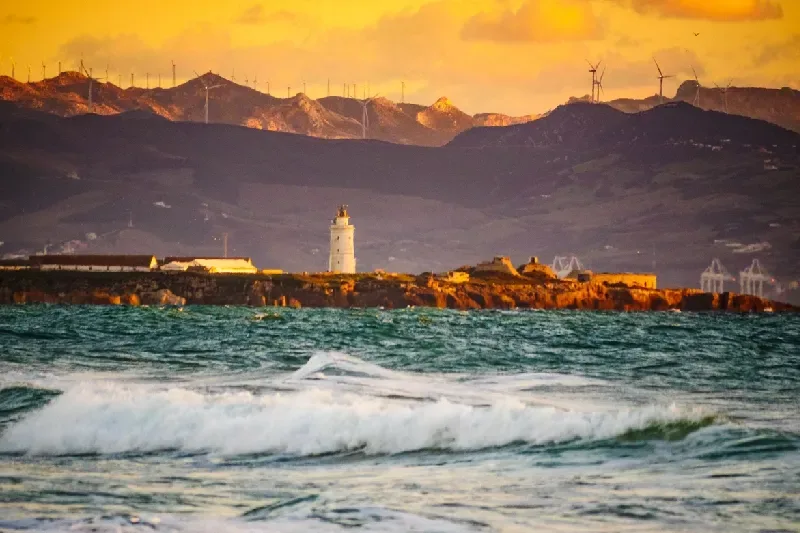
- Tarifa: is the southernmost point of continental Europe, where the Atlantic meets the Mediterranean. The eclipse path centerline passes very close to Tarifa. Dramatic coastal scenery, strong winds typical of the area, and a unique geography make this one of the most photogenic spots in Spain.
- Cádiz: is a historic city built on a narrow peninsula, surrounded by sea on three sides. The light during the eclipse will be extraordinary here, reflecting off the ocean in every direction as totality settles.
- Málaga: Málaga is a larger city with superior tourist infrastructure, international airport, and strong beach culture. It has slightly shorter totality than Cádiz or western Andalusia but is much easier logistically.
- Algeciras and Gibraltar border area: Algeciras offers access to the Strait of Gibraltar region and surrounding hills, providing a truly unique geographical backdrop.
Eclipse Duration: Approximately 2 minutes 30 seconds to 4 minutes 10 seconds depending on exact location (Spain is closer to the northern edge of the path compared to North Africa).
Weather Chances: Moderate to Good. August in southern Spain is generally sunny and hot, but Atlantic-facing coastal areas can develop morning mist or high cloud.
Experience Style:
- Full European infrastructure
- Beach culture combined with the eclipse creates a festive, carnival-like atmosphere
- Expect enormous crowds, Cádiz and Tarifa will be exceptionally busy
- Strong cultural backdrop, lamenco, tapas, Moorish architecture in nearby Granada and Seville
- Shorter totality duration than North Africa or Egypt, but still a powerful experience
Best For: First-time eclipse travelers seeking a comfortable, familiar setting, families preferring simple logistics, those combining the eclipse with a broader Spain or Portugal trip, and travelers from the UK, France, or Northern Europe avoiding long-haul flights.
2- Morocco: Culture Meets Totality
Morocco is one of the most underrated eclipse destinations on the 2027 path, and knowledgeable travelers are increasingly choosing it over Spain, for good reason.
The northern coast falls deep within the totality path with longer duration than Spain, and the added dimension of one of the world's most culturally vivid countries as your backdrop.
Best Viewing Locations:
- Tangier: Morocco's northernmost city, cosmopolitan and historically significant, with easy ferry connections from Spain. The corniche along the bay offers wide-open horizon views, ideal for watching the horizon glow as totality approaches.
- Tetouan: a UNESCO World Heritage medina city in the Rif Mountains foothills, very close to the path centerline. Less internationally known than Tangier but deeply atmospheric, narrow white-washed streets, artisan workshops, mountain backdrop.
- Chefchaouen: the famous "Blue City" nestled in the Rif Mountains may be near the path's southern edge; verify exact positioning as eclipse date approaches.
- Northern Atlantic coast beaches: the stretch between Tangier and Asilah offers wide-open Atlantic beach settings with excellent horizon views in all directions.
Eclipse Duration: Approximately 4 minutes 45 seconds to 5 minutes 10 seconds
Weather Chances: Good to Very Good. Northern Morocco in August benefits from the same high-pressure system that dominates the western Mediterranean.
Experience Style:
- Extraordinary cultural immersion
- The contrast of witnessing this sky event above ancient Islamic architecture is profound
- Less crowded than Spanish eclipse sites
- Longer totality than Spain
- Budget-friendly compared to European eclipse destinations
Best For: Travelers seeking culture alongside the eclipse, visitors extending their journey from Spain, budget travelers looking for a strong totality experience, and anyone who has always dreamed of visiting Morocco. Read in detail about the Solar Eclipse in Morocco!
Join our Morocco Eclipse Group Tour 2027. Travel with fellow eclipse chasers through one of Africa's most magical destinations.

3- Tunisia: The Hidden Eclipse Gem
If you ask serious eclipse chasers which destination outside of Egypt is most underrated for 2027, most will say Tunisia. And they're right.
Tunisia occupies a sweet spot that few people are talking about: strong totality duration, exceptional sky clarity statistics, a beautiful Mediterranean coastline, and a fraction of the crowds you'll face in Spain.
Best Viewing Locations:
- Sfax: Tunisia's second-largest city and the closest major urban center to the path centerline in Tunisia. Sfax is a working city with authentic character, less polished than Tunis but more genuine.
- Kerkennah Islands: these flat, palm-dotted islands in the Gulf of Gabès, reachable by ferry from Sfax, may be the single most unique viewing experience on the entire 2027 path.
- Gulf of Gabès coastal towns, several smaller coastal communities between Sfax and the Libyan border offer centerline proximity with minimal crowds.
- El Djem, home to one of the best-preserved Roman amphitheatres in the world (comparable to the Colosseum), El Djem may fall within or very close to the path. Watching totality from the rim of this 1,800-year-old monument would be an extraordinary experience.
Eclipse Duration: Approximately 5 minutes 20 seconds to 5 minutes 45 seconds near the centerline
Weather Chances: Very Good. Eastern Tunisia in August has some of the most reliable clear-sky conditions in the Mediterranean.
Experience Style:
- Relaxed, unhurried Mediterranean pace
- Strong historical depth, ancient Carthage, Roman ruins, traditional medinas
- Excellent cuisine: fresh seafood, North African spices, wonderful street food culture
- Genuinely less crowded than any Western European eclipse site
- Good value for money, accommodation, food, and transport are affordable
Best for: travelers who prioritize long totality and clear skies, those seeking a powerful eclipse experience without overwhelming crowds, history lovers fascinated by Roman archaeology, and budget-conscious travelers who still want exceptional viewing conditions.
4- Egypt: The Heart of the Eclipse Path
Let's be clear about something: Egypt is not just one of the best places to watch the 2027 eclipse. It is, by virtually every objective metric, the best place on Earth.
Best Viewing Locations:
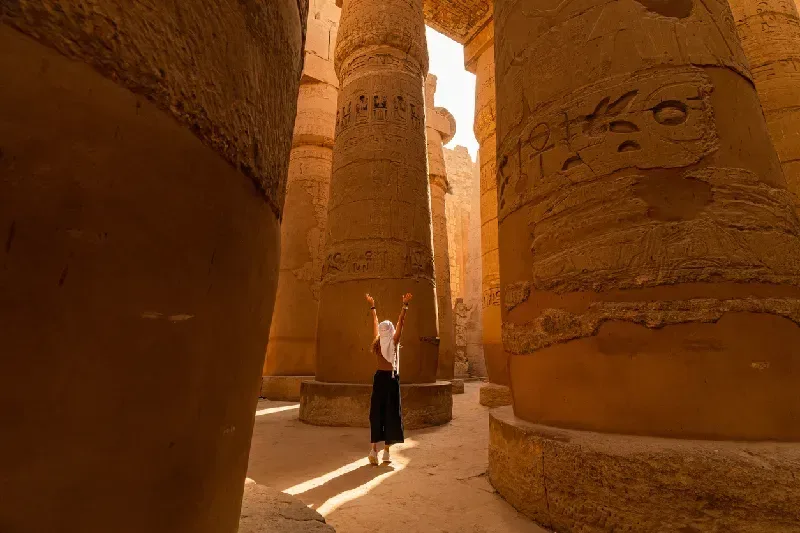
- Luxor: The crown jewel of eclipse viewing, positioned near the centerline with over 6 minutes of totality. It also offers unmatched historical depth, including Karnak Temple, Luxor Temple, the Valley of the Kings, the Valley of the Queens, and more, making it one of the most extraordinary combinations of astronomy and ancient history anywhere in the world.
- Qena: Located slightly north of Luxor and even closer to the theoretical maximum eclipse point, Qena offers a few extra seconds of totality. It is far less crowded, more authentic, and increasingly popular among experienced eclipse chasers. Nearby Dendera Temple, home to the famous zodiac ceiling, adds a strong astronomical and cultural dimension to the experience.
- Sohag: Further along the path, Sohag provides solid totality conditions with very small crowds and a more local, unspoiled atmosphere. The nearby White Monastery (Deir el-Abyad) adds a striking historical and visual contrast to the eclipse experience.
- Nile cruise (Luxor–Aswan): One of the most memorable ways to experience the eclipse, with totality observed from the Nile itself. The darkened sky reflected on the water, framed by temples like Philae or Kom Ombo, creates a rare and cinematic once-in-a-lifetime setting.
Eclipse Duration in Egypt:
- Qena: ~6 minutes 22 seconds
- Luxor: ~6 minutes 15 seconds
- Sohag: ~6 minutes 10 seconds
- Aswan region: ~5 minutes 45 seconds
Weather Chances: Very Good. Upper Egypt in August offers some of the most reliable clear-sky conditions in the world, thanks to its extremely dry desert climate and dominant summer high-pressure systems.
Experience Style:
- A dramatic mix of ancient history and desert landscapes along the Nile
- Unmatched archaeological depth with Luxor, Karnak, Valley of the Kings, and more
- Unique cultural atmosphere where ancient solar mythology meets modern eclipse viewing
- Options ranging from luxury Nile cruises to desert camps and relaxed riverside stays
- Strong tourism infrastructure with easy access from Cairo and established hospitality
Best for: Travelers seeking the longest totality and most reliable skies, those wanting a once-in-a-lifetime blend of astronomy and ancient civilization, Nile cruise enthusiasts, and eclipse chasers who prioritize both experience quality and viewing conditions over everything else.
Witness the solar eclipse in Egypt with our Egypt Solar Eclipse Tour and secure your place under Egypt's ancient skies.
5- Saudi Arabia: Desert, Red Sea, and Totality
Saudi Arabia is emerging as an unexpected eclipse destination for 2027, particularly as the country opens increasingly to international tourism.
Best Viewing Locations:
- Jeddah: Saudi Arabia's second-largest city and Red Sea gateway. Modern, cosmopolitan, with a spectacular corniche along the sea. Jeddah's historic Al-Balad district (UNESCO World Heritage) provides a striking cultural backdrop.
- Red Sea coastal areas north of Jeddah: open water, desert landscape and eclipse is a dramatic combination unique to this location on the path
- NEOM region (northern Red Sea): Saudi Arabia's flagship megacity project sits in the region and may have dedicated viewing facilities by 2027
Note: Mecca is in the broader eclipse region but is accessible only to Muslim visitors. Non-Muslim travelers should plan for locations in and around Jeddah.
Eclipse Duration: from 3.5 to 5 minutes (varies by location)
Weather Chances: Good. Saudi Arabia's Red Sea coast in August is hot and clear. Dust events (haboobs) are possible but statistically unlikely to affect eclipse viewing.
Experience Style:
- Unique combination of desert, sea, and modern architecture
- Less crowded than European eclipse sites
- Saudi e-visa is now available to most nationalities online
Best For: Gulf region travelers, those combining the eclipse with a broader Saudi Arabia cultural trip and muslim travelers who wish to experience the eclipse in the broader holy land context.
Explore our Saudi Arabia Solar Eclipse tour, be among the first to experience Saudi Arabia's wonders during a once-in-a-generation eclipse.

#Comparing the Eclipse Experience by Destination
| Destination |
Total Duration |
Crowds | Experience |
| Luxor, Egypt | ~6 min 15 sec |
Moderate |
Ancient temples, spiritual |
| Qena, Egypt | ~6 min 22 sec | Low | Desert, authentic |
| Tunisia (Sfax/Kerkennah) | ~5 min 20-45 sec | Low–Moderate | Mediterranean, relaxed |
| Morocco (Tangier/Tetouan) | ~4 min 45 sec to 5 min 10 sec | Moderate | Cultural, vibrant |
| Spain (Cádiz/Tarifa) | ~2 min 30 sec to 4 min 10 sec | Very High | European coastal |
| Saudi Arabia (Jeddah) |
|
Low | Desert, Red Sea |
#Places That Will See a Partial Solar Eclipse in 2027
Even outside the path of totality, much of Europe, North Africa, and the Middle East will experience a significant partial eclipse.
Europe
- Portugal: Portugal will experience a strong partial eclipse, especially along the southern coast. In cities like Lisbon and Porto, daylight may take on a softer, silvery tone, while the Algarve will see even deeper dimming closer to the eclipse path.
- France: Southern France, including Nice and Marseille, is expected to experience one of Europe’s stronger partial eclipses outside totality. The changing Mediterranean light and noticeably dimmer skies may create an unusual atmosphere during maximum eclipse.
- United Kingdom: The eclipse will appear more modest across the UK, with the strongest coverage in Cornwall and southwest England. While the changes may be subtle compared to southern Europe, eclipse viewers may still notice cooler light and sharper shadows.
- Germany: Germany will see a noticeable but moderate partial eclipse, particularly in southern regions such as Munich. The effect becomes weaker farther north toward Berlin and Hamburg.
- Italy: Italy is among the best European countries for viewing the partial eclipse, especially in southern Italy and Sicily. Cities like Rome, Naples, and Palermo may experience dramatic dimming and striking Mediterranean lighting conditions.
- Greece: Greece is expected to experience very deep partial coverage, particularly across Crete and Rhodes. The combination of Aegean landscapes, ancient landmarks, and eclipse-filtered light could make Greece one of the most visually memorable partial-eclipse destinations in Europe.
- Spain (Outside Totality): Even outside the totality zone, cities like Madrid and Barcelona will experience a dramatic partial eclipse. Travelers elsewhere in Spain remain within relatively easy reach of Cádiz and Tarifa, where full totality will occur.
North Africa & the Middle East
- Cairo & Northern Egypt: Cairo and Alexandria sit just outside the totality path, meaning the eclipse will still feel dramatic but without complete darkness. The skies above landmarks like the Pyramids of Giza may take on an unusual filtered light during maximum eclipse, while Luxor and Upper Egypt remain the best destinations for totality.
- Casablanca, Rabat, and Marrakech In Morocco: will all experience a strong partial eclipse, while northern cities like Tangier and Tetouan lie directly inside the path of totality. The contrast between Morocco’s historic medinas and the changing eclipse light could create extraordinary viewing conditions.
- Northern Algeria: including Algiers and nearby coastal regions, will experience deep partial coverage with noticeable atmospheric changes during peak eclipse moments.
- Jordan: will experience a significant partial eclipse, particularly around Petra and Amman. The sandstone landscapes of Petra under eclipse-filtered skies could offer one of the region’s most unique viewing settings.
- Turkey: Istanbul and southern coastal regions such as Antalya will see a noticeable partial eclipse, with stronger coverage toward southern Turkey.
- Dubai, Abu Dhabi, and Doha: will experience a lighter partial eclipse compared to North Africa, though the changing desert light and skyline views may still create a memorable atmosphere.

#How to Prepare for the 2027 Solar Eclipse
Planning a solar eclipse trip is a bit different from a regular holiday. It combines travel planning with timing, logistics, and a bit of advance preparation to make sure you’re in the right place at the right moment.
Step 1: Decide Your Destination First
Before anything else, choose your preferred destination. This decision will shape your flights, accommodation, visa requirements, and overall travel style.
In general, your choice depends on the kind of experience you want:
- A longer eclipse experience with strong viewing conditions
- A mix of eclipse viewing and cultural exploration
- A more convenient or familiar travel setup
- A budget-friendly option with good accessibility
Once you have a direction in mind, it becomes much easier to build the rest of your plan around it. It’s usually better to choose early and refine details later rather than postponing the main decision.
Step 2: Understand the Booking Timeline
Eclipse travel tends to follow a gradual booking pattern, where availability and pricing shift over time.
Late 2026 – Early 2027
- Some well-located hotels and properties begin to sell out
- Tour availability becomes more limited in popular categories
- Flight and accommodation prices may gradually increase
- Many travelers begin finalizing their plans
- At this stage, planning is still very manageable, though flexibility may start to decrease.
Mid-2027 (Closer to the Eclipse)
- Reduced availability in prime locations
- Fewer options for organized tours
- Higher variation in travel and accommodation pricing
- More constraints for independent travelers in busy areas
Planning Insight
- Starting early mainly helps with:
- Better hotel location options
- More tour choices
- Smoother logistics overall
- Greater flexibility in budget and itinerary design
- Even in 2026, there is still ample opportunity to plan a well-structured trip.
Step 3: Book Flights
Once your destination is chosen, flights are usually the next step.
Helpful tips:
- Compare multiple airports and routing options
- Use fare alerts to track price changes
- Consider flexible dates if possible
- Book when pricing feels reasonable rather than waiting for perfect timing
- Flight prices may adjust over time depending on demand, so early monitoring helps you make better decisions.
Step 4: Book Accommodation
Accommodation plays a key role in eclipse travel, especially for staying close to viewing areas.
Recommended approach:
- Book soon after confirming your flights
- Focus on location and accessibility first
- Choose flexible or refundable options if available
- Compare both central and nearby alternatives
- If central areas become limited, nearby towns or secondary locations can still offer good access with proper planning.
Step 5: Consider an Eclipse Tour Package
A guided eclipse tour is a convenient option for many travelers, especially if you prefer structured planning.
Typical inclusions:
- Pre-selected viewing locations
- Transport to and from the site
- Guidance on timing and safety
- Basic equipment support (like eclipse glasses)
- Backup planning in case of weather changes
When choosing a tour, it helps to consider:
- Group size and travel style
- Experience of the operator with eclipse events
- Quality of logistics and local coordination
- Flexibility in case of changes
- Tour options vary widely, from budget group trips to more private and premium experiences.
#Best Photography Tips for the 2027 Solar Eclipse
The 2027 eclipse is a photographer's dream, especially from Egypt, where the combination of ancient architecture and maximum totality duration creates once-in-a-century composition opportunities.
Camera Setup
- Telephoto lens (300–600mm equivalent) for close-up corona shots
- Wide-angle lens for landscape shots capturing the darkened sky and surroundings
- Sturdy tripod: essential; even small shake will ruin long exposures
- Solar filter: required during partial phases; remove only during totality
- Intervalometer: automate a bracket of exposures during totality
Exposure Settings (Totality)
- Start with ISO 400, f/8, 1/500s and bracket from there
- The corona varies dramatically in brightness, bracket exposures from 1/1000s to 1 full second
- Use RAW format for maximum post-processing flexibility
Smartphone Tips
- Switch to Pro/Manual mode if available
- Lock focus and exposure manually before totality begins
- Use a tripod mount, even phones benefit enormously from stability
Are you excited to witness one of the most extraordinary natural events in the sky? A total solar eclipse is not just something you watch, it’s something you feel as the world around you slowly shifts from daylight to twilight in a matter of minutes. It’s a rare experience that brings people together in silence and awe, reminding you just how incredible and precise our universe really is.