Article Index:
#Key Destinations in Sri Lanka's Tea Country
#Tea Plantations and Factories: Where the Magic Happens
#The Train Journey: One of the World's Great Rail Experiences
#Hiking and Nature Walks: Getting Closer to the Hills
#Best Time to Visit Tea Country
There's a moment, somewhere between Kandy and Ella, as the train rounds a bend and the entire world opens up into an ocean of emerald green, when you understand why people fall in love with Sri Lanka's hill country and never quite get over it. I certainly haven't.
I spent two weeks winding my way through Sri Lanka's famous tea region, and I can honestly say it was one of the most visually stunning, soul-soothing travel experiences of my life. Rolling hills wrapped in manicured tea bushes, cool mountain air that smells faintly of eucalyptus and fresh-brewed tea, colonial bungalows perched on clifftops, and train journeys so beautiful they feel like someone designed them purely for the sake of wonder.
If you're planning a trip to Sri Lanka and wondering whether the hill country is worth the detour from the beaches, it absolutely is. Here's everything you need to know
#Key Destinations in Sri Lanka's Tea Country
Nuwara Eliya: "Little England" at Altitude
Nuwara Eliya is the kind of place that surprises you. You half-expect to step off the bus and find yourself in the tropics, but instead you're greeted by Tudor-style cottages, manicured hedgerows, a proper colonial-era golf course, and cool, crisp air that hovers around 15°C even in the height of summer.
The British planted tea here in the 19th century and left behind an architectural legacy that's still very much alive. The Hill Club, a stuffy but charming colonial members' club, still requires a jacket at dinner. The post office looks like it was lifted straight from a Cotswolds village. And Gregory Lake, right in the town center, is perfect for an evening stroll as the mist rolls in off the surrounding hills.
Customize Your Dream Vacation!
Get in touch with our local experts for an unforgettable journey.
Plan Your Trip
Ella: The Backpacker's Paradise with Scenery to Match
A couple of hours further east by train (more on that shortly), Ella is where cool mountain scenery meets a buzzing little traveler's hub. The main street is lined with cafes, guesthouses, and yoga studios, but step even slightly off it and you're immediately surrounded by tea plantations, jungle, and dramatic viewpoints.
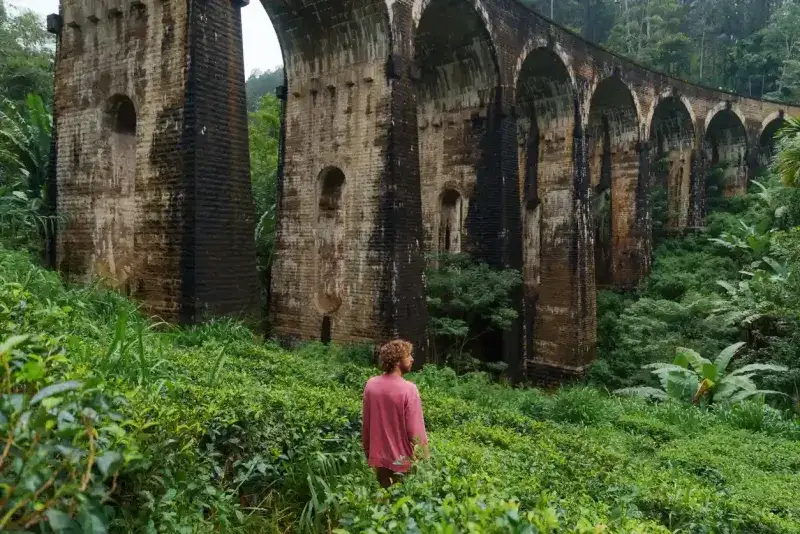
Then there's the Nine Arches Bridge, a magnificent colonial-era railway viaduct tucked into the jungle about a 20-minute walk from town. Timing your visit to catch the train rolling over it (check the schedule at your guesthouse) is one of those travel moments that lives rent-free in your head forever.
Hatton and Talawakelle: Gateway to the Plantations
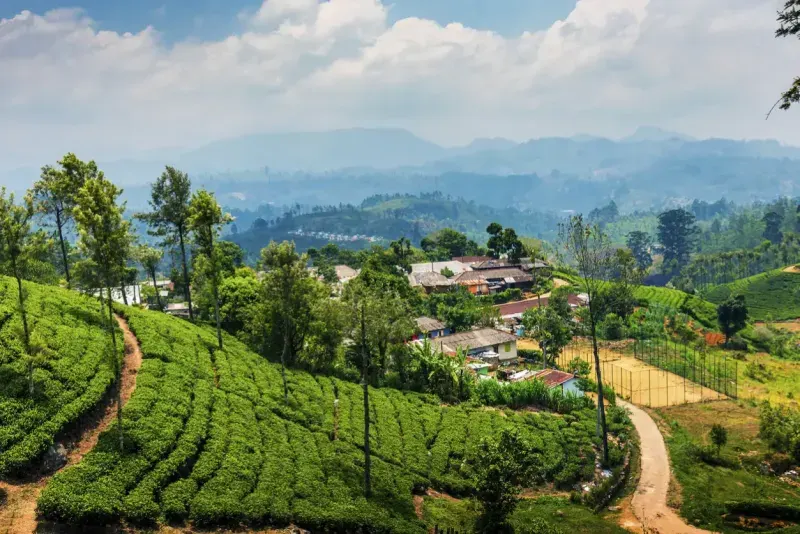
These twin towns don't attract as many tourists as Nuwara Eliya or Ella, which is precisely why I loved them. Hatton and Talawakelle are proper working towns, busy with tea factory workers, local markets, and the rhythm of everyday Sri Lankan life.
They're excellent bases for visiting some of the most authentic tea estates in the region, and the surrounding countryside is genuinely spectacular.
Kandy Outskirts: A Cultural Gateway
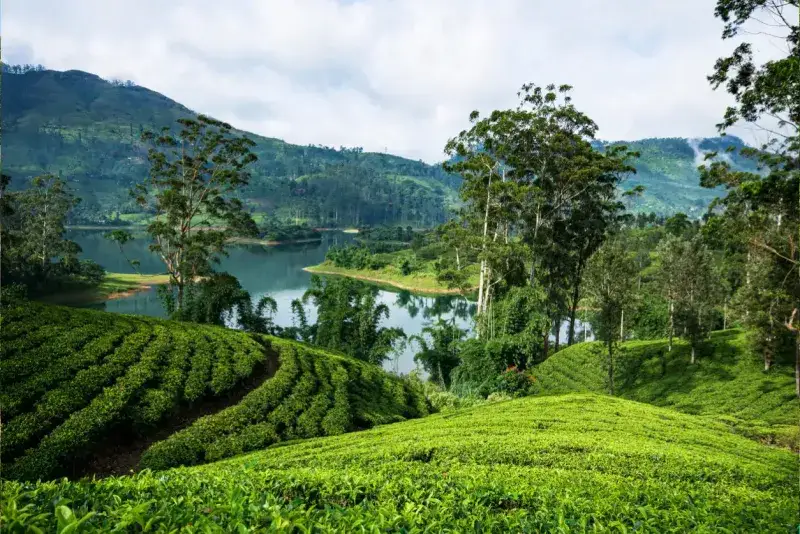
While Kandy itself is Sri Lanka's cultural capital, home to the famous Temple of the Tooth Relic, the outskirts of the city are where the hill country begins. Several tea plantations within an easy day-trip from Kandy make it a great first taste of tea country before you head deeper into the hills. If you're short on time, a Kandy-based plantation tour can give you a solid introduction to Ceylon tea without requiring a full multi-day excursion.
Ready to explore tea country for yourself? Check out our Sri Lanka tours designed to take you through the most spectacular corners of the hill country.
#Tea Plantations and Factories: Where the Magic Happens
I didn't know much about how tea was made before visiting Sri Lanka. I knew it came from leaves. That was roughly the extent of it. After visiting three different factories in the hill country, I was completely converted into a tea nerd.
The Experience of Walking a Tea Estate
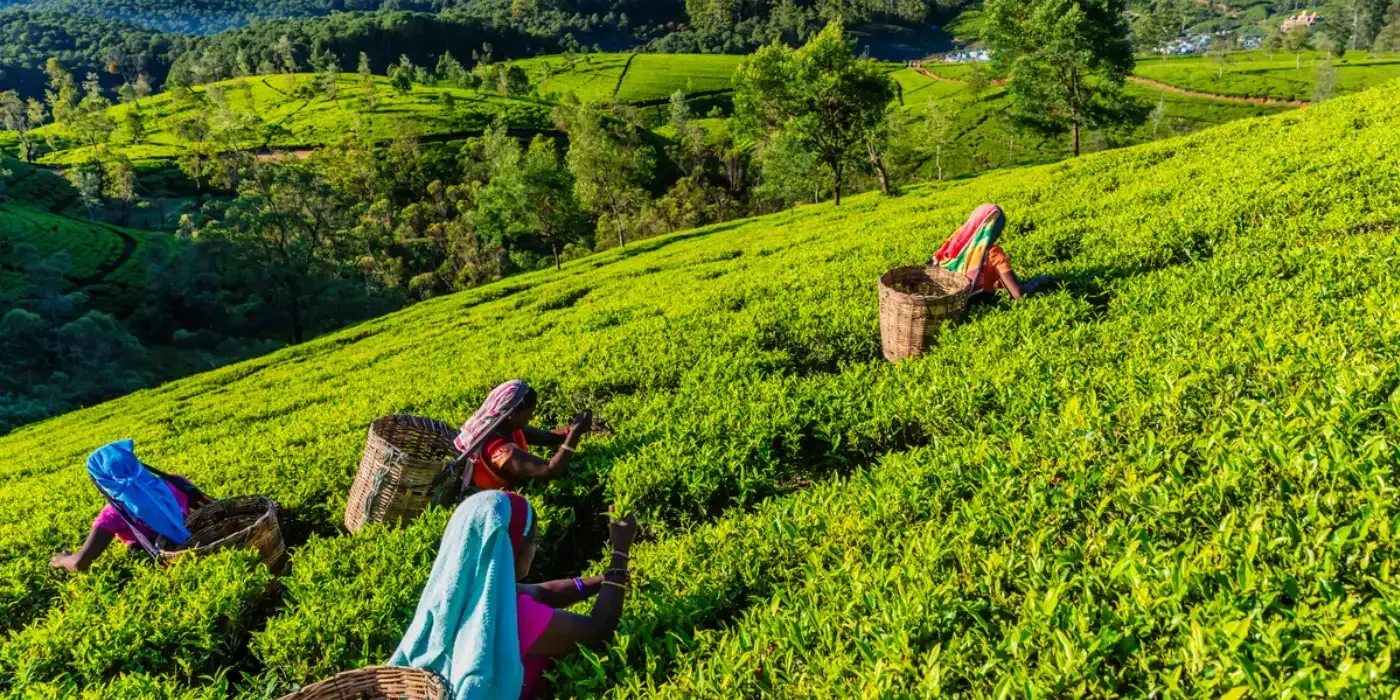
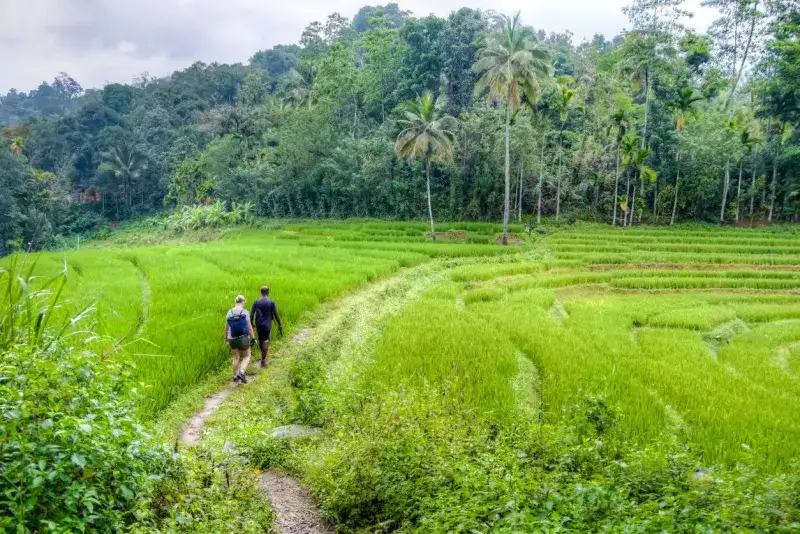
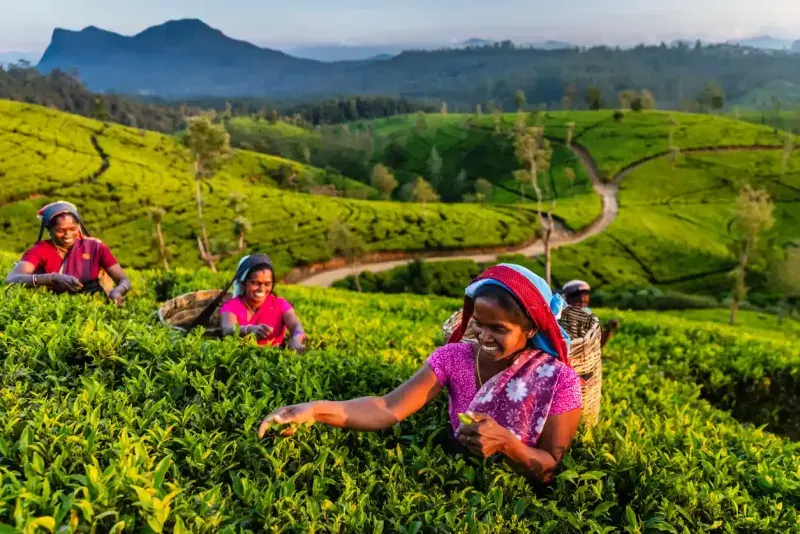
There's something meditative about walking through a working tea plantation. The bushes are planted in neat rows that follow the contours of the hills, creating rippling green patterns that look almost too perfect to be real. Tamil tea pluckers, often women in brightly colored saris, move through the rows with practiced speed, selecting only the finest two leaves and a bud from each plant.
Most estates welcome visitors to walk with them and learn, and some allow you to try plucking yourself (spoiler: it's much harder than it looks).
Tea Factories Worth Visiting
- Pedro Tea Estate near Ella is one of the most visitor-friendly factories in the region. The estate dates back to the 1880s and still uses traditional processing methods alongside modern machinery. The guided tour takes you through each stage, withering, rolling, oxidation, drying, and sorting, and ends with a proper tea tasting. Watching dried black tea sorted by grade on massive vibrating sieves while the air fills with that warm, malty scent is genuinely fascinating.
- Blue Field Tea Factory just outside Nuwara Eliya is another excellent stop. It sits at high elevation, which produces the distinctive light, floral character that makes Nuwara Eliya teas so prized. The surrounding estate is stunning, and the viewing platform over the valley is worth the trip alone.
- Dambatenne Tea Factory near Haputale carries a particularly storied history, it was originally built by Sir Thomas Lipton of the famous tea brand in 1890. The factory is still operational, and wandering through its slightly time-warped interior while breathing in decades of accumulated tea aromas is a genuinely atmospheric experience.
Want a guided tea country experience included? Explore Our Tea trip in Sri Lanka
#The Train Journey: One of the World's Great Rail Experiences
If you do nothing else in Sri Lanka's hill country, take the train from Kandy to Ella. I mean it. This might be the single most beautiful train journey on the planet.
Kandy → Nuwara Eliya (Nanu Oya) → Ella
The full journey takes around 7 hours, depending on which train you take, and every single minute of it is worth it. The route climbs steadily from Kandy's lakeside warmth up into the cool highland air, passing through tunnels, over viaducts, and around hairpin bends with sheer drops into misty valleys below.
For the first hour or so, you're passing through lush jungle and small villages. Then, almost imperceptibly, the landscape shifts, the trees thin out, the air cools, and suddenly the world opens up into those iconic rolling tea estates. Waterfalls cascade off hillsides. Clouds drift through the train windows (literally, keep your belongings away from the open doors).
I'd suggest sitting on the right-hand side of the train heading from Kandy to Ella for the best views of the valleys, though honestly, the scenery is spectacular on both sides.

#Hiking and Nature Walks: Getting Closer to the Hills
The tea country isn't just for looking at, it rewards those who get out and walk through it.
Little Adam's Peak, Ella
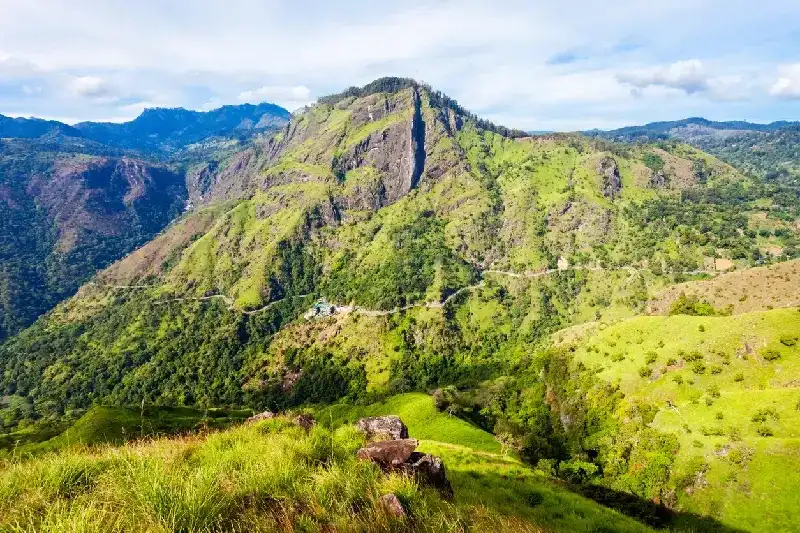
This is the most accessible hike in the region and should be on every itinerary. Starting from the edge of Ella town, the trail winds through tea estates before climbing to a pointed peak with extraordinary views in every direction. The whole thing takes about 2 hours to return and doesn't require any special equipment. Go at sunrise if you can, the golden light over the mist-covered valleys is deeply, unreasonably beautiful.
Horton Plains and World's End
A more substantial day out, Horton Plains National Park sits at over 2,000 meters and is unlike anywhere else in Sri Lanka. The plateau landscape is covered in cloud forest and patana grasslands, and the wildlife is extraordinary, sambar deer, purple-faced langurs, and Sri Lanka's endemic leopards (rarely seen, but they're there).
The highlight is World's End, a sheer cliff that drops nearly 870 meters in a near-vertical plunge into the lowlands below. On a clear morning, the view stretches all the way to the southern coast. By mid-morning, clouds typically roll in and obscure the drop entirely, so arrive early, ideally by 7am, before the mist builds up.
#Best Time to Visit Tea Country
This is one of the most common questions I get asked, and the honest answer is: it depends on what you want.
- The dry season for the western hill country (Nuwara Eliya, Kandy, Hatton) runs roughly from January to April, when skies tend to be clearer and hiking conditions are better. This is also when Nuwara Eliya comes alive during the April racing season and Sinhalese New Year celebrations.
- Ella and the eastern hill country tend to be drier from June to September, which aligns with the island's southwest monsoon that hits the other side of the hills.
- That said, tea country has a reputation for unpredictable weather year-round, afternoon showers are common even in the "dry" season, and heavy morning mist is part of the charm regardless of when you visit. Pack layers, bring a waterproof jacket, and lean into it.
- For plantation walks and factory visits, there's no bad time to go, the estates are working year-round, and there's something atmospheric about wandering through tea gardens in the mist and rain.
Not sure when to go or where to start? Discover our Sri Lanka tour packages and start planning your adventure today!
Sri Lanka's tea country isn't a destination you pass through, it's one you sink into. The hills have a particular quality of light and air that I haven't found anywhere else. And the combination of dramatic natural scenery, fascinating agricultural heritage, and warm Sri Lankan hospitality makes tea country one of the most complete travel experiences in Asia.
#FAQS
You’ll find yourself surrounded by rolling emerald hills, working tea plantations, colonial-era architecture, and some of the most scenic train journeys in the world. It’s a mix of natural beauty, culture, and history you won’t get anywhere else.
You’ll walk among perfectly manicured tea bushes, watch local pluckers selecting the top two leaves and a bud, and visit factories to see how Ceylon tea is processed from leaf to cup. Some estates even let you try plucking yourself!
Start with Nuwara Eliya for its colonial charm, move to Ella for breathtaking viewpoints like Little Adam’s Peak and Nine Arches Bridge, and include Hatton or Talawakelle to see authentic tea estate life. Even Kandy’s outskirts offer accessible plantation experiences.
It depends on the region. Western hill towns like Nuwara Eliya, Kandy, and Hatton are drier from January to April, while eastern areas like Ella are best from June to September. Rain and mist are common year-round, but they add to the magical atmosphere.
You can travel by train, car, or tuk-tuk. The Kandy to Ella train is world-famous for its views, and hiring a local guide or driver for plantation tours makes the trip smoother and more insightful.