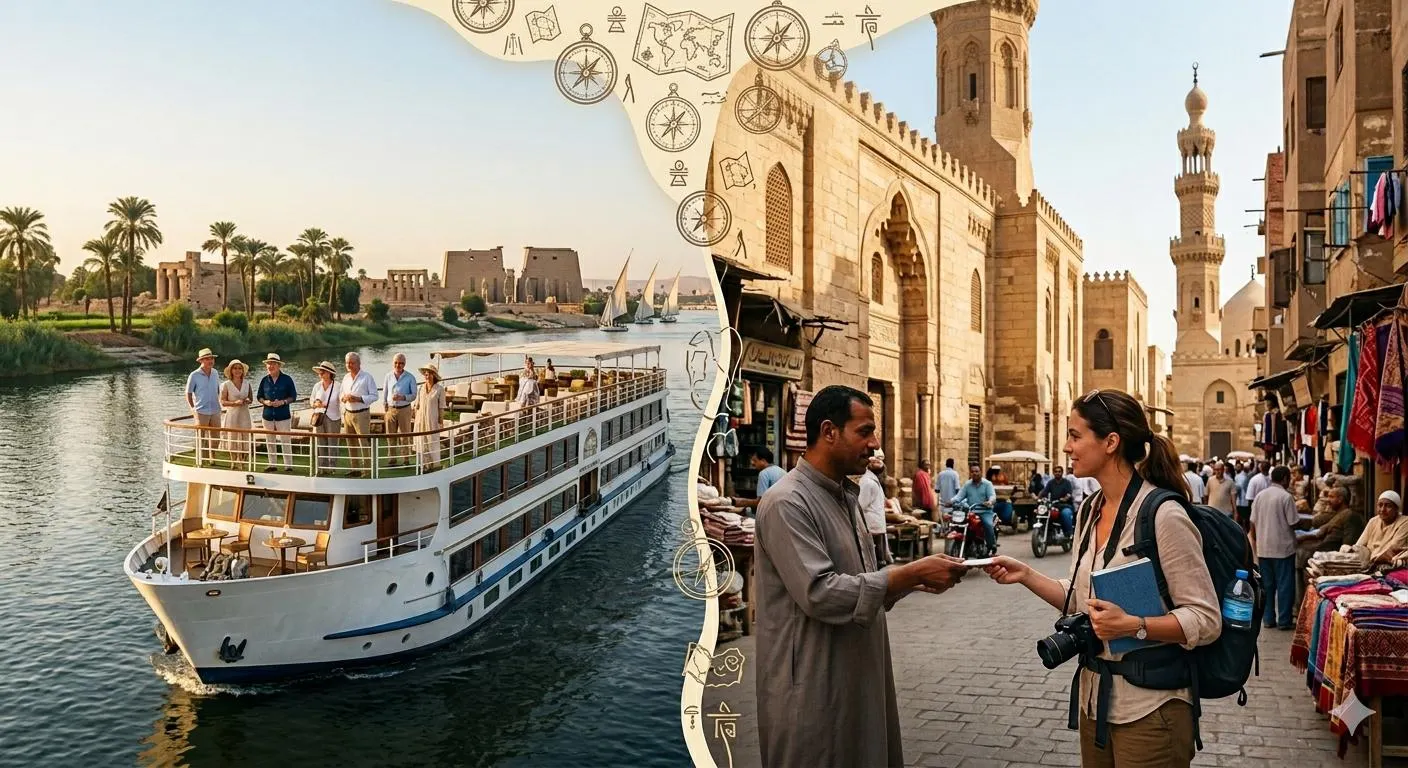
Picture this: You're standing at the crossroads of your Egypt adventure. One path leads to a luxurious Nile cruise ship where everything is handled, every meal is served, and expert guides explain every hieroglyph. The other path winds through local neighborhoods, budget hotels, and authentic Egyptian experiences you'll navigate yourself.
Which path should you take?
This isn't just about choosing between a Nile cruise and independent travel. It's about understanding what kind of traveler you are, what matters most to you, and which approach will create the Egypt memories you'll treasure forever. Because here's the truth: both options can be absolutely magical—or completely disappointing—depending on whether they match your travel style.
By the end of this comprehensive guide, you'll know exactly whether booking a Nile cruise package or striking out independently through Egypt's ancient wonders is the right choice for your journey down one of the world's most legendary rivers.
Ready to make the smartest decision for your Egyptian adventure?
Understanding Your Options: What We're Actually Comparing
What Exactly Is a Nile Cruise?
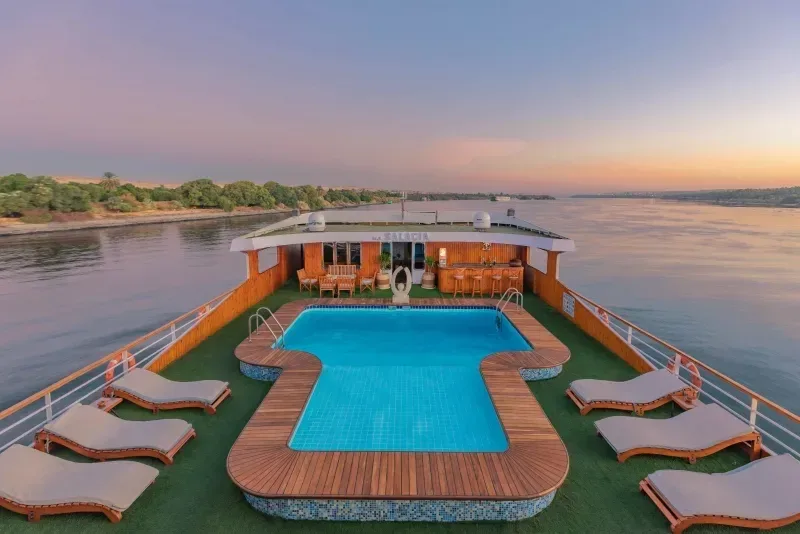
When we talk about Nile river cruises, we're describing an organized tour where you live aboard a floating hotel sailing between Luxor and Aswan (or the reverse route), waking up each morning at a different ancient site. Think of it as an all-inclusive resort that happens to move, carrying you effortlessly from the Valley of the Kings to Philae Temple while you sleep, eat gourmet meals, and lounge by the pool.
Most Nile cruise experiences last between three and seven nights, following a well-established route that hits Egypt's archaeological greatest hits. Your accommodation, all meals, guided excursions with professional Egyptologists, temple entrance fees, and onboard entertainment come bundled into one package price. You unpack once, settle into your cabin with Nile views, and let the river carry you through 3,000 years of history.
The experience typically includes daily morning excursions to temples and tombs, afternoons sailing or relaxing onboard, and evenings featuring Egyptian cultural performances, gala dinners, or simply watching the sun set over the desert from the sun deck. It's convenience, luxury, and expertise wrapped into one floating package.
What Does Independent Nile Travel Actually Mean?
Independent travel along the Nile means you're the architect of your own Egyptian adventure. You book your own hotels in Luxor, Aswan, and anywhere between. You arrange transportation—whether that's trains, private drivers, or the occasional felucca sailboat. You decide when to wake up, which temples to visit, how long to spend at each site, and where to eat dinner. You might hire guides at individual temples or explore solo with a guidebook in hand.
Instead of floating down the Nile aboard a Nile cruise ship, you're experiencing the same destinations from a completely different angle. You're navigating Egyptian streets, negotiating with taxi drivers, discovering local restaurants tourists on cruises never see, and solving the puzzle of Egyptian logistics one piece at a time. It's messier, more authentic, definitely more challenging, and often far more memorable precisely because you earned every experience through your own efforts.
Think of it as the difference between a guided museum tour and wandering through the same museum at your own pace, making your own discoveries, occasionally getting lost, and having the freedom to spend three hours staring at one particular artifact if it moves you.
For first-time Egypt visitors, yes—Nile cruise packages ($600-900) offer convenience, expert Egyptologist guides, luxury accommodation, and stress-free temple access worth the premium over independent travel ($300-400). Experienced travelers preferring authenticity and flexibility often choose independent options instead.
The Nile Cruise Advantage: Why Organized Travel Works
Convenience That Changes Everything
What if you could explore Egypt's most incredible archaeological sites without ever worrying about where you'll sleep tonight, how you'll get there tomorrow, or whether you bought the right entrance ticket? That's the fundamental promise of a Nile cruise, and for many travelers, it's worth every premium dollar.
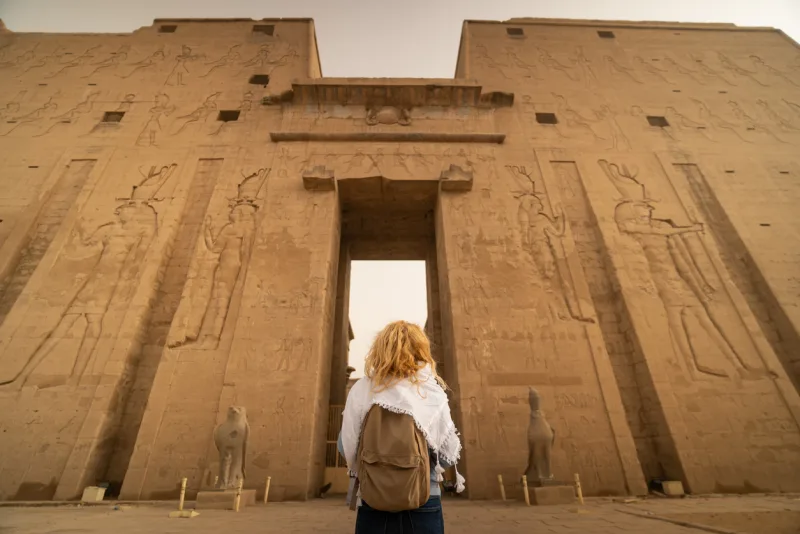
Imagine waking up to find your floating hotel has arrived at Edfu Temple overnight. Breakfast is waiting. Your Egyptologist guide meets you in the lobby. The entrance tickets are already purchased. A air-conditioned bus idles outside. You simply follow along, camera in hand, while someone else handles every logistical detail. After exploring one of Egypt's best-preserved temples, you return to the ship for lunch while it sails toward your next destination. No hotel checkout. No finding transportation. No navigating unfamiliar cities with luggage.
This level of convenience particularly appeals to first-time Egypt visitors who might feel overwhelmed by the logistics of independent travel in a country where English isn't universally spoken, where bureaucracy can be Byzantine, and where the gap between tourist prices and local prices requires constant negotiation. When you book a Nile cruise, you're essentially paying someone else to handle all the stress so you can focus entirely on experiencing ancient Egypt.
The Egyptologist Difference: When Expert Guidance Transforms Stone Into Story
Stand in front of Karnak Temple's Hypostyle Hall and you'll see 134 massive columns covered in hieroglyphs. Beautiful, certainly. But what are you actually looking at? Without context, even the most magnificent Egyptian monuments become pretty but meaningless stone arrangements.
Now imagine standing in the same spot with an Egyptologist who spent six years studying ancient Egypt at Cairo University. Suddenly those hieroglyphs aren't random symbols—they're telling you about Ramesses II's military campaigns, religious dedications, and political propaganda. That column arrangement isn't arbitrary—it represents the primordial marsh from which creation emerged in Egyptian cosmology. Those faded paintings on the ceiling depict the goddess Nut swallowing the sun each evening and giving birth to it each dawn.
Every Nile cruise includes professional Egyptologist guides who transform your temple visits from photo opportunities into profound historical experiences. These aren't casual tour guides reading from scripts—they're licensed experts who can answer your specific questions, decode hieroglyphic inscriptions, explain the architectural evolution of Egyptian temples, and connect what you're seeing to broader patterns in ancient Egyptian civilization.
Can you hire guides independently? Absolutely. But you'll pay $30-50 per site, spend time finding reputable guides (not scammers), and deal with the logistics of coordinating guide bookings at each destination. A Nile cruise builds this expertise into your package price and ensures you never miss crucial context that makes ancient Egypt come alive.
Luxury and Comfort in the Land of Ancient Pharaohs
Egypt in summer can hit 45°C (113°F). Even in winter, midday temperatures regularly reach 30°C (86°F). After spending three hours exploring the Valley of the Kings under the desert sun, what sounds more appealing: returning to your Nile cruise ship's swimming pool and air-conditioned cabin with Nile views, or navigating to your budget hotel and hoping the air conditioning works?
Modern Nile cruise ships offer luxury hotel-level comfort with amenities specifically designed for the Egyptian climate. Private cabins with ensuite bathrooms and usually balconies overlooking the Nile. Sun decks with pools and lounging areas. Multiple dining venues serving international and Egyptian cuisine. Bars serving cold drinks while you watch the riverbanks drift past. Spas, gyms, and evening entertainment. Some luxury ships rival five-star hotels in quality and service.
This comfort level matters more than you might initially think. Exploring ancient tombs and temples is physically demanding—lots of walking, climbing stairs, standing in the heat. Having a comfortable retreat to rest, recharge, and prepare for the next day's adventures makes a significant difference in how much you enjoy your Egypt experience. You're not just buying transportation and guides when you book a Nile cruise—you're buying the energy and enthusiasm to fully appreciate each new wonder.
Social Connections That Enhance Solo Travel
Traveling solo but hate eating alone every night? One of the unexpected advantages of a Nile cruise is the instant community you join aboard the ship. Sixty to two hundred travelers (depending on ship size) all experiencing Egypt together creates natural social opportunities that independent travel simply doesn't offer.
You'll meet people from around the world over dinner, share excursion experiences, compare photos over evening drinks, and often form friendships that outlast the cruise itself. Solo travelers particularly appreciate this built-in social network—you have the option of company without being forced into constant group interaction. Want to join the table of Australian retirees for dinner conversation? Great. Prefer to dine alone tonight? Also fine.
This social dimension also enhances the experience itself. Shared wonder at seeing the Temple of Hatshepsut for the first time, collective gasps at the hieroglyphic detail in Ramesses II's tomb, group excitement about tomorrow's Abu Simbel excursion—these communal reactions amplify individual experiences in ways solitary temple visits never quite match.
Safety, Security, and Peace of Mind
Let's talk honestly about safety concerns for travelers in Egypt, particularly solo female travelers or first-time visitors to the Middle East. While Egypt is generally safe for tourists, particularly in heavily touristed areas like Luxor and Aswan, there are real considerations around harassment, scams, and navigating unfamiliar cultural norms.
A Nile cruise provides multiple layers of security and support that independent travelers must establish for themselves. Vetted, licensed operators with reputations to protect. Tourist police escorts for certain excursions. Secure ship accommodation where your belongings stay safe. 24/7 staff support if anything goes wrong. English-speaking assistance for any problem from medical issues to lost passports. Travel insurance often included in premium packages.
For many travelers, especially those new to developing countries or traveling solo, this security infrastructure justifies the Nile cruise premium. You're not just paying for convenience—you're paying for the peace of mind that comes from knowing experienced professionals have your back if anything goes wrong, from minor inconveniences to genuine emergencies.
Yes, independent travel through Luxor, Aswan, and Nile Valley destinations is generally safe. However, Nile cruises offer extra security through tourist police escorts, vetted operators, 24/7 support systems, and secure accommodation. Women traveling solo face more harassment traveling independently than on cruises.
Customize Your Dream Vacation!
Get in touch with our local experts for an unforgettable journey.
Plan Your Trip
The Nile Cruise Trade-Offs: What You Sacrifice for Convenience
The Price Premium You'll Pay
Let's cut to the financial reality: a Nile cruise costs significantly more than covering the same route independently. How much more? Typically 2-3 times as much for comparable experiences, sometimes even more depending on ship category and season.
A four-night Nile cruise from Luxor to Aswan ranges from $450 for budget three-star ships to $1,500+ for luxury five-star vessels. That's per person. Add drinks (not usually included), tips for guides and crew ($40-60 total), optional excursions like Abu Simbel ($100-150), and incidental expenses, and you're easily spending $600-2,000 for four days.
Compare that to independent travel covering the same route. Budget hotels in Luxor and Aswan run $20-40 per night. Train tickets between cities cost $10-20. Temple entrance fees total around $90 if you visit all the same sites. Local restaurant meals run $5-15. Even if you hire private guides at major temples ($30-50 per site), you'll spend $300-500 total for an experience covering the same temples and destinations.
That's a significant price difference. The question becomes whether the convenience, guides, luxury accommodation, and comprehensive experience justify paying double or triple. For some travelers, absolutely yes. For budget backpackers or those who value authentic local experiences over comfort, probably not.
The Tyranny of the Fixed Schedule
One of the most frequent complaints from Nile cruise passengers goes something like this: "We spent three hours at Edfu Temple, which felt too long since it was hot and we'd already seen similar temples, but we only got ninety minutes at Luxor's west bank, which wasn't nearly enough time to properly explore the Valley of the Kings, and I would have gladly skipped Kom Ombo entirely to spend more time at Karnak."
When you book a Nile cruise, you're accepting someone else's schedule, pace, and priorities. Wake-up calls at 5:30 AM for early temple visits. Breakfast at 6:30 AM. Departure at 7:00 AM sharp. Return by noon for lunch and sailing. No sleeping in, even if you're exhausted. No lingering at temples that captivate you. No skipping sites that bore you. The ship sails on schedule, and you're either aboard following the program or you're left behind.
This regimentation frustrates independent-minded travelers who hate being told when to wake up, eat, and move. It also means you might rush through temples you love while spending frustrating hours at sites that don't interest you, all because the Nile cruise itinerary decided your schedule in advance.
Flexibility has real value. The freedom to decide, "You know what, I'm fascinated by Luxor and I want to spend three full days exploring instead of the one day the cruise allows" or "I don't care about Edfu Temple, I'd rather spend that time in Aswan's Nubian villages" isn't available when you've pre-paid for a fixed itinerary.
The Tourist Bubble That Insulates You From Real Egypt
Here's what a typical Nile cruise day looks like: Wake up on the ship. Eat breakfast on the ship with other tourists. Take an air-conditioned bus with other tourists to a temple where hundreds of other cruise tourists are visiting simultaneously. Return to the ship for lunch with other tourists. Sail to the next destination while lounging on the ship with other tourists. Eat dinner on the ship. Watch onboard entertainment with other tourists. Sleep on the ship.
Notice what's missing? Any meaningful interaction with actual Egyptians beyond service staff. Any experience of contemporary Egyptian life. Any authentic local moments that don't involve souvenir shopping.
The Nile cruise experience, by design, insulates you from the messiness, challenges, and authenticity of real Egypt. You're viewing ancient Egypt through a carefully controlled, sanitized lens that protects you from inconvenience but also prevents genuine cultural immersion. You eat buffet food designed for international palates, not traditional Egyptian cuisine. You stay in your floating luxury hotel, not family-run guesthouses. You interact primarily with other tourists and Egyptologists, not everyday Egyptians going about their lives.
For some travelers, this insulation is exactly what they want—why deal with Egypt's chaos when you can experience the highlights in comfort? But for culture seekers who believe the point of travel is encountering different ways of life, the Nile cruise bubble feels like a missed opportunity to truly experience Egypt beyond its ancient monuments.
Crowd Chaos at Peak Sites
Picture this common scenario: Twenty Nile cruise ships arrive at Edfu Temple between 8:00 and 10:00 AM. Each ship disgorges 60-200 passengers. Suddenly 1,500 tourists are attempting to explore the same temple simultaneously, creating bottlenecks at popular photo spots, making it nearly impossible to experience any moment of quiet contemplation, and turning your visit into a competitive jostling match for position.
This crowd problem plagues popular Nile cruise stops, particularly Edfu, Kom Ombo, and Philae Temple. Because most cruises follow nearly identical schedules, they arrive at the same places at the same times, creating predictable tourist tsunamis. Your professional photographs get ruined by photobombing strangers. The atmosphere of ancient mystery gets shattered by tour groups shouting over each other. The intimate connection with history you imagined becomes a rushed, crowded ordeal.
Independent travelers can strategically avoid these crowds by arriving at temples during off-peak hours—very early morning or late afternoon when cruise ships have departed. But Nile cruise passengers are stuck with whatever timing the ship's schedule dictates, and that schedule almost always puts you at popular sites exactly when every other cruise is there too.
The Independent Travel Advantage: Freedom and Authenticity
Financial Freedom: Where Your Money Goes Further
Let's talk about what $800 buys you in Egypt. That amount might cover a mid-range four-night Nile cruise—or it could fund nearly two weeks of independent travel experiencing far more of Egypt than any cruise itinerary includes.
Independent travel along the Nile costs roughly $30-50 per day if you're budget-conscious, or $80-120 per day if you prefer comfortable mid-range accommodation and occasional splurges. That's everything—hotels, transportation, food, entrance fees, occasional hired guides. A week of independent Nile travel might cost what three nights on a cruise ship runs, leaving you budget to explore Cairo, the Red Sea coast, the White Desert, or whatever else captures your imagination.
This budget flexibility particularly matters for younger travelers, extended backpacking trips, or anyone for whom Egypt represents one destination in a longer journey. The money you save by traveling independently can extend your trip by weeks, fund additional destinations, or simply go back into your savings account for the next adventure.
But it's not just about spending less—it's about controlling where your money goes. When you pay independently, you can choose to spend more on experiences that matter to you (hiring a private guide for a half-day photography session in the Valley of the Kings) while economizing on things that don't (staying in a budget hotel instead of luxury accommodation). A Nile cruise package decides these priorities for you.
The Intoxicating Freedom of Making Your Own Schedule
What if you discover you're absolutely fascinated by Luxor's west bank and want to spend three full days thoroughly exploring the Valley of the Kings, Valley of the Queens, worker's village at Deir el-Medina, and various noble's tombs instead of the rushed half-day Nile cruise ships allocate? When you're traveling independently, you simply extend your Luxor hotel, rearrange your onward transportation, and spend as long as you want.
This flexibility to follow your interests transforms travel from a checklist of prescribed experiences into an organic journey shaped by what actually captures your imagination. Fell in love with Aswan's Nubian culture? Stay extra days exploring Nubian villages and learning about their unique traditions. Realized you don't actually care much about Ptolemaic temples after visiting one? Skip Edfu and Kom Ombo entirely, saving time and money for experiences you value more.
The ability to sleep in when you're exhausted, take rest days when you need them, change your entire itinerary based on a conversation with a fellow traveler, or spontaneously accept an invitation to a local's home for dinner—these moments of serendipity simply can't happen on a Nile cruise operating on military precision schedules. Independent travel trades certainty and convenience for possibility and discovery.
Authentic Egypt Beyond the Tourist Postcards
The Egypt you experience independently bears little resemblance to the Egypt visible from a Nile cruise ship. You'll eat where Egyptians eat—tiny local restaurants serving koshary for $2, street vendors grilling corn on the cob, family-run cafeterias where you point at pots of simmering stews because menus don't exist. You'll navigate the chaos of local transportation, getting hopelessly lost in Luxor's backstreets and discovering that perfect coffee shop tourists never find. You'll stay in family-run guesthouses where the owner's grandmother wants to feed you, teach you Arabic phrases, and show you photos of her grandchildren.
These authentic moments create the stories you'll tell for years. Not "I saw the Temple of Karnak" (which every tourist sees), but "I got lost trying to find Karnak and ended up drinking tea with a shopkeeper who showed me his grandfather's photographs from the 1952 revolution, then walked me to the temple himself and refused to accept payment." That's the difference between seeing Egypt and experiencing Egypt.
Independent travel also allows cultural exchange impossible from the Nile cruise bubble. You're not an obviously wealthy tourist briefly deposited at temples before retreating to your luxury ship—you're a traveler navigating Egyptian life alongside Egyptians, which creates opportunities for genuine interaction rather than transactional tourist-local relationships.
The Photography Advantage: Empty Temples at Dawn
Serious photographers almost universally choose independent travel over Nile cruise constraints for one simple reason: they can access temples at optimal times when cruise tourists haven't arrived yet or have already left.
Imagine photographing the Hypostyle Hall at Karnak Temple at 6:00 AM when the site opens, with golden morning light streaming through the columns and exactly three other early-bird visitors in sight. Compare that to arriving at 9:00 AM with your cruise group when hundreds of tourists pack every photo angle, harsh midday light creates terrible shadows, and capturing any shot without strangers in frame becomes nearly impossible.
Independent travelers can plan their temple visits around light quality, crowd patterns, and specific photographic goals. They can return multiple times to the same location if weather wasn't optimal. They can spend hours waiting for the perfect moment rather than rushing through on a tour group schedule. For anyone serious about travel photography, this flexibility is essential—and impossible to achieve on a Nile cruise.
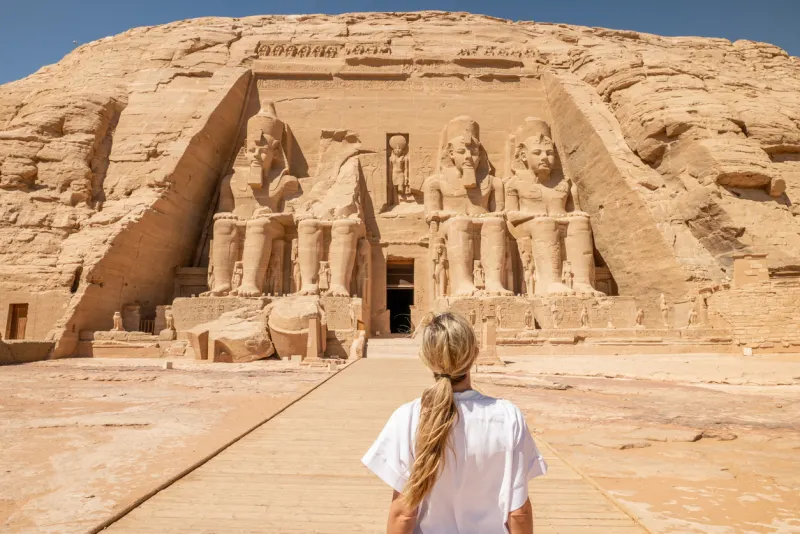
The Independent Travel Challenges: What Makes It Hard
The Logistics Load That Never Stops
Every decision falls on your shoulders when traveling independently. Where to stay tonight? How to get from Luxor to Aswan? Which temples to visit and in what order? How to hire a reputable guide rather than a scammer? Where to eat? How much to pay for a taxi? What time does the temple open? Is tomorrow a holiday when sites might be closed?
This constant decision-making and problem-solving energizes some travelers—they love the challenge, the sense of accomplishment, the adventure of figuring it out. But it exhausts others who'd rather focus on experiencing Egypt than managing logistics. After several days of navigating Egyptian bureaucracy, negotiating prices, dealing with language barriers, and solving transportation puzzles, some independent travelers find themselves longing for the simplicity of a Nile cruise where someone else handles everything.
The cognitive load is real. You're simultaneously traveler, travel agent, accountant, navigator, and cultural translator. That takes mental energy that could otherwise go toward fully experiencing and appreciating what you're seeing.
Missing the Expert Knowledge That Brings Ruins to Life
Walking through the Valley of the Kings without an Egyptologist means you're looking at elaborately decorated tombs without understanding the symbolism, mythology, historical context, or significance of what you're seeing. That beautiful ceiling isn't just pretty—it's depicting the goddess Nut swallowing the sun god Ra each evening, a crucial element of Egyptian cosmology and resurrection beliefs. But without expert guidance, you miss these layers of meaning.
You can hire guides independently, but quality varies wildly, and even good guides cost $30-50 per major site. Visit six or eight temples during your Nile journey and you're spending $200-400 on guides alone—money that could have gone toward a Nile cruise package that includes expert Egyptologists throughout.
Alternatively, you can study extensively before your trip, bring detailed guidebooks, and educate yourself. But there's something irreplaceable about having an expert present to answer your specific questions, notice details you'd overlook, and adjust explanations based on your particular interests and knowledge level.
Safety Concerns and Cultural Navigation
Egypt presents real challenges for independent travelers, particularly women traveling alone. Street harassment can be persistent and wearing. Scammers target tourists with elaborate schemes. Taxi drivers might take circuitous routes to inflate fares. Navigation can be genuinely difficult in cities where street signs don't exist or aren't in English. Medical emergencies require navigating an unfamiliar healthcare system.
None of these challenges are insurmountable, and millions of independent travelers navigate Egypt successfully every year. But they require vigilance, cultural awareness, street smarts, and emotional resilience that not every traveler possesses. The stress of constant awareness—am I being scammed, is this safe, should I trust this person—can detract from the enjoyment of your Egypt experience.
A Nile cruise eliminates or minimizes most of these concerns through its security infrastructure, vetted service providers, and professional support systems. You're trading independence for peace of mind.
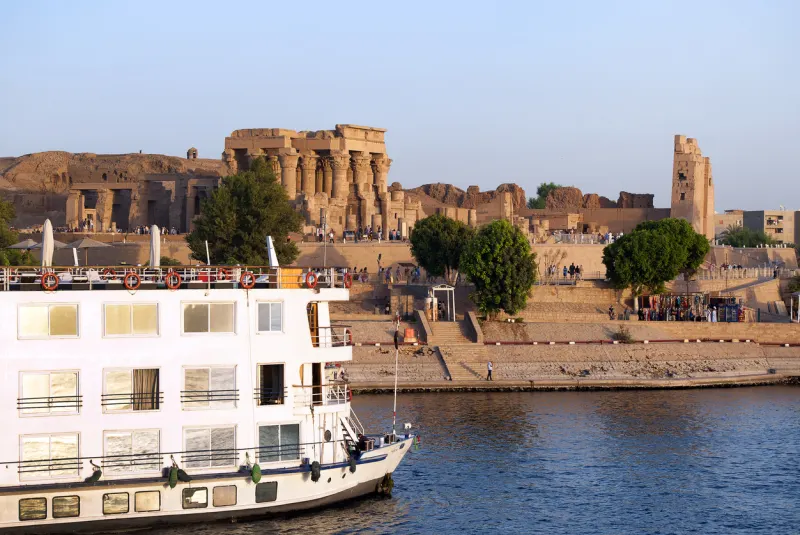
Making Your Decision: Which Path Is Right for You?
Choose a Nile Cruise If You Value:
Comfort and convenience over adventure and authenticity. If the idea of navigating Egyptian logistics fills you with anxiety rather than excitement, if you prefer knowing exactly what to expect rather than embracing uncertainty, if you'd rather maximize your temple time rather than spending hours arranging transportation, then a Nile cruise offers the perfect Egypt experience.
Expert guidance throughout your journey. If understanding what you're seeing matters enormously to you, if you want to ask questions and receive expert answers, if context and historical depth enhance your appreciation of ancient sites, then the included Egyptologist guides justify the Nile cruise premium.
Luxury, social interaction, and the romance of actually sailing the Nile. If you've dreamed of watching the sunset over the Nile from your ship's sun deck with a cold drink in hand, if meeting fellow travelers enriches your experience, if comfort and amenities matter to you, then a Nile cruise delivers these elements better than independent travel ever could.
Choose Independent Travel If You Prioritize:
Budget and financial flexibility. If you're on a tight budget, if you'd rather extend your trip than upgrade your accommodation, if you want control over where every dollar goes, then independent travel offers vastly better value per dollar spent.
Flexibility and freedom to follow your interests. If rigid schedules frustrate you, if you want the option to change plans spontaneously, if you'd rather spend three days at one fascinating site than rush through ten sites on a fixed itinerary, then independent travel's flexibility is essential.
Authentic local experiences and cultural immersion. If you believe the point of travel is experiencing different cultures, if you want to eat where locals eat and stay where locals stay, if tourist bubbles feel hollow and you crave genuine cross-cultural exchange, then independent travel opens doors Nile cruise passengers never see.
The Hybrid Approach: Best of Both Worlds?
Can't decide? Some travelers successfully combine both approaches. Take a three or four-night Nile cruise to efficiently cover the major temples between Luxor and Aswan with expert guidance, then add several independent days in Luxor before or after the cruise to explore at your own pace. Or reverse it—travel independently but book a smaller, more intimate dahabiya sailboat (traditional wooden boats with 6-12 passengers) for a unique Nile sailing experience without the crowds and rigidity of large cruise ships.
This hybrid approach balances convenience with flexibility, letting you experience the best elements of both styles while minimizing their respective drawbacks.
The Honest Truth: There's No Wrong Choice
Here's what matters most: both Nile cruise packages and independent travel can create absolutely magical Egypt experiences when they align with your travel style, values, and circumstances. The "best" choice isn't universal—it's deeply personal.
A Nile cruise becomes the perfect choice when convenience, expertise, and comprehensive experience matter more to you than budget or absolute flexibility. Independent travel shines when authenticity, freedom, and value outweigh the appeal of organized comfort.
Know yourself honestly. Choose accordingly. And then commit fully to making the most of whichever path you select. Because whether you're floating down the Nile aboard a luxury ship or navigating Egyptian streets with a backpack and a phrase book, you're about to experience one of the world's most extraordinary destinations.
The Nile has been carrying travelers for thousands of years. It doesn't judge whether you arrive by cruise ship or independently—it just keeps flowing, eternal and magnificent, ready to share its ancient secrets with anyone wise enough to follow its course.
Independent Nile travel costs $300-500 for 4 days (hotels, transport, tickets, food) versus $600-1,500 for comparable Nile cruise packages. You save 50-70% traveling independently but sacrifice convenience, included guides, luxury accommodation, onboard amenities, and the Nile sailing experience itself.
Yes, you can visit Valley of the Kings, Karnak, Edfu, Kom Ombo, and Philae Temple independently using trains, private drivers, or buses between Luxor and Aswan. Stay in hotels, hire guides per site, and create flexible itineraries covering identical destinations as Nile cruises.
Nile cruise disadvantages include higher costs ($600-1,500), fixed rigid schedules with early wake-ups, tourist bubble experiences with limited authentic Egyptian interaction, crowds at popular temples when multiple ships arrive simultaneously, and zero flexibility to extend favorite destinations or skip uninteresting sites.
Nile cruises include accommodation, all meals, guided temple excursions, Egyptologist guides, entrance fees, and onboard entertainment in package prices. Independent travel requires separate payments for hotels ($20-40/night), meals ($5-15 each), transport ($10-20 between cities), tickets ($90 total), and optional guides ($30-50 per site).