Table of content
The historic core of Manaus tells the story of a city built on rubber money. A walk through its streets shows how quickly that wealth arrived and disappeared. Grand buildings from the 1880s and 1900s still stand a few blocks from the riverfront, and many now house museums and markets with street food stalls. If you're wondering what to do in Manaus, Brazil, during a day that combines culture and food, start in the city center.
Tour Teatro Amazonas and learn about the rubber boom
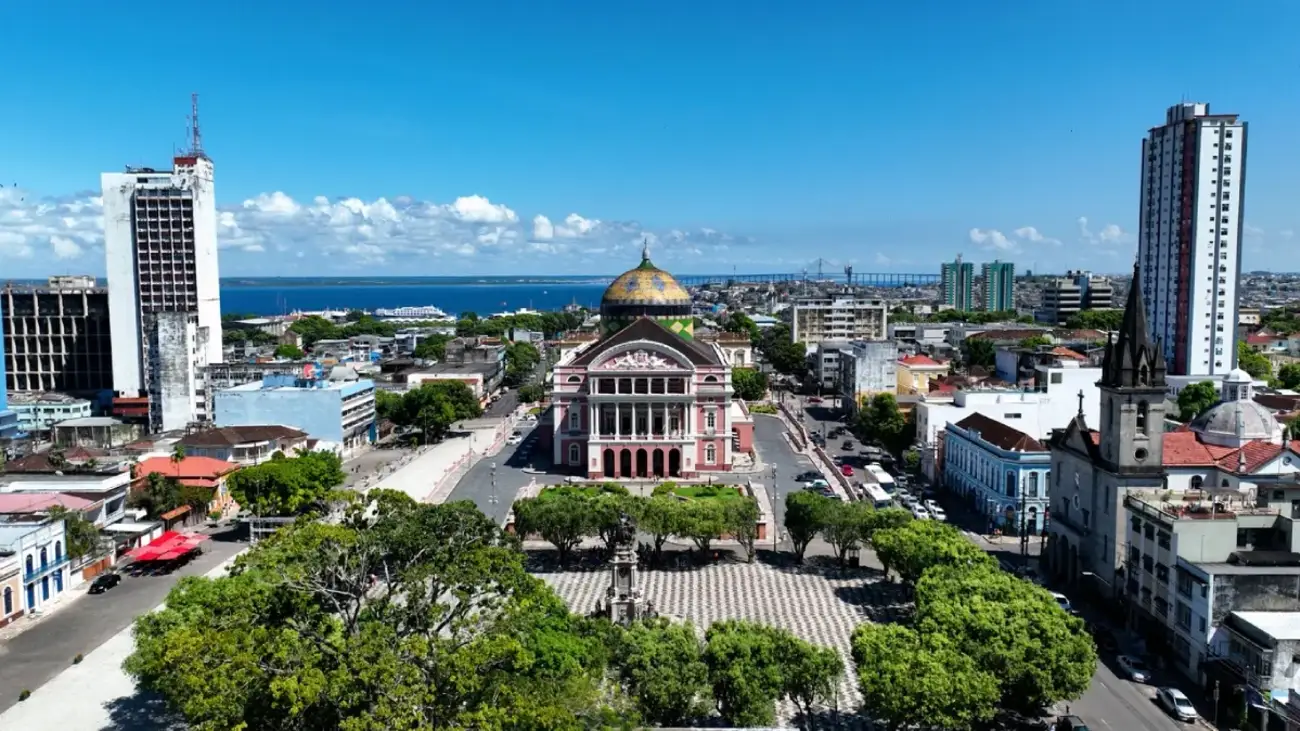
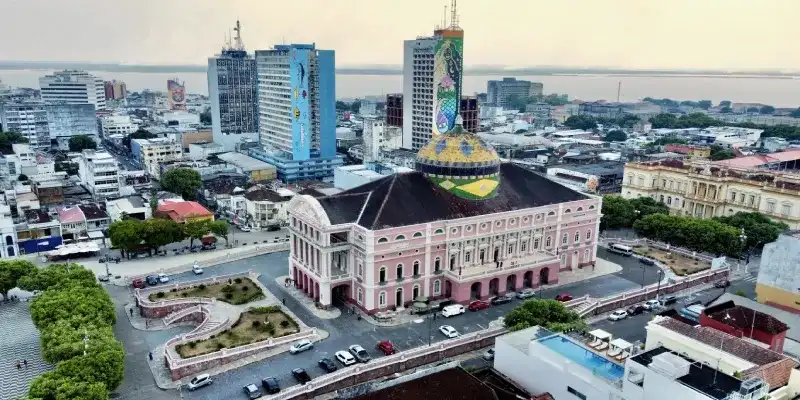
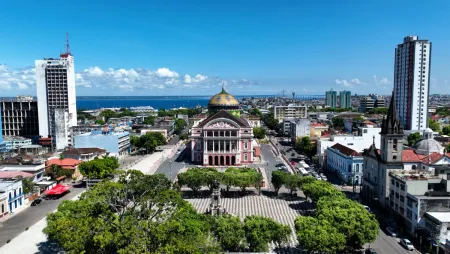
Teatro Amazonas opened in 1896 at the height of the rubber boom, and it remains the city's most photographed building. The opera house anchors the historic district at the edge of Largo de São Sebastião. Nearly 11,000 Tripadvisor reviews show how central it is to a Manaus itinerary. A guided tour explains how rubber barons paid for European materials and artists to create an opera house in the middle of the forest. That history gives the rest of the neighborhood more context.
Walk through Largo de São Sebastião
Largo de São Sebastião sits across from the theater and showcases the rubber boom's architecture. The promenade opened in 1901 and features Portuguese tiles that represent the "Meeting of the Waters," the same phenomenon discussed later in this piece. The Church of São Sebastião stands nearby and was built in 1888. Local legend says its second tower never arrived because the ship carrying it from Europe sank in the Atlantic. The square comes alive in the evening as bars fill up and lights illuminate the theater's facade. Locals and travelers gather here.
Visit Palácio Rio Negro
A short walk from the square leads to Palácio Rio Negro, the former home of German rubber baron Karl Waldemar Scholz. Construction began in 1903 and ended in 1911. Imported materials and French Neoclassical and Art Nouveau details define its design. Scholz reportedly hired 27 servants and sent his laundry to Paris, a seven-month boat journey each way. The palace served as the Amazonas state government's headquarters until 1995. It later became a cultural center and museum, open Monday through Saturday from 1:00 PM to 5:00 PM and Sunday from 11:00 AM to 3:00 PM. Entry is free, and guided tours, usually in Portuguese, take visitors through furnished rooms and the garden before reaching a balcony overlooking the Rio Negro.
Browse Adolpho Lisboa Market for local food and crafts
Adolpho Lisboa Market stands near the river. Builders constructed it between 1880 and 1883 and modeled it after Paris's old Les Halles, with an iron structure shipped from Europe. The market became a national historic heritage site in 1987. It closed for restoration in 2006 and reopened in 2013. Fresh fish, spices, Indigenous remedies, and handicrafts fill its stone and iron pavilions, which face the river and the street.
Try tacacá, tambaqui, and Amazon fruits
No visit to the historic center feels complete without trying the food. Tacacá is a tucupi-based soup with dried shrimp and numbing jambu leaves, and some stalls have sold it here since 1967. Try it with tambaqui, a fruit-eating river fish sold by the cut, and a Manaus specialty. Regional fruits such as cupuaçu make a good dessert.
![Manaus centre with rio negro in the background]()
Just offshore from the historic district, the Amazon offers a spectacle that no building or market can match. Two rivers run side by side for miles without blending, and this unusual sight is one of Manaus's top attractions.
Take a boat tour to the Meeting of the Waters
The Rio Negro and the Solimões meet just outside the city, yet the boundary between them remains clear enough to see. The Negro is dark, warm, acidic, and slow. The Solimões is pale, cooler, and much faster, and those differences prevent the rivers from mixing right away. Guides often point out undercurrents caused by their different speeds, so swimming at the junction is not recommended.
A standard small-group tour lasts about two hours and includes hotel pickup with a licensed guide. Prices are around USD 218 per adult. Budget options cost less, including a 6.5-hour Amazon Safari that starts near USD 36. Longer full-day trips can reach USD 140 for nine hours. Travelers interested in dolphins can book a six-hour Meeting of the Waters and Pink Dolphin Tour with lunch for about USD 94. An eight-hour Indian Village combo starts around USD 150. Private options include a speedboat trip that combines the river junction with pirarucu fishing at a floating house, a visit to Catalão Village, and time at Janauari Ecological Park. Prices start at USD 50 per person in groups of six or more.
Watch the sunset at Ponta Negra
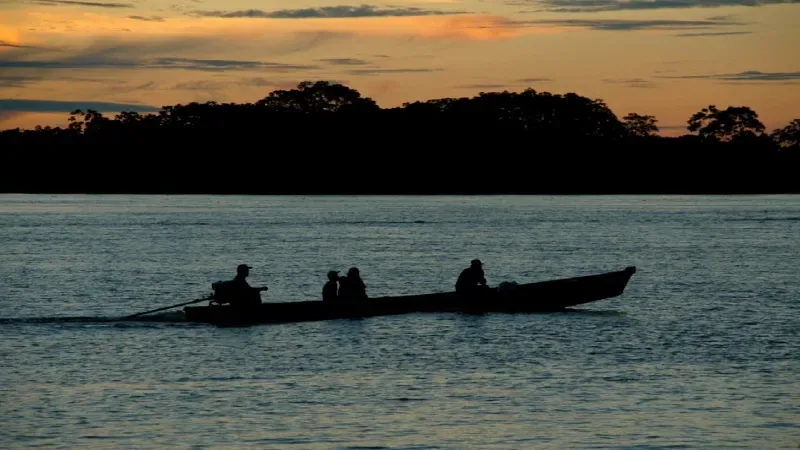
Ponta Negra lies in Manaus's western zone, about 13 kilometers from downtown on the Rio Negro. Restaurants line the long waterfront promenade, alongside bars and hotels. The area received major upgrades in the mid-2000s, including Portuguese stone paving inspired by Largo de São Sebastião. Sundays and holidays bring street closures, fairs, live music, and cultural shows. Visitors describe the sunsets as having a "nice flair," although the sun sets behind a mountain rather than over the water. Nearby, Lagoa do Jacaré offers sunset boat tours with opportunities to spot wildlife along the route.
Visit Praia da Lua when river conditions allow
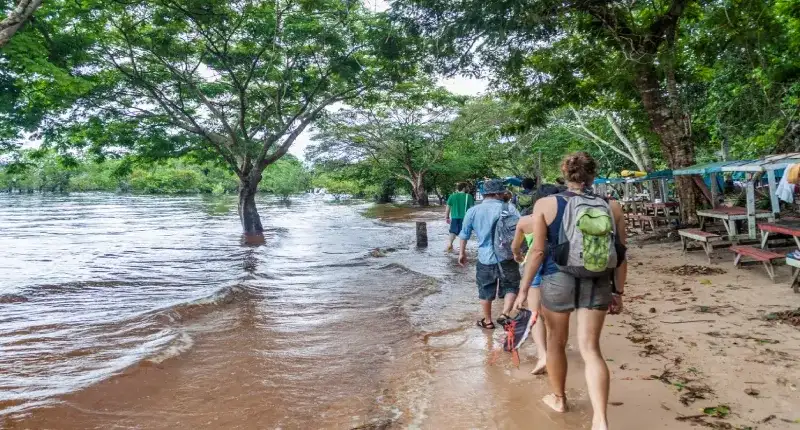
Praia da Lua, or "Moon Beach," is one of the best river beaches near Manaus. Fine white sand meets tea-colored water here. The beach is largest during the dry months, from September to December, because low water reveals more shoreline. Boats leave from Marina do Davi, just beyond Ponta Negra, and the trip takes about 10 to 15 minutes depending on conditions. The short ride costs around USD 5, although some travelers report higher fares based on the route and season.
Beach shacks sell grilled fish and cold drinks, but facilities are limited. Bathrooms are scarce, and vendors use ice instead of electricity to keep items cool. Boats usually operate between 8am and 6pm, although schedules can be flexible. Patience helps when waiting for a return ride.
![Tourists at Praia da Ponta Negra beach during high water level]()
What are the must-see attractions in Manaus?
Start with Teatro Amazonas, Largo de São Sebastião, and Adolpho Lisboa Market. Add a boat trip to the Meeting of the Waters and sunset at Ponta Negra.
What activities can you enjoy in the Amazon rainforest near Manaus?
Try guided forest hikes, canoe trips through flooded forests, birdwatching, and nighttime wildlife outings. The MUSA observation tower also offers views above the rainforest canopy.
Which day trips are worth taking from Manaus?
Popular options include the Meeting of the Waters, the waterfalls of Presidente Figueiredo, and Anavilhanas National Park via Novo Airão. Choose reputable guides who respect wildlife and local communities.
What river cruise options depart from Manaus?
Cruises explore the Rio Negro, the Amazon River, or both. Amazon Clipper offers three-, four-, and six-day itineraries, while other trips range from two to ten nights.
How many days should you spend in Manaus and the surrounding rainforest?
Allow one or two days for the city and at least two to three days for the rainforest. This gives you time for historic landmarks plus a jungle lodge stay, river cruise, or guided excursions.
Manaus lets you enjoy city comforts and rainforest wildlife without choosing between them. Two places within the city limits bring you close to the Amazon's canopy and animals, with no boat trip needed.
Climb the MUSA tower to see above the forest
MUSA, short for Museu da Amazônia, is inside the Adolpho Ducke Forest Reserve, a native forest area that covers more than 100 square kilometers on Manaus's edge. The museum covers about 100 hectares of the reserve and has operated under the National Institute of Amazonian Research (INPA) since 2009. A guided visit passes an orchid and bromeliad nursery, a lake, aquariums, and labs with snakes, insects, and butterflies before you reach the tower.
The observation tower rises 42 meters from an 80-square-meter base. Its 242 steps lead to platforms at 14, 28, and 42 meters. Up to 30 visitors can use the platforms to watch birds and look out over the canopy. Early risers who visit around 6am can see mist lift from the treetops, which regular visitors consider one of the park's best sights. Sunset visits are also available from 5:30 to 6:30pm, depending on the season, and amateur astronomers use the tower after dark.
MUSA is open daily except Wednesday, from 8:30am to 5pm, although admissions close at 4pm. Standard entry costs about R$ 50. A guided trail visit costs about R$ 70, which is also the price of a sunrise or sunset tower session and a birdwatching outing. A night trail costs R$ 140, the same as a guided trail and sunset tower package. Visitors must wear closed-toe shoes, and anyone under 14 must be with an adult.
Explore the trails and science exhibits at Bosque da Ciência
Bosque da Ciência is closer to downtown in the Petrópolis neighborhood. It covers about 13 hectares of forest, which INPA has managed since the site opened in 1995. MUSA centers on its remote tower, while this site offers shaded trails, a suspended walkway near the treetops that extends about 110 meters, and enclosures for rescued animals.
Manatees are the biggest draw. The site's aquatic mammal lab has worked with the species since 1974, and more than 40 rehabilitated manatees have returned to the wild over the decades. Exhibits also include giant otters, caimans, turtles, and a colony of native stingless bees. Casa da Ciência has interactive displays about Amazon research. Monkeys, sloths, and the endangered pied tamarin, a species closely linked to Manaus, sometimes appear along the paths.
Entry is free, but visitors must book in advance through the official website. Regular hours are Tuesday through Sunday, from 9am to 4:30pm. Another source lists slightly different weekday hours, with separate morning and afternoon sessions. Either schedule gives you enough time to cover the main trails and animal enclosures in one to two hours.
![Boat with tourists on the tributary of the river Rio Negro]()
Customize Your Dream Vacation!
Get in touch with our local experts for an unforgettable journey.
Plan Your Trip
The city limits are only the start. A short boat ride or drive takes you into rainforest country, where national parks, lodges, and waterfalls offer bigger experiences for travelers who want more to do in Manaus.
Explore Anavilhanas National Park from Novo Airão
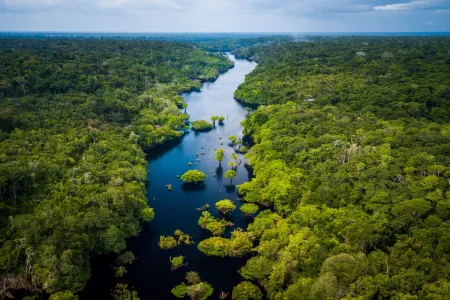
Anavilhanas is a national park spread across a river, with a maze of forested islands so dense that boats must navigate narrow channels. The blackwater igapó forest floods with the seasons, so manatees and caimans thrive here alongside primitive fish that can reach three meters long. Novo Airão serves as the starting point for day trips and multi-day cruises through the archipelago. It offers a close view of a place that most Manaus visitors never see.
Stay at a jungle lodge to take guided hikes and canoe trips
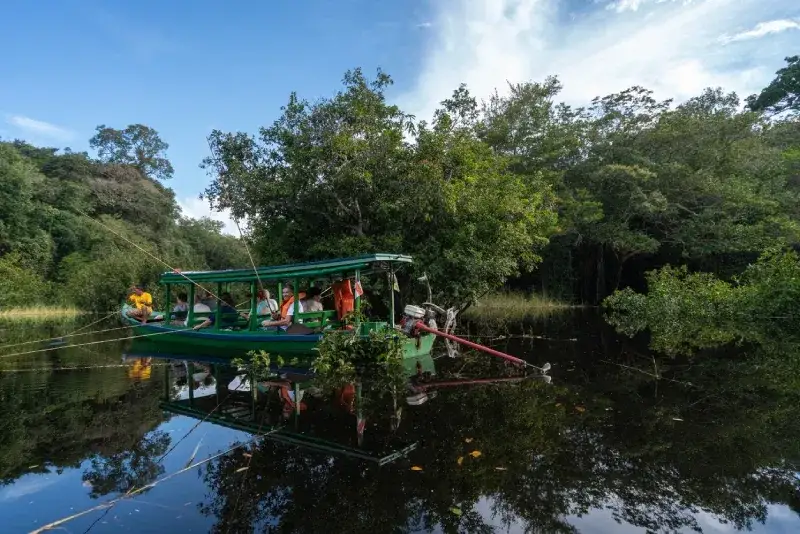
Juma Amazon Lodge sits in Autazes, about three hours from Manaus. Its treetop bungalows sit beneath a 31-meter observation tower that rises above the forest. Canoe trips through flooded igapó forests are among the lodge's most popular activities. Night boat tours also let guests stargaze, hear the jungle, and spot frogs or caimans. Guides lead hikes that cover survival skills, edible plants, and Amazonian wildlife. Longer routes end with a barbecue lunch over an open fire. A partnership with Amazon Tree Climbing lets children as young as three enter the canopy with ropes and pulleys. Travelers with limited time can book jungle immersion packages that last two to four days.
Choose a river cruise for a multi-day trip
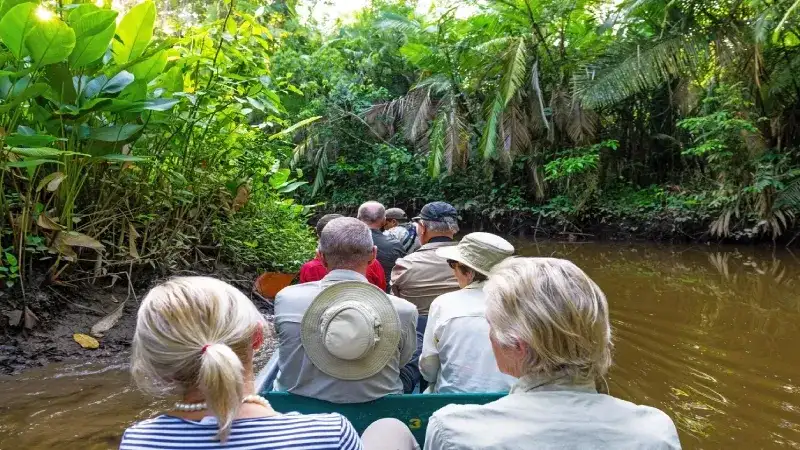
Cruises from Manaus travel along the Rio Negro and its tributaries. Trips last from two to ten nights, based on how far into the region you want to travel. Three or four nights provide a solid overview, while a full week better suits wildlife watchers and birders. The season also matters. Dry months from June through November suit jungle walks and fishing, while December through May brings higher water, closer canopy views, and more mosquitoes. Operators such as Amazon Clipper Cruises offer set itineraries, including Amazon River and Negro River routes, plus a six-day trip that covers both.
Visit the waterfalls of Presidente Figueiredo
Known as the "Land of Waterfalls," Presidente Figueiredo lies about 125 kilometers north of Manaus. Day trips usually include the Iracema and Santuario waterfalls, along with a stop at Maroaga cave, where amphibians, alligators, turtles and bats live. Full-day tours last close to eight hours and include lunch, with prices starting at about USD 70. Multi-day kayak trips follow the Urubu River, a narrow 310-mile tributary with calm currents and close rainforest views.
![Amazon Rainforest Canoe Trip]()
A well-timed visit makes all the difference in a city where the river itself dictates what is and isn't possible on any given day.
Choose your dates around rainfall and river levels
Manaus operates on two seasons rather than four. The dry months running from June through November pull river levels down by 10 to 15 meters, exposing the white-sand beaches and forest trails that disappear entirely under high water. The wet season, December through May, floods the igapó forests and opens up canoe routes through submerged canopy — a spectacle of its own, though one that comes with considerably more mosquitoes. Temperatures hold steady between 28 and 35°C year-round regardless. First-time visitors generally do best arriving between July and September, when wildlife is reliable, trails are accessible, and the river's drama is most visible.
Allow time for both the city and rainforest
The historic center warrants a full day, possibly two if Teatro Amazonas and Palácio Rio Negro are on the list. Reserve at least two to three additional days for the rainforest — enough for a jungle lodge stay, a river cruise leg, or a proper excursion into Anavilhanas. Compressing either half of the trip shortchanges both.
Compare central hotels and airport transfer options
Eduardo Gomes International Airport sits roughly 20 minutes from downtown by taxi, with fares around BRL 40.70. The 306 bus covers the same route in about 40 minutes for approximately BRL 2.75 — a sensible option for travelers arriving without luggage complications. Shuttle operators such as Gray Line accept bookings if a guaranteed pickup matters more than the savings.
Budget for guides, boat trips, and meals
Mid-range jungle lodges run between USD 170 and USD 400 per night depending on the season and what's included. Meals within the city tend to add USD 50 to USD 120 to daily spending, though tacacá from a market stall and grilled tambaqui at a riverside shack cost considerably less than a sit-down restaurant.
Prepare for heat, insects, and changing weather
Long-sleeved shirts, a compact rain poncho, broad-spectrum sunscreen, and DEET-based mosquito repellent are non-negotiable. The Amazon does not announce its afternoon downpours in advance.
Choose safe tours that respect wildlife and local communities
Before booking any operator, ask directly how they handle wildlife encounters and what relationships they maintain with local communities. The answers reveal more about a tour's quality than any review platform does.
Conclusion
Manaus rewards travelers who explore beyond the obvious. Gilded theaters, historic markets, and riverside promenades reveal the rubber boom's rise and fall. The Meeting of the Waters and nearby beaches offer a glimpse of nature's unusual side. The region's full Amazon experience awaits beyond the city, from MUSA's canopy towers and Anavilhanas' flooded forests to a stay at a jungle lodge.
Plan your trip around the dry or wet season. Pack wisely and choose operators that respect wildlife and local communities. These choices can make Manaus an adventure you will remember.
![Amazon Dawn]()