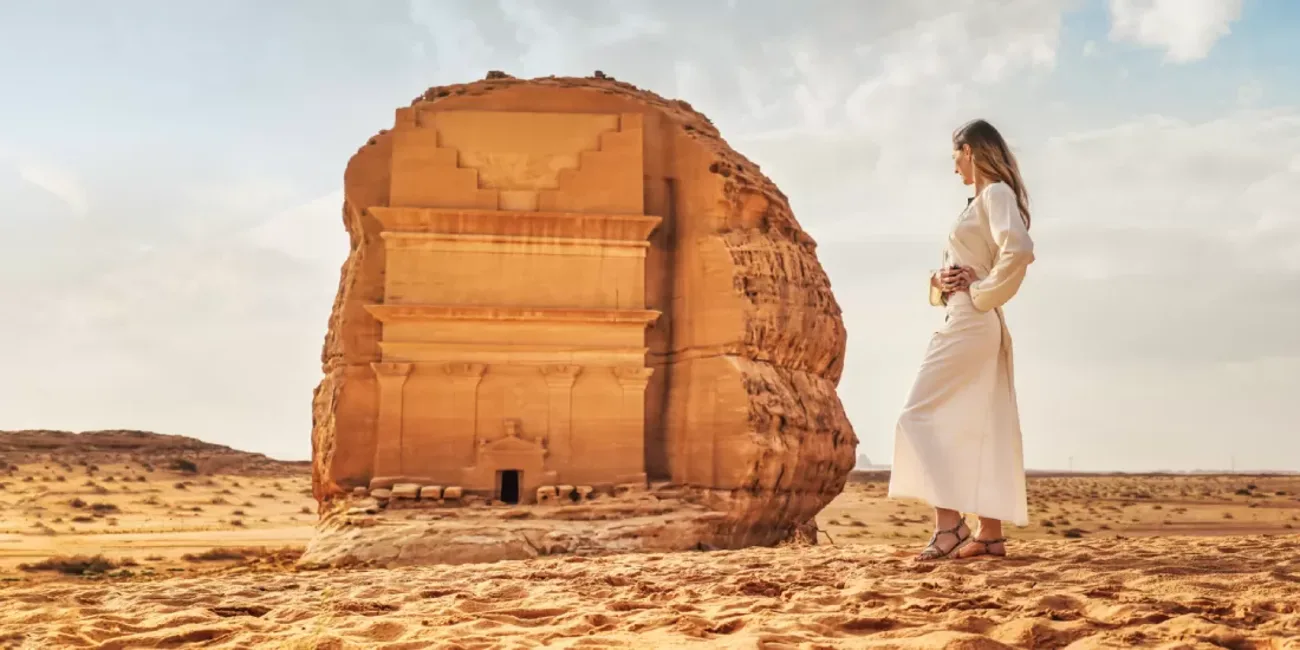
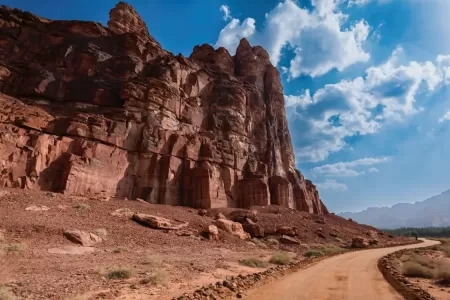
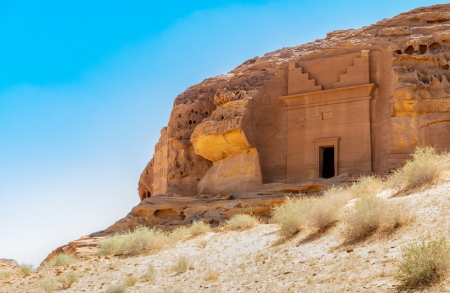
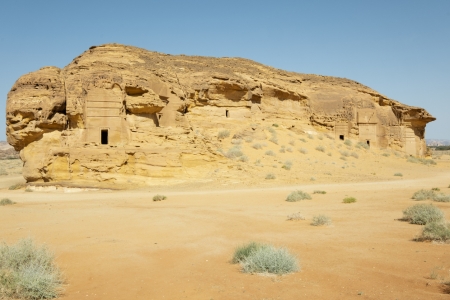
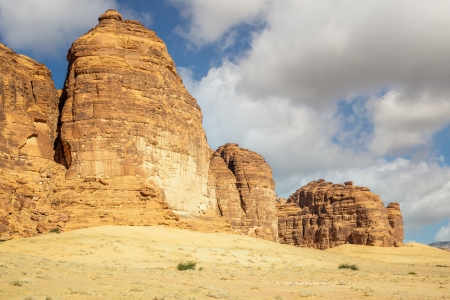
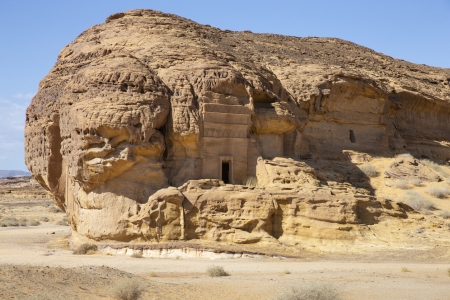
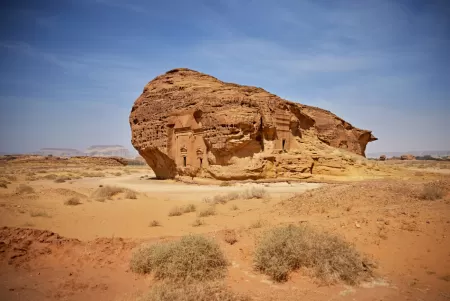
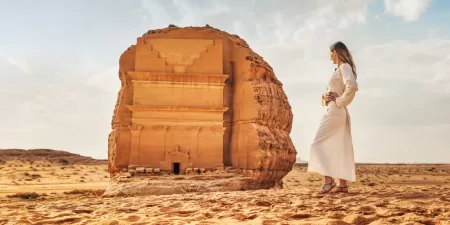
Standing alone in the desert sands of Madain Saleh, Qasr Al-Farid (The Lonely Castle) represents one of ancient Arabia's most impressive architectural achievements. This 72-foot-tall Nabataean tomb, carved from a single sandstone monolith in the 1st century CE, draws over 400,000 visitors annually to Saudi Arabia's first UNESCO World Heritage site.
What is Qasr Al-Farid?
Qasr Al-Farid (Arabic: قصر الفريد) translates to "The Lonely Castle" or "The Unique Palace." Located within the Hegra archaeological site (also known as Madain Saleh or Al-Hijr) in AlUla Governorate, this monumental tomb stands as the largest of 131 rock-cut tombs at the site.
Quick Facts About Qasr Al-Farid
- Height: 72 feet (22 meters)
- Construction Period: 1st century CE
- Civilization: Nabataean Kingdom
- UNESCO Status: Part of Al-Hijr (Madain Saleh) World Heritage Site (inscribed 2008)
- Location: AlUla, northwestern Saudi Arabia
- Annual Visitors: Approximately 400,000
History of Qasr Al-Farid: The Nabataean Legacy
Who Were the Nabataeans?
The Nabataeans transformed from nomadic traders into a sophisticated civilization controlling vital trade routes between Arabia, the Mediterranean, and beyond. Flourishing from the 4th century BCE to 106 CE, they mastered desert survival, hydraulic engineering, and monumental architecture.
Their strategic position along the Incense Route—transporting frankincense, myrrh, and spices—generated immense wealth that funded elaborate tomb construction throughout their territories.
The Kingdom of Lihyan Connection
Historical evidence suggests Qasr Al-Farid was commissioned for Hayyan bin Koza, a prominent figure from the Kingdom of Lihyan. The tomb's inscriptions feature text from three ancient cultures:
- Lihyanite script
- Thamudic inscriptions
- Nabataean carvings
This multicultural blend reflects the cosmopolitan nature of ancient Arabian trade cities.
Why Construction Stopped?
Qasr Al-Farid remains famously unfinished—the lower third shows rough, uncarved stone. Archaeologists propose three theories:
- Sudden death of the patron before completion
- Economic decline as trade routes shifted
- Roman annexation in 106 CE disrupted the Nabataean empire-wide projects
Architecture & Design: How Qasr Al-Farid Was Built
Top-Down Carving Technique
Unlike modern construction, Nabataean stonemasons worked from top to bottom. This innovative method:
- Prevented damage from falling debris
- Allowed precise facade planning
- Enabled scaffolding removal as work progressed downward
The unfinished base of Qasr Al-Farid provides rare insight into this ancient technique, making it invaluable for understanding Nabataean craftsmanship.
Architectural Elements
The Facade Features:
- Stepped crown echoing Petra's Treasury
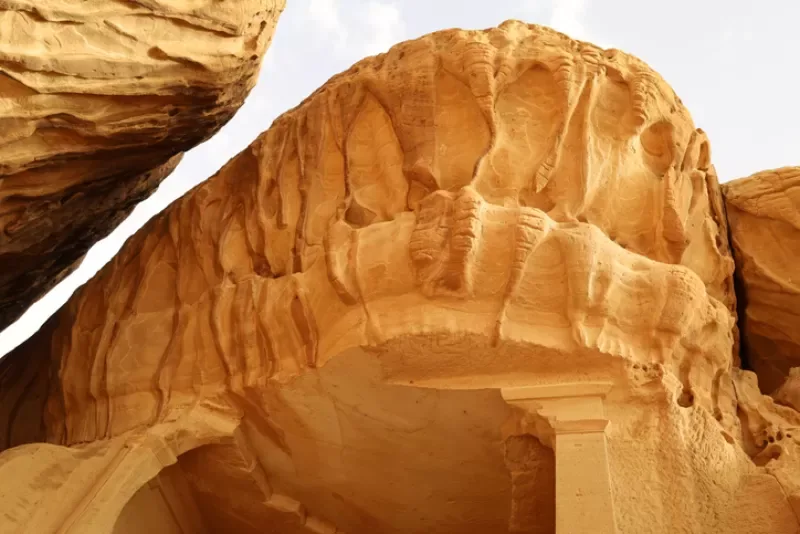
- Four engaged columns with Nabataean-style capitals
- Intricate pilasters with decorative crowning
- False doors symbolizing passage between worlds
- Two additional rock columns (unique to this tomb)
Interior Layout:
The single burial chamber remains undecorated but functionally designed, reflecting Nabataean understanding of sacred space and geometry.
Comparison to Petra
While Petra in Jordan is the Nabataeans' most famous city, Qasr Al-Farid showcases their southern architectural evolution. Both sites share:
- Rock-cut construction techniques
- Classical facade elements
- Burial monument purposes
- UNESCO World Heritage status

Why Is It Called "The Lonely Castle"?
The name "Qasr Al-Farid" stems from two unique characteristics:
- Physical isolation: Unlike clustered tomb groups elsewhere in Hegra, this monument stands approximately 10 kilometers from the main archaeological complex
- Singular construction: Carved from a single, massive sandstone outcrop with no adjacent structures
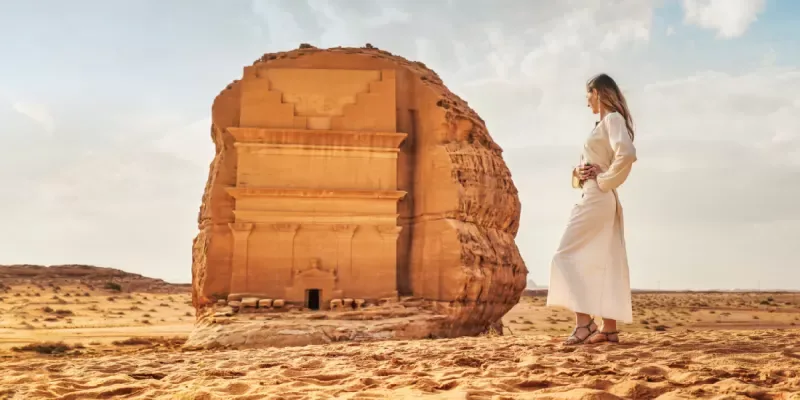
This isolation creates dramatic photographic opportunities, especially during golden hour when the sandstone glows amber against endless desert horizons.
Visiting Qasr Al-Farid: Practical Travel Information
How to Get to Qasr Al-Farid?
By Air:
Fly into AlUla International Airport (ULH) with direct flights from:
- Riyadh (90 minutes)
- Jeddah (2 hours)
- Dubai (2.5 hours)
By Road:
AlUla is approximately:
- 380 km from Medina (4 hours drive)
- 1,100 km from Riyadh (11 hours drive)
From AlUla Town:
All visits to Hegra (Madain Saleh) archaeological site are organized through the official Hegra Welcome Center. Private vehicles cannot access the site directly.
Entry Requirements & Tickets:
- Saudi eVisa: Required for international tourists (available online)
- Hegra Site Pass: Purchase at the Welcome Center or online via experiencealula.com
- Ticket Price: Approximately 95 SAR ($25 USD) for adults
- Guided Tours: Mandatory; independent exploration not permitted
- Advance Booking: Highly recommended during peak season (October-March)
Best Time to Visit:
- Optimal Season: October to March
- Temperature: 15-25°C (59-77°F), Low rainfall, Comfortable for desert exploration
Winter at Tantora Festival (December-February):
Experience AlUla's premier cultural event featuring concerts, art exhibitions, and heritage celebrations during your visit.
Avoid: June-August
Temperatures exceed 40°C (104°F), making outdoor activities challenging.
What to Expect During Your Visit?
Tour Duration: 2-3 hours for Hegra site (includes Qasr Al-Farid)
Accessibility: The Interior of Qasr Al-Farid is closed to preserve the monument
Exterior viewing from designated pathways. Wheelchair-accessible boardwalks are available at the main viewing areas
Photography:
- Personal photography encouraged
- Commercial shoots require permits
- Drone photography requires special authorization from the Royal Commission for AlUla
What to Bring?
- Sun protection (hat, sunscreen, sunglasses)
- Comfortable walking shoes
- Water bottle (provided on some tours)
- Camera with zoom lens for detailed shots
- Light jacket (November-February mornings can be cool)

Other Attractions at Hegra (Madain Saleh):
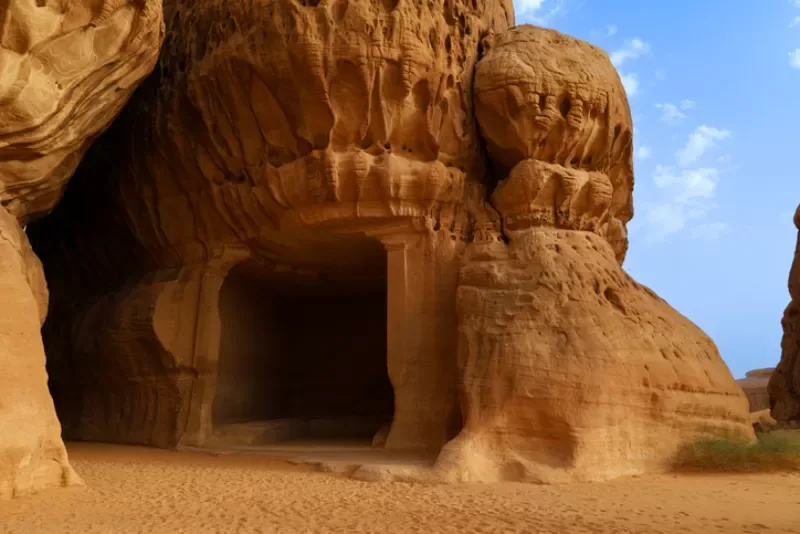
Qasr Al-Farid is one of many remarkable monuments within the 52-hectare archaeological site:
Must-See Tombs:
Qasr Al-Bint: A cluster of 29 tombs with intricate facades, including inscriptions dating to 31 BCE.
Jabal Al-Ahmar (Red Mountain): 18 tombs featuring the earliest Nabataean inscriptions at Hegra.
Jabal Ithlib: Sacred mountain with religious sanctuaries, water channels, and the famous Diwan hall.
Al-Khuraymat: 53 tombs representing middle-class Nabataean burial practices.
Additional AlUla Experiences:
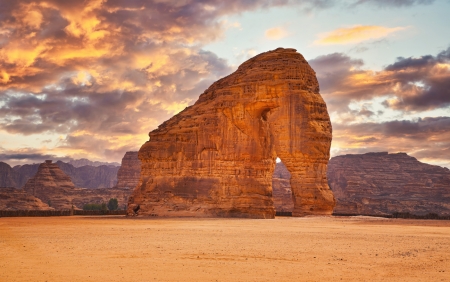
- Elephant Rock (Jabal AlFil): Natural sandstone formation resembling an elephant
- Dadan Archaeological Site: Ancient Kingdom of Dadan and Lihyan ruins
- Old Town AlUla: 12th-century mud-brick village
- Maraya Concert Hall: World's largest mirrored building hosting international performances
Cultural Significance of Qasr Al-Farid
Nabataean Burial Practices
Tomb size directly correlated with social status and wealth. Qasr Al-Farid's impressive scale indicates its patron held considerable power and resources.
Key beliefs:
- Afterlife required physical passage through symbolic doorways
- Tomb facades served as eternal homes for spirits
- Elaborate carvings honored the deceased and their lineage
UNESCO World Heritage Importance:
Al-Hijr (Madain Saleh) became Saudi Arabia's first UNESCO World Heritage site in 2008, recognized for:
- Outstanding universal value of Nabataean architectural heritage
- Exceptional preservation of rock-cut monuments
- Cultural exchange evidence along ancient trade routes
- Unique testimony to a disappeared civilization
Modern Saudi Vision 2030:
AlUla development represents a cornerstone of Saudi Arabia's Vision 2030 tourism diversification strategy. The Royal Commission for AlUla (RCU) balances sustainable tourism with archaeological preservation, transforming the region into a world-class heritage destination.
Planning Your Saudi Arabia Tour with Qasr Al-Farid
Recommended Itineraries
3-Day AlUla Focus:
- Day 1: Hegra archaeological site (Qasr Al-Farid)
- Day 2: Old Town, Dadan, Elephant Rock
- Day 3: Adventure activities (rock climbing, hiking, hot air balloon)
7-Day Northwestern Saudi Circuit:
- AlUla (3 days)
- Tabuk (2 days) - desert landscapes and Red Sea coast
- NEOM region (2 days) - futuristic megacity project
14-Day Complete Saudi Experience:
Combine AlUla with Riyadh, Jeddah, Red Sea islands, and Edge of the World.
Tour Operator Recommendations
Choose licensed operators offering:
- Expert Egyptologist or archaeologist guides
- Small group sizes (under 15 people)
- Flexible itineraries
- Saudi Tourism Authority certification
Conservation & Sustainable Tourism
The Royal Commission for AlUla employs cutting-edge preservation techniques:
- 3D scanning and digital archiving of all monuments
- Environmental monitoring for erosion and weathering patterns
- Visitor capacity limits to prevent site degradation
- Restoration programs using traditional materials and methods
Visitors contribute to preservation by:
- Following designated pathways
- Not touching carved surfaces
- Avoiding littering
- Respecting photography restrictions
Start Your Qasr Al-Farid Adventure
Qasr Al-Farid stands as living proof of the Nabataean civilization's architectural genius and cultural sophistication. This lonely sentinel of the desert invites modern travelers to witness history carved in stone and imagination.
Whether you're a history enthusiast, architecture admirer, or adventure seeker, Qasr Al-Farid and the broader Hegra archaeological site offer an unforgettable journey into ancient Arabia's golden age.
Ready to explore Saudi Arabia's hidden treasures? Contact us to design your personalized Tours to Saudi Arabia, and discover why this UNESCO World Heritage site captivates hundreds of thousands of visitors each year.

Customize Your Dream Vacation!
Get in touch with our local experts for an unforgettable journey.
Plan Your Trip