Table of Contents:
#Essential Monuments That Define Jaipur's Character
#Hidden Gems and Local Favorites
#Where to Stay and Eat Like a Local
#Planning Your Jaipur Visit
#Conclusion
Jaipur's maze of palaces, forts, and hidden courtyards holds secrets that standard guidebooks rarely uncover. Tourist brochures feature the same recycled photographs of Amber Fort and Hawa Mahal, yet they miss the architectural nuances that make these structures extraordinary. Local families know which marble corridors echo with the best acoustics, which temple corners catch the perfect golden light, and where centuries-old recipes still simmer exactly as royal kitchens once prepared them.
This exploration reveals the Pink City through resident eyes from the silver urns at City Palace that hold Guinness World Records to the unnamed food stalls where three generations have perfected their recipes. Each monument carries layered histories that transform simple sightseeing into genuine discovery. The astronomical precision of Jantar Mantar becomes fascinating when you understand how Maharaja Sawai Jai Singh calculated celestial movements with tools built in 1734. Street vendors near Johari Bazaar serve the same sweets that once graced Rajput courts, their techniques unchanged since the 18th century.
Beyond the famous attractions lie lesser-known treasures: cenotaphs where royal families performed final ceremonies, temple complexes that resemble palaces more than places of worship, and rooftop cafes where locals gather for evening chai while watching the sun paint ancient walls in shades of amber and rose.

City Palace
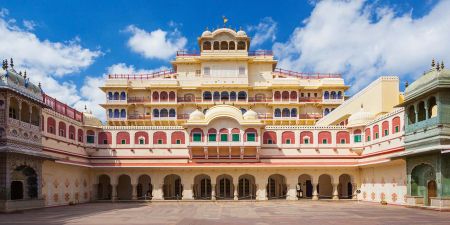
Between 1729 and 1732, Maharaja Sawai Jai Singh II orchestrated the creation of this remarkable residence, where royal descendants continue their ancestral traditions today. Few palaces worldwide maintain such a living heritage morning prayers still echo through courtyards where ceremonies have occurred for three centuries. Admission fees reflect this exclusivity: ₹200-300 for Indian visitors, ₹700-1000 for international guests, with standard hours from 9:30 AM to 5:00 PM, plus evening access between 7:00 PM and 10:00 PM.
The Diwan-e-Khas houses two extraordinary silver urns, each weighing 345 kilograms when empty vessels so massive they earned recognition from Guinness World Records as the largest sterling silver containers ever crafted. Chandra Mahal's seven stories dominate the skyline, though public access remains limited to the ground-floor museum, preserving the privacy of current residents.
Amber Fort
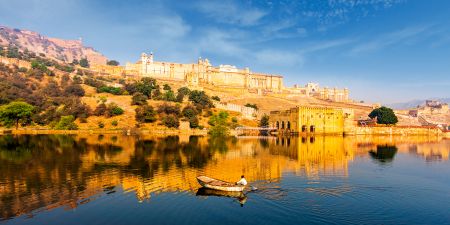
Eleven kilometers north along NH-8 sits this UNESCO World Heritage Site, where Kachhwaha rulers established their stronghold during the 16th century before relocating their capital to Jaipur in 1727. Entry fees range from Rs 200 for Indians to approximately ₹550 for foreign visitors, with gates welcoming explorers from 8:00 AM until 5:30 PM.
Within the Sheesh Mahal lies perhaps history's most ingenious bedroom design, thousands of mirrors positioned so precisely that lighting just two candles created an illusion of sleeping beneath starlit skies. Royal ladies who missed open-air sleeping could experience celestial beauty from their protected chambers.
Hawa Mahal
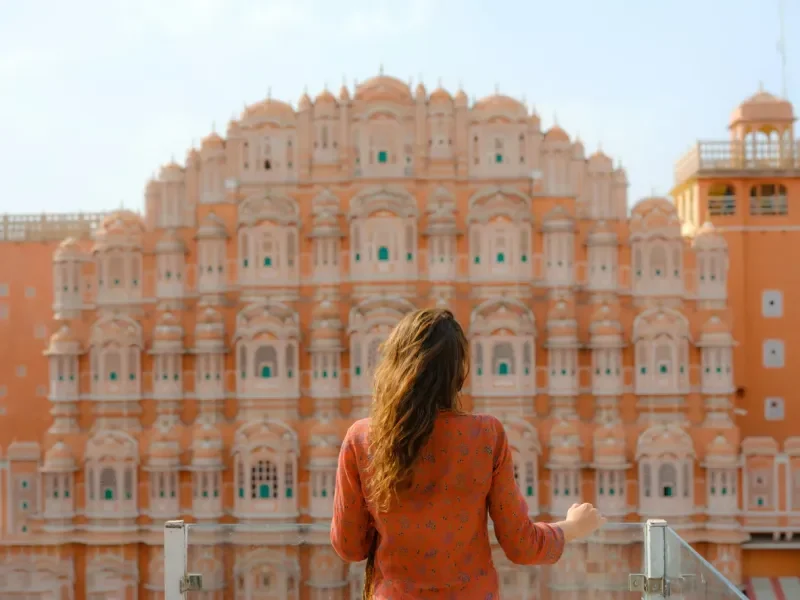
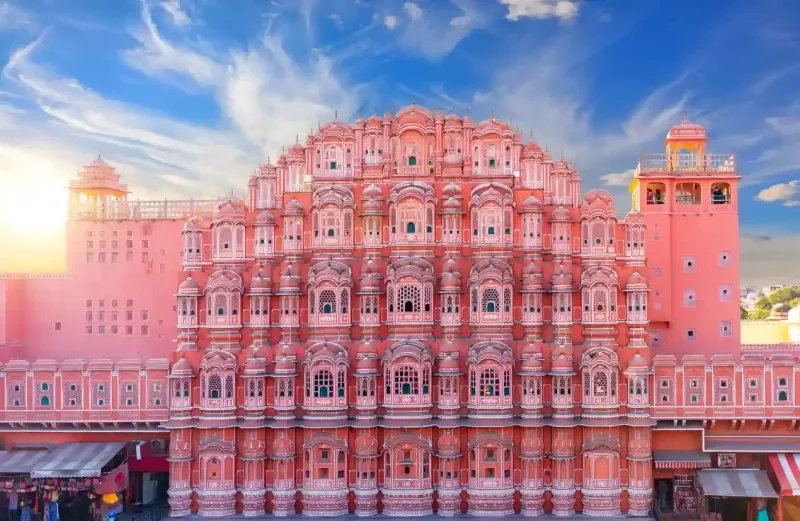
Architect Lal Chand Ustad brought Maharaja Sawai Pratap Singh's vision to life in 1799, creating this 87-foot tower adorned with 953 Jharokhas, each window carved with mathematical precision. While approximately one million visitors photograph its honeycomb facade annually, few venture inside to experience its climate engineering genius.
These latticed openings served dual purposes: enabling royal women to observe street celebrations while remaining unseen, and employing the Venturi effect to circulate cool air throughout interior chambers, ancient air conditioning that required no electricity.
Jantar Mantar
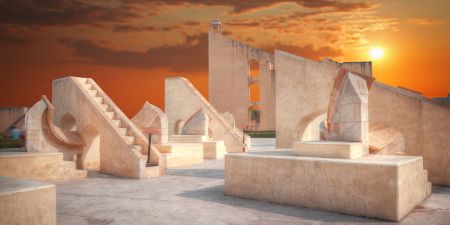
Sawai Jai Singh completed this astronomical marvel in 1734, installing 19 precision instruments that continue measuring celestial movements. The towering Vrihat Samrat Yantra reaches 88 feet skyward, functioning as one of Earth's largest sundials with accuracy within two seconds. UNESCO recognition followed, acknowledging achievements that attracted over 700,000 annual visitors during 2006-08.
Each instrument represents mathematical concepts translated into stone and bronze, where ancient astronomers tracked planetary positions with accuracy that modern technology validates.
Nahargarh Fort
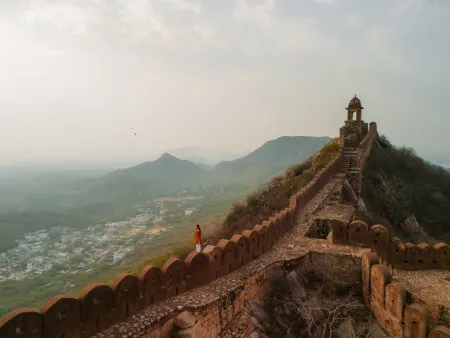
Built in 1734, this defensive fortress enjoys the unique distinction of never facing military attack throughout its existence. Located 30-45 minutes from central Jaipur, international visitors pay 200 Rupees for admission. Official hours end at 5:30 PM, though the walls remain accessible until 10:00 PM, perfect timing for watching sunset transform the Pink City into glowing amber.
Jal Mahal
This Water Palace appears to float upon Man Sagar Lake, most dramatically viewed from the serpentine road ascending toward Nahargarh Fort. Though the entrance remains restricted, the lakeside perspective provides unforgettable photographic opportunities where palace reflections double the architectural beauty.
Ready to explore the royal palaces, vibrant bazaars, and historic landmarks of Jaipur? Plan your journey with our expertly crafted India tour packages and experience the culture, heritage, and unforgettable sights of India’s Pink City.

Gaitor Cenotaphs
The Nahargarh valley cradles this royal cremation ground, where silence replaces the bustle that defines popular attractions. Established during the 18th century, these marble and sandstone memorials rise beneath chhatri domes, each structure telling stories of Rajput dynasties. The site welcomes visitors for Rs 30 per person between 9:30 AM and 5:00 PM. Sawai Jai Singh II's cenotaph commands attention through its 20 carved pillars, where Hindu deities dance alongside musicians and warriors frozen in eternal battle scenes. The craftsmanship reveals details that become apparent only during quiet contemplation.
Patrika Gate
This contemporary marvel emerged in 2016, receiving its official inauguration from Prime Minister Narendra Modi in 2020. Positioned at Jawahar Circle Garden's entrance, merely 7 kilometers from the airport, the gateway requires no admission fees. Nine ornate arches celebrate distinct Rajasthan regions, their pastel hues and ceiling artwork creating striking photographic opportunities. Dawn hours between 5 AM and 9 AM offer optimal conditions with minimal crowds and favorable natural lighting.
Galtaji Temple
Pink sandstone walls rise from the Aravalli Hills, 10 kilometers from Jaipur's center, creating a structure that blurs the boundaries between palatial architecture and sacred space. Diwan Rao Kriparam commissioned this complex around 1730, designing it around seven holy water tanks sustained by natural springs. The Galta Kund maintains its water levels year-round, preserving its significance for ritual purification. Monkeys inhabit every corner, earning the site its popular "Monkey Temple" designation. Evening visits reward visitors with sweeping city panoramas from this elevated Aravalli Hills position.
Albert Hall Museum
This Indo-Saracenic masterpiece opened its doors in 1887, establishing itself within Ram Niwas Garden's grounds. Indian visitors pay Rs 40 while foreign guests contribute Rs 300 for entry. The museum's vast collection encompasses 19,000 artifacts, including a Ptolemaic period Egyptian mummy that captivates archaeology enthusiasts. Early morning arrivals before 9 AM provide unobstructed photography opportunities. Flocks of pigeons congregate around the building's exterior, their movements adding natural animation to architectural photographs.

Customize Your Dream Vacation!
Get in touch with our local experts for an unforgettable journey.
Plan Your Trip
Heritage Hotels and Havelis
Royal Heritage Haveli transforms an 18th-century hunting lodge into living history. Each suite displays hand-painted frescoes where Mughal floral motifs intertwine with Rajput geometric patterns, their pigments still vibrant after centuries. The Indo-Mughal archways frame private terraces that overlook gardens designed according to Persian charbagh principles. WelcomHeritage Traditional Haveli near the railway station showcases marble galleries where mirror work reflects candlelight exactly as it did during evening court gatherings, while vintage chandeliers cast patterns that once illuminated royal conversations.
Traditional Rajasthani Restaurants
Suvarna Mahal at Rambagh Palace recreates royal dining customs that governed maharaja courts for centuries. Open from 7:00 PM to 11:45 PM, the restaurant serves thalis following ancient Ayurvedic principles where each dish balances specific rasas: sweet, sour, salty, pungent, bitter, and astringent. Crystal chandeliers illuminate tables while classical musicians perform ragas that once accompanied royal feasts. Virasat Heritage Restaurant preserves cooking rituals where spices are ground fresh daily using traditional stone querns. Chokhi Dhani presents unlimited thalis alongside folk performances that demonstrate how food and entertainment are intertwined during harvest celebrations. LMB in Johari Bazaar has perfected dal baati churma for generations, where wheat dumplings are still baked in traditional clay ovens, and ghee is clarified using methods unchanged since Rajput kitchens.
Rooftop Cafes with Views
Tapri Central holds court opposite Central Park with 13,743 reviewers rating it 4.5 stars. Operating from 7:30 AM to 10:00 PM (closing at 12:30 PM Tuesdays), the cafe serves chai in Ramjara glasses, thick-bottomed vessels designed to retain heat while protecting fingers from burning. Wind View Cafe positions diners directly facing Hawa Mahal, where the latticed windows create ever-changing shadow patterns throughout the day. Nebulae at Hilton rises 110 feet above street level, offering sight lines to Nahargarh Fort, where royal families once lit signal fires to communicate across the valley.
Local Street Food Spots
Food Meter in Bani Park operates from 10:00 AM to 11:30 PM, earning 4.7 stars from 95 local reviewers. Setia Samosa has maintained its kachori recipe since 1980, where each morning brings fresh grinding of coriander, cumin, and asafoetida in precise proportions that create the distinctive flavour profile locals crave. The establishment opens at 7:00 AM and closes by 8:00 PM, earning 4.5 stars from 234 reviews. Lassiwala serves lassi in traditional clay cups that impart an earthy flavour impossible to replicate in glass, though their 7:00 AM to 4:00 PM schedule means early arrival is essential. Clay vessels also naturally cool the yoghurt-based drink, a cooling technique perfected centuries ago. Masala Chowk charges ₹13 entry to Ram Niwas Garden, where multiple food vendors gather exactly as they did during colonial-era exhibitions, now rated 4.3 stars by 16,782 people and open 8:00 AM to 10:30 PM.
Best Time to Visit
Weather patterns determine your monument exploration experience more than most visitors realize. November through March delivers temperatures between 8°C and 32°C, allowing comfortable walks through palace courtyards without the intense heat that makes afternoon sightseeing unbearable. January brings the Jaipur Literature Festival, transforming the city into a literary hub where authors discuss their works in heritage hotel gardens. March hosts the Elephant Festival before Holi celebrations, featuring decorated elephants parading through the streets near Amber Fort.
October to March maintains pleasant conditions between 10°C and 25°C, essential for exploring outdoor monuments where shade becomes scarce during midday hours. Summer months push temperatures above 45°C, making even short walks between palace sections exhausting.
Getting Around the City
Metro operations span 6 AM to 10 PM on weekdays, with trains arriving every 10 minutes during rush periods and 15 minutes during quieter hours. Fares range between 25-30 INR maximum, connecting major tourist areas efficiently. Private cab services charge INR 1,600-2,700 daily, worthwhile when visiting multiple scattered locations like Amber Fort and Nahargarh Fort in one day.
Auto-rickshaws cost Rs 25 to Rs 200 based on distance, though negotiating beforehand prevents disputes. Traffic congestion peaks between 9 AM and stretches until 8:30-9 PM, affecting travel times between widely separated attractions.
What to Wear
Cotton fabrics prove essential for bazaar exploration, where air circulation remains limited. Temple visits require modest clothing covering shoulders and knees, while lightweight dupattas or jackets provide layering options for air-conditioned palace interiors. Comfortable walking shoes matter more than fashion when navigating uneven stone pathways at historical sites.
Shopping in Local Bazaars
Market activity intensifies during late morning and early evening hours. Early morning visits or late afternoon timing ensure comfortable temperatures for prolonged shopping. Bargaining typically starts at half the quoted price, with vendors expecting negotiation as standard practice. Small denomination bills facilitate smooth transactions, while crossbody bags provide security in crowded bazaar lanes. Hydration becomes crucial as enclosed market areas trap heat and humidity.
Amongst other attractions that are also worth visiting are the famous Jantar Mantar observatory, the Jaigarh Fort, and the Badi Chaupar. Jaipur is a truly magical city that you should aim to visit and stay in for about 7-10 days to be able to experience it in its entire glory!
The Pink City reveals its true character when approached with curiosity rather than a checklist mentality. Each marble corridor, each centuries-old recipe, each astronomical instrument tells stories that standard tourism misses entirely. These monuments become living history when you understand the engineering brilliance behind mirror work designed to simulate starlight, or recognize the mathematical precision embedded in sundials accurate to mere seconds.
Local knowledge transforms ordinary sightseeing into genuine cultural immersion. The difference lies not just in knowing where to find authentic dal baati churma, but in understanding why royal kitchens developed these specific cooking techniques. Temple complexes reveal their architectural logic when you discover how natural acoustics were calculated centuries before modern sound engineering existed.
Your exploration gains depth when guided by resident wisdom from the optimal morning light for photographing heritage structures to the seasonal rhythms that determine when street vendors serve their finest specialties. Such insights create connections between historical grandeur and contemporary life, where ancient craftsmanship continues in family workshops, and royal garden designs influence how locals choose their evening gathering spots.
This approach to Jaipur appreciation requires patience and a genuine interest in the cultural layers beneath surface attractions. The reward lies in experiencing a city where past and present coexist naturally, where every carved pillar and painted ceiling reflects a sophisticated understanding of art, science, and daily human needs developed over centuries of refined civilization.
Which is the most famous place in Jaipur?
Hawa Mahal (Palace of Winds) is Jaipur's most famous place the iconic pink honeycomb facade and 953 windows. Close second is Amber Fort, a massive hilltop palace with stunning mirror work and elephant rides. City Palace and Jantar Mantar (UNESCO observatory) are also iconic. For me, Amber Fort is most impressive, but Hawa Mahal is most photographed and globally recognized.
Is 2 days enough in Jaipur?
Yes, 2 days covers Jaipur's main highlights but feels rushed. Day 1: Amber Fort, City Palace, Jantar Mantar, Hawa Mahal. Day 2: Jaigarh or Nahargarh Fort, Albert Hall Museum, shopping in Johari and Bapu Bazaars. You'll see major attractions but miss deeper exploration. Ideal for first-time visitors on tight schedules or Golden Triangle tours combining Delhi-Agra-Jaipur.
Is 4 days enough for Jaipur?
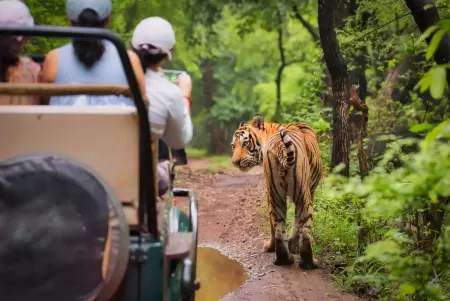
Yes, 4 days is more than enough, actually perfect for relaxed exploration. You'll see all major forts (Amber, Jaigarh, Nahargarh), palaces, Jantar Mantar, markets, plus day trips to Pushkar or Ranthambore tiger safaris. Allows time for textile workshops, cooking classes, leisurely shopping, and hidden gems. Unless extremely slow-paced, 4 days cover everything comfortably with breathing room.
Is 3 days enough for Jaipur?
Yes, 3 days is the sweet spot for Jaipur, a perfect balance without rushing or boredom. Day 1: Amber Fort, Jaigarh Fort, stepwell. Day 2: City Palace, Jantar Mantar, Hawa Mahal, Albert Hall. Day 3: Nahargarh Fort sunrise, bazaar shopping, block printing workshop. You'll experience major attractions, local culture, and shopping with breathing room. Ideal for most travelers.
Which month is best for a Jaipur trip?
October to March is best, with November and February ideal. October-November offers post-monsoon freshness, 20-30°C temperatures, and Diwali celebrations. December-January is the coolest (10-22°C), perfect for sightseeing. February-March brings pleasant warmth. Avoid April-June (scorching 35-45°C) and July-September (monsoon, humid). I recommend November for perfect weather, festivals, and comfortable fort exploration without extreme heat.
Which city is called the Paris of India?
Jaipur is called "Paris of India" for its pink buildings, wide boulevards, and planned city layout designed by Maharaja Sawai Jai Singh II in 1727. The city earned this nickname from systematic grid design, beautiful architecture, and pink color scheme (painted 1876 for Prince of Wales). Pondicherry is sometimes called "Paris of the East" for French colonial architecture, but Jaipur holds the official "Paris of India" title.