Amber Fort: What Every Visitor Needs to Know Before Going
Amber Fort, also referred to as the Amber Palace, is a major tourist attraction in Jaipur due to its sublime appearance and geographical advantages. Read More!
.jpg "Amber Fort: What Every Visitor Needs to Know Before Going")
Amber Fort, also referred to as the Amber Palace, is a major tourist attraction in Jaipur due to its sublime appearance and geographical advantages. Read More!
Picture this: each dawn brings approximately 5,000 explorers to the same ancient stone corridors that have witnessed centuries of royal intrigue. During 2007 alone, an astounding 1.4 million curious souls traced the footsteps of Rajput rulers through these very passageways. The fortress that Raja Man Singh I erected in 1592 eventually earned its rightful place among the world's most treasured monuments when UNESCO bestowed Heritage Site status upon it in 2013.
#Where Is Amber Fort, and Why Visit
#Planning Your Visit to Amber Fort
#What to See Inside Amber Fort
#Essential Tips for Visiting Amber Fort
This architectural wonder commands attention as Jaipur's crown jewel, drawing questions about its precise location and the secrets held within its walls. The difference between a hurried tourist snapshot and a meaningful encounter with history often lies in preparation. Your journey through these hallowed halls demands insight into practical matters, entry protocols, optimal timing, and the hidden stories each chamber whispers to those who listen.
From deciphering transportation routes and admission details to discovering the mesmerizing Mirror Palace and royal courtyards, this exploration guide reveals the knowledge needed to unlock Amber Fort's full majesty. Every detail serves a purpose: transforming your visit from a simple sightseeing stop into an authentic dialogue with Rajasthan's glorious past.
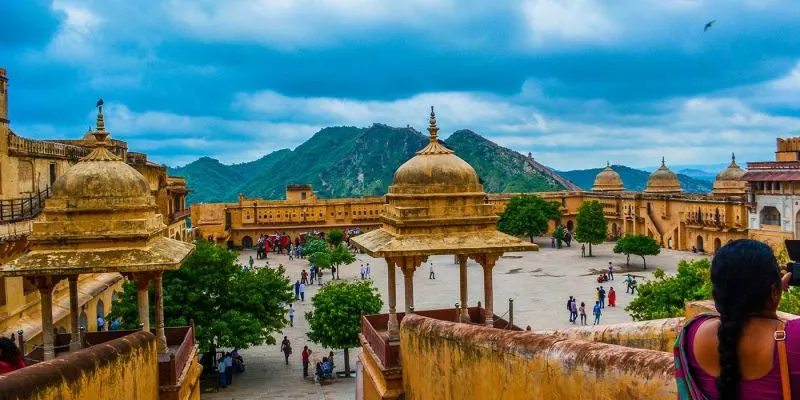
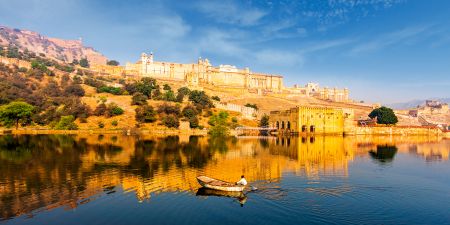
The Aravalli range cradles this magnificent fortress 11 kilometers north of Jaipur's bustling center, where ancient stones overlook the serene waters of Maota Lake. The town of Amer holds a fascinating secret. It once reigned as the region's capital long before Jaipur claimed that distinction. Railway travelers will discover Jaipur Junction Railway Station positioned 13 kilometers away, while those arriving by air face a 20-kilometer journey from Sanganer Airport.
Multiple pathways lead curious visitors to this hilltop marvel. Public buses maintain steady service from Ajmeri Gate and Badi Chaupar, departing every 10 minutes for journeys lasting 40 minutes to an hour. Fare structures range between Rs. 20-40 based on service levels. Railway station connections cost approximately Rs. 30 with similar timing. Auto-rickshaws present another alternative—though fare negotiations prove essential beforehand. Taxis emerge as the most straightforward option at Rs. 200-300 from the city center, with modern app-based services like Uber and Ola ensuring reliable pickup and drop-off arrangements.
Time's layers unfold dramatically at this site, beginning with Raja Alan Singh of the Meena clan, who established the original structure in 967 AD. The Kachhawa Rajputs seized control around 1037 AD, initiating a seven-century dynasty that would shape the region's destiny. Raja Man Singh I, Emperor Akbar's trusted military commander, constructed the current palatial complex in 1592. Maharaja Jai Singh I continued this architectural legacy, expanding the palace over 150 subsequent years.
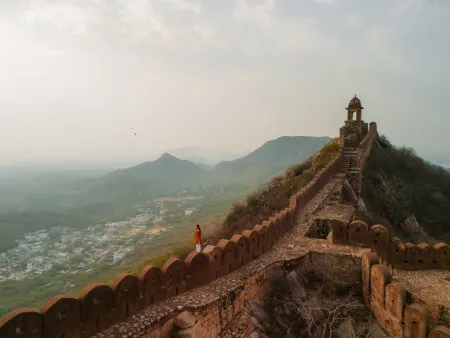
Amber's strategic importance cannot be overstated. For seven centuries, it functioned as the Kachwaha Rajput capital, its elevated position offering commanding views and defensive advantages against potential invaders. Watchtowers and fortified walls spread like protective fingers across the surrounding hillsides. The year 1727 marked a pivotal transition when Sawai Jai Singh II relocated the capital to his newly conceived city of Jaipur, forever altering Amber's role from active governance center to revered ancestral stronghold.
Global recognition came during the 37th World Heritage Committee session in Phnom Penh, Cambodia, where Amber Fort was designated a UNESCO World Heritage Site in 2013. This honor united the fortress with five fellow Rajasthani strongholds under the collective title "Hill Forts of Rajasthan". The designation celebrates the fort's remarkable fusion of Rajput and Mughal architectural philosophies, manifest through pale yellow and pink sandstone harmoniously blended with pristine white marble. UNESCO's recognition acknowledges Amber Fort as an exceptional example of fortified royal residences that defined Rajput princely states over centuries of Indian history.
October through March unveils Amber Fort's most welcoming embrace, with temperatures settling comfortably between 10°C and 25°C. These cooler months transform courtyard explorations and stair climbing from endurance tests into pleasant discoveries. Summer's fury pushes mercury beyond 40°C, turning midday wanderings into formidable challenges. Monsoon months paint the landscape in verdant hues while temperatures hover between 25°C and 35°C, though rain-slicked pathways demand extra caution from curious explorers.
Dawn expeditions between 8:00 AM and 11:00 AM reward early risers with thinner crowds and gentler temperatures. Those seeking golden hour magic should aim for 4:00 PM to 6:00 PM arrivals, when sunset light bathes ancient stones in photographers' dreams.
The fort's gatekeepers request ₹100 from Indian nationals, while international visitors contribute ₹500. Students receive substantial relief: Indians pay merely ₹20, foreign students ₹150. Young explorers under 7 years pass through gates without charge. Evening spectacles demand ₹100 from all attendees, though this admission grants access exclusively to the Light and Sound Show. English presentations cost ₹200, Hindi versions ₹100.
Elephant ascents command ₹1100 per couple, available solely during morning hours from 7:30 AM to 12:30 PM.
Fort gates welcome visitors daily from 8:00 AM until 5:30 PM. Evening performances extend access from 7:00 PM to 9:00 PM. English Light and Sound presentations commence at 7:30 PM, Hindi shows at 8:00 PM.
Dedicated explorers should reserve 2 to 3 hours for meaningful discovery, though history enthusiasts often find themselves absorbed for 4 to 5 hours.
Three distinct paths lead from base parking to the fortress entrance. Jeep services charge approximately ₹450 for uphill transport, though peak-hour delays can stretch waiting times to an hour. Walking enthusiasts enjoy panoramic vistas while conquering moderately steep cobbled paths. The celebrated elephant experience continues drawing crowds despite its restricted morning schedule.
Get in touch with our local experts for an unforgettable journey.
Plan Your Trip
Four distinct courtyards unfold before you, each space revealing increasingly intimate glimpses into royal life as your footsteps carry you deeper into the heart of Rajput power.
This expansive assembly ground welcomed victorious armies home during Sawai Jai Singh's reign (1693-1743 AD). The Maharaja's personal bodyguards gathered here for ceremonies and parades, where war treasures gleamed under desert sunlight as proof of military triumph. Horse stables lined the courtyard's edges, their upper chambers housing the vigilant guards who protected royal sleep.
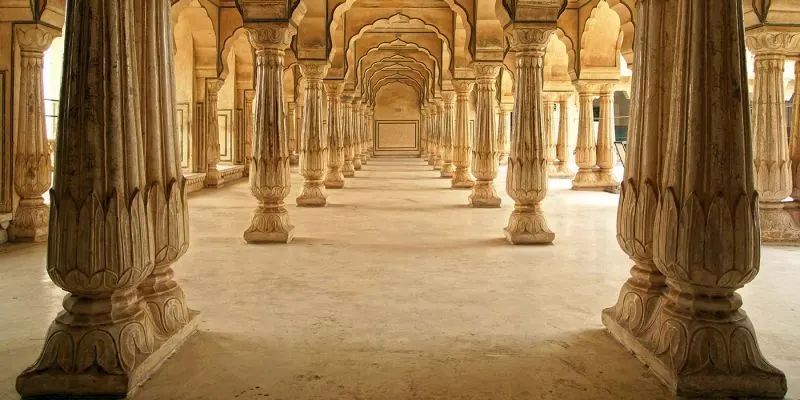
Dozens of pillars support this grand hall, where common subjects once approached their ruler with grievances and petitions. Look closely at the carved elephant heads adorning select columns. These intricate details speak to the artistic mastery that permeates every corner of the fort.
Mirza Raja Jai Singh conceived this three-tiered gateway as both protection and artistry, naming it for the remover of obstacles. Above the ornate entrance, Suhag Mandir served as the royal ladies' viewing gallery, its latticed marble screens allowing queens to observe court proceedings while maintaining proper seclusion. The gateway itself exemplifies the architectural marriage between Mughal grandeur and Rajput tradition.
Step into a universe of reflected light where thousands of tiny Belgian mirrors transform darkness into celestial wonder. Mirza Raja Jai Singh crafted this chamber so his queen could experience starlit nights indoors, safe from desert winds. Strike a match or light a phone's flashlight watch as a single flame becomes infinite, dancing across walls and ceiling in mesmerizing patterns. Today, protective barriers prevent entry to preserve these delicate 17th-century mosaics.
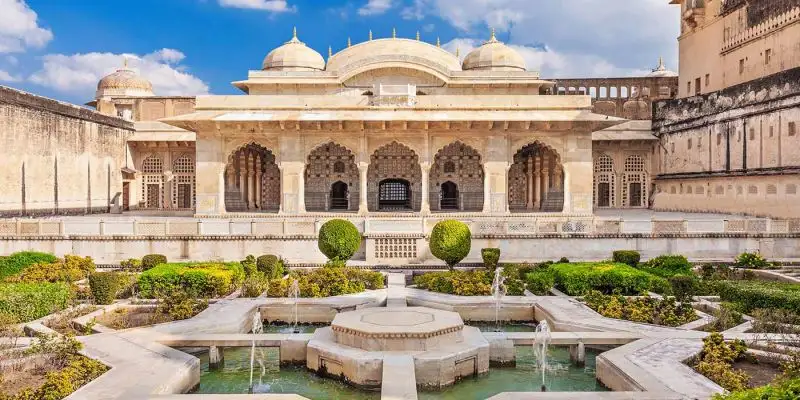
Ancient engineering genius flows through marble channels within these walls, creating natural air conditioning that cooled royal residents centuries before modern technology. The adjacent garden, another creation of Mirza Raja Jai Singh (1623-68), centers around a hexagonal star pool where fountains once danced for royal entertainment.
Raja Man Singh's architectural puzzle still intrigues visitors—twelve identical apartments surrounding a central courtyard, designed so no one could determine which wife received the king's nightly visit. The central pavilion provided a meeting space where royal ladies gathered behind silk curtains, conducting their own court away from masculine politics.
Eighty majestic elephants carry approximately 900 visitors daily during their limited operating window from 8:00 AM to 12:00 PM. Official pricing sits at ₹1,000 for two people, though recent fluctuations have adjusted these rates upward. The 20-30 minute ascent rewards passengers with sweeping views of Maota Lake, yet animal welfare considerations weigh heavily on many travelers' minds. Mahouts often expect additional gratuities beyond the standard fare.
Jeeps present a swifter alternative, charging ₹450-500 for round-trip tickets that accommodate up to five passengers. The steep cobbled pathways remain accessible on foot at no charge, though the climb demands reasonable physical stamina. Securing elephant rides requires arrival before 9:00 AM, as operators typically fulfill their daily quota by 11:00 AM.
Opportunistic photographers station themselves near elephant boarding areas, capturing unsolicited images before demanding payment. Local guides frequently steer visitors toward village shops peddling ordinary glass as precious gems and common metals masquerading as silver. Official ticket counters provide your safest transaction point, while pre-negotiated service prices eliminate unwelcome surprises.
Fort photography proceeds without restriction, though drone operations require advance authorization. Modest attire covering shoulders and knees demonstrates cultural respect. Sturdy footwear proves essential for extensive exploration, while protective headwear and sunscreen shield against Rajasthan's relentless desert sun.
This 52-minute spectacle commands ₹295 per person, with complimentary admission for children under seven. Gulzar's evocative script comes alive through Amitabh Bachchan's distinctive narration, with dual performances each evening at Kesar Kyari Garden. October through February schedules place English presentations at 6:30 PM and Hindi versions at 7:30 PM. The show regulations strictly prohibit photography throughout the performance.
Standing at the crossroads where centuries of Rajput legacy meet modern exploration, Amber Fort reveals itself as more than mere stone and mortar—it becomes a living classroom where history speaks directly to those who listen. Your preparation now transforms into experience, each practical detail serving as a key to unlock deeper understanding.
The Mirror Palace awaits your wonder, while the courtyards stand ready to share their secrets with visitors who arrive equipped with knowledge rather than mere curiosity. Yet wisdom extends beyond knowing which chamber holds the greatest treasures; it lies in recognising the subtle deceits that prey upon the unprepared traveller.
Winter's gentle embrace offers the kindest introduction to this UNESCO sanctuary, where early morning light paints the sandstone in hues that photographers dream of capturing. Those who heed this timing discover not just cooler temperatures but the rare privilege of walking these royal corridors in relative solitude, a gift that transforms casual sightseeing into a profound encounter with the past.
Your journey through these pages equips you with more than logistical details; it provides the foundation for genuine dialogue with history itself.
Amber Fort is famous for its stunning Sheesh Mahal (Mirror Palace) with intricate mirror work, blend of Hindu-Rajput and Mughal architecture, elephant rides uphill, and panoramic views over Maota Lake. Built in 1592 by Raja Man Singh I, it's renowned for elaborate frescoes, marble work, ornate Ganesh Pol gate, and massive courtyards. UNESCO World Heritage Site since 2013. Jaipur's most visited attraction and India's most spectacular hilltop fort.
Amber Fort entry fee: ₹100 ($1.20) for Indian citizens, ₹500 ($6) for foreign tourists. Students get a ₹25 discount with a valid ID. Children under 7 are free. Audio guide ₹200 extra. Light and sound show separately: ₹200 (Indians), ₹400 (foreigners). Combination tickets with other Jaipur monuments are available. Cash only at the ticket counter. Fees subject to change; verify current rates.
They're the same fort—just different spellings! "Amer Fort" and "Amber Fort" refer to identical location. Original name is "Amer" (pronounced "Amma"), but British anglicized it to "Amber." Locals use "Amer Fort," tourists say "Amber Fort." Both spellings and pronunciations correct and widely accepted. It's one fort with two names, not two different places.
Many Bollywood films were shot at Amber Fort: Bajirao Mastani (2015), Jodhaa Akbar (2008), Mughal-e-Azam (1960), Shuddh Desi Romance (2013), and Veer (2010). International productions include The Fall (2006) and The Dark Knight Rises (2012). Bajirao Mastani's song sequences featuring Deepika Padukone are most famous. The fort's majestic architecture and Sheesh Mahal make it popular for period dramas and historical films.
Need 2-3 hours minimum for proper exploration. Quick visit covering main highlights (Sheesh Mahal, courtyards, gates) takes 1.5-2 hours. Thorough exploration with audio guide and photography takes 3-4 hours. Add 30-45 minutes if riding elephant or jeep uphill. I recommend arriving early (8-9 AM) to avoid crowds and heat, spending 2.5-3 hours exploring leisurely. Light and sound show adds 1 hour.
Jeep ride costs ₹360-₹400 ($4.30-$4.80) per jeep (not per person), holding up to 6 passengers. Round trip included. Much cheaper than elephant rides (₹1,100-₹1,400 for 2 people). Jeeps depart from base parking, taking 10 minutes uphill. Share with travelers to split cost. Walking is free but steep (20-30 minutes). I recommend jeep for convenience, especially in summer or for elderly/children.
Jaipur's India’s most flamboyant state, colorful in every imaginable way, capital to Rajasthan land of the Maharajas. Read More!
Amber Fort, also referred to as the Amber Palace, is a major tourist attraction in Jaipur due to its sublime appearance and geographical advantages. Read More!
In the middle of the old city, situated Jaipur City Palace. It is a masterpiece and a gift for art and history lovers. Know More!
Hawa Mahal, “Palace of Winds” or “Palace of the Breeze,” is a palace built in Jaipur, located on the edge of the City Palace.The palace was built in red and pink colours sandstone, so it goes with the “Pink City” Jaipur.
Jantar Mantar, literally means "instruments for measuring the harmony of the heavens," is the best preserved historic astronomical observatory site in the Pink City Jaipur.