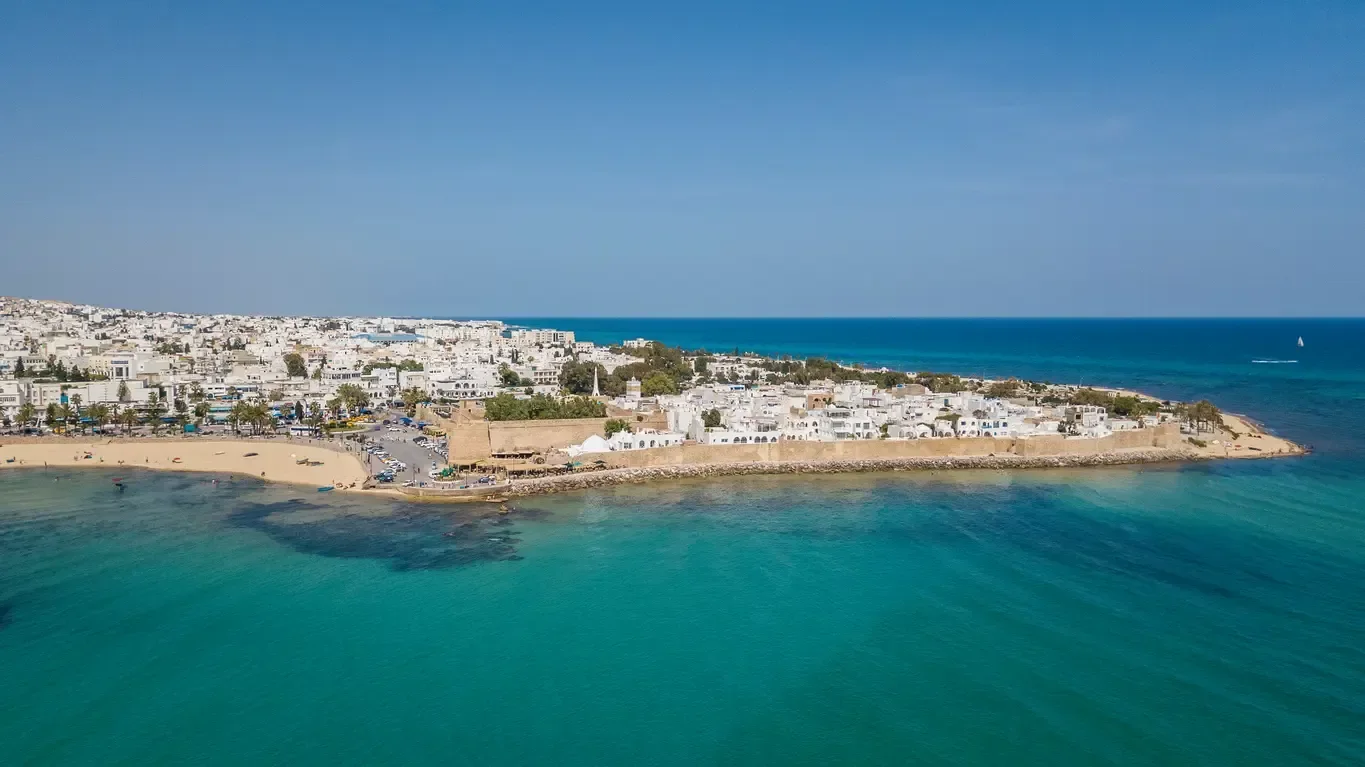
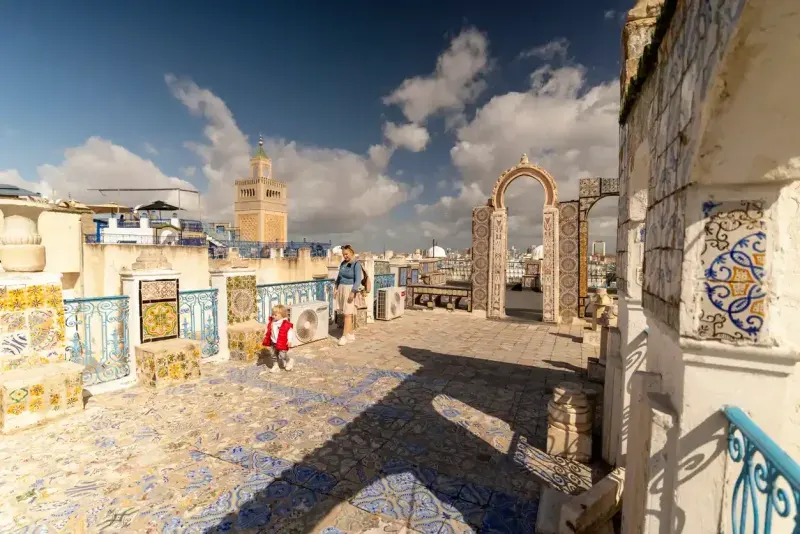
Tunisia is one of North Africa's most rewarding travel destinations, with ancient ruins, stunning beaches, and some of the warmest hospitality you'll find anywhere in the Mediterranean. But is Tunisia safe right now? The honest answer is yes, for the vast majority of tourist areas, with a few important things to know before you go.
I get this question all the time. And I completely understand why people ask it. Tunisia made international headlines in 2015 following a series of tragic terrorist attacks, and that shadow has followed the country's reputation ever since. But here's what I've seen on the ground and what the latest 2026 travel data tell us: Tunisia has changed significantly; tourist areas are well monitored; and millions of European visitors return every single year without incident.
This guide gives you a straight, honest answer to "is Tunisia safe?" not a vague reassurance, but real information about specific areas, specific risks, and exactly what precautions to take so you can travel with confidence.
Table of Contents:
#How Safe Is Tunisia Now in 2026?
#Where Is Safe in Tunisia and Where to Avoid
#What Are the Real Risks for Tourists in Tunisia?
#How Safe Is Tunisia for Solo Female Travellers?
#My Practical Safety Tips for Tunisia
#Why Tunisia Is Still Absolutely Worth Visiting
#Frequently Asked Questions: Is Tunisia Safe?
The current picture is more positive than many people expect. The US State Department currently rates Tunisia at Level 2: Exercise Increased Caution, the same rating as countries like France, Germany, and Belgium. That means it's not a "do not travel" destination; it's a "go, but stay informed" destination. The UK Foreign Office and the French Ministry of Foreign Affairs classify the main tourist areas as normal vigilance zones, with restrictions only applying to specific border regions in the south and southwest.
How safe is Tunisia for tourists in practice? The Travel Safety Index currently gives Tunisia a practical traveller risk score of just 37 out of 100, meaning the everyday risk for tourists is low. The main concerns in tourist areas are petty theft and tourist scams, not violent crime. Serious incidents targeting tourists in popular destinations are rare.
2026 Travel Advisory Summary
- USA: Level 2 Exercise Increased Caution (five remote border regions at Level 4)
- UK: Avoid border areas with Libya and Algeria; tourist areas considered normal
- France: Normal vigilance for main tourist zones; restricted zones in the deep south
- Canada: High degree of caution; specific border area warnings
The key message across all advisories:
Tourist areas like Tunis, Hammamet, Sousse, and Djerba are considered safe.
Ready to see Tunisia for yourself? Our Tunisia tours are designed with your safety and comfort in mind, licensed guides, vetted transport & hand-picked hotels included. Let's get you there!
This is the most important question to answer clearly, because Tunisia does not have a uniform safety level. The country is divided into very different zones, and knowing them makes all the difference.
Tunis, La Marsa & Sidi Bou Said
The capital and its northern coastal suburbs are safe, well-patrolled, and home to a large international community. La Marsa and Sidi Bou Said have a relaxed Mediterranean feel, with café terraces, art galleries, and beautifully preserved architecture. Tourist police are visible throughout.
Hammamet, Sousse & Monastir
Tunisia's most established beach resort areas are among the safest destinations in the country. Millions of European tourists visit these coastal towns every year. Hotels are well-secured, beaches are monitored, and the tourist infrastructure is excellent.
Djerba Island
One of the Mediterranean's most beloved island destinations is relaxed, beautiful, and very safe. Djerba has been welcoming tourists for decades and has a well-established security presence. It's a particularly good choice for families.
Carthage, Kairouan & El Djem
Tunisia's UNESCO heritage sites are well-visited, properly managed, and considered safe for tourists. These are some of the most extraordinary ancient sites in the entire Mediterranean world, and they're very much worth the trip.
Southern Desert & Sahara Oases (Douz, Tozeur)
The Tunisian Sahara and southern oasis towns are generally manageable with a reputable guided tour, but require more careful planning. Always use licensed operators, avoid independent travel in remote desert areas, and check your government's current advisory before visiting.
Border Areas with Libya & Algeria
These regions, particularly the southwestern desert near the Libyan and Algerian borders, are restricted or advised against by most Western governments. Do not travel to these areas. All major tourism itineraries avoid them entirely.
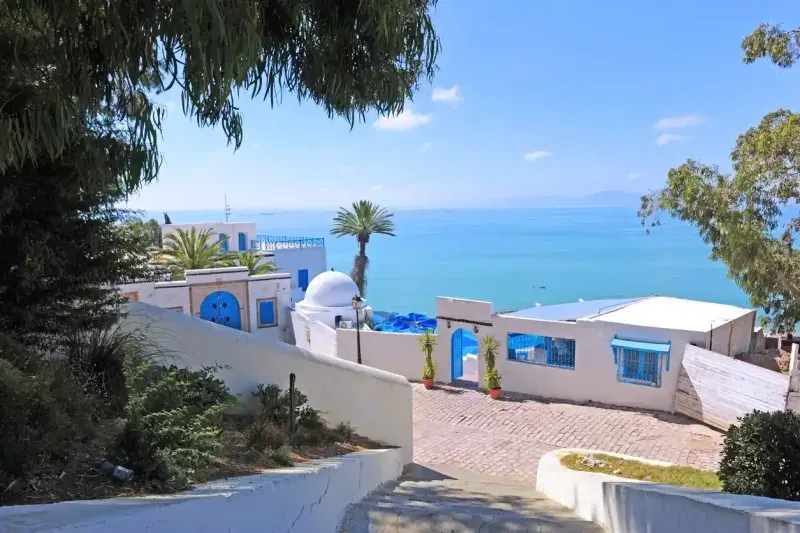
Sidi Bou Said
Customize Your Dream Vacation!
Get in touch with our local experts for an unforgettable journey.
Plan Your Trip
Let me be honest about this rather than just reassuring. Understanding the real risks rather than vague warnings lets you prepare properly and travel confidently.
Low Risk
|
Moderate — Be Aware
|
Avoid Entirely
|
| Violent crime against tourists |
Petty theft in crowded medinas |
Libya and Algeria border zones |
| Serious street crime in tourist areas |
Tourist scams in souks |
Medinas alone after dark |
| Natural disasters |
Verbal harassment (particularly for women) |
Remote desert without guides |
| Transport safety on main routes |
Unofficial taxi overcharging.
Protests and civil unrest (unpredictable).
|
Unmarked taxis |
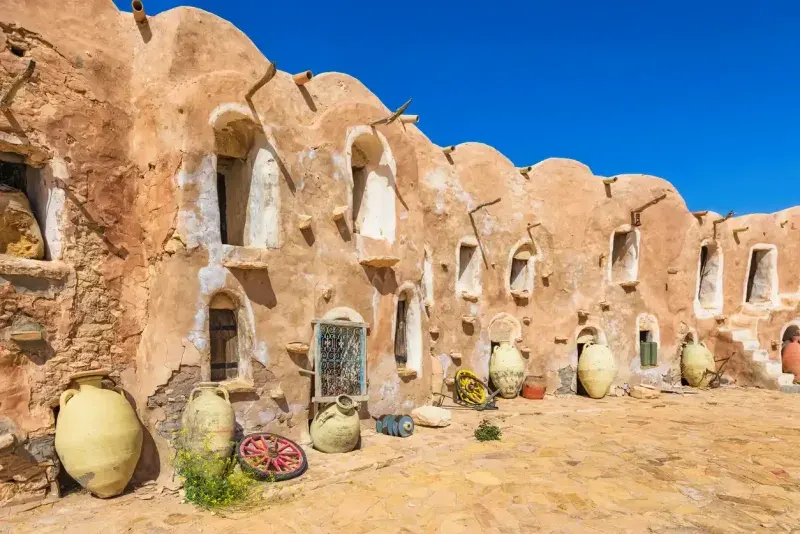
Ksar Ouled Debbab is a fortified granary in Tunisia
This deserves its own section because it's one of the most common questions I receive, and the honest answer is more positive than most internet searches suggest.
Tunisia is genuinely the most progressive country in the Arab world regarding women's rights. In 1956, it became the first country in the region to abolish polygamy. Women are doctors, judges, entrepreneurs, and politicians here in large numbers. In Tunis, coastal suburbs like La Marsa and Sidi Bou Said, and in beach resort areas, women dress exactly as they would in France or Spain, and nobody blinks.
That said, verbal harassment (catcalling and unsolicited comments) does happen, particularly in more traditional urban areas and crowded medinas. It's rarely threatening and usually manageable with a firm response or simply walking away. Physical harassment is uncommon. The practical guidance: dress modestly in traditional neighbourhoods and religious sites, use registered taxis or ride-hailing apps rather than walking alone at night in unfamiliar areas, and stick to well-lit, populated zones after dark. Thousands of solo female travellers visit Tunisia every year and report overwhelmingly positive experiences.
In the Medina
Medinas are the lifeblood of Tunisian cities, chaotic, beautiful, and full of life. They're also where pickpocketing is most likely. Keep your phone and wallet in a front pocket or a crossbody bag you keep in front of you. Be friendly but firm with vendors: the classic "free tea" invitation in a souk often leads to high-pressure carpet sales. Smile, say no thank you, and keep walking. Explore medinas in daylight; they change character significantly after dark.
Taxis and Transport
Always use official yellow taxis with a meter, or ride-hailing apps. Unofficial taxis approaching tourists at airports and tourist sites are known for overcharging significantly. Tunisia's train network between major cities is safe, affordable, and surprisingly pleasant. For southern and desert destinations, always book through a licensed tour operator rather than arranging privately.
Scam Awareness
The most common scams targeting tourists in Tunisia involve "free" guided tours of a medina that end in a shop where you're pressured to buy, inflated prices for goods without established price tags, and unsolicited "guides" who attach themselves to you near monuments. Research fair prices before visiting markets, politely decline guides who approach you first, and always agree on prices before getting into any unofficial transport.
Golden rule: Register your trip with your government's travel registration service before you go, keep a digital and physical copy of your passport, and save the local emergency number (197 for police in Tunisia) in your phone. Simple precautions that take five minutes and give enormous peace of mind.
Here's what I think gets lost in all the safety conversations: Tunisia is extraordinary. Carthage, one of the great ancient civilisations, sits right on the outskirts of Tunis. The Roman amphitheatre of El Djem is bigger and better preserved than the Colosseum. The medina of Tunis is a UNESCO World Heritage Site that genuinely transports you back centuries. Sidi Bou Said is one of the most beautiful villages in the entire Mediterranean. Djerba has some of the finest beaches in North Africa. And the food, fresh seafood, brik pastry, harissa, everything is among the most underrated cuisines in the world.
The 2015 attacks were a tragedy, and the fear they generated was understandable. But Tunisia has rebuilt, reinforced its security, and kept welcoming visitors. Millions of Europeans, particularly French, German, and Italian tourists, never stopped coming. The country deserves to be seen for what it is today, not what happened a decade ago.
So, is Tunisia safe? For the tourist areas, beaches, and heritage sites that make this country so extraordinary: yes, genuinely. Go informed, take sensible precautions, stick to recommended areas, and you'll discover one of the Mediterranean's most rewarding and underappreciated destinations. We'd love to help you plan it properly.
Is Tunisia safe to visit in 2026?
Yes for the main tourist areas, absolutely. Tunis, Hammamet, Sousse, Djerba, and Sidi Bou Said are all considered safe and welcome millions of visitors every year. The US State Department rates Tunisia at Level 2 (Exercise Increased Caution), which is the same level as many popular European destinations. Just avoid the border regions with Libya and Algeria in the far south and southwest, and you'll be fine.
How safe is Tunisia now compared to a few years ago?
Significantly safer. Since the 2015 attacks, Tunisia has massively invested in tourist area security. Tourist police are visible in all major sites, hotels and resorts have enhanced security protocols, and the country has had no major attacks targeting tourists in years. European visitor numbers have recovered strongly, and the overall security situation in tourist zones is genuinely stable.
How safe is Tunisia for tourists, specifically?
Very safe in the tourist areas. The Travel Safety Index gives Tunisia a practical tourist risk score of 37/100, meaning everyday risk is low. The main concerns are petty theft and tourist scams, not violent crime. Violent incidents targeting tourists are rare. The vast majority of visitors to Tunisia report no safety problems at all beyond the occasional overenthusiastic souk vendor.
Which parts of Tunisia are safe to visit?
Tunis, La Marsa, Sidi Bou Said, Hammamet, Sousse, Monastir, Djerba, Carthage, Kairouan, and El Djem are all considered safe and are the heart of Tunisia's tourist offer. The southern oasis towns like Tozeur and Douz are generally fine with a reputable guided tour. The areas to avoid are the border zones with Libya and Algeria in the far southwest, but these areas aren't on any tourist itinerary anyway.
Is Tunisia safe for solo female travellers?
Yes, with sensible precautions. Tunisia is the most progressive country in the Arab world on women's rights. Women are highly visible in professional and public life here. Violent crime against female tourists is very rare. Verbal harassment (catcalling) does happen in some areas, particularly in traditional urban zones, but physical incidents are uncommon. Dress modestly away from beach areas, use registered taxis at night, and stick to busy, well-lit areas after dark. Thousands of women travel solo in Tunisia every year without serious incident.