Table of Contents:
#The Layers of History That Shaped Tunis
#When to Visit Tunis for the Best Experience
#Top 8 Things to Do in Tunis Beyond the Medina
#Practical Tips for Navigating Tunis City
#Where to Eat, Stay, and Connect in Tunis
#Conclusion
History whispers from every corner of Tunis, Tunisia, where centuries of civilization have layered themselves into a remarkable urban tapestry. The capital and largest city of Tunisia reveals a cultural heritage spanning thousands of years, while its greater metropolitan area houses approximately 2,700,000 inhabitants. This magnificent city claims its position as the third-largest in the Maghreb region and holds eleventh place among Arab world metropolises.
Fascinating contradictions define the very essence of Tunis. The Medina, granted UNESCO World Heritage status in 1979, captivates visitors with its labyrinthine streets, bustling shops, and kaleidoscope of colors, yet this historic heart represents merely the beginning of what awaits discovery. Ancient Carthaginian remnants stand alongside tranquil coastal havens, revealing experiences that stretch far beyond the old city's protective walls.
Essential discoveries await those who seek authentic Tunis through this detailed exploration. Conquest, commerce, and independence have intricately woven themselves into the city's cultural DNA, creating patterns that emerge wherever curiosity leads. During the 12th through 16th centuries, Tunis ranked among the most prosperous and influential cities in the Islamic world. Modern Tunis continues this legacy, offering visitors an extraordinary fusion of historical treasures and contemporary pleasures that reward the inquisitive traveler.
Centuries stack upon centuries in Tunis like geological strata, each historical epoch depositing its own cultural sediment across the urban landscape. Every stone archway, every minaret, every colonial boulevard bears witness to the successive civilizations that claimed this strategic Mediterranean crossroads as their own.
From Carthage to the Islamic Caliphates
Carthage emerges from history's mists as the foundation stone of Tunis's story. Phoenician settlers established this maritime powerhouse in 814 BCE, creating an empire that would dominate Mediterranean commerce for centuries. Roman legions brought this era to a catastrophic end in 146 BCE, reducing the great city to rubble in one of antiquity's most devastating destructions. Yet from these ashes arose renewal—Julius Caesar ordered Carthage's resurrection as a Roman colony in 122 BCE, and the reborn city flourished to become one of Rome's premier African territories.
The 7th century witnessed North Africa's most profound transformation with the arrival of Arab Muslim forces. Umayyad strategists recognized Ifriqiya's (modern Tunisia's) importance, establishing their forward base at Kairouan in 670 CE. Berber resistance proved fierce but ultimately futile as Islamic civilization took root throughout the region. The Aghlabid dynasty (800-909) ushered in an era of stability and prosperity, their reign eventually yielding to the Fatimids, who captured Kairouan in 909.
The Ottoman and French eras
Spanish ambitions in North Africa met their match when Ottoman forces seized control of Tunis in 1574, incorporating the territory as the Eyalet of Tunis within their sprawling empire. Local governance evolved under the Husainid dynasty, established by al-Ḥusayn ibn ʿAlī in 1705. These rulers maintained nominal Ottoman allegiance while exercising remarkable autonomy, forging independent diplomatic ties with European courts.
French imperial designs materialized in 1881 with the establishment of a protectorate, codified through the Treaty of Bardo. Colonial administrators restructured society through administrative overhauls, infrastructure projects, and settlement policies that privileged European colonists. These changes sparked Tunisian nationalist sentiment, first organized through the Destour Party in 1920, then more effectively channeled through Habib Bourguiba's Neo-Destour Party beginning in 1934.
Post-independence transformation
March 20, 195,6 marked Tunisia's emergence as a sovereign nation, with Bourguiba ascending to the prime ministership. The monarchy's abolition followed in 1957, elevating Bourguiba to the presidency of the newly proclaimed republic. His administration launched ambitious reforms targeting education, women's rights, and legal frameworks.
Economic pressures tested the Neo-Destour Party's hold on power (later reorganized as the Destourian Socialist Party), yet political dominance remained intact. Bourguiba's increasingly autocratic tendencies precipitated his removal in 1987, succeeded by Zine al-Abidine Ben Ali. Despite initial democratic promises, Ben Ali's rule grew progressively authoritarian until the 2011 revolution ignited the Arab Spring, inaugurating yet another chapter in Tunis's ever-evolving historical chronicle.
Tunis reveals different personalities throughout the year, each season offering distinct advantages for the curious traveler. The city's Mediterranean climate patterns create windows of opportunity that align perfectly with various exploration goals.
Spring and autumn: Ideal weather
Spring months (March to May) present Tunis at its most welcoming, with temperatures hovering between 16°C and 20°C while the landscape awakens in brilliant displays of color. Daily sunshine stretches up to 13 hours, establishing ideal conditions for archaeological expeditions and cultural immersion. April and May emerge as exceptional periods for heritage enthusiasts, when crystalline skies provide stunning backdrops for historic site photography.
Autumn (September to November) delivers equally compelling conditions for comprehensive exploration. High temperatures settle comfortably above 25°C, providing warmth without summer's intensity. Tourist numbers thin considerably during these months, allowing more intimate encounters with coastal treasures and even Saharan excursions.
Summer: Hot but vibrant
Summer months (June to August) witness Tunis's most animated season. Temperatures soar beyond 30°C, with July marking the year's most arid period. Despite the heat, Tunisia bathes in nearly 11 hours of daily sunshine.
Coastal zones pulse with energy as beachgoers seek refuge from inland temperatures. La Marsa beach becomes a particularly popular retreat from the heat. Summer also stages spectacular cultural events across the region, notably the renowned Carthage Music Festival, where performances unfold beneath star-studded Mediterranean skies.
Winter: Quiet and cool
Winter (December to February) unveils Tunis's contemplative side, with January temperatures dropping to around 8°C. The cooler climate creates exceptional conditions for unhurried cultural exploration without competing crowds.
These quieter months prove perfect for deep engagement with the UNESCO-listed medina or extended visits to the Bardo Museum's remarkable mosaic collections. Hotel rates frequently decrease during this period, providing enhanced value for extended stays.
Winter brings occasional precipitation (reaching 55mm), particularly along coastal areas, though conditions remain notably milder than European winters. Evening temperatures may require light layering for comfort.
True diversity emerges once you venture beyond the bustling Medina, where ancient ruins meet pristine Mediterranean shores. These eight essential experiences illuminate the city's remarkable range of cultural treasures.
1. Visit Zitouna Mosque and Kasbah Square
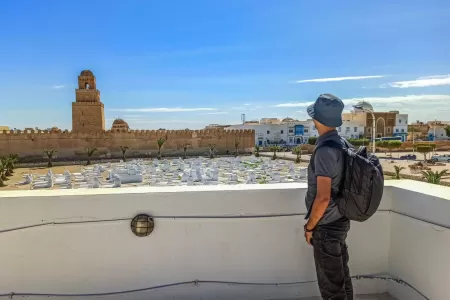
Al-Zaytuna Mosque commands attention as Tunisia's oldest mosque, constructed during the late 7th century at Tunis's very heart. Remarkably, its 160 authentic columns originated from ancient Carthage. The structure's fascinating evolution began as a Christian basilica before transforming into one of history's first Islamic universities. A short walk leads to Place de la Kasbah, where imposing government buildings surround the National Monument, a significant symbol that appears on every Tunisian identification card.
2. Explore the Bardo Museum
The Bardo Museum houses the world's most extensive collection of Roman mosaics within a magnificently preserved 15th-century Hafsid palace. Among its countless treasures lies the sole surviving mosaic depicting Roman poet Virgil composing The Aeneid. The museum's galleries chronicle Tunisia's complete historical spectrum from prehistoric times through modern eras, featuring exquisite Punic jewelry alongside remarkable artifacts recovered from ancient maritime disasters.
3. Relax in La Marsa
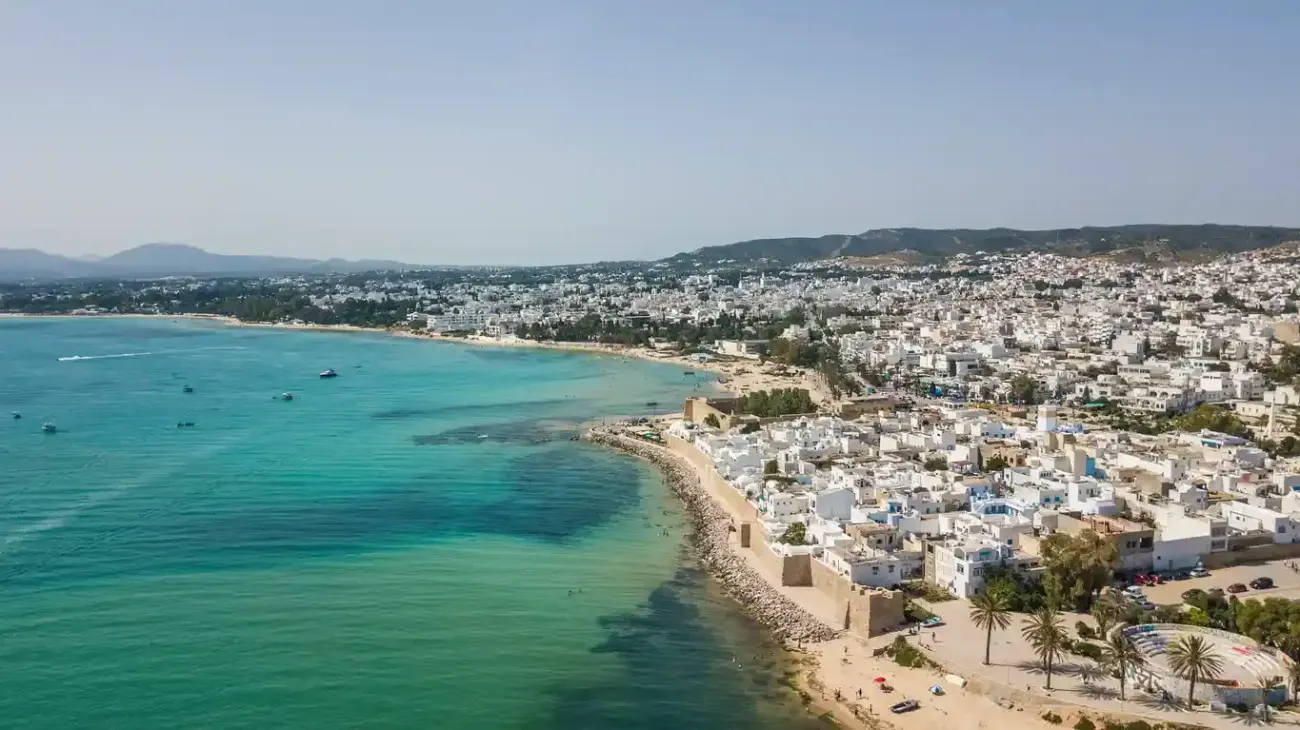
A mere 15-minute journey from central Tunis delivers you to La Marsa's refreshing coastal sanctuary, where expansive sandy beaches meet a lively corniche dotted with inviting cafés and restaurants. This coastal haven provides an ideal launching point for regional exploration while immersing visitors in authentic Mediterranean coastal culture.
4. Discover Sidi Bou Said
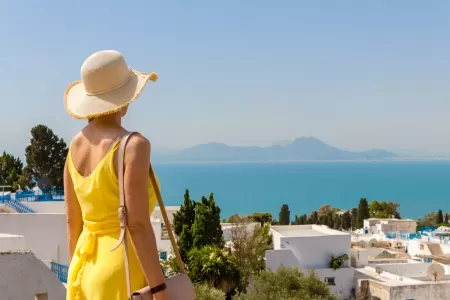
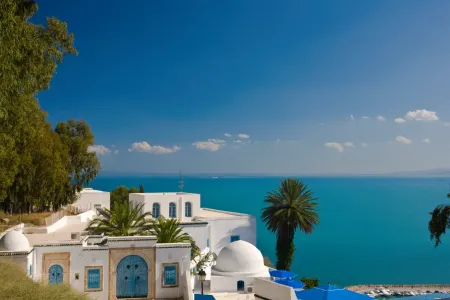
Perched dramatically upon clifftops overlooking azure Mediterranean waters, this enchanting blue-and-white village evokes comparisons to Greece's famous Santorini. Optimal visiting times occur during early morning hours or sunset periods to experience the village without overwhelming crowds. The village's artistic heritage runs deep, having inspired creative giants including Michel Foucault, Paul Klee, and fashion icon Azzedine Alaïa.
5. Walk through the ruins of Carthage
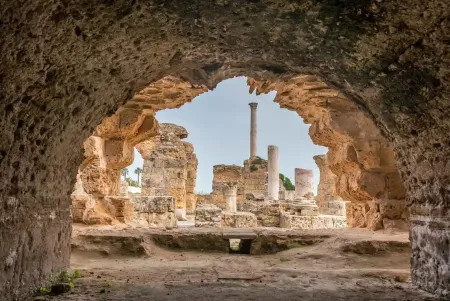
Carthage's foundations date to the 9th century BC, when it flourished as the Mediterranean's premier trading center before Roman forces destroyed it in 146 BC. Today's archaeological park preserves the impressive Antonine Baths, the largest such structures beyond Rome itself, alongside the ancient amphitheater, historic Punic Ports, and Byrsa Hill's commanding panoramic vistas. UNESCO recognized the entire site's global significance in 1979.
6. Shop at the Central Market
Since 1891, Tunis's Central Market (Marché Central) has provided an atmospheric window into authentic local daily life. The market's thoughtful organization features three distinct sections: a dedicated fish hall, a central zone specializing in Tunisia's famous harissa and premium olives, plus a vibrant produce area bursting with seasonal fruits and vegetables. Spring visitors enjoy an additional sensory reward—the intoxicating fragrances of bitter orange and geranium blossoms cultivated for essential oil production.
7. Admire the Cathedral of St. Vincent de Paul
This striking neo-Romanesque cathedral, completed in 1897, stands as the French colonial period's most substantial architectural achievement. Positioned prominently on Independence Square, its elaborate façade showcases intricate Roman and Eastern decorative influences while sheltering one of Africa's most historically significant pipe organs.
8. Enjoy the beaches of Gammarth
Gammarth's affluent coastal district stretches along endless public beaches punctuated by luxurious resort properties. Evening hours reveal spectacular sunset displays that paint brilliant hues across Mediterranean skies, while popular establishments like Yüka beach bar attract locals gathering for traditional sundowner rituals accompanied by live musical performances.
Customize Your Dream Vacation!
Get in touch with our local experts for an unforgettable journey.
Plan Your Trip
Transportation mastery unlocks the true potential of exploring this North African jewel. Understanding the intricate network of movement options elevates your journey from mere sightseeing to genuine urban discovery.
Using Bolt and taxis
Recent regulatory developments have reshaped ride-hailing services across Tunis. Bolt operations ceased in May 2025 following administrative challenges, though alternatives like InDrive and Yassir continue serving the metropolitan area. Yellow taxis remain the backbone of urban transport, their regulated meters ensuring fair pricing across the city. The cardinal rule demands insistence on meter usage should any driver claim mechanical failure, courteously seek another vehicle. Night hours between 9 pm and 6 am witness doubled fare rates, a standard practice worth noting for evening adventures.
Public transport and walking
The Tunis metro system weaves light rail connections to cultural treasures like the renowned Bardo Museum. Meanwhile, the TGM suburban railway extends northward, linking central districts with coastal gems including Carthage and Sidi Bou Said. Public buses crisscross the urban landscape, though peak hours bring considerable crowding. The ancient Medina surrenders only to pedestrian exploration, its centuries-old pathways too narrow for modern vehicles.
Staying safe and avoiding scams
Discretion regarding personal valuables prevents unwanted attention from opportunistic individuals. Persistent "helpful" guides often signal potential scam attempts rather than genuine assistance. Crowded marketplaces and tourist areas occasionally attract pickpockets, making secure cross-body bags with reliable zippers essential travel companions. Should financial losses occur, prompt reporting to local authorities creates necessary documentation for insurance and recovery procedures.
Authentic immersion emerges through Tunis's culinary landscape, thoughtful accommodations, and essential connections that elevate mere sightseeing into meaningful cultural engagement.
Best local restaurants and cafés
Culinary treasures flourish throughout Tunis, far removed from predictable tourist establishments. Within the Medina, Fondouk El Attarine creates a tranquil courtyard sanctuary where traditional Tunisian specialties like slow-braised lamb paired with fluffy couscous invite leisurely appreciation. Dar Slah showcases authentic preparations through carefully curated mezze selections, featuring smoky méchouia relish and aromatic chorba soup.
Coastal dining reaches its pinnacle at Le Golfe, positioned along La Marsa's waterfront where ocean-fresh seafood mingles with spectacular sunset panoramas. Coffee connoisseurs gravitate toward Café Houasse in La Marsa, renowned for its traditional mint tea crowned with fragrant pine nuts and sweet almonds.
Recommended areas to stay
La Marsa emerges as an ideal base for those seeking genuine local flavor, combining exceptional dining opportunities with Mediterranean coastal charm. Dar El Marsa Hotel & Spa delivers oceanfront vistas from its strategically positioned location. The historic Medina shelters distinctive properties such as Dar Ben Gacem Kahia, a beautifully preserved Tunisian residence featuring traditional courtyard architecture and elevated terrace views.
Maison Dedine in Sidi Bou Said presents luxurious accommodations with breathtaking water panoramas, while Centreville's Radisson Hotel maintains consistent international hospitality standards.
Getting a SIM card and internet access
Communication needs are met with ready solutions from Tunisie Telecom or Ooredoo, available at airport locations and numerous city retail outlets. Both providers deliver reliable coverage throughout Tunisia, with SIM cards priced between TND 5 and TND 20 and data packages starting at around TND 5.
Money exchange and cash tips
Official exchange bureaus provide superior rates compared to airport or hotel services. Exchange rate awareness proves essential before conducting transactions. Gratuity customs favor discretionary appreciation upscale restaurants warrant 5-10%, casual cafés merit 2-3 dinars, and luggage assistance typically receives 2 dinars per piece.
Tunis emerges as an extraordinary testament to where antiquity dances with Mediterranean allure. This exploration has unveiled a metropolis that transcends its celebrated Medina, revealing layers of experience that reward the discerning traveler. From Carthaginian archaeological marvels to the ethereal sunsets painting Sidi Bou Said's cobalt and alabaster facades, authentic encounters await at every discovered corner.
Seasonal wisdom proves essential for crafting the perfect Tunisian sojourn. Spring and autumn months unlock ideal conditions for archaeological wanderings, while summer months summon coastal enthusiasts to La Marsa and Gammarth's shores. Winter presents its own treasures—uncrowded cultural sanctuaries and economic opportunities for museum devotees and heritage seekers.
True character emerges beyond conventional tourist circuits through bustling souks, waterfront refuges, and sacred monuments like Zitouna Mosque alongside the Bardo Museum's mosaic masterpieces. These encounters forge connections spanning millennia, linking visitors to both ancient civilizations and contemporary North African vitality.
Movement throughout greater Tunis proves manageable through various transit methods, from metered taxis to efficient light rail networks, though awareness of local practices ensures smoother exploration. Accommodation choices, whether seaside La Marsa or the historic Medina, fundamentally shape each visitor's urban narrative.
Tunis ultimately enchants through its striking juxtapositions: French colonial grandeur intersecting with Arab architectural poetry, traditional bazaars neighboring contemporary commercial districts, and millennia-old ruins gazing toward modern Mediterranean developments. This complex city beckons visitors to penetrate surface observations and uncover the authentic Tunisian spirit that flourishes just beyond initial impressions.
FAQs
Q1. Is it safe to visit Tunis as a tourist?
Tunis is generally safe for tourists, but it's wise to take standard precautions. Avoid displaying signs of wealth, be cautious in crowded areas, and use cross-body bags for better security. Stay alert for common scams, such as unsolicited help from "friendly" guides.
Q2. What are the must-see attractions in Tunis beyond the Medina?
While the Medina is fascinating, don't miss other attractions like the Bardo Museum with its impressive Roman mosaics, the ruins of ancient Carthage, the picturesque village of Sidi Bou Said, and the beautiful beaches of La Marsa and Gammarth.
Q3. When is the best time to visit Tunis?
Spring (March to May) and autumn (September to November) offer ideal weather for exploring Tunis. These seasons provide mild temperatures, less crowded attractions, and perfect conditions for both cultural sightseeing and enjoying the coastal areas.
Q4. What should female tourists know about dress codes in Tunisia?
While Tunisia is relatively liberal compared to some other North African countries, it's respectful for female tourists to dress modestly, especially when visiting religious sites or more conservative areas. Lightweight, loose-fitting clothing that covers shoulders and knees is appropriate.
Q5. How can I get around Tunis efficiently?
Tunis offers various transportation options. Yellow taxis are plentiful, but ensure the meter is used. The light rail system (metro) is an affordable way to reach key attractions. For coastal areas, the TGM suburban train is convenient. Walking is the best way to explore the Medina's narrow alleys.