Table of Contents:
#What Makes Sidi Bou Said Special? The Blue-and-White Story
#Getting to Sidi Bou Said: Easy Access from Tunis
#When to Visit Sidi Bou Said: Timing Your Perfect Day
#Top Things to Do in Sidi Bou Said: The Complete List
#Practical Sidi Bou Said Travel Tips
#Why Artists Love Sidi Bou Said
#Final Verdict: Is Sidi Bou Said Worth Visiting?
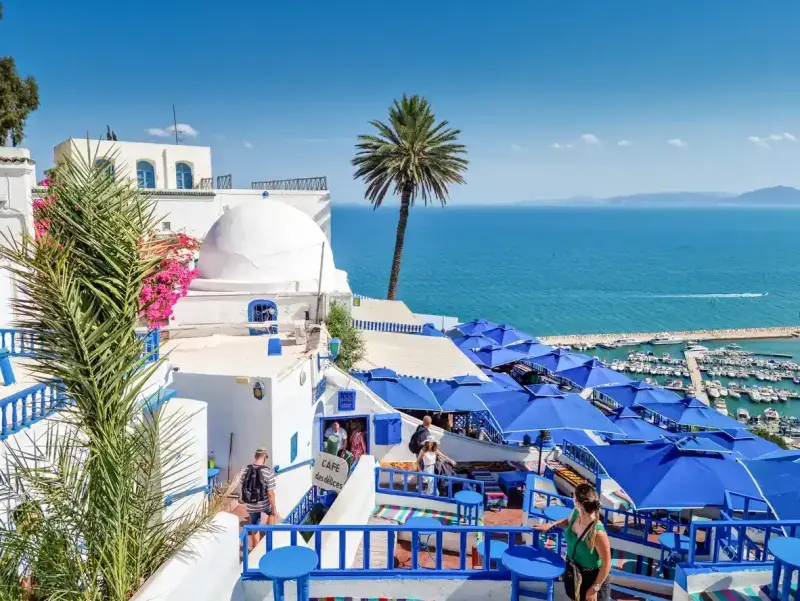
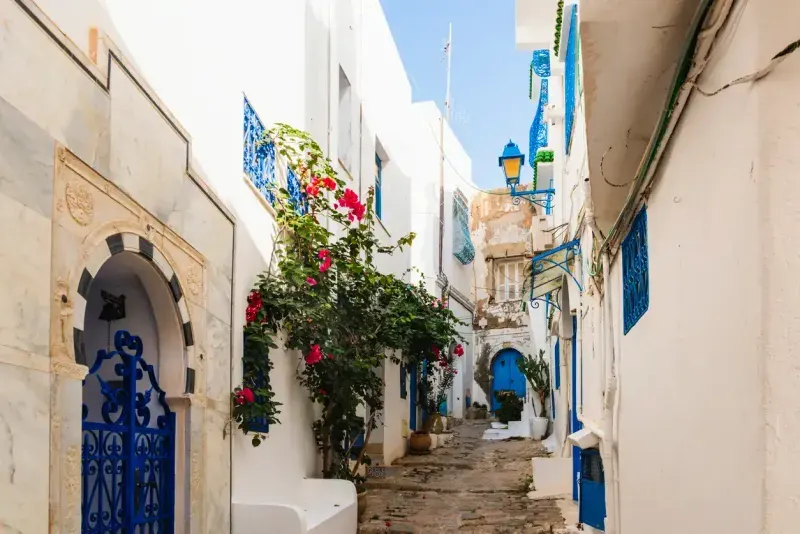
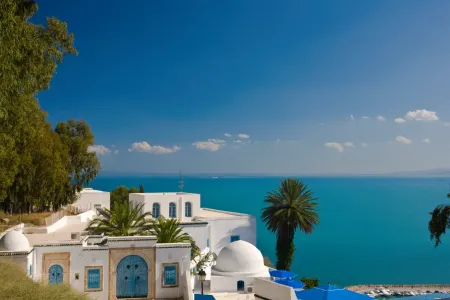
Picture this: A stunning clifftop village where EVERY building is painted brilliant blue and white, cascading down to turquoise Mediterranean waters. Cobblestone streets wind past bougainvillea-draped balconies, ornate iron grillwork catches golden sunlight, and the scent of jasmine drifts through ancient alleyways.
Welcome to Sidi Bou Said, Tunisia's most photogenic destination and the country's artistic soul. Just 20 kilometers from Tunis, this enchanting village has captivated artists, writers, and travelers for over a century. Matisse painted here. Paul Klee found inspiration in its colors. Simone de Beauvoir, Michel Foucault, and André Gide all sought creative refuge in its serene streets.
But Sidi Bou Said isn't just pretty, it's a living testament to Tunisian culture, where 13th-century spiritual traditions meet 1920s architectural vision, creating one of the Mediterranean's most romantic destinations.
Whether you're planning a day trip from Tunis, searching for things to do in Sidi Bou Said, or just dreaming about Tunisia's coast, this complete guide gives you everything you need to experience this blue-and-white paradise like a local!

The Spiritual Foundation (13th Century)
Sidi Bou Said's story begins with Abou Saïd al-Baji, a 13th-century Sufi mystic who chose this elevated clifftop, then called Djebel el-Manar, for contemplation and religious teaching.
Why here? The dramatic location overlooking the Gulf of Tunis provided:
- Spiritual isolation for meditation
- Stunning natural beauty inspires devotion
- Strategic views across sea and land
- Pure air and peaceful atmosphere
When this revered teacher died in 1231, his followers established a zawiya (Islamic religious school and shrine) around his tomb. Pilgrims began visiting, and a community grew around this sacred site.
The legacy today: The saint's shrine remains the spiritual heart of the village, giving Sidi Bou Said both its name and its contemplative character that artists continue seeking centuries later.
The Blue-and-White Decree (1920s Revolution)
Fast forward to the 1920s, when French Baron Rodolphe d'Erlanger, a wealthy artist and musicologist,t fell deeply in love with Sidi Bou Said.
His vision: Preserve the village's unique character against haphazard development threatening Tunisia's traditional architecture.
His achievement: In 1920, d'Erlanger successfully lobbied for a municipal decree mandating:
- All buildings painted ONLY blue and white
- Maximum two-story height limit
- Traditional architectural elements preserved
- Modern construction matching historic aesthetic
The genius? This wasn't just aesthetic control; it was cultural preservation through COLOR. The decree created the harmonious blue-and-white symphony that defines Sidi Bou Said today, protecting it from the architectural chaos affecting other Tunisian towns.
The result: Nearly 100 years later, Sidi Bou Said remains virtually unchanged, a perfectly preserved Mediterranean jewel where every building contributes to the collective artistic vision.
UNESCO Recognition (2025)
In January 2025, UNESCO advanced Sidi Bou Said's formal World Heritage nomination titled "Village of Sidi Bou Said: a hub of cultural and spiritual inspiration in the Mediterranean."
Why it matters:
- International recognition of cultural significance
- Protection of architectural heritage
- Increased tourism awareness
- Validation as Tunisia's artistic treasure
What it means for you: You're visiting a globally recognized cultural landmark, not just a pretty village!
Ready to Experience Sidi Bou Said's Blue-and-White Magic?
Book Your Tunisia Tours Today!
Now that you know all the amazing things to do in Sidi Bou Said, it's time to see this Mediterranean paradise yourself!

By TGM Train (BEST Option!)
The Experience: Scenic, affordable, authentic Tunisian public transport
Details:
- Departure: Tunis Marine station (in Tunis city center)
- Duration: Under 40 minutes
- Cost: Approximately 1 TND (~$0.33 USD) one-way
- Frequency: Every 15-20 minutes
- Final stop: Sidi Bou Said station
- Bonus: Mediterranean coastal views during the ride!
Why I recommend this: The TGM train itself is an experience, locals commuting, students chatting, seaside views flashing past. Plus, you'll arrive like Tunisians do, not isolated in a tourist bubble.
Pro tip: Sit on the RIGHT side heading north for best sea views!
By Taxi
From Tunis:
- Cost: 15-25 TND (~$5-8 USD)
- Duration: 30-40 minutes, depending on traffic
- Insist on the meter or agree on a price beforehand
From Carthage:
- Cost: 5-10 TND (~$2-3 USD)
- Duration: 10-15 minutes
- Easy to combine both destinations in one day
By Organized Tour
Many Tunis-based tours combine:
- Carthage archaeological sites
- Sidi Bou Said village
- Sometimes the Bardo Museum
Pros: No navigation stress, expert guides, efficient routing
Cons: Less time to wander freely, set schedules

Customize Your Dream Vacation!
Get in touch with our local experts for an unforgettable journey.
Plan Your Trip
Best Times of Day
Early Morning (8:00-11:00 AM): IDEAL
- Soft golden light is perfect for photography
- Virtually NO crowds (locals just waking up)
- Cafés opening, fresh pastries baking
- Cool temperatures for walking cobblestone hills
- Most authentic local atmosphere
Midday (11:00 AM-4:00 PM): CROWDED
- Tour groups arrive (especially 12:00-2:00 PM)
- Harsh overhead sun (not ideal for photos)
- Hottest temperatures
- Cafés and shops are busy
- Skip this window if possible!
Late Afternoon/Evening (4:00 PM-7:00 PM): MAGICAL
- Crowds thin out
- Golden hour light transforms white walls
- Mediterranean sunset views are spectacular
- Romantic atmosphere intensifies
- Cafés are perfect for sunset mint tea
Pro tip: Visit on weekdays rather than weekends. Tunisian families flock here on Fridays/Saturdays, creating significant crowds.
Best Seasons
Spring (March-May): PERFECT
- Comfortable 20-25°C temperatures
- Blooming bougainvillea everywhere
- Clear skies, minimal rain
- Not yet peak tourist season
Summer (June-August): HOT & BUSY
- 30-35°C temperatures (bring water!)
- Peak tourist season (Europeans escaping north)
- Longer daylight hours (extended exploring)
- The Mediterranean sea warm for swimming nearby
Fall (September-November): EXCELLENT
- Pleasant 22-28°C temperatures
- Fewer tourists than summer
- Sea still warm
- Beautiful light for photography
Winter (December-February): QUIET
- 10-15°C (cool but manageable)
- Very few tourists (authentic local life)
- Some cafés close/reduce hours
- Occasional rain (check forecast)

1. Café des Nattes: The Legendary Mint Tea Experience
What it is: The most famous café in Sidi Bou Said, operating since the early 20th century
The experience:
- Sit on traditional rush mats (nattes) on the floor
- Order signature mint tea with pine nuts (thé à la menthe)
- Soak up the atmosphere where artists gathered for decades
- Simple, authentic, timeless
Location: Near the main entrance to the village
Cost: 3-5 TND for tea (~$1-2 USD)
Vibe: Traditional, no-frills, historical
Why you can't skip it: This is THE Sidi Bou Said experience. The café hasn't changed in 100 years, same mats, same tea, same soul.
Pro tip: Go early in the morning or late in the afternoon to avoid tour-group crowds. The experience loses magic when crowded!
2. Café des Délices: Sunset Cliff Views
What it is: Perched on cliffs overlooking the Gulf of Tunis with spectacular panoramic views
The experience:
- Dramatic clifftop terrace
- Watch sunset paint Mediterranean orange/pink
- Romantic atmosphere (bring a date!)
- More upscale than Café des Nattes
Location: Lower village, near coastal cliffs
Cost: 5-10 TND (~$2-3 USD) for drinks
Vibe: Romantic, scenic, Instagram-worthy
Best for: Sunset views (arrive 30-45 minutes before sunset for good seats)
Fun fact: This café appears in countless Tunisia travel photos, those iconic blue chairs overlooking turquoise water? Taken here!
3. Palais Ennejma Ezzahra (Baron d'Erlanger's Palace)
What it is: The stunning Moorish palace built by Baron d'Erlanger, now the Center for Arab and Andalusian Music
Why visit:
- Exquisite architecture blending European and North African styles
- Intricate stucco work, painted ceilings, decorative tiles
- Museum displaying traditional Arab musical instruments
- Learn about Tunisian musical heritage
- Beautiful gardens and courtyards
- Panoramic Gulf of Tunis views
Location: Western edge of the village
Hours: Tuesday-Sunday 9:00 AM-5:00 PM (closed Mondays)
Entry: 8 TND (~$3 USD), 5 TND for Tunisians
Duration: 1-1.5 hours
Why it's essential: This palace represents the artistic vision that CREATED modern Sidi Bou Said. Understanding d'Erlanger's preservation efforts adds depth to your visit.
Pro tip: English information is limited, consider hiring a guide (10-15 TND) or downloading info beforehand!
4. Dar El Annabi: Traditional Tunisian House Museum
What it is: Beautifully preserved 18th-century mansion showcasing traditional Tunisian domestic life
What you'll see:
- 50+ rooms arranged around a central courtyard
- Period furniture and decorative arts
- Traditional costumes and textiles
- Mannequins depicting daily life scenes
- Ornate ceilings and tilework
- Family heirlooms and artifacts
Location: Central village
Hours: Daily 9:00 AM-6:00 PM
Entry: 5 TND (~$2 USD)
Duration: 45 minutes-1 hour
Why visit: Gain authentic insight into how wealthy Tunisian families lived centuries ago. The preserved interiors are stunning!
Photography: Allowed (no flash), great opportunity to capture traditional Tunisian aesthetics!
5. Wander the Blue-and-White Streets (FREE!)
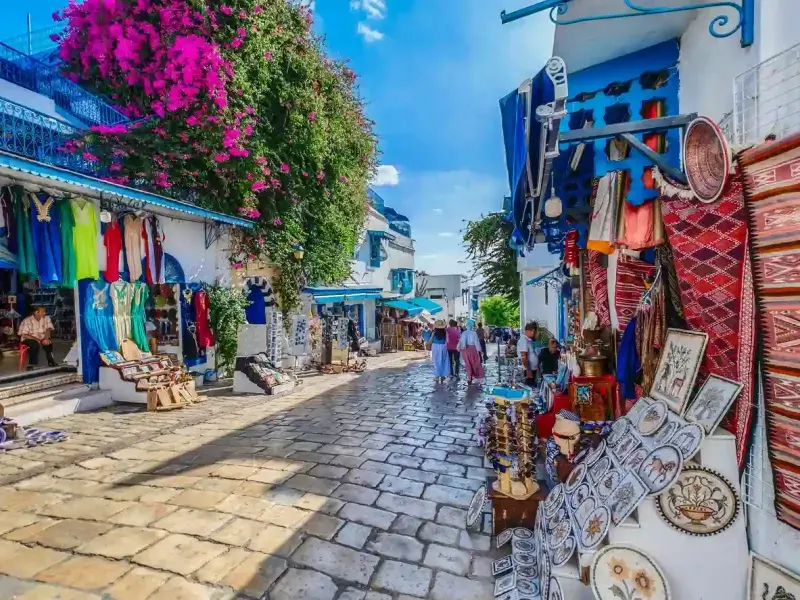
The best "thing to do in Sidi Bou Said"? Simply WANDER!
What makes it magical:
- Every corner reveals new blue-and-white compositions
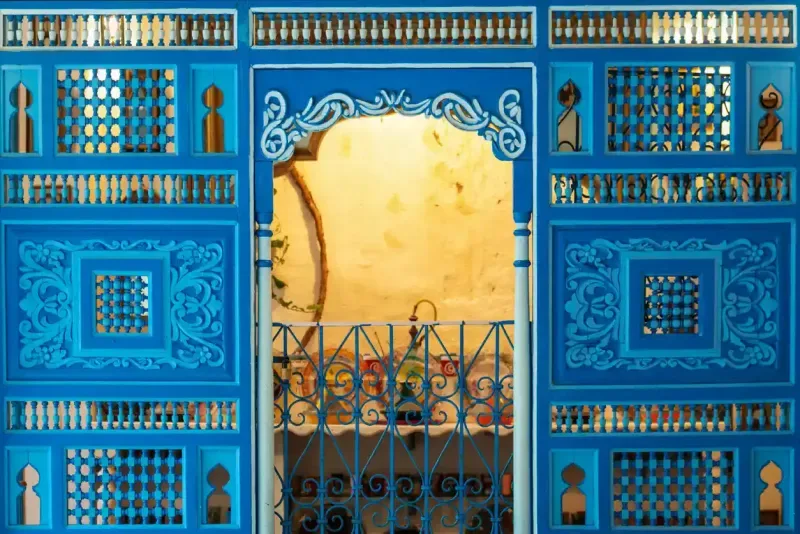
- Ornate iron grillwork (moucharabiehs) on every window
- Bougainvillea cascading over walls
- Cobblestone alleys climbing and descending
- Hidden courtyards through arched doorways
- Cats lounging in doorways (Tunisia has MANY friendly cats!)
Photography goldmines:
- Blue doors with brass studs
- White staircases with potted geraniums
- Arched passages framing sea views
- Decorative ironwork catching sunlight
How to explore: Start at the main entrance, wander UPWARD through central streets, then explore side alleys. Getting "lost" is part of the charm. The village is small, you'll find your way!
Time needed: 1-2 hours minimum, but you could easily spend half a day just wandering and photographing.
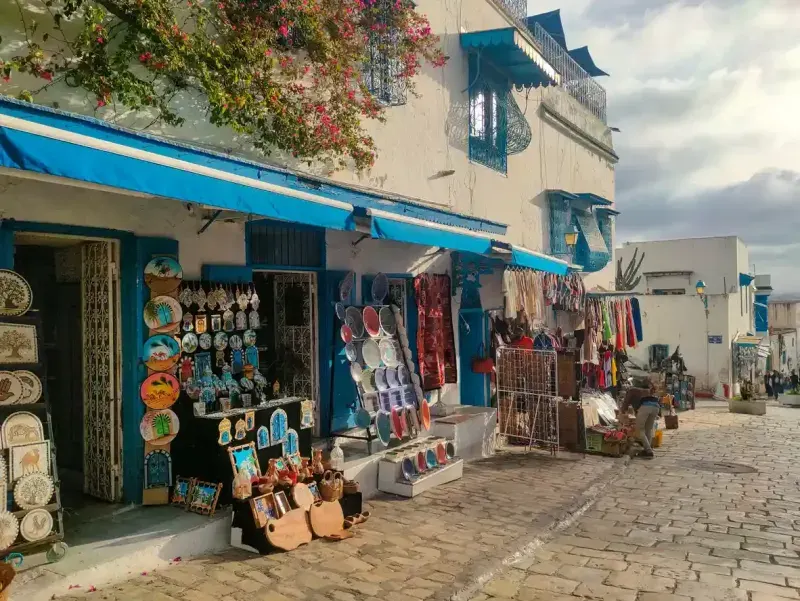
6. Shopping for Tunisian Handicrafts
Sidi Bou Said offers more refined, artistic shopping than typical Tunisian souks:
What to buy:
- Art & Paintings: Local artists sell watercolors, acrylics of village scenes
- Birdcages: The iconic decorative birdcages (blue and white, naturally!)
- Textiles: Hand-embroidered linens, traditional weaving
- Ceramics: Blue-and-white pottery, tiles
- Jewelry: Silver Berber pieces, handmade designs
- Photography: Prints and postcards by local photographers
Shopping tips:
- Prices are less aggressive than those in the Tunis medina
- Still haggle respectfully (start 40-50% below asking)
- Quality tends to be higher (tourist village = reputation matters)
- Look for artist signatures on paintings
Best shops: Along the main street (Rue Habib Thameur) and side alleys
7. Mediterranean Viewpoints
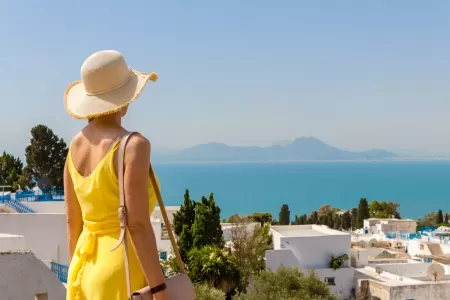
Sidi Bou Said's clifftop location = SPECTACULAR VIEWS!
Best viewpoints:
- Lighthouse area: Northern edge, panoramic Gulf of Tunis vistas
- Café des Délices terrace: Classic postcard perspective
- Palace Ennejma Ezzahra gardens: Elevated coastal views
- Upper village streets: Peek-a-boo sea glimpses through alleyways
What you'll see:
- Azure Mediterranean stretching to the horizon
- Carthage archaeological sites in the distance
- Tunis Bay coastline
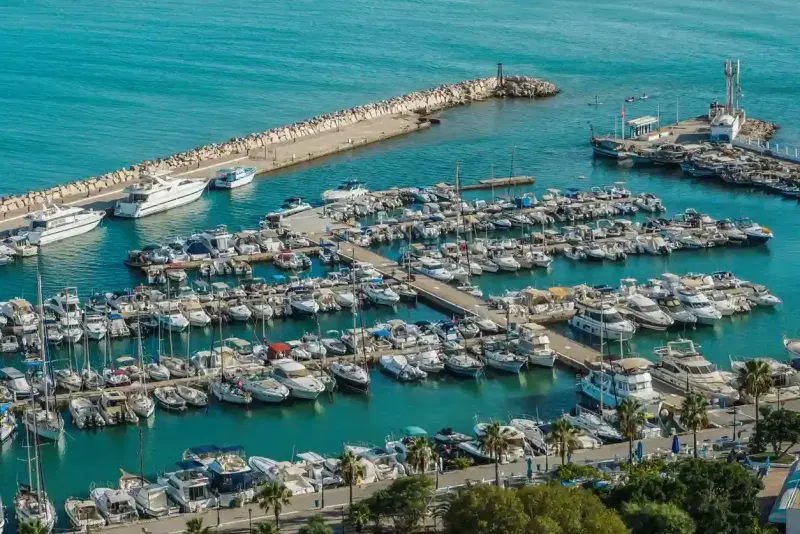
- Yachts and fishing boats dotting water
- Dramatic cliffs plunging to the sea
Best time: Late afternoon for golden light, evening for sunset colors
8. Visit the Sidi Bou Said Shrine
The spiritual heart: The zawiya (shrine) of Abou Saïd al-Baji, who gave the village its name
What to know:
- Active religious site (respectful behavior essential)
- Modest dress required (shoulders/knees covered)
- Women may need to cover their hair
- Remove shoes before entering
- Non-Muslims may have restricted access
Why visit: Understanding the spiritual foundation adds meaning to your Sidi Bou Said experience. This saint's presence CREATED everything you're enjoying!
Photography: Ask permission, be discreet, respect worshippers

How Much Time Do You Need?
- Quick visit: 2-3 hours (main sights + café)
- Recommended: Half day (4-6 hours for relaxed exploration)
- Ideal: Full day (combine with Carthage, leisurely café hopping)
- Overnight: Romantic option! Stay in a boutique hotel, enjoy the village after day-trippers leave
What to Wear
Footwear (CRITICAL!):
- Cobblestone streets = UNEVEN surfaces
- Wear sturdy walking shoes (NOT flip-flops!)
- Comfortable sneakers or walking sandals ideal
- Village has HILLS you'll be climbing
Clothing:
- Tunisia is a moderate Muslim country
- Shoulders/knees covered show respect
- Lightweight, breathable fabrics (can get hot!)
- Bring layers (coastal breezes cool down quickly)
- Hat and sunglasses (Mediterranean sun is intense!)
Photography outfit tip: Light colors (white, pastels) create beautiful contrast against blue-and-white backgrounds!
Money & Costs
Budget expectations:
- TGM train: 1 TND each way
- Café tea: 3-5 TND
- Museum entries: 5-8 TND each
- Lunch: 10-20 TND
- Souvenirs: 10-100+ TND (depending on purchases)
- Total day budget: 30-60 TND (~$10-20 USD) for basic visit, more with shopping/dining
ATM: Available in the village, but bring cash from Tunis to be safe
Tipping: Round up at cafés, 1-2 TND for guides
Language
Local languages: Arabic (Tunisian dialect), French
English: Spoken at tourist cafés, some shops, and limited elsewhere
Useful phrases:
- "Salam aleikum" (hello)
- "Shukran" (thank you)
- "B'shaḥal?" (how much?)
- "Laṭīf" (beautiful/nice)
Pro tip: Learning a few Arabic words earns smiles and better interactions!

The legendary artistic community:
- Henri Matisse painted here, inspired by light and colors
- Paul Klee created watercolors of village scenes
- André Gide wrote about his experiences
- Simone de Beauvoir sought creative solitude
- Michel Foucault found philosophical inspiration
- August Macke captured blue-and-white harmony
What draws them?
- Exceptional Mediterranean light (clear, bright, defining)
- Harmonious color palette (blue + white + bougainvillea pink)
- Peaceful atmosphere conducive to creativity
- Unchanged traditional character
- Romantic, timeless quality
- Spiritual tranquility from Sufi heritage
Today: Local artists continue this tradition, selling paintings throughout the village!
ABSOLUTELY YES!
Here's why:
- Unique beauty: No other place looks like this
- Easy access: 40 minutes from Tunis by train
- Affordable: Budget-friendly day trip
- Photogenic: Every corner is Instagram-worthy
- Cultural depth: Spiritual heritage + artistic legacy
- Relaxing: Peaceful escape from urban Tunisia
- Authentic: Still a real community, not a theme park
- Romantic: Perfect for couples
- Manageable: Small village, easy to explore
Who should visit?
- Photographers (professional or amateur)
- Culture enthusiasts
- Romantic couples
- Art lovers
- Anyone seeking Mediterranean beauty
- Day-trippers from Tunis
- Tunisia first-timers wanting highlights
The bottom line: Sidi Bou Said delivers everything Tunisia promises: beauty, culture, history, authenticity, in one perfectly preserved blue-and-white package. It's Tunisia's most photogenic destination and essential for any Tunisian itinerary!
Don't skip this Mediterranean gem!
What is Sidi Bou Said known for?
Sidi Bou Said is known for its stunning blue-and-white architecture, with every building painted blue and white by a 1920 decree. Famous for clifftop Mediterranean views, Café des Nattes (traditional mint tea), Café des Délices (sunset views), and attracting artists like Matisse. It's Tunisia's most photogenic village, 20km from Tunis, with a UNESCO World Heritage nomination (2025).
How safe is Sidi Bou Said?
Very safe, one of Tunisia's safest destinations. It's a small, peaceful village with minimal crime and tourist police presence. My main concerns are minor: tourist pricing, occasional persistent vendors, and uneven cobblestones (wear good shoes). Petty theft is rare. I take normal precautions: watch belongings, agree on taxi prices. Much safer than larger Tunisian cities.
Where is the nicest part of Tunisia?
Depends on interests: Sidi Bou Said for romantic blue-and-white beauty, Djerba Island for beaches, Hammamet for resorts, Carthage for ancient ruins, Tunis Medina for authentic culture, Sahara Desert for adventure. Most travelers consider Sidi Bou Said the most picturesque and Djerba the best for beaches.
Is it worth staying in Sidi Bou Said?
Yes, if seeking romance and avoiding crowds. Benefits: peaceful evenings after day-trippers leave, lantern-lit streets at night, stunning sunrise/sunset. Cost: 60-200 TND/night (~$20-65 USD). However, a half-day visit from Tunis (40-minute train) works fine if you're budget-conscious. Stay overnight for photography/romance; day trip for quick sightseeing.
Can I share a room with my girlfriend in Tunisia?
Yes, unmarried couples can share rooms at tourist hotels without issues. Tunisia is liberal hotels in Tunis, Hammamet, Sidi Bou Said, and Djerba don't require marriage certificates. International hotels and riads accommodate couples routinely. Avoid excessive public affection outside hotels. Small family guesthouses in conservative areas might be stricter, but booking through Booking.com/Airbnb ensures no problems.
What to be careful of in Tunisia?
Be careful: 1) Tap water (drink bottled only). 2) Petty theft in medinas (secure valuables). 3) Taxi scams (insist on meter). 4) Food safety (busy restaurants only). 5) Sun exposure (SPF 50+, hydrate). 6) Aggressive traffic. 7) Border areas (avoid Libya/Western Sahara borders). 8) Modest dress (cover shoulders/knees). 9) Ramadan (respect fasting). Overall, Tunisia is safe with basic precautions.