Inside the Carthage Empire: Stunning Discoveries That Changed History

#Rewriting History: Challenging the Roman Narrative
#Carthaginian Society: Way More Complex Than You Think
#Stunning Discoveries That Changed Everything
#Carthage's Legacy in Tunisia & Beyond
#Top Things to Do in Carthage for History Lovers
Few ancient civilizations spark as much curiosity as the Carthage empire, a Mediterranean powerhouse that historians are still uncovering today. This remarkable city started as a tiny settlement back in 814 BCE, but within just a few centuries, it had become one of the ancient world's greatest urban centers. We're talking about a city that hit its golden age in the 4th century BC and housed an extraordinary 500,000 inhabitants, making it one of the wealthiest and most influential powers across the entire Mediterranean!
Hidden beneath centuries of Roman propaganda lies a civilization far more sophisticated than anyone imagined. Carthage, Tunisia, reveals engineering marvels that'll blow your mind—defensive walls stretching an astounding 37 kilometers (23 miles), longer than virtually any other ancient city! The empire's reach extended way beyond just one city, encompassing huge chunks of northwestern Africa, strategic parts of Spain (Iberia), and crucial Mediterranean islands including Sicily, Sardinia, and Corsica.
Rome's brutal destruction of Carthage in 146 BC, following the devastating Punic Wars, tried to erase this African superpower from history, but it failed. The archaeological treasures of ancient Carthage, Tunisia, earned UNESCO World Heritage recognition in 1979, transforming the site into one of Tunisia's must-visit destinations for history lovers.
Recent excavations present a civilization far more accomplished than Roman writers ever admitted, one that's forcing historians to completely rewrite ancient Mediterranean history. Let me show you what makes the Carthage empire so fascinating!
Here's the thing about ancient history: the winners write the story. And nowhere is this more obvious than with the Carthage empire. When Rome obliterated Carthage in 146 BCE, they didn't just destroy the city; they destroyed virtually every Carthaginian text, leaving their incredible story to be told exclusively by their enemies. That's shaped our entire understanding of Carthaginian civilization for over 2,000 years!
Greek and Roman writers—big names like Livy, Polybius, and Appian—dominated everything we know about Carthage. But here's the problem: these guys came from cultures that were locked in constant conflict with Carthage. The Greeks fought them over Sicily, while the Romans battled for control of the entire Mediterranean. You can imagine how that affected their "objectivity," right?
Rome deliberately crafted Carthage's reputation around betrayal and deception. They even created the phrase fides Punica ("Punic faith") as cultural shorthand for treachery—basically calling all Carthaginians liars. This propaganda stuck for centuries after Carthage was destroyed, echoing through Roman schools and literature. As historian Eve MacDonald puts it perfectly: "The Roman memories only ever told one side of the story".
What Modern Archaeology Really Shows
Modern excavations starting in the late 1800s have uncovered physical evidence that completely contradicts Roman accounts. Carthage Tunisia reveals sophisticated city planning and engineering that blows away contemporary achievements—especially those ingenious cothon harbors (we'll get to those amazing ports later!).
Scientists have also discovered Carthage's remarkable economic independence through extensive lead-silver mining operations, allowing them to thrive even when trade routes got cut off during wartime. These findings don't show primitive barbarians at all—they reveal "a sophisticated and multicultural African city with a history of innovative technologies".
The Child Sacrifice Controversy: What's Really True?
No Carthaginian practice has sparked more heated debate than the alleged ritual child sacrifice. Archaeologists discovered infant burial sites called "tophets," which ignited fierce academic arguments. Traditional interpretations claimed these were sacrificial sites to appease gods, while many modern researchers dismissed this as Roman propaganda designed to make Carthaginians look evil.
But here's where it gets interesting: Oxford University research under Dr. Josephine Quinn reached a surprising conclusion: "the archaeological, literary, and documentary evidence for child sacrifice is overwhelming". Her team found parental inscriptions above cremated infant remains often ending with phrases like "heard my voice and blessed me."
However—and this is crucial—context matters. Such practices occurred very infrequently, perhaps affecting only about 25 burials annually in a city of 500,000 people. That's like 0.005% of the population. While disturbing by modern standards, this was nowhere near the systematic practice Roman propaganda suggested.
Archaeological digs across ancient Carthage Tunisia keep revealing layers of social complexity that Roman historians deliberately hid. Every artifact tells a story of cultural sophistication that challenges everything we thought we knew about this African civilization.
The religious world of Carthage was remarkably adaptable, weaving Phoenician traditions into a rich tapestry influenced by Mediterranean contacts. Religious devotion centered mainly around the powerful deities Tanit and Baal, though Greek gods gradually entered the Carthaginian pantheon as cultural exchange flourished.
Their art was extraordinary:
Painted terracotta masks with grimacing expressions (crafted to ward off evil spirits)
Exquisite gold and glass jewelry featuring beaded male heads with intricately curled hair and oversized, penetrating eyes
Masterfully carved funeral stones (stelae) that seamlessly merged Egyptian, Greek, and Phoenician artistic styles
Commerce formed the beating heart of Carthaginian life. A sophisticated trading aristocracy held both political power and religious influence throughout the Carthage empire. This elite class presided over a remarkably cosmopolitan population of skilled artisans, laborers, and foreign residents who made the city vibrant and diverse. At its peak, Carthage housed approximately 400,000 inhabitants—huge for ancient times!
Women & Queen Dido's Legendary Status
Queen Dido's status as Carthage's founder created a fascinating contradiction. Despite this powerful feminine founding myth, women faced significant social limitations—they couldn't participate in politics and were denied basic citizenship rights. Religious inscriptions typically identified women through their male relatives, reflecting their subordinate legal status.
Yet Dido's founding legend remained central to Carthaginian identity. The celebrated tale describes her clever escape from Tyrian tyranny and her ingenious land negotiation—she cut an oxhide into impossibly thin strips to encircle the hill that would become Byrsa ('hide'), the future site of her great city. Pretty clever, right?
Multiculturalism: Berbers, Phoenicians & Greeks Living Together
Modern genetic analysis has revealed shocking truths about Carthaginian ancestry that completely flip traditional assumptions. Despite their strong Phoenician cultural identity, DNA evidence shows virtually no Levantine genetic markers among Carthaginian remains! Instead, their genetic makeup reflects major contributions from Sicilian, Greek, and North African populations.
Archaeological evidence confirms a thriving Greek community had established itself within Carthage by the 4th century BCE. These genetic revelations validate what archaeologists long suspected: rather than establishing colonies through mass migration, Carthaginians spread influence through cultural assimilation and local integration.
Geneticist David Reich's analysis captures this perfectly: Carthaginians "preserved Phoenician culture, language, religion and their commercial lifestyle, but passed it to people of biologically different ancestry".
This transforms our understanding of ancient Carthage Tunisia from a simple Phoenician colony into something far more intriguing—a true Mediterranean melting pot unified under Punic cultural leadership!
Get in touch with our local experts for an unforgettable journey.
Plan Your Trip
Archaeological excavations keep yielding extraordinary evidence, each discovery adding new dimensions to our understanding of this remarkable African civilization. Let me show you the coolest finds!
The Hannibal District: Ancient Urban Planning Genius
Perched atop Byrsa hill lies one of archaeology's most revealing discoveries—the meticulously organized "Hannibal district," uncovered by French archaeologist Serge Lancel. This early 2nd-century BC neighborhood showcases urban planning that rivals any contemporary Mediterranean city!
What makes it special:
Precisely laid streets measuring about 6 meters wide
Uniform housing blocks separated by carefully constructed clay roads
Ingenious in-built staircases designed to navigate the hillside's natural slope
Each house follows a distinctly Punic pattern—long corridors leading to spacious central courtyards
This wasn't random construction—this was sophisticated city planning that created both privacy and communal gathering spaces!
Industrial Zones: Ancient Manufacturing Powerhouse
The industrial complex at Bir Massouda represents perhaps the most significant breakthrough in understanding Carthaginian manufacturing skills. This massive 1,500-square-meter precinct reveals the earliest documented iron metallurgy anywhere in North Africa, with evidence stretching back to the mid-8th century BC!
Archaeometallurgical analysis confirms Carthaginian craftsmen mastered both wrought iron and steel production—materials that likely became cornerstone exports in their extensive trade networks. Scattered throughout the site, crushed murex shells tell another story: evidence of industrial-scale purple dye manufacturing, the luxury commodity that adorned elites across the ancient world.
The Cothon Harbors: Engineering Ahead of Its Time
Nothing captures Carthaginian genius quite like their dual-harbor masterpiece! The commercial port seamlessly connected to a circular military basin measuring approximately 325 meters across. This military harbor—the famous cothon—housed an astounding 220 individual docking slips meticulously arranged around a central admiralty island.
Why this was revolutionary:
Iron chains could seal the harbor entrance during conflicts
The design maintained operational secrecy from enemies
Ships could be launched rapidly during emergencies
Central island provided command center for naval operations
This engineering sophistication allowed the Carthage empire to dominate Mediterranean naval operations while keeping their military capabilities hidden from rivals. Pretty impressive for 2,000+ years ago!
Punic Inscriptions: Cracking the Code
Language holds the key to understanding any ancient society, and Carthaginian inscriptions provide remarkable windows into their world. Two crucial Punic-Libyan bilingual inscriptions from the 2nd century BC have unlocked previously inaccessible aspects of their society and government systems.
The celebrated Cenotaph Inscription discovered at Dougga proved instrumental in cracking the mysterious Libyco-Berber script. Thousands of neo-Punic limestone stones scattered across North Africa document religious devotion, primarily recording dedications offered to deities like Baal Hammon.
The Punic Diaspora: Culture Survives Destruction
Carthage's physical destruction in 146 BC failed to eliminate its cultural DNA from the Mediterranean! Survivors faced enslavement and dispersal, yet Punic traditions proved remarkably resilient. Several coastal settlements that surrendered before the final siege escaped destruction, becoming repositories of Carthaginian heritage.
Neo-Punic—an evolved language incorporating Berber and Latin elements—emerged as the regional common language, facilitating communication across North Africa for centuries. The cultural persistence becomes most striking in Saint Augustine's respectful mention of "Punicis libri" (Punic books) around 401 AD—proving Punic literary traditions survived nearly 400 years beyond their homeland's destruction!
Ancient stones continue their silent testimony across Tunisia's coastal plains, where remnants of the mighty Carthage empire maintain their grip on modern imagination. This vanished civilization refuses to stay buried!
Carthage Tunisia: A Modern Archaeological Hub
North Africa's most significant archaeological site draws international research teams whose work unveils layer upon layer of Punic secrets. Carthage Tunisia has become a focal point for Mediterranean studies, where scholars from Oxford, the Sorbonne, and leading American universities converge to examine pre-Roman layers.
These excavations concentrate specifically on Punic-era deposits, revealing intimate details of daily life that Roman accounts never bothered recording. New discoveries happen regularly—who knows what they'll find next?
UNESCO Protection: Preserving History
The 1979 UNESCO World Heritage designation marked a turning point in Carthage's modern story. This protected status shields the archaeological zones from Tunisia's expanding urban development, while international conservation initiatives have restored key monuments including the impressive Antonine Baths and the enigmatic Punic port installations.
These preservation efforts ensure future explorers can walk the same paths once traveled by Hannibal's contemporaries!
Carthaginian Influence on Roman & African Culture
Carthaginian knowledge proved too valuable for complete destruction. Mago's extensive 28-volume treatise on agriculture became the only Punic text Romans chose to preserve and translate—they recognized its agricultural wisdom was superior to their own methods!
Across North Africa, Carthaginian cultural threads persisted for centuries:
The Punic language survived as a living tongue until the 6th century AD
Religious and commercial practices maintained Carthaginian character long after Rome took over
Agricultural techniques influenced farming across the Mediterranean
Ready to explore? Here are the must-see things to do in Carthage when you visit Carthage Tunisia:
1. The Carthage Museum
Start your journey here! The museum presents artifacts spanning multiple civilizations—from Punic terra cotta to stunning Roman mosaics. You'll see everyday items that reveal how ancient Carthaginians actually lived. Perfect for understanding the full scope of history before exploring the ruins.
What you'll see:
Punic pottery and religious artifacts
Stunning Roman-era mosaics
Phoenician jewelry and metalwork
Interactive displays explaining daily life
2. The Ancient Punic Ports (Cothon)
Walk around the circular harbor where Carthaginian naval power was born! You can still see the outline of the famous cothon—that revolutionary circular military harbor with 220 docking slips. Stand here and imagine 220 warships launching simultaneously. The engineering genius becomes obvious when you see it in person.
Why visit:
See ancient naval engineering firsthand
Understand how Carthage dominated the Mediterranean
Great photo opportunities overlooking the harbor
Peaceful waterside walks
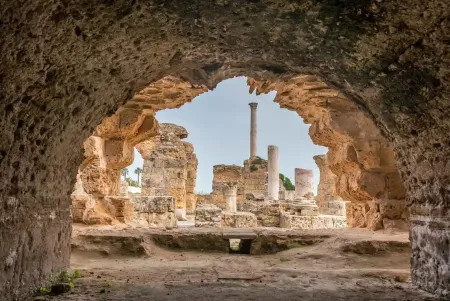
3. The Antonine Baths
These massive Roman-era baths are among the largest outside Rome itself! While built after Carthage's destruction, they sit atop earlier Punic foundations. The sheer scale is breathtaking—columns that once stood over 15 meters tall, underground heating systems, and elaborate mosaic floors.
Highlights:
Explore underground chambers and tunnels
See how ancient heating systems worked
Panoramic Mediterranean Sea views
Best visited in morning or late afternoon
4. Byrsa Hill & Archaeological Park
Climb to the top of Byrsa Hill where Queen Dido founded the city! The Hannibal district sits here—those precisely planned Punic houses we discussed earlier. You'll also find the Cathedral of St. Louis (now a museum) and spectacular views over the Gulf of Tunis.
Don't miss:
Punic residential quarter ruins
Panoramic city and sea views
Photo opportunities at sunset
Museum inside the cathedral
5. The Roman Amphitheater
This reconstructed amphitheater once held up to 36,000 spectators! While it's Roman-era (built around 238 AD), it sits on ancient Carthaginian ground. During summer, it hosts concerts and cultural events—imagine watching a performance where gladiators once fought!
Experience:
Walk through the arena floor
Explore underground passages
Attend summer concerts (June-August)
Feel the historical atmosphere
6. Tophet of Salammbô
This is the controversial burial ground we discussed—the site that sparked debates about child sacrifice. Whether ritual site or cemetery, it's an important archaeological location with hundreds of burial urns and stone markers (stelae) dedicated to Tanit and Baal.
What makes it significant:
Original Punic religious site
Hundreds of ancient inscriptions
Archaeological controversy center
Insight into Carthaginian religion
7. Magon Quarter
Recently excavated residential area revealing how ordinary Carthaginians lived! You'll see house foundations, street layouts, and everyday artifacts that humanize this ancient civilization. Less crowded than other sites, making it perfect for contemplative exploration.
Why it's special:
Authentic Punic neighborhood layout
Away from tourist crowds
See where regular people lived
Recent excavations still ongoing
Practical Tips for Visiting Carthage Tunisia:
Best Time to Visit:
Spring (March-May): Perfect weather, blooming flowers, fewer crowds
Fall (September-November): Comfortable temperatures, great for walking
Avoid: July-August can be extremely hot for outdoor exploration
Getting There:
TGM Train: From Tunis city center, take the TGM suburban train to "Carthage-Hannibal" station
Journey time: About 20-30 minutes from downtown Tunis
Cost: Very affordable (under 2 TND)
Taxi: Available but agree on price beforehand
Tickets & Timing:
Combined ticket: Buy one ticket for all sites (much better value!)
Cost: Around 12 TND for all archaeological sites
Opening hours: Generally 8:30am-5pm (winter), 8am-7pm (summer)
Time needed: Full day to see all major sites properly
What to Bring:
Comfortable walking shoes (lots of uneven terrain!)
Sun protection (hat, sunscreen, sunglasses)
Water bottle (limited vendors at some sites)
Camera (spectacular photo opportunities)
Light jacket (for museums and cooler months)
Conclusion
The archaeological record speaks with crystal clarity: the Carthage empire emerges not as the barbaric enemy of Roman legend, but as a testament to ancient genius and cultural fusion. Every excavated artifact, decoded inscription, and genetic analysis dismantles centuries of misconceptions, revealing instead a civilization that commanded respect and admiration across the ancient Mediterranean.
Modern science has unveiled the true character of Carthaginian society—a vibrant tapestry woven from multiple cultural threads, where Phoenician maritime traditions merged seamlessly with indigenous North African customs and Mediterranean influences. The genetic evidence confirms what architectural remains suggested: this was a civilization built through cultural attraction rather than conquest, drawing peoples together through commercial opportunity and urban sophistication.
Standing today among the weathered stones of ancient Carthage Tunisia, you encounter physical proof of a remarkable truth. These ruins represent more than archaeological curiosities—they embody human achievement persisting against deliberate erasure. The precision of Punic urban planning, the innovation of harbor engineering, and the sophistication of industrial processes all contradict Roman propaganda about cultural barbarism.
What emerges most powerfully is Carthage's remarkable cultural endurance. Even Rome's systematic destruction couldn't extinguish this African metropolis's contributions. Punic agricultural knowledge influenced Roman farming, while the language survived for centuries, carrying forward traditions connecting ancient North Africa to its Phoenician heritage.
The stones of Carthage Tunisia continue their silent instruction, offering lessons about ancient civilizations' complexity and the dangers of accepting historical accounts written by victors. Each visitor exploring these ancient pathways participates in ongoing historical rediscovery, honoring the sophisticated society that once thrived on Tunisia's shores.
Ready to explore the Carthage empire yourself? The things to do in Carthage await—where every stone tells a story that Rome tried to silence!
Q1. What ethnicity were the Carthaginians?
Carthaginians were a diverse mix of Sicilians, Greeks, and North Africans. Genetic studies show virtually no Levantine DNA despite their Phoenician culture. The Carthage empire was a true multicultural melting pot that spread through cultural assimilation, not mass migration from one ethnic group.
Q2. What were Carthage's main innovations?
The Carthage empire pioneered advanced urban planning, the earliest iron metallurgy in North Africa (8th century BC), and revolutionary circular naval harbors (cothons) with 220 docking slips. They also mastered industrial-scale purple dye production and agricultural techniques that even Romans later adopted.
Q3. Is Carthage mentioned in the Bible?
Carthage isn't directly mentioned in the Hebrew Bible. However, the Greek Septuagint translation used "Karkhēdōn" (Carthage) for the place name Tarshish in Isaiah 23:1, suggesting possible Biblical connections to the Carthaginian world.
Q4. What can I see at Carthage today?
Top things to do in Carthage: explore the Carthage Museum, ancient Punic harbors (cothon), massive Antonine Baths, Byrsa Hill with panoramic views, Roman amphitheater, and Tophet burial ground. Buy a combined ticket (12 TND) for all sites. Spring and fall offer best weather.
Q5. How did Carthage culture survive after destruction?
The Punic language survived until the 6th century AD (750 years after destruction!). Carthaginian agricultural knowledge was preserved by Romans, and cultural influences persisted across North Africa for centuries. Coastal cities that surrendered early became repositories of Carthaginian heritage.
Q6. How do I get to Carthage from Tunis?
Take the TGM suburban train from Tunis to "Carthage-Hannibal" station—only 20-30 minutes and under 2 TND. Trains run frequently. Taxis are available but agree on price first. The train is easiest and drops you near main sites.
Q7. When's the best time to visit Carthage?
Visit Carthage Tunisia in spring (March-May) or fall (September-November) when temperatures are comfortable (20-25°C) for exploring outdoor ruins. Avoid summer (June-August)—it gets extremely hot (30°C+). Winter is quieter but cooler. Sites open 8:30am-5pm (winter) or 8am-7pm (summer).
Q8. Did Carthaginians really practice child sacrifice?
Oxford research confirmed archaeological evidence of child sacrifice exists, but it was extremely rare—only about 25 burials annually in a city of 500,000 people (0.005%). This wasn't the systematic practice Roman propaganda suggested, though it did occur infrequently for religious purposes.
Q9. Why was the Carthage empire so powerful?
The Carthage empire dominated Mediterranean trade through superior naval technology (cothon harbors), strategic control of Sicily, Sardinia, and Iberia, advanced metallurgy and manufacturing, and a multicultural society that assimilated local populations. Their commercial networks and economic self-sufficiency made them Rome's greatest rival.
Q10. What language did Carthaginians speak?
Carthaginians spoke Punic, a Phoenician language dialect. After 146 BC, it evolved into Neo-Punic (incorporating Berber and Latin) and remained spoken across North Africa until the 6th century AD. Saint Augustine mentioned "Punic books" still existing around 401 AD—nearly 550 years after Carthage's fall!
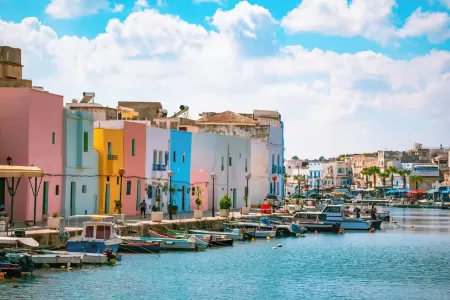
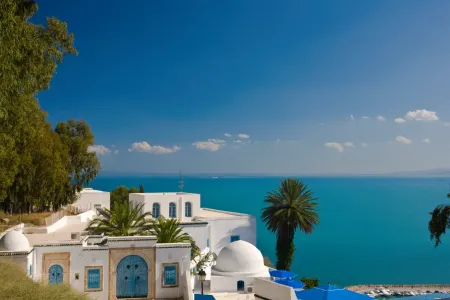
Sidi Bou Said is a stunning clifftop village near Tunis, famous for its blue-and-white houses, Mediterranean views, and artistic atmosphere. It’s one of Tunisia’s most beautiful and photogenic destinations, perfect for a relaxing cultural escape.
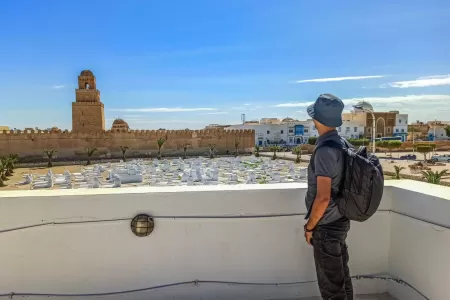
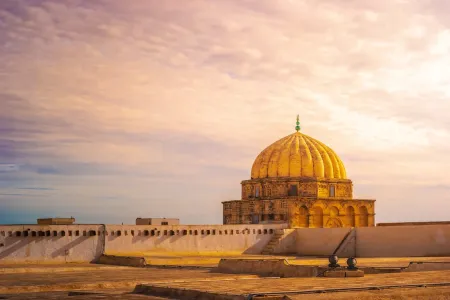
Kairouan is Tunisia’s spiritual capital and Islam’s fourth holiest city, known for the Great Mosque of Kairouan, rich history, and UNESCO-listed medina.
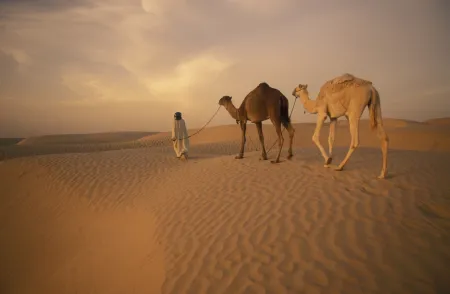
Douz, the Gateway to the Sahara, is a charming desert town in southern Tunisia famous for camel treks, towering dunes, and authentic Bedouin culture.
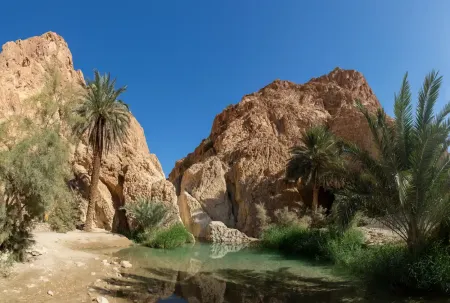
Tozeur, Tunisia guide: Star Wars locations, desert oases, Sahara adventures. Includes transportation, hotels, best times (October-April), and itineraries. Essential desert travel resource.
Essential Tunis city guide: ancient Carthage, Bardo Museum, coastal beaches, and Sidi Bou Said. Complete things to do in Tunis beyond the medina with practical tips and recommendations.