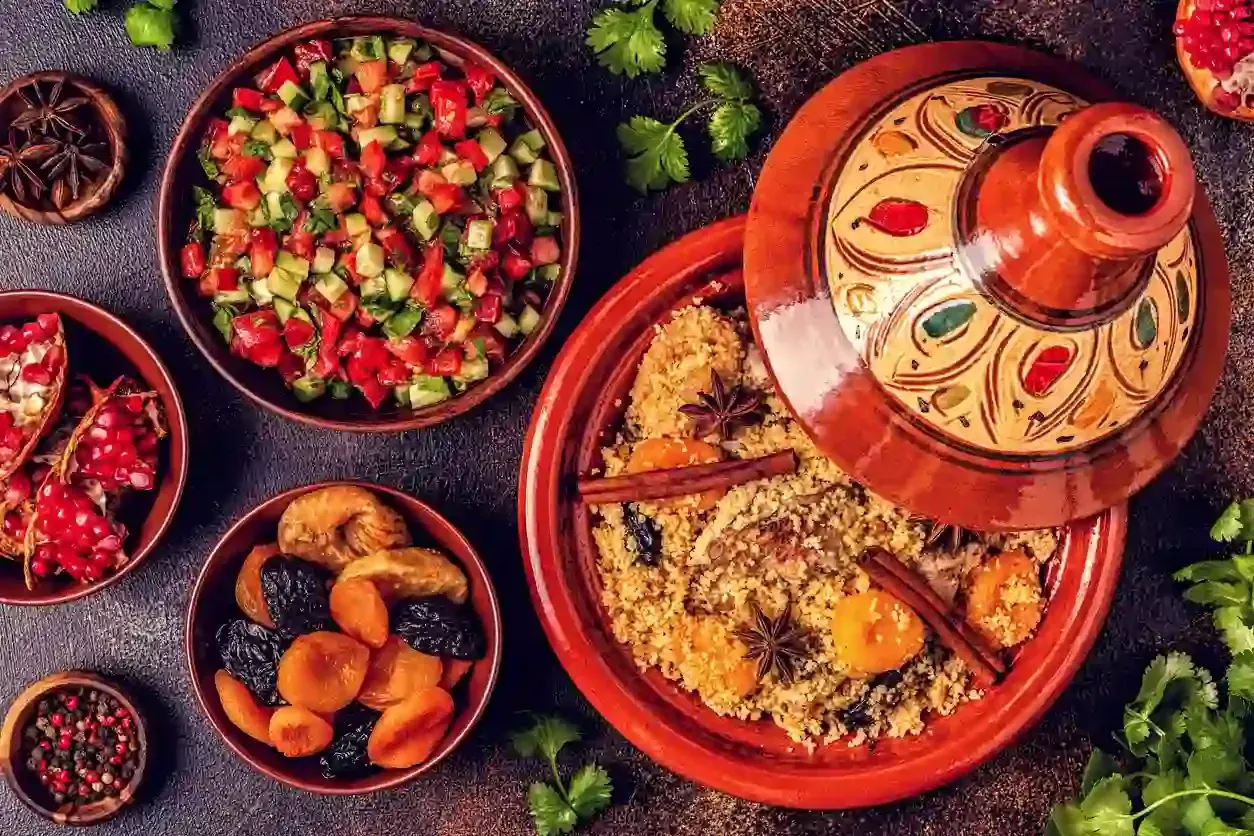
Close your eyes and picture this: you're sitting on a low cushion in a candlelit riad, a cone-lidded clay pot is set in front of you, and the moment the lid comes off, a cloud of cumin, saffron and slow-cooked lamb hits you. That's Morocco. It's a country you don't just look at; you taste it, one shared plate at a time.
The traditional Moroccan dishes you'll meet here are the product of a thousand years of mixing: Amazigh (Berber) home cooking, Arab spice routes, Andalusian elegance from across the water in Spain, and flavours carried up from sub-Saharan Africa. Put simply, Moroccan cuisine is one big, generous melting pot, and sharing it is the whole point. So if you're wondering what to eat in Morocco and where to start, here's your menu, dish by dish. Let's dig in.
Short on time or not sure where to begin? Use this quick guide to pick your first plate, then read on for the full story behind each one.
| Dish |
Known for |
Tastes like |
Best for |
| Tagine |
The national stew |
Rich, tender, lightly spiced |
First-timers · everyone |
| Couscous |
The Friday family meal |
Fluffy, savoury, comforting |
Comfort-food lovers |
| Pastilla |
Sweet-savoury pie |
Flaky, almondy, surprising |
Adventurous palates |
| Harira |
Ramadan soup |
Warm, herby, hearty |
Cool evenings · vegetarians |
| Mechoui |
Feast-day roast lamb |
Smoky, melting, simple |
Meat lovers |
| Mint tea |
The welcome drink |
Sweet, fresh, fragrant |
Every moment of the day |
To understand Moroccan cuisine, picture a crossroads. The original Amazigh (Berber) people gave Morocco its staples: barley, olive oil, dates, and the clay tagine pot. Arab traders then arrived with cinnamon, saffron, ginger and the idea of mixing sweet with savoury. Later, Muslims and Jews leaving Andalusia brought refined pastries and the art of layering flavour, while caravans crossing the Sahara added heat and depth. The result is a kitchen where a single dish can taste sweet, salty, sour, and warm all at once, anchored by ras el hanout, a signature house blend that can hold a dozen or more spices.
1. Tagine — Morocco's slow-cooked soul
Best for: first-timers
If you try one thing, make it tagine. Named after the cone-lidded clay pot it's cooked in, a tagine in Morocco is less a recipe than a method: meat or vegetables cooked low and slow until everything turns tender and the sauce goes rich. The classics worth hunting down:
- Chicken, preserved lemon & olives — the bright, tangy one everyone falls for.
- Lamb with prunes & almonds — sweet, deep and festive.
- Kefta & egg — spiced meatballs baked in tomato sauce with an egg cracked on top.
- Vegetable tagine — proof you don't need meat to eat brilliantly here.
Order it in a traditional riad in Fez, and you'll taste why Moroccans eat it their whole lives.
MEMPHIS TOURS' TIP
A real tagine takes two to three hours to cook. If a restaurant serves it in ten minutes, it was reheated. Look for places that ask you to order ahead, or join a cooking class to make your own from scratch.
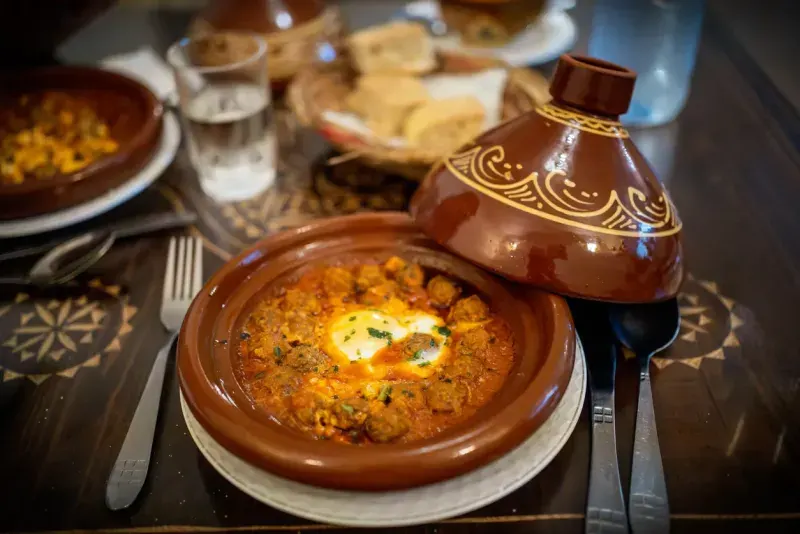
Traditional Moroccan Kefta Tagine with Poached Eggs in Tomato Sauce
Customize Your Dream Vacation!
Get in touch with our local experts for an unforgettable journey.
Plan Your Trip
2. Couscous — the Friday ritual
Best for: comfort-food lovers
Fluffy steamed semolina piled with seven vegetables and tender meat, couscous in Morocco is far more than a side dish; it's a weekly event. Families gather after Friday prayers for a shared mountain of it, topped with a sweet-and-savoury broth. Done properly, the grains are steamed three times until light as air. It's comfort food, celebration food, and the taste most travellers miss most when they get home.
3. Pastilla (b'stilla) — sweet meets savoury
Best for: adventurous palates
Pastilla is Morocco's showstopper: a flaky pie of shredded poultry (traditionally pigeon, now usually chicken) layered with almonds, cinnamon and a dusting of icing sugar. One bite and you'll understand the Andalusian influence: it's delicate, surprising and unlike anything else you've eaten. A seafood version is the star along the coast in Essaouira.
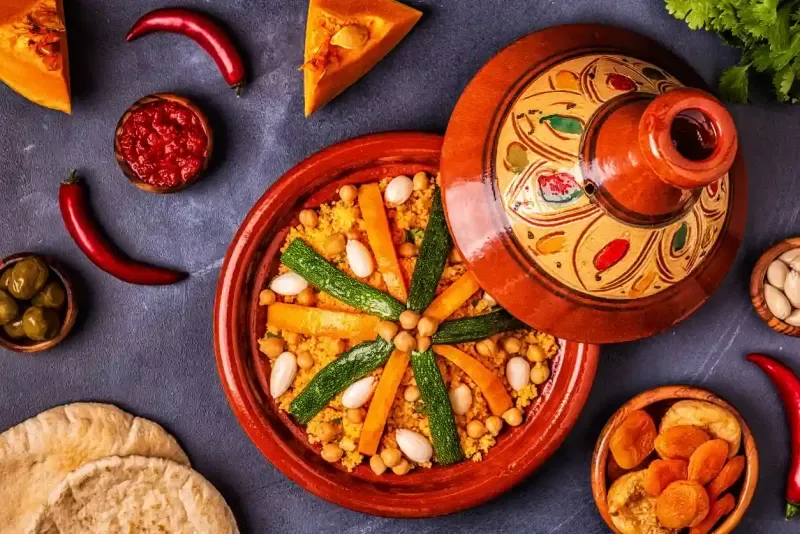
Vegetable tagine with almond and chickpea couscousm
4. Harira — the soup that breaks the fast
Best for: cool evenings & vegetarians
A hearty tomato, lentil, and chickpea soup scented with coriander and celery, harira is what Moroccans eat to break their fast during Ramadan, usually with a sticky sesame sweet called chebakia and a few dates. You'll find it year-round though, and a bowl on a cool desert evening is pure comfort.
5. Mechoui — lamb for a feast
Best for: meat lovers
Mechoui is a whole lamb slow-roasted until the meat falls off the bone, rubbed with cumin and butter. It's the centrepiece of weddings and big celebrations, and in Marrakech you can find it carved to order in the famous mechoui alley near the main square — one of the city's great food rituals.
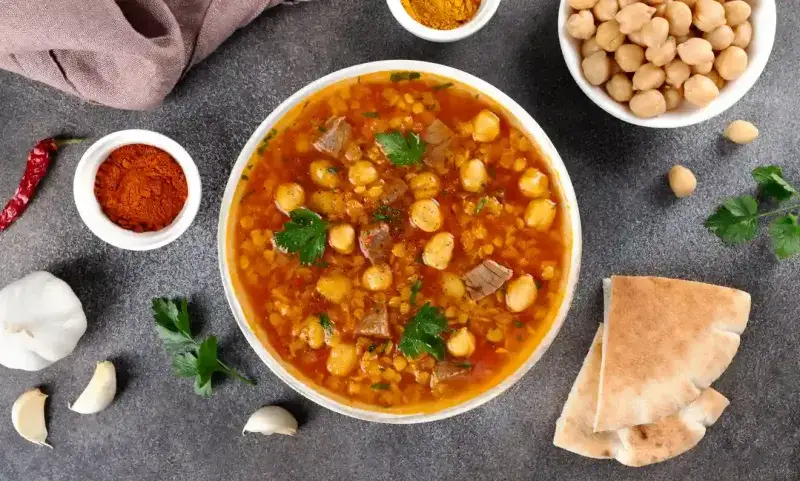
Moroccan harira soup with ingredients, spices and arabic bread on grey background. Ramadan iftar food.
6. Rfissa & more home favourites
Best for: curious foodies
Beyond the famous names, look out for rfissa (shredded flatbread soaked in a lentil and fenugreek sauce with chicken, traditionally served to new mothers), bissara (a warming fava-bean soup), and zaalouk (a smoky aubergine and tomato dip). These are the dishes Moroccan grandmothers are famous for: the real home cooking you'll rarely find on a tourist menu.
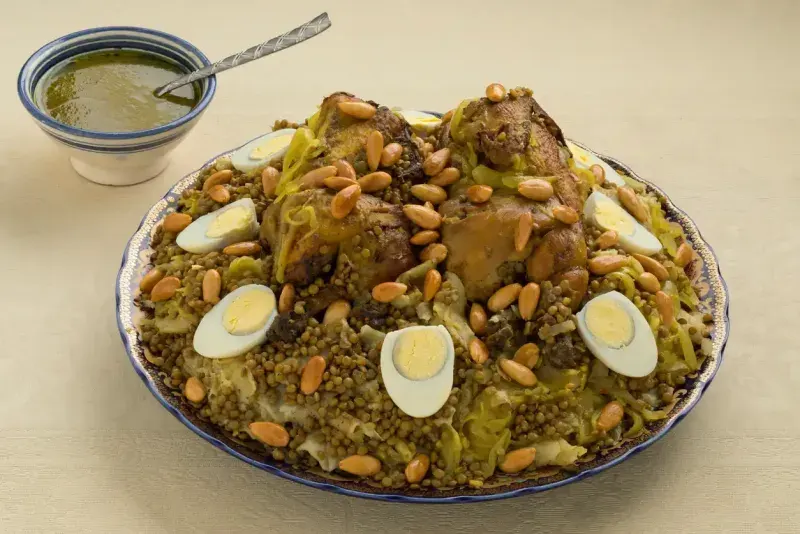
Traditional Moroccan Rfissa dish with eggs and almonds
Some of the best traditional dishes in Morocco never see a restaurant table. As the sun sets on Marrakech's Jemaa el-Fnaa square, hundreds of stalls fire up, and the whole place turns into one giant open-air kitchen. Pull up a bench and try:
- Brochettes — spiced grilled meat skewers cooked over charcoal.
- Msemen & harcha — flaky square pancakes and semolina bread, perfect with honey.
- Maakouda — crispy fried potato cakes, often tucked into a sandwich.
- Sardines with chermoula — the coastal favourite, marinated in herbs and grilled.
- Snail soup (babbouche) — for the brave; locals swear by it for digestion.
MEMPHIS TOURS' TIP
Eat where the locals eat. At a busy stall, point to what you want and watch them cook it in front of you. A long queue of Moroccans is the best review you'll ever get, and the food is freshest and cheapest there.
Mornings are gentle and bread-based. Expect a spread of khobz (round bread), msemen, and beghrir (spongy "thousand-hole" pancakes) served with olive oil, honey, soft cheese, apricot jam, and, of course, a glass of mint tea. In a riad, breakfast often arrives on a tray of little dishes—a relaxed, delicious way to start a day of exploring.
No meal ends without Moroccan mint tea — green tea brewed strong with fresh mint and poured from a height to build a frothy top. It's the drink of welcome, friendship, and every negotiation in the souk. Pair it with chebakia (sesame-and-honey flower cookies), kaab el ghzal ("gazelle horns" filled with almond paste), or sellou, a rich blend of toasted flour, almonds, and honey.
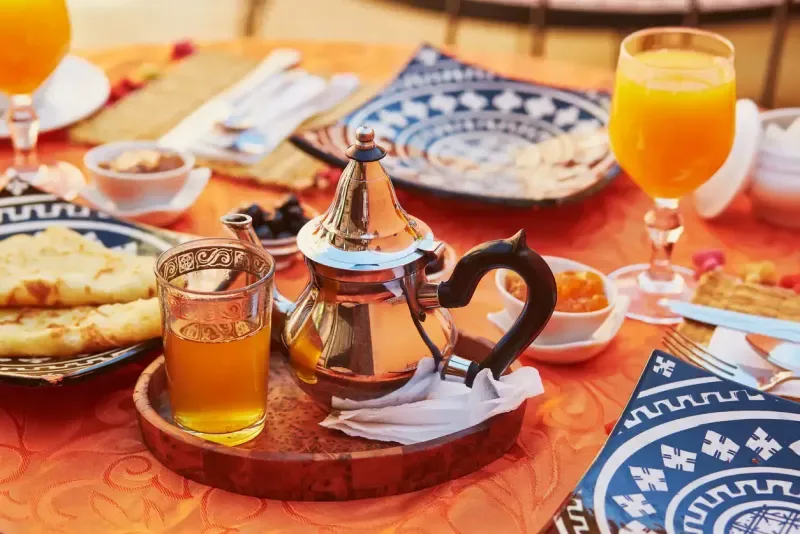
Delicious breakfast in Moroccan style
Every city has its own flavour — here's where to chase each one.
| City |
Signature flavour |
Don't miss |
Best for |
| Fez |
The culinary capital |
Pastilla & rich spiced tagines |
Serious foodies |
| Marrakech |
Street-food heaven |
Mechoui alley & night markets |
First-timers |
| Essaouira |
Atlantic seafood |
Grilled sardines off the boats |
Seafood lovers |
| Chefchaouen |
Mountain Rif cooking |
Goat cheese & slow home dishes |
Slow travellers |
MEMPHIS TOURS' TIP
Visiting during Ramadan? Food shifts to the evening, when the whole country breaks its fast with harira, dates, and sweets at iftar, one of the most special times to eat in Morocco. Spring and autumn are the easiest seasons for market walks and cooking classes.
For most travellers,
Moroccan food isn't just something you eat on your trip; it becomes the memory they chase long after they've left. So come hungry, say yes to the second helping, and let every meal tell you a little more about the country.
Taste It All on a Morocco Tour
Reading about tagine is one thing; smelling it lift off the pot in a Marrakech riad is another. Explore our Morocco tours and go straight to the source, with market walks, hands-on cooking classes, and meals in family-run riads, all guided by locals who know exactly where to eat.
What is Morocco's most popular food?
When I think of Moroccan cuisine, couscous comes to mind first. It’s Morocco’s most popular food, often served with vegetables, meat, and rich spices.
Is Morocco expensive to eat out?
From my experience, eating out in Morocco is very affordable. Local meals cost just a few dollars, though upscale restaurants in big cities can be pricier.
What are two rules of food etiquette in Morocco?
I always remember two key rules: eat with your right hand and wait for the host to invite you before starting. Both are important in Moroccan food culture.
Does Morocco have a Michelin star restaurant?
Morocco doesn’t have a Michelin-starred restaurant yet, but I’ve enjoyed many fine-dining spots in Marrakech and Casablanca with world-class flavors.
Does Morocco have a national dish?
Yes, Morocco’s national dish is couscous. I love how it’s prepared differently across regions, making it a true symbol of Moroccan culinary tradition.