Table of content
You won't find this wetland highlighted on most travel maps, yet it covers an area that most people can barely imagine. The Pantanal extends across three countries in the heart of South America, far from Rio's postcard views or the Amazon's green canopy. That is exactly why many travelers pass it by.
The Wetland Shared by Brazil, Bolivia, and Paraguay
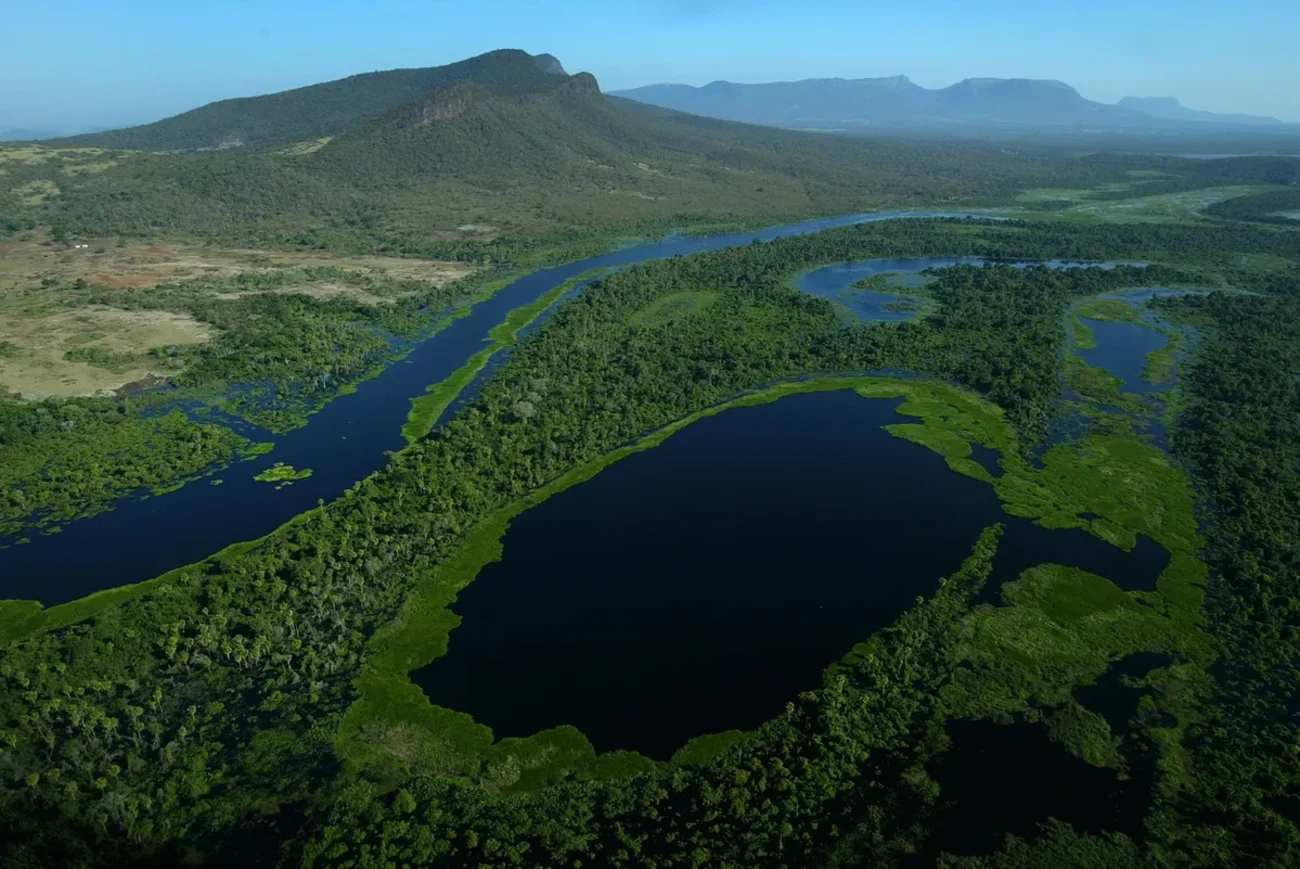
The Pantanal lies in the upper Paraguay River basin and spans Brazil, Bolivia, and Paraguay. About 80 percent lies in Brazil, covering parts of Mato Grosso and Mato Grosso do Sul. Smaller sections extend into eastern Bolivia and northeastern Paraguay.
Its numbers do little to convey its true scale. The wetland spans about 42 million acres, an area larger than Greece. Estimates of its size range from roughly 140,000 to 195,000 square kilometers, depending on how its borders are drawn. Despite its size, the Pantanal has nowhere near the Amazon's name recognition, which helps explain why few international travelers include it in their plans.
Northern and Southern Pantanal: Two Different Experiences
The region has two distinct halves, and each offers a different trip. The Northern Pantanal covers about one-third of the total area. It sits at a slightly higher elevation and is known for its denser gallery forests and waterways. Cuiabá is the main gateway and connects visitors to the Transpantaneira Highway, a 147-kilometer dirt road that crosses about 120 wooden bridges before reaching Porto Jofre through gallery forest and open wetland.
The Southern Pantanal makes up the other two-thirds and offers the wetland at its most intense. Campo Grande serves as the entry point, with roads leading into grassland, savanna, and flooded plains where water levels change more dramatically.
The contrasting habitats lead many visitors to combine both areas during one Pantanal trip. A combined itinerary lets travelers see the south's drier grasslands and termite-studded savanna, as well as the denser gallery forests and waterways of the north.
Why Wildlife Is Easier to See Here Than in the Amazon
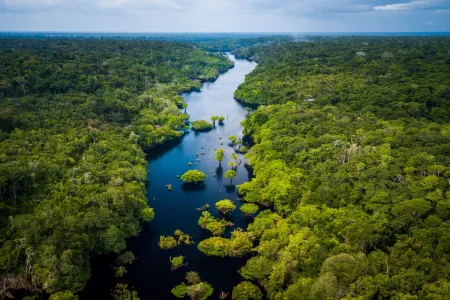
The Pantanal stands out against its better-known neighbor. The Amazon covers about 28 times more land than the Pantanal and supports roughly twice as many species, but its dense canopy conceals much of that wildlife. Animals have far fewer places to hide in the Pantanal.
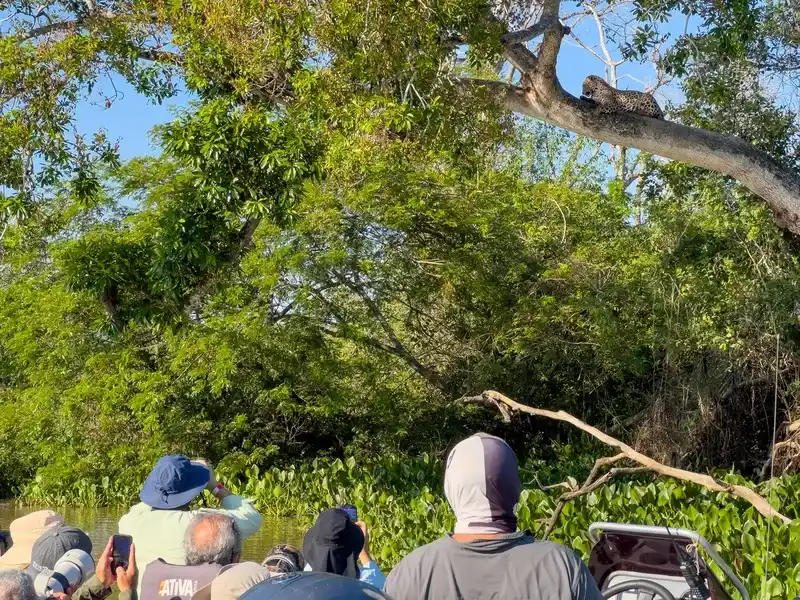
Open floodplains take the place of thick foliage, which makes sightings easier and more frequent. This visibility gives the Pantanal South America's highest concentration of wildlife, despite its smaller area and lower total number of species than the Amazon. Jaguars, giant otters, marsh deer, and hyacinth macaws appear with a regularity that jungle terrain cannot match.
That visibility brings a steady flow of visitors. Nearly one million tourists come each year to see the Pantanal's wildlife firsthand. Even so, the wetland remains in the Amazon's shadow for many people planning their first trip to Brazil. Large areas stay quiet and uncrowded for travelers willing to look beyond the obvious choice.
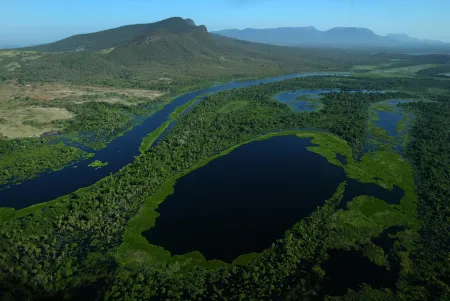
![view of Pantanal wetlands in Brazil]()
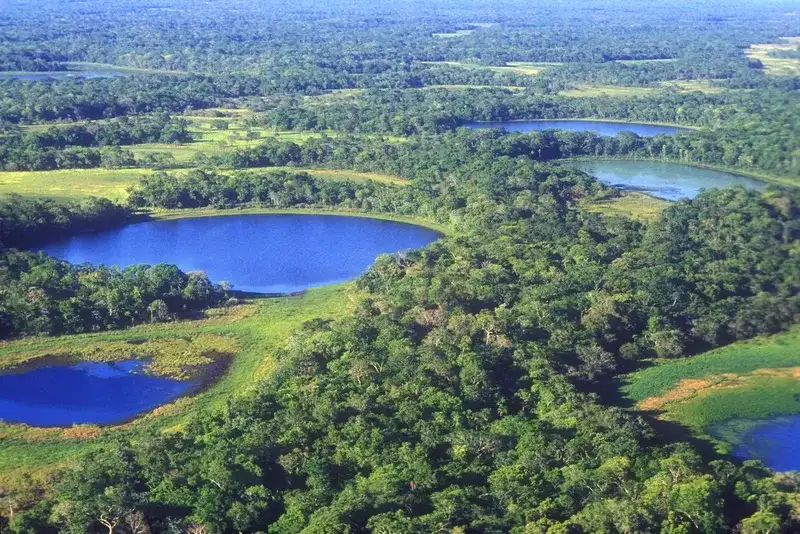
Water shapes everything here. Once you understand its rhythm, the whole wetland begins to make sense. The Pantanal does not remain the same throughout the year. It expands, contracts, and changes on a cycle that wildlife and local communities rely on.
Where the Floodwater Comes From
More than 1,200 rivers and streams feed the Pantanal. These waterways include the free-flowing Paraguay River, which remains undammed along its course. Most rain falls between November and March, with annual averages of about 1,000 to 1,250 millimeters. Some parts of the floodplain receive up to 1,500 millimeters. Rainwater flows from the surrounding highlands into the flat basin below. The soil cannot absorb it quickly enough, so the water spreads across the land rather than draining away.
Flooding does not reach every area at the same time. Water levels in the north usually peak in March or April, while southern areas reach their highest levels in July or August. This staggered cycle leaves different parts of the wetland in flood or drought during the same month. A northern and southern stop on Pantanal tours can therefore offer very different views of the region.
How Flooded Grasslands Become Fish Nurseries
Water spreads across the grasslands and creates a natural nursery for fish. The Pantanal supports about 260 fish species, and seasonal floods provide the shallow, nutrient-rich water they need to breed and grow. This flood pulse also replenishes groundwater and keeps river levels steady enough for boats to travel through the region.
Why Receding Water Draws Birds and Mammals
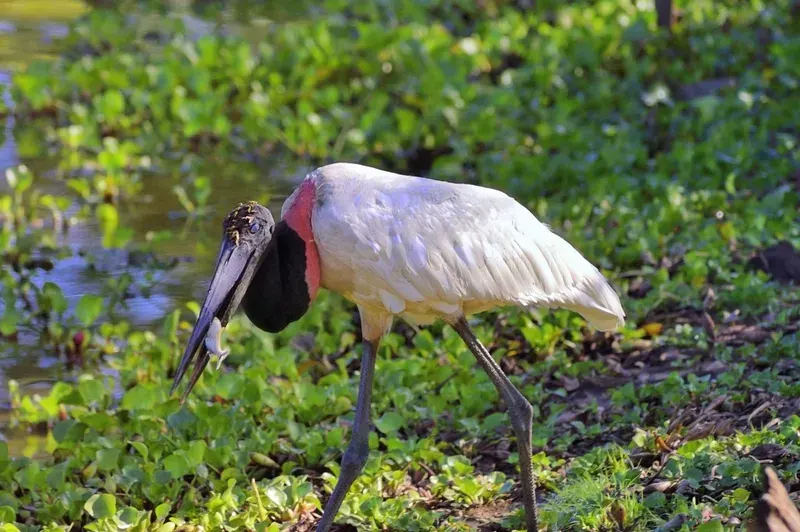
Floodwater retreats between April and September, leaving smaller ponds and exposed mudflats behind. Wildlife gathers around these areas as water becomes scarce. Jabiru storks rely on low water levels to catch mussum fish buried in the mud. Their breeding success depends directly on how far water levels fall each year. Capybaras also adjust their movements. Their home ranges grow during the dry months as more grassland opens up, while mammal densities peak in August and September.
What Wet and Dry Seasons Mean for Visitors
Visitors planning Pantanal Brazil tours will have a very different experience depending on the season. Dry months, from roughly May to October, bring firmer ground and narrower rivers. Animals also gather near the remaining water sources, which makes wildlife sightings easier. Wet season conditions from November through March can flood roads and limit access to many lodges by boat. Fresh food and shelter spread more widely across the region during this period. Most visitors plan their trips around changes in water levels.
![Jabiru stork fishing in Pantanal Brazil]()
When is the best time to visit the Pantanal for wildlife watching?
August and September are particularly good for wildlife watching, as receding water concentrates animals near remaining pools and rivers. Flood timing varies between the northern and southern Pantanal.
What safety precautions should I take in the Pantanal?
Travel with experienced guides, keep a safe distance from wildlife, and prepare for heat and insects. Check wildfire smoke conditions and remember that medical care is limited in remote areas.
Is the Southern Pantanal worth visiting if I don’t see a jaguar?
Yes. Its grasslands, savannas, and wetlands offer much more than jaguars, including giant anteaters, marsh deer, capybaras, and abundant birdlife. Campo Grande is the main gateway.
How can I improve my chances of seeing jaguars and giant otters?
Visit during the dry season, use knowledgeable local guides, and allow five to seven days. A longer stay gives you more opportunities for sightings than a short visit.
What should I look for in a responsible Pantanal wildlife tour?
Choose operators that keep groups small, respect wildlife distances, and support local conservation. Look for clear wildlife-viewing practices rather than relying on promises of guaranteed sightings.
Jaguars steal the spotlight, but the Pantanal's other residents also help keep this wetland functioning. Each species below plays a distinct part in the water-driven landscape described above.
Giant Otters and Their Family Groups
Giant otters live in close family groups of three to eight animals, usually centered on one breeding pair. Groups can grow to twenty if two families feed together. They dig riverbank dens with multiple chambers and give birth during the dry season, when fish gather in shrinking pools. Adults reach six feet and weigh about 75 pounds. Each otter eats six to nine pounds of fish a day and may work with others to corner prey. They hunt during the day and rest in burrows at night. Around 22 distinct vocalizations help them stay in contact. Hunting pressure has declined in the Pantanal, and the local population has recovered to an estimated 1,000 or more. It is among the healthiest populations anywhere, despite the species' Endangered status overall.
Hyacinth Macaws and Their Nesting Trees
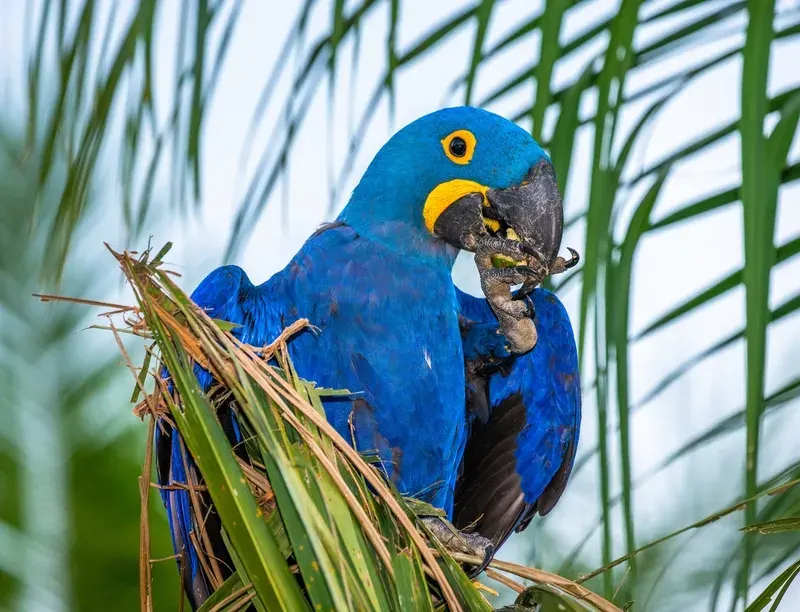
The hyacinth macaw is the largest flying parrot and reaches roughly one meter in length. It depends almost entirely on one tree species for nest cavities. About 90 percent of nests occur in manduvi trees, which do not form suitable cavities until they are more than 60 years old. The toco toucan both helps and harms the macaw. It disperses 83 percent of manduvi seeds but also eats 53 percent of macaw eggs. Pairs mate for life and raise only one chick per brood. About 5,000 of the world's roughly 6,500 remaining hyacinth macaws live in the Pantanal. They eat acuri and bocaiuva palm nuts, some of which must pass through cattle before the birds can crack them.
Marsh Deer Built for Wet Ground
Marsh deer have elastic membranes between their hooves. These membranes keep them from sinking into soft mud. They are South America's largest deer, standing up to 1.2 meters at the shoulder and growing antlers with eight to ten points. During the wet months, they spread through flooded savannas. Once the dry season begins, they move to reed beds near permanent water and usually live alone or in groups of two to five. Brazil and the IUCN both list the species as Vulnerable.
Tapirs and Anteaters Away From the Riverbanks
Giant anteaters forage in open fields during cooler hours. Their two-foot tongues collect about 30,000 ants each day, while their long claws make them walk on their knuckles. Wildfires burned 30 percent of the Pantanal in 2020, covering about 4.5 million hectares. The fires killed millions of animals, and anteaters were among the hardest hit. Brazilian tapirs weigh about 225 kilograms and stay closer to forest edges and water margins. They feed mainly at dusk and throughout the night.
Apple Snails: Small Animals With a Big Role
Apple snails are among the largest freshwater snails, with shells often reaching four to seven centimeters, and they are central to the Pantanal's food web. They provide food for fish, birds, and caimans. Their diet changes with the seasons and follows the plants exposed by rising and falling floodwater.
![Macaw is sitting on a palm tree in Pantanal Brazil]()
Customize Your Dream Vacation!
Get in touch with our local experts for an unforgettable journey.
Plan Your Trip
Beyond the rivers and grasslands, people have built lives here for generations. Their daily routines reveal as much about the Pantanal as any wildlife sighting.
How Pantaneiro Families Adapt to Changing Water Levels
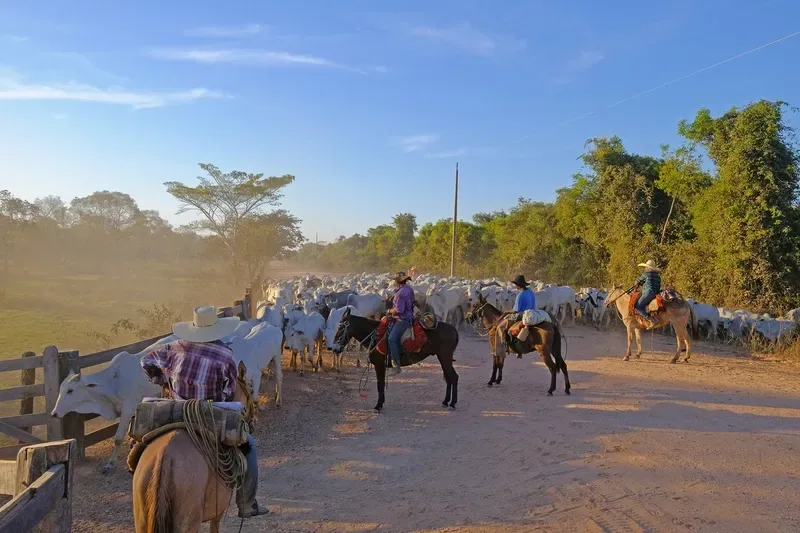
Pantaneiro families plan their work around the flood pulse, which takes about four months to move across the floodplain from north to south. Few roads remain usable during the wet months, so ranchers depend on "comitivas," cattle drives in which cowboys guide up to 1,500 cattle on horseback to distant auction points. One rancher described a 140-kilometer journey that lasted three full days.
Fire serves a similar purpose. Families burn grassland under strict control during the rainy season to keep pastures healthy without destroying them. Many also choose native grass over faster-growing imported varieties because floodwater kills exotic grass. Native pasture supports only 0.3 head of cattle per hectare, compared with 1 head on exotic pasture.
Social life changes with the landscape too. Groups still meet for tereré, a mate tea ritual where neighbors discuss ranching challenges and share news. WhatsApp now serves some of that purpose for families living farther apart.
What Fishing and Cattle Ranching Mean for Local Livelihoods
Ranching remains the region's backbone. Nearly 3,000 ranches cover about 90 percent of Brazil's Pantanal and support a herd of about 3.8 million cattle. Most cattle graze on native grass, which also provides wildlife habitat. Programs such as Embrapa's Fazenda Pantaneira Sustentável now include nearly 100 ranches covering 1.75 million acres. Participating ranches have increased herd fertility by 41 percent.
Fishing is just as important to communities in Brazil's Pantanal. About 8,000 registered commercial fishers catch more than 5,000 tons of fish from local waters each year. Migratory species account for 44 percent of the region's small-scale catch and support about one-third of residents. Families take turns fishing different river stretches each season, and this practice has kept fish stocks stable since commercial fishing began in the 1970s. Mato Grosso's "Transporte Zero" law, in force since January 2024, bans the commercial fishing of 12 species for five years and threatens nearly half of the commercial catch. This change matters if your Pantanal tours pass through fishing communities along the river.
![cowboys at a farm in Pantanal Brazil]()
Planning your Pantanal tour begins with one simple choice: which gateway brings you closer to the experience you want.
Choose Your Gateway: Cuiabá or Campo Grande
Cuiabá places you about two hours by road from Poconé, where the Transpantaneira Highway begins. Charter flights from Poconé to Porto Jofre take about an hour. Campo Grande suits southern routes better, with Aquidauana about two hours away, Miranda about three hours away, and Corumbá five to six hours away. Book at least six months ahead for the July–October peak season, and note that many lodges close for the wet season from mid-November.
Look Beyond Busy Safari Routes With Local Guides
Local guides can identify a family of giant otters by sound alone and know when a nearby catfish is under attack. Some places, such as the Taiama Reserve, remain closed to tourism no matter which operator you choose. Ask about canoe trips or horseback routes led by Pantaneiro guides rather than following the standard boat circuit.
Allow Enough Days for Slow Wildlife Watching
Dedicated Pantanal wildlife tours can last up to ten days, while broader Brazil itineraries often allow about a week. Travelers who stay only two nights often miss sightings that appear after the third or fourth day. Allow five to seven days if jaguars and otters are at the top of your list.
Pack for Heat, Insects, and Changing Conditions
Daytime temperatures can exceed 100°F (40°C) in the hottest months, while cold fronts in June and July can drop nights to around 50°F (10°C). Bring insect repellent, a hat, and sturdy footwear. Light, neutral-colored long-sleeve clothing also helps because dark colors attract mosquitoes. A boat with a canopy can save you from hours of direct sun.
Understand Fire, Pollution, and Upstream Development Risks
Wildfire smoke can affect air quality during your trip, so operators monitor conditions before going out. Medical care becomes limited once you leave Cuiabá, and you should consider that before choosing a remote itinerary.
Choose Operators That Respect Wildlife and Support Local Conservation
Choose operators that limit group sizes. Keeping trips to about six guests helps prevent boats and vehicles from crowding wildlife. Some tours direct part of your payment to programs that compensate ranchers for living alongside wildlife rather than expanding cattle operations. Keep a safe distance from jaguars and other animals because no photo is worth disturbing them.
Conclusion
The Pantanal rewards travelers who look beyond Brazil’s better-known destinations. Jaguars, giant otters, hyacinth macaws, and marsh deer thrive here, often in ways the Amazon cannot match. Seasonal floods shape this wetland’s entire ecosystem, from fish nurseries to cattle drives, and that rhythm still guides Pantaneiro life today.
Plan your trip around the wet and dry seasons, pick a gateway, and allow enough time to explore. You’ll soon understand why this place deserves more attention. Patience and the right local guide make the biggest difference.
The Pantanal offers what the Amazon cannot: a clear view into wild Brazil.
![Tourists watch a jaguar on a tree]()