Table of content
The Brazilian side faces most of the waterfalls
Geography explains why Brazil's side offers such wide views. The Iguazu River carries more than 95% of its drainage basin through Brazilian territory, yet only a little over 20% of the waterfalls sit on that bank. Argentina holds roughly 80% of the cascades. This layout places visitors on Brazil's side directly across from most of the falls rather than among them.
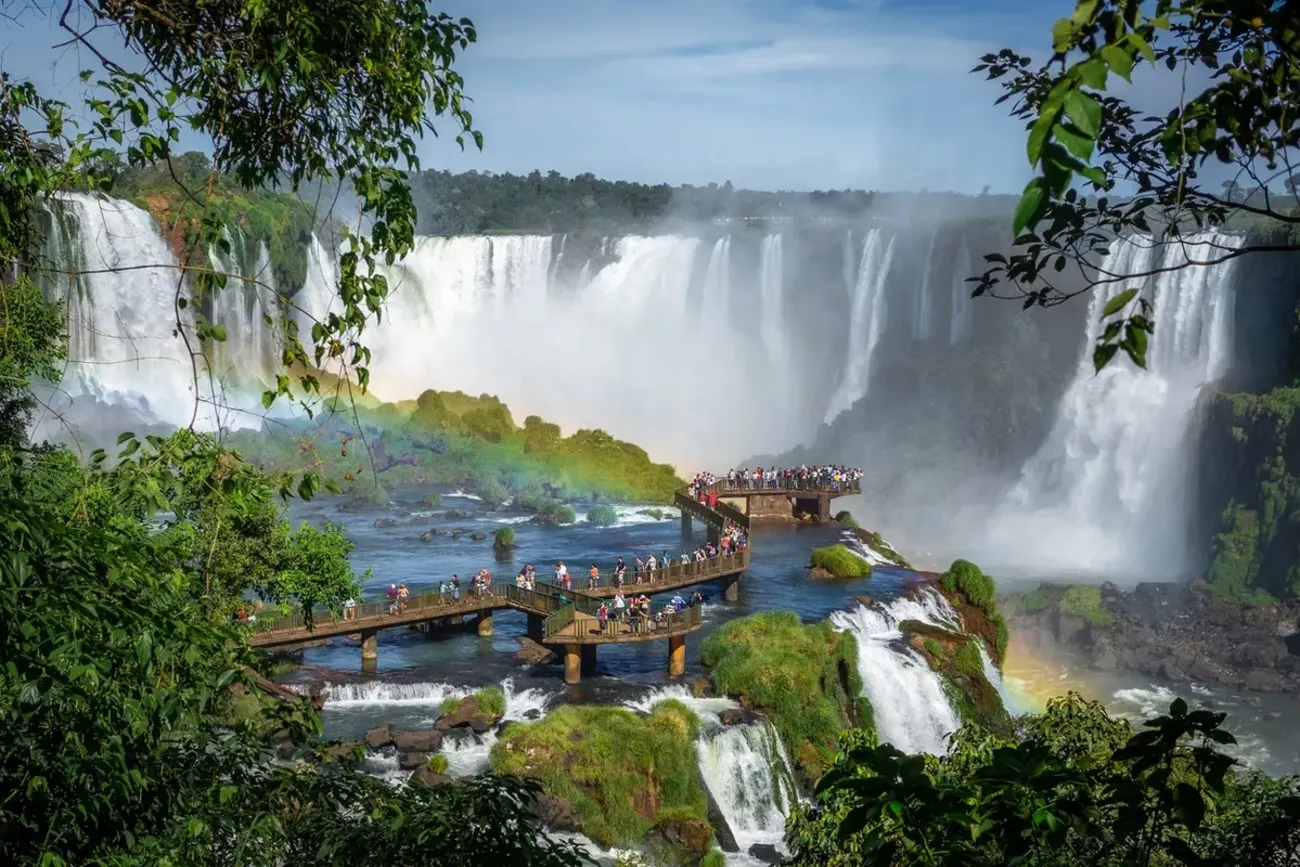
The falls form a shape like a reversed letter "J," and the border cuts through the Devil's Throat. Brazil's position gives it its panoramic advantage. Visitors look across the canyon at the full curtain of water instead of standing beside individual drops.
Brazil vs. Argentina: wide views or close-up walks?
Each side offers a different experience. Argentina's Iguazú National Park has six separate circuits, including the roughly 1,750-meter Lower Trail with stairs and the roughly 1,850-meter Upper Trail. A dedicated 1,100-meter walkway leads to the Devil's Throat. The ecological train and the short boat crossing to San Martín Island mean that most visitors need a full day to explore the park.
Brazil uses a single route instead. The traditional Waterfall Trail runs about 1.5 kilometers. One continuous trail leads toward the final viewpoint, so visitors do not need to divide their attention between several paths.
Here's how the two compare at a glance:
|
Feature
|
Argentina
|
Brazil
|
|
Main trail length
|
Multiple circuits, 1,100- 1,850 m each
|
About 1.5 km on a single trail
|
|
Typical visit time
|
Full day
|
Roughly two hours
|
|
Protected area
|
67,720 hectares
|
185,262 hectares
|
|
View style
|
Close-up, immersive
|
Wide, panoramic
|
One waterfall system, two UNESCO-listed national parks
Both parks protect the same waterfall system and stretch of Atlantic Forest, although they sit on opposite riverbanks. UNESCO added Argentina's Iguazú National Park to its World Heritage List in 1984. Brazil's Iguaçu National Park followed two years later, in 1986.
The two parks cover approximately 252,982 hectares together. Brazil holds the larger share with 185,262 hectares, compared with Argentina's 67,720 hectares. This shared protection matters because the surrounding forest supports close to 2,000 plant species and around 400 bird species, including the Harpy Eagle. Several wild cat species also live near the falls.
The nearest base cities also sit on opposite banks: Foz do Iguaçu in Brazil and Puerto Iguazú in Argentina. The Tancredo Neves International Bridge links them. One river feeds one waterfall system, but two countries protect two distinct viewpoints of the same natural spectacle. That contrast makes Brazil's side worth including in your plans.
![Iguazu Falls from the Brazilian side]()
Why does Brazil offer better panoramic views of Iguazu Falls?
The Brazilian bank faces most of the waterfalls, giving you sweeping views across the canyon. Argentina’s trails offer closer encounters with individual cascades.
How much time should you allow for the Brazilian side?
Allow roughly two hours for the main visit. Plan extra time for photos, shuttle queues, or activities such as the Macuco Safari boat ride.
How do you reach Iguazu Falls from Foz do Iguaçu?
Take bus line 120, a taxi, or a private transfer to the park entrance. Your admission includes the park shuttle to the waterfall trail.
When is the best time to visit the Brazilian side?
March, April, and September offer a good balance of comfortable weather and impressive falls. An early weekday visit usually means fewer queues and favorable light for photos.
What should you wear and bring to the falls?
Wear light clothing and secure footwear with good grip. Bring a poncho, sunscreen, insect repellent, and a waterproof bag for your phone, camera, and passport—the final walkway gets very wet.
Getting to Brazil's side of the falls begins with choosing the right airport, as this part of the journey shapes the rest of your trip.
Reaching Foz do Iguaçu by air
Flights into Brazil bring you closest to the falls. Foz do Iguaçu International Airport (IGU) lies just 13 kilometers from downtown on BR-469, making it the main access point for Brazil's side. Azul, Gol, and LATAM Brasil offer domestic flights from São Paulo, Rio de Janeiro, Curitiba, Brasília, and Belo Horizonte. JetSmart also operates seasonal flights from Santiago, Chile.
The airport is only 3 kilometers from Iguaçu National Park, 4 kilometers from the Bird Park, and 14 kilometers from the waterfalls. A regular bus connects the terminal directly to the city center. Book one to three months ahead to find better fares. Tuesday and Wednesday departures often cost less than weekend flights.
Getting from the airport or city to the park
Several transport options can take you to the park entrance. Bus line 120 goes directly to the National Park and is the best public transport option. A taxi from the airport costs about R$ 30-45 (roughly USD 6-8), while the bus costs R$ 5 (about USD 1). Private transfers from the airport to the falls cost about 13 euros and take roughly 15 minutes.
The Cataratas Visitor Center is about 18 kilometers from central Foz do Iguaçu along BR-469. Private vehicles cannot enter the protected area. Visitors park and take the official shuttle, which travels about 12 kilometers through the Atlantic Forest to the waterfall trail. Your entrance ticket includes the shuttle, so you do not need to book it separately.
Crossing from Puerto Iguazú: passports and visa checks
Visitors staying in Argentina will cross through Puerto Iguazú. The immigration offices are about 1.5 kilometers apart, and the border operates 24 hours a day. Public buses take about 30-40 minutes between the towns, and private cars take around 30 minutes. There is no entry or exit fee, and a standard bus crossing costs about R$ 10-15 (roughly USD 2-3).
Visa requirements depend on your passport. Many European and South American citizens can enter Brazil without a visa for up to 90 days. Since April 10, 2025, travelers from the United States, Canada, and Australia must obtain an e-Visa before arrival. The visa allows multiple entries and stays of up to 90 days. Bring your original passport and proof of onward travel for both countries.
Booking official tickets and checking current opening hours
Iguaçu National Park uses a timed-entry ticket system, so reserve your time slot online in advance. A standard ticket includes park admission, round-trip internal transport, the waterfall trail, the final walkway, main viewpoints, and elevator access. Weekday entry begins at 9:00 AM, while weekend entry starts at 8:30 AM. Last entry is around 4:00 PM, and visitors must leave by 5:30 PM.
The park stays open every day of the year, including holidays. Reserve early for weekends, Easter, Christmas, and New Year. Entrance machines accept Brazilian reais, US dollars, Argentine pesos, and Paraguayan guaraní. A cash machine is also available on-site.
![Helicopter flight above Iguazu falls Brazil.]()
Why does Brazil offer better panoramic views of Iguazu Falls?
The Brazilian bank faces most of the waterfalls, giving you sweeping views across the canyon. Argentina’s trails offer closer encounters with individual cascades.
How much time should you allow for the Brazilian side?
Allow roughly two hours for the main visit. Plan extra time for photos, shuttle queues, or activities such as the Macuco Safari boat ride.
How do you reach Iguazu Falls from Foz do Iguaçu?
Take bus line 120, a taxi, or a private transfer to the park entrance. Your admission includes the park shuttle to the waterfall trail.
When is the best time to visit the Brazilian side?
March, April, and September offer a good balance of comfortable weather and impressive falls. An early weekday visit usually means fewer queues and favorable light for photos.
What should you wear and bring to the falls?
Wear light clothing and secure footwear with good grip. Bring a poncho, sunscreen, insect repellent, and a waterproof bag for your phone, camera, and passport—the final walkway gets very wet.
Once you pass the ticket gates, your walk through Iguazu Falls Brazil starts with a short ride through the rainforest.
Taking the park bus to the trail entrance
The park's shuttle stops several times before reaching the falls, but the first two stops serve travelers booked on the Poço Preto Trail or the Macuco Safari. Most visitors remain on board until the third stop, Path of the Falls, where the pink Belmond Hotel das Cataratas stands above the trees. Buses should arrive every few minutes, but lines can grow during busy hours, so patience helps. Visitors with limited mobility can avoid the walk and continue to Porto Canoas, the route's final stop. A short path and elevator lead from there to the main platforms.
First lookouts: seeing the falls across the canyon
Visitors who get off at the Path of the Falls stop will see an opening in the trees with a view that many people pass by too quickly. These first lookouts show the cascades from a distance and let you capture the whole landscape in one frame before the trail moves closer. Morning offers better light to photograph the cascades from this side, while a moderate zoom lens helps isolate individual falls across the river.
The riverside trail: views of San Martín Island and nearby cascades
The Brazil Waterfall Iguazu Falls route follows the canyon's edge for roughly 1.2 to 1.5 kilometers. The walk often takes longer than the distance suggests because there is so much to see along the way. The path stays opposite most of the falls and begins with a frontal view of the Tres Mosqueteros cascades. It then opens onto views of San Martín Island and many smaller falls across the river. Some sections have stairs instead of ramps, and the walk takes about an hour without counting transport or photo breaks.
The final walkway: spray and views toward Devil’s Throat
The trail ends at a boardwalk that extends over the river toward the base of Floriano Falls, directly facing Devil's Throat. This chasm is nearly 150 meters wide and drops about 82 meters, carrying close to half of the river's flow. Spray and changing winds often blur the view, and you will almost certainly get wet. Waterproof protection for phones and cameras matters more than an umbrella. The park sells rain ponchos to visitors who arrive unprepared.
The upper viewing deck: a last look from above
Visitors can climb a short uphill path from the walkway or take the elevator at Espaço Naipi, depending on the lift line. The upper deck offers a wider, clearer panorama of the walkway and Devil's Throat, away from the mist around the lower platform. The trail eventually reaches Porto Canoas, where return buses wait beside a restaurant overlooking the river before it goes over the edge.
![Iguazu Falls Brazil walkway]()
Customize Your Dream Vacation!
Get in touch with our local experts for an unforgettable journey.
Plan Your Trip
The right planning can turn a good visit into a great one, and timing matters more than most travelers expect.
Choosing a season: heat, rain, and changing river levels
The rainy season lasts from December through March, raising water levels and temperatures to 85-90°F. The falls roar louder during these months, but heavy storms can close trails or leave San Martín Island unavailable. Rain falls throughout the year, but winter (June to August) is the driest period and offers clearer skies with milder weather, which is better for photos despite a thinner curtain of water. No month guarantees peak flow because the river responds to rain throughout its massive upstream basin, not only local rainfall. Shoulder months such as March, April, and September offer a good balance of comfortable weather and an impressive water display.
Picking an entry time to reduce queues
Early arrivals usually mean shorter lines. The quietest times on the Brazilian side are between 9:00 and 9:30 in the morning, then again from 2:00 to 4:00 in the afternoon. A standard ticket costs R$ 134 for general visitors and R$ 121 for Brazilian and Mercosur citizens (both include a voluntary R$ 3 Fundo Iguaçu fee), while children up to 6 years old enter free with a photo ID. Busy months may make the optional VIP Pass worthwhile because it gives priority boarding on the park bus, but it is sold separately from the entry ticket, and most visitors do not need it outside peak season. Weekday visits also mean less waiting than weekends.
Taking clear photos in bright light and heavy spray
Morning light works best on the Brazilian bank because the rising sun lights the cascades across the canyon. A polarizing filter reduces glare from wet rocks and brings out the forest's green tones. Photographers who want to freeze the water should use a shutter speed between 1/500 and 1/2000 of a second. Settings around 1/4 to 1 second with a neutral-density filter create a soft, silky look instead. Shoot in RAW and bracket exposures because bright highlights on white water disappear fast. Choose your lens before reaching the wettest part of the walkway. Changing lenses there can cause problems.
What to wear and how to keep your gear dry
Pack light clothing or a swimsuit because getting wet is part of the experience. Sandals with heel straps grip wet metal walkways much better than loose flip-flops. Place your phone, passport, and camera in a waterproof bag before entering the spray zone. Bring sunscreen, a hat, and insect repellent, and you will be ready for whatever the forest brings.
![Iguazu Falls rainbow view]()
The waterfall trail is not the only reason to spend time in Foz do Iguaçu. Nearby activities bring fresh perspectives to your Iguazu Falls Brazil trip, with river adventures and peaceful forest walks.
Macuco Safari: a boat ride near the falls
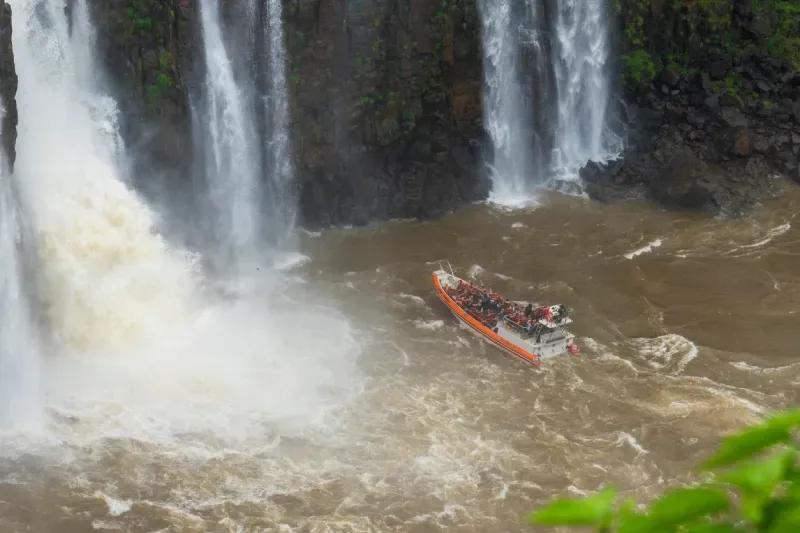
Macuco Safari takes you to river level rather than keeping you on the walkway. The experience begins with a 2-kilometer trip through the Atlantic Forest in an electric vehicle and continues along a 600-meter guided trail that leads toward the river. A twin-engine boat brings you close enough to the cascades to feel the spray and hear the water's full roar. The outing lasts about 1 hour and 45 minutes, and tours depart every 20 minutes from 9:00 AM to 5:00 PM.
Forest trails and birdwatching away from the main route
Quieter trails beyond the falls reward patient walkers. Private birding outings start around 5:30 AM and end by 7:00 AM, at the time birds are most active. The Poço Preto Trail covers about 9 kilometers one way and is the longest trail on the Brazilian side.
Parque das Aves: learning about Atlantic Forest conservation
Parque das Aves sits next to the park and offers a self-guided walk of about 1.5 kilometers through immersion aviaries that house more than 1,300 birds from around 130 species. More than half of the animals are rescues. It is Foz do Iguaçu's most visited attraction after the falls.
Protecting the park: keep your distance and never feed wildlife
Coatis frequently roam the trails, and feeding them violates federal law. Violations can lead to fines from R$ 500 to R$ 10,000. Keep food zipped away and admire wildlife from a distance.
Conclusion
Brazil's side of Iguazu Falls offers something Argentina simply can't: a full, sweeping view of nature at its loudest and most beautiful. Plan for your timed ticket, and every step of the experience, including the spray near Devil's Throat, feels worthwhile.
Waterproof gear and an early start can turn a good visit into an unforgettable one. Patience helps too. The short trail offers a broader viewpoint than miles of walking ever could.
Pack light, charge your camera, and let the falls do the rest. Few places on Earth match this view, and even fewer make an unforgettable afternoon so easy to enjoy.
![Tourists in Macuco Safari boat Iguazu falls Brazil]()