Type Of Content
Where Ilha Grande is and what makes it worth visiting
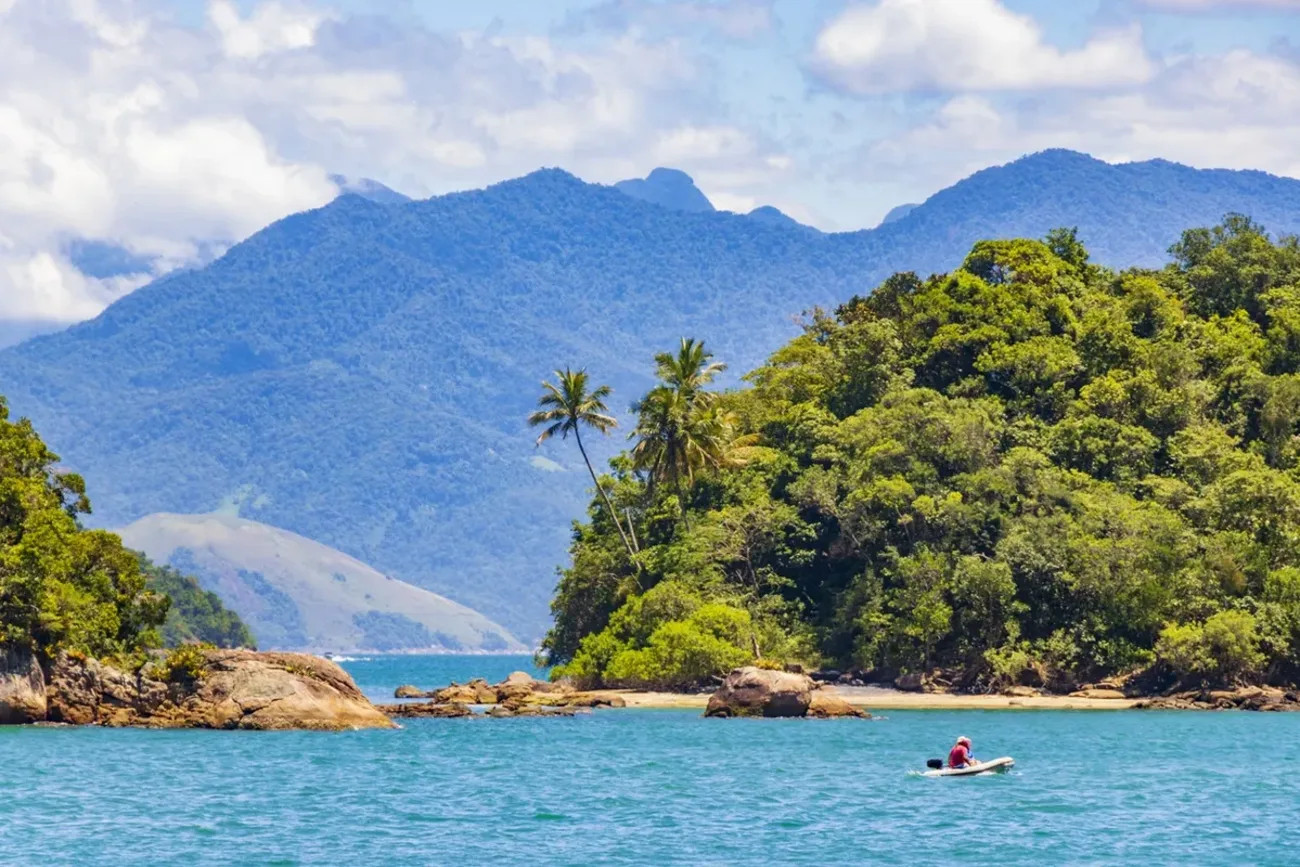
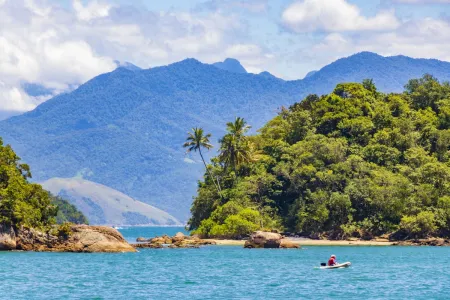
Ilha Grande sits in the Atlantic Ocean, about 12 km off Angra dos Reis's coast in Rio de Janeiro state. It stretches roughly 29 kilometers from one end to the other and is about 12 kilometers across at its widest. The island is around 400 km from São Paulo and about 150 km from Rio de Janeiro city, which makes it an easy coastal getaway instead of a distant trip. Pico da Pedra D'Água, its highest point, rises to 1,031 meters above sea level. Around 5,000 people live on the island, mostly in Vila do Abraão, the main village.
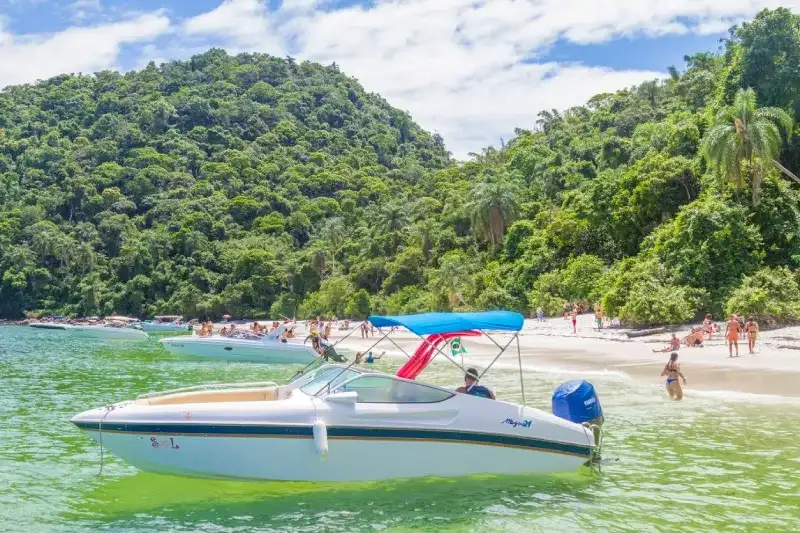
No single landmark makes Ilha Grande worth visiting. The island has no cars, so you can spend your days walking or traveling by boat. Tropical, subtropical and temperate currents meet in the surrounding waters. Depending on the season, you may spot coral reefs, hawksbill turtles and even humpback whales. The island's land shelters about 250 bird species and more than 70 mammal species, including howler monkeys and coatimundi. It also supports around 40 reptile and more than 30 amphibian species. Anyone looking for things to do in Ilha Grande beyond the beaches can easily spend several days watching wildlife.
How a former prison island became a UNESCO-listed destination
Before travelers found its beaches, Ilha Grande served a much grimmer purpose. The government first used it as an immigration quarantine station and later built the Cândido Mendes Penal Colony, a maximum-security prison for some of Brazil's most dangerous offenders. Tragedy also struck the island when a mudslide buried a pousada on Bananal beach on 1 January 2010, killing around 30 people.
Protection and recovery came afterward. Ilha Grande sits within the Tamoios Environmental Protection Area, which was created in 1986 to protect the islands and coast of Angra dos Reis. Ilha Grande State Park now covers 62.5% of the island. Other reserves bring protected status to 87% of its land. The UNESCO World Heritage property covers about 150,392 hectares and is surrounded by a 258,921-hectare buffer zone. Its designation recognizes the Atlantic Forest's rare biodiversity and the region's long cultural history. The Aventureiro Sustainable Development Reserve, established in 2014, also protects beaches on the island's quieter southern coast.
Best time to visit for weather, prices and fewer crowds
October, November, March and April offer the best mix of sunshine and manageable crowds. Travelers who prefer quieter weeks should plan a trip between May and early October. The weather stays warm and sunny, temperatures drop slightly, and far fewer tourists visit. December through February brings the hottest days and the heaviest rain, although clear skies still appear often. Late December through March is also peak holiday season, so expect higher prices and fuller pousadas unless you book well ahead.
How many days to spend on the island
A day trip from Rio is possible, but it does not do the island justice. Most visitors recommend at least 2 to 4 days at the beaches, on hiking trails and on boat tours. Many also consider 3 to 4 nights ideal. That gives you enough time to reach hidden bays and quieter beaches without rushing. If you enjoy slow beach mornings and days on the water, staying for 4 days and 5 nights works just as well. Few travelers regret having the extra time.
![Vila do Abraão Ilha Grande aerial]()
No roads connect Ilha Grande to the mainland, so every trip begins at one of three coastal ports before you board a boat.
Getting from Rio de Janeiro or Paraty to the coast
The drive from Rio to the Costa Verde ports is about 150 km and usually takes 2 to 3 hours, depending on traffic. Costa Verde buses leave Rio's Novo Rio station almost every hour between 4 am and 9 pm. Tickets cost about R$85 to R$100, and the trip to Angra dos Reis takes around 3 hours, while Mangaratiba and Conceição de Jacareí take a little less time. Paraty Tours offers private transfers from Rio if you want to avoid the bus station. Pickups are available at 8:30 am, 12:30 pm, and 5 pm for at least two passengers, at about R$125 per person. Airport pickups are available between 8:30 am and 5 pm.
Colitur's public bus, Line 101, travels from Paraty to Angra dos Reis for about 25 reais each way and makes frequent stops. Shared vans leave Paraty at around 8 am, 11:30 am, and 2 pm. Angra dos Reis is about 100 km from Paraty, and the full van-and-boat transfer to Abraão takes around three hours, including a crossing of about 45 minutes. Private boats also run directly from Paraty to Ilha Grande. The fare is per trip rather than per person, at around 3,000 reais for up to six passengers.
Choosing between Conceição de Jacareí, Angra dos Reis and Mangaratiba
Each departure point works best for a different type of trip:
-
Conceição de Jacareí is closest to Rio and offers the shortest crossing. Schooners take about 30 to 50 minutes, and departures are more frequent than at the other ports. It is the best option if Vila do Abraão will be your base to explore Ilha Grande.
-
Angra dos Reis is the largest town and the only option with banks and similar services. It offers a slower public ferry run by Barcas Rio that takes about 1 hour 20 minutes, along with faster catamarans and schooners that take around 50 minutes. Water taxis can also reach pousadas along the island's western half.
-
Mangaratiba sits on the bay's northern side and also has a Barcas Rio public ferry. The crossing takes about 1 hour 30 minutes, but departures are less frequent, so check the timetable before making plans.
-
Ferries, speedboats and shared transfers: What to check before booking
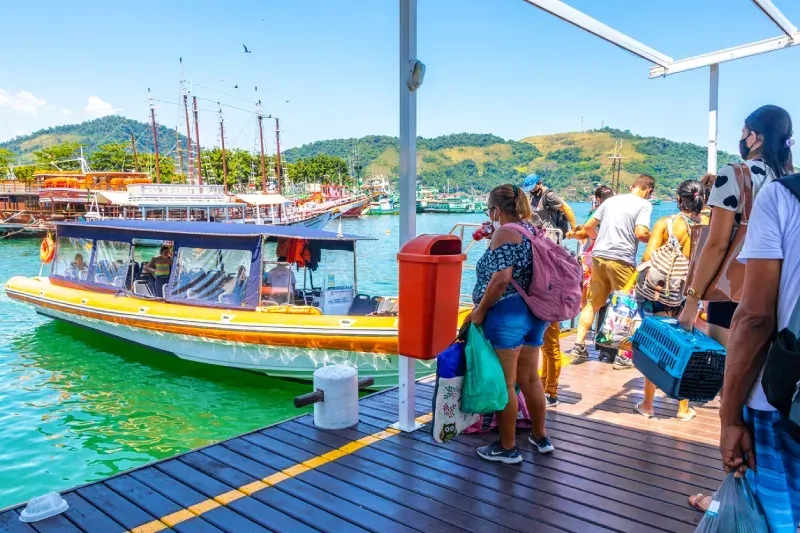
Ferries are the cheapest and most reliable option, though they are also the slowest. They operate on fixed daily schedules. The Angra dos Reis ferry leaves at 3:30 pm on weekdays and 1:30 pm on weekends. It returns from Ilha Grande at 10 am, costs around R$20.50 one way, and takes about 80 minutes. Since February 2025, the Barcas Rio consortium has run these public ferries instead of CCR Barcas. Boats from Mangaratiba depart daily at 8 am, and the return journey leaves at 5:30 pm. Extra Friday-night sailings have run in some seasons, so check the current timetable.
Schooners and speedboats are faster but cost more. Their schedules can change often, so call ahead or check with your pousada before confirming your plans. Water taxis cost around R$50 per person, though they usually require at least four passengers before departure.
Keep a few points in mind before booking. Reserve your return boat early during summer and long weekends because seats fill quickly. Bring enough cash because the island has only one ATM. Check the forecast as well, since rough seas can delay or cancel crossings with little notice. Cars cannot cross to the island, so leave yours in a guarded lot on the mainland.
![Ilha Grande ferry boat Abraão pier]()
When is Ilha Grande least crowded?
May through early October generally sees fewer visitors. December through March is busier, especially around New Year and Carnival, when accommodation prices rise.
Is Ilha Grande a good stop on a first trip to Brazil?
Yes, especially if you enjoy beaches, rainforest walks, and boat trips. Vila do Abraão is the easiest base for first-time visitors, and three to four nights allow time to explore without rushing.
Is it safe to visit Ilha Grande during rainy weather?
Check local forecasts, trail conditions, and boat services before traveling. Rough seas can disrupt crossings, while heavy rain can make hiking unsafe. Be prepared to change your plans.
Where can I find calm water for swimming on Ilha Grande?
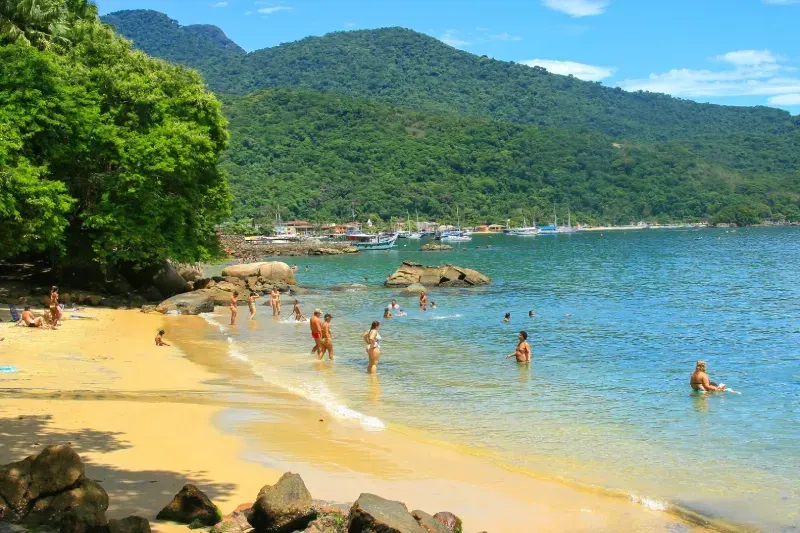
Praia Grande de Araçatiba and Araçatibinha offer calm, sheltered water. Lopes Mendes faces the open sea and has surf, so check conditions before entering.
Which boat tour visits Ilha Grande’s popular lagoons?
The Meia Volta tour visits Lagoa Azul and Lagoa Verde, with additional stops at Praia do Amor and Praia da Feiticeira. It typically lasts about six hours; confirm current prices and departure times before booking.
Your choice of base on Ilha Grande shapes the rest of your trip because travel between villages requires a trail walk or a boat ride rather than a taxi.
Vila do Abraão: The easiest base for first-time visitors
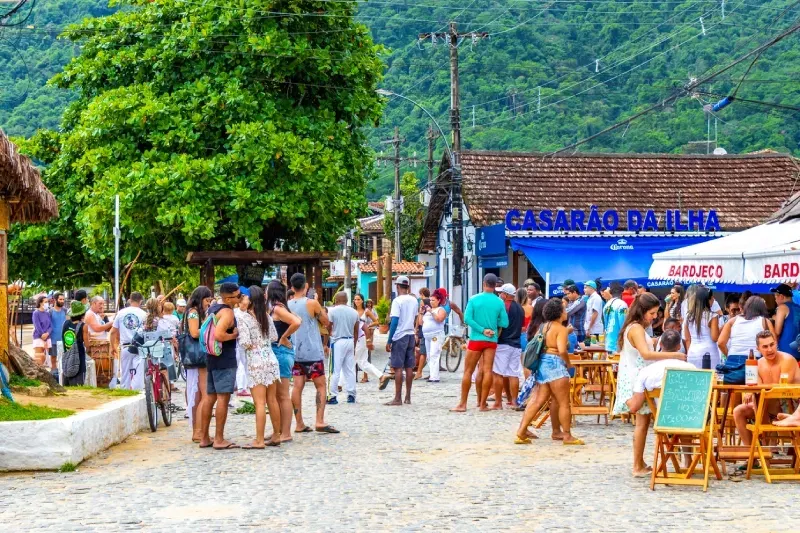
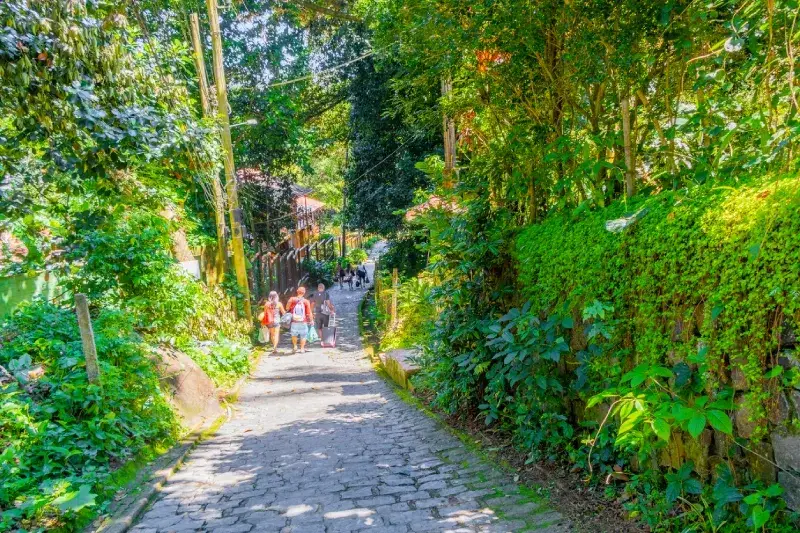
Vila do Abraão has most of the island's pousadas, restaurants, and services, making it the natural base for anyone planning things to do in Ilha Grande. The village has two distinct areas: a cobbled west side that feels calmer and works well for travelers with suitcases, and a central-east side with unpaved streets that flood during rain. Rooms often cost less there for that reason. A stay near the pier puts you close to the action, while accommodation farther out offers more quiet. Social Ilha Grande Hostel sits on the beachfront and offers free Wi-Fi, barbecue facilities and a shared kitchen, plus a sun terrace. Abraão Beach and Preta Beach are steps away. AllBags Guesthouse scores 92 out of 100 for walkability. It is a flat five-minute walk from the pier, with 47 restaurants within 0.3 miles.
Araçatiba and quieter beaches: Staying away from the main village
Araçatiba sits on the island's western side and is one of Ilha Grande's main villages after Abraão and Provetá, but it lacks the nightly parties that fill Abraão. Pousadas here are simpler and usually include half-board because the village has no supermarket. One inn sells simple supplies. Lagoa Verde is less than 30 minutes away on foot, so you do not need to follow a boat schedule. Praia Grande de Araçatiba runs for about 700 meters and has calm water. The smaller Araçatibinha cove offers sheltered swimming beside an old sardine cannery's ruins. Natiga operates two to three boats each day from Angra dos Reis. The 25-minute crossing costs around R$75, but tickets require online pre-booking.
Choosing a pousada or hostel with easy luggage access
Travelers carrying suitcases should choose Abraão's cobbled west side instead of the flood-prone east. Pousada CostaVerde stands on the cobbled stretch and caters to hikers with orthopedic mattresses and Starlink access. Travelers on a tighter budget can choose hostels such as MPB, which offers sturdy beds and owner-led service away from the bustle. Check that your accommodation is registered before booking. Since June 2026, overnight visitors must pay Angra dos Reis's Sustainable Tourism Fee (Taxa de Turismo Sustentável) through the Viva Angra portal. Proof of at least two nights in a registered pousada cuts the fee in half, from R$100 to R$50. Reserve early around New Year, Carnival and July because rooms disappear quickly during those weeks.
Local meals, beach bars and relaxed evenings in Abraão
Food costs more here than on the mainland because nearly everything arrives by boat. Dom Mário is a good choice for a special dinner, serving local fish with passion-fruit sauce, octopus, and filet mignon in a candlelit room. Banana da Terra suits tighter budgets with home-style caiçara cooking and the island's standout feijoada. Casarão da Ilha offers waterfront seating, live music, and a seafood-focused menu.
![Vila do Abraão street pousada]()
Customize Your Dream Vacation!
Get in touch with our local experts for an unforgettable journey.
Plan Your Trip
Once you settle into Abraão, the island's trails and boat routes offer plenty of things to do on Ilha Grande.
Visit Lopes Mendes by hiking or taking a boat to Pouso
The classic route follows trails T10 and T11. It covers a 9.1-mile round trip with 2,398 feet of elevation gain and takes about 5.5 to 6 hours on foot. Most visitors walk one way and take a schooner or taxi boat to Pouso on the return. From there, trail T11 leads to the sand in 30 to 40 minutes.
Find quieter swimming beaches near Abraão
Praia Preta is about 10 minutes from the village and has dark, almost volcanic sand. The flat Historic Circuit, or T1, connects the beach with Praia do Galego and the old aqueduct in about an hour.
Walk to Feiticeira Waterfall and its nearby beach
Trails T1 and T2 reach the beach in about 1 hour 40 minutes to 2 hours. The route takes you past Cachoeira da Feiticeira waterfall and a clear natural pool. A boat back to Abraão costs about R$35 per person.
Explore Dois Rios and the former prison site
Trail T14 stretches about 8.5 kilometers each way and takes about 2.5 hours one way. It leads to a near-ghost village and the demolished prison site, which UERJ now manages as a museum.
Hike Pico do Papagaio with a local guide
The climb to the 982-meter summit covers roughly 12 kilometers round trip and takes 5 to 7 hours. Night ascents require a registered guide and cost between R$230 and R$380.
Take a boat tour to Lagoa Azul and Lagoa Verde
The Meia Volta tour lasts about 6 hours. It stops at both lagoons, Praia do Amor, and Praia da Feiticeira, and costs around R$150.
![Lopes Mendes beach Ilha Grande]()
A few simple habits will keep your island days running smoothly and help protect the wild coastline you came to see.
Plan daily spending and bring backup cash
Vila do Abraão has no bank branches and only one ATM, which can run out of cash, so arrange cash on the mainland before you cross. Cards and PIX work almost everywhere, including on boat tours, so a small amount of backup cash is enough. A daily card limit is a smart habit anywhere in Brazil.
Prepare for patchy Wi-Fi and mobile service, plus power cuts
Claro provides the most reliable mobile signal near the coast, while the village's Wi-Fi uses a radio link and can slow down with heavy use. Short power cuts still occur, so pack a power bank, especially if you use an older phone.
Pack for humid trails and wet boat landings, with mosquitoes in mind
Pack repellent and sunscreen, plus trekking shoes and a light rain layer, as pousadas rarely provide rain gear. A reusable water bottle cuts costs on boat tours, where water comes in small disposable cups.
Check trail and surf conditions, then confirm return boat times
Begin hikes before 8 to 10 am, carry two liters of water per person, and confirm your return boat before you leave. Lopes Mendes has gentle but genuine open-sea swell, so watch the surf.
Protect wildlife and reduce waste while following local access rules
The island lies within a strict nature reserve and UNESCO site, so fires and littering are prohibited, as is feeding wildlife. Stay on marked trails and take out everything you bring in.
Conclusion
Ilha Grande rewards travelers who swap cars and crowds for trails and tides. Once a prison colony, the island is now one of Brazil's best-protected escapes. Clear water, quiet beaches, and jungle paths still feel wild.
Plan your ferry, choose a base that suits your pace, and pack clothes suited to humid, unpredictable weather so your trip runs smoothly. Whatever number of days you spend here, moving slowly is more rewarding than rushing between sights.
Ilha Grande won't suit travelers who want nightlife or quick thrills. Everyone else will find a rare, unspoiled escape that deserves protection for years to come.
![hiker Atlantic rainforest trail Brazil]()