Table of content
Centro, São Paulo's historic heart, is where the city's centuries press closest together. A few blocks of walking here carry more history than most cities accumulate in their entirety, and the density of significant sites makes it the most logical starting point for anyone serious about understanding what shaped this place.
Pátio do Colégio: Where the City Began
The founding moment of São Paulo is fixed to a precise date and a precise spot. On January 25, 1554, Jesuit priests Manuel da Nóbrega and José de Anchieta celebrated the city's first mass at what is now Pátio do Colégio — a site whose significance is matched only by how much of it has had to be reconstructed. The white building visible today was completed in 1979, yet the garden preserves something irreplaceable: a rammed-earth wall fragment from 1585, the city's oldest surviving architectural element. The Anchieta Museum inside holds over 600 objects — colonial paintings, altarpieces, documents — each one a thread connecting the present to Jesuit Brazil. Outside, the Glória Imortal monument commands attention, rising 25.75 meters in granite and bronze, unveiled in 1925 as a tribute to the city's founders. The site receives visitors Tuesday through Saturday, 9 a.m. to 4 p.m., and closes on Mondays and Sundays.
Sé Cathedral: Visit the City's Best-Known Church
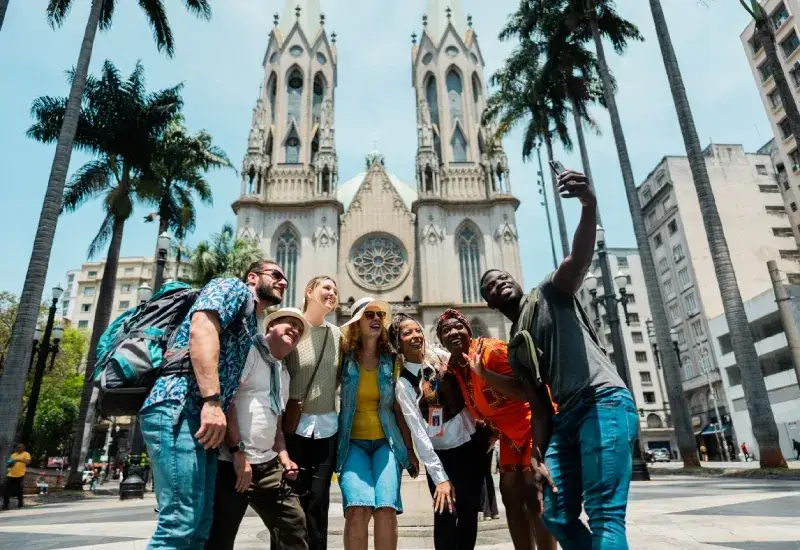
A short walk from Pátio do Colégio brings you to Sé Cathedral, counted among the largest neo-Gothic cathedrals in the world. The building presents two distinct architectural personalities: its rear sits heavy and formal beneath a sweeping green dome, while the front rises into slender bell towers that pull the eye upward. Praça da Sé, the broad square that frames the cathedral, runs lively through the daylight hours with street performers and foot traffic. Locals are consistent in their advice — this area rewards daytime visits, and after dark the calculus changes.
São Bento Monastery: Check Times for Gregorian Chant
North of Sé stands São Bento Monastery, one of Brazil's most frequented religious sites. Its current structure dates to 1922, the work of architect Richard Berndl, though the aesthetic draws deliberately from 17th-century precedents. Sunday morning Mass draws the largest crowds, and the reason is the music — Gregorian chants performed with an organ built from 6,000 pipes, an instrument whose sound fills the main hall completely. Seats go quickly, so arriving early is less a suggestion than a necessity. The monastery's clock tower marks every quarter hour, and the small store near the exit sells bread, jam, and pão de mel, a honey bread filled with sweet jam and finished in chocolate — a detail that rewards those who linger. Entry is free, and the doors stay open daily.
Theatro Municipal: Book a Tour or See a Show
Theatro Municipal brings this historic corridor to a grand conclusion. Construction ran from 1903 to 1911, with the Palais Garnier in Paris serving as the architectural model. The theater opened officially on September 12, 1911, seating around 1,523, and today serves as the permanent home of the São Paulo Municipal Symphony Orchestra, the Coral Lírico, and the City Ballet. Its cultural weight grew considerably in 1922, when it hosted the Week of Modern Art — a gathering now credited with establishing the foundations of Brazil's modern art movement. A full restoration completed before its 2011 centennial recovered the gilded interior details and ceiling frescoes that define the space. Free guided tours run Wednesday through Friday at 11 a.m., 1, 3, and 5 p.m., and on Saturdays at 11 a.m., 2, and 3 p.m.; the 11 a.m. Saturday tour is conducted in English specifically for international visitors.
These four sites, walkable within a compact area, account for a rich half-day in Centro — colonial origins, baroque religious architecture, and early 20th-century grandeur all within reach before the city's modern art scene comes into view.
![ourists and tour guide taking selfies on th mobile phone in Sé Square, in São Paulo, Brazil]()
Avenida Paulista is less a road than a living record of the city's ambitions — galleries, theaters, and cultural centers line its length in a concentration that few urban boulevards anywhere can match. An afternoon here moves easily from world-class museum to rooftop terrace without ever needing to board a train.
MASP: Explore Brazilian and International Art
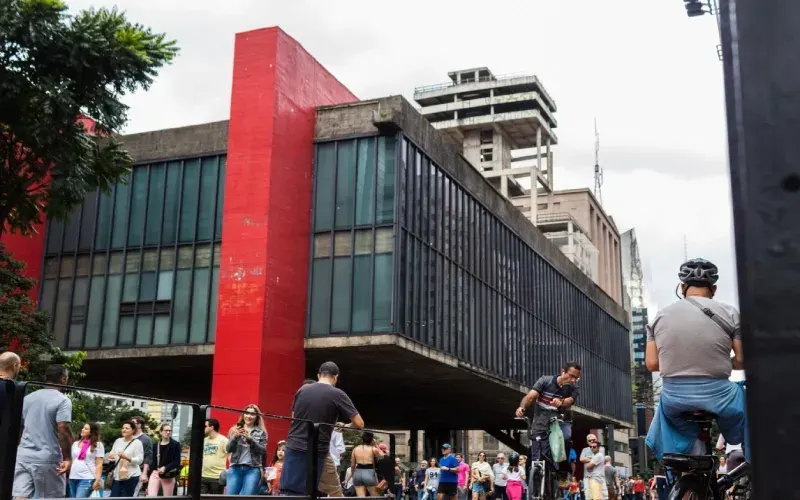
The Museu de Arte de São Paulo announced itself to the avenue in 1968 through one of the boldest architectural statements in Brazilian modernism: a structure suspended on red concrete pillars, its mass seemingly defying gravity above a wide-open plaza, designed by architect Lina Bo Bardi. The museum's origins, however, stretch back to 1947, when it occupied a single floor inside a media building owned by its co-founder — modest beginnings for an institution whose eventual opening on Paulista drew Queen Elizabeth II.
What exists today is significantly larger. A recent expansion introduced a 14-floor building carrying 82,600 square feet of additional space, pushing MASP's exhibition area up by 66 percent. The original suspended structure now bears Bo Bardi's name; the new building honors Pietro Maria Bardi, the museum's founding artistic director. The inaugural shows inside the new wing — collectively titled "Five essays on MASP" — span African arts, geometric abstraction, 12 paintings by Renoir, the museum's own institutional history, and a 2019 video installation by Isaac Julien built around Bo Bardi's architectural legacy. The numbers tell their own story: for nearly six decades, MASP operated within 2,000 square meters of gallery space, displaying roughly 1 percent of its holdings; the addition lifts that figure to approximately 1.3 percent.
Current rotating exhibitions include Latin American Histories, on view through January 2027, alongside a Jesús Soto show opening in late November. Adult admission is R$85. The museum opens Tuesday from 10 a.m. to 8 p.m., Wednesday and Thursday until 6 p.m., Friday until 9 p.m., and weekends until 6 p.m., with Mondays closed.
Avenida Paulista: Enjoy the Sunday Street Scene
MASP anchors the avenue's cultural identity, but the boulevard itself earns attention on its own terms. Galleries, theaters, and smaller exhibition spaces occupy the stretch on either side, close enough that moving between them requires nothing more than a willingness to walk. On Sundays, the avenue closes to traffic entirely and fills with vendors, performers, and families — a weekly ritual that transforms one of South America's busiest commercial corridors into something closer to a public living room.
SESC Avenida Paulista: Plan a Visit to the Viewing Deck
A short distance along the avenue, SESC Avenida Paulista opened in 2018 carrying an unusually good offer: a 17th-floor terrace with an unobstructed 360-degree view down the length of Paulista, entirely free of charge. Few vantage points in the city deliver this quality of perspective without a ticket price attached, which makes it a remarkable find even for experienced São Paulo visitors.
The floors below the terrace rotate through audiovisual and technology-focused art exhibitions that reward a visit before or after heading up. SESC also maintains a dense calendar of public programming — Pilates sessions, Pedal Cultural cycling meetups, sports classes for children between three and six, embroidery workshops, and theater productions examining questions of inner life and personal identity. Programming shifts each month and popular sessions tend to fill quickly, so checking the schedule in advance is worth the effort.
![People taking a walk in front of Art Museum of Sao Paulo (MASP) in Sao Paulo, Brazil]()
What are the best things to do in São Paulo for first-time visitors?
Explore the historic center, visit MASP on Avenida Paulista, and walk or cycle through Ibirapuera Park. Add Liberdade for Japanese heritage and Beco do Batman for street art.
How many days should you spend in São Paulo?
Two days are enough to explore the historic center and Avenida Paulista. Allow a third day for parks, neighborhoods, and more local food.
What local foods should you try in São Paulo?
Try a mortadella sandwich or cod-filled pastel at Mercado Municipal. At street fairs, order a crisp pastel with fresh sugarcane juice. Bixiga and Mooca are good choices for Italian food.
Where is a convenient area to stay in São Paulo?
Jardins and the area around Avenida Paulista offer easy access to museums, cafés, and metro stations. Choose a base near your main planned stops to reduce travel time.
What is the easiest way to get around São Paulo?
Combine walking with the metro to reach most central attractions. Ride-hailing is another option, including for airport transfers. Visit Praça da Sé and its surroundings during daylight hours.
Centro and Paulista reveal the city's institutional face — its monuments, its grand cultural ambitions. What lies beyond them is something altogether different: a São Paulo of distinct neighborhoods, each shaped by its own immigrant history, architectural personality, and street-level energy.
Ibirapuera Park: Walk, Cycle, and See Modern Design
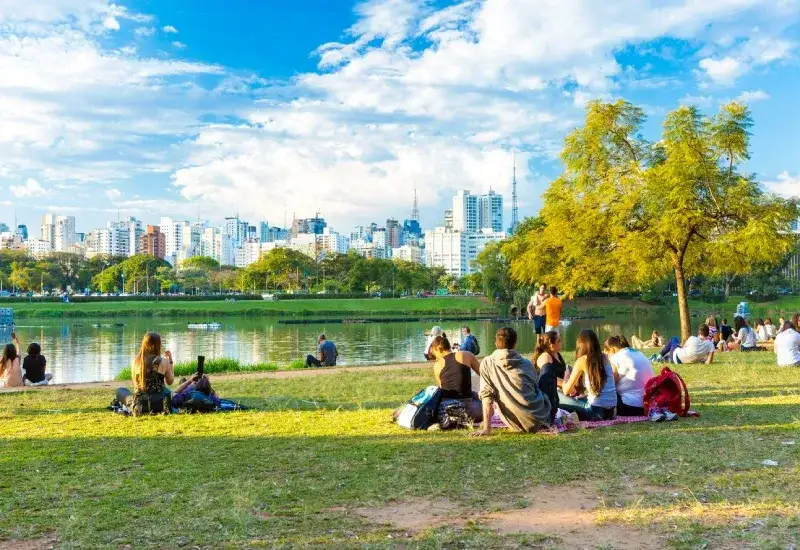
Ibirapuera Park spreads across 1.58 square kilometers (about 158 hectares) of grounds, holding three lakes, dense tropical planting, and a constellation of cultural institutions within a single green boundary. The main circuit stretches 2.9 miles along paved paths lined with brazilwood, pink jequitibá, and ipê trees — most walkers complete the loop in under an hour, though swans, herons, and ducks along the water's edge tend to slow that pace considerably. Oscar Niemeyer shaped much of what you see here architecturally: the Museum of Contemporary Art, the Afro Brazil Museum, and the sweeping Oca exhibition space all carry his signature. Those preferring a guided route can join a 2.5-hour small-group bike tour for around USD 77. Weekdays offer noticeably quieter trails, particularly in the morning hours before the city fully stirs.
Liberdade: Discover Japanese Heritage and Local Shops
Liberdade announces its identity immediately — red lanterns run the length of the main street, and shop windows display imported goods alongside locally made crafts. A weekend market fills the square near the subway station with food stalls serving dishes that sit squarely between Japanese and Brazilian culinary traditions. Few neighborhoods in the city carry this degree of cultural specificity, and that specificity is precisely what makes it worth the visit.
Vila Madalena: See Street Art at Beco do Batman
Beco do Batman draws the crowds to Vila Madalena — an alley whose walls function as a rotating canvas for local artists, repainted often enough that no two visits look identical. Bars and small galleries cluster nearby, and the neighborhood finds its best rhythm as the afternoon light drops.
Jardins: Browse Shops and Stop at Local Cafés
Jardins operates at a quieter register than most of the city. Tree-lined streets, boutique shops, and unhurried cafés make it a natural pause between larger stops — and a sensible base for those who prefer proximity to the metro without the noise of a busier district.
Museu do Futebol: Learn Why Football Matters in Brazil
Museu do Futebol occupies Pacaembu Stadium and treats football not as sport but as a thread running through Brazilian identity — a distinction the original fifteen rooms spanning 6,000 square meters were built to make. A 2024 renovation deepened that argument considerably. The Football Dance Hall now lets visitors select footage of historic plays, while a dedicated Pelé hall centers on his 1970 World Cup jersey as a kind of cultural artifact. The Origins Room received particular attention: it now traces women's football history from the 19th century through the 1941 ban imposed under Getúlio Vargas, a period long underrepresented in the museum's earlier iterations. The museum opens Tuesday through Sunday from 9 a.m. to 6 p.m., with the last entry at 5 p.m., and remains closed on Mondays. Full tickets run R$25, students pay R$12.50, children under seven enter free, and Tuesdays are free for all visitors.
![Beautiful day in Ibirapuera Park in Sao Paulo, Brazil]()
Customize Your Dream Vacation!
Get in touch with our local experts for an unforgettable journey.
Plan Your Trip
São Paulo's culinary identity is not incidental — it is the direct consequence of centuries of immigration, trade, and cultural collision, all of it edible. Few cities on earth offer this particular kind of storytelling through food, and working through even a fraction of it ranks among the most rewarding experiences the city affords.
Mercado Municipal: Try Classic Snacks and Check Prices First
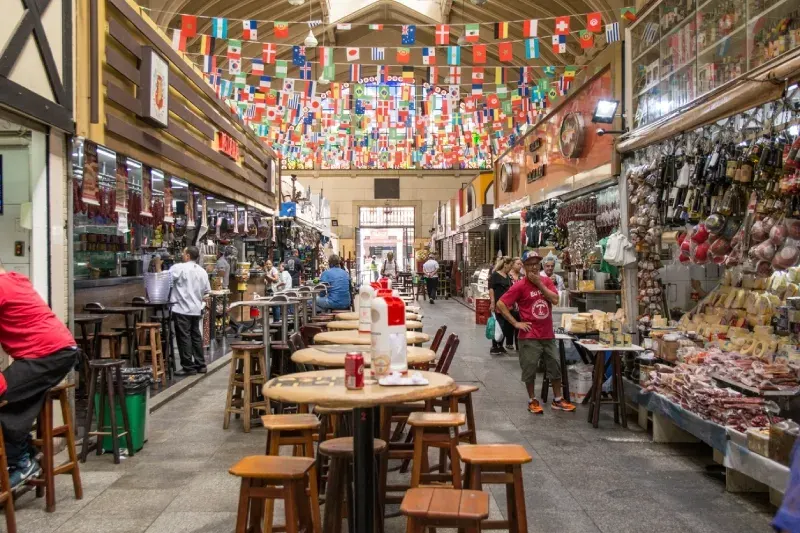
Mercado Municipal, known affectionately as Mercadão, has drawn São Paulo's residents since 1933, its arched hall lit by stained-glass windows that cast color across row upon row of covered food stalls. Entry is free, though setting aside R$ 40.00 to R$ 80.00 for a snack and drink gives you a realistic picture of what you'll spend. The hours matter here: arriving between 8 and 10 a.m. puts you ahead of the lunch crush, and the window between noon and 2 p.m. is best reserved for those who have come only to photograph the architecture. The mortadella sandwich and pastel de bacalhau are the orders this market is known for, though the food-court stalls upstairs rarely justify their prices. One habit worth adopting before you accept any tasting — ask for the final price first.
Street Fairs: Order Pastel with Fresh Sugarcane Juice
The feira livre offers something Mercadão cannot: immediacy. Pastel de feira — a thin, blistered turnover eaten upright at the stall — arrives hot and salty, and caldo de cana, pressed cold from sugarcane, is exactly what cuts through it. Savory fillings of beef, cheese, or palm heart are the standard choice; guava with Minas cheese is the natural finish. What gives the pastry its particular crispness is a splash of cachaça worked into the dough, and the range of fillings itself reflects Brazil's Japanese immigrant heritage as much as its European one — a detail that rewards a moment's thought while you eat. A queue at any stall is a reliable indicator of quality.
Bixiga and Mooca: Discover Italian Roots Through Food
Bixiga, the district folded into Bela Vista, holds its identity firmly. Decades of family-run cantinas earned it the name São Paulo's Little Italy, and the cooking still carries the weight of that history. Pasta runs between 50 and 100 BRL per person, with couvert — bread, olives, a small plate of starters — adding roughly 10 BRL. Across the city, Mooca tells a parallel story and houses the Museum of Immigration alongside it. These two neighborhoods, taken together, give a more complete account of how successive waves of arrivals shaped what São Paulo eats than any single landmark can offer.
Pinheiros: Find Restaurants, Bars, and Live Music
Pinheiros sustains its energy well after dinner, the foot traffic thick enough that bars spill their crowds onto the pavement. Vila Madalena sits close enough to reach on foot, and Bar Samba draws a Friday night crowd for live samba at around R$ 35.00 on the door. For something that trades energy for elegance, Baretto inside Hotel Fasano carries a distinction of its own — Wallpaper magazine has named it the world's best bar, and bossa nova fills it most Saturday nights. Jardins, positioned near the metro, which runs until midnight on weekdays and 1 a.m. on Saturdays, holds its place as the most sensible base for covering all of it.
![Municipal Market (Mercado Municipal) in Sao Paulo. A huge and famous market with local and exotics fruit, vegetable, spices and food]()
Knowing the city's history and neighborhoods is one thing; getting the practical mechanics right is what determines how much of it you actually see.
Best Time to Visit: Weather, Rain, and Major Events
São Paulo's shoulder months — April through June and August through September — offer the most agreeable conditions, with mild temperatures and thinner crowds at the major sites. December through March brings the city's rainy season, with heavy afternoon downpours that can disrupt outdoor plans. That said, the event calendar runs year-round, and festivals tied to specific dates — Carnival, the São Paulo Art Biennial, the Pride Parade, one of the largest in the world — can push accommodation prices sharply upward, so checking local schedules before booking dates is worth the effort.
Where to Stay: Choose a Base Near Your Main Stops
Jardins and the stretch around Avenida Paulista offer the most practical base for first-time visitors. Both sit within easy reach of metro stations, which connect directly to Centro, Ibirapuera, and Liberdade. The neighborhoods themselves hold a range of accommodation options, from boutique hotels along tree-lined streets to larger properties a short walk from MASP.
Getting Around: Airports, Metro, and Ride-Hailing
The metro system is efficient and inexpensive — a single ride costs around R$ 5.00, and the network covers most of the sites described in this guide. Ride-hailing fills the gaps where the metro doesn't reach. An Uber from Guarulhos International Airport to the city center runs R$ 70.00 to R$ 120.00 depending on traffic, which in São Paulo is a significant variable. Taxis meter at roughly R$ 2.00 to R$ 3.00 per kilometer, though ride-hailing tends to offer more predictable pricing. For most of Centro and Paulista, walking between stops is not only possible but worthwhile.
Safety and Costs: Practical Tips for First-Time Visitors
Loading R$ 40.00 to R$ 80.00 onto a reusable transport card covers several days of metro travel, and carrying R$ 100.00 to R$ 200.00 in small notes handles bus fares and street-fair purchases where cards aren't accepted. Praça da Sé and parts of Centro are best visited during daylight hours — a point locals make consistently and worth taking seriously.
How Many Days You Need: Build a Two- or Three-Day Route
Two well-structured days accommodate Centro and Paulista without feeling rushed. A third day opens up Ibirapuera, Liberdade, Vila Madalena, and the Museu do Futebol — the neighborhoods that add texture to what the central sites establish.
Beyond the City: Choose a Beach or Mountain Side Trip
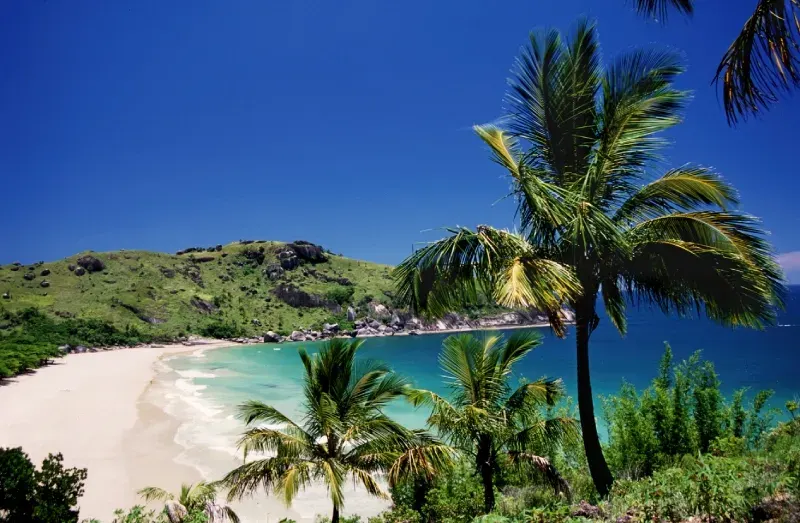
Travelers with time beyond three days will find coastal towns and highland retreats within a few hours of the city. The shoreline at Ubatuba and Ilhabela sits roughly three hours away, while the mountain town of Campos do Jordão offers a cooler, quieter contrast to São Paulo's density.
Conclusion
São Paulo does not reveal itself quickly. Colonial churches, Niemeyer's concrete curves, the controlled chaos of a feira livre, a bossa nova set at a bar ranked among the world's finest — these are not stops on a checklist so much as separate conversations the city holds with anyone willing to listen.
The practical starting point is straightforward: anchor yourself near Jardins or Paulista, let the metro do the heavy work between neighborhoods, and resist the urge to over-schedule. The city's most memorable moments tend to arrive unplanned — a mural freshly painted overnight in Vila Madalena, a monastery store selling chocolate-dipped pão de mel, a chant carried through 6,000 organ pipes on a Sunday morning.
Few cities of this scale reward patience as genuinely as São Paulo does. Those who return a second or third time often find they've barely scratched the surface of a place that has been accumulating history, immigration, and reinvention since 1554.
![Bonete Beach - Ilhabela - Sao Paulo - Brazil]()