Liam
It was amazing. The staff was amazing. The food was superb. The guide was very helpful.
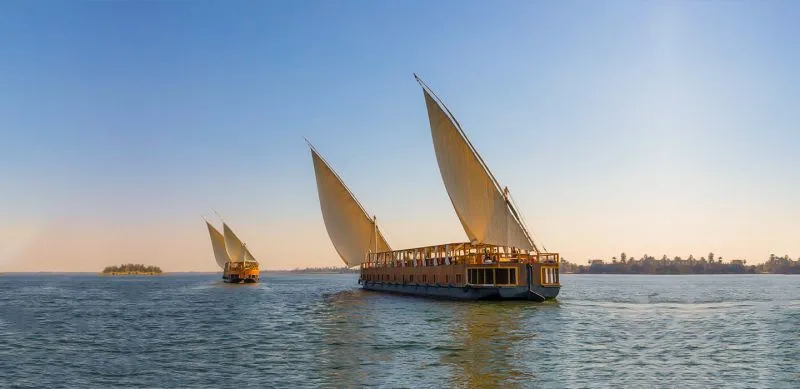
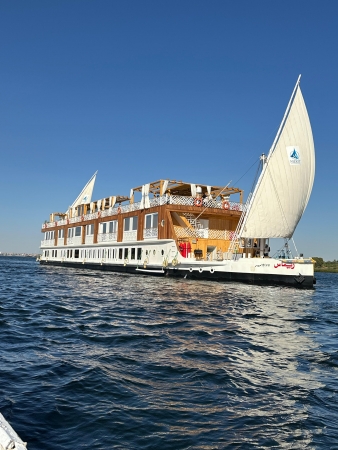
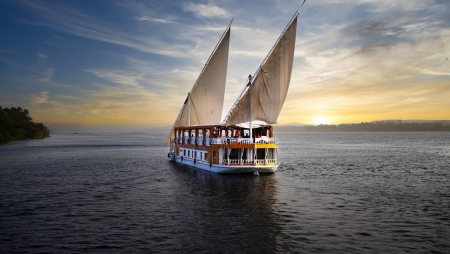
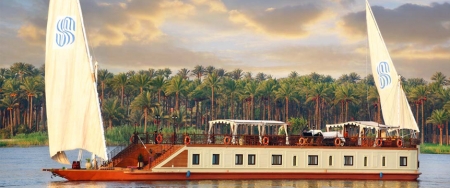
Experience unique routes and the Nile River in the most exclusive and luxurious way by taking a cruise on Nuun and Nuut Dahabiyas. Life on board a dahabiya will bring together superb sightseeing, sailing, and delicious meals.
Schedule
4/5 Days
3/4 Nights
Countries
1 Country
5 Cities
Type
Small group tour
12 Persons
Run
Selected Departure Dates
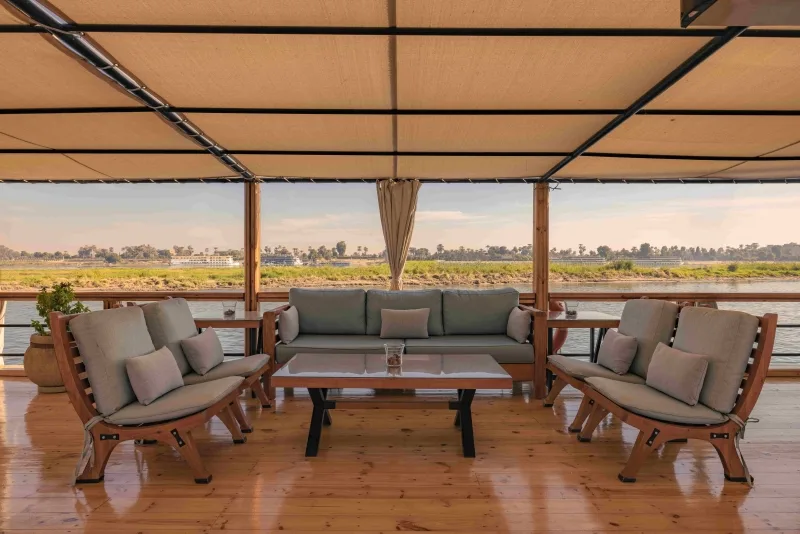
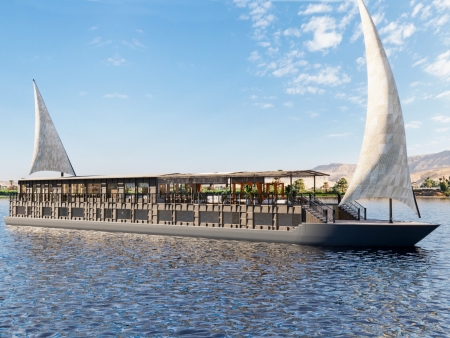
There is an older, slower, more beautiful way to travel the Nile. Before motor cruisers, before schedules, before crowds — there were dahabiyas. Traditional wooden sailing vessels that carried 19th century explorers and aristocrats up the river under full canvas, stopping wherever the wind and curiosity took them. The Nuun and Nuut are that experience, rebuilt for today. Twin sister dahabiyas operated by Ashranda, Nuun and Nuut are among the most luxurious traditional sailing vessels on the Nile. Each carries a maximum of 12 guests across 6 cabins and 2 private-terrace suites — small enough that the crew knows your name by the end of Day 1, and quiet enough that you can hear the water moving under the hull at night. The routes they sail pass sites no motor cruise ship stops at: sandstone quarry temples, island anchorages, and stretches of the river where the only thing on the banks is sugar cane and silence. What to Expect Vessel type: Traditional wooden dahabiya — wind-powered sailing, not a motor cruise ship Capacity: Maximum 12 guests across 6 cabins and 2 private-terrace suites Guide: English-speaking Egyptologist on every excursion Meals: Full board throughout — all breakfasts, lunches, and dinners plus tea and coffee Inclusions: All entrance fees, all ground transfers, soft drinks in minibar Routes: 4-day Aswan to Luxor / 5-day Luxor to Aswan / 8-day Luxor to Luxor Departures: Selected dates — contact Memphis Tours to confirm availability On Board Cabins & Suites: 6 cabins with twin or large beds, 2 suites with private terrace. All cabins feature large panoramic windows with Nile views, in-room private safe, modern duvets, hairdryer, and free Wi-Fi. Common Areas: Elegant dining room and lounge, sun deck with chaise-longue chairs, Arabic seating area, soft drinks in the minibar. Services: Free Wi-Fi throughout, electronic fire and smoke detection, wireless internet in rooms, accompanying motorboat for calm-wind days. Frequently Asked Questions What makes a dahabiya different from a regular Nile cruise? A dahabiya is a traditional wooden sailing vessel — the original way to travel the Nile before motorized cruise ships existed. Where large cruise ships carry 60 to 160 passengers and follow fixed schedules, the Nuun and Nuut carry a maximum of 12 guests each and sail at a pace that allows you to stop at islands, quarry temples, and anchorages that larger vessels simply cannot reach. It is a fundamentally different experience — slower, quieter, and considerably more personal. What sites do you visit on the Nuun and Nuut dahabiyas? Depending on your chosen itinerary, sites include Kom Ombo Temple, Edfu Temple, Gebel el Silsila and the sandstone quarries, El Kab village and rock-cut tombs, the Valley of the Kings, Karnak Temple, and Philae Temple. The 5-day and 8-day routes include stops at island anchorages like Beshir Island, Fawaza Island, and Sheikh Rehan Island that are exclusive to dahabiya travel. How many guests are on each dahabiya? Each vessel carries a maximum of 12 guests. Nuun and Nuut are twin dahabiyas — identical in layout and specification — so if your group is larger, both can sail together on the same route. What is included in the price? Full board meals including tea and coffee with every meal, all temple and site entrance fees, an English-speaking Egyptologist guide for excursions, all transfers by air-conditioned vehicle, and soft drinks in your cabin minibar. Tips and personal extras are not included. Is a dahabiya suitable for first-time visitors to Egypt? Yes — but it suits a particular kind of traveler. If you want to cover as many temples as possible in the shortest time, a motor cruise ship is faster. If you want to actually feel the Nile — to sail on it, sleep on it, and see the Egypt that exists between the famous sites — a dahabiya is the right choice. Many guests who have already done a standard cruise choose a dahabiya for their second trip. What is the best time of year to sail? October through April offers the coolest temperatures and the most consistent winds for sailing. May through August is hotter but the river is quieter. The dahabiyas sail year-round on selected departure dates. How do I secure my cabin? A deposit of 50% secures your cabin and all included services. The remaining balance can be paid up to two days before arrival or in cash on arrival. Ready to sail the old way? Send us your travel dates and group size and we'll confirm availability. → Get Your Free Quote
4 days of curated travel across iconic destinations.
Your dahabiya journey begins at noon in Aswan. The moment you step on board, the pace of travel changes — no airport announcements, no coach transfers, no crowds. Just the deck beneath your feet, the Nile ahead, and lunch served as the sails fill and Aswan slips behind you. By late afternoon you reach Kom Ombo, where the temple rises directly from the riverbank in the golden hour light. After the visit, you sail on to anchor near the quiet shore of Beshir Island for the night.
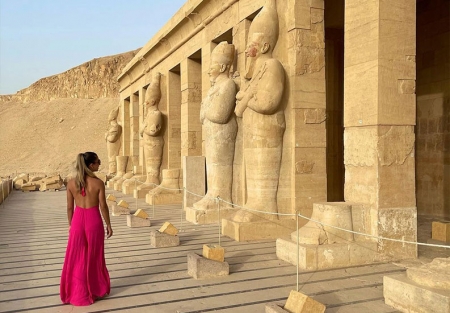
Kom Ombo Temple stands at a bend where the Nile curves sharply — a location the ancient Egyptians considered spiritually charged. It is the only perfectly symmetrical double temple in Egypt, its entire structure mirrored for two gods: Horus the Elder on the north side, Sobek the crocodile god on the south. Every hall, every gateway, every inner sanctuary exists twice. A small museum on the grounds displays ancient crocodile mummies — votive offerings to Sobek that were buried near the temple for thousands of years before being discovered and preserved.
Overnight: Near Beshir Island
Meals: Lunch, Dinner
Please note: scheduled timings may be adjusted due to navigational or environmental factors.
Breakfast is served on deck as the dahabiya pulls away from Beshir Island at first light. The morning sail to Edfu is one of the most pleasant stretches of the journey — desert cliffs on the west bank, farmland and date palms on the east, and the unhurried rhythm of the river setting the pace. By mid-morning you arrive at Edfu for the most impressive temple visit of the cruise.
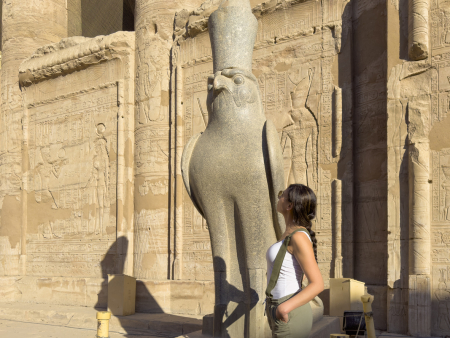
The Temple of Horus at Edfu is the best-preserved ancient temple in Egypt — and one of the largest. Built during the Ptolemaic period over nearly 200 years of continuous construction, it was buried under desert sand and river silt for centuries, which is precisely why it survived in such extraordinary condition. Its entrance pylons rise more than 36 meters, its inner chambers are still roofed, and its carved reliefs still carry traces of original paint. Two massive granite statues of the falcon god Horus flank the entrance, each carved from a single block of stone. Walking through it gives a rare sense of what an ancient Egyptian temple actually looked and felt like when it was in active use.
Overnight: In Esna Meals: Breakfast, Lunch, Dinner
Please note: scheduled timings may be adjusted due to navigational or environmental factors.
This is the day the Nile does the work. After breakfast, you enter the Esna Lock — a working river lock that raises and lowers vessels between different water levels and is one of the most unexpectedly captivating things to experience from the deck of a dahabiya. The afternoon sail into Luxor is unhurried, the West Bank cliffs appearing on the horizon as the city announces itself ahead.
The Esna Lock channels the entire flow of vessel traffic through a single gated passage — watching your dahabiya rise or fall between the lock walls, with the ancient temple of Esna visible just beyond the embankment, is one of those moments that feels genuinely cinematic. The afternoon sail from Esna to Luxor passes through the most densely farmed stretch of the Nile valley, where the fields run right to the water's edge and the West Bank cliffs glow amber as the sun moves west.
Overnight: In Luxor
Meals: Breakfast, Lunch, Dinner
Please note: scheduled timings may be adjusted due to navigational or environmental factors.
A final breakfast on the river as Luxor wakes up on both banks around you. Then check-out, transfer, and the end of your dahabiya journey — carrying memories of a Nile that most travelers never get to know this well. We hope this journey has been everything you imagined, and we can't wait to welcome you back.
Your dahabiya journey ends in Luxor — ask us about adding the Valley of the Kings, Karnak Temple, or a Cairo extension before you fly home.
→ Talk to Our Egypt Travel Experts
Experience unique routes and the Nile River in the most exclusive and luxurious way by taking a cruise on Nuun and Nuut Dahabiyas. Life on board a …
Everything you need, covered.
Available as custom add-ons.
Pro Tip
Optional add-ons and upgrades are available for this egypt program. Speak with our travel specialists to tailor your package.
Transparent seasonal rates for your egypt program — choose the tier that fits your style.
Essential resources for your egypt journey
Real stories from real travelers who trusted us with their journeys.