The Ultimate Travel Guide to Almaty, Kazakhstan
.jpg "The Ultimate Travel Guide to Almaty, Kazakhstan")
Almaty is Kazakhstan's largest city and its cultural and commercial capital — roughly 2 million people living directly beneath the snow-capped Zailiysky Alatau range of the Tian Shan mountains. It served as the national capital until 1997, when government moved north to Astana, and it remains the country's most visited and most liveable city.
What makes Almaty unusual is the compression of experiences: ski a world-class resort in the morning, eat horse-meat sausage in a 19th-century bazaar at lunch, and be in a Korean restaurant or rooftop bar by night. Alpine wilderness starts 30 minutes from downtown.
Its name comes from alma, Kazakh for apple. This is the genetic homeland of the domesticated apple — every apple you have eaten traces back to the wild forests around this city.
Almaty sits in south-eastern Kazakhstan near the Kyrgyz border, on a sloping plain at 700–900 metres rising quickly into peaks above 4,000 metres.
Mountain backdrop — The Tian Shan is visible from almost every street; the grid runs uphill, so "up" always means south.
Greenness — Tree-lined avenues, irrigation channels (aryks) and large parks make it Central Asia's greenest city.
Soviet planning, modern money — Broad boulevards and monumental architecture beside glass towers and serious café culture.
Genuine diversity — Kazakh, Russian, Uyghur, Korean, Dungan and Uzbek communities all shape the food and culture.
The name means "apple-rich." The foothills hold wild groves of Malus sieversii, confirmed by genetic research as the ancestor of the cultivated apple. The large, aromatic local Aport apple is a point of civic pride.
Silk Road settlement — The area lay on a northern branch of the Silk Road, with medieval trading towns such as Almatu.
Saka burial culture — Nomadic Saka peoples buried elites in kurgan mounds nearby. The Golden Warrior, found at Issyk in 1969 in over 4,000 gold pieces, is now Kazakhstan's national symbol.
Mongol disruption — The 13th-century invasions destroyed the towns, and the region reverted to nomadic pastoralism.
In 1854 the Russian Empire founded the fort of Zailiyskoye, soon renamed Verny, with a grid city growing around it.
Catastrophic earthquakes in 1887 and 1911 flattened much of it, prompting seismic-resistant design — including the timber Ascension Cathedral, famously built without nails.
Renamed Alma-Ata in 1921, it became capital of the Kazakh SSR in 1929, linked by the Turkestan–Siberia Railway.
World War II brought evacuated factories and film studios, alongside deported Korean, German and Chechen communities whose descendants remain.
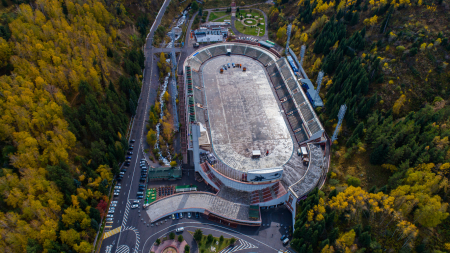
Monumental projects followed: the Medeu rink (1972), Hotel Kazakhstan and Republic Square.
The Jeltoqsan protests erupted when Moscow replaced the Kazakh party leader with an outsider. Suppressed at the time, they are now seen as an early crack in Soviet authority and a founding moment of Kazakh national identity.
Kazakhstan became independent in 1991, and the city took the Kazakh form Almaty in 1993.
The capital moved to Astana in 1997, but Almaty kept the money, the universities and the culture.
Oil wealth reshaped the skyline, and the mountain corridor became the focus of tourism.
Get in touch with our local experts for an unforgettable journey.
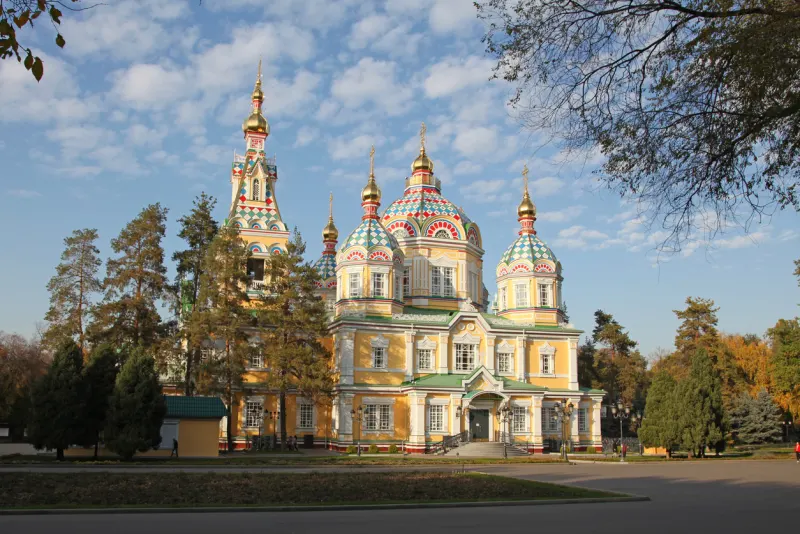
Plan Your TripPanfilov Park & Ascension (Zenkov) Cathedral — A canary-yellow 1907 wooden cathedral, among the world's tallest timber buildings, beside the 28 Panfilov Guardsmen memorial and eternal flame.
Central State Museum — The best introduction to Kazakh history, with a replica of the Golden Warrior.
Central Mosque — The city's largest, with a striking blue dome.
Republic Square & Independence Monument — Soviet civic scale meeting post-independence symbolism.
Arasan Banya — A vast Soviet-era bathhouse with Russian, Finnish and Turkish sections. An institution, not a tourist stop.
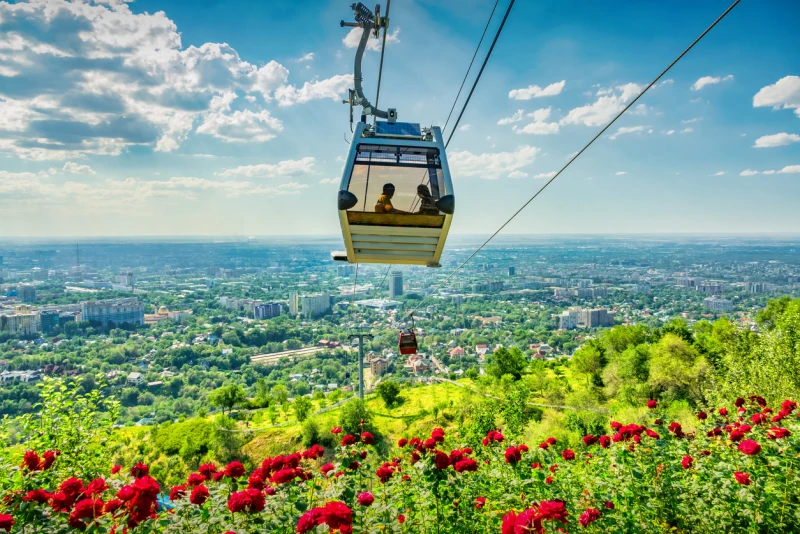
Kok Tobe — Cable car to the classic panorama, plus an amusement park, cafés and a Beatles monument. Best at sunset.
Almaty Arbat (Zhibek Zholy) — Pedestrian street for buskers, portrait artists and people-watching.
First President's Park & Botanical Garden — Formal gardens and quiet green space, best in autumn colour.
Operating since 1875, with the current hall dating from the 1970s.
Sections for produce, dairy, spices, Korean salads, bread and meat.
Look for kurt (dried salted cheese balls), dried apricots, saffron and cumin — and note the meat hall displays horse meat openly.
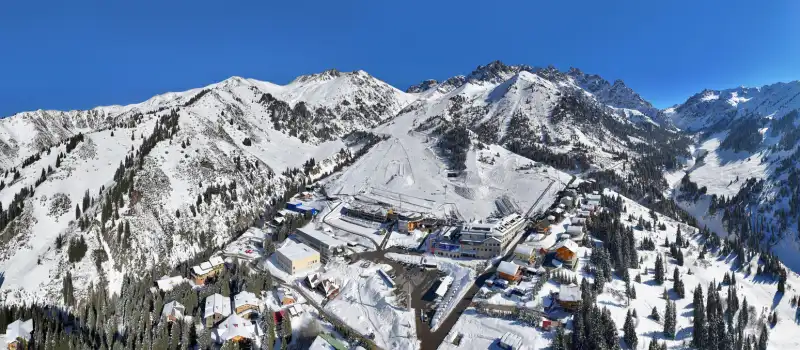
Medeu, at 1,691 m and 15 km from the centre, is among the world's highest outdoor skating rinks.
The Health Staircase — 842 steps from the rink toward Shymbulak — is a local fitness ritual.
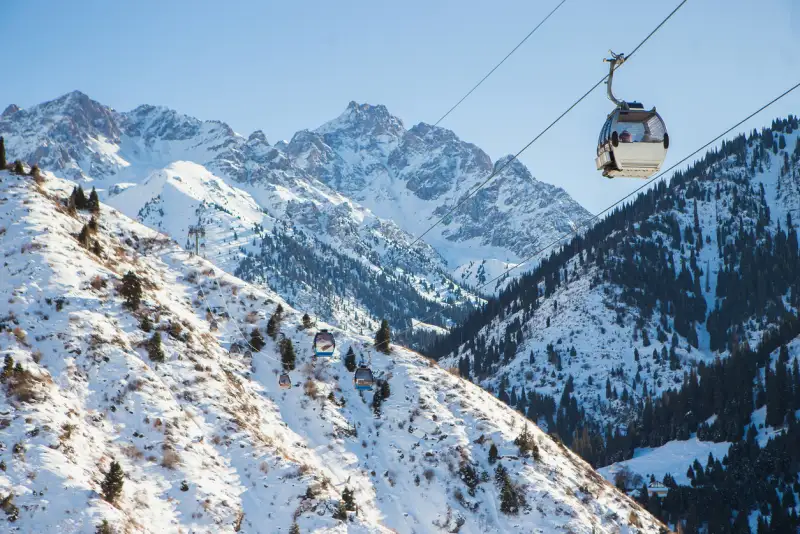
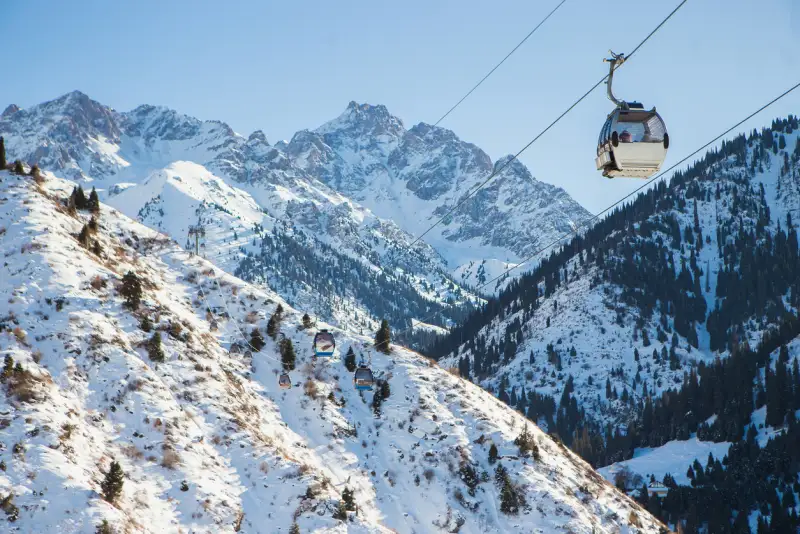
Shymbulak, Central Asia's leading ski resort, is reached by gondola from Medeu.
The season runs roughly mid-November to April, with the most reliable snow December to March.
Cable cars start around 3,500 KZT one way; day ski passes typically US$25–40.
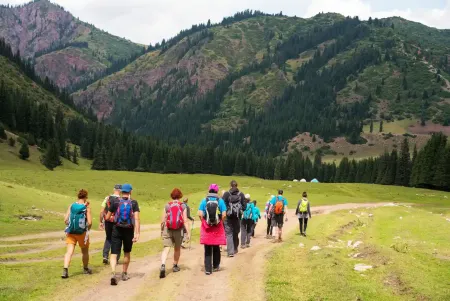
In summer the same gondola serves alpine hiking through meadows and pine forest.
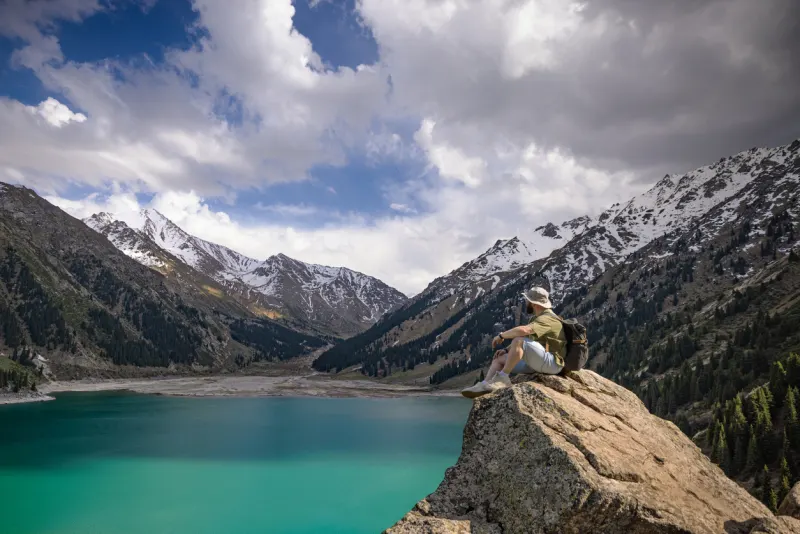
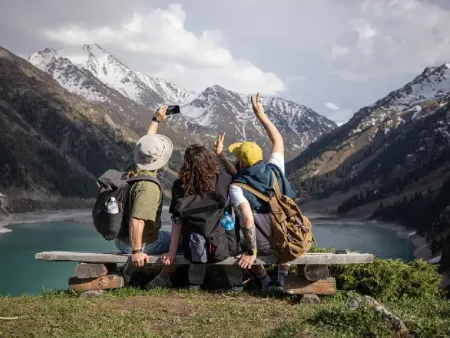
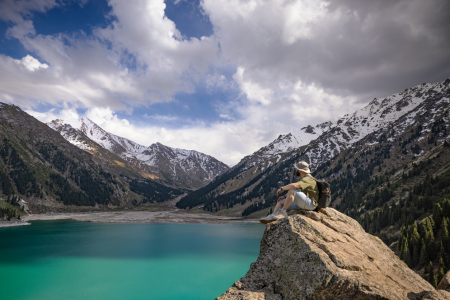
A turquoise glacial lake at 2,511 m, about 28 km from the city.
A permit is normally required — arrange through a tour operator in advance.
Best light is early morning; the road can close in winter or after heavy weather
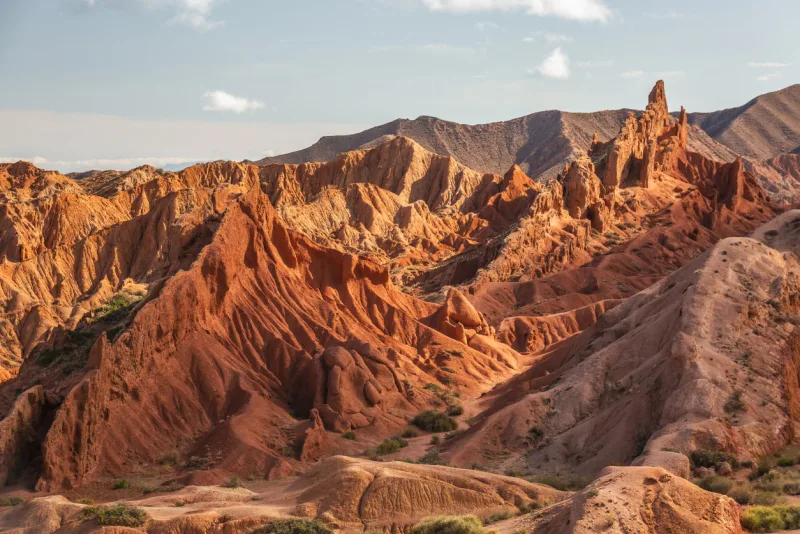
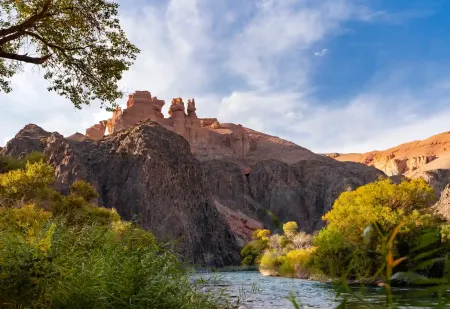
About 220 km east, a red sandstone canyon system often compared to the Grand Canyon.
The Valley of Castles is the signature section, walkable down to the river in an hour or two.
Realistically a full day, leaving around 7am and back by evening.
Kolsai Lakes — Three linked alpine lakes in spruce forest, good for walking and horse riding.
Kaindy Lake — A sunken "ghost forest" of drowned spruce trunks created by the 1911 earthquake.
Best done as an overnight trip with a homestay in Saty village.
Home to the Singing Dune, which hums in dry wind, plus Przewalski's horses and the striped Aktau mountains. Requires permits and two days.
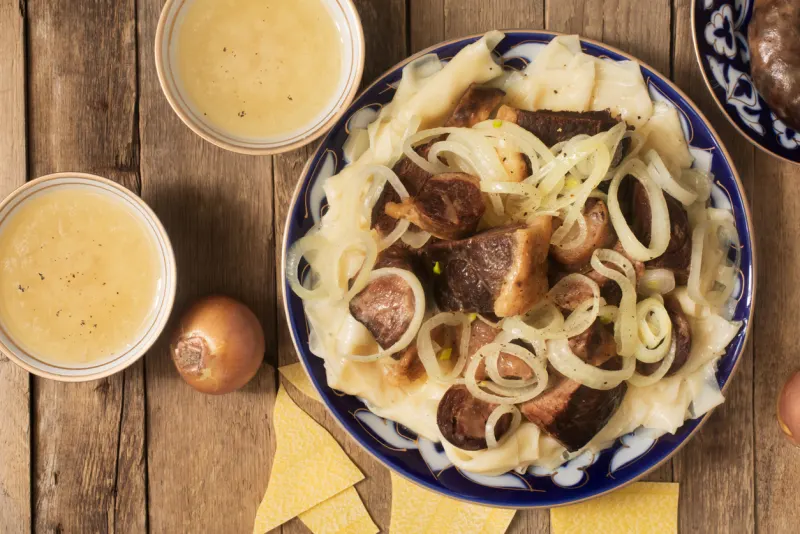
Besbarmak — The national dish: boiled meat with flat noodles and onion broth, served communally.
Kazy (horse sausage), shashlik, manti dumplings and samsa pastries.
Baursak — Fried dough eaten with tea at every celebration.
Kurt — Hard, salty dried cheese; an acquired taste worth acquiring.
Korean — The Koryo-saram community produces excellent kuksu and spicy salads.
Dungan and Uyghur — Hand-pulled laghman noodles are a city staple.
Georgian, Russian and a strong specialty coffee scene around Panfilov Street.
Kumis (fermented mare's milk) and shubat (camel milk) — traditional and genuinely unusual.
Tea with milk, central to hospitality, and Rakhat chocolate, the standard souvenir.
|
Season |
Months |
Conditions |
Best For |
|---|---|---|---|
|
Spring |
Apr – Jun |
12–25°C, green, blossom |
Peak. Hiking, city sightseeing |
|
Summer |
Jul – Aug |
30–35°C+ in the city |
Mountains and lakes; city is hot |
|
Autumn |
Sep – Oct |
10–22°C, golden colour |
Peak. Best light and comfort |
|
Winter |
Nov – Mar |
−5 to −15°C |
Skiing, skating, low prices |
May–June and September–October are the best all-round months: mild, dry, ideal for city and mountains alike.
Autumn is the connoisseur's choice — golden foliage, clear air, fewer visitors.
July–August works only if you spend the days in the mountains; the city gets uncomfortably hot.
December–March is for snow: world-class skiing at a fraction of European prices.
Shymbulak skiing — mid-November to April. Big Almaty Lake — road most reliable May to October.
Kolsai and Kaindy — best June to September. Charyn Canyon — year-round, but very hot in midsummer.
Almaty International Airport (ALA), 15 km north, connects across Asia, the Gulf, Turkey and Europe.
Rail links Astana and Tashkent; sleeper trains are cheap. Bishkek is four hours by road.
Metro — One line only, but clean, cheap and architecturally impressive.
Buses and trolleybuses — Extensive, paid by transit card.
Ride-hailing apps — Cheap and ubiquitous; the easiest option for visitors.
Walking — The centre is walkable, though the uphill gradient is real.
Central grid (Dostyk to Seyfullin) — Best for walkability, metro and cafés; hostels and apartments are excellent value.
Visa-free access applies to many nationalities — including the US, UK and EU — typically up to 30 days. Policies change, so verify your status before booking.
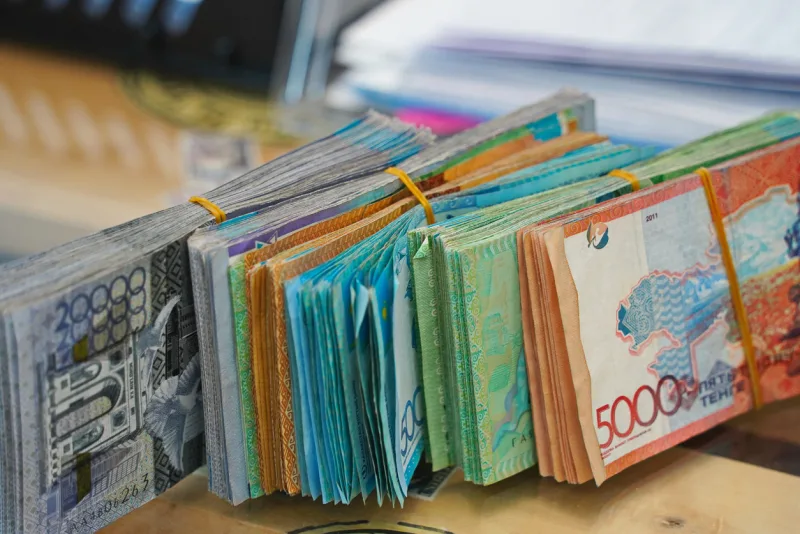
Currency: Kazakhstani Tenge (KZT). Cards are widely accepted; carry cash for bazaars and mountains.
Language: Kazakh and Russian are both in daily use; English is common among younger people in the centre.
Altitude — Big Almaty Lake and Shymbulak exceed 2,500 m; ascend gradually.
Sun — Mountain UV is intense year-round, including on snow.
Earthquakes — Almaty is seismically active; note your hotel's guidance.
Permits — Big Almaty Lake and Altyn Emel need operator-arranged paperwork.
Three days — City sights, Medeu and Shymbulak, plus one mountain excursion.
Five days — Adds Charyn Canyon and Big Almaty Lake comfortably.
Seven or more — Allows Kolsai, Kaindy and Altyn Emel with overnight stays.
Day 1: Panfilov Park, Central State Museum, Green Bazaar, Kok Tobe at sunset.
Day 2: Big Almaty Lake early, then Medeu and Shymbulak.
Day 3: Charyn Canyon, or a slower city day with Arasan Banya and Korean food.
Charyn Canyon is a dramatic 12-million-year-old red-rock gorge in Kazakhstan, famed as the "Grand Canyon of Central Asia.
Almaty is Kazakhstan's largest city , a green, Soviet-planned metropolis beneath the Tian Shan, famed for skiing, apples, bazaars and alpine day trips.
Medeo is the world's highest outdoor ice rink, at 1,691 m near Almaty, Kazakhstan — famed for glacial-water ice and over 120 speed skating world records