Tangier in Morocco: The City Between Two Seas
Where the Atlantic ends, the Mediterranean begins, and Europe sits 14 kilometres away across the water. Here is what I've learned about Tangier, and what's actually worth your time.

Tangier in Morocco is the city where two seas and two continents meet. Perched on Morocco's northwestern tip at the entrance to the Strait of Gibraltar, it faces Spain across 14 kilometres of water and has been a crossroads for Phoenicians, Romans, Portuguese, Spanish, and British across nearly three thousand years.
This guide covers the essential things to do in Tangier, Morocco, the hillside medina and Kasbah, the American Legation Museum, Café Hafa above the strait, Cape Spartel at the northwesternmost point of Africa, and the Caves of Hercules with its Africa-shaped sea opening. It also covers the beaches in Tangier, Morocco, how to reach the city by ferry, rail, and air, and the Tangier Eclipse 2027, 4 minutes and 50 seconds of totality on August 2, 2027, with a 79% clear-sky probability.
I've arrived in Tangier by plane, by train, and by ferry, and the ferry is the one that stays with me. You watch Spain shrink behind you, and forty minutes later, Africa is right there, white houses stacked up a green hill, the call to prayer drifting over the port. Tangier in Morocco is not a city you ease into. It hits you at the dock.
For most of the last century, Tangier was a place people passed through rather than visited. It was an International Zone, governed by nobody in particular, and it filled up with writers, spies, painters, and people who preferred not to explain themselves. That reputation still hangs around. But the Tangier of today is a working port city with a fast train, a rebuilt marina, and a medina that is genuinely lived in rather than staged for visitors.
This guide covers what Tangier actually is, the things to do in Tangier, Morocco that are worth the time, the beaches, how to get here, and why the city is about to have the biggest week in its modern history, the Tangier Eclipse 2027.
#Where is Tangier, and why does its position matter?
#Things to Do in Tangier, Morocco
#The best time to visit Tangier
The fastest way I know is the ferry from Tarifa, which lands at Tangier Ville port, right in the city centre, in about 35 minutes. If you're coming from Algeciras, Barcelona, or Genoa, those ferries arrive at Tangier Med, the bigger commercial port outside the city, and you'll need roughly 45 minutes to transfer into town from there.
On the Al Boraq high-speed train, I can get from Tangier to Casablanca in about 2 hours 10 minutes, and Rabat is even closer at around 1 hour 20. Marrakech is the long haul, roughly 6 to 7 hours by rail with a connection, so if time is tight, I'd take a short domestic flight instead.
Tangier sits on the northwestern tip of Morocco, at the southern gate of the Strait of Gibraltar. On a clear morning, you can see the coastline of Spain from a café terrace. That single geographic fact explains everything about the city.
Every ship moving between the Atlantic Ocean and the Mediterranean Sea has to pass through this strait. The Phoenicians knew it. The Romans knew it. So did the Portuguese, the British, the Spanish, and the French, all of whom held Tangier at some point.
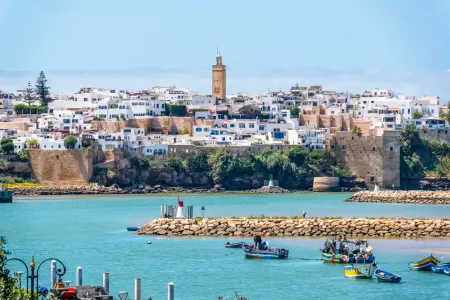
The city has been fought over, traded, split, and shared for nearly three thousand years, and you can read all of it in the architecture. An Anglican church built in Moroccan style. A former American diplomatic mission in the middle of an Arab medina. Spanish street signs beside Arabic ones.
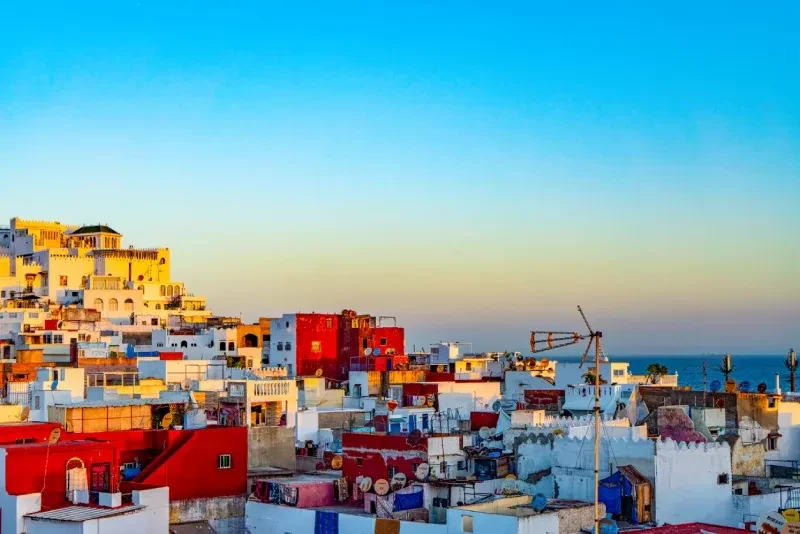
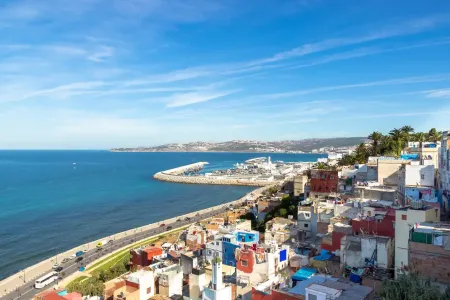
Locals call it the Bride of the North. It's also sometimes called the White City, for the whitewashed houses climbing the hillside above the bay.
Explore our Morocco tours, northern circuits through Tangier and Chefchaouen, imperial cities, Sahara desert camps, and the 2027 eclipse.
Browse Morocco Tours →
Yes, Tangier is safe for you to visit. Morocco maintains low crime rates, and Tangier has a strong tourism infrastructure with a visible police presence. You should take standard precautions: avoid unlicensed guides, watch your belongings in crowded areas, and use registered taxis.
Yes, you can drink alcohol in Tangier at licensed hotels, restaurants, bars, and nightclubs. You'll find alcohol more available in Tangier than in other Moroccan cities due to its cosmopolitan nature. However, you shouldn't drink in public streets or during Ramadan out of respect.
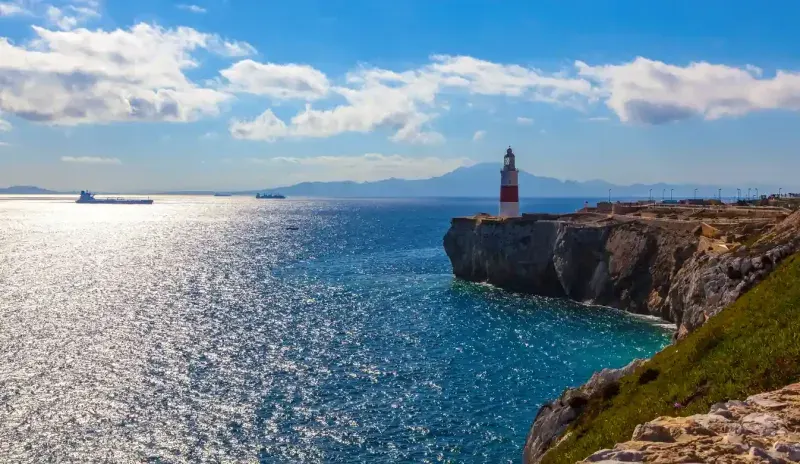
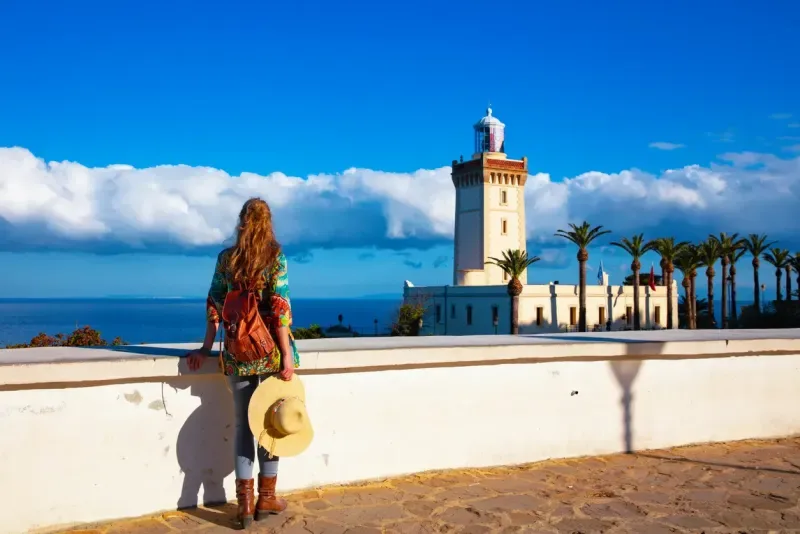
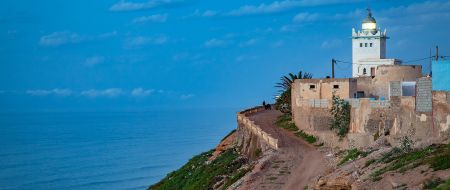
Cape Spartel is the northwesternmost point of Africa, about 14 kilometres west of Tangier, and it marks where the Atlantic Ocean meets the Mediterranean Sea. There's a nineteenth-century lighthouse standing on a headland roughly 300 metres above the water. On a clear day, I can see the Spanish coast across the Strait of Gibraltar from up there, two seas and two continents in one view.
Yes, as long as you go in with realistic expectations. The cave itself is small and takes me about fifteen minutes; the real draw is the sea-facing opening whose shape traces the outline of Africa almost exactly. People have lived here since Neolithic times, and you can still see the circular cuts where Berber workers quarried millstones. I always pair it with the Cape Spartel lighthouse, 5 kilometres north, and the walk along the beaches between the two.
Tangier rewards two full days. Here is where I'd send you, roughly in the order I'd do it.
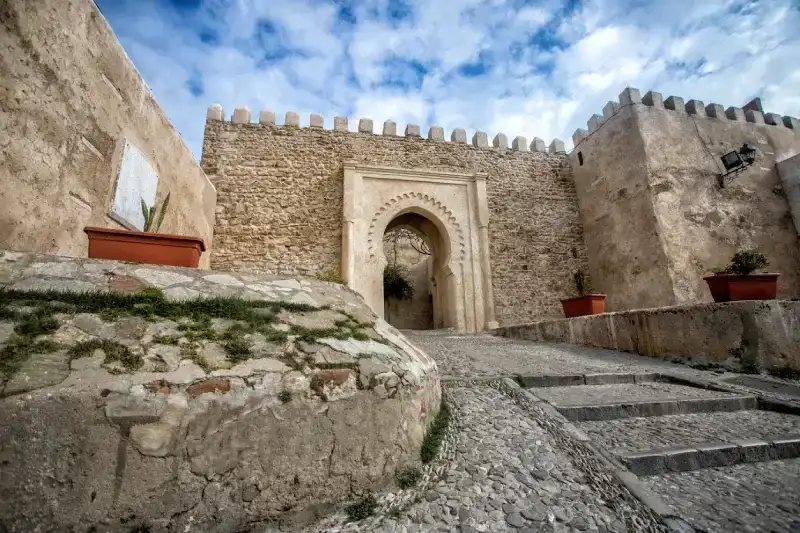
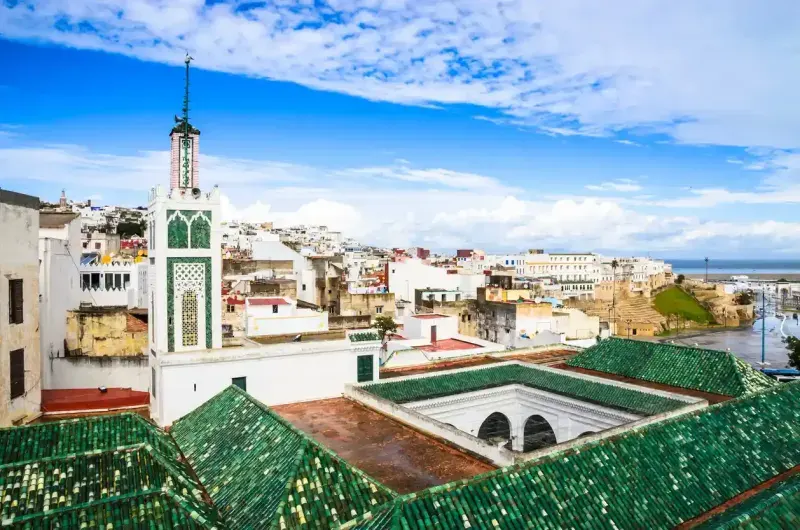
Start at the Grand Socco, the big square that acts as the seam between the new town and the old. Head uphill through the gate, and the lanes narrow immediately. You'll pass through the Petit Socco, smaller, shabbier, more atmospheric, and then climb to the Kasbah, the fortified quarter at the top of the hill.
Inside the Kasbah is Dar el Makhzen, once the sultan's palace and now the Kasbah Museum of Mediterranean Cultures. Go in. The courtyards alone are worth the ticket, and the collection traces Tangier's history from Phoenician trade through Roman Volubilis to the present.
Tucked into the medina, this is the only United States national historic landmark located outside the United States. Morocco was the first country to recognise American independence, and the building was a gift. Inside, there's a strong collection of Moroccan and orientalist paintings, including the portrait known locally as the Moroccan Mona Lisa. It's quiet, air-conditioned, and almost nobody is there.
A small English church built in Moorish style, with the Lord's Prayer carved in Arabic above the altar and a Victorian graveyard outside. It shouldn't work. It absolutely does.
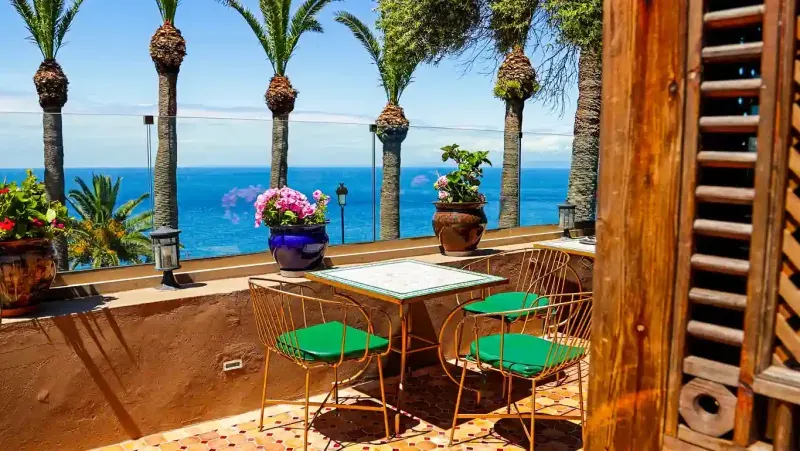
Opened in 1921 and stacked in terraces down a cliff above the water. Order mint tea, take the lowest free table, and look at Spain. The Rolling Stones drank here. So did Paul Bowles and William Burroughs. The tea is ordinary. The view is not.
Fourteen kilometres west of the city, Cape Spartel is the northwesternmost point of Africa, the exact place where the Atlantic Ocean meets the Mediterranean Sea. There's a nineteenth-century lighthouse on a headland about 300 metres above the sea, and on a clear day, you get two seas and two continents in a single view.
Five kilometres south along the coast are the Caves of Hercules. The famous part is a sea-facing opening in the rock whose silhouette traces the outline of the African continent almost exactly. Legend says Hercules slept here before his eleventh labour. Archaeology says people have lived here since Neolithic times, and that Berber workers quarried millstones from the walls; you can still see the circular cuts.
My honest take: the caves themselves take fifteen minutes and get crowded on weekends. The walk between the lighthouse and the caves, about 4.5 km along the coast, past the beaches, is the experience. Do it on foot, uphill from the caves toward the lighthouse.
Also called Parc Rmilat. Seventy hectares of eucalyptus, pine, and oak on the hills between the city and Cape Spartel, free to enter, and used mostly by Tangier families walking off Friday lunch. It's named after Ion Perdicaris, a Greek-American who arrived in the 1870s and was later famously kidnapped by a local chieftain, an incident that briefly involved a US president.
Avoid unlicensed guides offering "free tours," don't exchange money on the street, skip tap water (drink bottled), avoid walking alone in the medina late at night, don't photograph people without permission, and decline aggressive vendor approaches. You'll have a better experience using licensed tour operators like Memphis Tours.
Yes, $50 (approximately 500 MAD) is significant in Morocco. You can enjoy a nice restaurant meal for two (200-300 MAD), full-day guided tours (400-600 MAD), or budget 3-4 nights in basic accommodations. For the 2027 eclipse period, expect inflated prices in Tangier.
I take a grand taxi from central Tangier, it's 20 to 30 minutes and the standard option, just agree the fare before you set off. Shared grand taxis are cheaper, but wait until they're full. Tangier's hop-on hop-off bus also runs a coastal line. Honestly, the easiest option is a half-day guided trip that loops the lighthouse, the caves, and the beach road together.
I'd pick spring (March to May) or autumn (September to November) every time for warm days, cool evenings, and far fewer crowds. Summer gets hot and fills up with Moroccan holidaymakers, which is fun but not restful. Winter is mild by European standards but genuinely damp, and I've stayed in older riads with no heating, so pack accordingly.
Get in touch with our local experts for an unforgettable journey.
Plan Your Trip
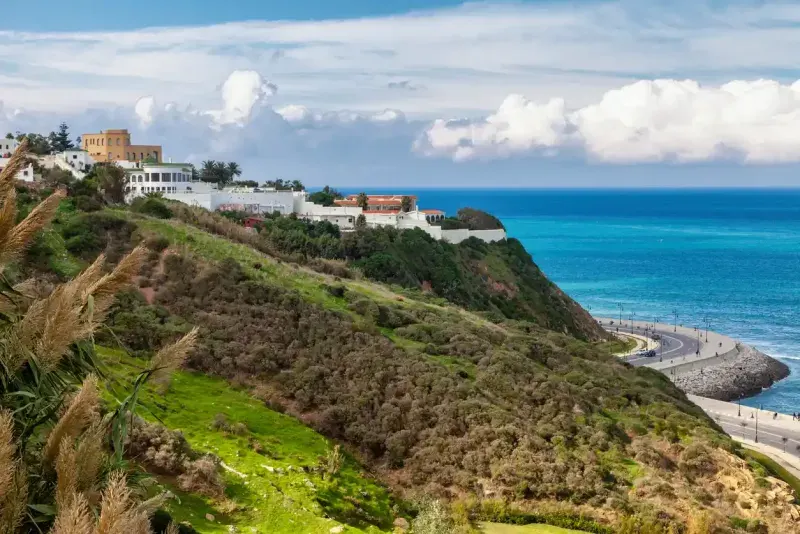
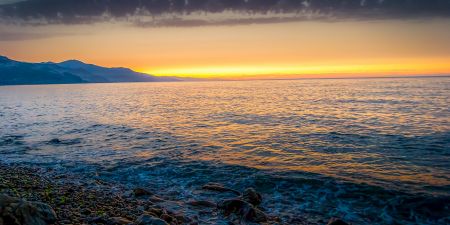
Tangier has two very different coastlines, and this trips people up. The Mediterranean side is calm, warm, and urban. The Atlantic side is cold, wild, and beautiful.
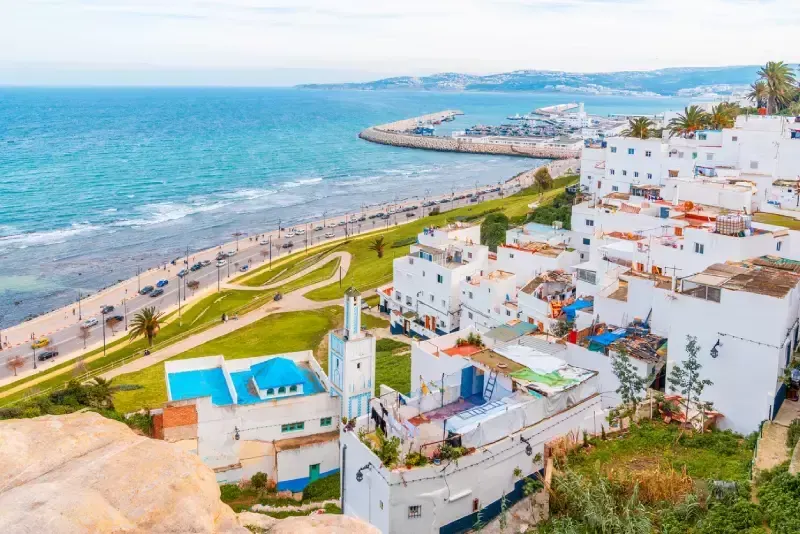
The long curve of sand in the bay right below the city. Convenient, busy, best for an evening walk rather than an afternoon of swimming. Locals use it heavily, and it's a good place to see what Tangier does with itself at sunset.
Just below the Caves of Hercules on the Atlantic side. Wide golden sand, real surf, cafés on the road above the dunes. It has held a Blue Flag for water and service quality. This is the one I'd choose.
Strung along the coast road between the lighthouse and the caves, these are cove beaches with small restaurants and, crucially, far fewer people than the city beach in August. Sol Beach also carries a Blue Flag. Sidi Kacem stretches on for kilometres of fine white sand.
The Atlantic here is genuinely cold, even in July; this is open ocean, not the Med. And while beach dress is relaxed at the Atlantic coves, the city beach is a local family space; modest swimwear and a cover-up walking to and from the water will make your day easier.
The total solar eclipse happens on 2 August 2027. Totality begins over Tangier in the mid-morning and lasts 4 minutes and 50 seconds, and that's no ordinary eclipse. It's the second-longest total solar eclipse of the twenty-first century, and the last one visible from Morocco until the 2400s, which is why I tell people this is a genuine once-in-several-lifetimes event.
Two reasons convinced me. First, totality in Tangier lasts 4 minutes 50 seconds longer than anywhere in Spain, and nearby Tetouan stretches to 4 minutes 53 seconds. Second, Tangier has a 79% clear-sky probability for early August based on 24 years of satellite weather data, which beats most of the European locations sitting on the same eclipse path. Long totality plus reliable skies is exactly what you want.
By air: Tangier Ibn Battouta Airport (TNG) is located about 12 km from the centre, with direct flights to London, Paris, Madrid, Brussels, and Amsterdam.
By ferry: from Tarifa in Spain, the fast ferry reaches Tangier Ville port right in the city centre in around 35 minutes. Longer routes from Algeciras, Barcelona, and Genoa dock at the larger Tangier Med port outside town.
By train: Tangier is the northern terminus of Al Boraq, Africa's first high-speed rail line. Casablanca is roughly 2 hours and 10 minutes away; Rabat is closer to 1 hour and 20 minutes away.
Yes, you can hold hands with your wife in Morocco; married couples showing modest affection is acceptable. You'll see Moroccan couples doing the same. However, you should avoid passionate kissing or intimate embracing in public, especially outside tourist areas, out of cultural respect.
The best months for you to visit Tangier are April-May (spring) and September-October (fall) with pleasant 20-25°C temperatures. August 2027 (eclipse month) averages 30°C, warm but manageable. Avoid January-February if you prefer warmer weather, as temperatures drop to 10-15°C.
No, and this is the part people get wrong. Only the northern corridor sees totality: Tangier, Tetouan, and Chefchaouen. Everywhere further south, including Casablanca, Rabat, Fez, and Marrakech, gets a partial eclipse only. Marrakech sits about 350 kilometres south of the path, so if you want the full blackout, you need to be up north.
Day to day, I hear Moroccan Arabic (Darija) most, with Amazigh spoken too. French is everywhere in business and on signs, and because Spain is so close, Spanish is far more common here than in the rest of Morocco. In hotels, museums, and with licensed guides, I've always found English perfectly workable.
Spring (March to May) and autumn (September to November) are the sweet spots with warm days, cool evenings, and no crowds. Summer is hot, and the beaches fill with Moroccan holidaymakers, which is fun but not restful. Winter is mild by European standards but genuinely damp, and many older riads have no heating.
Tangier is fairly relaxed, but I keep it modest shoulders and knees covered in the medina, the Kasbah, and religious sites. Beachwear stays on the beach. I always bring layers because the Atlantic wind makes evenings cooler than the daytime temperature suggests, and I'd wear shoes with grip: the medina lanes are steep, and the stone gets polished and slippery.
Yes, and plenty of people do. The 35-minute fast ferry from Tarifa makes a same-day return completely realistic. A single day gives you the Medina, the Kasbah, and a good lunch. What it won't give you is Cape Spartel, the Caves of Hercules, or the Atlantic beaches; for those, I'd stay at least one night.
On 2 August 2027, the moon's shadow crosses northern Morocco, and Tangier lands almost perfectly inside the path of totality.
For 4 minutes and 50 seconds, the sun disappears completely. That is the second-longest total solar eclipse of the twenty-first century, and longer than the totality visible from anywhere in Spain. Tangier also carries a 79% clear-sky probability for that date, based on 24 years of satellite weather records, which is why eclipse chasers have been booking this city since the maps were published.
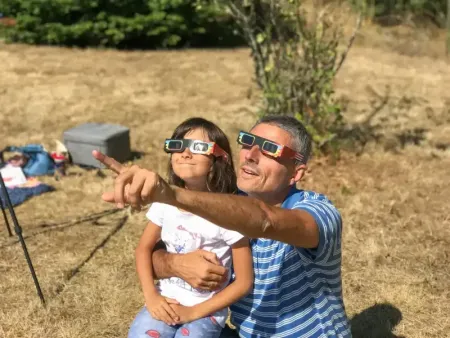
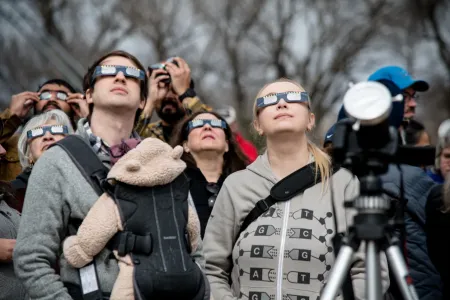
Totality begins in the mid-morning. The temperature drops several degrees. Stars come out. The sun's corona appears as a white halo around a black disc, and the horizon glows orange in every direction at once. Then it ends, and it will not happen over Morocco again until the 2400s.
If you are planning around this, accommodation in Tangier for the first week of August 2027 is already the tightest in Morocco. Book long before you think you need to.
Yes, but for the right reasons. Tangier is not Marrakech. There is no vast souk theatre, no Jemaa el-Fna, no desert on the doorstep. What Tangier has is a sense of standing exactly on the line between two worlds, with the water of two seas moving underneath you and the lights of Europe visible after dark.
Give it two days. Walk the Kasbah in the morning, take a grand taxi to Cape Spartel after lunch, and be back at Café Hafa when the light goes gold. That's the city.
Where is Tangier in Morocco?
Tangier sits on the far northwestern tip of Morocco, right at the southern mouth of the Strait of Gibraltar, the exact point where the Atlantic Ocean meets the Mediterranean Sea. I always tell people the wild part: Spain is only about 14 kilometres away across the water, close enough to see on a clear day. Tangier is also the northern end of Morocco's Al Boraq high-speed rail line, so it's easy to reach from the rest of the country.
What is Tangier known for?
I think of Tangier as the gateway between Africa and Europe, and that's exactly what it's famous for. It's known for its hillside medina and Kasbah, its past as an International Zone that drew writers like Paul Bowles and William Burroughs, Cape Spartel, where two seas meet, and the Caves of Hercules with its Africa-shaped opening. And from 2 August 2027, it's one of the best places on Earth to watch a total solar eclipse.
What are the top things to do in Tangier, Morocco?
Here's what I'd never skip: walk the medina and the Kasbah, and go inside the Kasbah Museum in Dar el Makhzen. Visit the American Legation Museum and St. Andrew's Anglican Church. Drink mint tea at Café Hafa above the Strait of Gibraltar. Head out to Cape Spartel lighthouse at the northwesternmost point of Africa, see the Caves of Hercules, and take a slow walk through Perdicaris Park. Two full days covers all of it comfortably.
How many days do you need in Tangier?
Two full days is what I recommend. I'd spend the first day on the medina, the Kasbah, the American Legation Museum, and an afternoon tea at Café Hafa. The second day I'd give to the coast, Cape Spartel, the Caves of Hercules, and the Atlantic beaches. If you want to add a day trip to Chefchaouen or Asilah, make it three.
What are the best beaches in Tangier, Morocco?
My favourite is Achakkar Beach on the Atlantic coast, with wide golden sand, real surf, Blue Flag status, and cafés looking out over the dunes. Sol Beach also holds a Blue Flag, and Sidi Kacem (Ba Kacem) gives you kilometres of fine white sand. The city's Municipal Beach in the bay is handy and lively, but I'd use it for an evening walk rather than a proper swim, as it gets busy.
Can you swim at the beaches in Tangier?
Yes, you can. Just know the two coasts feel completely different: the Mediterranean side is calmer and warmer, while the Atlantic beaches near Cape Spartel stay cold with stronger surf even in midsummer. Achakkar and Sol beaches both carry Blue Flag certification for water quality, so I head there. At the city beach, I'd wear modest swimwear and throw on a cover-up, walking to and from the water, which is the local norm.
Is Tangier safe for tourists?
In my experience, yes, Tangier feels safe, with a visible tourist police presence and low levels of violent crime. The things you'll actually deal with are minor: pickpocketing in the crowded medina lanes and persistent unofficial guides near the Grand Socco. A firm, friendly "la, shukran" (no, thank you) while you keep walking sorts out almost every situation.
Is Tangier safe for solo female travellers?
Yes, I'd say Tangier is generally safe for women travelling alone, and it's one of the more relaxed cities in Morocco. The most common thing you'll notice is verbal attention in the medina rather than any real physical risk. What helps me: dressing modestly, walking with purpose, using licensed petit taxis after dark, and booking a guided walk on the first day to get my bearings.
Merzouga is a small desert village in southeastern Morocco, at the edge of the Erg Chebbi dunes, the country's main gateway to the Sahara. This guide covers what to do in Merzouga, from sunset camel treks and overnight desert camps to sandboarding, 4x4 tours, and stargazing, plus how to get there from Marrakech and Fes and the best time to visit.
North Africa as well as giving a different experience than the heart of the senior continent. Visiting Morocco, Tunisia, Algeria is different from South Africa, Kenya, Uganda, and more.
Mhamid city is authentic where you can find knowledgeable locals proudly talk about its history besides sharing interesting facts!
Explore the site where visitors are drawn to Azrou for monkeys and fragrant cedar forest trails as well. Read more!
Rissani is a great spot where you can enjoy the local life of its people besides having walks in its narrow yet beautiful alleys. Read more!
Casablanca's architectural soul dances between Art Deco elegance and Moroccan tradition, from its bustling city center to the enchanting Habous district - a modern medina that beautifully marries age-old charm with contemporary living, showcasing Morocco's timeless ability to adapt and inspire. Read More!
The entire Medina has been designated a Unesco World Heritage of Humanity Site. Wander through its souks and alleys which are unchanged since the Middle Ages. Read more!
Chefchaouen is a city with blue and white lime-washed houses. A powerful charm that you really can feel in the Outa-el-Hammam square, in the cobblestone medina. Read More!
Essaouira is one of the most charming cities in Morocco. Know more about this City with Memphis Tours.
Nestled in Morocco's Middle Atlas, Ifrane - the "Little Switzerland of Africa" - beckons with its Alpine charm, lush forests, and crisp mountain air, offering a refreshing escape between the ancient wonders of Fez and Marrakech. Read More!
Marrakech: A sensory feast where ancient medinas, bustling souks, and majestic palaces paint a vibrant tableau of Moroccan culture, inviting you to lose yourself in its timeless magic!
Nestled amidst picturesque walking trails, Tinghir beckons adventurers with its irresistible charm, offering a tapestry of experiences that unfold whether you're embarking on a whirlwind day trip or savoring a leisurely multi-night sojourn in this captivating Moroccan gem.
Ouarzazate has been unfailingly linked with cinema since 1984. it has remarkable examples of traditional architecture give a foretaste of the famous Route of the 1000 kasbahs.
Rabat Morocco, a city where time dances to its rhythm, invites you to lose yourself in fragrant gardens, stroll along sun-dappled promenades, and immerse your senses in a kaleidoscope of festivals that paint the grand avenues with joy and laughter!
Nestled between the majestic Middle and High Atlas mountains, Midelt beckons adventurers with its breathtaking landscapes, where nature's grand canvas unfolds in a symphony of rugged peaks and verdant valleys, inviting you to lose yourself in Morocco's hidden gem!
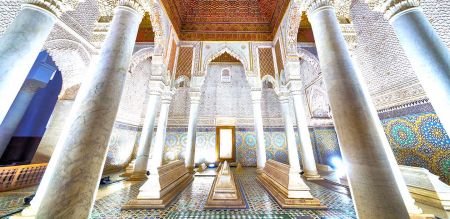
Saadian Tombs, The royal cemetery of Al-Saadian family who ruled Morocco from 1546-1659. The mausoleum is comprising about 60 gravestones for Saadian members divided into 3 main chambers.
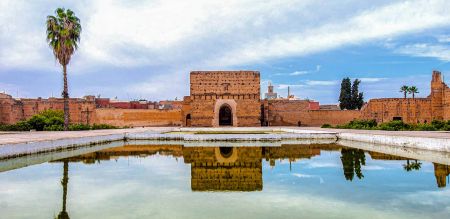
Among various things to do in Morocco El Badi Palace, was built for the Saadian Sultan Ahmed al-Mansour Dhabi in Marrakesh following the same Muslim-Morrocan style of architecture.
Skoura, one of Morocco’s beautiful oases, is located near Ouarzazate near the Atlas Mountains. The city offers its visitors the chance to rest and relax within its charming nature. Know more!
Saidia, Morocco's "Blue Pearl," beckons with its sun-kissed Mediterranean shores, where golden sands stretch for miles, inviting you to lose yourself in a paradise of azure waters, vibrant culture, and endless summer dreams!
Know more about Oujda Morocco, the largest city. It lies in the extreme northeast of Morocco, near the Moroccan-Algerian border.
Agadir is the leading seaside resort in Morocco deserves its title. A 10km-long beach of fine sand and more than 300 days of sunshine a year.
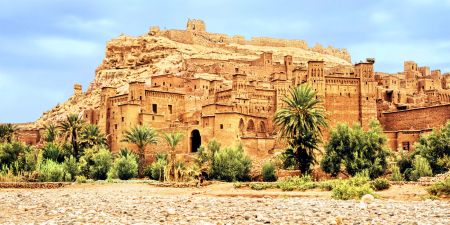
Ait Benhaddou, a UNESCO World Heritage Site in Morocco, is a stunning fortified village renowned for its ancient mud-brick architecture, rich history, and iconic role in numerous films and TV shows!
Tetouan, a charming Hispano-Mauresque town, plays on the mixture of cultures whilst remaining guardian and shopwindow for its most beautiful traditions.
Dive in the heart of the Kingdom Morocco, Beni Mellal, boarded by Er Rachidia from the east, Khouribga in the west, Meknes and Boulemane on the north, Azilal and el Kelaa des Srarhna in the south. Know more!
Taroudant, often called "Little Marrakech," is a historic Moroccan city renowned for its ancient ramparts, vibrant souks, and authentic charm, offering a tranquil escape in the Souss Valley.
The calm coastal Sidi Ifni is grounded over the Fishing activities by its inhabitants' hands who are the Shilha of the Ait Baamrane tribe dwelling the city of Sidi Ifni and its surroundings. Read more!
Khamlia Village, known as the "Gateway to the Desert," is a charming Berber village in Morocco famous for its Gnawa music, rich cultural heritage, and warm hospitality.
Although Zagora, dating back to the 13th century, lacks major architectural monuments, it remains an intriguing destination for exploring southeastern Morocco!
Imlil, Morocco, is a perfect place to escape into the Atlas Mountains. Compared to Marrakech, the region of Imlil is cooler and more tranquil. Know more!