Table of content
Once you understand why El Calafate draws so many visitors, you can decide on the best time to go and sort out the logistics.
Where El Calafate Fits into Your Patagonia Route
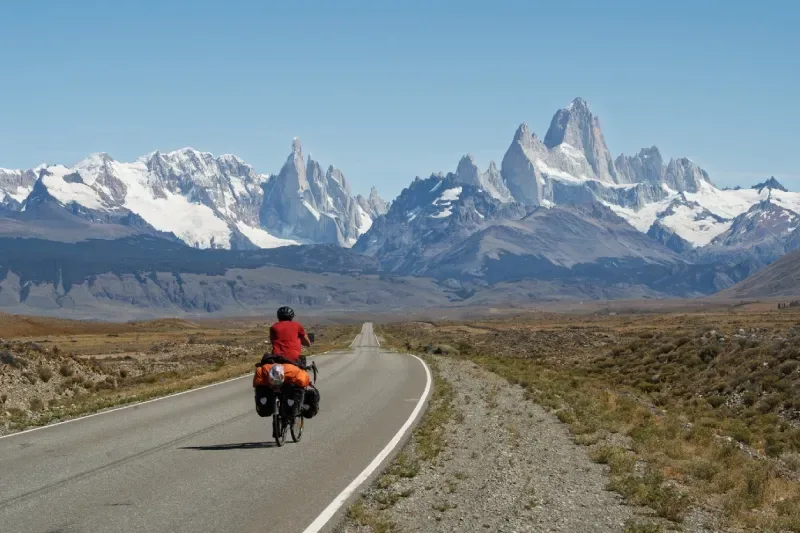
El Calafate serves as Argentine Patagonia's main gateway, with regional flights from Buenos Aires, Córdoba, Bariloche, Ushuaia, and Trelew. You can travel overland from town to El Chaltén to trek near Mount Fitz Roy or cross the border to Chile's Torres del Paine National Park. Most Patagonia itineraries use El Calafate as a hub. Travelers fly in, visit the glaciers, and continue to their next stop by bus or rental car.
Best Time to Visit for Weather, Crowds, and Tours
Summer, from December to February, brings the warmest weather. Average daytime temperatures reach 17°C, with lows near 6°C, while January can reach 20°C. This is also peak season, so prices rise, and walkways get busier.
Spring, from September to November, has daytime highs of about 12°C and fewer crowds. Strong winds are common in November. Autumn, from March to May, averages roughly 11°C. The winds are calmer, and fewer visitors fill the trails.
Winter, from June to August, is cold. Daytime temperatures average 4°C and can fall to -3°C overnight. Patient travelers get the lowest prices and nearly empty viewpoints. Summer days can last up to 17 hours, while winter days are nowhere near as long. February also hosts the two-week Festival del Lago Argentino.
Flights to El Calafate and Airport Transfers
Comandante Armando Tola International Airport (FTE) receives daily flights from Buenos Aires, Ushuaia, Bariloche, and Trelew. The airport is about 22 kilometers from downtown, with a drive time of around 20 to 30 minutes. Taxis cost about ARS155, while the Aerobus shuttle costs closer to ARS62.
Shared shuttles provide luggage assistance and hotel drop-off. They usually cost USD35 to USD40 per person for the 30-minute ride. Book ahead during high season because vehicles fill quickly. Private pickups are also available if you prefer not to share a ride.
Getting Around by Bus, Taxi, Rental Car, or Tour
Downtown El Calafate is easy to explore on foot, with Avenida del Libertador at its center. Taxis and remises suit short trips and airport runs, but agree on the fare before you leave. Intercity buses leave the town terminal for El Chaltén, Río Gallegos, and Puerto Natales.
Rental cars start at about USD70 per day for a full-size vehicle and around USD100 for a compact SUV. A car gives you more freedom to visit the glacier or petrified forest on your own schedule. Guided excursions with hotel pickup are easier if you want to avoid handling the logistics yourself.
What to Budget for Hotels, Food, and Activities
El Calafate costs less than many other Patagonian destinations. A three-star hotel room may cost as little as USD 29 per night during shoulder season. Food prices vary. A parrilla dinner at a place such as La Zaina averages ARS341 per entrée, while tapas at a local brewery cost closer to ARS93 per dish. Groceries are affordable too, and a dozen eggs costs about ARS20.
Park entrance fees, boat excursions, and airport transfers usually come separately from your hotel rate.
What to Pack for Wind and Changing Weather
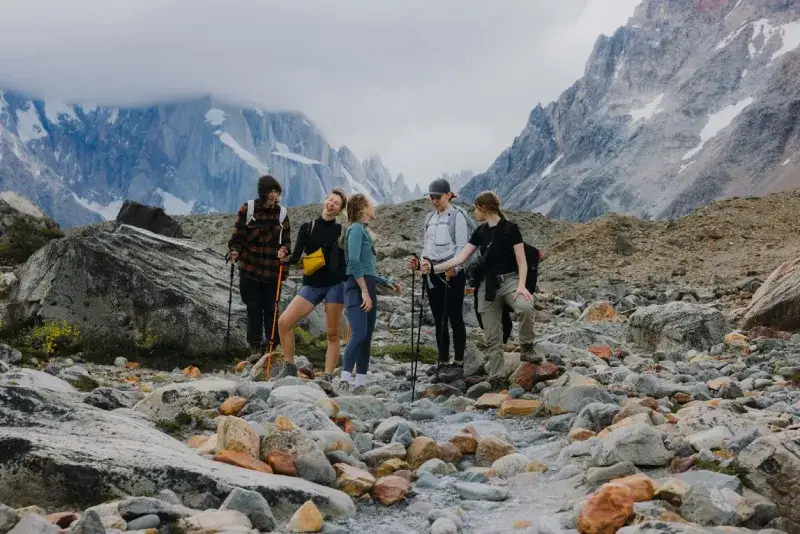
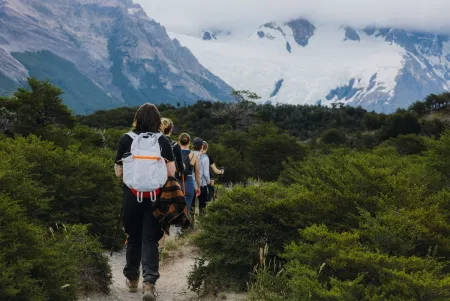
Patagonia's weather can change fast, so layers matter more than any one jacket. Pack:
-
A waterproof, windproof outer shell with a warm fleece mid-layer
-
Moisture-wicking base layers that dry fast if rain catches you outside
-
Broken-in waterproof hiking boots with ankle support
-
A warm hat and sun hat, along with windproof gloves, because wind and glacier glare can be intense
-
Sunglasses with a strap, so a gust does not send them into the lake
Temperatures can move from sunny warmth to biting cold within one afternoon. Pack sunscreen and SPF lip balm, even for cloudy days.
![A group of hikers with backpacks and trekking poles rests on a rocky trail beneath cloud-covered peaks in Patagonia]()
Once you've sorted out the logistics, the glacier deserves its own plan. Perito Moreno offers more than a single viewpoint. You can choose from several experiences, each determining how close you get to the ice.
Explore the Glacier Walkways and Available Viewpoints
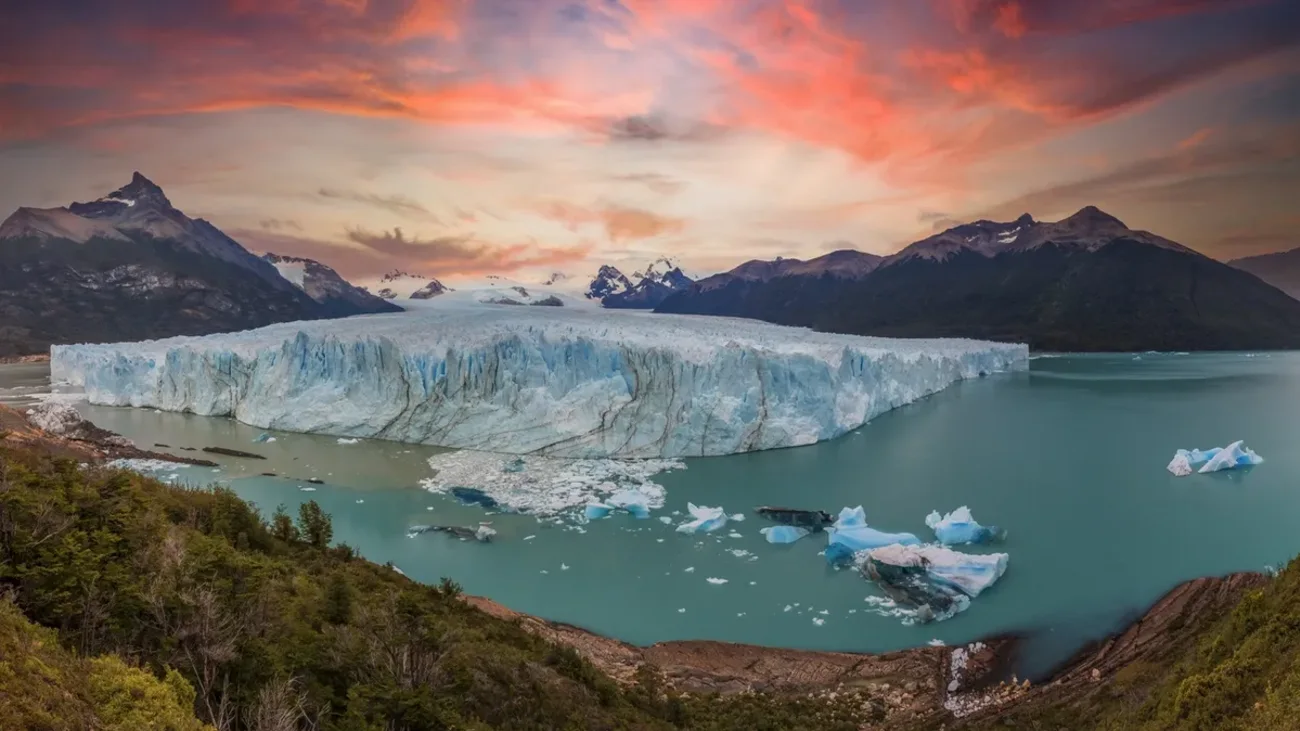
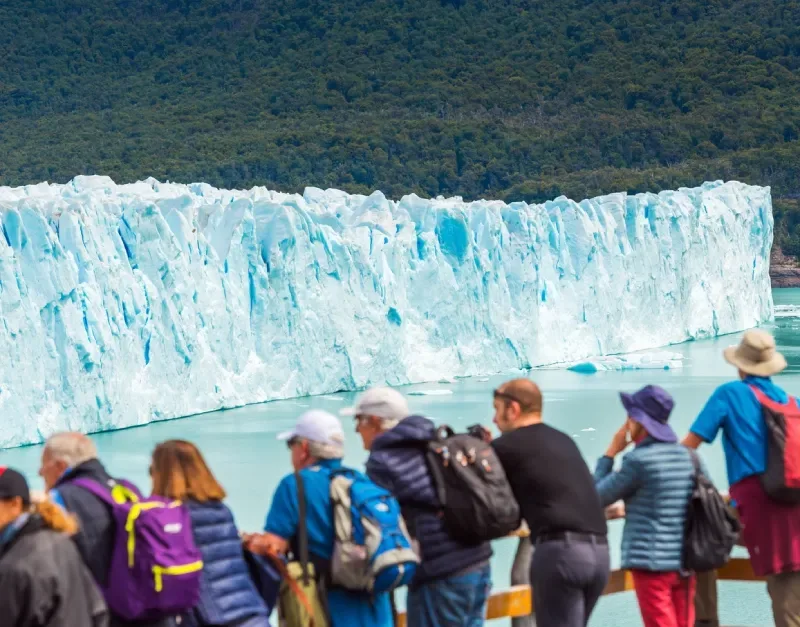
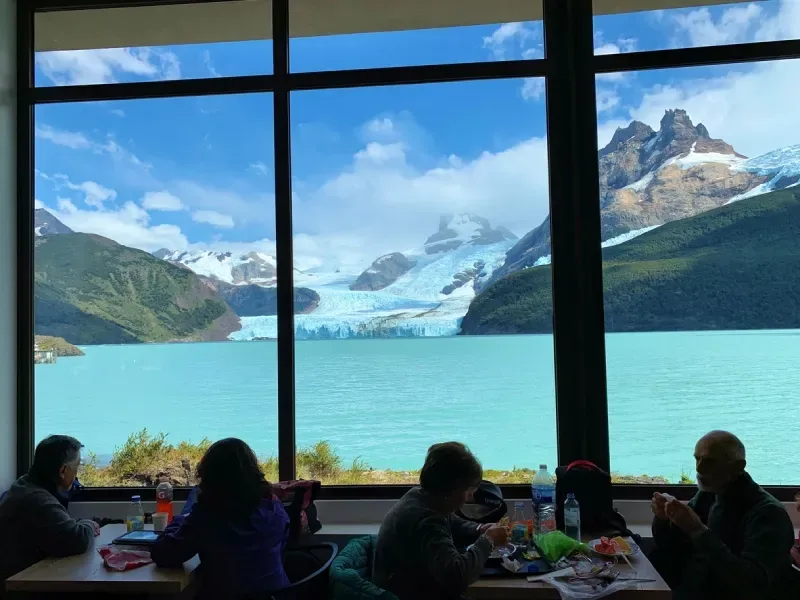
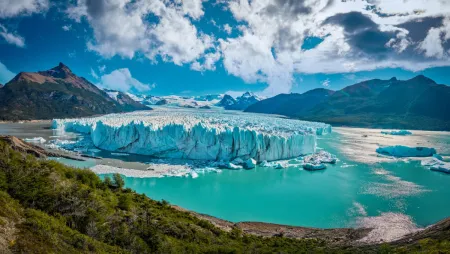
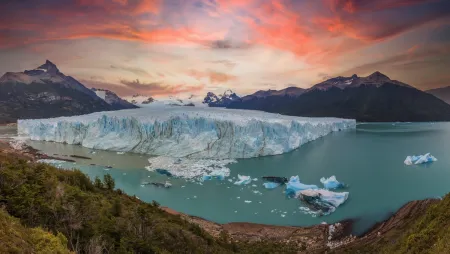
The glacier covers nearly 250 square kilometers and remains one of the planet's few glaciers that is still advancing rather than retreating. Metal footbridges stretch roughly 4.7 kilometers and connect the main viewing circuits. The white "accessible" path guides visitors to Primer Balcón, the widest panoramic viewpoint and one of the best places to see a calving event. The yellow central path and steeper Balcón Inferior route take you closer to the ice front, and the climb gives you a clear sense of the glacier's scale. A free shuttle runs every few minutes between the parking area and walkway entrance so that you can save your energy for the trails.
Take a Boat Trip Along the Ice Walls
A boat trip offers a completely different view of the glacier. The ice wall rises above you, and the cracking sounds travel across the water. Standard cruises last about an hour and cost around USD 50 to USD 57 per person. Full-day navigation trips to Upsala and Spegazzini glaciers cost more, but they cover a much larger section of Lago Argentino in one outing.
Compare Guided Glacier Treks and Check Fitness Requirements
Two official options let you walk on the ice itself, and the park's sole concessionaire operates both. Here is how they compare:
|
Feature
|
Minitrekking
|
Big Ice
|
|
Time on ice
|
1 to 1.5 hours
|
3 to 4 hours
|
|
Age range
|
8 to 65
|
18 to 50
|
|
Fitness level
|
Moderate
|
High
|
|
Price
|
USD 371 to 530
|
USD 459
|
Big Ice includes a 2-kilometer moraine approach over loose rock and slopes of up to 35 degrees. That demanding route explains the stricter age limit. Los Glaciares National Park recorded more than 700,000 visitors in 2023, and Perito Moreno receives most of them. Reserve your trek in advance, especially during busy periods.
Plan Your Visit: Transport, Park Tickets, and Booking Tips
Perito Moreno sits about 80 kilometers from El Calafate, or roughly 1.5 hours each way by bus, taxi, or rental car. Park entry costs around USD 31 and is separate from tour or trek fees. Summer hours are 8am to 6pm, while winter hours are 9am to 4pm. Arrive before 9am to enjoy the walkways before the bus crowds arrive.
![A group of people on the background of the Perito Moreno Glacier]()
What are the best things to do in El Calafate?
Visit Perito Moreno Glacier, cruise Lago Argentino, and watch flamingos at Laguna Nimez. Other highlights include the Glaciarium museum, horseback riding at an estancia, and trying Patagonian lamb.
How many days should you spend in El Calafate?
Two to three days cover the main highlights, including Perito Moreno and a lake cruise. Allow four days or more for extra adventures and flexibility if the weather changes.
When is the best time to visit El Calafate?
December to February offers the warmest weather and longest daylight hours, but also the biggest crowds. Spring and autumn are quieter alternatives, with cooler temperatures.
How can you visit Perito Moreno Glacier from El Calafate?
The glacier is about 80 kilometers away, roughly 1.5 hours by bus, taxi, rental car, or guided tour. Explore the viewing walkways, add a boat ride, or book a guided ice trek. Park admission is separate from tour fees.
Should you visit both El Calafate and El Chaltén?
Yes, if you want glacier sightseeing and mountain hiking. The towns are about three hours apart; allow at least one full day in El Calafate and two in El Chaltén.
Beyond the glacier, El Calafate offers several excursions that complete a trip to this part of Patagonia. Each experience reveals a different side of the region, from water and wildlife to ice research and rural life.
Cruise Lago Argentino to See Upsala and Spegazzini Glaciers
A boat trip on Lago Argentino passes Upsala, one of South America's largest glaciers at about 765 square kilometers, and Spegazzini, where ice walls rise nearly 135 meters high. It has the tallest glacier front in the park. The Todo Glaciares tour departs from Punta Bandera, about 47 kilometers from town, and stops at Spegazzini Base. A walking trail there passes the De Agostini Lookout, which opened in December 2024. Full itineraries last between 7 and 11 hours. Prices begin at about USD 235 and can reach USD 360, depending on the route and meal option.
Watch Flamingos at Laguna Nimez
Laguna Nimez is about a kilometer from downtown, reached by an easy walk across the white bridge over the Calafate stream. The 70-hectare reserve has recorded 132 bird species and holds Important Bird Area status from BirdLife International. Groups of 50 to 100 Chilean flamingos gather near the lagoons, especially between October and March. The flat 3-kilometer trail takes about 90 minutes at a relaxed pace, and the reserve remains open year-round.
Learn About Patagonia’s Ice at the Glaciarium
The Glaciarium opened in 2011 and covers 2,500 square meters of exhibition space. Its scientific director, glaciologist Pedro Skvarca, has studied Patagonian and Antarctic ice for decades. The museum's ice bar is built with glacial ice and kept at around -15°C. It is located 6 kilometers from town along Route 11, and a free daily transfer leaves from downtown.
Visit an Estancia for Horse Riding and Rural Traditions
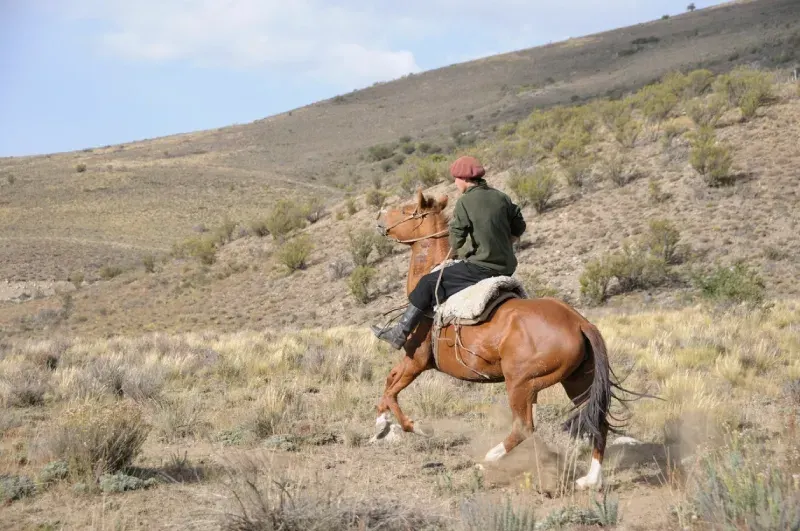
Estancia Nibepo Aike is about 55 kilometers from El Calafate. Visitors can watch sheep shearing, enjoy an asado lunch, and ride horseback through Los Glaciares National Park. Closer to town, Estancia 25 de Mayo offers rides that cover 12 kilometers round trip over about four hours, followed by a countryside lunch.
Choose a Cerro Frías 4x4 Tour for Lake and Mountain Views
Cerro Frías lies 25 kilometers from town, outside the Andes range. Its location offers views of Torres del Paine, Fitz Roy, and Lago Argentino from one viewpoint. The half-day tour lasts about four hours, and vehicles climb to roughly 450 meters before stopping near the summit. Prices start at about USD 158.
See Rock Art at Punta Walichu
Punta Walichu is roughly 7 to 8 kilometers from El Calafate. The site has rock paintings estimated to be around 4,000 years old and linked to pre-Tehuelche peoples.
![A gaucho rides across the Patagonian steppe, a scene of the rural traditions visitors can experience at local estancias]()
Customize Your Dream Vacation!
Get in touch with our local experts for an unforgettable journey.
Plan Your Trip
Once the glacier excursions wind down, El Calafate itself offers a good reason to slow down and settle in for the evening.
Choose Between Downtown Hotels and Lakefront Stays
Downtown rooms cluster around Avenida del Libertador, with restaurants and shops within walking distance and tour desks nearby. Budget stays start at about USD 40 a night, while boutique options with a hot tub and sauna begin at USD 115. Travelers who want to wake up by Lago Argentino can expect to pay between USD49 and USD162 per night. Properties such as Xelena Hotel offer lake-view balconies and an indoor-outdoor pool. Confirm the shuttle schedule before booking, as lakefront hotels often require a taxi ride to reach the town's restaurant strip.
Try Patagonian Lamb and Local Restaurants
Patagonian lamb, slow-cooked beside a wood fire on an iron cross, defines dinner here. La Tablita on Coronel Rosales has served this style since 1968, while Casimiro Biguá keeps its downtown asador cooking for more than three hours. Mi Rancho offers something different with guanaco served grilled or smoked, as well as in stews.
Taste Calafate Berry Treats and Learn the Return Legend
A Tehuelche legend holds that anyone who eats the small purple calafate berry will return to Patagonia. The story dates back to a healer named Koonek, who survived winter alone and became the thorned bush that bears fruit each summer. Bars around town serve the Calafate Sour, a purple take on the pisco sour made with the berry.
Browse the Artisan Market and Visit Local Breweries
Paseo de los Artesanos opens most evenings from 5pm to 10pm and sells mate gourds and leather goods, along with silver jewelry set with rhodochrosite. La Zorra Taproom and Nativa Restaurante serve craft beer brewed in town afterward.
![Tourists looking from a window at the Perito Moreno glacier in Argentina]()
The number of days you spend in El Calafate determines which experiences fit your trip. Use your itinerary length to choose the right balance of glacier visits, local stops, and side trips.
One Day: Prioritize the Glacier with Limited Time
With only one day, head straight to Perito Moreno and skip the rest. Choose the walkways or combine them with a boat ride along the ice wall. Both options are possible without booking a multi-day tour.
Two to Three Days: Balance Major Sights with Local Stops
Most travelers stay for three days and two nights. This schedule allows for the glacier on day one, a Lago Argentino boat cruise on day two, and Laguna Nimez or Cerro Frías on day three. Two days can still cover the main sights if time is limited.
Four Days or More: Add Adventures and a Weather Buffer
A fourth day gives you time for the La Leona Petrified Forest or a steppe outing, such as horseback riding or a 4x4 route. Some operators structure four-day plans around a glacier navigation and a Viedma adventure, with an extra day available if bad weather disrupts plans. Four nights offer a comfortable pace, though three can be enough with favorable flight times.
El Calafate or El Chaltén: Visiting Both
Allow at least one full day in El Calafate and two days in El Chaltén. The towns are about three hours apart by bus or car. A day trip is only practical with a rental car because bus schedules do not support it. Many travelers split their stay between two nights in each town.
Continuing to Torres del Paine: Travel Time and Border Planning
Visit El Calafate before Torres del Paine because flight connections work better from here. A round-trip tour takes 14 to 16 hours and crosses the border twice over roughly 700 kilometers. It provides only 4 to 5 hours inside the park. Buses to Puerto Natales take 5 to 7 hours, while border processing can add 15 minutes to 3 hours depending on the season.
Conclusion
El Calafate is worth visiting whether you have one day or a full week. The glacier walkways alone make the trip worthwhile, while boat rides, flamingo-filled lagoons, and estancia visits can fill the rest of your stay. Your budget goes further here than in other Patagonian towns, so you can splurge on a glacier trek and still enjoy affordable meals downtown.
Choose your visit length based on how much you want to explore, whether that means a quick glacier stop or more time with ice, wildlife, and local culture. Pack for changeable weather, book popular treks early, and let this small town live up to its reputation.
![Cyclist riding paved road toward massive Mount Fitz Roy, Patagonia, Argentina]()