Table of Content
#Why Kenya and Not Just Tanzania?
#The Great Migration Month-by-Month
#Wildlife You'll See Beyond Wildebeest
#The Mara River Crossing: What Actually Happens
#Choosing Where to Stay in the Maasai Mara
#How to Get to the Maasai Mara
#What to Pack for a Mara Migration Safari
#Responsible Safari Travel in Kenya
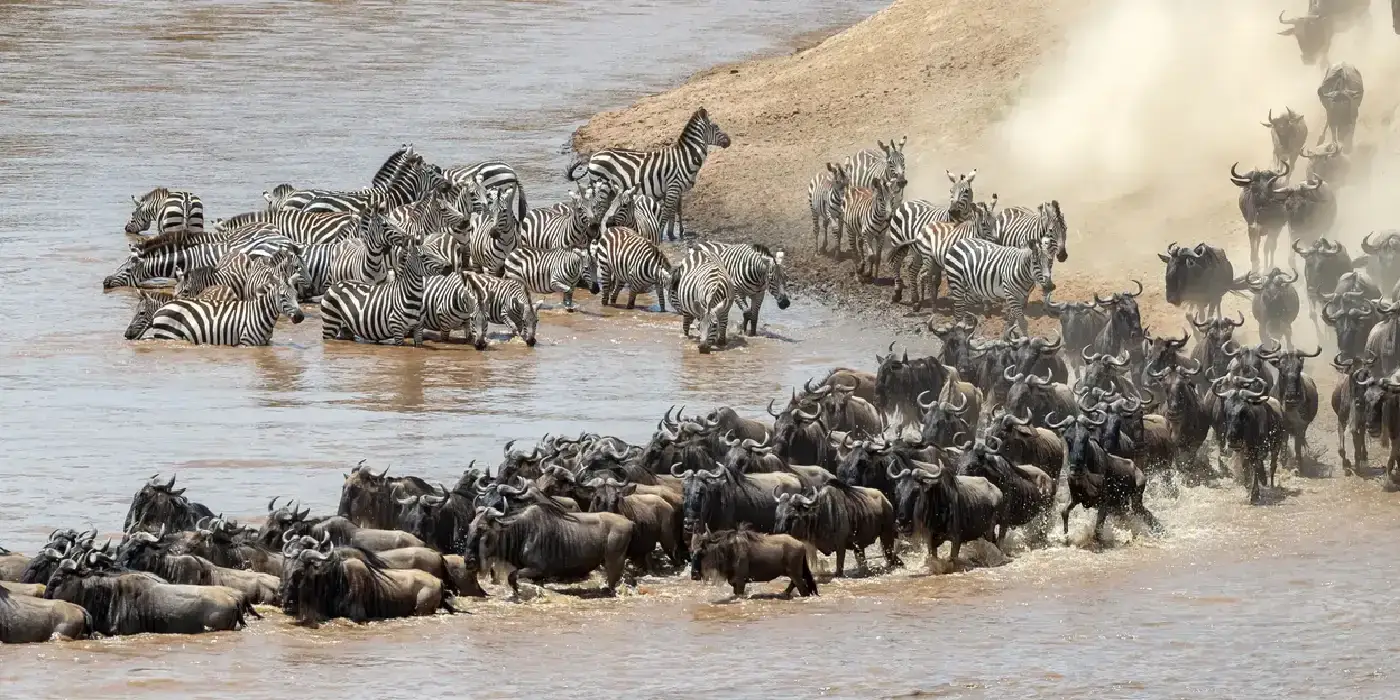
Every year, roughly two million wildebeest, zebra, and gazelle trace an ancient, instinct-driven circuit across the Serengeti-Mara ecosystem. In Kenya, this loop reaches its most electrifying climax, a chaotic, heart-stopping crossing of the Mara River that has no script, no schedule, and no guarantee. This is the Great Migration, and it is absolutely worth building your life around.
#What Is the Great Migration?
The Great Migration is the largest overland wildlife movement on the planet. It is not a single event but a continuous, year-round loop driven by rainfall and fresh grass, two things wildebeest cannot live without. The herds follow no fixed calendar. They follow the rains.
The circuit spans the Serengeti National Park in Tanzania and the Maasai Mara National Reserve in Kenya, covering roughly 3,000 kilometres. While the calving season in Tanzania's southern Serengeti gets attention, it is the Kenyan leg, specifically the Mara River crossings from July through October, that most travellers picture when they hear "the Great Migration."
Quick Fact: Wildebeest are born to run, calves can stand within minutes of birth and keep pace with the herd in days. During the Mara crossings, roughly 250,000 wildebeest make the dangerous swim across crocodile-filled waters.
#Why Kenya and Not Just Tanzania?
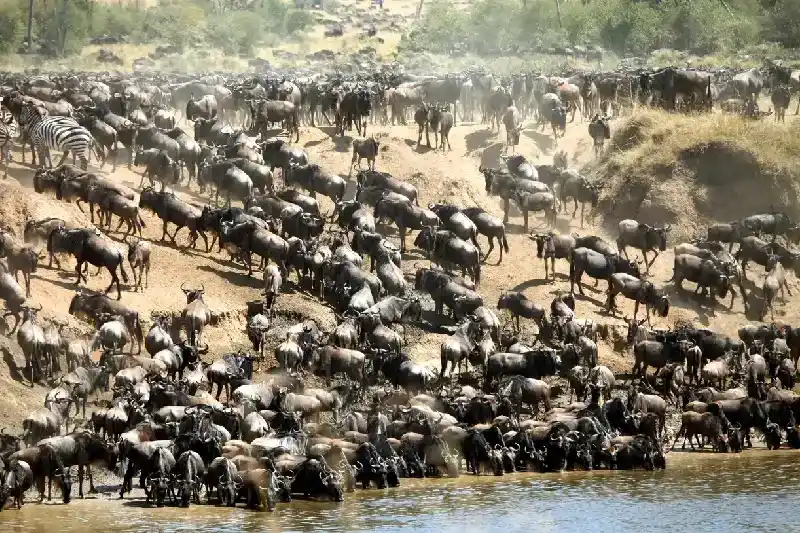
Tanzania's Serengeti is where most of the migration's year is spent. But Kenya's Maasai Mara is where the drama peaks. The Mara River is the ultimate barrier, wide, fast, and full of Nile crocodiles. Watching a herd stand at the bank for hours before a sudden mass panic sends thousands plunging in at once is, without exaggeration, one of the most intense natural spectacles on Earth.
Ready to witness it yourself? View our Kenya Safari Tours!
Customize Your Dream Vacation!
Get in touch with our local experts for an unforgettable journey.
Plan Your Trip
#The Great Migration Month-by-Month
Understanding where the herds are is the key to planning the right trip. Here is a concise breakdown of the full annual cycle, with emphasis on Kenya's prime window.
January – March: (Southern Serengeti, Tanzania)
Calving season. Around 8,000 wildebeest are born daily. Great predator action, but in Tanzania.
April – May: (Central Serengeti)
Long rains. Herds move north. Fewer tourists; can be excellent value for Tanzania safari.
June: (Western Corridor, Tanzania)
Grumeti River crossings begin. First dramatic crossings of the migration year.
July – August: (Maasai Mara, Kenya)
Herds start entering Kenya. First Mara River crossings. Peak drama begins. Book early.
September – October: (Maasai Mara, Kenya)
The golden window. Highest concentration of crossings. Exceptional predator activity.
If your goal is witnessing a Mara River crossing in Kenya, plan your trip between mid-July and late October, with September being the single most reliable month.
#The Mara River Crossing: What Actually Happens
This is the moment that defines the Kenyan migration experience. Here is the honest, unfiltered reality of what a river crossing looks and feels like.
The Build-Up
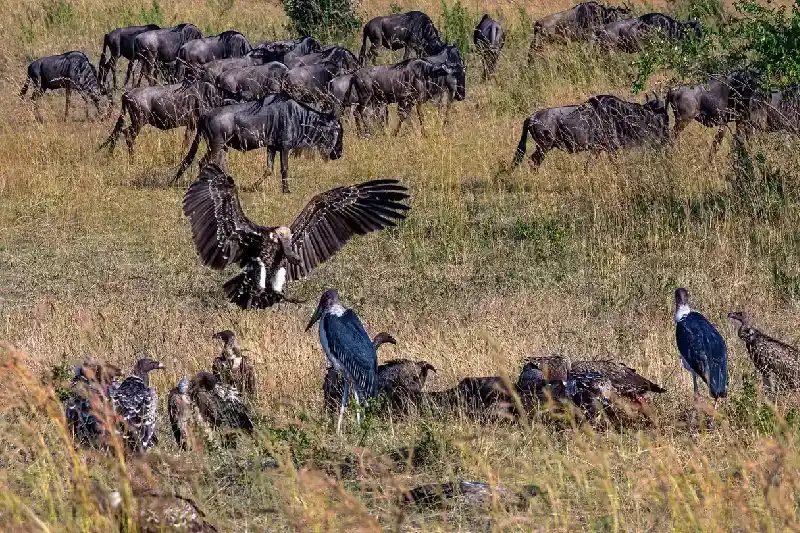
Thousands of wildebeest gather at the riverbank. There is a collective nervous energy, the animals mill about, approach the water's edge, then retreat. This can last minutes or hours. Nobody knows what triggers the eventual charge. One animal, sometimes a zebra, sometimes a wildebeest, simply commits, and in seconds, thousands follow in a thunderous stampede into the water.
The Crossing
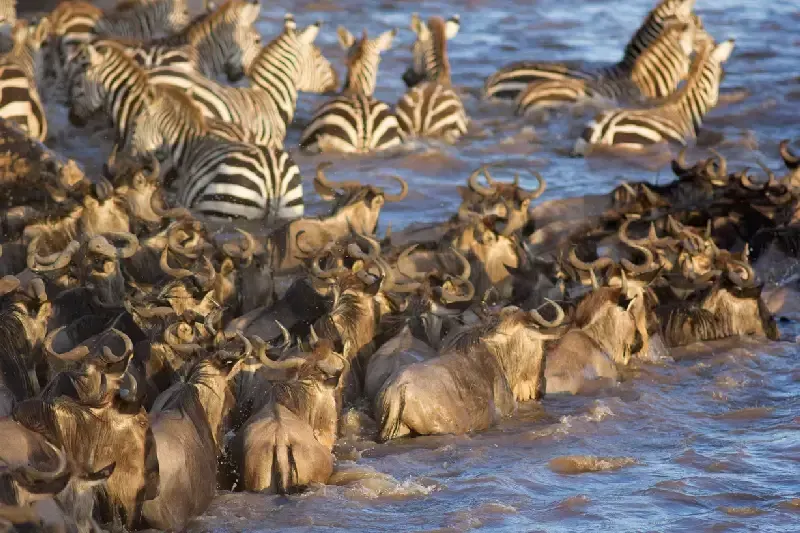
The river churns. Crocodiles, some over five metres long, move in immediately. The noise is extraordinary: splashing, grunting, the cracking of hooves on rock. Weaker animals get swept downstream. Others scramble up steep muddy banks on the far side. The chaos lasts 10 to 30 minutes, sometimes longer.
The Aftermath
The survivors shake off the water and walk calmly into the Mara grasslands as though nothing happened. The predators, lions, cheetahs, hyenas, and wild dogs, are waiting. The river crossing is the beginning of another hunt, not the end of the spectacle.
"You sit in that Land Cruiser barely breathing, watching two thousand animals suddenly decide, all at once, that today is the day they cross. Nothing prepares you for it."— First-time safari traveller, Maasai Mara
#Wildlife You'll See Beyond Wildebeest
The migration brings the herds, but the Maasai Mara is a year-round Big Five destination. Here is what is present during the migration season:
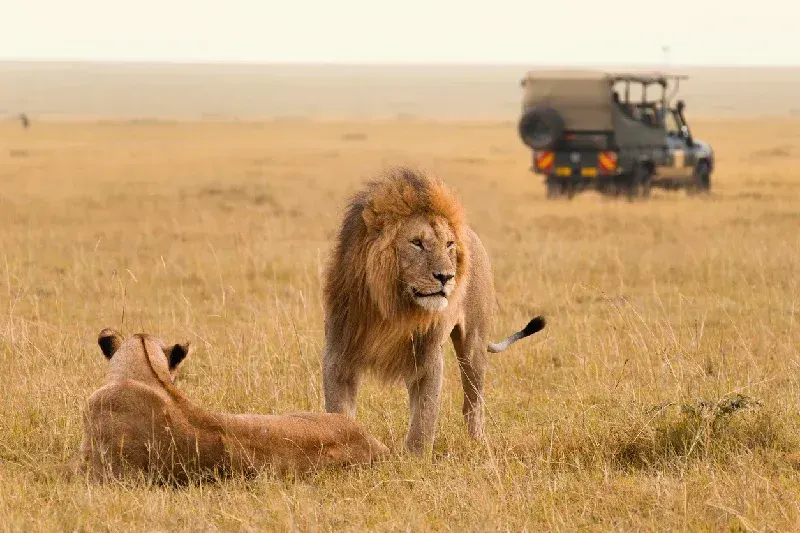
- Lion: The Mara has one of Africa's highest lion densities. Prides of 20+ are common during the migration feast.
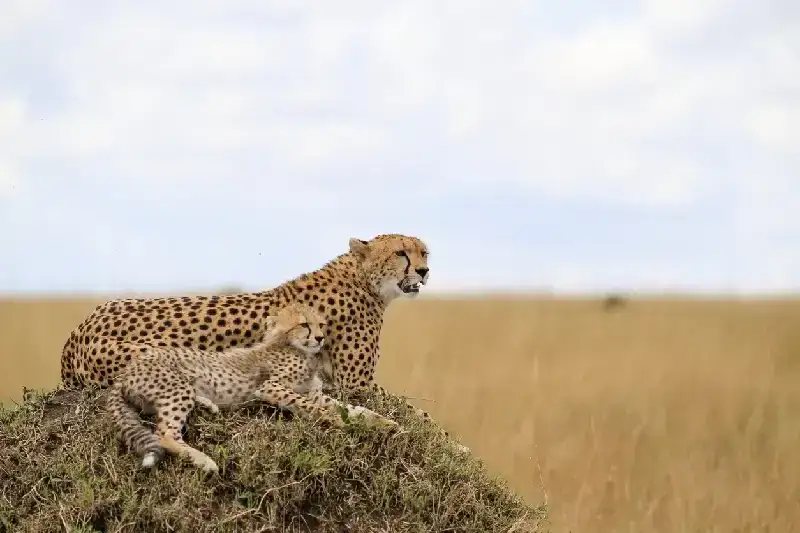
- Cheetah: Open plains make for excellent cheetah viewing. The Thomson's gazelle that follow the herds are prime cheetah prey.
- Black Rhino: A small but meaningful black rhino population exists in the Mara. Rare and extraordinary to spot.
- Elephant: Large herds frequent the Mara woodlands and river zones year-round. Very approachable by vehicle.
- Hippo: Dense hippo pods inhabit the Mara River itself, a dramatic backdrop to the wildebeest crossings.
- Nile Crocodile: Ancient and enormous. Some individuals in the Mara are estimated to be over 70 years old and 5+ metres long.
#Choosing Where to Stay in the Maasai Mara
Your camp or lodge location matters enormously. The Mara ecosystem is divided into the National Reserve (government-managed) and surrounding private conservancies. Understanding the difference is crucial to getting the most from your safari.
The National Reserve
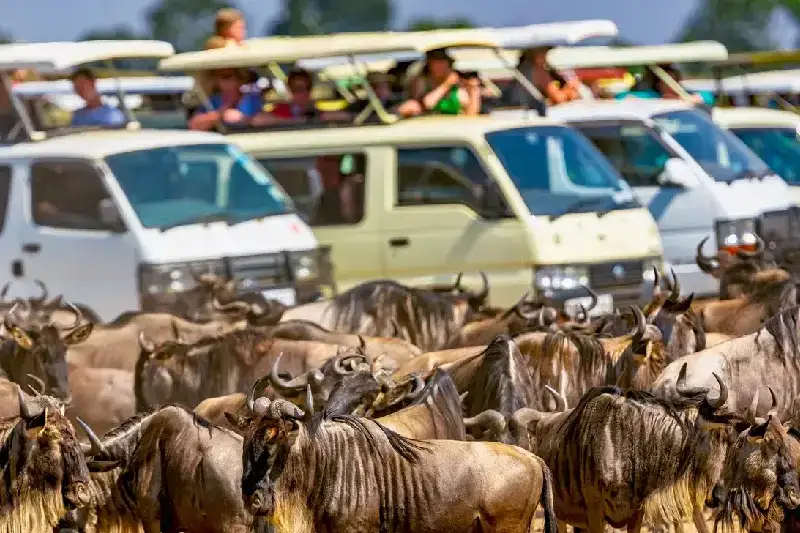
- Open to all vehicles and day-trippers, can be crowded at crossings during peak season
- More affordable; self-drive permitted
- Excellent access to the main Mara River crossing points
- No off-road driving permitted
Private Conservancies (Highly Recommended)
- Exclusive use areas bordering the reserve, fewer vehicles, more intimate experience
- Night game drives and off-road driving typically allowed
- Walking safaris and bush breakfasts are common extras
- Higher prices, but the experience is categorically different
- Key conservancies: Olare Motorogi, Naboisho, Mara North, Ol Kinyei
Pro Tip: Book conservancy camps at least 6–9 months in advance for July–October travel. Start Planning your Kenya Safari
#How to Get to the Maasai Mara
The Maasai Mara is located in southwestern Kenya, approximately 270 km from Nairobi. There are two main ways to reach it:
- Scheduled bush flights from Wilson Airport, Nairobi: approximately 45 minutes. Multiple daily departures to Mara airstrips (Keekorok, Mara North, Olare Orok). By far the most comfortable and efficient option.
- Road transfer from Nairobi: approximately 5–6 hours by road through the Rift Valley. Scenic but long; best combined with a stop at Lake Naivasha or the Great Rift Valley viewpoint.
- Fly into Nairobi's JKIA: well-connected to major hubs including London Heathrow, Dubai, Amsterdam, and Addis Ababa.
#What to Pack for a Mara Migration Safari
Clothing & Gear
- Neutral-toned clothing (khaki, olive, tan)
- Light layers, mornings are cool; afternoons warm
- Wide-brimmed hat and UV-protection sunglasses
- Comfortable closed-toe shoes
- Light rain jacket (July–October can have afternoon showers)
Photography & Health
- 300mm+ zoom lens for wildlife; wider lens for landscapes
- High-speed memory cards, crossings happen fast
- Yellow fever vaccination certificate (required for Kenya entry)
- Malaria prophylaxis (consult your doctor)
- Insect repellent with DEET
#Responsible Safari Travel in Kenya
The Maasai Mara faces real pressures: over-tourism at crossing points, habitat encroachment, and the challenge of balancing conservation with local livelihoods. Travelling responsibly makes a direct difference.
- Choose conservancy-based camps: a portion of every conservancy fee goes directly to Maasai landowners and community projects
- Follow your guide's lead: experienced guides know when to give animals space and will never allow harassment of wildlife
- Limit vehicles at crossings: ask your camp about their vehicle-limit policies at the river
- Travel with accredited operators: look for Kenya Tourism Board registered companies
- Respect Maasai communities: ask before photographing people; consider purchasing crafts directly from artisans
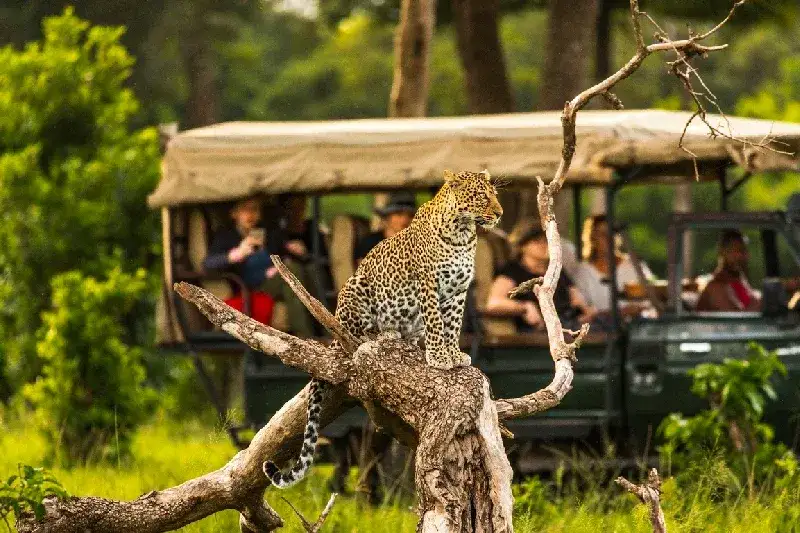
The Great Migration in Kenya has been happening for millions of years. This could be the year you finally see it yourself. Book your Kenya Safari tour.
FAQS
The Great Migration in Kenya refers to the annual movement of over two million wildebeest, zebra, and gazelle into the Maasai Mara National Reserve from Tanzania's Serengeti. It typically occurs between July and October and is best known for the dramatic Mara River crossings, where massive herds brave fast currents and Nile crocodiles to reach fresh grazing grounds. It is widely considered the greatest wildlife spectacle on Earth and a bucket-list experience for safari travellers.
No. Crossings are entirely unpredictable, they can happen multiple times a day or go days without occurring. September is statistically the most active month. Good guides will monitor the herds daily to position you as close as possible to the action.
A minimum of three nights is recommended to have a good chance of witnessing a crossing. Five to seven nights significantly increases your odds and allows for a far richer, less rushed experience.
No, though they are the most dramatic part. The entire Mara ecosystem buzzes during this period. Predator sightings are exceptional, the birdlife is extraordinary, and the sheer density of animals across the plains is unlike anything else in Africa.
Absolutely. Popular combinations include Amboseli (elephants with Kilimanjaro views), Samburu (rare northern species), Lake Nakuru (flamingos and rhino), and the Kenya coast. A 10–14 day itinerary can accommodate two or three destinations comfortably.
The Maasai Mara is exceptional year-round for wildlife. The migration season (July–October) layers the herds and river crossings on top of that. Outside migration season, the Mara is quieter, cheaper, and still offers outstanding game viewing, particularly for lion, elephant, and big cats.