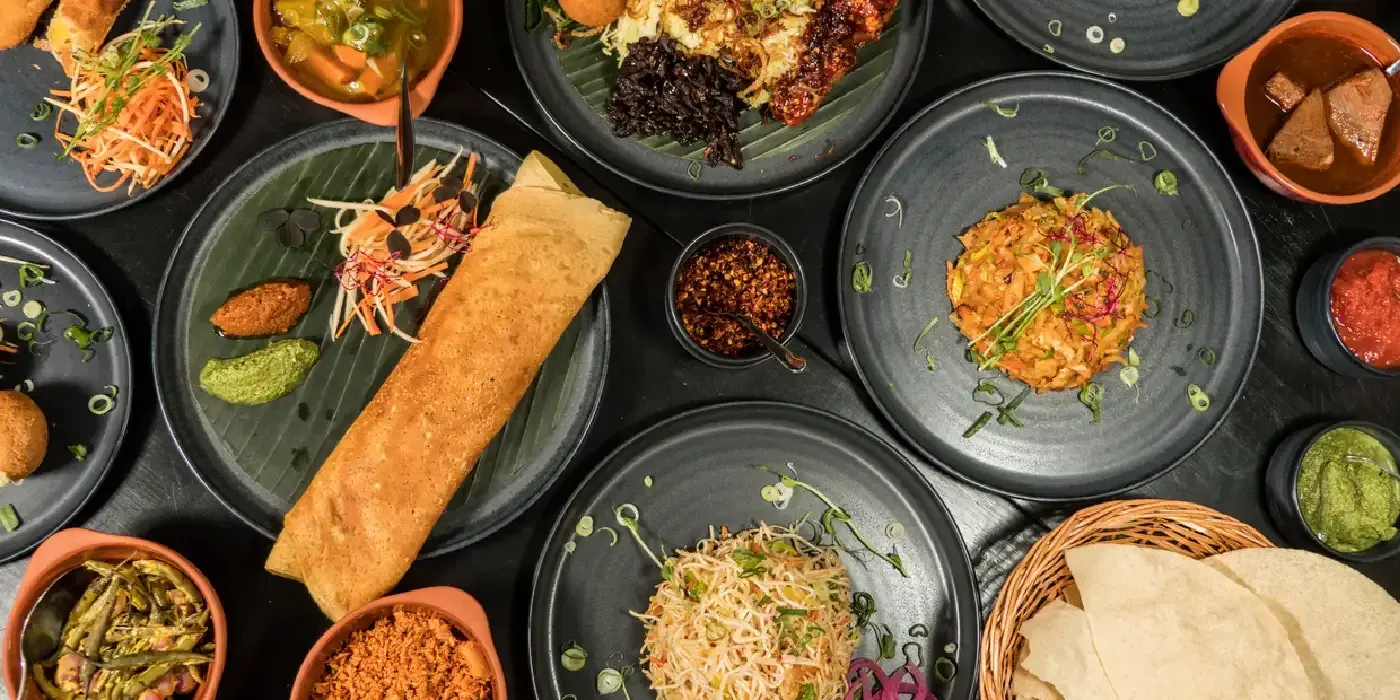
Sri Lanka doesn't just have food, it has a food culture that'll completely rewire your taste buds. Imagine waking up to the scent of coconut milk simmering with pandan leaves, or sitting roadside at dusk watching a kottu roti chef rhythmically chop and fry your dinner on a scorching iron griddle. That's Sri Lanka.
Whether you're planning a cultural tour of Colombo, a beach holiday in Mirissa, or an ancient cities circuit through Dambulla and Sigiriya, eating your way through Sri Lanka is a non-negotiable part of the experience. This guide breaks down the 10 essential dishes you can try in Sri Lanka.
Sri Lankan Cuisine: Key Facts for Travelers
- Heavily influenced by South Indian, Dutch, Portuguese, and Malay cuisines
- Coconut milk, pandan, goraka, and Maldive fish are staple ingredients
- Spice levels range from mild to intensely hot, always ask first
- Street food is safe, abundant, and often the most authentic option
- Rice and curry is eaten twice daily by most Sri Lankans
- Vegetarian and vegan options are widely available island-wide
- Best food regions: Colombo, Galle, Jaffna, and the Hill Country
- Always try local tea: Sri Lanka produces some of the world's finest
Customize Your Dream Vacation!
Get in touch with our local experts for an unforgettable journey.
Plan Your Trip
Top 10 Sri Lankan Dishes to Try
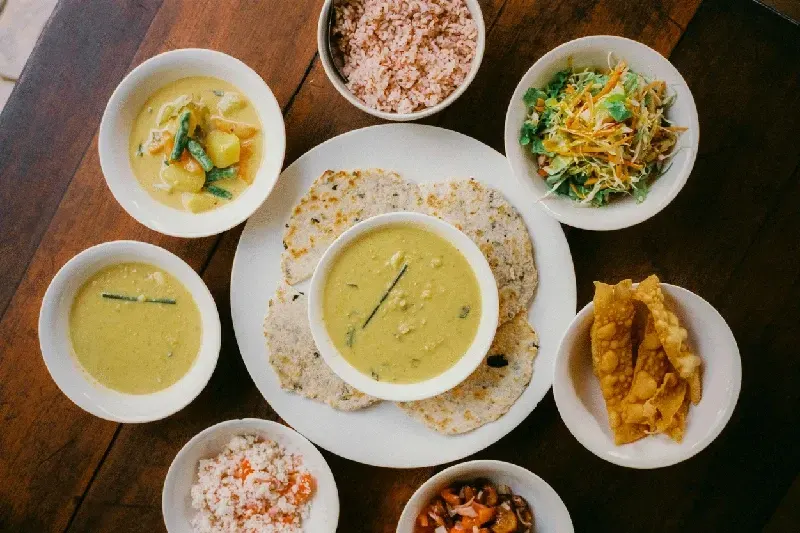
1- Rice and curry: Vegetarian-Friendly | Spicy
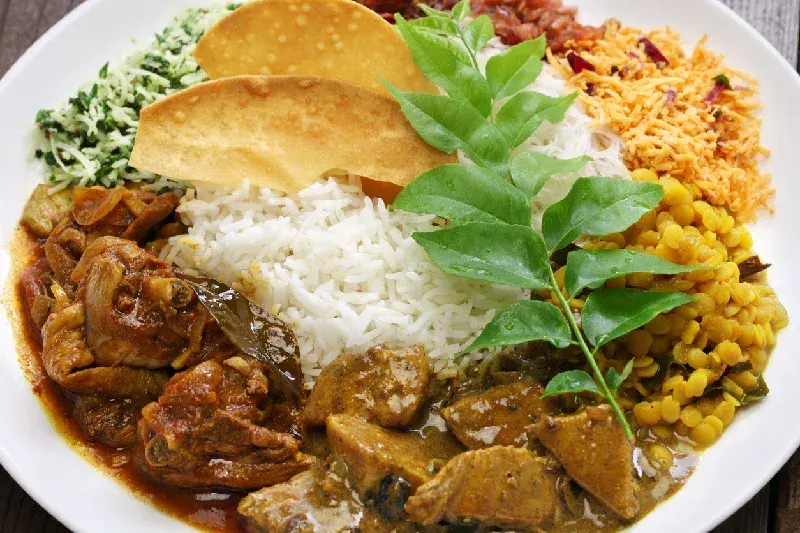
Rice and curry is not a single dish, it's a philosophy. A mound of steamed white or red rice arrives surrounded by four to six small bowls of curries: a dal (lentil curry), a vegetable curry, a fish or meat curry, sambal, papadom, and pickle. Everything is eaten together, mixed with your right hand in the Sri Lankan tradition.
- Each region has its own variation, Jaffna's version is more tamarind-forward; coastal areas lean heavily on seafood
- Coconut milk softens the heat of the spices and creates a creamy, layered flavor
- A full rice and curry lunch at a local restaurant (known as a "rice packet") costs as little as 300–600 LKR
- Best eaten at lunchtime, many local spots only serve it until around 2pm
Where to try it: Any local "kade" (small restaurant) or roadside canteen across the island.
2- Hoppers (Appa): Vegetarian | Street Food
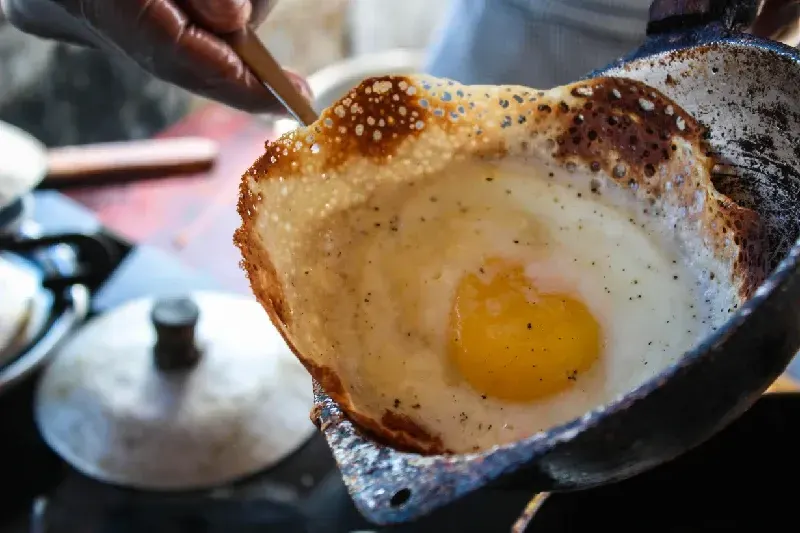
Hoppers are thin, crispy-edged rice flour pancakes cooked in a small wok-like pan over a flame. The batter, fermented with coconut milk and a touch of palm toddy, produces a slightly sour, airy pancake with a chewy center. An egg hopper has a whole egg cracked into the center while it cooks.
- Eaten for breakfast or dinner, typically with lunu miris (a fierce onion and chilli sambal), coconut sambal, or seeni sambal (caramelized onion)
- String hoppers (idiyappam) are a related dish, fine noodles pressed into flat rounds, eaten with curry or coconut milk
- Hoppers have a naturally gluten-free batter, making them popular with dietary-conscious travelers
- Available at any hopper-specific shop (called a "hopper place") or street stall from around 6pm onwards
3- Kottu Roti: Street Food | Spicy
The sound of kottu roti being made is unmistakable, two metal blades clang rhythmically against a hot iron griddle, chopping shredded roti bread together with egg, vegetables, and curry. It's Sri Lanka's answer to fried rice, but louder, heartier, and more addictive. You can smell a kottu stall from 200 meters away.
- Choose your protein: chicken, beef, mutton, cheese (paneer), or plain vegetable
- Served with a side cup of curry gravy to pour over the top
- Best eaten straight off the griddle, the crispy bits of roti are the prize
- Price ranges from 400–900 LKR depending on protein and location
- Widely considered Sri Lanka's most popular street food dish
Where to try it: Kottu is everywhere, but Colombo's Pettah market area and any roadside stall after 7pm is your best bet for the real, unfiltered experience.
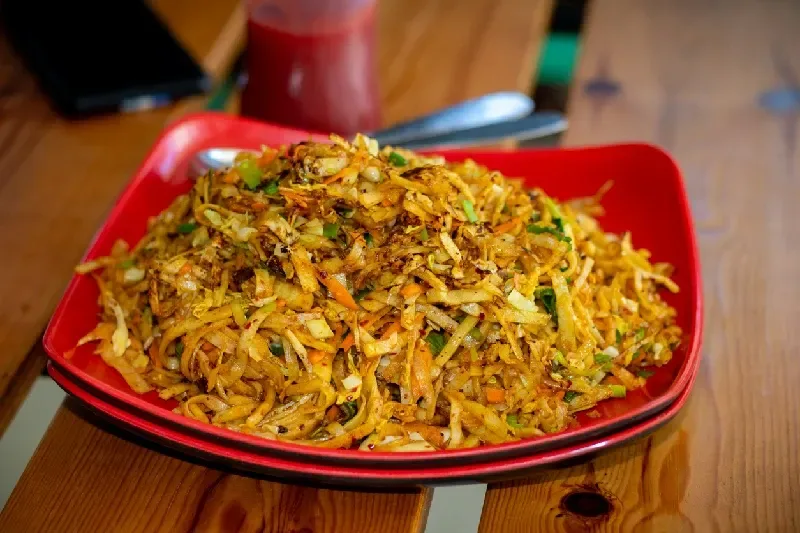
4- Fish Ambul Thiyal: Seafood
Ambul thiyal (literally "sour fish curry") is one of Sri Lanka's most distinctive dishes, dark, intensely flavored cubes of tuna or wahoo slow-cooked with goraka (a dried sour fruit similar to kokum), black pepper, turmeric, and curry leaves until almost all the liquid has evaporated. The result is a dry, deeply aromatic, profoundly savory curry unlike anything else in the region.
- Goraka acts as both a souring agent and a natural preservative, this curry traditionally keeps for days without refrigeration
- Originates from the southern coastal region around Galle and Matara
- Usually made with tuna (thalapath) or a similar firm-fleshed fish
- Best eaten with red rice and a mild coconut sambal to balance the intensity
Where to try it: Southern coastal restaurants in Galle, Unawatuna, or Weligama.
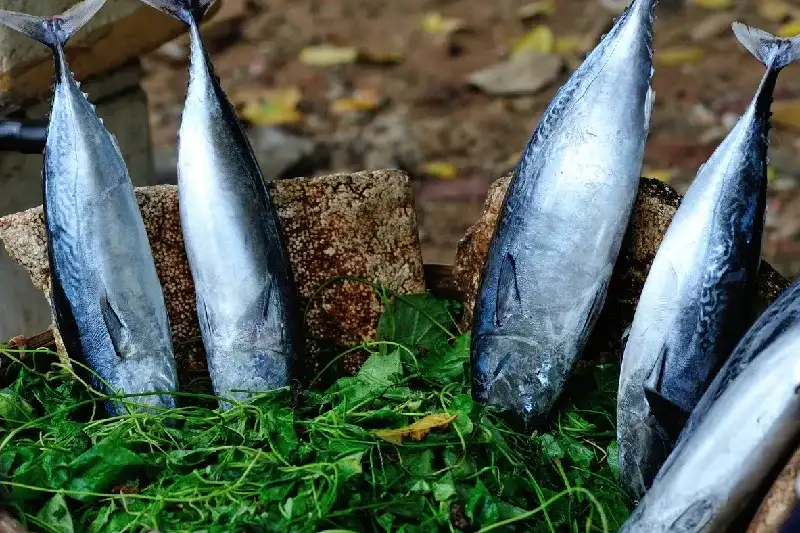
5- Pol Sambol: Vegan | Spicy
Pol sambol is freshly grated coconut mixed with red onion, dried chilli, lime juice, salt, and Maldive fish (though the fish is omitted in vegan versions). It's the Sri Lankan equivalent of a condiment that appears on the table whether you ordered it or not, and once you taste it, you'll understand why. Bright, textured, and fiercely spiced, it brings everything else on the plate to life.
- Made fresh daily in most households, the flavor deteriorates quickly, so freshness matters
- Eaten alongside hoppers, string hoppers, bread, or rice and curry
- Vegan-friendly when Maldive fish is excluded, ask when ordering
- Seeni sambol (caramelized onion version) is sweeter and less spicy, a gentler alternative
Where to try it: You'll find it everywhere, but the best pol sambol is always homemade. If you're lucky enough to be invited to a Sri Lankan family home, eat theirs.
Ready to Taste Sri Lanka for Yourself? Our curated Sri Lanka tour packages include food trails, local cooking experiences, and more!
6- Lamprais: Must Try
Lamprais (from the Dutch "lomprijst," meaning food packed in a package) is a uniquely Sri Lankan-Dutch Burgher dish: rice cooked in stock, served with multiple curries, frikkadels (small meatballs), blachan (a pungent shrimp paste), and eggplant pahi, all wrapped together in a banana leaf and oven-baked. The banana leaf steams everything inside, infusing the rice with an extraordinary herbal depth.
- A living relic of the Dutch colonial period, now considered a heritage dish of the Burgher community
- Traditionally served on Sundays at Dutch Burgher homes and churches in Colombo
- Each parcel is a complete, self-contained meal, no extra sides needed
- Increasingly rare outside Colombo, if you see it on a menu, order it immediately
Where to try it: Gallery Café Colombo, Semondes Bakery, and a few heritage restaurants in Colombo.
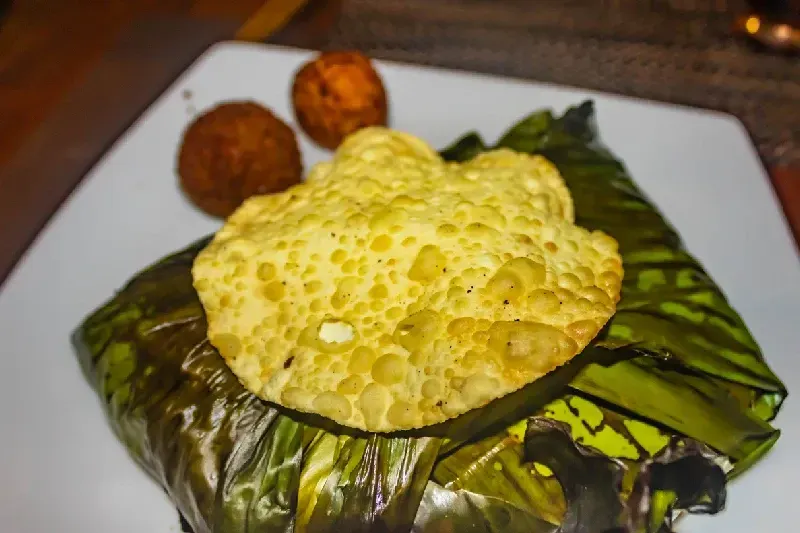
7- Jaffna Crab Curry: Seafood | Very Spicy
The Tamil cuisine of Jaffna, Sri Lanka's northern peninsula, is one of the most distinctive regional food traditions on the island, and its crab curry is the showstopper. Sri Lankan lagoon crabs are cooked whole in a dark, tamarind-spiked gravy with Jaffna's signature blend of roasted spices. The result is explosively bold, bracingly sour, and deeply satisfying in a way that polite curries simply aren't.
- Jaffna's spice blend (particularly heavy on coriander, cumin, and dried chilli) differs significantly from southern Sri Lankan curry powder
- Traditionally eaten by hand, cracking the shell and mopping up gravy with string hoppers or bread
- Best crab season is roughly October–February when the crabs are fattest
- A trip to Jaffna specifically for the crab curry is, in our view, entirely justified
Where to try it: Jaffna town's Cosy Restaurant and Mangos Restaurant are both beloved locally.
8- Watalappam: Dessert
Watalappam is a dense, dark, steamed custard made from coconut milk, jaggery (palm sugar), eggs, and an aromatic blend of spices, cardamom, cloves, nutmeg. Brought to Sri Lanka by Malay immigrants during the Dutch colonial period, it has become one of the island's most beloved sweets. The texture is somewhere between crème brûlée and a firm panna cotta, with a flavor that's deeply caramel-sweet with a warm spiced finish.
- Especially popular during Muslim festivals like Eid, commonly found at Malay-run sweet stalls
- Often topped with cashews, which add a pleasant crunch contrast
- The jaggery flavor varies by region and brand, darker jaggery gives a more intense molasses note
- Available at some upscale hotels but most authentically found at Muslim sweet shops in Colombo's Pettah
Where to try it: Pettah market in Colombo is the best spot, look for Muslim sweet stalls selling trays of watalappam by the piece.
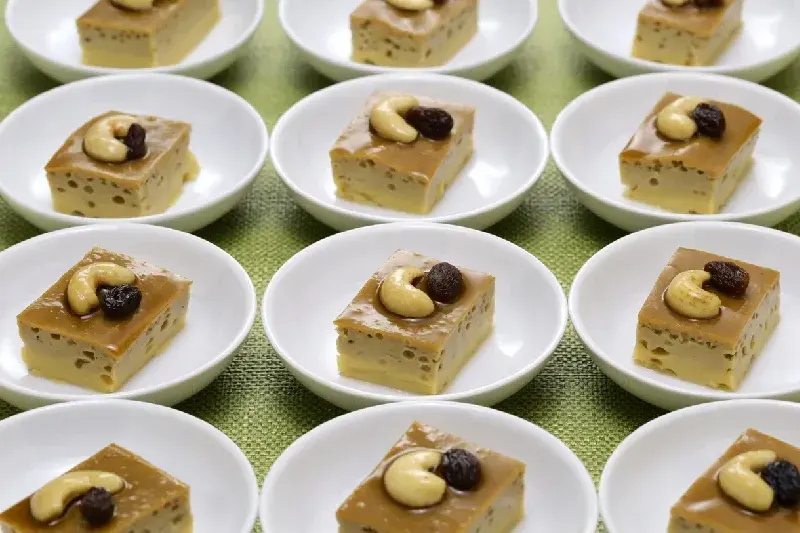
9- Sri Lankan Dhal Curry (Parippu)
Don't dismiss the dhal curry as a side dish afterthought, Sri Lankan parippu (red lentil curry) is a masterclass in how a few ingredients can produce something extraordinary. Red lentils are simmered until silky-soft with coconut milk, tempered with a sizzling tadka of mustard seeds, curry leaves, red onion, and dried chilli. It's comforting, nutritious, and quietly habit-forming.
- One of the most accessible dishes for first-time visitors wary of heat, it's rarely very spicy
- The tempering (the sizzling oil poured over at the end) is the defining step, that scorch of curry leaves transforms the dish
- Eaten as part of rice and curry, alongside hoppers, or simply with bread for breakfast
- Considered one of the most important "every day" foods in Sri Lankan home cooking
Where to try it: Any local restaurant, canteen, or guesthouse. The dhal curry at any simple rice-and-curry lunch spot is often the best version you'll find.
10- Pittu: Traditional
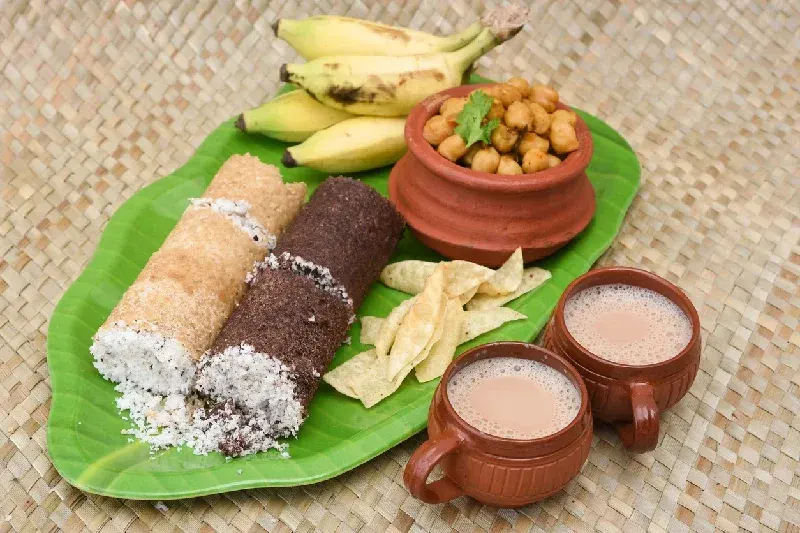
Pittu are cylindrical cakes of steamed rice flour and grated coconut, traditionally cooked in a bamboo or metal mould. The texture is dry and crumbly, think couscous, but with a gentle coconut sweetness. They're eaten with coconut milk poured over the top and accompanied by curry or pol sambol. It's one of those dishes that sounds unremarkable on paper but earns its place as a Sri Lankan staple through sheer satisfying simplicity.
- A breakfast or dinner dish, rarely served at lunch
- The traditional bamboo mould (pittu bambuwa) gives a slight earthy flavor that's impossible to replicate
- Often eaten with banana, the sweetness against the savory curry is a revelation
- A wheat flour version (atta pittu) is common in bakeries across the island
Where to try it: Any local breakfast spot or home-style guesthouse serving traditional Sri Lankan breakfasts. Hill Country areas like Ella and Kandy do excellent pittu.
Food Travel Tips for Sri Lanka
- Know your spice level: Sri Lankan food ranges from gently spiced to face-meltingly hot. "Not spicy" at a local restaurant often means "mild by local standards." Ask for tourist-spicy if you're cautious.
- Eat with your right hand: Mixing rice and curry by hand is the traditional method and genuinely improves the eating experience. Cutlery is always available, but going local is worth it.
- Street food is the real deal: The best food in Sri Lanka is rarely in fancy restaurants. Roadside kades, market stalls, and family-run guesthouses serve the most authentic, freshest food at a fraction of the price.
- Always order the tea: Sri Lanka produces some of the world's finest Ceylon tea. Drink it plain black with a little sugar, the way locals do, rather than with milk. A completely different experience.
- Try Maldive fish everywhere: This dried, cured tuna is Sri Lanka's secret umami weapon, added to sambals, curries, and coconut dishes to add an irreplaceable depth of flavor. Don't skip dishes that include it.
- Eat regionally: Sri Lankan food changes dramatically by region. Jaffna food tastes nothing like Galle food. Eating across regions on a tour is the only way to understand the full picture.
Sri Lanka's food is more than sustenance, it's a conversation between centuries of trade routes, colonial histories, and the ingenuity of a people who turned coconuts, spices, and rice into an endlessly varied cuisine. Every dish you eat here tells a story.
The best way to experience it is by moving through the island slowly, spending time in Colombo's street food lanes, taking a cooking class in the Hill Country, eating crab in Jaffna, and sitting with a pot of black tea watching the Indian Ocean. Experience Sri Lanka's Food Culture First-Hand. Check out our Sri Lanka tours.
You should start with rice and curry. It gives you a full experience of local flavors with different curries and sides in one meal.
It can be quite spicy, but you can ask for milder versions. You’ll still enjoy the rich flavors without too much heat.
It’s a popular street food made from chopped flatbread, vegetables, eggs, and sometimes meat. You should definitely try it, it’s flavorful and fun to watch being prepared.
Yes, you’ll find many options like dhal curry, vegetable curries, and coconut-based dishes that are naturally vegetarian.
It can be safe if you choose busy places with fresh food. You should follow where locals go for the best experience.
Yes, you should try seafood like crab curry or fish dishes. You’ll find them fresh and full of bold spices, especially near the coast.
You’ll usually have hoppers, string hoppers, or roti with curry and sambol. It’s simple but full of flavor.