Galle: Sri Lanka's Most Historic City

Perched on the southwestern tip of Sri Lanka, Galle is one of Asia's most captivating destinations, a place where crumbling Dutch ramparts meet turquoise ocean, and colonial-era streets buzz with boutique cafés, gem traders, and curious travellers. Whether you're a history buff, a beach lover, or simply someone who appreciates a slow afternoon in a beautifully preserved old town, Galle has something to pull you in.
It's the kind of city that rewards wandering. You turn a corner and stumble upon a 17th-century lighthouse. You duck into a shaded courtyard and find yourself in a gallery selling handmade batik. There's a depth to Galle that goes beyond the Instagram-worthy shots, and that's exactly what makes it such a remarkable stop on any Sri Lanka journey.
Long before Europeans arrived, Galle was known to Arab and Chinese traders who sailed along Sri Lanka's southern coast. Some historians believe the city may even be the biblical port of Tarshish, though that remains a matter of lively debate. What's clear is that the natural harbour here made it a natural hub for maritime trade, connecting the island to Persia, Arabia, and China centuries before colonialism reshaped the region.
The name 'Galle' itself is thought to derive from the Sinhala word 'gala,' meaning rock, a reference to the prominent rocky headland on which the Old Town sits. Others trace it to the Portuguese 'galo,' meaning rooster, supposedly inspired by a cockerel figurehead found by early explorers. Either way, the name stuck.
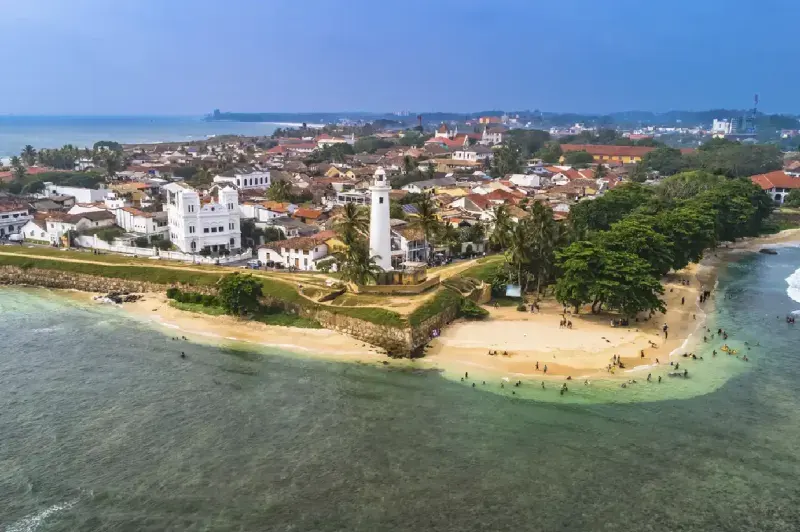
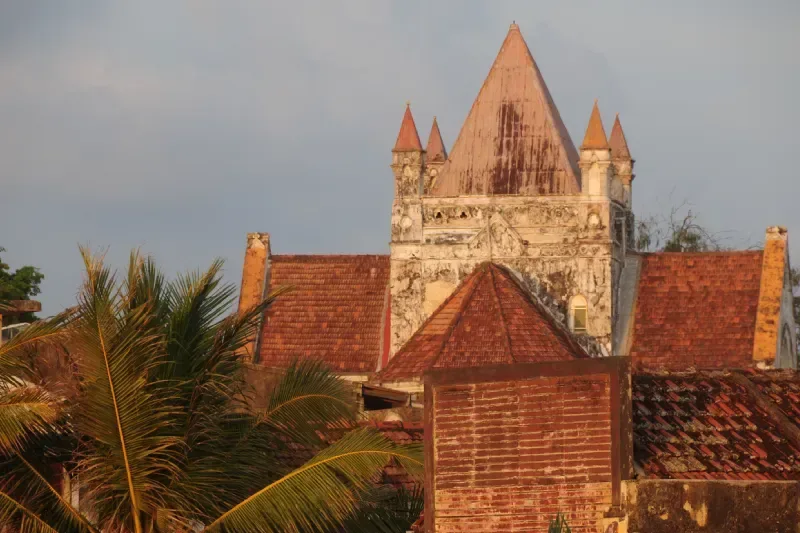
The Portuguese arrived in 1505 and built a small fort in Galle, using its harbour for trade. In 1640, the Dutch captured the city and expanded it, constructing strong stone walls, bastions, and the grid-like streets of the Old Town. They also built churches, warehouses, and homes, including the Dutch Reformed Church (1755). Today, the Old Town is a UNESCO World Heritage Site.
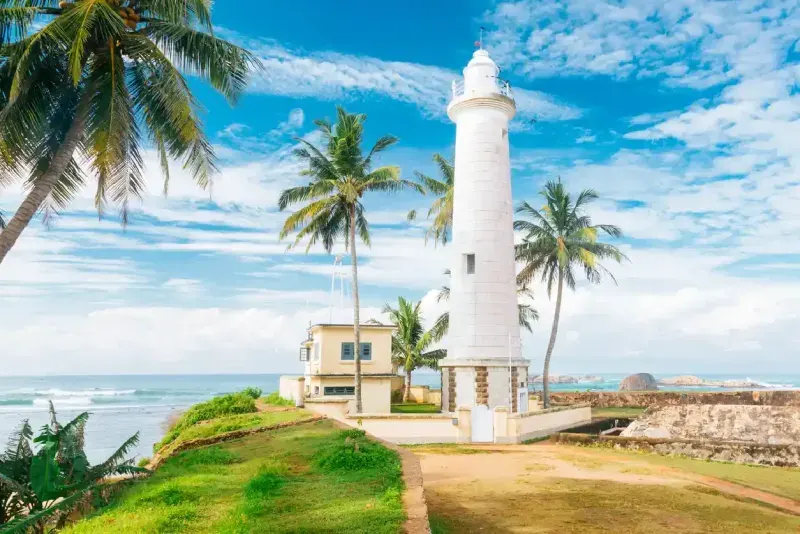
The British took control of Galle in 1796, preserving most Dutch buildings while adding structures like the lighthouse. Galle briefly became the island’s main port until trade shifted to Colombo in the late 19th century, helping preserve its historic architecture.
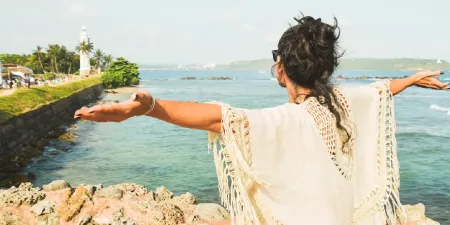
Galle Fort, known locally as “the Fort,” is one of the best-preserved colonial fortifications in Asia. Its massive granite walls surround the Old Town and offer stunning sunset views over the Indian Ocean.
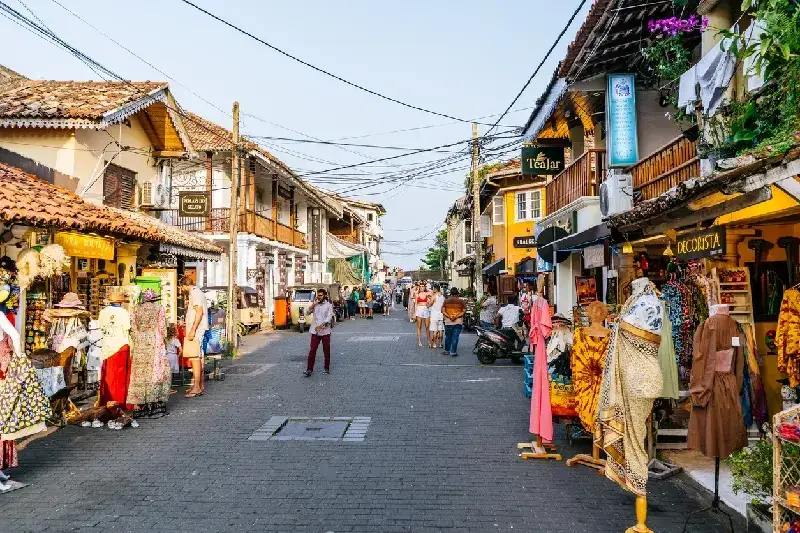
Inside the Fort, the streets follow a Dutch grid layout, making the area easy to explore on foot. Historic buildings now house guesthouses, cafés, and boutiques, while others remain homes or offices, giving the Fort a lively, authentic atmosphere.
The Groote Kerk (Dutch Reformed Church) is arguably the Fort's most iconic landmark, its whitewashed interior lined with ornate tombstones of Dutch and British settlers. Just nearby, the Galle National Museum, housed in a former Dutch warehouse, offers a well-curated look at the region's history, from ancient trade artefacts to colonial-era documents. Clocktower Square, the lighthouse, and the old Dutch Government House are other must-see spots.
No visit to Galle is complete without a walk along the ramparts, the sea-facing walls that form the outer edge of the Fort. The full circuit takes about an hour at a leisurely pace, and the views are spectacular at any time of day, though most visitors gravitate toward late afternoon, when the light softens and the street food vendors set up along the wall. Local kids jump off the lower walls into the sea, and couples come to watch the sunset. It feels genuinely communal in a way that's lovely to witness.
Get in touch with our local experts for an unforgettable journey.
Plan Your Trip
Beyond the big landmarks, some of the best Galle experiences are unscripted. Wander into the smaller streets off the main drag and you'll find local tailors, herbal medicine shops, and family-run guesthouses that have been operating for generations. The Galle Friday Market (actually held near the bus stand just outside the Fort) is a riot of colour and noise, fresh fruit, street food, sarongs, and spices all piled together.
The Fort also has a genuinely excellent dining and café scene, with independent restaurants serving everything from fresh seafood to wood-fired pizza. Several of the Fort's colonial buildings have been transformed into upscale boutique hotels, making it one of the most atmospheric places to stay in Sri Lanka.
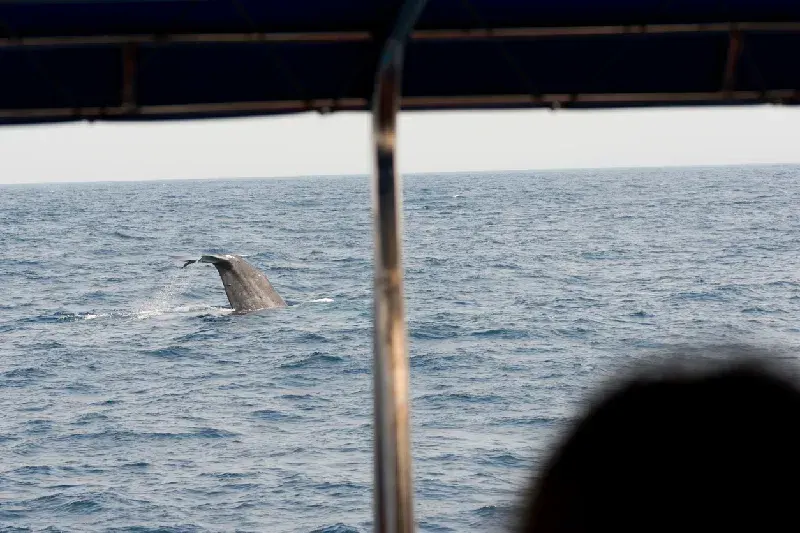
Galle makes an excellent base for exploring the southern coast. Mirissa's beach and whale watching, the stilted fishermen of Koggala, the sea turtle conservation centre at Rekawa, and the elephant transit home at Udawalawe National Park are all within a couple of hours. The Galle-to-Colombo coastal train is also one of the most scenic rail journeys in Asia, well worth taking at least one way.
Galle has a dual monsoon pattern, which can be confusing for first-time visitors. The best time to visit is generally from November to April, when the southwest coast enjoys dry, sunny weather and relatively calm seas. The southwest monsoon (May to September) brings heavy rain and strong waves to the Galle coast, though this can actually be a dramatic and beautiful time to visit if you don't mind occasional downpours and don't plan to swim.
December and January tend to be peak season, so accommodation prices rise and the Fort gets noticeably busier. If you prefer fewer crowds, shoulder months like November or March offer a pleasant balance of good weather and manageable visitor numbers.
Galle Fort has some of Sri Lanka's most characterful accommodation, with several heritage guesthouses and boutique hotels occupying restored Dutch-era buildings. Staying inside the Fort gives you easy access to the ramparts, restaurants, and galleries, and the atmosphere in the evenings is magical. Budget options are available but limited inside the Fort itself, you'll find more affordable guesthouses in the Unawatuna and Hikkaduwa areas nearby.
Galle's food scene reflects its layered history. You'll find traditional Sri Lankan rice and curry (usually served on a banana leaf with a dozen accompanying dishes), freshly grilled seafood along the seafront, and a growing number of contemporary cafés inside the Fort serving excellent coffee, hoppers, and fusion dishes. Don't leave without trying a kottu roti, chopped flatbread stir-fried with vegetables, egg, and your choice of protein, cooked on a flat iron with a rhythmic clatter that you can hear halfway down the street.
The Galle Literary Festival, held annually in January, draws writers, thinkers, and readers from around the world for a week of talks, readings, and discussions set against the Fort's colonial backdrop. It's become one of Asia's most prestigious literary events and a genuinely wonderful reason to time a visit.
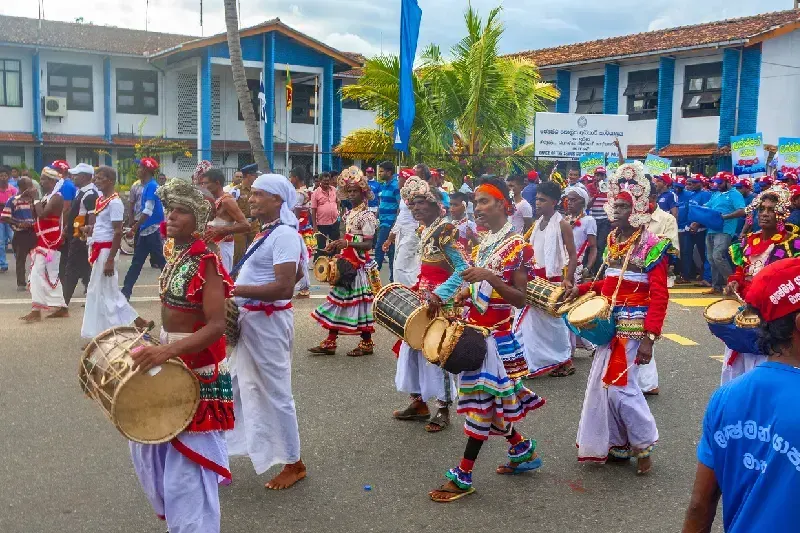
The Fort also hosts the Galle Heritage Festival, celebrating the city's multicultural history through music, traditional craft demonstrations, and cultural performances. Local religious festivals, Buddhist, Hindu, and Christian, bring their own colour and ceremony throughout the year.
Galle is the kind of place that changes the pace of a trip in the best possible way. After the bustle of Colombo or the wildlife intensity of a national park safari, the Fort's shaded streets and ocean-facing ramparts offer a different kind of richness, one that rewards slowing down, paying attention, and letting history wash over you.
It's also remarkably accessible. You can see the highlights in a day if you're short on time, but a stay of two to three nights really lets the place settle in. Whether this is your first visit to Sri Lanka or your fifth, Galle tends to leave a mark. The light at the end of the day on those old stone walls is something you don't easily forget.
Galle is best known for its historic Galle Fort, a UNESCO World Heritage Site with colonial architecture, ocean views, and charming streets filled with cafés, shops, and galleries.
You can reach Galle from Colombo by train, bus, or private taxi. The scenic coastal train ride takes about 2–3 hours, while traveling by road usually takes around 2 hours, depending on traffic.
Inside Galle Fort, you can walk along the historic ramparts, visit museums and churches, explore boutique shops and cafés, and enjoy beautiful sunset views over the Indian Ocean.
The best time for you to visit Galle is between November and April, when the weather on Sri Lanka’s southwest coast is mostly sunny with calmer seas and ideal conditions for exploring the city and nearby beaches.
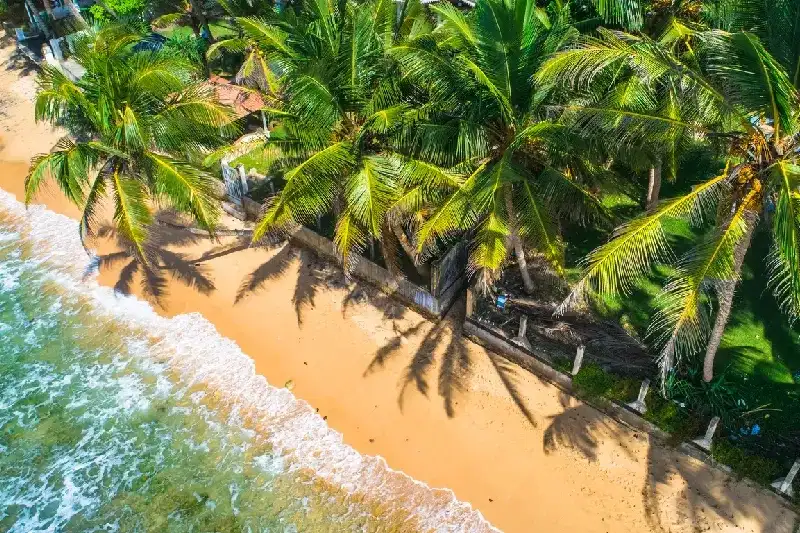
Yes, you can easily visit beautiful nearby beaches such as Unawatuna Beach, Jungle Beach, and Hikkaduwa Beach, which are perfect for swimming, relaxing, or surfing.
You can explore the main highlights of Galle in one day, but staying two to three nights allows you to fully enjoy the atmosphere, explore nearby beaches, and take day trips along Sri Lanka’s southern coast.
Your complete guide to Colombo, Sri Lanka: discover sights, food, nightlife, guided tours, weather, and travel tips for every visitor.
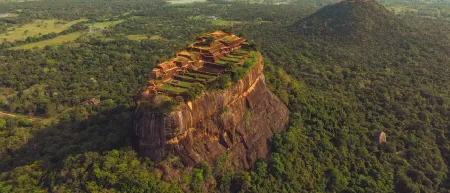
Sigiriya Lion Rock is Sri Lanka’s legendary rock fortress, known for its history, frescoes, and unforgettable panoramic scenery.
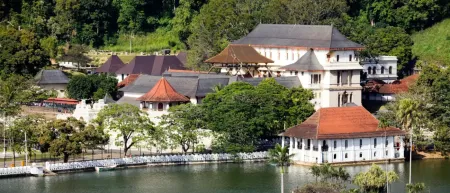
Discover Kandy with our guide to temples, scenic lake, cultural shows, and top attractions for an unforgettable visit.
Experience Ella, Sri Lanka, lush landscapes, scenic train rides, and peaceful vibes. Your complete guide to things to do and when to visit.
Plan your visit to Yala National Park in Sri Lanka. Discover wildlife, safari experiences, best seasons, and travel tips for this iconic nature reserve.
Discover Galle, Sri Lanka: historic Fort, beautiful beaches, vibrant streets, and unforgettable coastal charm.
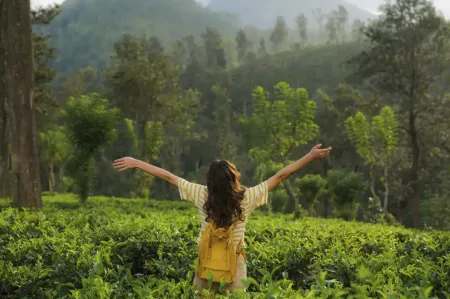
Find the best things to do in Nuwara Eliya, from tea plantations to scenic parks and mountains in Sri Lanka’s charming hill station.
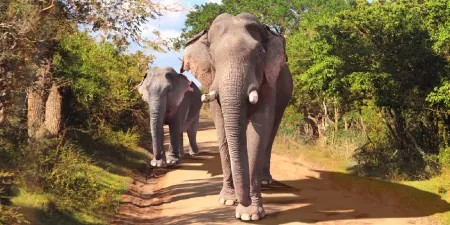
Udawalawe National Park offers incredible elephant sightings, wildlife safaris, and beautiful scenery. Learn the best time to visit and travel tips.
Negombo is more than an airport stopover. Explore its fishing culture, Little Rome churches, Dutch canals, and fresh seafood. Full guide inside.
Weligama, Sri Lanka's Sandy Village, your complete guide to beaches, surfing, things to do, and travel tips on the southern coast.
Explore Anuradhapura in Sri Lanka, home to sacred Buddhist sites, ancient ruins, massive dagobas, and unforgettable cultural experiences.
Plan your visit to Dambulla Cave Temple with top highlights like cave murals, Buddha statues, panoramic views, plus useful visitor tips.
Visit Nine Arch Bridge and enjoy stunning views, scenic train crossings, hiking trails, and one of the country’s top attractions.
Explore the best things to do in Habarana, from jeep safaris and birdwatching to visiting nearby temples and ancient Sri Lankan cities.
Once the royal capital of Sri Lanka, Polonnaruwa showcases impressive ruins, sacred monuments, and remarkable ancient engineering.