Weligama Sri Lanka

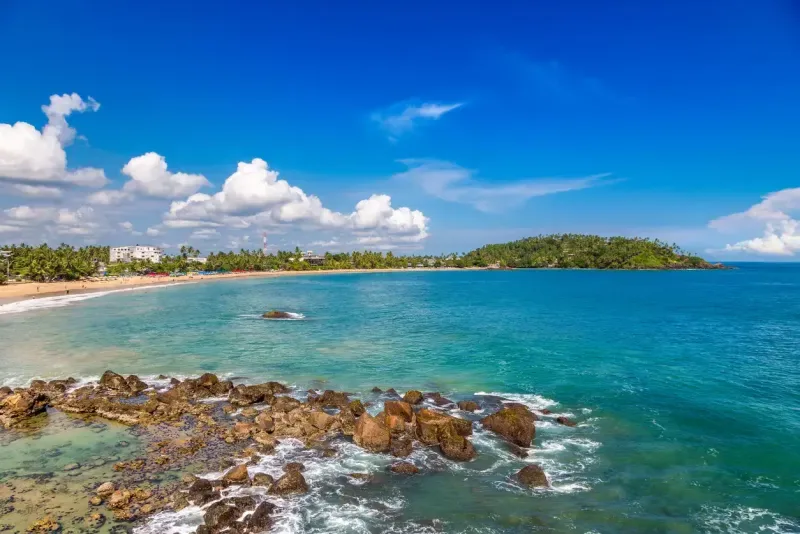
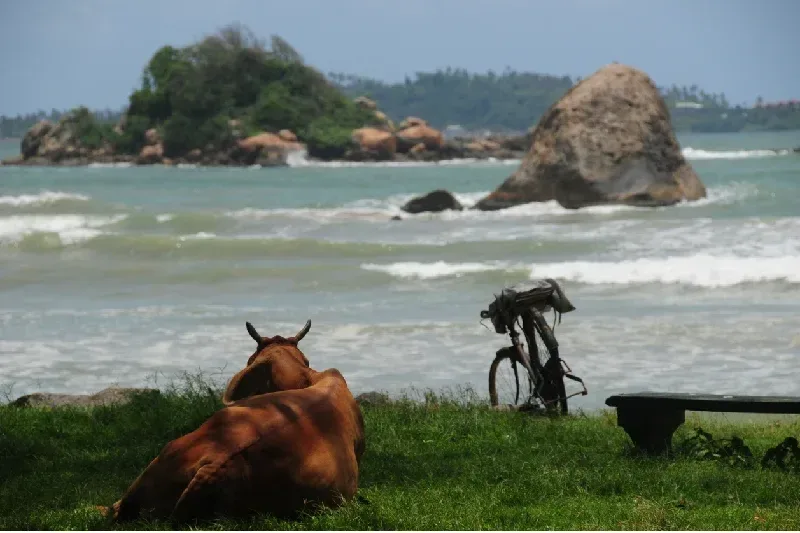
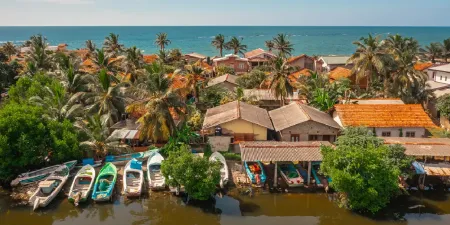
Weligama is a laid-back coastal town on Sri Lanka's southern coast, sitting in the Matara District roughly 144 kilometres south of Colombo. Its name literally means "Sandy Village" in Sinhala, and it absolutely lives up to that. With a sweeping two-kilometre horseshoe bay, beginner-friendly surf breaks, colourful fishing boats, and a genuine small-town atmosphere, Weligama has quietly become one of the most beloved beach destinations in Asia.
Whether you're chasing your first wave, looking for a chilled-out base to explore the south coast, or just want to eat fresh seafood while watching the sun drop into the Indian Ocean, Weligama delivers. It's the kind of place that was supposed to be a two-night stop but ends up being two weeks.
Weligama sits in a sweet spot, it's not as touristy or crowded as Mirissa or Hikkaduwa, but it's not off the beaten track either. You get:
It's also one of the best bases on the south coast. Within an hour, you can reach the historic fort city of Galle, the whale-watching hotspot of Mirissa, or the turtle conservation beaches near Rekawa.
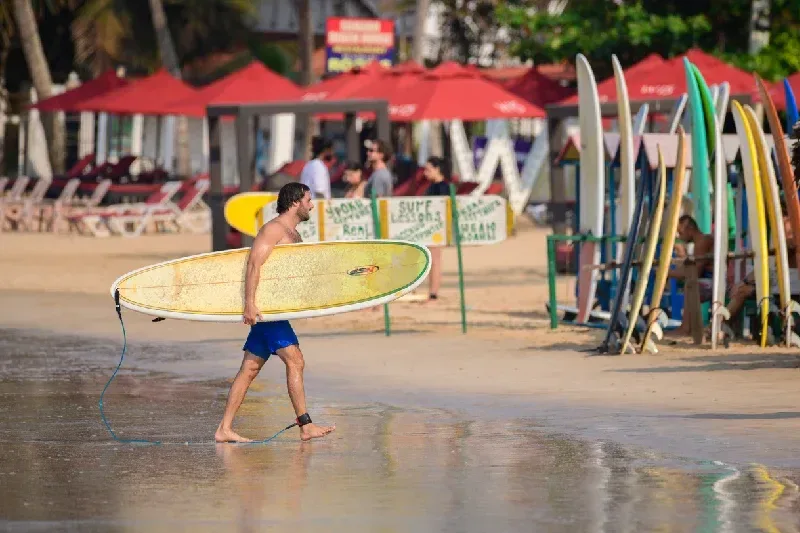
This is what Weligama is most famous for, and rightly so. The huge horseshoe bay is naturally sheltered from the biggest ocean swells, creating consistently gentle waves that are almost perfect for beginners. Surf schools and board rental shops line the beach road, and lessons are affordable by any standard.
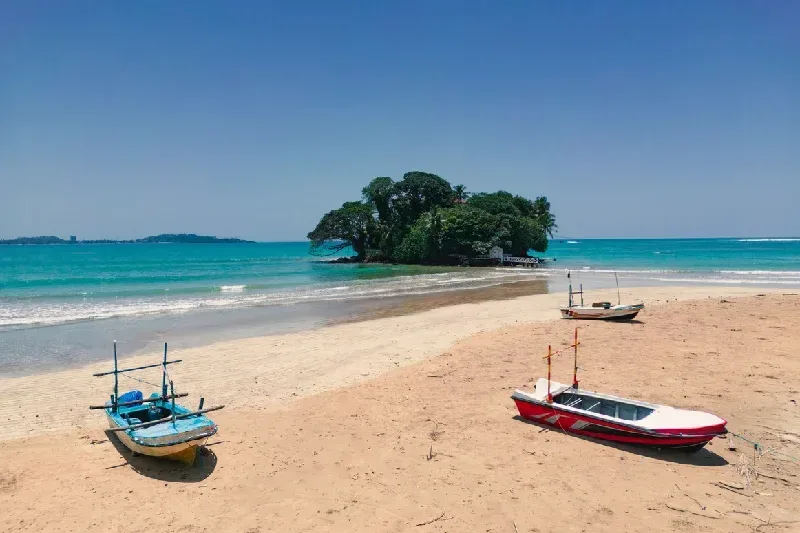
Just a short wade (or boat ride at high tide) from the shore sits one of Sri Lanka's most unusual landmarks, Taprobane Island. This tiny private islet was developed in the 1920s and is home to a stunning colonial-era villa surrounded by tropical gardens. You can walk across at low tide and admire it from the shore. It's a genuinely unique sight and one of those spots that makes you stop and stare.
Get in touch with our local experts for an unforgettable journey.
Plan Your Trip
On the eastern outskirts of Weligama, carved directly into a massive boulder, is the Kushta Raja Gala, a striking rock-cut statue believed to date from somewhere between the 6th and 9th century. Local legend says it depicts a foreign king who was cured of leprosy after drinking coconut water and pulp for three months. Historians generally identify the figure as Bodhisattva Avalokitesvara. Either way, it's an impressive piece of ancient craftsmanship and well worth a short detour.
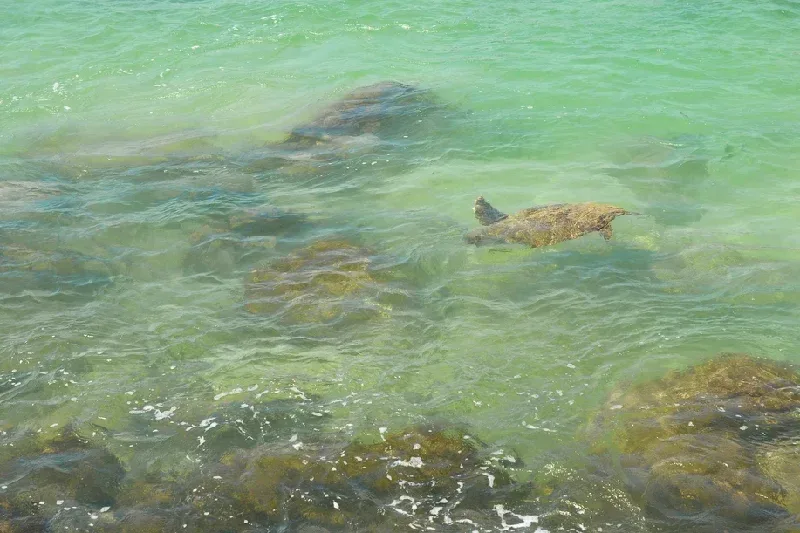
About 3 kilometres east of Weligama, Polhena Beach is a hidden gem with shallow, sheltered waters and a vibrant coral reef. It's one of the best places in Sri Lanka to snorkel with sea turtles, green turtles and hawksbill turtles are regular visitors. You can rent snorkelling gear on the beach or join a guided tour. The marine life here is genuinely diverse: expect starfish, reef fish, corals, and if you're lucky, the big green turtles the reef is known for.
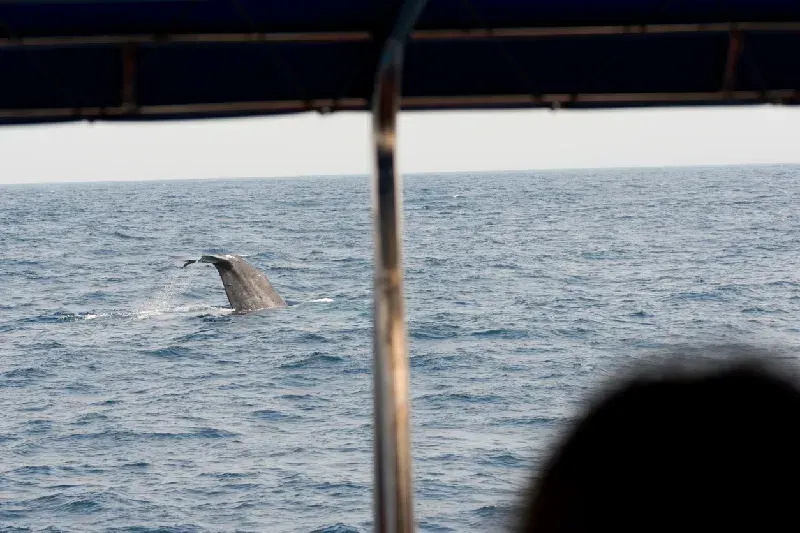
Mirissa, the next town east of Weligama (a 10-minute tuk-tuk ride away), is arguably the best place in the world to see blue whales from shore. The whale watching season runs from November to April, when the Indian Ocean calms and the whales gather in these warm waters. Spinner dolphins are almost guaranteed. Most tours depart at dawn and return by mid-morning
One of the most iconic images of Sri Lanka's southern coast is the stilt fishermen of Weligama. At sunrise and sunset, local fishermen perch on small wooden poles driven into the sand just offshore, fishing with long bamboo rods in the traditional style. It's both an ancient technique and a striking photographic subject. Head to the eastern end of the beach early in the morning or around dusk for the best chance to see them at work.
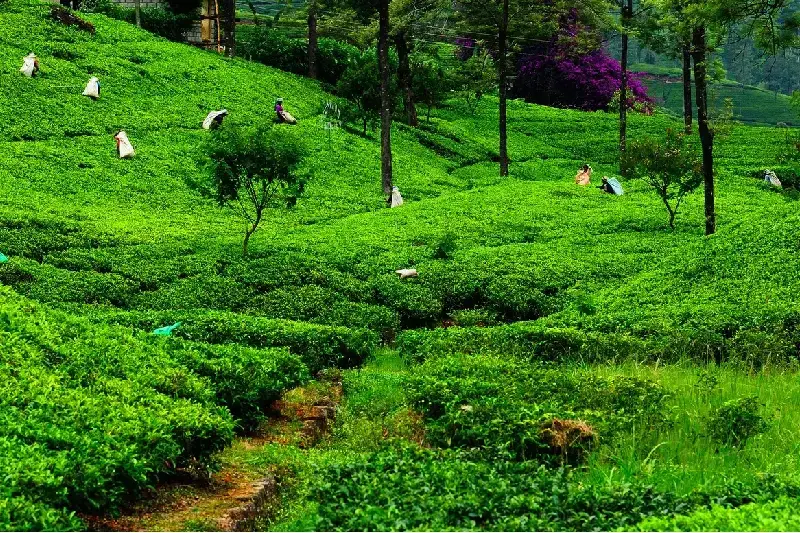
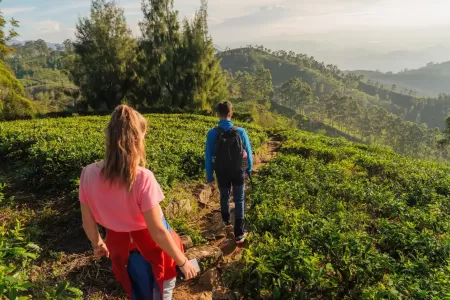
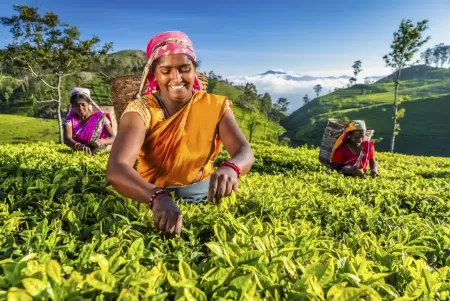
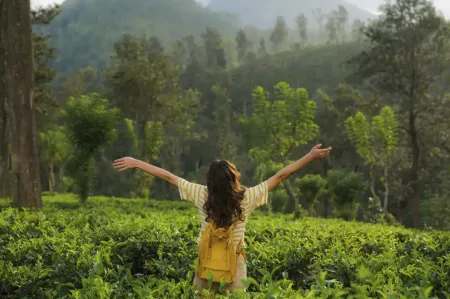
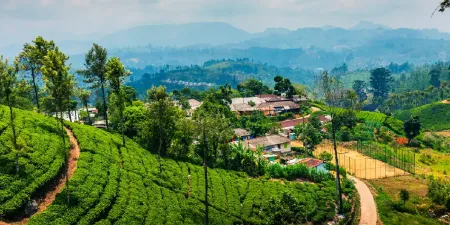
If you want to experience Sri Lanka's legendary tea culture without heading all the way to Ella or Kandy, the Handunugoda Tea Estate, just a short drive from Weligama, is the only tea plantation on the coastal belt of the island. The estate offers guided factory tours where you can see the full tea-making process, sample different varieties, and stroll through the lush fields.
Five of the world's seven sea turtle species are found along Sri Lanka's southern coast: the Olive Ridley, Green, Hawksbill, Loggerhead, and Leatherback. Several local turtle hatcheries and conservation programmes operate near Weligama, including the well-known Sea Turtle Hatchery established in 1986. Rekawa Beach, a short drive away, offers guided night watches during nesting season when turtles come ashore to lay eggs.
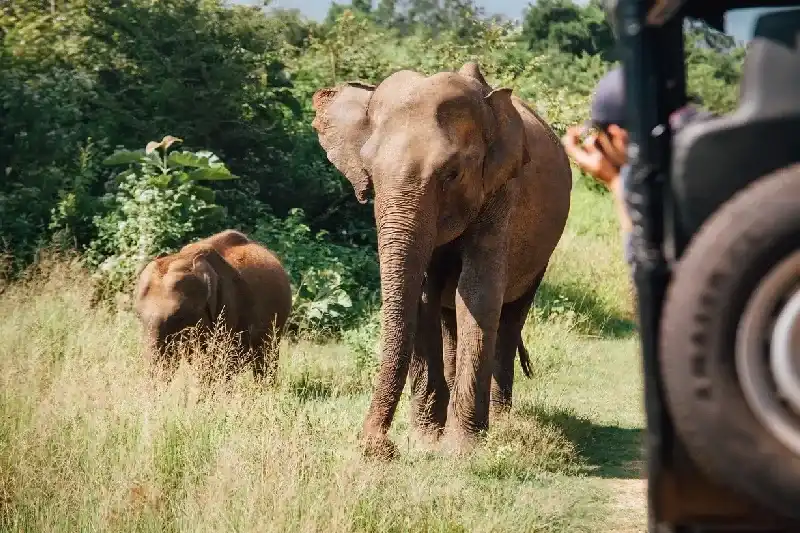
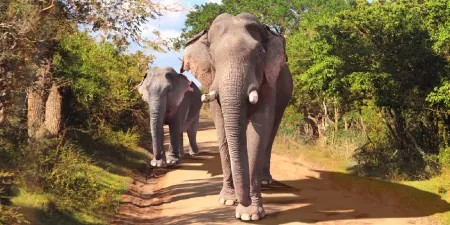
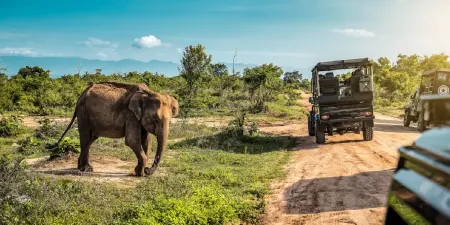
It might look like a stretch on the map, but Udawalawe National Park is a popular day trip from Weligama (about 2 hours by road). It's one of the best places in Asia to see wild Asian elephants, the park is home to over 500 of them. You'll also spot buffalo, crocodiles, deer, and a remarkable variety of birdlife. Full-day tours from Weligama are widely available.
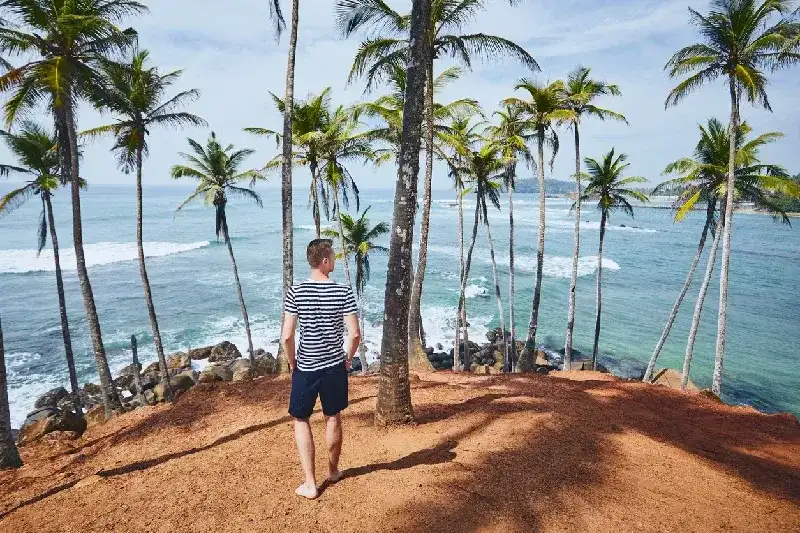
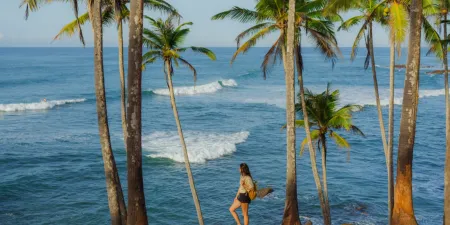
The Coconut Tree Hill in nearby Mirissa has become one of Sri Lanka's most photographed spots, a dramatic ridge lined with leaning palms above a crescent bay. It's an easy walk from Mirissa beach and particularly stunning at sunset. Mirissa Beach itself is worth a visit for its lively café scene, beach bars, and generally more social atmosphere than Weligama if you're in that mood.
This is the sweet spot. The southwest monsoon has cleared, the Indian Ocean is calm and clear, and the surf is at its most consistent. Whale watching is possible, the beaches are at their best, and the weather is warm and sunny. Accommodation books up, so plan ahead.
The southwest monsoon brings rain and rougher seas, which significantly reduces beach and surf conditions on the south coast. That said, prices drop noticeably, crowds thin out, and many travellers find the green, lush landscape beautiful in its own right. The east coast of Sri Lanka has its own dry season during these months.
Weligama has a genuinely excellent food scene, especially for a small coastal town.
Don't leave without trying a king coconut (thambili) from a roadside seller, it's chilled, sweet, and utterly refreshing in the tropical heat.
Weligama is not just a beach resort, it's a living, breathing Sri Lankan fishing town with deep roots.
This is a common question for first-time visitors to Sri Lanka's south coast.
Choose Weligama if you: want to learn to surf, prefer a more local and authentic atmosphere, are travelling on a budget, or want a quieter base with easy access to everywhere else.
Choose Mirissa if you: prioritise beach-bar nightlife, want to be closer to whale watching departure points, or prefer a more social and resort-like scene.
Weligama is a natural stop on any south coast Sri Lanka itinerary, and it pairs beautifully with destinations like Galle, Ella, Yala, and Kandy. The ideal trip combines the cultural depth of the Cultural Triangle with the coastal magic of the south, and Weligama sits right at the heart of that southern experience.
Weligama is best known for its surfing, wide sandy bay, and the iconic stilt fishermen you’ll often see along the coast.
Absolutely. You’ll find gentle, consistent waves and plenty of surf schools, making it one of the easiest places in Sri Lanka to learn how to surf.
You’ll want to spend 2–3 days. That gives you enough time to surf, relax on the beach, and explore nearby spots like Mirissa.
You can relax on the beach, try fresh seafood, visit small cafés, watch the sunset, take a short trip to nearby beaches, or explore local life around the bay.
The best time is from November to April, when the sea is calmer and the weather is ideal for surfing and beach days.
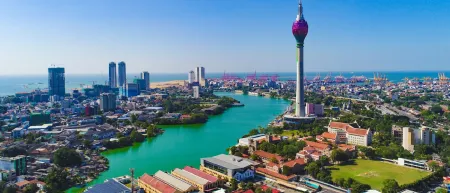
Your complete guide to Colombo, Sri Lanka: discover sights, food, nightlife, guided tours, weather, and travel tips for every visitor.
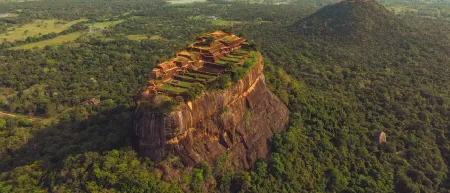
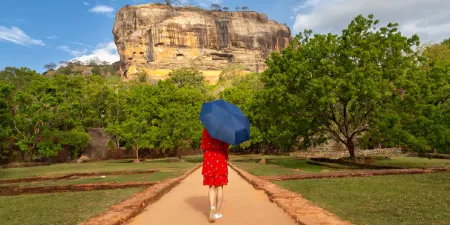
Sigiriya Lion Rock is Sri Lanka’s legendary rock fortress, known for its history, frescoes, and unforgettable panoramic scenery.
Discover Kandy with our guide to temples, scenic lake, cultural shows, and top attractions for an unforgettable visit.
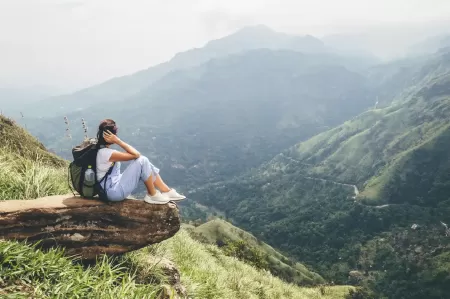
Experience Ella, Sri Lanka, lush landscapes, scenic train rides, and peaceful vibes. Your complete guide to things to do and when to visit.
Plan your visit to Yala National Park in Sri Lanka. Discover wildlife, safari experiences, best seasons, and travel tips for this iconic nature reserve.
Discover Galle, Sri Lanka: historic Fort, beautiful beaches, vibrant streets, and unforgettable coastal charm.
Find the best things to do in Nuwara Eliya, from tea plantations to scenic parks and mountains in Sri Lanka’s charming hill station.
Udawalawe National Park offers incredible elephant sightings, wildlife safaris, and beautiful scenery. Learn the best time to visit and travel tips.
Negombo is more than an airport stopover. Explore its fishing culture, Little Rome churches, Dutch canals, and fresh seafood. Full guide inside.
Weligama, Sri Lanka's Sandy Village, your complete guide to beaches, surfing, things to do, and travel tips on the southern coast.
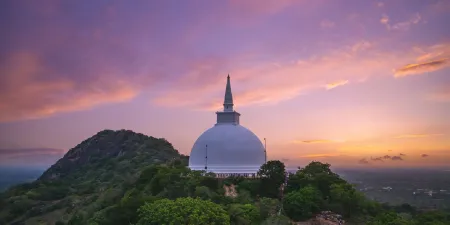
Explore Anuradhapura in Sri Lanka, home to sacred Buddhist sites, ancient ruins, massive dagobas, and unforgettable cultural experiences.
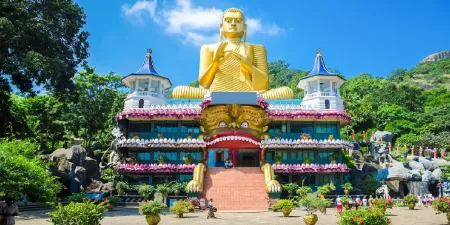
Plan your visit to Dambulla Cave Temple with top highlights like cave murals, Buddha statues, panoramic views, plus useful visitor tips.
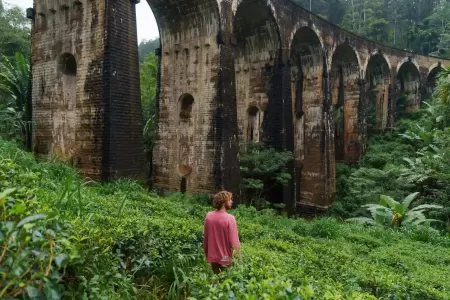
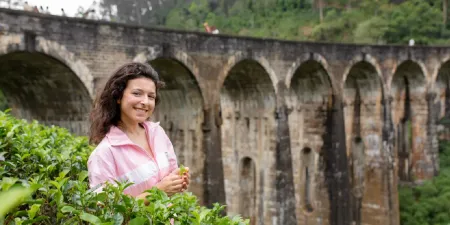
Visit Nine Arch Bridge and enjoy stunning views, scenic train crossings, hiking trails, and one of the country’s top attractions.
Explore the best things to do in Habarana, from jeep safaris and birdwatching to visiting nearby temples and ancient Sri Lankan cities.
Once the royal capital of Sri Lanka, Polonnaruwa showcases impressive ruins, sacred monuments, and remarkable ancient engineering.