Nine Arch Bridge

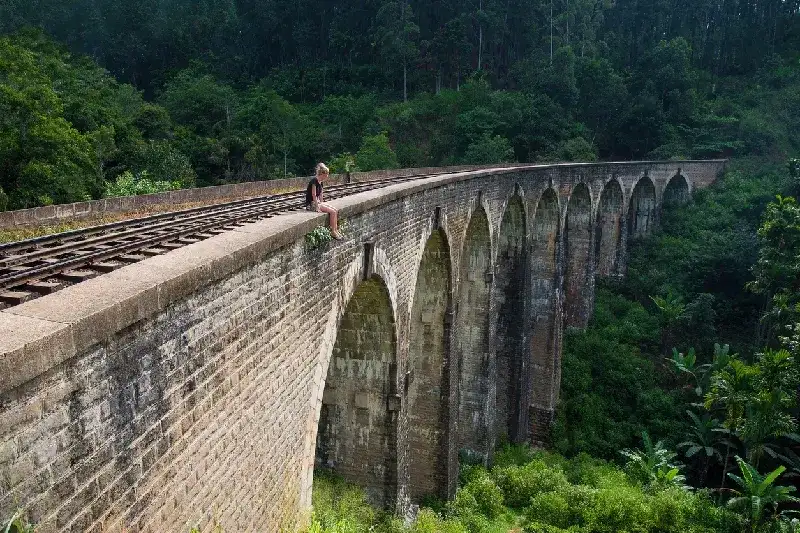
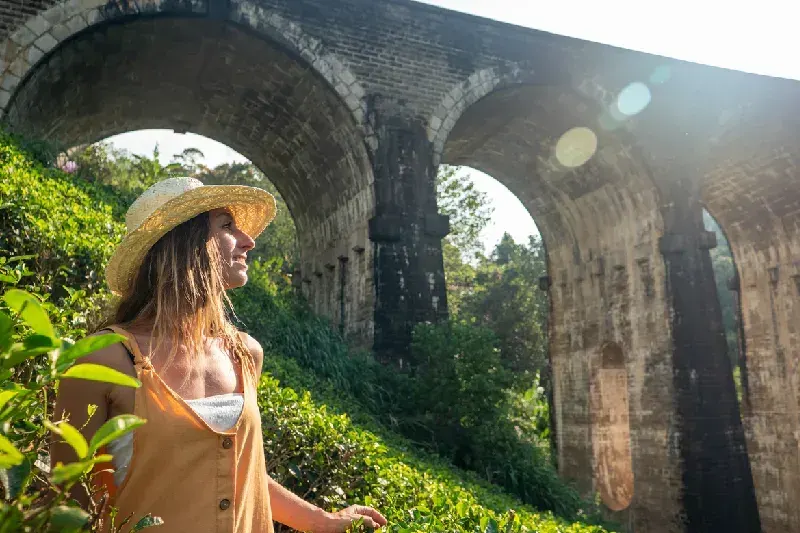
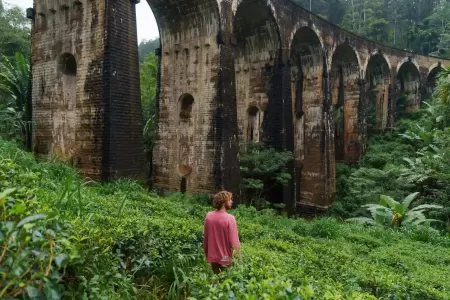
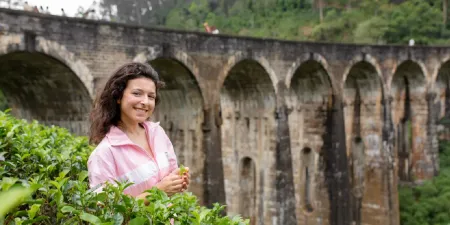
The Nine Arch Bridge, officially known as Demodara Bridge, is Sri Lanka's most iconic colonial-era railway viaduct, stretching across a lush jungle valley in the heart of the Ella highlands. Built in 1921 and still in daily use today, it carries the Upcountry Line train between Colombo and Badulla, cutting through some of the most beautiful scenery in South Asia.
It's not just a bridge. It's a symbol of Sri Lanka's Hill Country, as recognisable to travellers as Sigiriya Rock or Galle Fort, and a highlight of virtually every Sri Lanka tour package that ventures into the mountains.
The bridge was constructed during the British colonial period as part of Ceylon's (now Sri Lanka's) expanding railway network. The Upcountry Line was being extended deeper into the highlands to serve the booming tea industry, and the rugged terrain of the Ella Gap required a major viaduct to span the valley below.
Construction was completed in 1921, and the bridge has been in continuous operation ever since, over a century of daily train crossings through the jungle.
Stand at the main viewpoint on a misty morning and it becomes immediately obvious. When low cloud rolls in across the valley, which happens often in the Hill Country, the bridge appears to float above the mist with the jungle canopy far below. The nine arches seem suspended in mid-air, completely detached from the earth.
Here's where the history gets genuinely interesting. When construction began, the original plan called for steel girders, the standard engineering material of the time. But this was the tail end of the First World War, and steel was being rationed and redirected to the war effort in Europe. The builders were forced to improvise.
A local Sri Lankan contractor named P.K. Appuhami stepped in with an alternative: construct the entire bridge from locally quarried stone, brick, and cement. No steel at all. The colonial railway authority agreed, and Appuhami delivered a viaduct so solid and well-engineered that it has stood for over 100 years without any major structural intervention. What began as a wartime compromise became one of the finest examples of masonry railway construction in Asia.
The bridge sits just outside the town of Ella in Badulla District, Uva Province, in Sri Lanka's central highlands. It spans a forested gorge near the small railway station of Demodara, roughly 2–3 kilometres from Ella town centre.
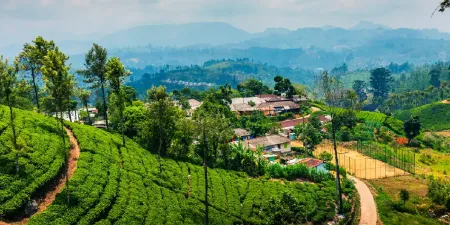
Ella itself sits at around 1,000 metres above sea level, nestled between rolling tea estates and jungle-covered ridges.
Yes, you should visit Nine Arch Bridge because it offers one of the most scenic railway views in Sri Lanka, surrounded by lush tea plantations and jungle.
Get in touch with our local experts for an unforgettable journey.
Plan Your Trip
The most atmospheric way to arrive in Ella, and the reason many people visit in the first place, is by train. The Colombo to Badulla Upcountry Line passes directly over the Nine Arch Bridge, meaning you can actually cross it as a passenger.
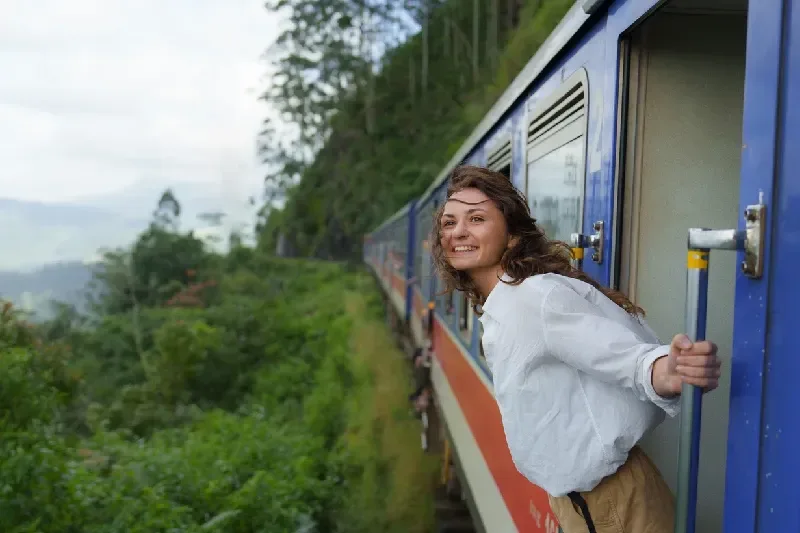
The train journey from Kandy to Ella is consistently ranked among the most scenic rail trips in the world. The route winds through misty mountains, tea plantations, waterfalls, and jungle for around 6–7 hours. Travellers hang from open doors, wave to locals working in the tea fields, and watch the landscape transform from bustling hill town to quiet highland wilderness.
From Ella town, tuk-tuks are cheap, plentiful, and easy to flag down. Many drivers will wait for you and bring you back for an agreed flat rate.
Private taxis and driver-guides are also widely available. A driver with local knowledge is particularly useful for timing your visit around the train schedule.
Walking to the Nine Arch Bridge from Ella is one of the most popular activities in town, and honestly, it's part of the experience.
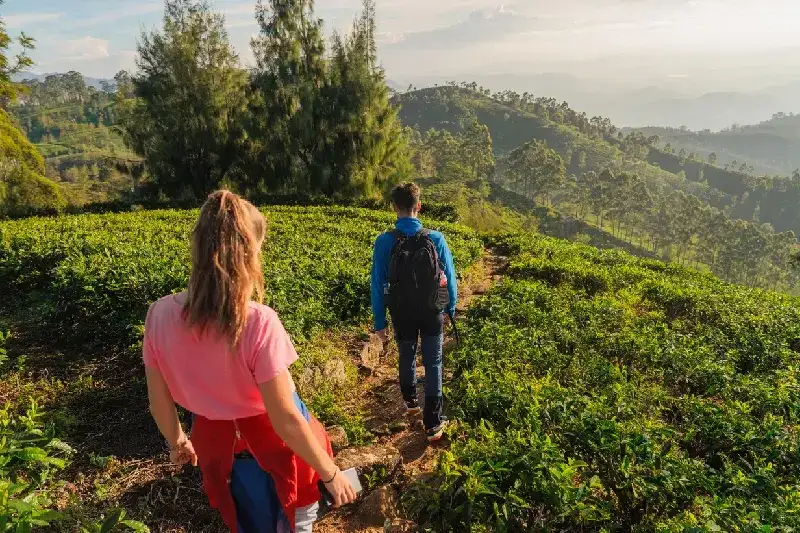
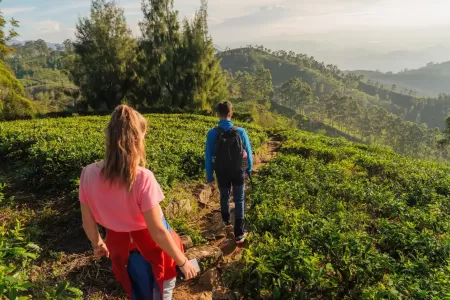
The most common route starts from the main road in Ella town and heads southwest, following signs towards Demodara. The path passes through tea gardens and small local settlements before arriving at the main viewpoints above the bridge.
Check our top tours:
You should avoid walking on the bridge when trains are approaching, but you can walk near and around it from safe viewpoints.
Watching a train roll across the Nine Arch Bridge is the defining moment of most visits. Many travellers plan their entire morning around it.
Train schedules in Sri Lanka vary frequently due to delays and operational changes. However, trains on the Kandy–Ella line typically pass the bridge several times throughout the day, especially in the morning and afternoon.
There is no fixed timetable for the bridge itself, and trains may be delayed by 30 minutes to over an hour.
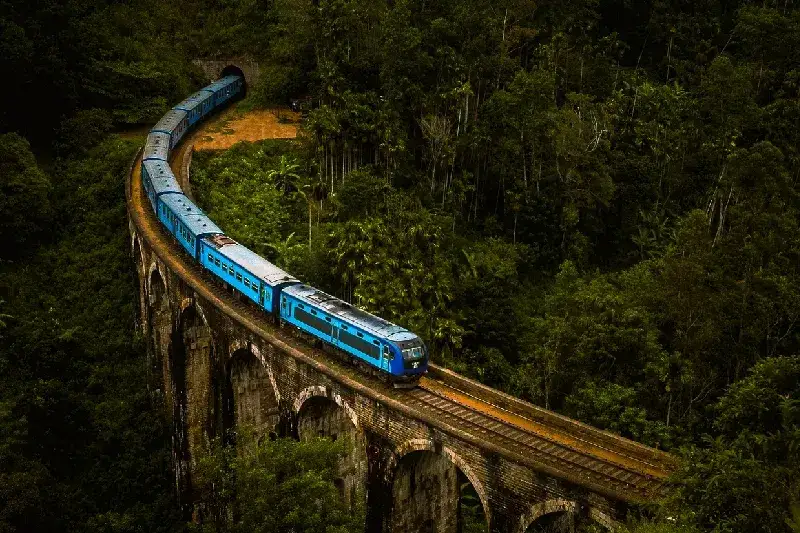
The sight of a turquoise, blue, or red Sri Lankan train carriage crossing the stone arches with jungle below is one of those images that lives in travel photography permanently. Crowds gather at the main viewpoint and wait patiently, sometimes for an hour, for the train to appear.
You should know that train timings are not fixed, but you can usually expect several trains throughout the morning and afternoon, though delays are common.
You should visit early in the morning or late afternoon to enjoy better light, fewer crowds, and the best chance of seeing a train crossing.
This is the main event. Position yourself at one of the elevated viewpoints, wait for the distant sound of the horn, and watch the train emerge from the jungle and roll slowly across the arches. It takes about 30–45 seconds for the full crossing, and the entire crowd cheers.
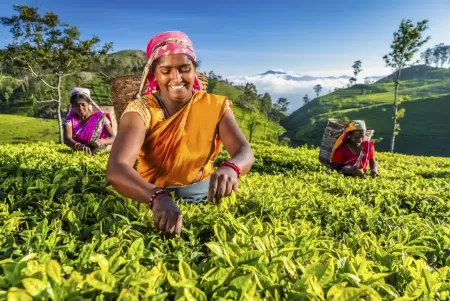
Even without the trains, this is one of the most beautiful spots in Sri Lanka. The valley below is dense jungle. Tea estates cascade down the hillsides. Birds call from the canopy. On a clear day, the ridgeline of Ella Rock is visible in the distance. Just sitting at the viewpoint and absorbing the scenery is an entirely worthwhile way to spend an hour.
A handful of small cafés and viewpoint restaurants have sprung up around the bridge, many with open terraces offering unobstructed views while you enjoy a cup of Ceylon tea or a fresh juice.
Arriving at the Nine Arch Bridge feels different from most tourist sites. There's no entrance gate, no ticket booth, no formal queue. You emerge through tea bushes and suddenly the bridge is just there, enormous, ancient, completely at home in the jungle. The atmosphere is relaxed and communal. Travellers from dozens of countries sit on rocks and fallen logs, sharing snacks and waiting for the train, chatting about where they've been and where they're going.
The Nine Arch Bridge is popular, and in peak season (December to March) the main viewpoints can get genuinely busy between 8:00 and 10:00 AM. Arriving before 7:30 AM largely solves this. The bridge is large enough that even when crowds are present, everyone finds a spot. It never feels as overwhelming as, say, a major European monument, the jungle setting keeps things grounded.
Plan for a minimum of 1.5 to 2 hours at the bridge, including travel time from Ella. If you're a photographer, or simply want to wait for two or three train crossings, 3 hours is more realistic. Most travellers combine the bridge with a morning hike or a stop at one of the nearby cafés, making it a comfortable half-day activity.
You should plan to spend around 1–2 hours so you can enjoy the views, wait for a train, and take photos without rushing.
Yes, you will find it safe if you stay on designated paths and keep a safe distance when trains are crossing.
The Nine Arch Bridge pairs naturally with everything else Ella has to offer. If you're building an itinerary around Sri Lanka tours in the Hill Country, here's what to include:
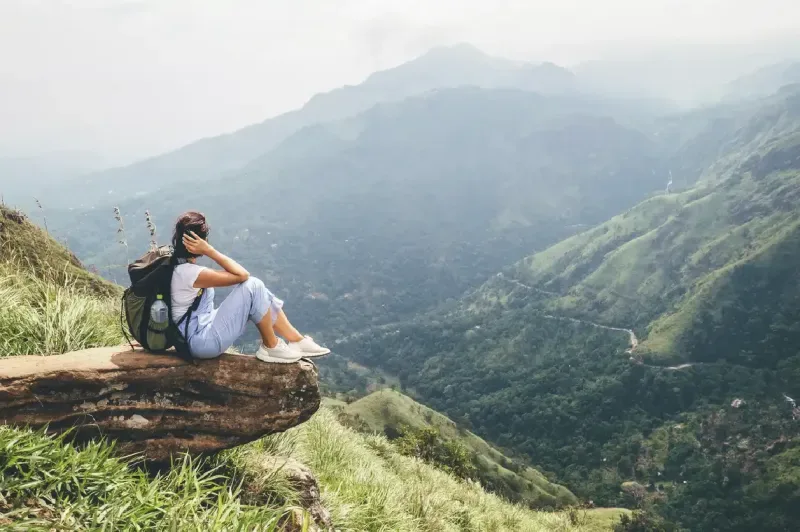
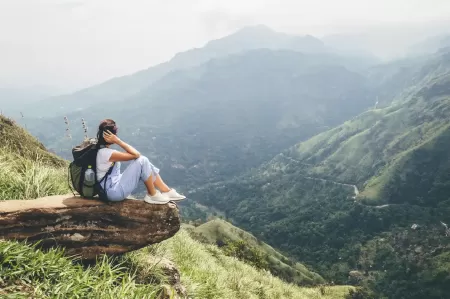
Yes, you should combine it with nearby attractions like Little Adam’s Peak and Ella Rock to make your visit more complete and rewarding.
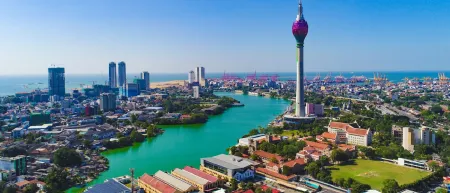
Your complete guide to Colombo, Sri Lanka: discover sights, food, nightlife, guided tours, weather, and travel tips for every visitor.
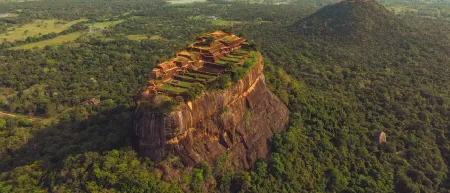
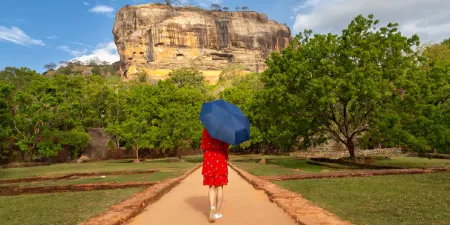
Sigiriya Lion Rock is Sri Lanka’s legendary rock fortress, known for its history, frescoes, and unforgettable panoramic scenery.
Discover Kandy with our guide to temples, scenic lake, cultural shows, and top attractions for an unforgettable visit.
Experience Ella, Sri Lanka, lush landscapes, scenic train rides, and peaceful vibes. Your complete guide to things to do and when to visit.
Plan your visit to Yala National Park in Sri Lanka. Discover wildlife, safari experiences, best seasons, and travel tips for this iconic nature reserve.
Discover Galle, Sri Lanka: historic Fort, beautiful beaches, vibrant streets, and unforgettable coastal charm.
Find the best things to do in Nuwara Eliya, from tea plantations to scenic parks and mountains in Sri Lanka’s charming hill station.
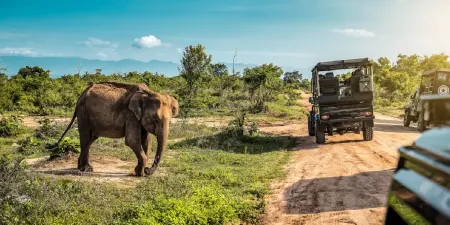
Udawalawe National Park offers incredible elephant sightings, wildlife safaris, and beautiful scenery. Learn the best time to visit and travel tips.
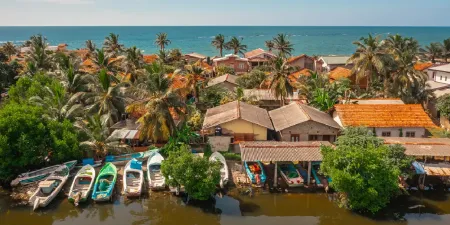
Negombo is more than an airport stopover. Explore its fishing culture, Little Rome churches, Dutch canals, and fresh seafood. Full guide inside.
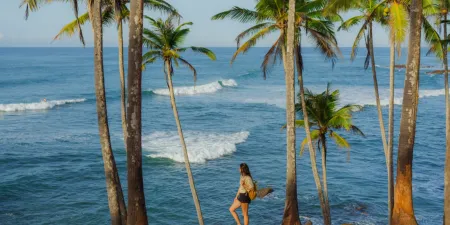
Weligama, Sri Lanka's Sandy Village, your complete guide to beaches, surfing, things to do, and travel tips on the southern coast.
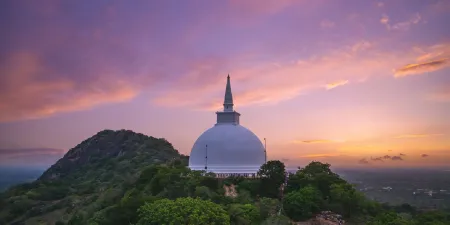
Explore Anuradhapura in Sri Lanka, home to sacred Buddhist sites, ancient ruins, massive dagobas, and unforgettable cultural experiences.
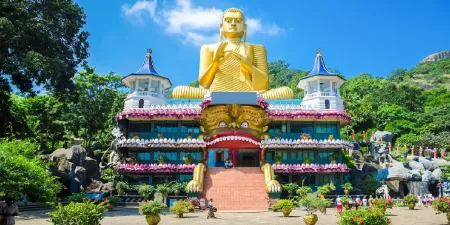
Plan your visit to Dambulla Cave Temple with top highlights like cave murals, Buddha statues, panoramic views, plus useful visitor tips.
Visit Nine Arch Bridge and enjoy stunning views, scenic train crossings, hiking trails, and one of the country’s top attractions.
Explore the best things to do in Habarana, from jeep safaris and birdwatching to visiting nearby temples and ancient Sri Lankan cities.
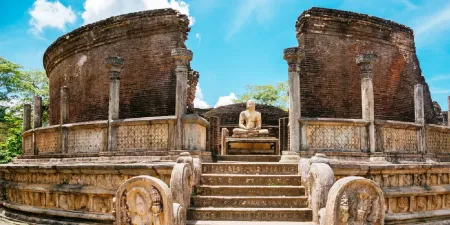
Once the royal capital of Sri Lanka, Polonnaruwa showcases impressive ruins, sacred monuments, and remarkable ancient engineering.