Dambulla Cave Temple

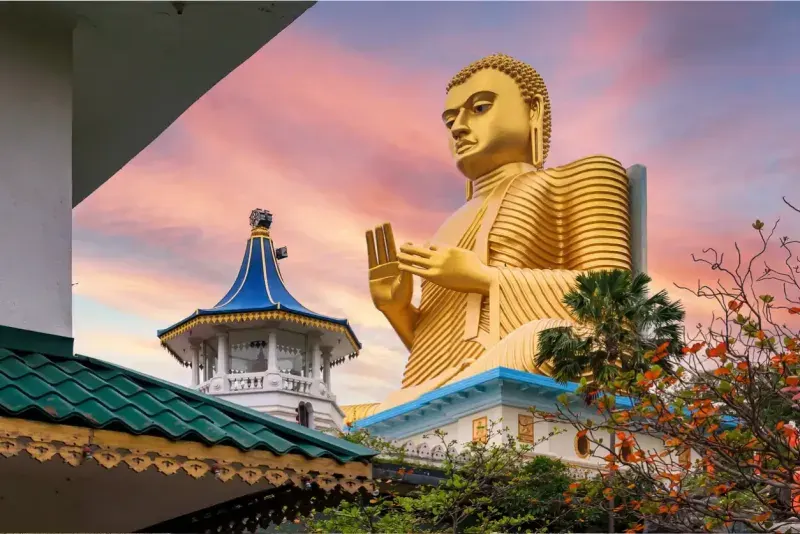
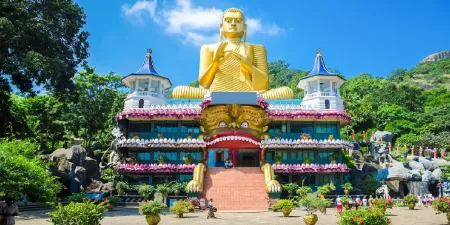
The Dambulla Cave Temple is the largest and best-preserved cave temple complex in Sri Lanka. Carved into a massive granite rock that rises about 160 metres above the surrounding plains, this ancient Buddhist sanctuary has been a place of worship for more than two millennia. It is one of the most visited heritage sites in the country and a must-see stop on any Sri Lanka itinerary.
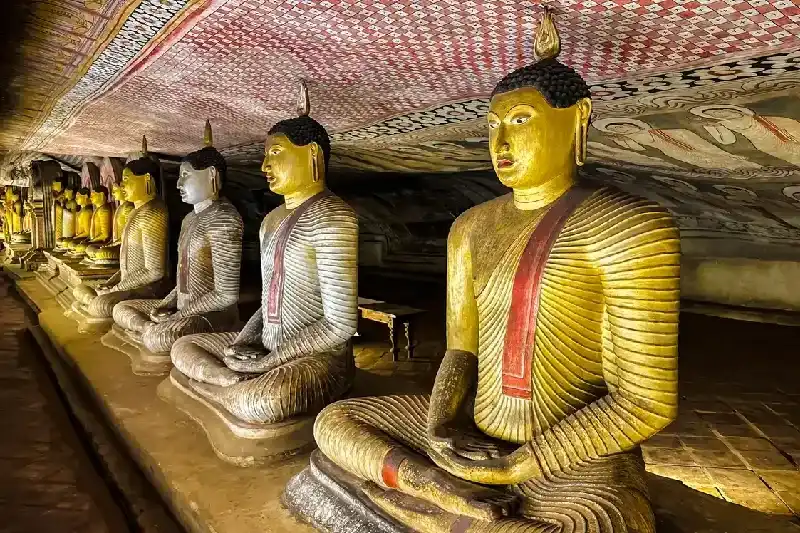
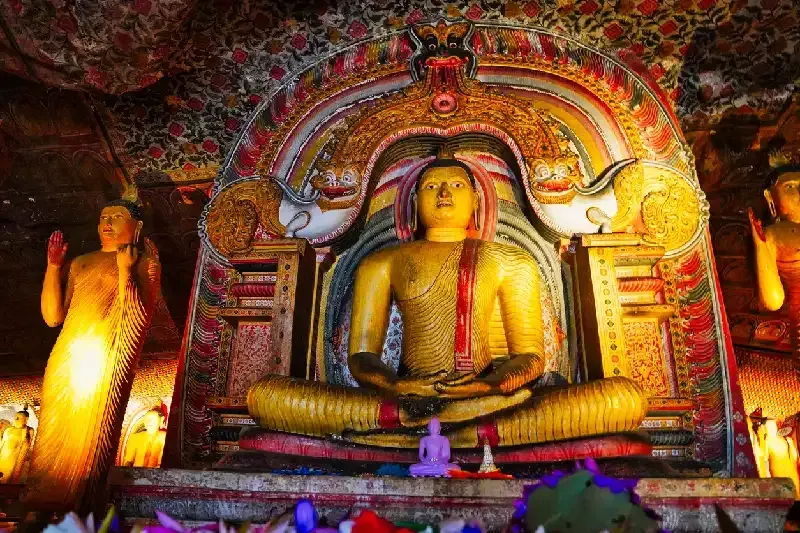
The complex consists of five main caves filled with an extraordinary collection of statues, murals, and religious art. In total, you'll find over 150 Buddha statues, 3 statues of Sri Lankan kings, and 4 statues of gods and goddesses, all sheltered beneath stone ceilings that are painted from wall to wall with intricate Buddhist imagery covering more than 2,100 square metres.
If you're planning Sri Lanka tour packages, Dambulla is almost always included as part of the iconic "Cultural Triangle" route, alongside Sigiriya Rock Fortress, Anuradhapura, and Polonnaruwa.
The history of Dambulla begins around the 1st century BC. According to the Sri Lankan chronicle the Mahavamsa, King Valagamba (also written as Vattagamani Abhaya) took refuge in these caves after being driven from his throne in Anuradhapura by invaders. He spent 14 years hiding in the cave complex. After reclaiming his kingdom around 89 BC, he converted the caves into a magnificent Buddhist temple as an act of gratitude, and the site has been sacred ever since.
Over the following centuries, many of Sri Lanka's greatest kings contributed to Dambulla:
This is the smallest of the five caves but one of the most striking. The cave is dominated by a massive 15-metre reclining Buddha carved directly from the living rock. At the feet of the Buddha lies a statue of Ananda, his devoted disciple. The ceiling above is painted with detailed Buddhist imagery, and the atmosphere here feels particularly intimate and ancient.
Get in touch with our local experts for an unforgettable journey.
Plan Your Trip
This is the largest and most impressive cave. It measures roughly 52 metres long, 23 metres wide, and up to 7 metres high at its peak. Inside you'll find:
Built during the Kandyan period by King Kirti Sri Rajasinha, this cave houses 57 Buddha statues as well as a reclining Buddha and painted walls. The murals here are considered some of the finest examples of Kandyan-era painting in existence.
Smaller than the others, Cave 4 contains several seated Buddha statues as well as a small dagoba (stupa) said to contain jewelry belonging to Queen Somawathie. It's a quieter, less-visited space that rewards those who take their time.
The newest of the five caves, added only in the early 20th century. It holds a reclining Buddha and statues of local deities, blending Buddhist and Hindu imagery in a way that's characteristic of Sri Lankan religious tradition.
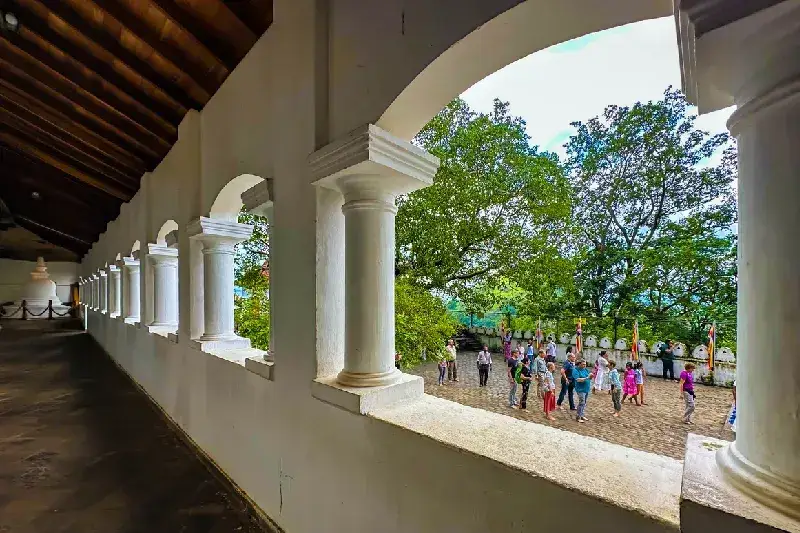
Dambulla Cave Temple is more than just a beautiful heritage site, it's a living, active place of worship. Monks still pray here. Local pilgrims visit on poya days (full moon days). Offerings of flowers, incense, and oil lamps fill the air with scent and smoke.
For travelers on Sri Lanka tours, Dambulla is significant for several reasons:
Dambulla is very well connected and easy to reach from most parts of the island:
The town of Dambulla itself is a practical base for exploring the Cultural Triangle, with a good range of hotels, guesthouses, and local restaurants.
The term "Cultural Triangle" refers to the area of central Sri Lanka bounded by three ancient cities, Anuradhapura, Polonnaruwa, and Kandy, with Dambulla and Sigiriya sitting at its heart. This region contains the highest concentration of UNESCO World Heritage Sites in South Asia and is the backbone of most popular Sri Lanka tour packages.
A typical Cultural Triangle itinerary looks something like this:
Dambulla is almost always the entry point to this circuit, making it one of the first major impressions Sri Lanka gives its visitors, and it rarely disappoints.
Absolutely. It's consistently rated as one of the top heritage experiences in all of South Asia. The combination of natural rock formations, 2,000 years of Buddhist art, and genuine spiritual atmosphere.
Most visitors spend 2–3 hours, including the walk up and down the rock. Budget a little more if you want to explore slowly and take photographs.
Yes, this is one of the most popular day trips in Sri Lanka. The two sites are only 19 km apart. Start at Dambulla in the morning, then head to Sigiriya in the afternoon (or vice versa, though Sigiriya is better in the morning light).
The path up is paved but steep in sections. It's manageable for most healthy adults and older children. For elderly visitors or those with mobility issues, it can be challenging; the final stretch before the caves is the steepest part.
Dambulla can be visited year-round. The driest and most comfortable months are generally January to April and July to September. The monsoon season (May–June for the southwest, October–November for the northeast) can bring heavy rain but the crowds thin out considerably.
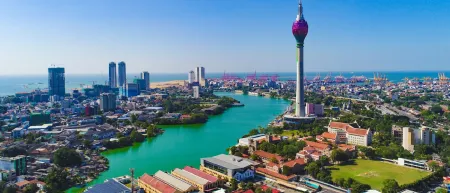
Your complete guide to Colombo, Sri Lanka: discover sights, food, nightlife, guided tours, weather, and travel tips for every visitor.
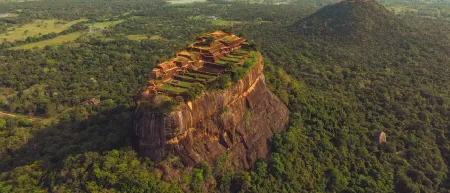
Sigiriya Lion Rock is Sri Lanka’s legendary rock fortress, known for its history, frescoes, and unforgettable panoramic scenery.
Discover Kandy with our guide to temples, scenic lake, cultural shows, and top attractions for an unforgettable visit.
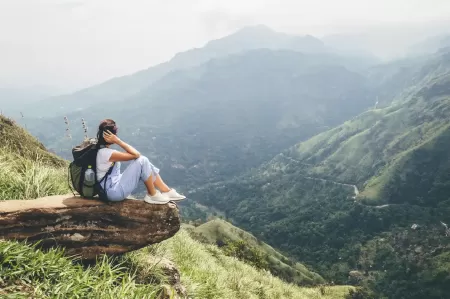
Experience Ella, Sri Lanka, lush landscapes, scenic train rides, and peaceful vibes. Your complete guide to things to do and when to visit.
Plan your visit to Yala National Park in Sri Lanka. Discover wildlife, safari experiences, best seasons, and travel tips for this iconic nature reserve.
Discover Galle, Sri Lanka: historic Fort, beautiful beaches, vibrant streets, and unforgettable coastal charm.
Find the best things to do in Nuwara Eliya, from tea plantations to scenic parks and mountains in Sri Lanka’s charming hill station.
Udawalawe National Park offers incredible elephant sightings, wildlife safaris, and beautiful scenery. Learn the best time to visit and travel tips.
Negombo is more than an airport stopover. Explore its fishing culture, Little Rome churches, Dutch canals, and fresh seafood. Full guide inside.
Weligama, Sri Lanka's Sandy Village, your complete guide to beaches, surfing, things to do, and travel tips on the southern coast.
Explore Anuradhapura in Sri Lanka, home to sacred Buddhist sites, ancient ruins, massive dagobas, and unforgettable cultural experiences.
Plan your visit to Dambulla Cave Temple with top highlights like cave murals, Buddha statues, panoramic views, plus useful visitor tips.
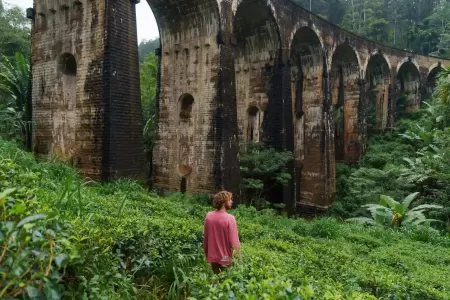
Visit Nine Arch Bridge and enjoy stunning views, scenic train crossings, hiking trails, and one of the country’s top attractions.
Explore the best things to do in Habarana, from jeep safaris and birdwatching to visiting nearby temples and ancient Sri Lankan cities.
Once the royal capital of Sri Lanka, Polonnaruwa showcases impressive ruins, sacred monuments, and remarkable ancient engineering.