Why Visit Anuradhapura in Sri Lanka?
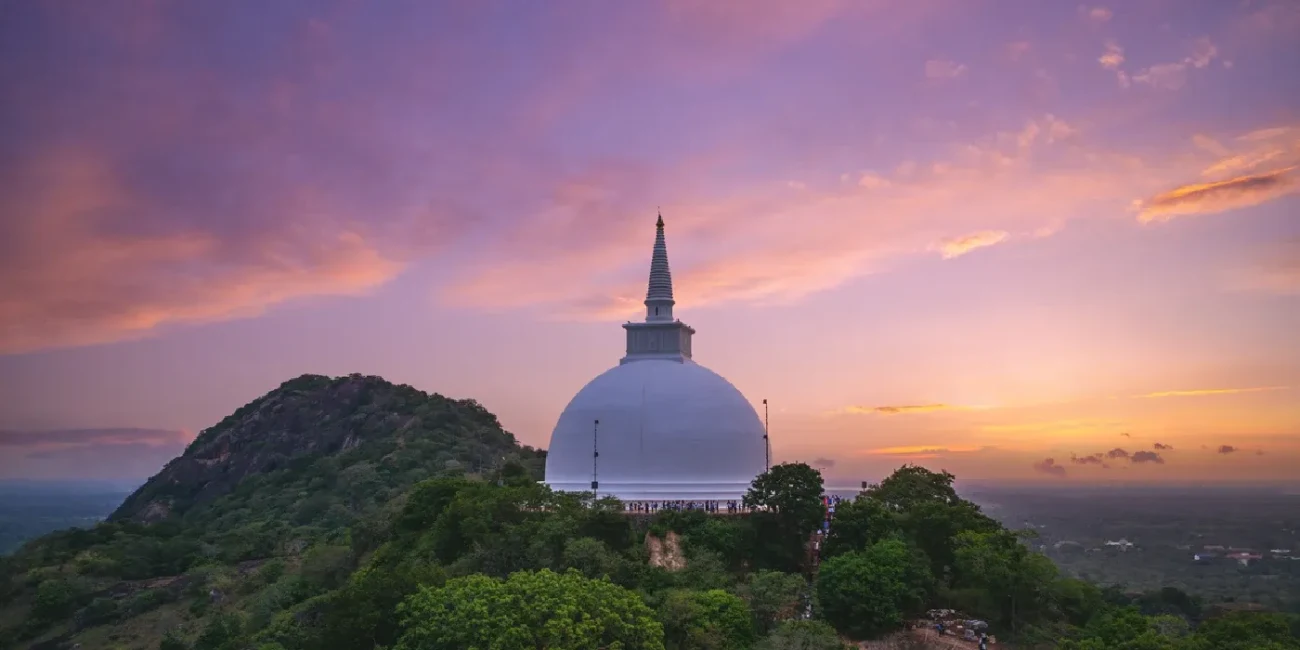
Anuradhapura (pronounced An-oo-rad-ha-poo-ra) served as the capital of Sri Lanka for over 1,300 years, from roughly the 4th century BCE to the 11th century CE. It was one of the great power centres of the ancient world, rivalling cities like Alexandria and Rome in scale and sophistication.
Today, it's both an active pilgrimage destination and an archaeological wonder. Unlike many ruins that sit dormant behind fences, Anuradhapura breathes. Monks in saffron robes walk its ancient paths. Pilgrims lay flowers at the base of dagobas that have stood for millennia. White-clad devotees circumambulate the sacred Bodhi tree, the oldest documented tree in human history. It's living history, and it hits differently than any museum ever could. If you're exploring Sri Lanka tours, this city is an absolute non-negotiable.
This is the most sacred site in the city and arguably one of the most revered spots in all of Sri Lanka. The Sri Maha Bodhi is a branch of the original Bodhi tree under which the Buddha attained enlightenment in India. It was brought to Sri Lanka in the 3rd century BCE by Princess Sanghamitta and has been continuously tended ever since, making it the oldest historically documented tree in the world.
Visiting on a poya (full moon) day is an unforgettable experience. The energy of hundreds of pilgrims in white clothing, surrounded by the scent of incense and the sound of chanting, is something you don't easily forget.
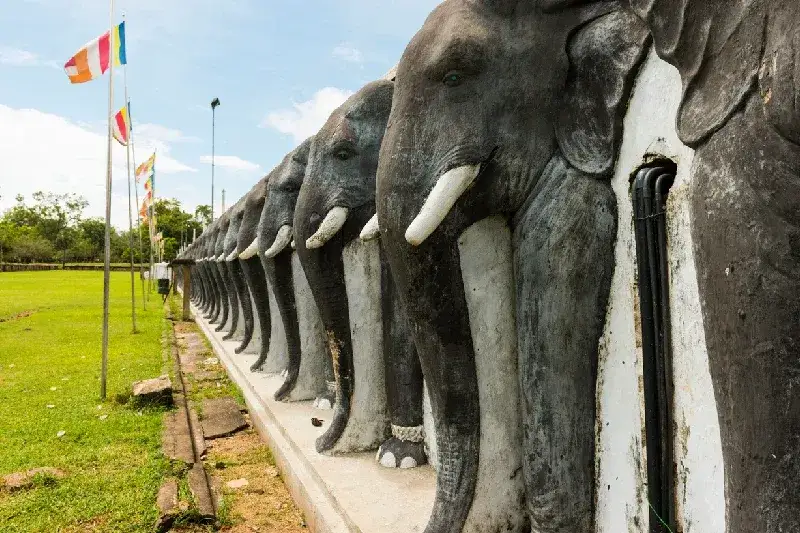
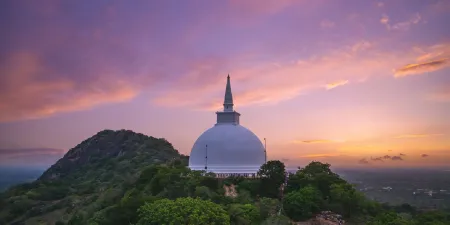
Built by King Dutugemunu in the 2nd century BCE, this massive white stupa stands around 55 metres tall and is surrounded by an elephant wall, a line of 338 elephant sculptures that give the impression of the dagoba being carried on the backs of elephants. It's breathtaking in the morning light and even more atmospheric at dusk.
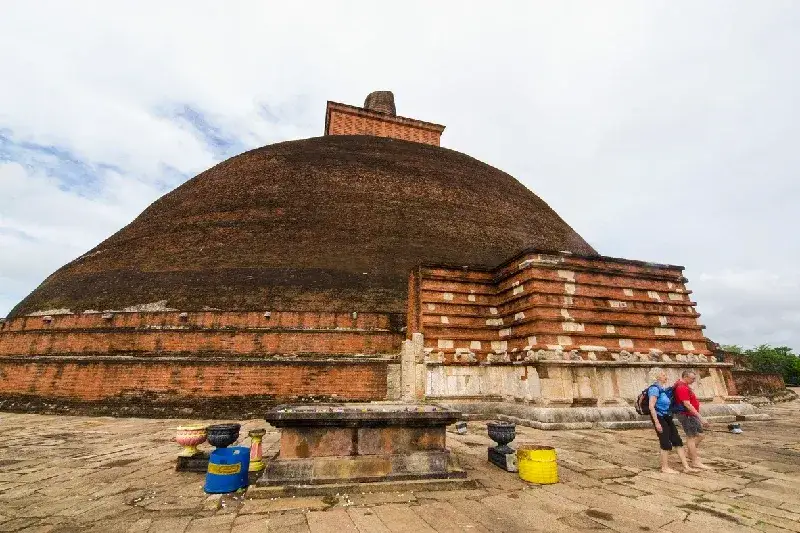
Once the tallest structure in the ancient world (outside of the Egyptian pyramids), the Jetavanaramaya stupa reaches approximately 70 metres today, and it was originally even taller. It was constructed by King Mahasena in the 3rd century CE and contains enough bricks to build a 3-metre-wide wall from London to Edinburgh.
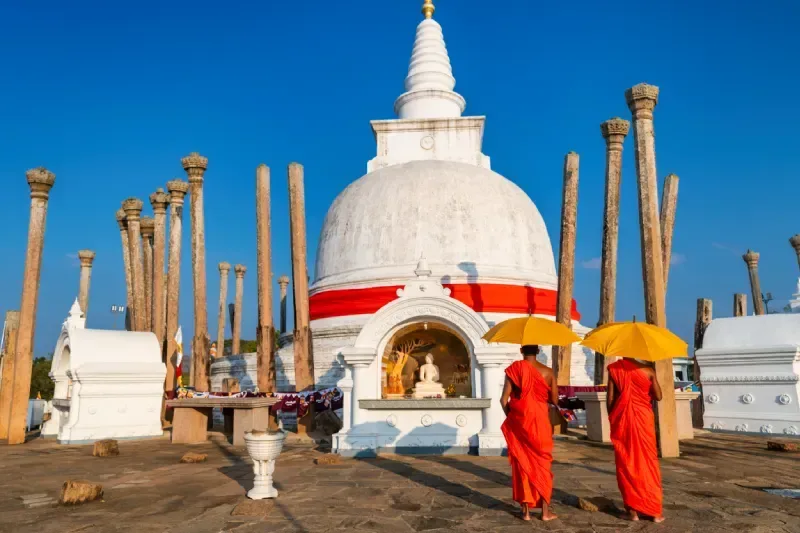
The oldest dagoba in Sri Lanka, Thuparamaya is said to enshrine the right collarbone of the Buddha. It's modest in scale compared to the giants nearby, but its historical significance is unmatched.
Get in touch with our local experts for an unforgettable journey.
Plan Your Trip
This enormous monastery complex was once home to over 5,000 monks and served as a major centre of Buddhist learning. The dagoba at its heart still dominates the skyline. The museum here is one of the best in the Cultural Triangle and well worth your time.
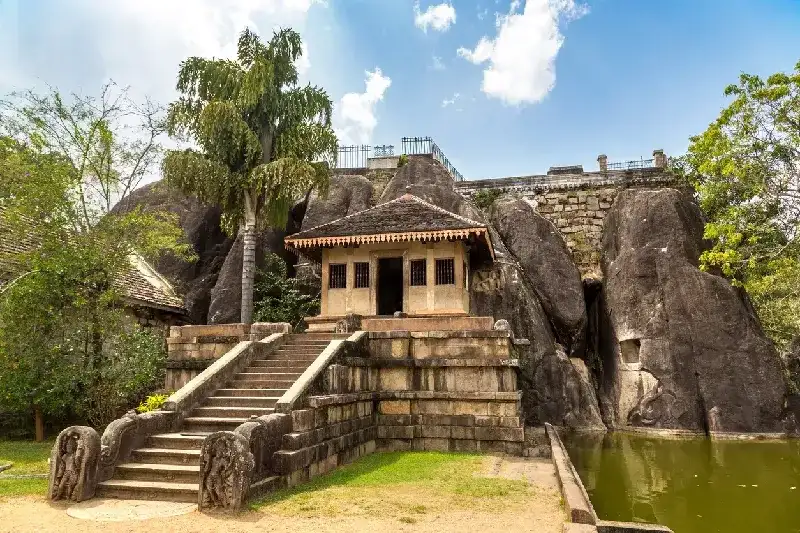
Carved directly into rock, this small but captivating temple features some of the finest stone carvings in Sri Lanka. The famous "Lovers" sculpture, two figures carved in the Gupta style, is a must-see. The location beside a peaceful tank (reservoir) makes it one of the most photogenic spots in the city.
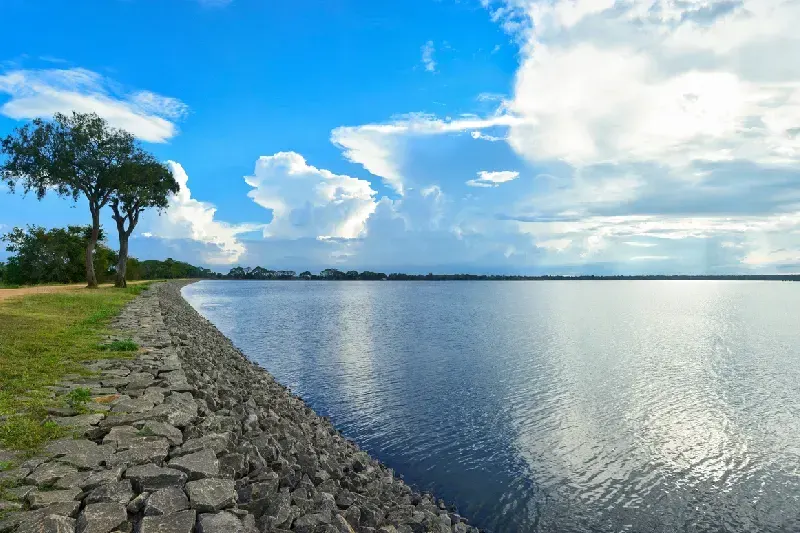
The hydraulic engineering of ancient Anuradhapura was revolutionary. The city was sustained by a sophisticated network of reservoirs (called tanks). Nuwara Wewa, Tissa Wewa, and Basawakkulama are the most famous, and cycling around them at sunrise or sunset is one of the most peaceful things you can do in Sri Lanka.
The monuments are jaw-dropping, but Anuradhapura's real magic often happens in the quieter moments between the big sites.
Get on a bicycle before 6 am. Seriously. The sacred city at first light, mist hanging low over the dagobas, monks beginning their morning walks, the air cool and still, is one of those travel moments that stays with you for years. Rent a bike the night before, set your alarm, and just ride.
Tissa Wewa is the most beautiful of Anuradhapura's ancient reservoirs, and its western bank at golden hour is genuinely stunning. The water catches the last light, birds wheel overhead, and the silhouettes of distant dagobas frame the horizon. Bring something to sit on, leave the itinerary behind for an hour, and just be there.
The Anuradhapura main market area is lively, colourful, and completely untouched by tourism. Pick up fresh tropical fruit, watch vendors arrange enormous piles of vegetables, and grab a kottu roti or string hoppers from a local café for next to nothing. This is the Sri Lanka that doesn't make it onto Instagram, and it's all the better for it.
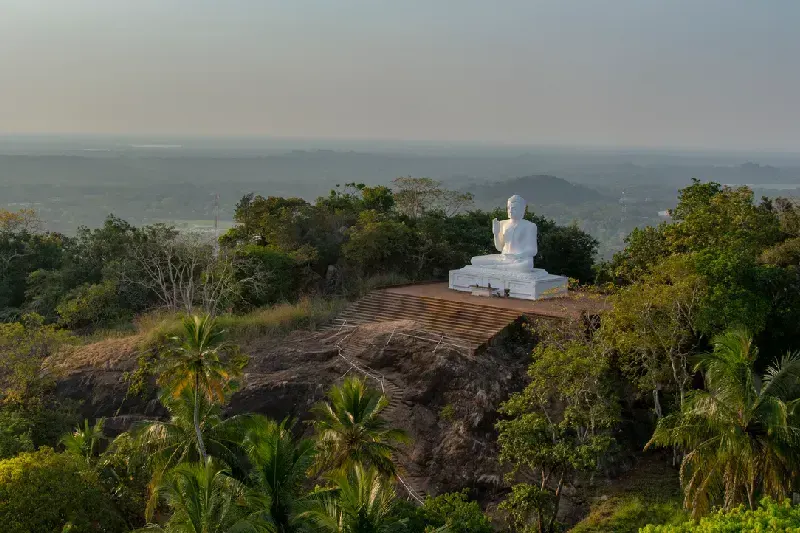
Several monasteries in and around Anuradhapura welcome respectful visitors for quiet contemplation or guided meditation sessions. The forest monastery of Mihintale (about 13km away and well worth a half-day trip) is particularly special, it sits on a rocky hilltop where Buddhism is said to have first been introduced to Sri Lanka, and the atmosphere is one of the most serene you'll find anywhere.
Anuradhapura wasn't just a capital, it was a civilisation in miniature. Here's what made it extraordinary:
White or light-coloured clothing is preferred when visiting religious sites. Shoulders and knees must be covered. You'll often need to remove shoes, so slip-ons are a practical choice.
Anuradhapura is one point of Sri Lanka's famous Cultural Triangle, along with:
If you're planning your Sri Lanka itinerary, a Cultural Triangle circuit that includes Anuradhapura is the most efficient and rewarding way to see it all.
Here's the honest case for prioritising this city:
Two full days is the sweet spot. Day one for the main sacred city sites (Sri Maha Bodhi, Ruwanwelisaya, Jetavanaramaya, Abhayagiri), and day two for a slower pace, cycling the reservoir trails, exploring Isurumuniya, and making the half-day trip to Mihintale. If you're short on time, one very full day is doable but you'll feel rushed.
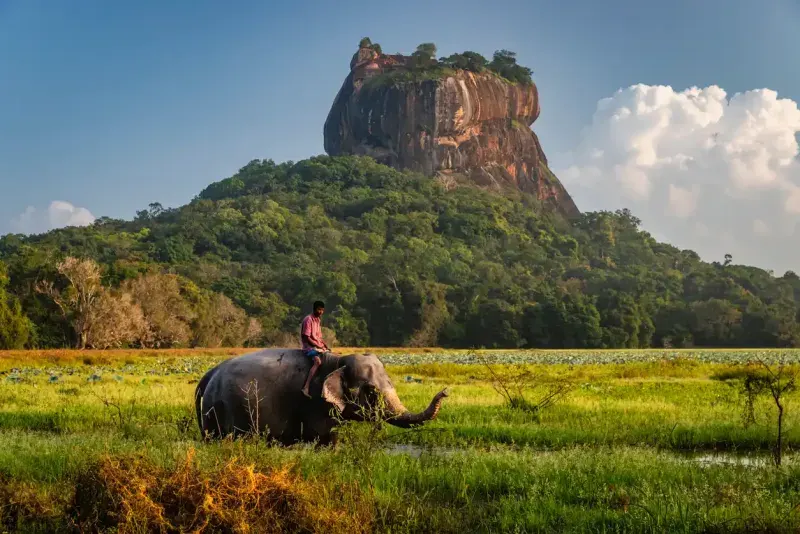
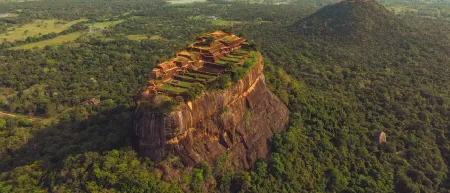
They're completely different experiences and both are worth it, but if you had to choose, Anuradhapura offers more depth, more authentic atmosphere, and a more immersive cultural encounter. Sigiriya is a single dramatic spectacle; Anuradhapura is an entire ancient world to wander through.
December through April is ideal, when the North Central Province is dry and sunny. May to October brings the south-west monsoon, and while Anuradhapura receives less rain than the coast, it can still be wet and humid. That said, visiting during the off-season means far fewer visitors, which has its own appeal.
Not strictly, but a good local guide adds enormous value. The stories, context, and connections between sites aren't well-explained by signage alone. A half-day guided tour can transform a confusing landscape of ruins into a coherent, fascinating narrative.
Yes, and it's a brilliant combination. Wilpattu National Park, Sri Lanka's largest and oldest national park, is just 30km west of Anuradhapura. Leopards, sloth bears, elephants, and crocodiles are all found there.
The train is the most enjoyable option, a scenic 4–5 hour journey through rice paddies and rural Sri Lanka, with comfortable intercity services running daily. By road it's roughly 3.5 hours via the E01 expressway.
Yes, unequivocally. The round ticket covers Anuradhapura, Polonnaruwa, Sigiriya, Dambulla, and Kandy, five of the most extraordinary sites in South Asia, for a combined fee that works out far cheaper than buying individual tickets. If you're doing any kind of Sri Lanka Cultural Triangle tour, get the round ticket on arrival.
Your complete guide to Colombo, Sri Lanka: discover sights, food, nightlife, guided tours, weather, and travel tips for every visitor.
Sigiriya Lion Rock is Sri Lanka’s legendary rock fortress, known for its history, frescoes, and unforgettable panoramic scenery.
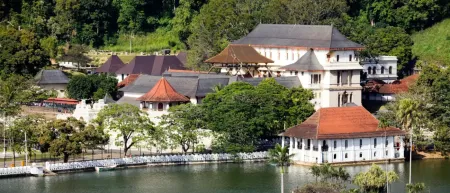
Discover Kandy with our guide to temples, scenic lake, cultural shows, and top attractions for an unforgettable visit.
Experience Ella, Sri Lanka, lush landscapes, scenic train rides, and peaceful vibes. Your complete guide to things to do and when to visit.
Plan your visit to Yala National Park in Sri Lanka. Discover wildlife, safari experiences, best seasons, and travel tips for this iconic nature reserve.
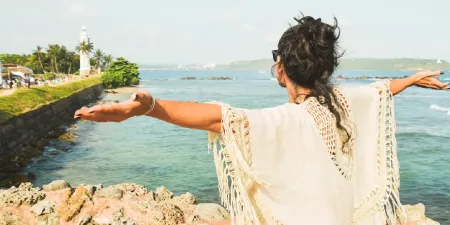
Discover Galle, Sri Lanka: historic Fort, beautiful beaches, vibrant streets, and unforgettable coastal charm.
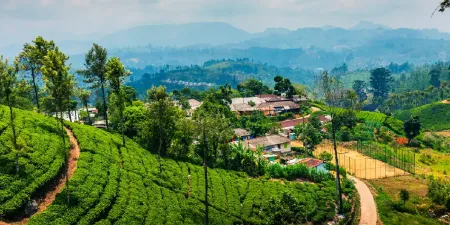
Find the best things to do in Nuwara Eliya, from tea plantations to scenic parks and mountains in Sri Lanka’s charming hill station.
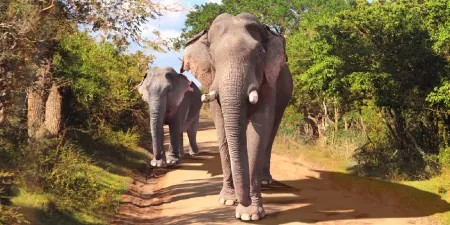
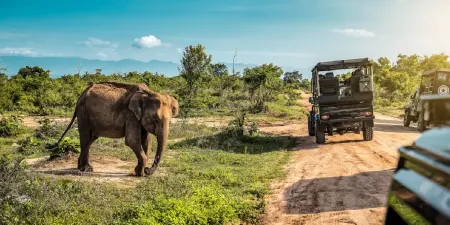
Udawalawe National Park offers incredible elephant sightings, wildlife safaris, and beautiful scenery. Learn the best time to visit and travel tips.
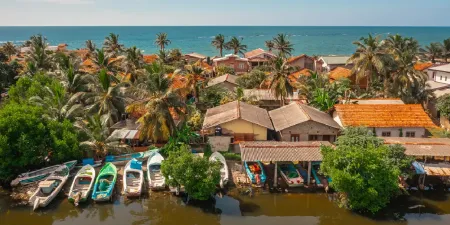
Negombo is more than an airport stopover. Explore its fishing culture, Little Rome churches, Dutch canals, and fresh seafood. Full guide inside.
Weligama, Sri Lanka's Sandy Village, your complete guide to beaches, surfing, things to do, and travel tips on the southern coast.
Explore Anuradhapura in Sri Lanka, home to sacred Buddhist sites, ancient ruins, massive dagobas, and unforgettable cultural experiences.
Plan your visit to Dambulla Cave Temple with top highlights like cave murals, Buddha statues, panoramic views, plus useful visitor tips.
Visit Nine Arch Bridge and enjoy stunning views, scenic train crossings, hiking trails, and one of the country’s top attractions.
Explore the best things to do in Habarana, from jeep safaris and birdwatching to visiting nearby temples and ancient Sri Lankan cities.
Once the royal capital of Sri Lanka, Polonnaruwa showcases impressive ruins, sacred monuments, and remarkable ancient engineering.