Table of content
Long before maps listed things to do in Cusco city, Inca legend explained why this valley mattered so much throughout the Andes.
The founding legends of Manco Capac and Mama Ocllo
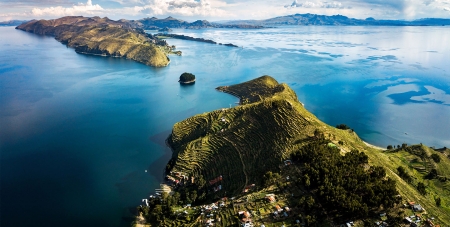
According to Inca myth, the sun god Inti sent two of his children, Manco Capac and Mama Ocllo, to bring order to humankind. The pair emerged from Lake Titicaca’s waters with a golden staff. As they traveled, Manco Capac drove the rod into the ground to test the soil. It finally sank near Huanacauri Hill, south of the Cusco Valley, and marked the site for a new city.
Manco Capac then gathered scattered highland groups and divided the settlement into two moieties, Hanan and Hurin. Mama Ocllo taught women to spin thread and manage households. The pair also taught people to grow maize and build proper homes. They raised a population that had been living, as one chronicler put it, “without religion or police”. Mama Ocllo became a mother and fertility goddess. Most versions remember her as both Manco Capac’s sister and wife.
The city’s name has its own legend. “Qusqu,” written in Spanish as Cuzco or Cusco, comes from an Aymara phrase meaning “rock of the owl.” The name relates to the story of the Ayar siblings, where Ayar Auca turned to stone to claim the land for his lineage. Every version shares one idea: Cusco was built as the navel of the world, not simply another settlement on a map.
How Cusco became the center of the Inca Empire
Beyond myth, Cusco’s rise to power came from careful planning. Pachacutec redesigned the city during the 15th century. He created a well-laid-out urban center with separate areas for religion, government, and daily production, surrounded by farmland and artisan districts.
The rebuilt capital became the seat of Tawantinsuyu, the Inca Empire. By the late 15th century, it extended roughly 1,100 miles northwest toward Ecuador and 1,600 miles south into Chile. The empire also reached Bolivia and Argentina. Its population may have exceeded 12 million, while Cusco held tens of thousands of residents and possibly as many as 200,000 at its peak. Four royal roads led from the city to its quarters: Chinchaysuyu, Antisuyu, Kuntisuyu, and Qullasuyu. Every regional leader kept a house in Cusco and spent part of each year there.
Buildings such as the Qorikancha, Aqllahuasi, Sunturcancha, and Kusicancha displayed stone-cutting so precise that builders used no mortar to hold the walls together.
Spanish conquest and the city’s UNESCO-listed heritage
Francisco Pizarro’s forces reached Cusco on November 15, 1533. Soon after, they installed Manco Capac’s namesake, Manco Inca, as a puppet ruler. The arrangement did not last. Manco Inca turned against his former allies and besieged Cusco for ten months between 1536 and 1537. He later retreated to Vilcabamba, where his Neo-Inca State survived for another 36 years.
The Spanish built Baroque churches over Inca foundations rather than clearing them. Qorikancha’s stonework still stands beneath the Santo Domingo convent. Earthquakes in 1650 and 1950 destroyed much of the colonial brickwork, but the original Inca walls barely moved. That detail still surprises visitors.
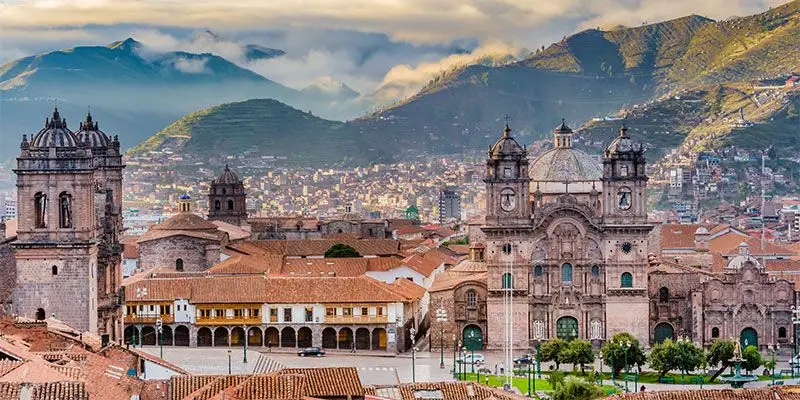
Cusco’s surviving Inca masonry and colonial architecture earned it UNESCO World Heritage status in 1983. The designation recognizes the city’s testimony to Inca civilization and its blend of two distinct cultures. The protected area covers 142.48 hectares and has a buffer zone of 284.93 hectares. These streets carry the marks of myth, empire, and conquest, which is why things to do in Cusco city, Peru, rarely feel like ordinary sightseeing.
![Panoramic view of Cusco, Peru, with the Cathedral and Plaza de Armas set against the Andes mountains]()
Understanding why Cusco earned UNESCO status is one thing. Seeing it in person is another, and the city holds much of its history within a few walkable sites.
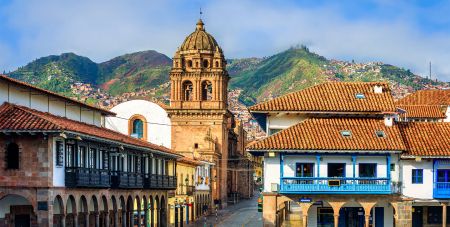
Explore Plaza de Armas and Cusco Cathedral
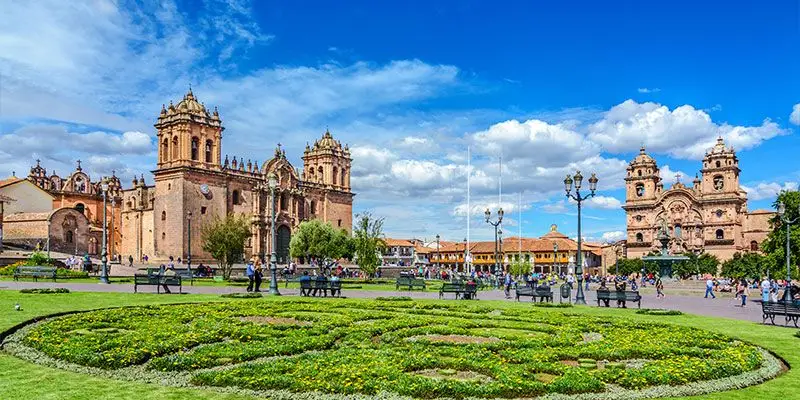
Begin at the main square, where most visits start. Builders began work on Cusco Cathedral in 1560 and completed its main structure by 1654. The temple holds Mass daily from 7:00 a.m. to 10:00 a.m., while tourist hours run from 10:30 a.m. to 5:00 p.m. Admission is not included with the Cusco Tourist Ticket, so visitors must pay separately or use the Religious Circuit ticket.
Visit Qorikancha and the Santo Domingo Convent
Qorikancha sits a short walk from the plaza. Its Quechua name means “enclosure of gold,” and it was once the empire’s most sacred temple, covering roughly 4,000 square meters. Spanish builders constructed the Santo Domingo convent directly over the temple. A magnitude 6.0 earthquake in 1950 destroyed much of the colonial brickwork, but the Inca stonework below barely shifted. Visitors can buy separate tickets for the convent and temple at 15 soles, the underground site museum at another 15 soles, or a combined pass for 25 soles.
Find the Twelve-Angled Stone on Hatun Rumiyoc
Hatun Rumiyoc Street lies a few blocks from the plaza, about a four- to five-minute walk away. A single block of green diorite attracts steady crowds. The stone is roughly six feet deep and weighs more than six tons. Its twelve distinct angles fit into the surrounding wall without mortar. It once belonged to Inca Roca’s palace and now forms part of the Archbishop’s Palace wall. Viewing is free, though visitors cannot touch the stone.
See the stone walls of Sacsayhuamán
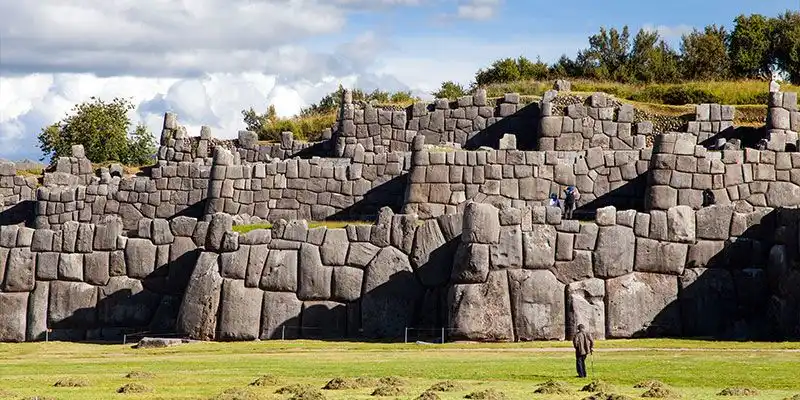
Sacsayhuamán stands north of the city at 3,701 meters and displays some of the empire’s most impressive engineering. Its longest wall extends about 400 meters and rises 6 meters tall. Builders used an estimated 6,000 cubic meters of stone, including blocks carried some 35 kilometers from the Rumicolca quarries. UNESCO listed the site with Cusco in 1983, and it still hosts Inti Raymi each June 24.
Explore Qenqo, Puka Pukara, and Tambomachay
Together with Sacsayhuamán, these sites make up Cusco’s classic archeological circuit:
-
Q’enqo, 4 kilometers away at 3,580 meters, was carved from a single rock formation. Its 55-meter amphitheater contains 19 niches and has long been linked to sacrifice and mummification rituals.
-
Puka Pukara, 7 kilometers from downtown, was a reddish military checkpoint on the Inca road toward the jungle.
-
Tambomachay, 8 kilometers away at 3,765 meters, is a ceremonial water site whose fountains have flowed continuously for roughly 500 years.
The Cusco Tourist Ticket covers entry to all four sites.
Learn about local history at Museo Inka
End your visit at Casa del Almirante, a 17th-century mansion built by the Spanish admiral Francisco Alderete Maldonado, on a site traditionally said to have been the residence of the Inca ruler Huáscar. Foreign visitors pay 10 soles. The exhibits follow local cultures from Chavín, dating from 1,200 to 400 BC, through the Inca period from 1230 to 1535 AD. The visit ends at the Mallki Wasi room, which features a life-size tomb display.
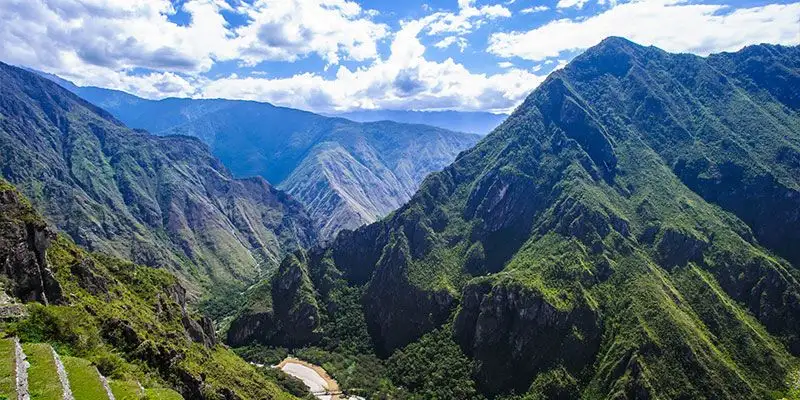
![Green Andean peaks and valley in the Sacred Valley near Cusco, Peru]()
What are the must-see attractions in Cusco?
Start with Plaza de Armas, Cusco Cathedral, Qorikancha, and the Twelve-Angled Stone. Add Sacsayhuamán for impressive Inca stonework, San Pedro Market for local food, and San Blas for artisan workshops.
Is Cusco easy to explore on foot?
Yes, many historic-center attractions are close together and walkable. San Blas involves an uphill climb, so take your time while adjusting to Cusco’s altitude of 3,400 meters.
Is three days enough to explore Cusco?
Two to three days is a good starting point for the city’s main sights, museums, and markets. Allow extra days for the Sacred Valley, Machu Picchu, or high-altitude hikes.
Do I need a tourist ticket to visit Cusco’s ruins?
The Cusco Tourist Ticket is required for Sacsayhuamán, Qenqo, Puka Pukara, and Tambomachay. The full ticket covers multiple ruins and museums and lasts ten days, but Cusco Cathedral and Qorikancha require separate admission.
Which day trips from Cusco are worth considering?
Pisac and Ollantaytambo are good choices for Inca ruins and local markets. For hiking, consider Humantay Lake or the higher, more demanding Rainbow Mountain. Allow at least three days to acclimatize before outings above 4,000 meters.
Cusco’s culture extends far beyond its ruins. It appears in markets, artisan workshops, canvas paintings, and festivals that still follow ancient lunar and solar calendars.
Browse San Pedro Market and try local dishes
Walk eight minutes from Plaza de Armas to reach San Pedro Market, which opens early, from around 6:00 a.m. to 6:00 p.m. (with shorter hours on Sundays). Arrive between 7:00 a.m. and 10:00 a.m., at a time when stalls are fully stocked and the morning crowd remains light. Order chiriuchu, a cold dish with guinea pig and chicken, plus cheese, dried fish, toasted corn, and a quinoa pancake called torreja. Caldo de gallina, chicharrón, and choclo con queso are also available, and a full meal rarely costs more than 15 soles, or about six U.S. dollars.
Visit San Blas for artisan workshops and small galleries
Head uphill from the center to reach San Blas, where small workshops keep Cusco’s weaving and ceramic traditions alive each day. Shops sell pieces made by the artisans behind the counter, offering a quieter alternative to the souvenir stalls around the main square.
See Andean themes in Cusco School paintings
Indigenous painters left Cusco’s colonial guild and created a style of their own. They replaced academic rules with bright colors, gold leaf, and local landscapes. The Angel with Arquebus series portrayed archangels as Andean nobles with long-barreled guns, while other paintings showed the Virgin in a bell-shaped gown that echoed nearby sacred mountains. Painters Marcos Zapata and Pedro Nolasco worked among dozens of anonymous colleagues, and the style developed its distinct character between 1680 and 1690. Santa Ana parish still displays a set of eighteen canvases showing Cusco’s Corpus Christi procession, with each painting measuring about six feet square. The need for paintings grew so high by the eighteenth century that two artists completed 435 works in seven months, shortly before the style faded by 1824.
Plan around Inti Raymi or Corpus Christi
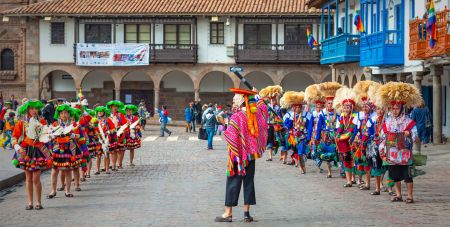
Schedule your trip for June 24 to see Inti Raymi, the Inca sun festival, which moves through Qorikancha, Plaza de Armas, and Sacsayhuamán in one day. Sacsayhuamán hosts the main ceremony, which lasts about four hours and seats roughly 3,500 spectators. Corpus Christi takes place earlier in June, at a time when fifteen saints and virgins leave their parish churches to spend eight days in Cusco Cathedral. The festival traces its roots to Inca processions that honored royal mummies. Spanish authorities later replaced those ceremonies with processions of saints and virgins. Visit during either week and look for chiriuchu stalls, as the dish’s ten ingredients, including roasted guinea pig and seaweed, mark both festivals.
![Plaza de Armas and Cusco Cathedral with green gardens, Cusco, Peru]()
Customize Your Dream Vacation!
Get in touch with our local experts for an unforgettable journey.
Plan Your Trip
Cusco’s history and culture can easily fill your days, but the region’s scenery invites you farther out to explore its valleys, trails, and famous citadel.
Visit Pisac and Ollantaytambo in the Sacred Valley
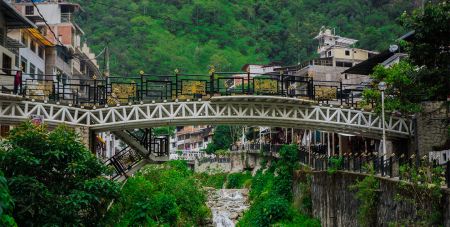
The main Sacred Valley towns lie roughly 500 to 600 meters below Cusco (Pisac at about 2,970 m and Ollantaytambo at about 2,790 m), so the valley makes a good stop while you adjust to the altitude. Pisac and Ollantaytambo define this area, with Inca terraces and lively local markets. Ollantaytambo also serves as the main gateway town before Machu Picchu. Many full-day tours include Chinchero and the Maras salt mines, then drop you at Ollantaytambo’s train station by evening.
Plan Machu Picchu as a separate part of your trip
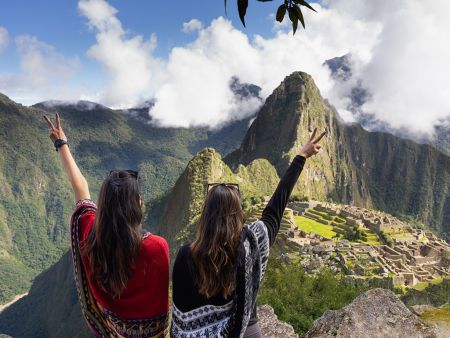
Machu Picchu deserves a full day rather than a rushed addition to a Sacred Valley loop. Tickets usually go on sale a few weeks before the start of each year through the official Ministry of Culture site, so confirm the current release date before planning. Daily capacity reaches 4,500 visitors during high season, from June to October, compared with 3,800 during low season. Trains to Aguas Calientes take from 1 hour 40 minutes to 3 hours 30 minutes, based on the service you book. A same-day round trip without an overnight stay can take more than 14 hours, so many travelers spend a night in Aguas Calientes. This also gives them time to visit the hot springs or site museum before returning. A standard tour with train travel and a hotel stay usually costs $350 to $600.
Compare Humantay Lake and Rainbow Mountain for high-altitude hikes
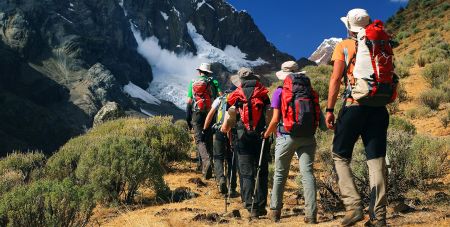
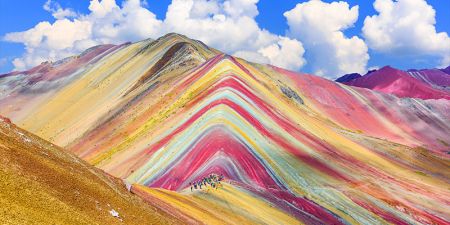
Both hikes require prior acclimatization. Humantay Lake sits at 4,200 meters and requires a roughly 3-hour drive, followed by a 1.5- to 2-hour uphill walk from Soraypampa. Rainbow Mountain reaches 5,200 meters. The trip involves a similar drive and a steeper, more demanding ascent. Humantay tours also cost less, at around $20 compared with $35 for Rainbow Mountain, and the route attracts fewer crowds. Choose Humantay first if you can only do one, as its lower altitude can help prepare you for the higher trek later.
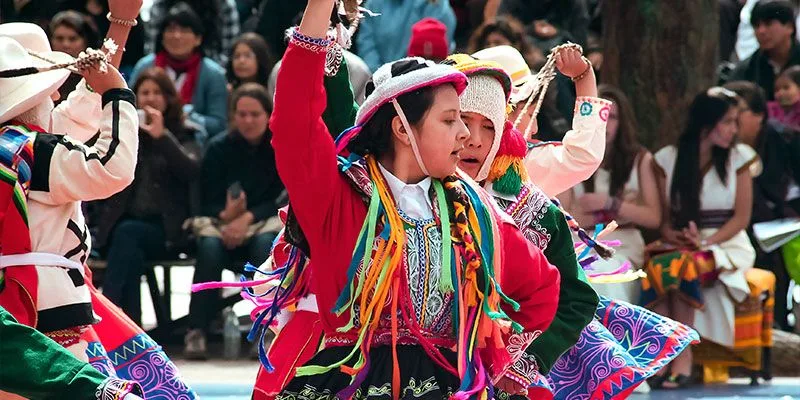
![Traditional Andean dancers in colorful costumes at a Cusco festival, Peru]()
Cusco rewards travelers who slow down and plan around the city’s rhythm instead of rushing through a checklist.
Choose between dry-season weather and quieter months
The dry season lasts from April through October, and crowds peak between June and August. April, May, September, and October bring dry weather with fewer visitors. Rain and lower prices come from November to March, although attractions often close in February.
Allow time to adjust to Cusco’s altitude before strenuous outings
Cusco sits at 3,400 meters, and altitude symptoms can begin within 24 hours. Allow at least two days before taking on a demanding trek. Plan three days or more if your route goes above 4,000 meters.
Decide how many days to spend in the city
Two or three days in Cusco, along with two days in the Sacred Valley, creates a balanced itinerary. A full week gives you time to explore the historic center, museums, markets, and day trips without feeling rushed.
Check tourist tickets, then review entry fees and guide options
The Boleto Turístico covers several museums and ruins and remains valid for ten days.
Choose where to stay and how to get around
Plaza de Armas and San Blas offer different prices and walking access. San Pedro provides another option for accommodations.
Support local businesses and respect sacred sites
Buy crafts directly from artisans and hire local guides.
Conclusion
Cusco holds centuries of history within streets you can explore in a single afternoon. Sacred temples and colonial churches sit close to lively markets and artisan workshops, so your days rarely feel rushed. Give yourself time to pause between stops because the altitude and the city’s beauty both call for patience.
Whether you trace Inca walls at Qorikancha, try chiriuchu at San Pedro Market, or plan a trip to Machu Picchu, Cusco rewards travelers who take their time. Pace your visit, respect sacred sites, and support the local makers behind the crafts. This ancient capital will give you far more than photos.
![Megalithic Inca walls of Sacsayhuamán near Cusco, Peru]()