In This Article
#Cultural Overview: What Makes Sri Lanka Unique
#Music, Dance & Performing Arts
#Arts, Crafts & Heritage Skills
#Regional Cultural Differences
#Cultural Etiquette for Travelers
I landed in Colombo on a Tuesday afternoon, and within twenty minutes of leaving the airport, I knew this place was unlike anywhere else I'd been. Sri Lanka doesn't just have culture, it has layers of it, woven together over millennia, still visibly alive in every neighborhood, meal, and conversation.
This guide is everything I wish I'd known before I went. Whether you're browsing tour packages or already planning your itinerary, understanding the culture will transform your trip from sightseeing into something far deeper.
#Cultural Overview: What Makes Sri Lanka Unique
Sri Lanka is a small island, about the size of Ireland, yet it carries the cultural weight of a continent. Formally known as Ceylon until 1972, it sits at the crossroads of South and Southeast Asian trade routes, which means its culture is a brilliant, sometimes surprising fusion of indigenous Sinhalese heritage, Tamil traditions, and Portuguese, Dutch, and British colonial influence.
What strikes most travelers first is the coexistence. Different ethnic groups, religions, and languages share this island, often on the same street. The 2019 Easter Sunday attacks and the decades-long civil war (which ended in 2009) are part of the national story, but so is the extraordinary resilience, warmth, and hospitality of Sri Lankan people. You'll feel that warmth immediately.
- Two main ethnic groups: Sinhalese (~75%) and Tamil (~15%), alongside Sri Lankan Moors, Burghers, and others
- Three official languages: Sinhala, Tamil, and English (widely spoken in cities and tourism areas)
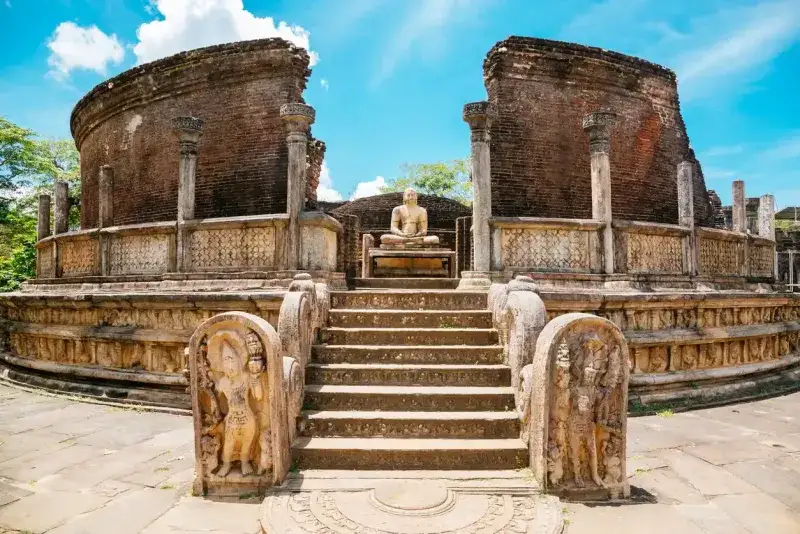
- UNESCO sites: 8 sites, including Sigiriya, Kandy, Galle Fort, and the Ancient City of Polonnaruwa
Ready to Experience It Yourself? Our handcrafted Sri Lanka tour packages are designed to take you beyond the landmarks!
Customize Your Dream Vacation!
Get in touch with our local experts for an unforgettable journey.
Plan Your Trip
#Religion & Spiritual Life
Nowhere is Sri Lanka's soul more visible than in its religious life. This is a country where the day begins with the smell of incense, where temples are as much a social hub as a sacred space, and where festivals aren't just events, they're the heartbeat of the community.
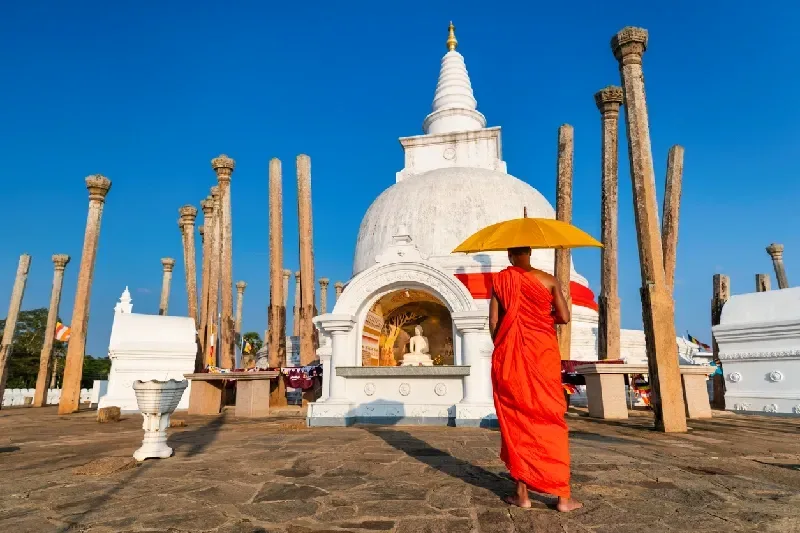
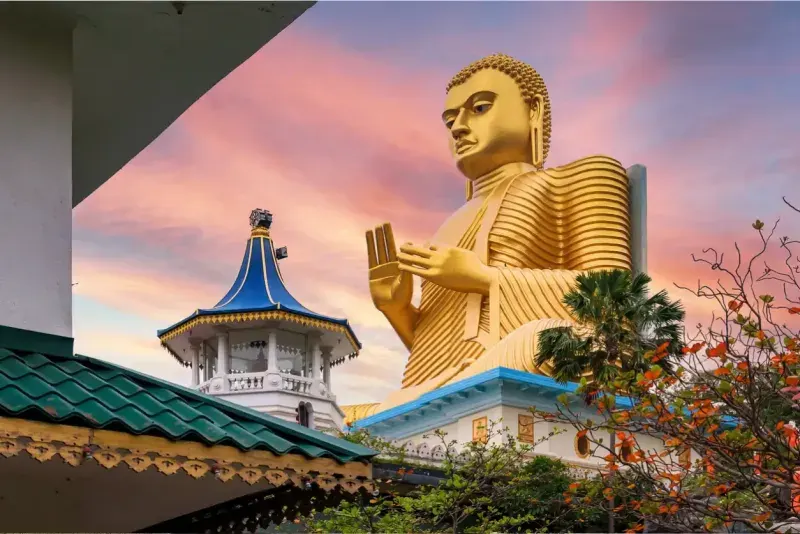
Buddhism is the dominant force. Theravada Buddhism has been practiced here since the 3rd century BCE, and it shapes everything from architecture to politics to the rhythm of daily life. Monks in robes are a constant presence, in markets, on buses, on Instagram. The spiritual atmosphere isn't performative; it's genuine and pervasive.
- Hinduism: Primarily among Sri Lankan Tamils in the north and east; vibrant kovil (temple) culture
- Islam: Concentrated among Sri Lankan Moors; mosques dot coastal trading towns
- Christianity: A colonial-era legacy, with both Catholic and Protestant communities
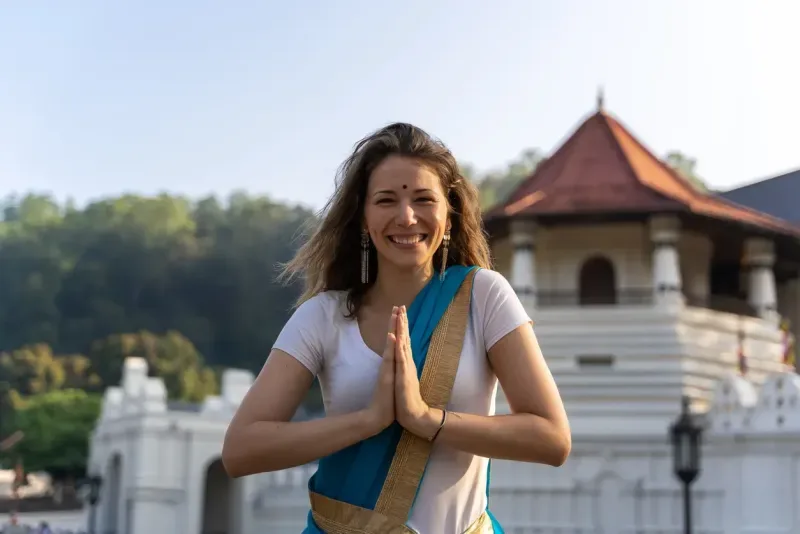
The Temple of the Sacred Tooth Relic (Sri Dalada Maligawa) in Kandy is the most important Buddhist site on the island, housing what is believed to be the Buddha's tooth.
#Festivals & Celebrations
If you time your Sri Lanka tour right, you might stumble into one of the island's extraordinary festivals, and that would be the best accident of your life. Sri Lankans celebrate with an intensity and community spirit that's genuinely moving.
- Sinhala & Tamil New Year (April 13–14): The biggest cultural event of the year. Families gather, play traditional games, and take part in rituals like oil anointing, with meals prepared at astrologically auspicious times. The whole country slows down.
- Vesak Poya (May full moon): Celebrates the Buddha’s birth, enlightenment, and passing. Streets glow with lanterns, illuminated pandols, and free food stalls offered to all.
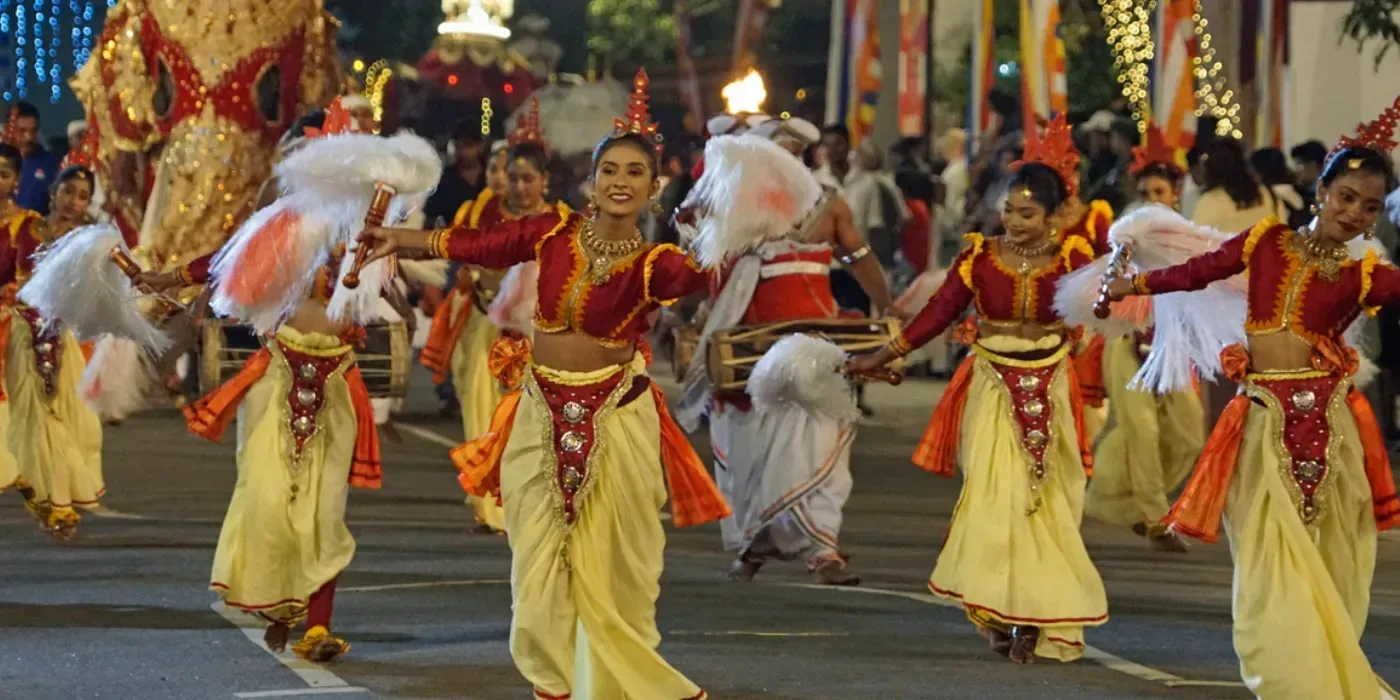
- Esala Perahera (July–August, Kandy): One of Asia’s oldest and grandest processions, unfolding over ten nights with elephants, dancers, drummers, and torch-bearers.
- Thai Pongal (January): A Tamil harvest festival celebrating gratitude, centered around cooking freshly harvested rice in milk and sharing it with family and community.
- Eid Al-Fitr & Christmas: Both are widely celebrated public holidays, reflecting Sri Lanka’s rich multi-faith identity.
Pro Tips: Book accommodation months ahead if visiting Kandy during Esala Perahera. The final nights sell out almost a year in advance. Ask your Sri Lanka tour operator about reserved viewing stands.
#Traditional Dress & Identity
Clothing in Sri Lanka is a quiet language, it communicates religion, occasion, ethnicity, and region without a single word. In cities you'll see plenty of jeans and t-shirts, but traditional dress remains deeply meaningful, especially for ceremonies and religious events.
- The saree: Worn by Sinhalese and Tamil women, often in vivid silks for special occasions. The draping style differs between communities, a subtle but meaningful distinction.
- The sarong (national male garment): Worn daily by men across all classes and ethnicities, especially in rural areas and at home. In hill country villages, it's as common as jeans.
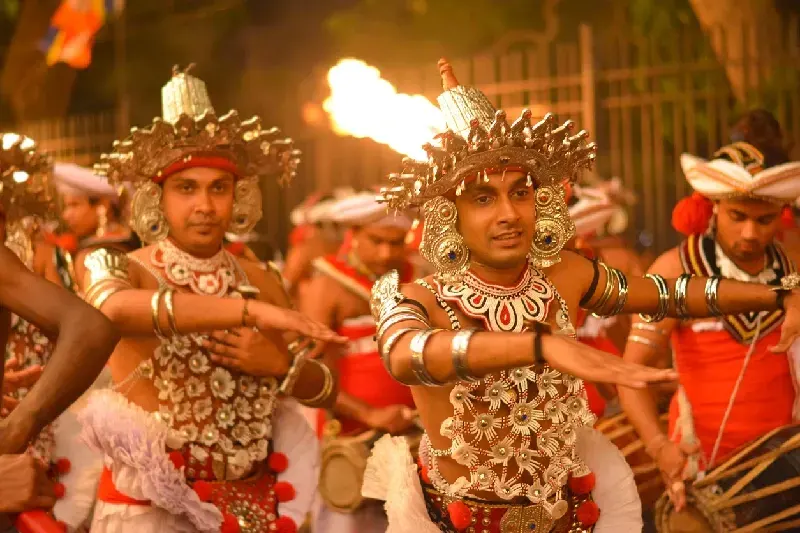
- Kandyan bridal wear: One of the most visually spectacular traditional costumes in Asia, heavily adorned with silver or gold jewelry, an ornate headdress, and a structured jacket. Entirely distinct from Indian bridal attire.
- White for mourning, white for purity: White is worn to funerals and also to Buddhist temples. Understanding this duality is important for travelers.
#Music, Dance & Performing Arts
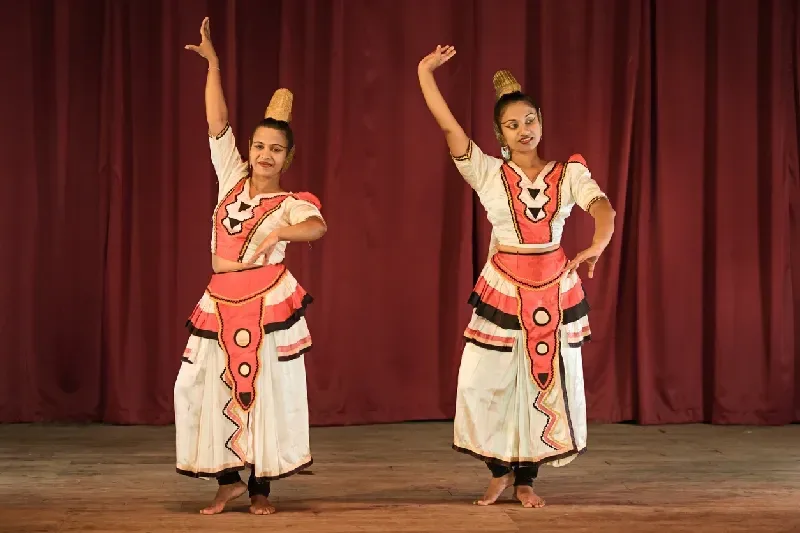
Sri Lankan performing arts are inseparable from religion and ritual. The most iconic tradition, Kandyan dance, isn't simply entertainment. It's a form of offering, originally performed to invoke divine blessings at religious ceremonies.
- Kandyan dance (Udarata Natum): A UNESCO-recognized tradition characterized by elaborate costumes, spectacular acrobatics, and precise footwork. Dancers train for years under masters. You can watch performances in Kandy nightly at cultural centers.
- Drum traditions: The geta beraya (Kandyan drum) and yak beraya (low-country drum) are distinct instruments; hearing them is one of the most visceral sound experiences in travel.
- Baila music: A lively, rhythmic genre born from Portuguese influence, Sri Lanka's own unique fusion of African, Portuguese, and Sinhala elements. Think of it as the island's party music.
#Sri Lankan Food Culture
If Sri Lankan culture had a love language, it would be food. I've eaten in dozens of countries, and few cuisines have surprised me as consistently as Sri Lankan food, bold, fragrant, layered, and almost always better than what I expected.
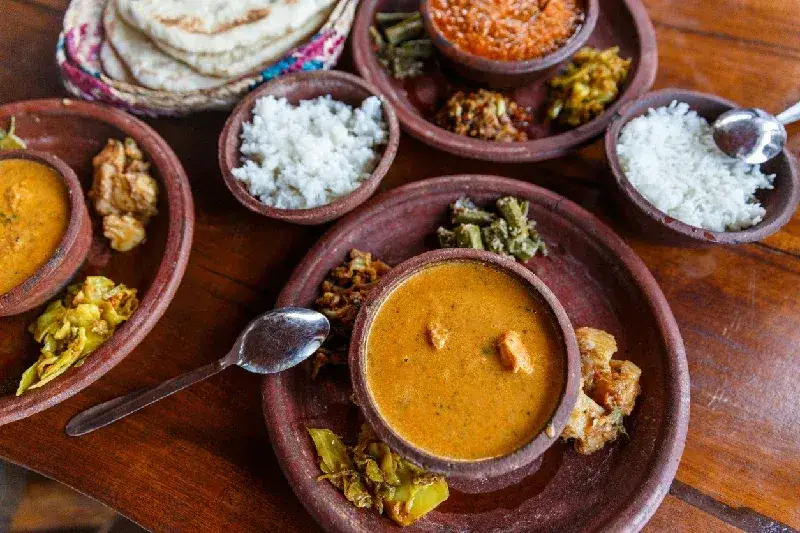
The rice and curry plate is the foundation of everything. But don't let the simplicity of that phrase deceive you. A proper rice and curry is a composed, symphonic meal, a mound of red rice surrounded by five to eight small dishes: a fish or meat curry, a dhal, a coconut sambol, a leafy green mallum, a pickled vegetable, and more.
- Coconut is everywhere: coconut milk in curries, scraped coconut in sambols, coconut oil for cooking. It's the flavor backbone of the cuisine.
- The spice trinity: Black pepper (native to the region), cinnamon (Sri Lanka produces the world's finest), and curry leaves form the aromatic base of almost everything.
- Hoppers (appa): Bowl-shaped rice flour pancakes, eaten for breakfast with curry or a fried egg inside. The greatest breakfast I've ever had, eaten from a roadside stall in Colombo at 7am.
- Street food: Kottu roti (chopped flatbread stir-fried with vegetables and egg), isso wade (prawn fritters), and pol roti are everywhere and excellent.
- Eating with hands: Traditional and completely normal. Rice and curry is best eaten this way, you mix the dishes together with your right hand. Ask someone to show you; locals will be delighted.
Discover 10 must-try dishes in Sri Lanka!
#Arts, Crafts & Heritage Skills
Sri Lanka's craft traditions are ancient, sophisticated, and genuinely worth your time and money. Buying directly from artisans, rather than tourist shops, supports communities and gets you something real.
- Batik: Wax-resist fabric dyeing producing intricate patterns. Kandy and Matara have excellent workshops where you can try it yourself.
- Wood carving: Particularly in Ambalangoda and the Kandy region, ceremonial masks, furniture, and decorative panels with extraordinary detail.
- Handloom textiles: The Dumbara region produces distinctive striped weavings (dumbara rata) used in temple offerings and home décor.
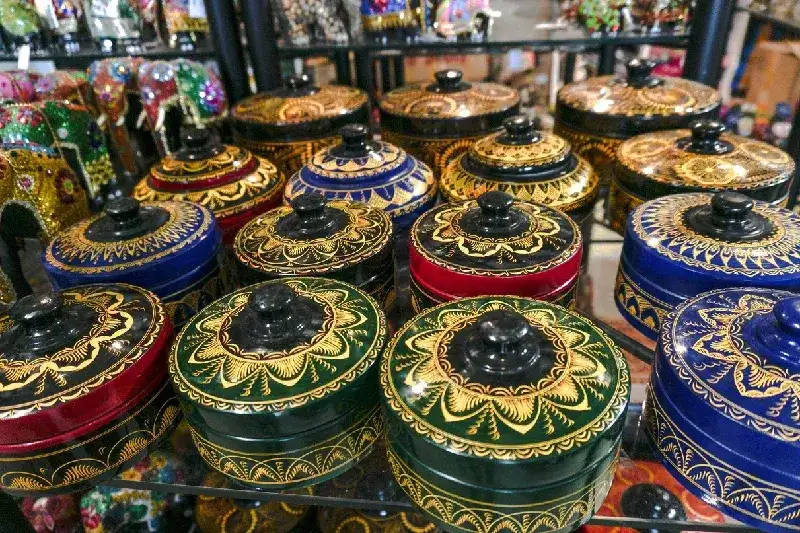
- Lacquerware: Intricately decorated boxes, bowls, and figures made using a traditional lac resin technique in Kandy.
- Moonstone jewelry: Sri Lanka produces some of the world's finest moonstones; Ratnapura ("City of Gems") is the center of the island's legendary gem trade, which includes blue sapphires, rubies, and cat's eye stones.
#Daily Life & Social Culture
One of the things that reshapes your assumptions about Sri Lanka is how different daily life can look depending on where you are. Colombo is urban, fast, tech-connected, and cosmopolitan. A village in the hill country runs on an entirely different clock.
- Family is central: Multi-generational households are common. Elders are treated with visible, practiced respect, children address grandparents and older community members with specific honorific terms.
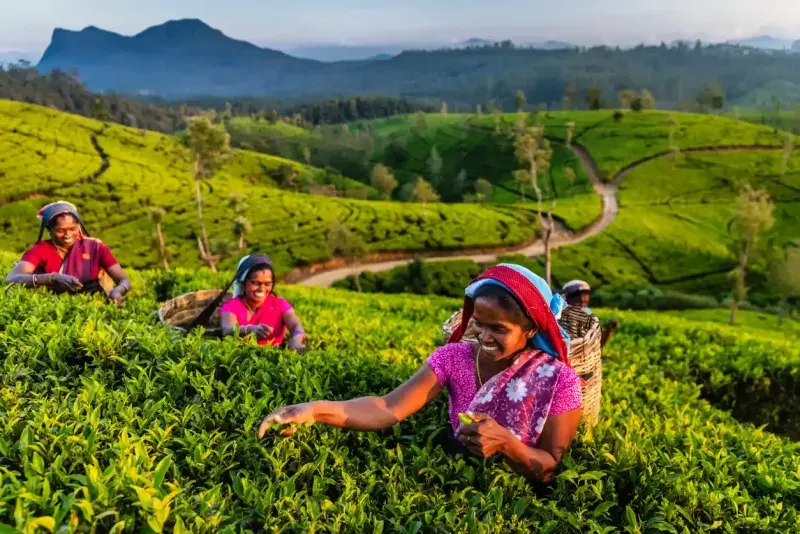
- Tea culture: Ceylon tea is drunk constantly, with condensed milk and plenty of sugar. The roadside "tea kade" (tea shop) is a social institution, where neighbors catch up, deals are struck, and gossip flows freely.
- The pace: In rural areas especially, life moves slowly and intentionally. Don't rush it. Sit with it. The ability to simply be present is something Sri Lankans do beautifully, and travelers who match that pace get far more from their experience.
- Hospitality is unconditional: Being invited into someone's home for tea or a meal is common. It's genuine, not transactional.
#Regional Cultural Differences
Sri Lanka is small enough to drive across in a day, but culturally, the north and the south can feel like different countries. Any good Sri Lanka tour package should ideally cover multiple regions, because each one reveals a different dimension of the island.
- The south coast (Galle, Matara, Mirissa): Cosmopolitan beach culture, surf communities, strong Portuguese-Dutch colonial architecture, and a bustling hospitality industry. More touristy, but the food and art scene are excellent.
- The hill country (Kandy, Nuwara Eliya, Ella): The cultural heartland of Sinhalese civilization. Buddhist temples, tea plantations worked by Tamil communities, cool climate, and a sense of timelessness.
- The north (Jaffna): Predominantly Tamil and Hindu. Kovils (Hindu temples) with towering gopuram gates, a fiercer spice palette, and a culture of remarkable resilience given the region's difficult recent history. A deeply moving place to visit.
#Cultural Etiquette for Travelers
- Dress modestly at religious sites: Both men and women should cover shoulders and knees when entering temples, mosques, and kovils.
- Keep a lightweight shawl in your bag, it doubles as sun protection too.
- Remove your shoes: Before entering any place of worship, and often before entering someone's home. Watch for the pile of shoes at the door.
- Don't turn your back on Buddha statues: When photographing or leaving a Buddhist shrine, back away respectfully rather than turning away.
- The head nod vs. the head wobble: Sri Lankans often use a gentle side-to-side head wobble to signal "yes" or "I understand", not "no." It's one of the most endearingly confusing things for new visitors.
- Accept offers with both hands: When receiving food, gifts, or even a business card, use both hands or the right hand, the left hand is considered impolite for giving and receiving.
- Photograph with permission: Especially of monks, religious ceremonies, and individuals. A smile and a gesture toward your camera is usually enough, most people will happily oblige.