Table of content
- What should you see and do in Egypt?
- Is a trip to Memphis and Saqqara worth the drive from Cairo?
- What will you see at the Citadel and the Muhammad Ali Mosque?
- How do you explore Islamic Cairo and Khan el-Khalili?
- What makes the Grand Egyptian Museum worth a half day?
- Are the Museum of Islamic Art, Cairo Tower and the Giza night show worth your time?
- What should you eat in Egypt, and where does koshari fit in?
- Is a felucca ride on the Nile worth it?
- How can you combine these things to do in Egypt's capital in 1, 2 or 3 days?
- When is the best time to go, and how do you get around Egypt?
- How much do entry tickets cost in Egypt?
The must-see places in Egypt are the Pyramids of Giza and the Grand Egyptian Museum in Cairo, Karnak and the Valley of the Kings in Luxor, Abu Simbel near Aswan, and a Nile cruise between them. Americans should allow 8 to 10 days.
What should you see and do in Egypt?
Beyond the pyramids, the best things to do in Egypt are Saqqara and Memphis, the Citadel, Islamic Cairo and Khan el-Khalili, the Grand Egyptian Museum, a felucca ride and a plate of koshari. Together they show you a city that is much more than its monuments.
The pyramids are unmissable, and our guide to the facts about the Pyramids of Giza covers them in detail. But Cairo rewards the traveler who stays a few days longer. Pharaonic capitals sit a short drive from medieval mosques, bazaars still trade where Mamluk caravans once unloaded, and the Nile slides through the middle of it all, best seen from a small wooden boat at sunset.
|
Experience |
Why go |
Time needed |
|---|---|---|
|
Memphis and Saqqara |
Egypt's first capital and the oldest pyramid |
3–4 hours |
|
Citadel and Muhammad Ali Mosque |
Medieval fortress with the best view of Cairo |
2–3 hours |
|
Islamic Cairo and Khan el-Khalili |
Fatimid streets and a 14th-century bazaar |
Half a day |
|
Grand Egyptian Museum |
Tutankhamun's treasures in one place |
3.5–4 hours |
|
Museum of Islamic Art, Cairo Tower, Giza night show |
Three easy add-ons |
1–2 hours each |
|
Egyptian food |
Koshari, ful, ta'ameya and more |
Every meal |
|
Felucca on the Nile |
A calm sunset sail |
About 1 hour |
Customize Your Dream Vacation!
Get in touch with our local experts for an unforgettable journey.
Plan Your Trip
Is a trip to Memphis and Saqqara worth the drive from Cairo?
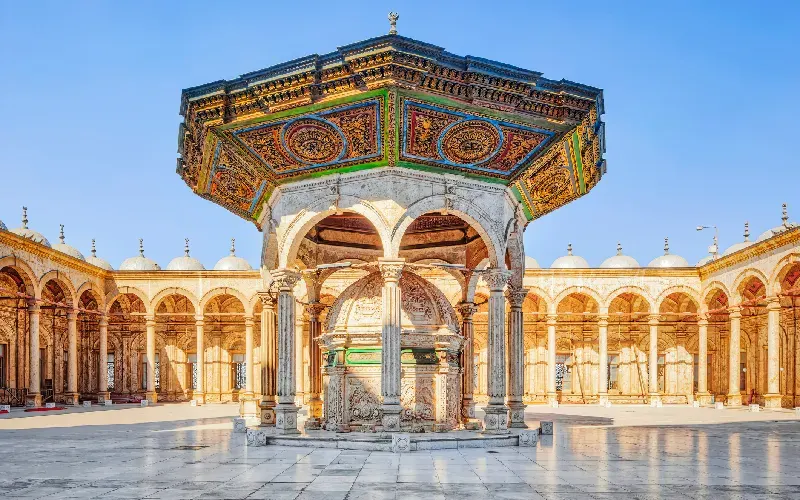
Yes. Memphis and Saqqara fit into one morning and show you the earliest chapters of pharaonic Egypt: the first capital and the first large stone pyramid.
Memphis, near the village of Mit Rahina, was the capital of Egypt's Old Kingdom, and the ancient writers Manetho and Herodotus credit its founding to King Menes, who united Upper and Lower Egypt. Little of the city remains, but an open-air museum shows a fallen colossal statue of Ramesses II and an alabaster sphinx. Saqqara, a short drive away, is the cemetery of ancient Memphis. Its star is the Step Pyramid of Djoser, built about 4,650 years ago and often described as the first large stone structure in the world, surrounded by a vast enclosure and a mortuary temple. Painted tombs nearby, such as those of Mereruka and Kagemni, still hold carved scenes of daily life in vivid color.
Quick facts: open around 8:00–17:00. Saqqara ticket around EGP 600 (≈$12); the Memphis open-air museum costs a little extra. Allow 3–4 hours for both. About 45–60 minutes from central Cairo. Best in the morning, October to April.
Memphis Tours Expert Tip: Ask your guide to take you into one painted tomb rather than just the pyramid enclosure. The colors and carved scenes of fishing, farming and feasting are far better preserved than most visitors expect, and the tombs are usually quieter than any pyramid.
Our Giza Pyramids and Saqqara tour, from $135, covers the plateau and Saqqara in one day.
What will you see at the Citadel and the Muhammad Ali Mosque?
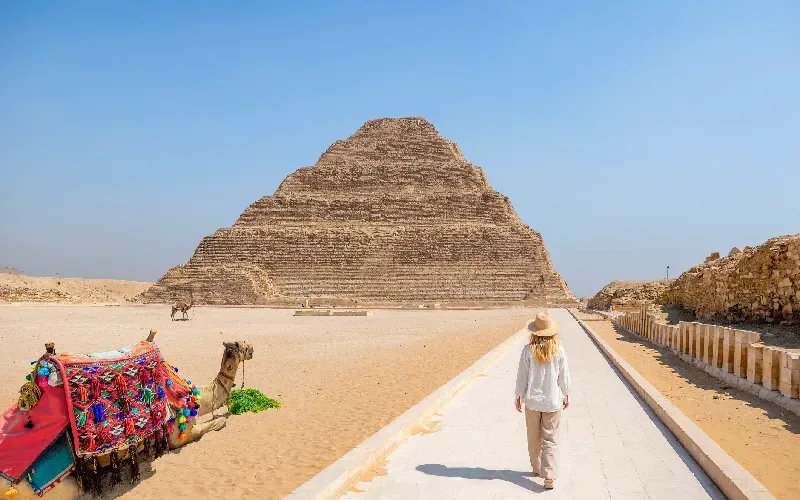
The Citadel of Salah El-Din is the best viewpoint over Cairo, and the Muhammad Ali Mosque is its showpiece. Allow 2–3 hours, and go in the morning when the air is clear.
Saladin began the Citadel in the 12th century on a spur of the Mokattam hills, and Egypt's rulers governed from it for about 700 years. Inside the walls, the domed Muhammad Ali Mosque, finished in 1848 in the Ottoman style, dominates the skyline with a pair of slim pencil minarets. Inside, the alabaster-clad walls and the huge chandelier-hung dome feel like a smaller version of an Istanbul mosque. Nearby, the Mamluk Al-Nasir Muhammad Mosque has a distinct green-tiled dome, and the Military Museum fills former palace rooms.
Quick facts: open around 8:00–17:00. Ticket around EGP 550 (≈$11). Allow 2–3 hours. About 20–30 minutes by car from downtown Cairo. Best in the morning, October to April.
Memphis Tours Expert Tip: Dress for the mosque before you arrive, with shoulders and knees covered, and wear shoes that slip off easily. You will remove them at the entrance, and the marble floor is far more comfortable than the cobbles outside.
Don't miss
- The terrace views over Cairo toward the pyramids on a clear day
- The Muhammad Ali Mosque's alabaster courtyard and dome
- The Military Museum
- The Al-Nasir Muhammad Mosque and its green dome
How do you explore Islamic Cairo and Khan el-Khalili?
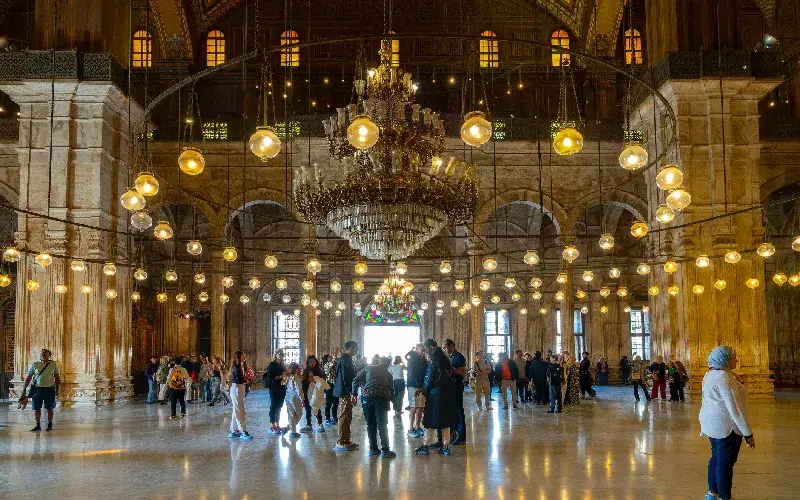
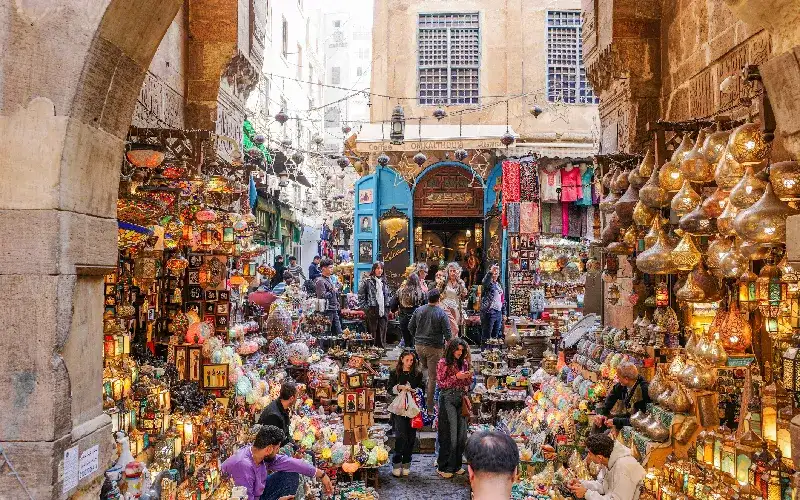
Walk Al-Muizz Street from Bab al-Futuh to Bab Zuweila, then finish in Khan el-Khalili. It is the best half day in Cairo for atmosphere, and it is easiest in the late afternoon and evening.
Cairo was founded in 969 by the Fatimid dynasty, and Al-Muizz Street is the spine of that medieval city, lined with mosques, madrasas, fountains and merchants' houses. Two of the original gates still stand, Bab al-Futuh at the north end and Bab Zuweila at the south. Highlights on the way include the Qalawun complex, the Al-Aqmar Mosque, the Ottoman house of Bayt al-Suhaymi and the Tentmakers' Bazaar, where artisans stitch appliqué fabrics by hand.
Khan el-Khalili, begun around 1382 under the Mamluks, is the city's great bazaar. Expect silver, spices, lanterns, leather, scarves and plenty of copper, with tea shops tucked into side alleys and the call to prayer echoing over the roofs.
Quick facts: the street is free to walk, and individual monuments charge small entry fees. Many shops open around 10:00 and stay open into the evening, with Friday mornings quieter. Allow half a day. About 20–30 minutes from central Cairo. Best in late afternoon and evening.
Memphis Tours Expert Tip: Bargaining is expected in the bazaar, so start at about half the first price and settle somewhere in the middle, with a smile. Stop for tea in a cafe on the edge of the souk, and you will see the bargaining and the people-watching at their best.
Don't miss
- The Qalawun complex and the Al-Aqmar Mosque
- The Tentmakers' Bazaar
- Bayt al-Suhaymi, an Ottoman house
- Tea at a cafe in Khan el-Khalili
What makes the Grand Egyptian Museum worth a half day?
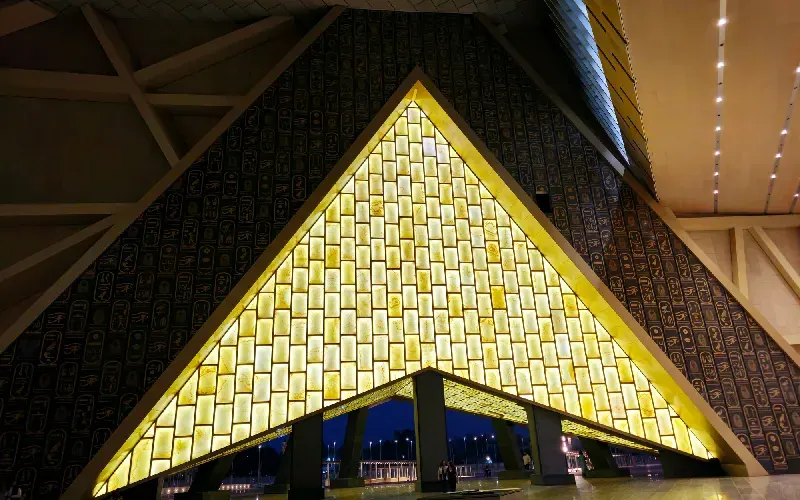
The Grand Egyptian Museum holds the largest collection of Tutankhamun's treasures anywhere, and you need 3.5–4 hours. Tourist tickets are sold online for a fixed time slot, so book before you fly.
The museum opened to the public in November 2025 beside the Giza plateau. You enter beneath an 11-meter granite statue of Ramesses II, then climb the Grand Staircase past more than 60 colossal statues, with windows framing the pyramids at the top. The Tutankhamun galleries hold more than 5,000 objects from the boy king's tomb, shown together for the first time since 1922, and Khufu's solar boat has a hall of its own. The Royal Mummies are not here but at the National Museum of Egyptian Civilization in Old Cairo.
Quick facts: grounds open around 8:30–19:00, galleries around 9:00–18:00. Ticket around EGP 1,450 for foreign adults (≈$30), booked online. Allow 3.5–4 hours. About 10 minutes from the Giza plateau and 30–45 minutes from central Cairo. Best in the 9:00 slot.
Don't miss
- The Ramesses II statue in the atrium
- The Grand Staircase
- Tutankhamun's golden mask and coffin
- The solar boat hall
Are the Museum of Islamic Art, Cairo Tower and the Giza night show worth your time?
Yes, as easy add-ons. Each takes one to two hours, and together they round out a Cairo trip when you want something indoors, something with a view, and something in the evening.
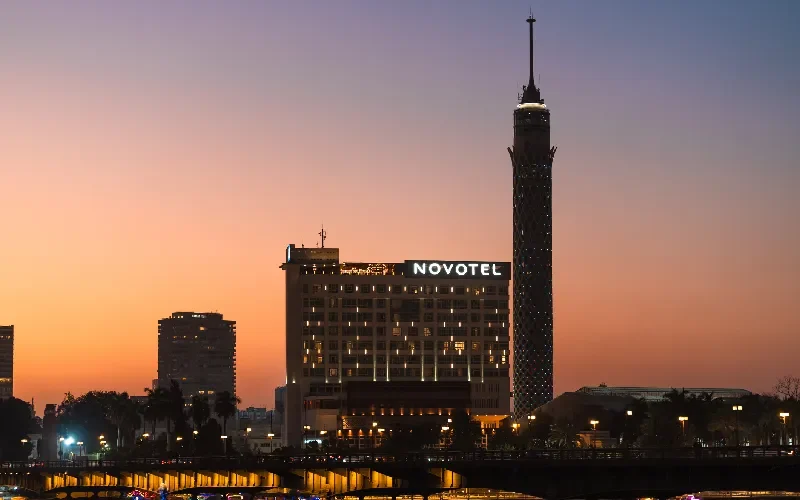
The Museum of Islamic Art, in a building from the early 1900s, holds more than 100,000 objects from mosques and sites across Egypt, Iran, Syria and India, from carved wooden doors to astrolabes and glass lamps. It is calm, air-conditioned and far less crowded than the big pharaonic museums. Cairo Tower, a lotus-shaped tower about 187 meters tall that opened in 1961, gives you a panoramic view of Cairo and Giza from the top, with a restaurant near the summit. The Sound and Light Show at the Giza plateau tells the story of the pyramids and Sphinx with narration and lighting in the evening, in several languages including English.
Quick facts: the museum opens around 9:00–17:00 with a ticket around EGP 270 (≈$6). Cairo Tower costs around $5–$10. Show times shift with the season, so check them locally. Allow 1–2 hours for each.
What should you eat in Egypt, and where does koshari fit in?
Eat koshari first. The national dish is a bowl of rice, lentils, macaroni and chickpeas topped with spiced tomato sauce, vinegar and crispy fried onions, and a bowl usually costs just a few dollars.
Koshari reflects Egypt's history as a crossroads, blending Italian pasta, Indian lentils and rice, and Middle Eastern spices. Beyond it, try ful medames (slow-cooked fava beans), ta'ameya (Egyptian falafel, made with fava beans), molokhia (a green soup), mahshi (stuffed vegetables), hawawshi (spiced meat in baked bread), fatteh and grilled kebab. Finish with sweet mint tea or karkade, a cold hibiscus drink.
Memphis Tours Expert Tip: Order koshari with garlic vinegar and hot sauce on the side and add them a little at a time. The sauces vary from mild to very sharp, and the busiest shops, usually with a line out the door, tend to be the best.

Is a felucca ride on the Nile worth it?
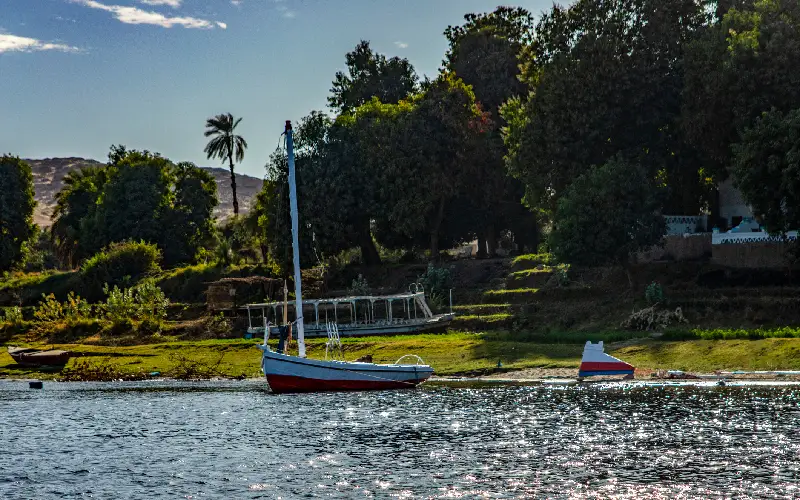
Yes, especially at sunset. A felucca is a traditional wooden sailboat, and an hour on the water is the calmest and most photogenic way to see Cairo or Aswan.
You can board a felucca from the Corniche in central Cairo or near Zamalek, and in Aswan the sail winds around granite islands. The boat drifts with the breeze, the city lights come on, and the noise of the streets fades away. Many travelers add a Cairo Nile dinner cruise and show, from $125, for an evening on the river with a meal and live entertainment.
Quick facts: allow about 1 hour. Rates are per boat, not per person, and vary with the season and group size. Best at sunset, October to April.
Memphis Tours Expert Tip: Agree the price and the length of the ride before you step aboard, and confirm whether it is per boat. Sunset slots are the most popular, so book your captain a day ahead through your hotel or guide.
How can you combine these things to do in Egypt's capital in 1, 2 or 3 days?
With one day, do Islamic Cairo. With two, add Saqqara and the Grand Egyptian Museum. With three, add the Giza plateau and an evening on the river.
|
Days |
Plan |
|---|---|
|
1 day |
Citadel in the morning, Al-Muizz Street and Khan el-Khalili in the afternoon, koshari for lunch, a felucca at sunset |
|
2 days |
Day 1 as above. Day 2: Memphis and Saqqara in the morning, then the Grand Egyptian Museum in the afternoon |
|
3 days |
Days 1–2 as above. Day 3: Giza plateau at opening, the Museum of Islamic Art, and the Sound and Light Show or a Nile dinner cruise in the evening |
If you would like the whole of Egypt in one trip, our Cairo to Abu Simbel tour, from $1,865 for 8 days, adds Luxor, and our Egypt and Petra tour, from $1,145 for 7 days, adds Jordan. For the big sights across the country.
When is the best time to go, and how do you get around Egypt?
The best time to visit Egypt is October to April, when days are comfortable and prices dip outside the Christmas and New Year weeks. In Cairo, ride-hailing apps and a private driver are the easiest ways to move around.
|
Season |
Months |
What to expect |
|---|---|---|
|
Best for sightseeing |
October–November, March–April |
Comfortable temperatures, good light, easier crowds than midwinter |
|
Peak season |
Late December–early January, Thanksgiving, spring break |
Cool days, busiest and most expensive, book early |
|
Warming up |
May |
Warmer days, quieter sites |
|
Very hot |
June–August |
Hot days in Cairo; start early and use the shaded, air-conditioned museums and mosques by midday |
Summer in Cairo is hot, but Cairo's mosques and museums are shaded and air-conditioned, so the city works year-round if you start early. Thanksgiving, Christmas and spring break are the busiest periods for American travelers. For getting around, Uber and Careem are easier than negotiating with taxis and show the price upfront. Central Cairo to Giza takes 30–45 minutes, Saqqara is about 45–60 minutes away, and a driver for the day lets you link several stops without the stress of parking. Cairo to Luxor or Aswan is a short flight of about 1 hour 15, or about 10 hours by overnight train.
|
Route |
Best option |
Approx. time |
|---|---|---|
|
Central Cairo to Giza |
Ride-hailing app or driver |
30–45 minutes |
|
Giza plateau to the Grand Egyptian Museum |
Driver or taxi |
About 10 minutes |
|
Central Cairo to Saqqara and Memphis |
Private driver or tour |
45–60 minutes |
|
Central Cairo to the Citadel |
Ride-hailing app or driver |
20–30 minutes |
|
Cairo to Luxor or Aswan |
Domestic flight (or overnight sleeper train) |
About 1 hour 15 by air; about 10 hours by train |
How much do entry tickets cost in Egypt?
Budget around $60–$80 per adult in entry fees for the sights in this guide. Prices are set in Egyptian pounds and rise often, so the dollar figures below are rounded at around 49 EGP to $1.
|
Site |
Foreign adult ticket |
Approx. in $ |
Notes |
|---|---|---|---|
|
Grand Egyptian Museum |
Around EGP 1,450 |
$30 |
Online only, timed slot |
|
Saqqara |
Around EGP 600 |
$12 |
Memphis museum extra |
|
Giza plateau |
Around EGP 600 |
$12 |
Great Pyramid interior extra |
|
Citadel of Salah El-Din |
Around EGP 550 |
$11 |
Includes the mosques inside |
|
Museum of Islamic Art |
Around EGP 270 |
$6 |
|
|
Cairo Tower |
Around $5–$10 |
$5–$10 |
Students with a valid ID often pay around half price. Cards work at the main museums, but carry cash for tips, bazaars and small entries.
Plan your trip with an Egypt specialist. Talk to a Memphis Tours expert or tailor your own trip.
Yes. Americans need a tourist visa, which costs around US$25–$30 and allows a 30-day stay. You can buy one at the airport on arrival or apply online through the official government portal before you fly. Your passport should be valid for at least six months beyond your arrival date.
The US State Department rates Egypt Level 2, Exercise Increased Caution, and advises against travel to North and Middle Sinai, the Western Desert and border areas. Cairo, Giza, Saqqara, Luxor and Aswan sit outside those zones. Check travel.state.gov for the latest advisory before you book.
Yes, most major mosques welcome visitors outside prayer times. Dress modestly with shoulders and knees covered, women should carry a scarf, and everyone removes shoes at the entrance. Some mosques close to visitors during Friday midday prayers, so plan around them. Your guide will know the opening patterns.
Choose busy stalls and restaurants where food is cooked fresh and served hot, and skip raw salads and ice if you have a sensitive stomach. Drink sealed bottled water. Koshari and ful are served fresh and hot at popular spots and are generally good first choices. Carry hand sanitizer and tissues.
Carry some. Cards work at hotels, the Grand Egyptian Museum and bigger restaurants, but small tips, felucca captains, taxis, bazaar stalls and koshari shops run on Egyptian pounds. Withdraw from bank ATMs, keep small notes, and carry a few US dollars for tips, which most guides and drivers happily accept.
For Saqqara, the Citadel and Islamic Cairo, yes. A licensed Egyptologist or Cairo guide explains what you are looking at, handles tickets and keeps touts away. Memphis Tours itineraries come with English-speaking guides, and small groups average around 10 travelers. In bazaars, a guide also helps you shop without pressure.