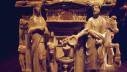
The Museum of Anatolian Civilizations of Turkey
Established in Ankara, the capital of Turkey, the Museum of Anatolian Civilizations was awarded the Museum of the Year in 1997 by being chosen from among 68 museums.
Established in Ankara, the capital of Turkey, the Museum of Anatolian Civilizations was awarded the Museum of the Year in 1997 by being chosen from among 68 museums.
The Museum of Anatolian Civilizations of Turkey is in two Ottoman buildings located near Ankara Castle, within the Atpazarı district of Ankara. One of the buildings is Mahmut Paşa Bedesteni and also the other one is Kurşunlu Han. These structures hold great significance in Turkish history, reflecting the architectural and economic influences of the Ottoman period.Bedesteni was built by Mahmut Paşa, one amongst prime ministers (vezirs) of Mehmet the Conqueror during 1464-1471.
The building doesn't have any inscription. It's recorded within the sources that pure Angora garments were distributed here. The planning of the building is of the classical type. There are 10 domes covering a rectangle designed to surround the placement, and there are 102 shops facing one another. According to the historical records and registry books, Kurşunlu Han was built as a foundation to finance Mehmet Paşa's (Mehmet the Conqueror's vezir) charitable works giving in Üsküdar, Istanbul.
It doesn't have an inscription. During the repairs of 1946, coins of the Murat II period were discovered. The findings indicate that the Han [inn, caravansary] existed within the 15th century. The Han has the everyday design of the Ottoman Period Hans. There's a courtyard and an arcade within the middle and that they are surrounded by two-storey rooms. There are 28 rooms on the bottom floor and 30 rooms on the primary floor. The rooms have furnaces. there's a barn with an "L" type on the bottom floor within the west and south directions of the rooms. There are 11 shops on the side of the Han, 9 shops on the side and 4 shops facing one another within the garden.
The inn (Han) was built by Mehmet Pasha and in 1467 Mehmet Pasha was promoted to Prime Minister (head vezir). The vaulted bazaar was built upon the orders of Mahmut Pasha who kept his position until 1470. He had his mosque, charity and madrasa in Üsküdar and his body is buried there. These two buildings constituting the museum today were abandoned after the fire in 1881.
The first museum in Ankara was established by Mübarek Galip Bey, the Directorate of Culture, in 1921, within the section of the Castle of Ankara called Akkale. Additionally to the present museum, artefacts from the Augustus Temple and also the Byzantine Baths were also collected. Upon the advice of Atatürk and from the view of building the "Eti Museum'' within the centre, the Hittite artefacts from the region were sent to Ankara, and so, a bigger museum was needed.
The Director of Culture at that point, Hamiz Zübeyr Koşay, and therefore the Minister of Education, Saffet Arıkan, recommended that the Mahmut Paşa Bazaar and therefore the Inn be repaired and converted into a museum. This recommendation was accepted and also the restoration continued from 1938 to 1968. In 1943, while the repairs of the building were still under progress, the center section was opened for visitors.
The repair projects of this part were administered by the architect Macit Kural and upon the tender the repair work was performed by the architect Zühtü Bey. In 1948 the museum administration left Akkale as a storage house, and also the museum was in four rooms of the Kurşunlu Han the repairs of which were completed. The restoration and exhibition projects of the part round the domed structure were prepared and applied by the architect İhsan Kıygı.
Five shops were left in their original form but the walls between the shops were destroyed, and thus an outsized location was provided for exhibition. The museum building reached its present structure in 1968. The Kurşunlu Han has research rooms, a library, a conference hall, a laboratory and workshops. It's been used as an administration building, and also the Mahmut Pasha Vaulted Bazaar has been used as an hall.
Established in Ankara which is the capital of Turkey, the Museum of Anatolian Civilizations was awarded the European Museum of the Year in 1997 in Lausanne, city of Switzerland by being chosen from among 68 museums. Composing unique masterpieces belonging to the civilizations of Anatolia, the gathering is ideal of its kind within the world.
The priceless collection preserves the heritage of civilizations starting from the Palaeolithic era and therefore the prehistoric times containing Assyrian, Hittite, and therefore the kingdoms of Phrygia and Urartu. It also contains a special part of Ankara.
The most unique samples of those pieces are Goddess Cybele Relievo symbolizing fertility and abundance, the sculpture of Kubaba (main goddess belonging to the Palaeolithic period), the sculpture of Dionysus (god of wine), Acemhöyük Box product of stone, Storm God and bulls ‘ statue of Hittites, Bronze Inscription and also the statue of Hittite Sphinx.
The Anatolian Civilizations Museum, being among exceptional museums in Turkey with its unique collection, has Anatolian archaeological artefacts and artefacts from the Palaeolithic Age to this.
Get in touch with our local experts for an unforgettable journey.
Plan Your Trip
Anatolian civilization refers to the ancient cultures that thrived in Anatolia (modern-day Turkey), including the Hittites, Phrygians, Urartians, and Lydians. You will witness their rich history, art, and artifacts at the Museum of Anatolian Civilizations in Ankara.
The Museum of Anatolian Civilizations is located in Ankara, Turkey, near Ankara Castle in the Atpazarı district.
The museum operates daily, opening at 08:30 AM and closing at 05:30 PM, with the last admission at 04:45 PM.
Yes, the Museum of Anatolian Civilizations is definitely worth visiting! It offers a unique glimpse into Anatolia’s rich history, featuring rare artifacts, detailed exhibitions, and an engaging layout that brings ancient cultures to life. The museum’s setting in a restored Ottoman-era building adds to its charm and historical significance.
The Pergamon Asclepieion in Turkey was an ancient healing center, famous for its sacred springs and Roman medical treatments. Explore its historic ruins.
Hatay Archaeology Museum in Antakya houses Turkey’s largest Roman mosaic collection, along with artifacts from ancient civilizations.
Aphrodisias Museum in Turkey houses breathtaking ancient sculptures, Roman reliefs, and artifacts from the renowned city of Aphrodite.
Antalya Archaeological Museum showcases artifacts from Perge, Aspendos, and Termessos, featuring ancient sculptures, mosaics, and relics.
No visit to Sagalassos would be complete without a stop at the Archaeological Museum in Burdur. This museum, located just a short drive from the site, houses major discoveries from Sagalassos.
Located in one of the foremost valuable areas of the Aegean Region, Denizli Hierapolis Archeology Museum belongs to a part that has been continuously inhabited since antiquity.
Embark on a unique Cultural and Heritage tour at Haci Bektas Veli Museum, we’ll uncover the illuminating Sufi heritage that shapes Turkey’s land and history.
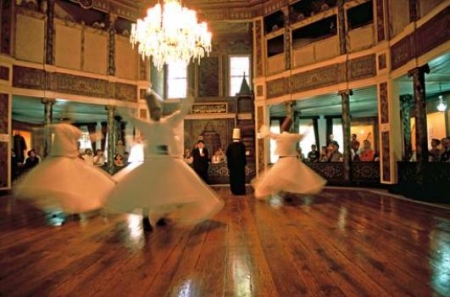
Explore the Galata Mawlawi House Museum, a key site in Istanbul highlighting Sufi mysticism and the Whirling Dervishes' unique history.
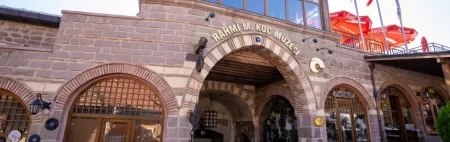
Step into the Rahmi M. Koç Museum in Istanbul, where industrial heritage comes to life with historic vehicles, ships, and interactive exhibits.
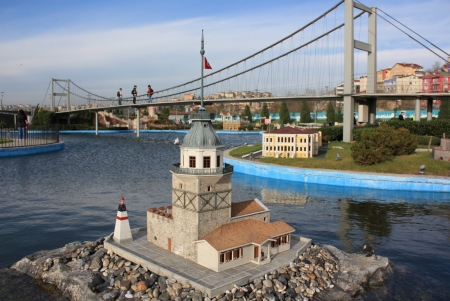
How about taking a fast tour through Turkey's major cities and sightseeing their landmarks? Located in Istanbul, Miniatürk is the world’s largest open air miniature museum
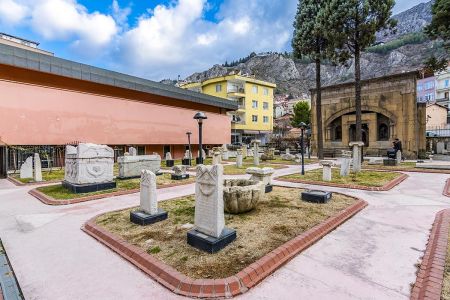
Explore Amasya Archaeological Museum, home to ancient artifacts and rare mummies from the Ilkhanid era.
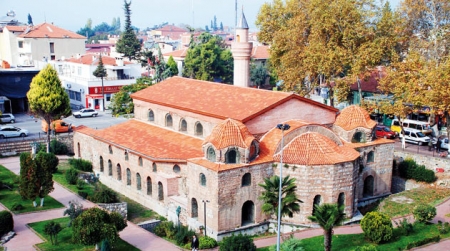
Discover Iznik Ayasofya, a historic Byzantine church-turned-mosque in Turkey, where the First Council of Nicaea once took place.
Explore Alacahoyuk Historic Site, an ancient Hittite city in Çorum with ruins, sphinx gates, and royal tombs and visit Alacahoyuk Museum to see remarkable artifacts.
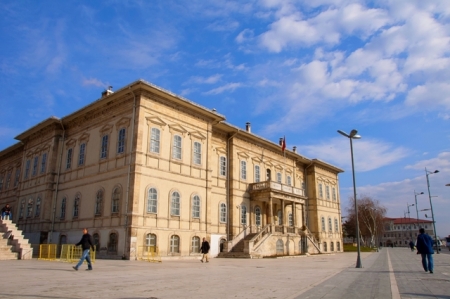
Visit the Istanbul Military Museum to explore Ottoman weapons, war relics, and live Mehter Band performances in a historic setting!
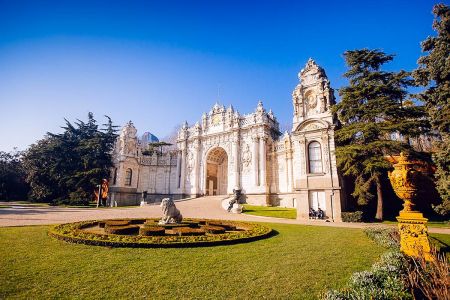
Step into Ottoman history at Yıldız Palace Museum, Istanbul’s royal complex with elegant halls, historic artifacts, and lush imperial gardens.
Visit Atatürk Congress & Ethnography Museum in Ankara, where Turkey’s National Struggle for Independence began in 1919. Explore its rich history!
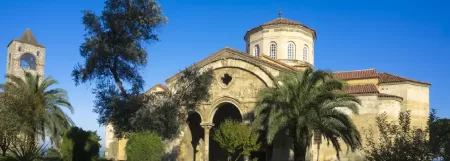
Trabzon Ayasofya Museum highlights Byzantine frescoes and rich history. Visit today to explore its stunning heritage and feel Trabzon vibes!
Established in Ankara, the capital of Turkey, the Museum of Anatolian Civilizations was awarded the Museum of the Year in 1997 by being chosen from among 68 museums.
Uncover Didim, located in Aydın province, home to the ancient sanctuary of Didyma, known for the Temple and Oracle of Apollo, one of the most significant Hellenic ruins.
Visit Miletus Museum in Turkey and explore the ruins of an ancient Greek city once famed for trade, philosophy, and grand architecture!
Assos Historic Site built in the 6th century BC in Çanakkale province, Assos was renowned in antiquity for its sarcophagi. Visit Assos and step into history!
Step into history at Troy, home of the legendary Trojan Horse! Uncover ancient ruins, city walls, and myths from Homer’s Iliad in Canakkale, Turkey.
Zeugma Mosaic Museum, a treasure of ancient Roman art in Gaziantep, showcases stunning mosaics like the iconic Gypsy Girl and other breathtaking artworks.
Explore the Bodrum Museum of Underwater Archaeology, home to incredible shipwrecks, ancient artifacts, and maritime history in Turkey.
Discover the ancient Mausoleum at Halicarnassus, a masterpiece of architecture and one of the Seven Wonders.
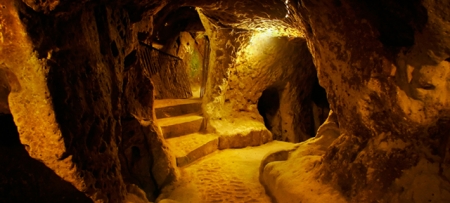
Discover the secrets of Derinkuyu Underground City in Cappadocia, a multi-level ancient wonder with tunnels, ventilation shafts, and hidden rooms.
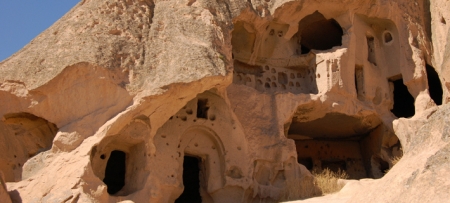
Situated in Nevsehir province, Zelve houses the most number of the world-famous Fairy Chimneys. Zelve is an important Christian center since it is the place
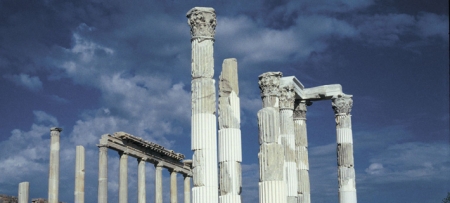
Dating back to the 3rd century BC, the Acropolis in Izmir province has preserved many of its structures and works of art. Built on several levels of mounds, the ancient site of Pergamon Acropolis is extraordinarily rich
This museum in Izmir province houses the archeological finds from the site where one of the most sophisticated civilizations once thrived.
Among the best things to do in Istanbul visiting the Church, Mosque, and Museum Hagia Sophia the major attraction, The 8th Wonders of the World" of Turkey with Memphis Tours.
Built during the Ottoman era, the museum complex provided a background for the development of museology in Turkey. The buildings of the complex are themselves of historic significance.
This church is known to serve as the court chapel during religious ceremonies. This church carries the imprint of the typical Byzantine architecture.
The Great Palace Mosaic Museum harbors the mosaics excavated from the courtyard of the Great Palace built during the Byzantine period.
Built on a domineering point along the Bosphorus after the conquest of Istanbul, the palace is located on the tip of the historic peninsula.
The construction of this first Turkish museum started in the 19th century within the confines of the Suleimaniye Mosque Complex.
The museum was originally a Rose Garden in the Seljuk Palace and was later presented as a gift to Rumi’s father and made a Dervish Lodge.
Opened to public in 2002, the museum is located below the Hall of Honor in Ataturk’s Mausoleum. In addition to exhibition pieces, visitors can also peek into Ataturk’s Private Library.
Built in one of the oldest neighborhoods of Ankara called Namazgah, the Ethnography Museum was also Ataturk’s first resting place for 15 years before Anıtkabir (Mausoleum).
Unique in the world with its rich collection of more than 35,000 pieces, Hatay Archeology Museum hosts the priceless mosaics known to history.