Article Index:
#Mahale Mountains National Park
#Which Tanzania National Park Should You Visit?
Let's be honest, if you're dreaming of Africa, you're probably already picturing Tanzania. Lions stalking the golden savanna. Elephants drifting silently across the horizon. A million wildebeest thundering through a river crossing while you hold your breath. Tanzania has that effect on people.
But here's the thing: Tanzania isn't just one safari destination. It's a collection of worlds, each national park with its own personality, its own drama, its own unforgettable moments. Choosing where to go can feel overwhelming, so we've put together this guide to the top Tanzania national parks to help you figure out where your adventure should begin.
Whether you're a first-time visitor chasing the Big Five or a seasoned traveller looking for something off the beaten path, Tanzania has a park with your name on it.
Ready to go? Check out our Tanzania Safari Tours, handpicked itineraries covering Tanzania's finest parks
#Serengeti National Park
The Greatest Wildlife Show on Earth
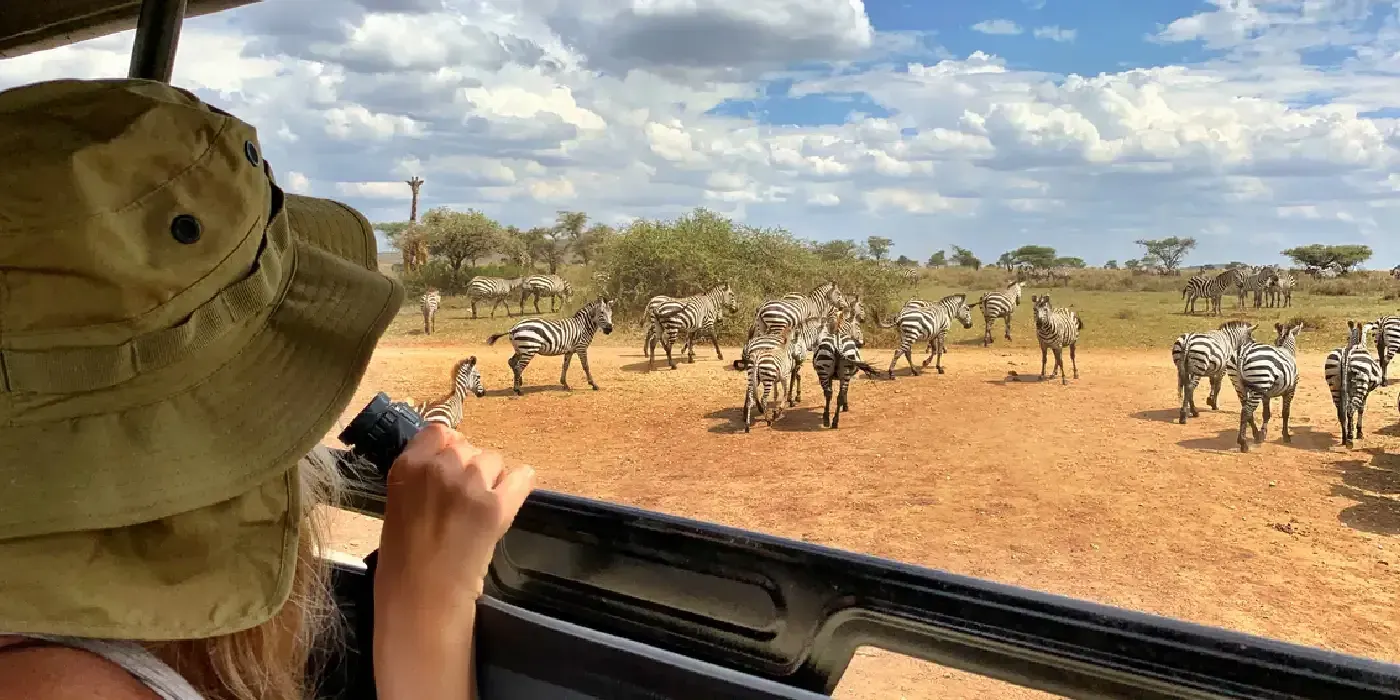
If Tanzania had a crown jewel, this would be it. The Serengeti is nothing short of legendary, and it absolutely lives up to the hype. Covering nearly 15,000 square kilometres of open savanna, it's one of the largest and most intact ecosystems on the planet.
The name comes from the Maasai word Siringet, meaning "endless plains", and standing in the middle of it, you'll understand why. The horizon stretches on forever, interrupted only by flat-topped acacia trees and the occasional kopje (rocky outcropping) where leopards love to lounge.
The Great Migration: A Once-in-a-Lifetime Event
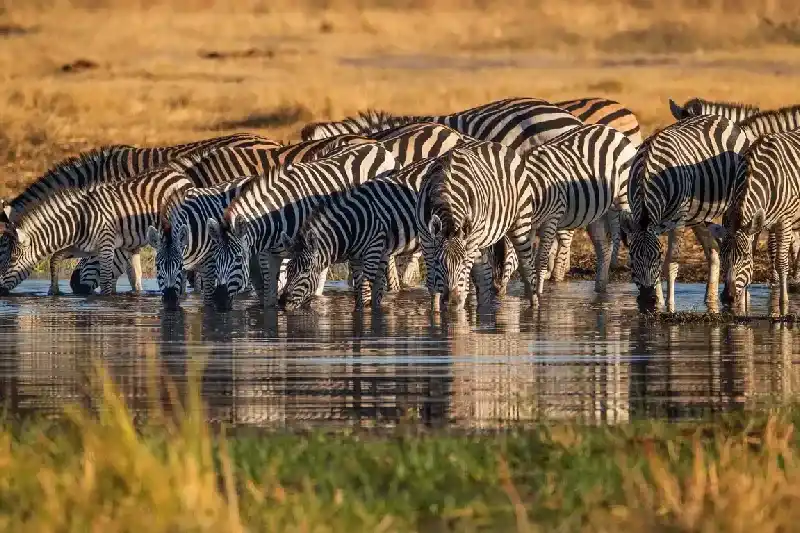
What draws most people here is the Great Migration, the annual movement of over 1.5 million wildebeest, accompanied by hundreds of thousands of zebra and gazelle, as they follow the rains around the ecosystem in a never-ending loop. There's no set date, no ticket booth, no guaranteed sighting. That's what makes it so extraordinary.
The most dramatic moments happen at the river crossings, typically between July and October at the Mara River, where crocodiles lie in wait and the wildebeest have no choice but to leap in. It sounds brutal. It is. It's also absolutely mesmerising.
Best time to visit: June–October for the northern migration and river crossings. December–March for calving season in the south, witnessing thousands of newborn wildebeest is equally spectacular.
Beyond the migration, the Serengeti offers year-round lion sightings (it has one of the densest lion populations in Africa), vast cheetah territories, and some of the best leopard spotting on the continent. This is big-game safari at its absolute finest.
Customize Your Dream Vacation!
Get in touch with our local experts for an unforgettable journey.
Plan Your Trip
#Ngorongoro Conservation Area
A Volcano That Became a Wildlife Paradise
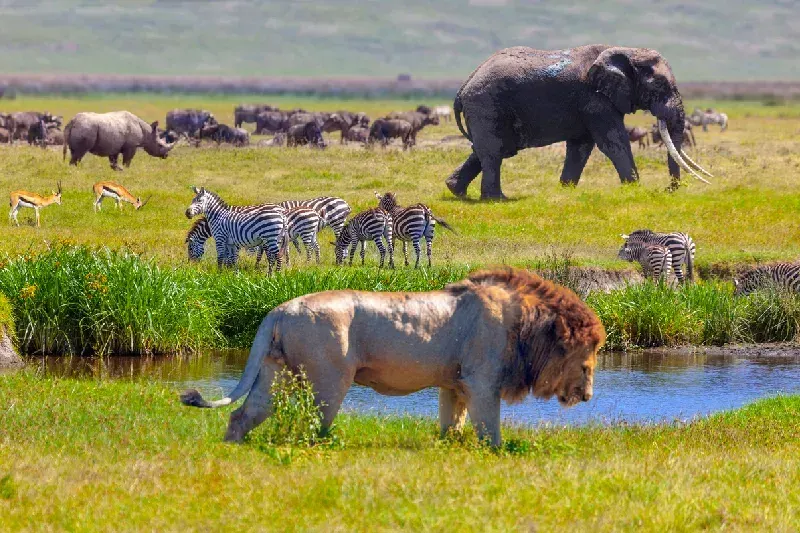
Imagine a place where the animals essentially can't leave, and neither would you, if you ever got in. The Ngorongoro Crater is the world's largest intact volcanic caldera, and it functions as a natural enclosure for an astonishing concentration of wildlife.
Dropping 600 metres from the crater rim to the floor below, the caldera covers about 260 square kilometres and is home to roughly 25,000 large animals. That includes all of the Big Five, and the Ngorongoro Crater is one of the best places in Africa to spot the endangered black rhino in the wild.
Beyond the Crater Floor
The Conservation Area itself is much larger than just the crater. The surrounding highlands are home to Maasai pastoralists who have lived here alongside wildlife for centuries, sharing the land in a way that feels both ancient and inspiring. A visit to a Maasai village can be one of the most culturally rich experiences of your entire trip.
The crater rim itself is shrouded in mist and forest, home to elephants and buffalo that roam between the highlands and the crater floor. At dawn, when the mist rolls over the rim and the plains below begin to wake up, it looks like a scene from a nature documentary. Because it basically is one.
Best time to visit: Year-round, the crater maintains its incredible wildlife density in all seasons. The dry season (June–October) offers clearer skies and easier wildlife spotting.
Combine Serengeti & Ngorongoro, Our most popular Tanzania tours combine these two icons into one unforgettable journey
#Tarangire National Park
Tanzania's Best-Kept Secret
Tarangire doesn't always make the headlines, and honestly? That's part of what makes it so special. While visitors flock to the Serengeti, Tarangire offers a different, quieter kind of magic, and in some ways, it's even more impressive during the dry season.
The Tarangire River acts as a lifeline when everything else dries up, drawing massive herds of elephants, sometimes hundreds at a time, down to drink. It's not unusual to see 300 or 400 elephants in a single day. For elephant lovers, Tarangire is nothing short of paradise.
Ancient Baobabs and Big Skies
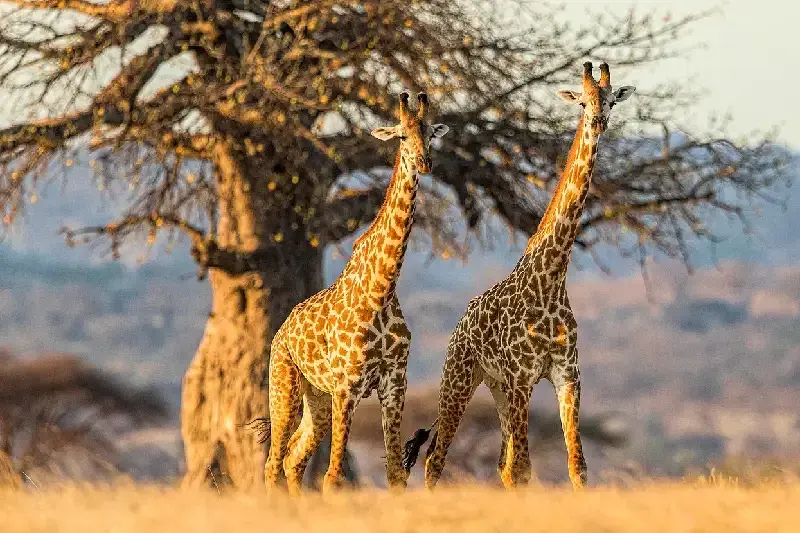
The landscape here is unlike anywhere else in Tanzania. Ancient baobab trees, some over 1,000 years old, dot the savanna like silent giants. The light that filters through their twisted branches at golden hour is the kind of thing photographers dream about.
The birdlife is extraordinary too, over 550 species have been recorded here, making it a dream destination for birders. And because it sees far fewer visitors than its more famous neighbours, you'll often find yourself at a game drive with no other vehicles in sight. That kind of peace is increasingly rare in East Africa.
Best time to visit: June–October (dry season) when animals concentrate around the river and elephant herds are at their largest.
#Lake Manyara National Park
Small Park, Big Surprises
Don't let its compact size fool you. Lake Manyara packs more variety into its 325 square kilometres than parks ten times its size. The park runs along the base of the Great Rift Valley escarpment, with the soda lake taking up a huge portion of the area, and it's what makes Manyara so distinctive.
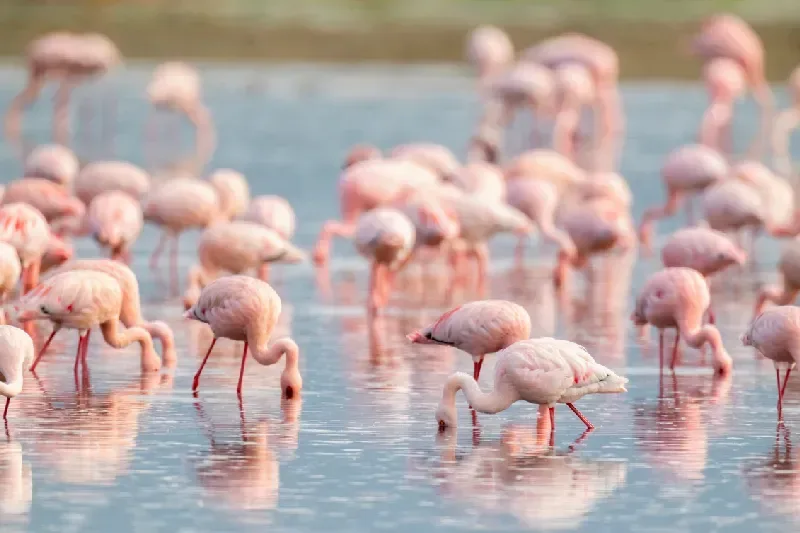
Flamingos gather here in their thousands, turning the shoreline pink. Hippos wallow in the shallows. Pelicans patrol the surface. And in the groundwater forests near the entrance, troops of baboons and vervet monkeys create chaos among the ancient fig trees.
Tree-Climbing Lions
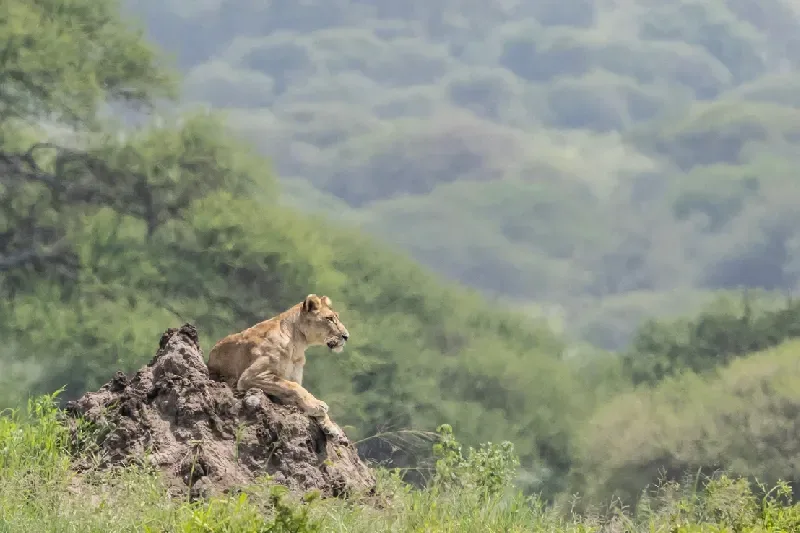
Here's something you won't see everywhere: Manyara is famous for its tree-climbing lions. The pride here have developed the unusual habit of hauling themselves up into the branches of acacia and fig trees, possibly to escape the heat, possibly to get a better view, or possibly just because they can. Whatever the reason, spotting a lion draped lazily across a branch is an image that stays with you.
Best time to visit: June–October for dry season game viewing. November–December for flamingos after the short rains. Ready for a Tanzania adventure? Join our Highlights of Tanzania Safari to explore top national parks in Tanzania.
#Ruaha National Park
Wild, Remote, and Utterly Extraordinary
If you want Tanzania with the crowds stripped away, truly off-the-beaten-path safari, Ruaha is your answer. Tanzania's largest national park (it's about the size of Switzerland) sees only a fraction of the visitors that head to the northern circuit, and that exclusivity is its greatest gift.
The landscape is rugged and dramatic, baobab-studded hills, rocky outcrops, and the Great Ruaha River cutting through a landscape that looks like it was designed by someone with a flair for the cinematic. In the dry season, the river becomes the stage for extraordinary wildlife dramas: crocodiles, hippos, elephants, lions, and wild dogs all competing for space along its banks.
A Haven for African Wild Dogs
Speaking of wild dogs, Ruaha has one of the largest populations in Africa. Watching a pack hunt is one of the most exhilarating things you can witness on safari, and Ruaha gives you a genuine chance of it. The park is also known for its lions (large prides are common), its elephants, and its leopards.
Getting here takes more effort, usually a flight from Dar es Salaam or Arusha, but that's exactly the point. The guests who make the journey to Ruaha are rewarded with something priceless: the feeling that this wild, ancient Africa belongs entirely to them.
Best time to visit: June–October (dry season) for best wildlife concentration along the river. Note: Ruaha is closed to visitors during the long rains (March–May).
#Kilimanjaro National Park
Africa's Rooftop Awaits
Not every Tanzania national park is about game drives and Big Five spotting. Kilimanjaro National Park is something else entirely, it's home to the highest peak in Africa, and climbing it is one of the most iconic adventures on the continent.
At 5,895 metres, Mount Kilimanjaro is a free-standing volcanic mountain that rises dramatically from the surrounding savanna. You can see it from the Serengeti on a clear day, this impossible white-capped giant floating above the horizon. Up close, it's even more staggering.
Multiple Routes, One Summit
There are several routes to the summit, ranging from the popular Marangu Route (nicknamed the "Coca-Cola Route" for its relative accessibility) to the more scenic and challenging Lemosho and Machame routes. None of them require technical climbing, but all of them demand physical fitness, mental determination, and a serious respect for altitude.
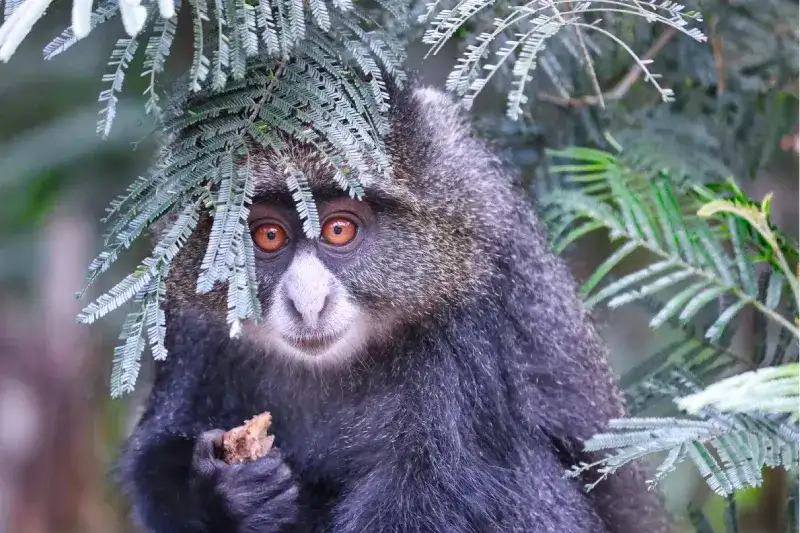
What makes Kilimanjaro remarkable isn't just the summit. The mountain passes through five distinct ecological zones on the way up, from rainforest teeming with colobus monkeys, through heather moorland, alpine desert, and finally the glaciated summit zone. It's like travelling through multiple continents in a single climb.
Best time to climb: January–March and June–October offer the clearest skies and best summit conditions. Most climbs take 6–9 days depending on the route.
#Mahale Mountains National Park
Where You Come Face to Face with Wild Chimpanzees
This one is for the truly adventurous. Mahale Mountains National Park sits on the shores of Lake Tanganyika, one of the world's deepest lakes, in western Tanzania, accessible only by light aircraft and boat. Getting here is part of the experience.
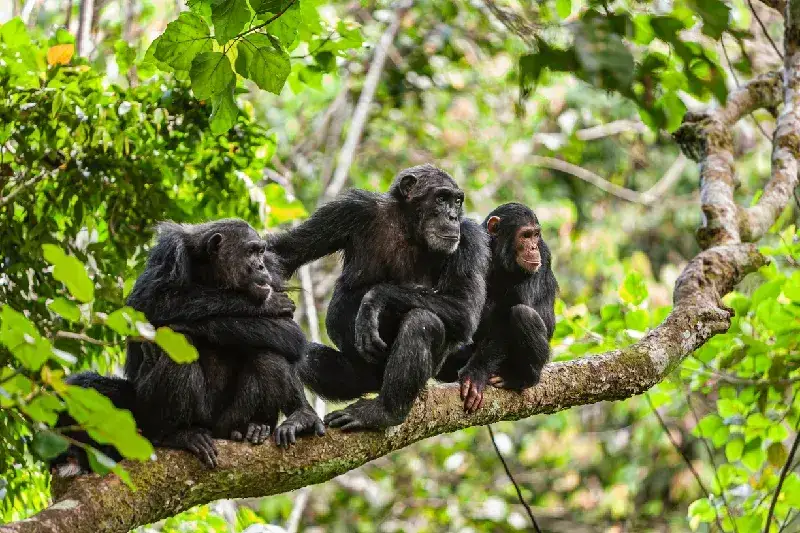
Mahale is home to one of the largest known populations of wild chimpanzees, and the trekking experience here is unlike anything else in East Africa. You hike through dense forest, guided by researchers and trackers who know the chimps' territories intimately. When you finally find a troop and sit quietly among them, watching them groom each other, play, squabble, and simply go about their day, it's deeply moving. These are our closest living relatives, and the encounter has a way of making you rethink everything.
After the trekking, you can swim in the crystal-clear waters of Lake Tanganyika, snorkel among colourful cichlid fish, or simply sit on the beach and watch the sun sink behind the Congo mountains across the lake. Mahale is remote, yes. But it might be the most magical place in Tanzania.
Best time to visit: June–October (dry season) when trails are drier and chimp tracking success rates are highest.
#Which Tanzania National Park Should You Visit?
Choosing the Right Safari for You
Here's the honest answer: it depends on what you're after. If this is your first safari and you want the full big-game experience, the northern circuit, Serengeti, Ngorongoro, Tarangire, Manyara, is where you start. These parks deliver everything you've ever seen in a wildlife documentary, and then some.
If you've done the northern circuit and want something wilder and more remote, head south to Ruaha or west to Mahale. If the mountains are calling, Kilimanjaro is one of the most rewarding challenges of a lifetime.
And if you're the kind of person who wants to do it all? Well, Tanzania makes that surprisingly possible. A 10–14 day safari can take you from the crater rim at Ngorongoro to the river crossings of the Serengeti to the beach at Zanzibar, with enough wildlife sightings in between to fill a lifetime of stories. The only regret people tend to have after a Tanzania safari is that they didn't come sooner. So, what are you waiting for?
#People Also Ask
You’ll find iconic parks like Serengeti National Park, Ngorongoro Conservation Area, and Tarangire National Park, all known for incredible wildlife and scenery.
You should visit during the dry season from June to October, when wildlife viewing is at its best and the Great Migration moves across Serengeti National Park.
You’ll ideally spend 7–10 days exploring top destinations like Serengeti National Park and Ngorongoro Conservation Area for a complete experience.
You’ll have one of the best chances to see all Big Five animals in Ngorongoro Conservation Area.
You can enjoy family-friendly safaris in parks like Lake Manyara National Park and Tarangire National Park, which are great for first-time visitors.
You’ll see lions, elephants, giraffes, zebras, wildebeest, leopards, rhinos, and hundreds of bird species across parks like Serengeti National Park.
You can fly into Arusha or Kilimanjaro, then travel by road or small aircraft to reach parks such as Serengeti National Park and nearby reserves.