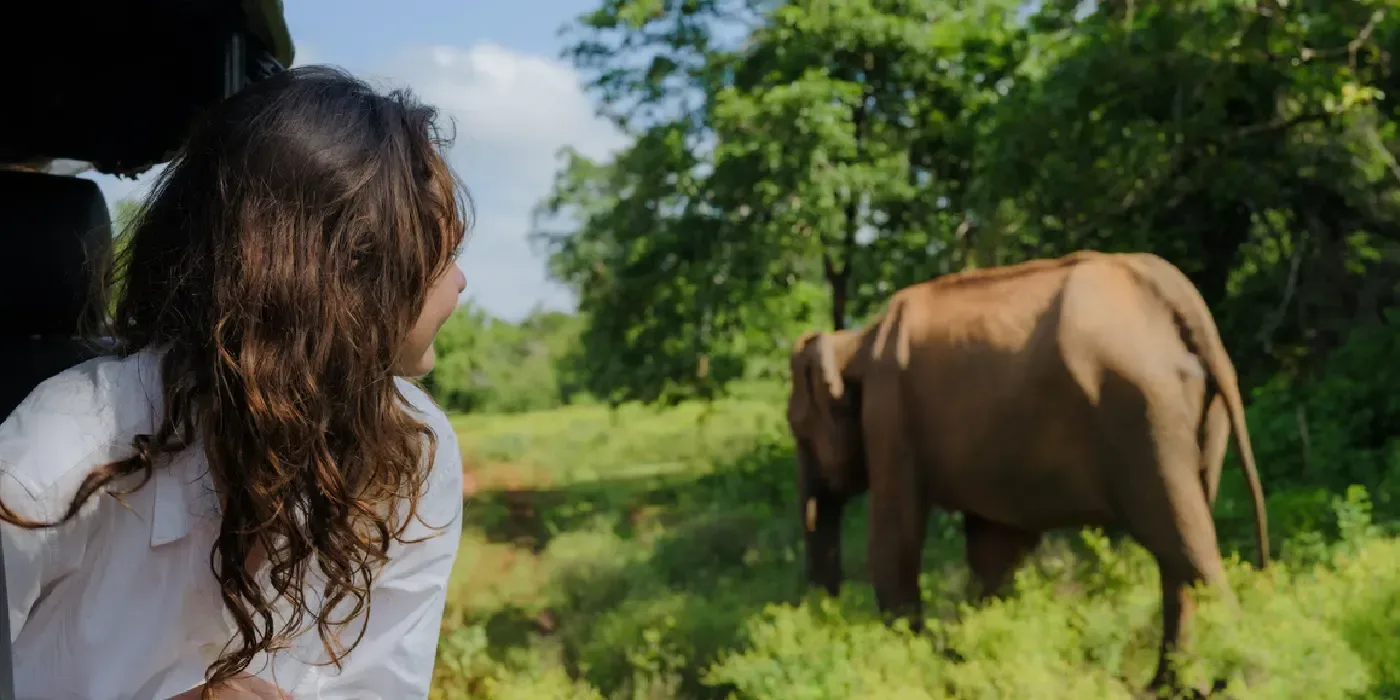
In this Guide:
#Why Sri Lanka is One of Asia's Best Safari Destinations
#The Best Safari Parks in Sri Lanka
#When Is the Best Time for Safari in Sri Lanka?
#How to Plan Your Sri Lanka Safari Itinerary
When I first started planning my trip to Sri Lanka, I thought "safari" meant Africa. Jeeps, dusty plains, lions. But Sri Lanka completely rewired my understanding of what a wildlife encounter can be. This island, barely the size of Ireland, packs in leopards, elephants, sloth bears, blue whales, and some of the most biodiverse ecosystems on the planet. And the best part? Most travellers don't even know what they're missing.
So if you're wondering whether to add a safari to your itinerary, the answer is an absolute yes. Here's everything you need to know, from the best parks to what to pack and when to go.
#Why Sri Lanka is One of Asia's Best Safari Destinations
Sri Lanka is often overlooked in favour of East African destinations, but wildlife lovers who've been to both will tell you it deserves a serious place on the safari map. Here's why:
- Highest leopard density in the world: Yala National Park is widely considered to have the densest population of leopards anywhere on Earth
- Wild elephant gatherings: Minneriya hosts the "The Gathering," one of the largest wild elephant congregations on the planet
- Diverse ecosystems: from dry zone scrubland to wet zone rainforests, highland cloud forests, and coastal lagoons
- Whale watching: the waters off Mirissa and Trincomalee offer blue whale sightings, the largest creatures on Earth
- Year-round wildlife: different parks peak in different seasons, so there's always somewhere worth visiting
- Affordable and accessible: compared to African safaris
Start planning your Sri Lanka wildlife adventure, explore our Sri Lanka tour packages!
Absolutely. Sri Lanka offers some of Asia's best wildlife encounters, including the world's highest density of leopards at Yala, epic elephant gatherings at Minneriya, and year-round whale watching off the southern coast.
Customize Your Dream Vacation!
Get in touch with our local experts for an unforgettable journey.
Plan Your Trip
#The Best Safari Parks in Sri Lanka
Yala National Park: The Leopard Capital
If you only do one safari in Sri Lanka, make it Yala. Located in the southeast, Yala is the most visited and most famous national park in the country, and for good reason.
- What you'll see: Sri Lankan leopards, elephants, sloth bears, crocodiles, sambar deer, peacocks, and over 200 bird species
- Best time to visit: February to July (dry season, animals gather around waterholes)
- Safari style: Morning and afternoon jeep safaris (typically 3–5 hours each)
- Key tip: Go during the morning session for the best leopard sightings. Arrive at the park gates before they open at 6am
Yala has several blocks. Block 1 gets the most traffic, but Block 5 is where seasoned wildlife photographers head for fewer crowds and incredible photographic opportunities.
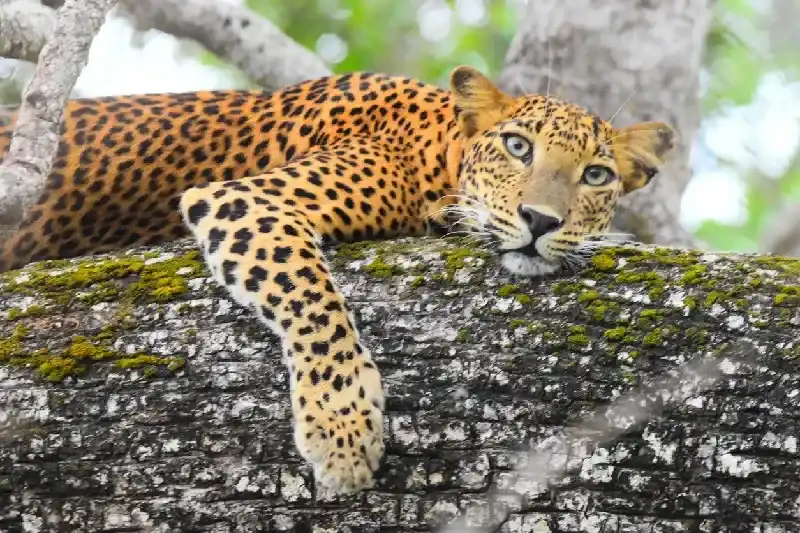
Yala National Park, specifically Block 1, is the world's best location for leopard sightings due to its remarkably high density of these cats.
Minneriya National Park: The Gathering
Between July and October, something extraordinary happens at Minneriya's ancient reservoir. Hundreds, sometimes over 400, wild elephants descend on the receding waterline to feed and socialise. It's called The Gathering, and it's genuinely one of the most spectacular wildlife events in the world.
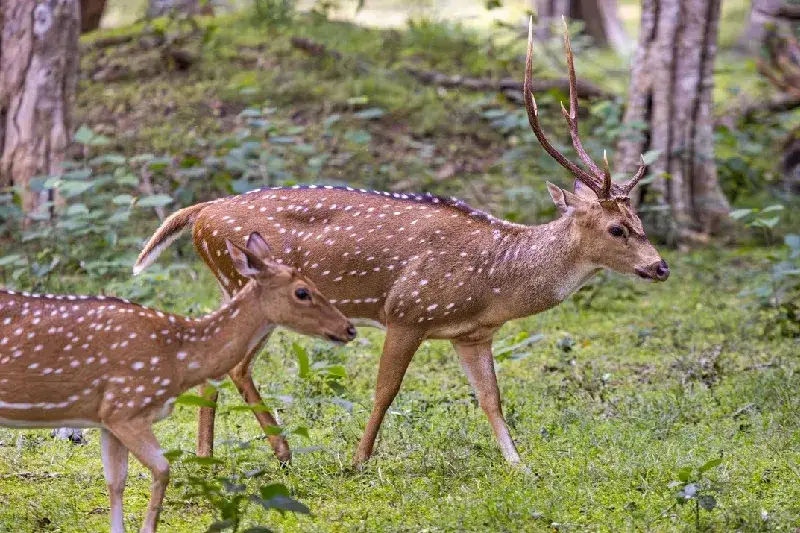
- What you'll see: Massive herds of Asian elephants, painted storks, cormorants, and Sri Lankan axis deer
- Best time to visit: August and September (peak of The Gathering)
- Safari style: Afternoon jeep safaris (the elephants come to the lake as the day cools)
- Key tip: If Minneriya closes for the season, nearby Kaudulla National Park often hosts the same herds
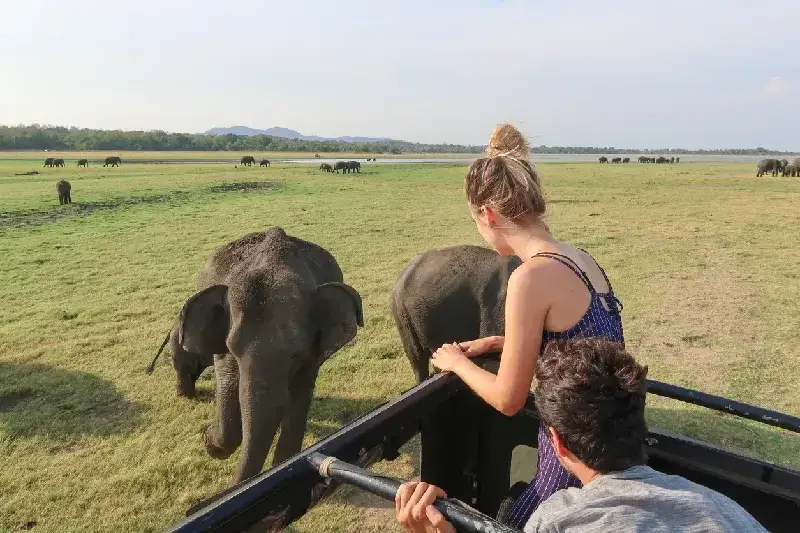
Yes, Sri Lanka has one of the largest populations of Asian elephants, and wild sightings are common across multiple parks. Minneriya's annual Gathering (Aug–Oct) is the most spectacular concentration.
Wilpattu National Park: The Untouched Wilderness
Wilpattu is the largest national park in Sri Lanka, and it feels like the country's best-kept secret. Located in the northwest, it was closed for nearly two decades during the civil conflict and is only now finding its audience. The landscape is different here, dense jungle punctuated by natural lakes called "villus," which attract an extraordinary range of wildlife.
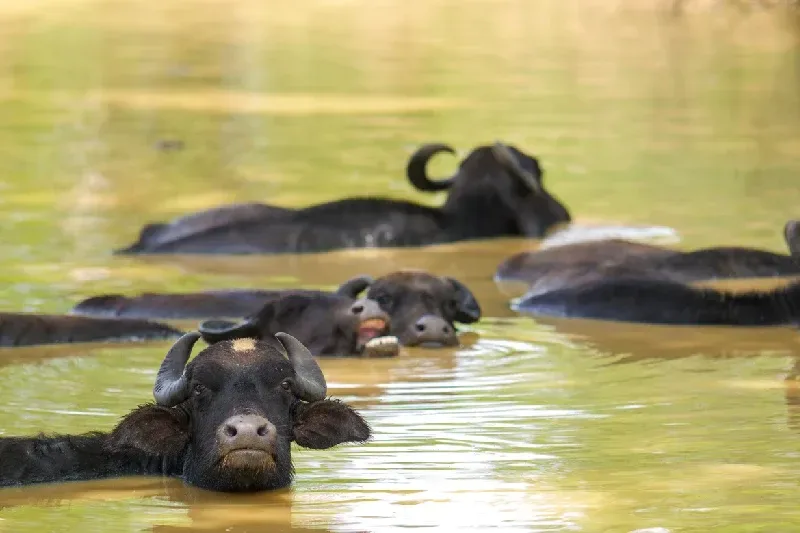
- What you'll see: Leopards, sloth bears, elephants, water buffalo, and jackals
- Best time to visit: February to October
- Safari style: Morning and afternoon jeep safaris
- Key tip: Wilpattu offers a far more intimate experience than Yala, you'll often have sightings entirely to yourself
Wilpattu features in our Sri Lanka Grand Tour explore the full itinerary!
Yala is more popular and accessible, with higher leopard density. Wilpattu is wilder, more remote, and less crowded, great for an immersive, quieter experience.
Sinharaja Forest Reserve: The Birdwatcher's Paradise
If birds are your thing, or if you want a completely different kind of safari experience, Sinharaja is unmissable. This UNESCO World Heritage rainforest in the southwest is one of the last viable remnants of Sri Lanka's wet zone primary rainforest.
- What you'll see: Sri Lanka's endemic bird species (over 20), purple-faced langurs, red-lipped lizards, and giant squirrels
- Best time to visit: January to April and August to September (drier periods)
- Safari style: Guided walking trails with local naturalists
- Key tip: Hire a local guide, they'll spot creatures you would never find on your own
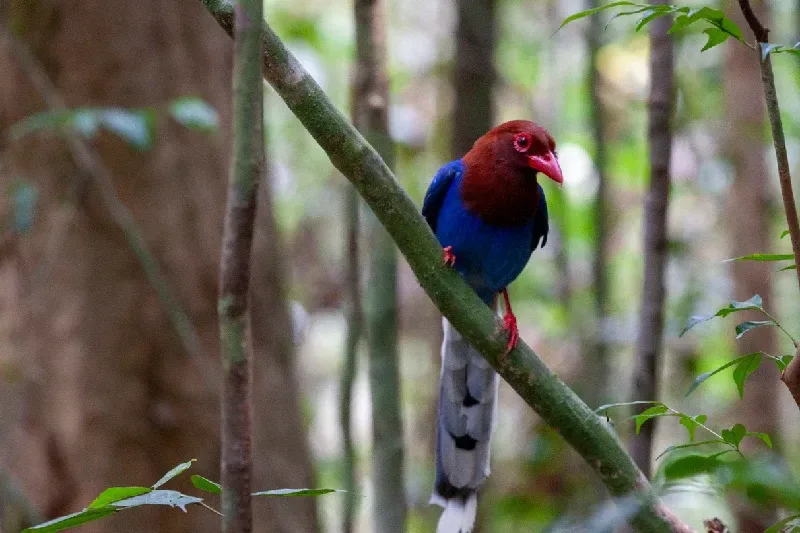
Yes, Sinharaja Forest Reserve and some private wildlife corridors offer guided walking experiences.
Mirissa: Whale & Dolphin Watching
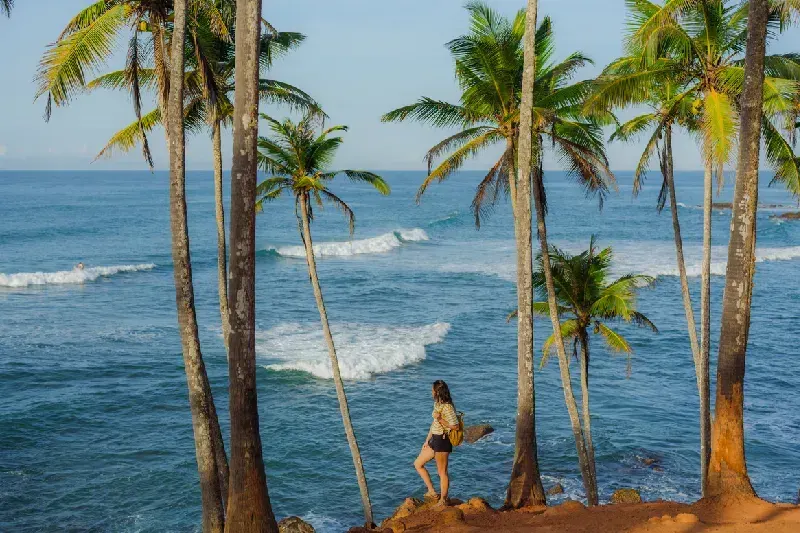
No guide to wildlife in Sri Lanka is complete without mentioning the ocean. From November to April, the waters off Mirissa's southern coast are prime territory for blue whale sightings. Sperm whales, fin whales, and spinner dolphins are also regularly spotted.
- What you'll see: Blue whales, sperm whales, spinner dolphins, and occasionally whale sharks
- Best time to visit: December to March (peak season)
- Safari style: Early morning boat tours (4–5 hours)
- Key tip: Book through reputable operators who follow responsible wildlife watching guidelines, the whales come close enough without needing to chase them
Udawalawe National Park: Sri Lanka's Elephant Heartland
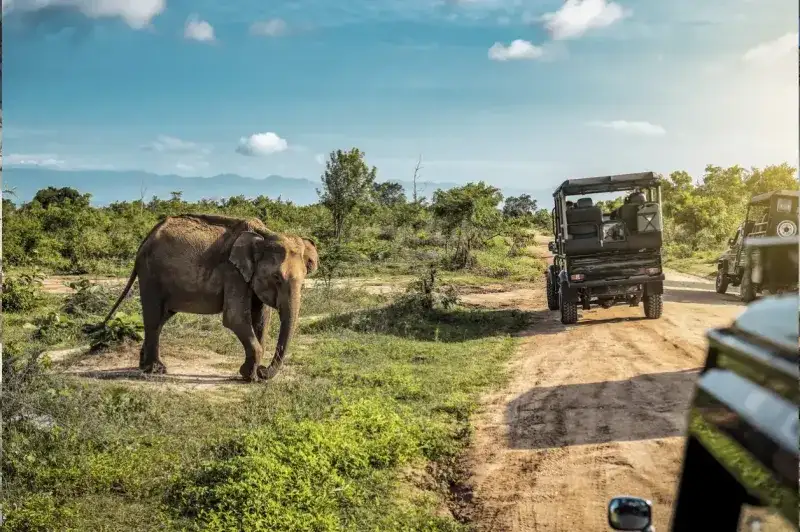
If Minneriya is about the spectacle of elephants, Udawalawe is about getting up close. Situated in the south-central dry zone where the Sabaragamuwa and Uva provinces meet, Udawalawe is built around a large reservoir, the Udawalawe Reservoir, and the surrounding scrub forest that elephants absolutely love. I visited on a whim, squeezing it in between Yala and a beach day in Tangalle, and it completely stole the show.
Unlike Yala, where wildlife sightings can be hit or miss depending on the day, Udawalawe practically guarantees elephant encounters. The park is home to a resident population of over 600 wild Asian elephants, and sightings, sometimes of herds 50+ strong, are almost a certainty on any given morning drive.
- What you'll see: Large herds of wild Asian elephants (up close and frequently), water buffalo, Sri Lanka axis deer, crocodiles, and a brilliant array of waterbirds including painted storks and open-billed storks
- Best time to visit: May to September and December to March (dry periods when animals concentrate around the reservoir)
- Safari style: Morning and afternoon jeep safaris (3–4 hours); the park is open year-round
- Key tip: Go in the early morning, the light is spectacular, the elephants are active, and you'll often catch entire family groups crossing open grassland in front of the reservoir
Elephant Transit Home: Just outside the park boundary sits the Udawalawe Elephant Transit Home, a rehabilitation centre run by the Department of Wildlife Conservation. Orphaned elephants are nursed back to health here before being released into the wild. Feeding times (usually 9am, noon, and 3pm) are open to visitors and are genuinely moving to watch, you're seeing elephants that will eventually return to the wild, not performing animals.
#When Is the Best Time for Safari in Sri Lanka?
Sri Lanka's two monsoon seasons mean different parks peak at different times. Here's a quick breakdown:
| Park | Best Months | Wildlife Highlight |
| Yala |
Feb – Jul |
Leopards, elephants |
|
Minneriya |
Aug – Oct | The Gathering (elephants) |
|
Udawalawe |
May – Sep, Dec – Mar | Resident elephant herds |
|
Wilpattu |
Feb – Oct | Leopards, sloth bears |
| Sinharaja | Jan – Apr, Aug – Sep | Endemic birds |
| Mirissa (ocean) | Dec – Mar | Blue whales |
Not sure when to go? Our Sri Lanka Tours are timed around peak wildlife seasons.
January to March is ideal for most parks. For The Gathering at Minneriya, visit between August and September. Whale watching peaks from December to March.
#How to Plan Your Sri Lanka Safari Itinerary
Most travellers combine safari with Sri Lanka's other highlights, beaches, temples, tea country, and culture.
10-Day Wildlife & Culture Itinerary:
- Arrive Colombo: head north to Wilpattu (2 nights)
- Drive to Sigiriya / Dambulla (2 nights), combine with Minneriya safari
- Kandy & tea country (2 nights)
- Down south to Udawalawe (1 night), elephant herds and Elephant Transit Home
- Continue to Yala (2 nights), leopard country
- Mirissa / Galle for whale watching and beaches (2 nights)
This route avoids backtracking and covers the major safari parks alongside Sri Lanka's cultural triangle.
#What to Pack for a Sri Lanka Safari
- Neutral-coloured clothing (khaki, beige, olive green, avoid bright colours and white)
- Lightweight long sleeves and trousers for sun protection and mosquitoes
- Good sunscreen and a wide-brimmed hat
- Insect repellent (DEET-based for jungle environments)
- Binoculars (essential, 8x42 or 10x42 are ideal)
- Camera with zoom lens
- Reusable water bottle, safaris in the dry zone are hot and dusty
- Closed-toe shoes for walking safaris
#Tips for Responsible Wildlife Tourism in Sri Lanka
- Sri Lanka's wildlife is precious and under pressure from tourism. A few things to keep in mind:
- Stay in the jeep unless instructed by a licensed guide
- Keep noise to a minimum around animals, this is for your safety and theirs
- Don't feed wildlife, even seemingly harmless primates
- Respect park closing times, the animals need undisturbed time
Discover our Sri Lanka Tours and start planning your adventure today!
Yes, Sri Lankan safari parks are well-managed and safe for tourists. Always follow your guide's instructions, especially around elephants and sloth bears, which can be unpredictable.
Yes, especially for Yala, which has daily visitor limits. Book your jeep safari at least a few days ahead during peak season (Dec–Mar), or further in advance if part of a tour.
Easily. Many Sri Lanka tours combine Yala safari (southeast) with beach time in Mirissa or Tangalle, they're all within a 1–2 hour drive of each other.