In this Guide:
#Quick Answer: Kenya vs Tanzania Safari, What's the Difference?
#My Kenya Safari Experience: The Masai Mara Blew My Mind
#My Tanzania Safari Experience: Into The Wild
#Kenya vs Tanzania: The Key Decisions Explained
#Practical Tips From Someone Who Made the Mistakes
I'll be honest with you. Before I left for East Africa, I spent weeks down a rabbit hole trying to figure out: Kenya or Tanzania? Blog after blog gave me the same vague answer, "both are great!", which told me absolutely nothing.
So I did what any slightly obsessive traveler would do. I went to both.
Three weeks. Two countries. One life-changing decision I will never regret. And now I'm here to give you the real, unfiltered breakdown that I wish someone had given me before I booked my flights.
#Quick Answer: Kenya vs Tanzania Safari, What's the Difference?
| Kenya | Tanzania | |
| Best for |
First-timers, The Great Migration (July–Oct) |
Deeper wilderness, exclusivity, Serengeti year-round |
| Top Parks |
Masai Mara, Amboseli, Samburu |
Serengeti, Ngorongoro, Tarangire, Selous |
| Safari Style |
More accessible, varied budgets |
More remote, leans luxury |
|
Wildlife highlight |
Big Five + predator density |
Great Migration (calving Jan–Feb), Ngorongoro crater |
| Crowds |
Moderate to high in peak season |
Lower, especially in southern circuits |
| Budget |
$200–$1,500+/day |
$300–$2,000+/day |
Now, let me tell you what those numbers actually feel like on the ground.
Customize Your Dream Vacation!
Get in touch with our local experts for an unforgettable journey.
Plan Your Trip
#My Kenya Safari Experience: The Masai Mara Blew My Mind
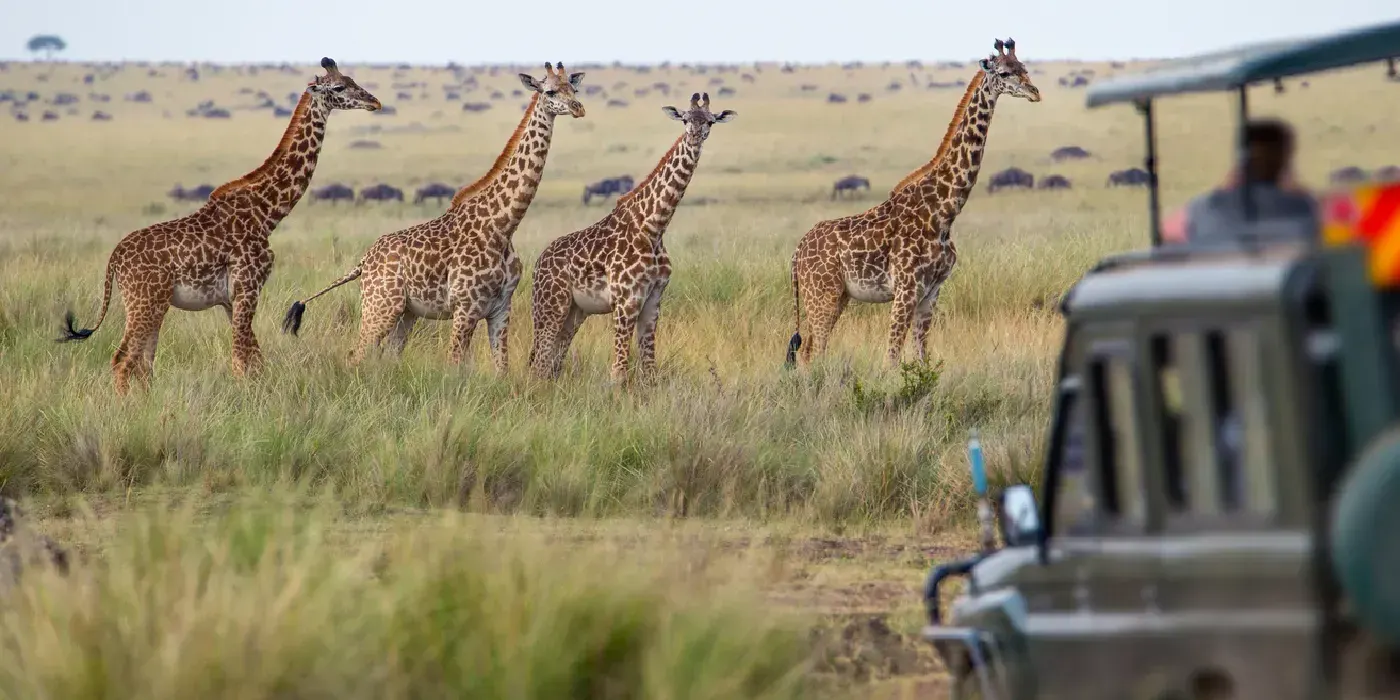
I started in Kenya, and I'm glad I did. Kenya eases you in. The infrastructure is solid, the guides speak excellent English, the roads (while bumpy) are manageable, and the sheer concentration of wildlife in the Masai Mara is almost surreal.
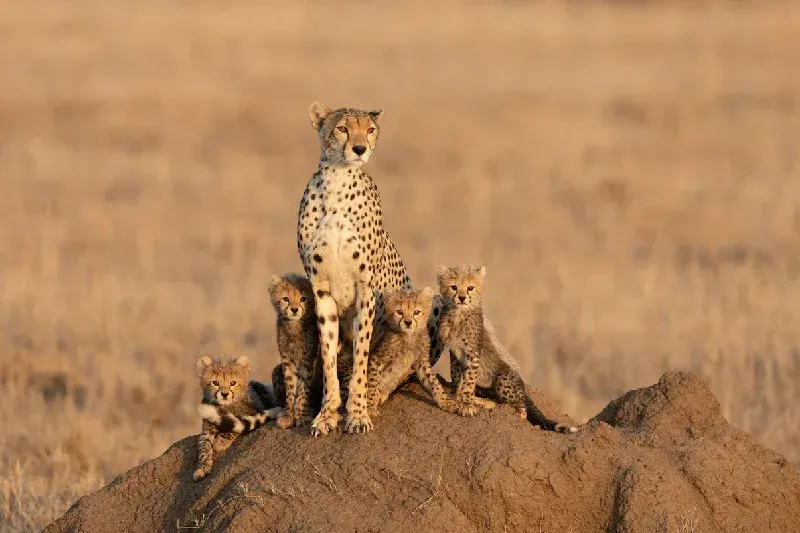
On my first morning game drive, we hadn't been out twenty minutes when our guide quietly killed the engine. Fifty meters away, a female cheetah was crouched in the golden grass, watching a herd of Thomson's gazelles with terrifying focus. We sat there for forty minutes. That's Kenya for you.
What Kenya Does Best
Predator sightings: The Mara has one of the highest concentrations of big cats in the world. On a good week, you can see lions, cheetahs, and leopards, sometimes on the same day.
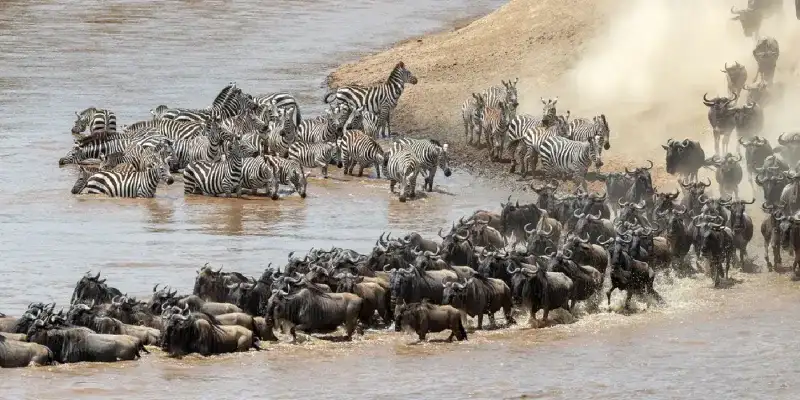
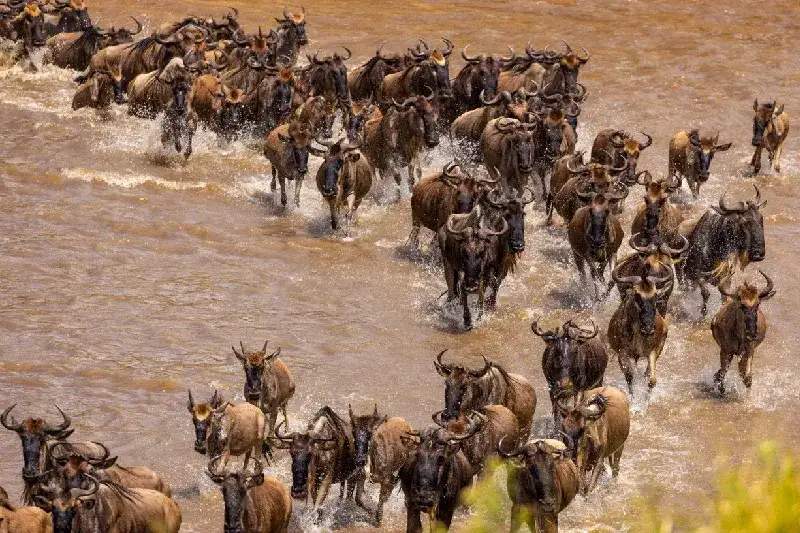
The Great Migration: Between July and October, over 1.5 million wildebeest cross the Mara River from Tanzania into Kenya. The river crossings are violent, spectacular, and utterly unforgettable. Read about the Great Migration in Kenya!
Variety of landscapes: Kenya isn't just savanna. Amboseli gives you elephants against the backdrop of Mount Kilimanjaro. Samburu is semi-arid and exotic, with species you won't find further south, the reticulated giraffe, Grevy's zebra, the gerenuk.
Accessibility: Nairobi is a major hub with direct flights from Europe, the Middle East, and beyond. Getting around is relatively easy.
Budget flexibility: Kenya caters to a wider range of travelers. You can find quality mid-range options that Tanzania simply doesn't offer at the same scale.
What Kenya Doesn't Tell You
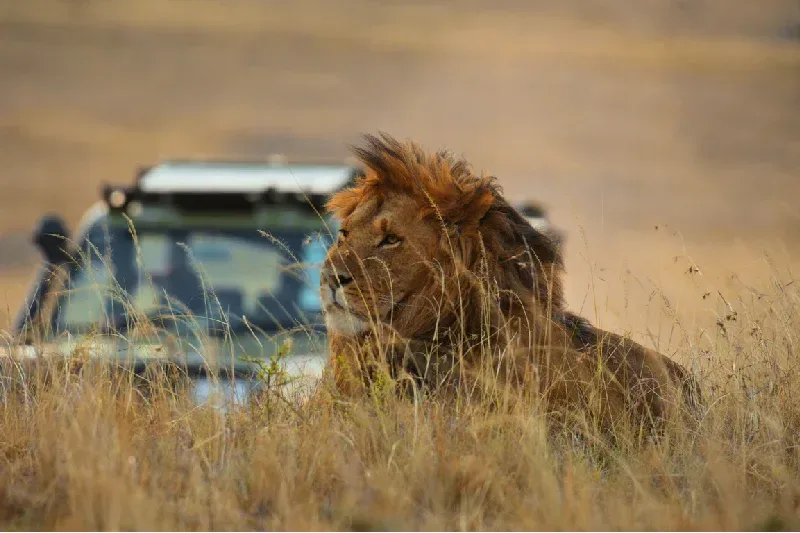
Here's where I get real with you. The Masai Mara during peak season (August especially) can feel crowded. Picture twenty Land Cruisers forming a semicircle around a lion kill. The lion doesn't care. I cared a little.
Also, some of the areas bordering the main reserve are heavily commercialized. Choose your camp carefully, there's a big difference between staying inside the Mara Triangle and staying in the overcrowded conservancies outside.
My honest take: Kenya is spectacular. It's the perfect first safari. The wildlife density is extraordinary, the infrastructure makes everything smooth, and the cultural experiences with Maasai communities are genuinely moving.
Ready to explore Kenya? Search for Kenya safari tours that combine the Masai Mara with Amboseli for the ultimate big cat and elephant double act.
#My Tanzania Safari Experience: Into The Wild
After Kenya, I flew into Kilimanjaro Airport and drove into the Serengeti. And something shifted.
It's harder to explain than I expected. Tanzania feels wilder. More raw. The distances are bigger, the camps are more remote, and there were entire mornings where we drove for an hour and saw nothing but endless golden plains and the occasional secretary bird, and that felt right. That felt like Africa without the performance.
What Tanzania Does Best
The Serengeti: It's enormous. At nearly 15,000 square kilometers, it dwarfs the Masai Mara. The Migration doesn't end at the Kenyan border, it circles back into Tanzania, and the calving season (January to February) in the southern Serengeti is one of the most astonishing wildlife events I've ever witnessed. Thousands of wildebeest calves born within weeks of each other. Predators everywhere.
Ngorongoro Crater: Nothing prepares you for your first look into the crater. It's a collapsed volcano that forms a natural enclosure for roughly 25,000 large animals, including a significant population of black rhino. It's the closest thing to a real-life Lost World.
Exclusivity and fewer crowds: Tanzania has strict conservation laws. Many areas limit the number of vehicles at a sighting. Some of the private conservancies we drove through had zero other vehicles in sight for hours. That intimacy is priceless.
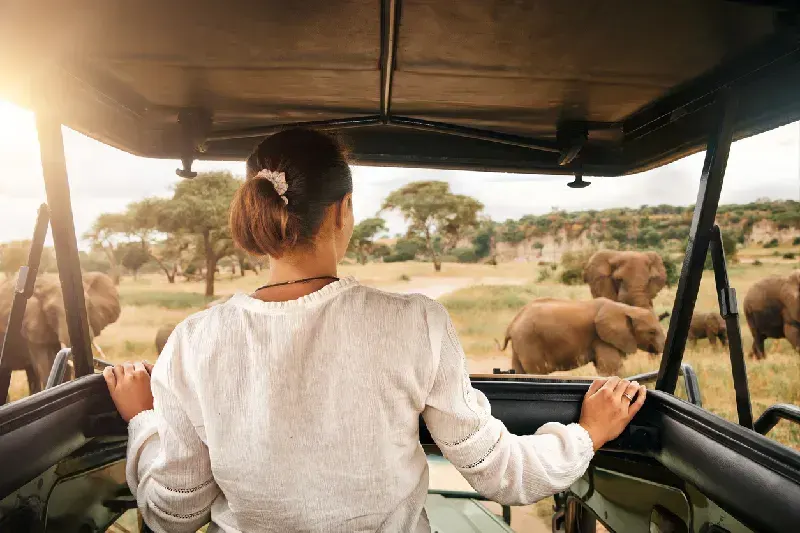
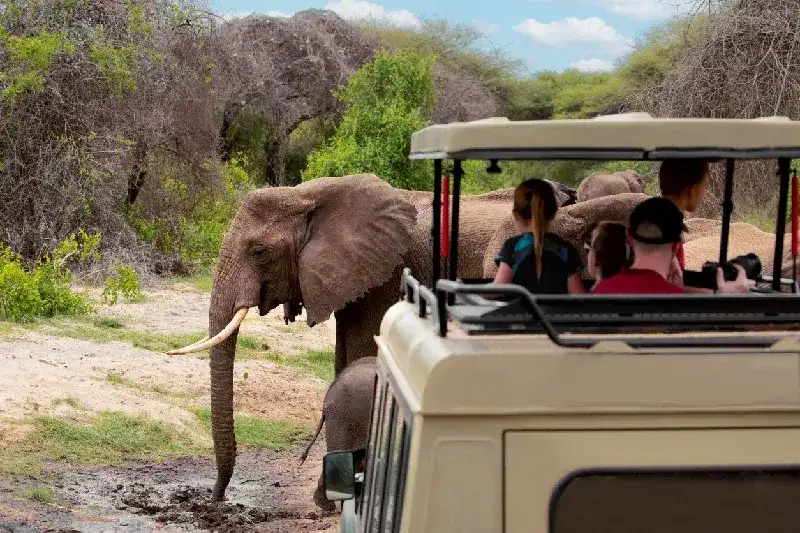
Tarangire: This is Tanzania's underrated gem. Massive ancient baobab trees, enormous elephant herds (we counted over 80 elephants at a waterhole), and almost no one else around.
Southern Circuit (Selous/Nyerere, Ruaha): If you really want to go off the beaten path, these remote parks in southern Tanzania offer walking safaris, boat safaris, and wildlife sightings that rival anywhere in Africa, with a fraction of the visitors.
What Tanzania Doesn't Tell You
Tanzania is more expensive. There's no getting around it. Conservation fees are high, the distances between parks mean more internal flights, and the infrastructure, while improving, is rougher than Kenya's. I took a light aircraft between parks three times, which added significant cost but saved hours of driving.
Also, Tanzania's Serengeti can be just as crowded as the Mara around the river crossings at Kogatende (the northern Serengeti) in peak season. The key is knowing where to go and when.
My honest take: Tanzania is for people who want to go deeper. If you've done Kenya before, Tanzania will astonish you. Even if it's your first safari, the Serengeti and Ngorongoro combination is one of the greatest wildlife itineraries on the planet.
Ready to explore Tanzania? Look for Tanzania safari tours that pair the central Serengeti with Ngorongoro Crater for a classic, life-changing circuit.
#Kenya vs Tanzania: The Key Decisions Explained
Which Country Is Better for the Great Migration?
Both, it depends on the time of year.
- January–March: Southern Serengeti (Tanzania) for calving season
- April–June: Central Serengeti (Tanzania) as the herds move north
- July–October: Masai Mara (Kenya) for the dramatic river crossings
- November–December: The herds begin moving south again through Tanzania
If you can only go once, July to October is the sweet spot because the river crossings are the most dramatic spectacle. Kenya wins this window. But Tanzania's calving season is severely underrated.
Which Is Better for Budget Travelers?
Kenya wins. There are quality mid-range camps in Kenya starting around $200–$300 per person per night (full board, game drives included). Tanzania's conservation fees and remoteness push costs higher, budget $400–$600 per person per night as a reasonable starting point for quality camps.
Which Has Better Wildlife Diversity?
It's close, but Tanzania edges it due to sheer size and variety of ecosystems. The Serengeti ecosystem, Ngorongoro, Tarangire, and the southern parks together offer extraordinary breadth. That said, Kenya's northern circuit (Samburu) adds unique species you won't see in Tanzania.
Which Is Better for First-Time Safari Goers?
Kenya. The infrastructure, accessibility, English-speaking guides, and sheer wildlife density of the Masai Mara make it the ideal first safari destination. You'll see the Big Five, experience remarkable cultural encounters, and have the logistics handled smoothly.
Which Is Better for a Luxury Experience?
Tanzania, particularly the private conservancies bordering the Serengeti and the remote southern parks. Some of the finest safari camps on the continent are here, offering night game drives, walking safaris, and complete seclusion that Kenya's more accessible parks simply can't match.
#Practical Tips From Someone Who Made the Mistakes
- Fly between parks where possible: driving long distances between Tanzanian parks is exhausting and eats into game drive time
- Book camps inside the reserve, not outside: the price difference is worth it for proximity and reduced crowds
- Go with a specialist operator, not a generic booking platform: safari is not the place to cut corners on guides
- Pack neutral colors: leave the white and bright blue at home; khaki, olive, and brown are your friends
- Bring a good zoom lens or rent one: 400mm minimum if you're into photography
- Allow more time than you think: 5 days feels like you're just getting started; 10 days feels right; 14+ days and you'll never want to leave
#So Kenya or Tanzania?
If I had to pick one: Tanzania, but only because I'd already been to Kenya. If I were advising a first-time safari traveler: Kenya without hesitation.
If budget isn't a constraint and you want something truly remote and exclusive: Tanzania's southern circuit will leave you speechless.
And if someone offered me the chance to do the full loop, Kenya's Mara, Amboseli, and Samburu, followed by Tanzania's Serengeti, Ngorongoro, and Tarangire, I would pack my bag tonight.
East Africa gets under your skin. I went expecting wildlife. I came back having felt something I still can't fully articulate, something about scale, and wildness, and what the world looked like before we rearranged everything.
Discover our African safari tours and experience the best of Tanzania and Kenya.
Both are generally safe for tourists within established safari circuits. Standard travel precautions apply, and reputable operators will handle logistics in a way that keeps you well clear of any risk areas.
A minimum of 7 days for a single country. 10–14 days is ideal. If doing both countries, 14–21 days gives you enough time to do justice to both.
The dry seasons, June to October and January to February, offer the best wildlife viewing. The wet seasons (April–May and November) still have wildlife but thicker vegetation makes spotting harder.
Absolutely, and I'd highly recommend it. Many operators run seamless cross-border itineraries. The logistics are well-established and surprisingly smooth.
Both are incredible for photography. Kenya is best for dramatic wildlife action like river crossings and predator hunts, while Tanzania stands out for breathtaking landscapes, vast plains, and scenic safari views.