In this Guide:
#Is 2 Weeks Enough for Vietnam?
#The 2-Week Itinerary: Day by Day
#What the Organized Tour Actually Handled
#What to know before your visit
I’ll be honest, planning a trip to Vietnam felt a little overwhelming at first. With so many places to see and logistics to figure out, my wife and I decided to go for a well-organized tour instead of doing everything on our own. And looking back, it was one of the best decisions we made.
From the moment we arrived in Hanoi, everything was seamlessly arranged, transfers, guided visits, even those small details you don’t think about until you’re there. It allowed us to focus on what really mattered: soaking in the atmosphere, trying incredible food, and actually enjoying each destination without the stress of planning the next step.
Over two weeks, we explored the highlights of Vietnam, from the stunning limestone scenery of Ha Long Bay to the vibrant energy of Ho Chi Minh City, all at a comfortable pace that didn’t feel rushed.
If you’re considering a 2-week Vietnam itinerary with a guided tour, here’s exactly how our journey went, what stood out the most, and why this style of travel made the experience so much more enjoyable.
#Is 2 Weeks Enough for Vietnam?
Yes, if you're strategic about it.
Vietnam is long and narrow, Hanoi in the north to Ho Chi Minh City in the south is a 2-hour flight. Trying to see everything would mean spending most of your trip in transit. Two weeks forces you to prioritize, which is actually a good thing.
This is what most organized Vietnam tours are built around, and there's a reason for that, it flows logically, covers the country's best highlights, and doesn't waste time backtracking.
Customize Your Dream Vacation!
Get in touch with our local experts for an unforgettable journey.
Plan Your Trip
#The 2-Week Itinerary: Day by Day
Days 1–3: Hanoi
Where we stayed: A 4-star boutique hotel in the French Quarter, quieter than the Old Quarter, but still just a 10-minute walk from everything.
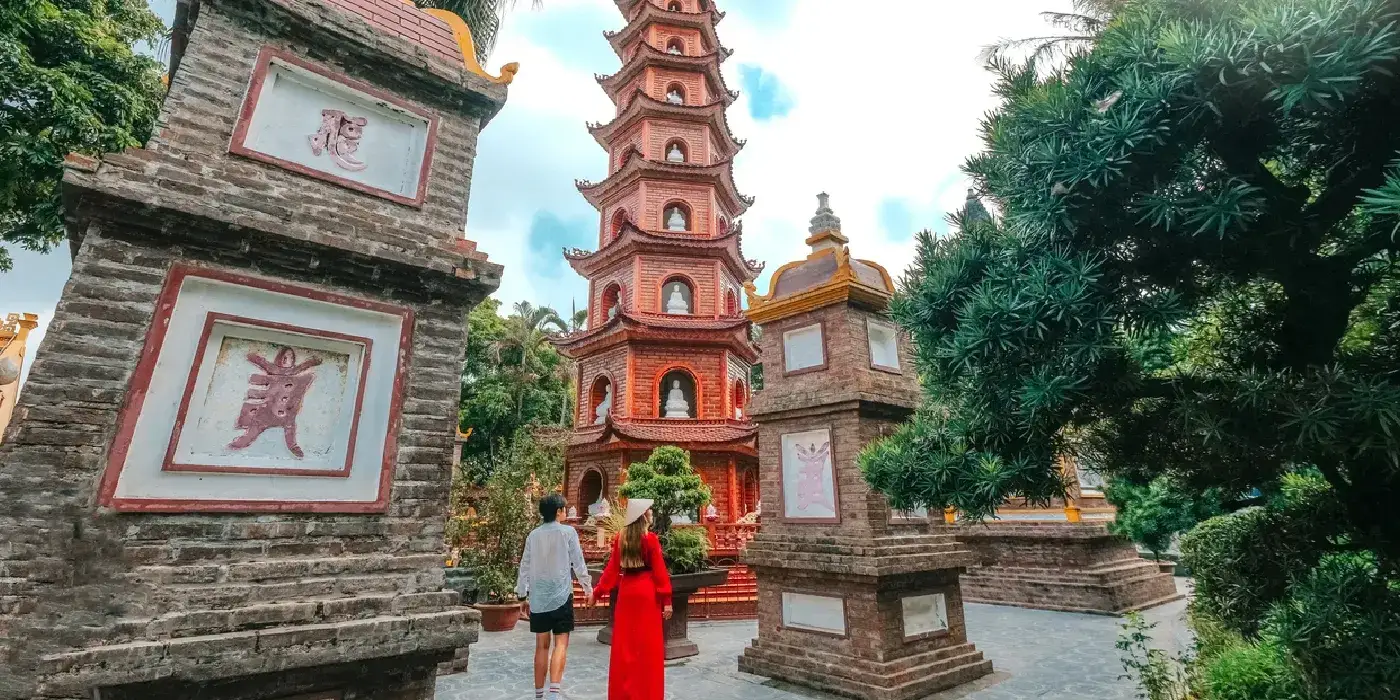
Our guide met us at Noi Bai International Airport holding a sign with our names on it. After 12 hours of travel, that felt like more of a luxury than it sounds. Hanoi was our introduction to Vietnam, and it didn’t exactly ease us in. The traffic is genuinely unlike anything I’d experienced, a constant stream of motorbikes that somehow works without turning into chaos. At some point, you stop trying to understand it and just cross the road when a local does.
Our guided day in Hanoi included:
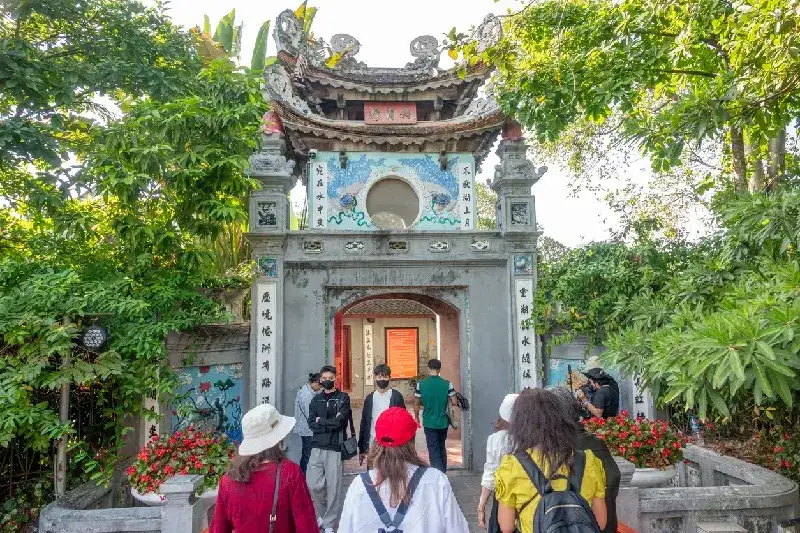
- Hoan Kiem Lake and Ngoc Son Temple (beautiful, especially in the morning mist)
- Ho Chi Minh Mausoleum and the Presidential Palace grounds
- Temple of Literature, Vietnam’s first university, dating back to 1070
- A street food walking tour in the evening with our guide, who knew exactly which stalls to stop at
What we did on our own time:
- Coffee at a rooftop café in the Old Quarter (Vietnamese iced coffee is something I still think about daily)
- Shopping for lacquerware and silk at Dong Xuan Market
- A long dinner at a proper local restaurant our guide recommended, not touristy, genuinely authentic
One thing the tour handled that I was especially grateful for: restaurant reservations. In Hanoi, the best places fill up fast, and menus are sometimes only in Vietnamese. Having a guide who could recommend spots or pre-book everything removed that friction completely.
Days 4–5: Ha Long Bay
This was the part of the trip I was most looking forward to, and it absolutely didn’t disappoint.
Our Vietnam travel package included a 2-day/1-night cruise on a mid-range junk boat with a maximum of 20 guests. I specifically looked for this when choosing the package. The larger boats feel more like floating hotels, while the smaller ones offer something much closer to a real experience.
What the cruise included:
- A private cabin with an en-suite bathroom and a window overlooking the bay
- All meals on board (the seafood was exceptional, fresh squid, prawns, clams)
- Kayaking through the limestone karsts in the late afternoon
- A sunrise tai chi session on the top deck, which I fully intended to skip, but ended up loving
- A visit to Sung Sot Cave, one of the largest cave systems in the bay
The honest take on Ha Long Bay:
It’s genuinely one of the most dramatic landscapes I’ve ever seen. The scale doesn’t fully come across in photos, thousands of karst islands rising out of calm, green water, with mist settling between them in the early morning. Even with other boats around, it never really felt crowded once we were out on the water.
Trying to organize this independently would have been a headache, coordinating transport from Hanoi, comparing cruise operators, and figuring out which part of the bay to book. Having it all arranged as part of the package made the experience completely seamless.

Days 6–8: Hoi An
We flew from Hanoi to Da Nang (about an hour), where our driver met us at arrivals and took us straight to Hoi An. The 30-minute transfer was included, a small detail, but after a flight, it really makes a difference. Hoi An was, without question, my favorite stop on the entire trip.
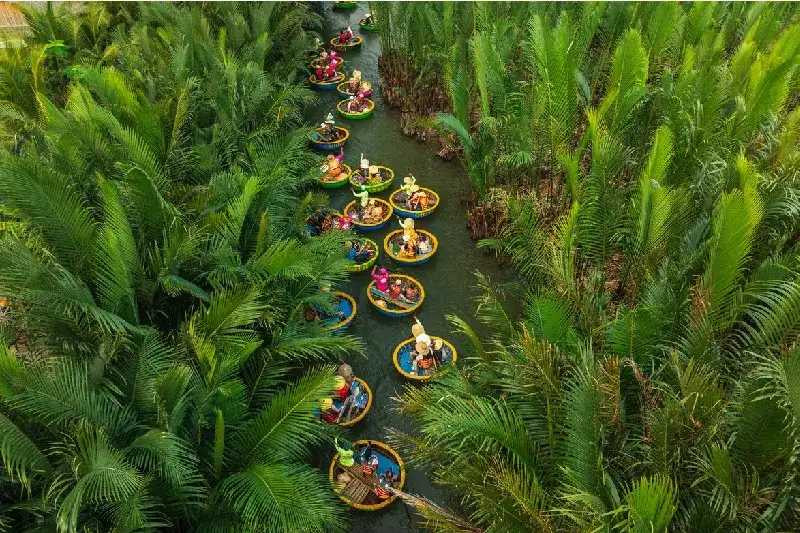
The Hoi An Ancient Town is a UNESCO World Heritage Site, narrow streets, yellow-painted shophouses, red lanterns hanging overhead, and the Thu Bon River running alongside it. It sounds like a postcard, and honestly, it looks like one too. But it doesn’t feel staged. People actually live and work here. Children cycle through the lanes, and in the evenings, shop owners sit outside chatting with neighbors.
Our guided half-day covered:
- Japanese Covered Bridge: over 400 years old and still standing
- Phung Hung Ancient House: a family home occupied for 8 generations
- The local market, where our guide explained what everything was and how it’s used
What we explored independently:
- Early mornings wandering the Ancient Town before the day-trippers arrived (before 9am, it’s almost empty and genuinely magical)
- An Bang Beach: just a 10-minute taxi ride, wide, relaxed, and uncrowded
- My Son Sanctuary: 4th-century ruins, arranged through the tour as an optional add-on
- A tailoring appointment: I had a linen suit made in 36 hours. Perfect fit, and a fraction of the price back home
What to eat in Hoi An:
- Cao lau: thick noodles with pork and greens, a local specialty you can only really find here
- White rose dumplings: delicate, steamed, topped with crispy shallots
Days 9–10: Da Nang
We moved to Da Nang for two nights, staying at a beach resort on My Khe Beach. This was built into the package and felt like a deliberate shift, from the cultural intensity of Hoi An to something slower and more relaxed.
Da Nang is a modern Vietnamese city with a beach, which makes it feel completely different from anywhere else we visited on this trip.
What we did:
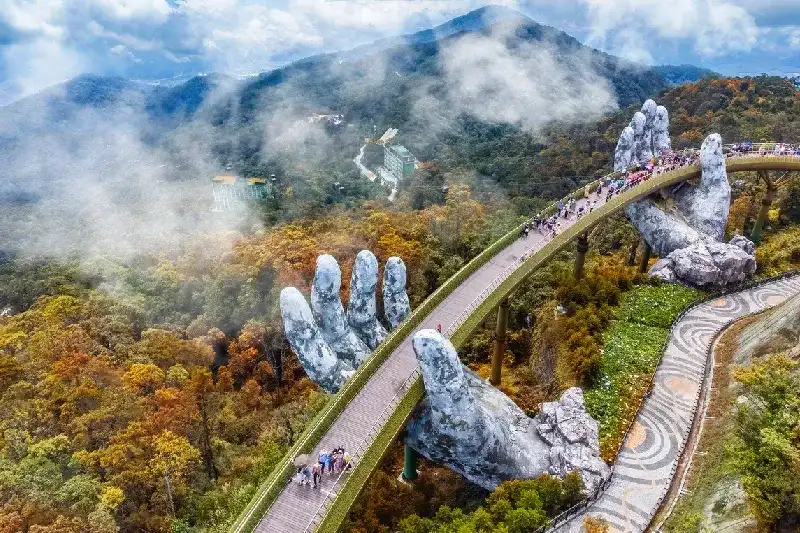
- Ba Na Hills and the Golden Bridge, the bridge held up by giant stone hands you’ve probably seen in photos. Our tour arranged tickets in advance, which meant we skipped the queues entirely.
- Marble Mountains, five limestone hills filled with caves, temples, and viewpoints. More interesting than I expected.
- Dragon Bridge on a Saturday night, at 9pm, it actually breathes fire. We stood on the riverbank with what felt like half the city, and it was completely worth it.
- A long, unhurried afternoon on the beach doing absolutely nothing, which, at that point in the trip, was exactly what we needed
Days 11–12: Nha Trang
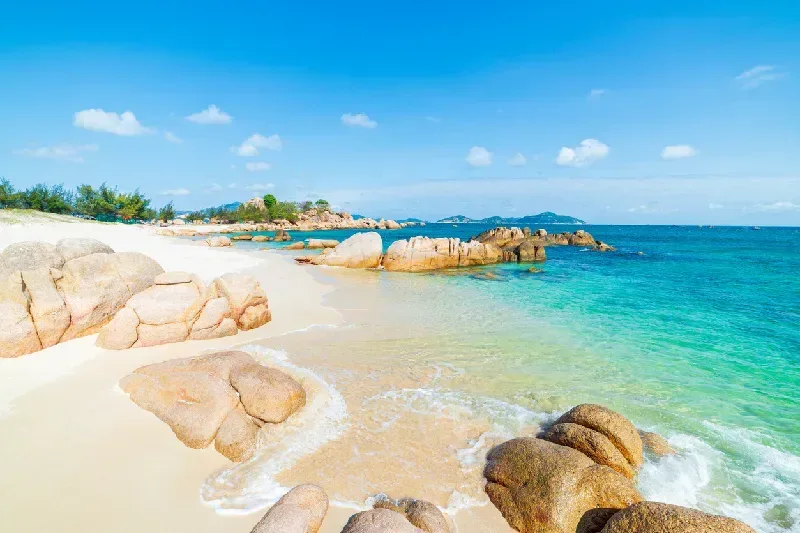
Nha Trang is Vietnam’s most developed beach resort city, and it’s a bit polarizing, some people love it, others find it too built-up. We enjoyed it for two nights, mainly because the diving here is excellent.
Our tour operator had a partnership with a local dive company, so everything was pre-arranged as an optional excursion, and it ran seamlessly.
What’s worth doing in Nha Trang:
- Snorkeling or diving at Hon Mun Marine Protected Area, clear water, healthy coral, and plenty of marine life
- Po Nagar Cham Towers, a 7th-century Hindu temple complex that many visitors surprisingly skip
- A boat trip to the nearby islands, arranged through the tour as an easy half-day excursion
If beach resorts aren’t really your thing, this is an easy place to adjust the itinerary. You could trim it to one night and spend an extra day in Hoi An or head earlier to Ho Chi Minh City.
Days 13–14: Ho Chi Minh City (Saigon)
The tour ended in Saigon, and it felt like exactly the right place to finish, fast-paced, modern, and full of energy.
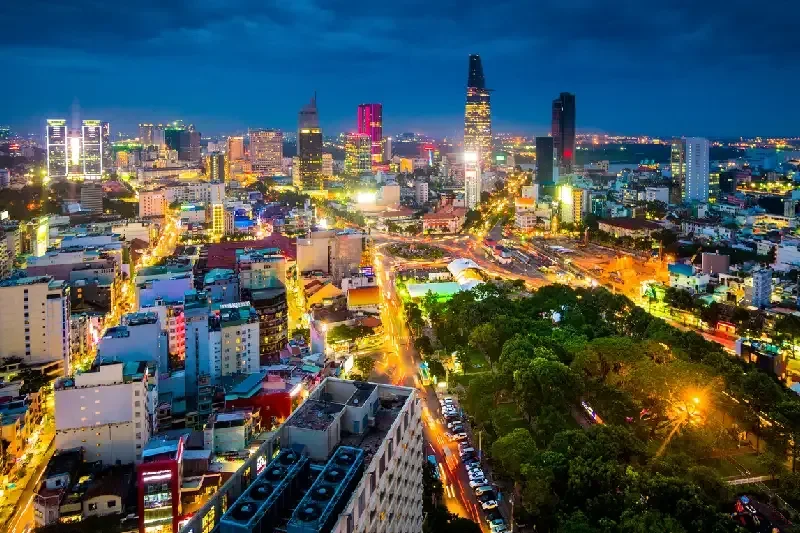
Ho Chi Minh City is nothing like Hanoi. Where Hanoi feels ancient and layered, Saigon feels like a city in a hurry, glass towers next to French colonial buildings, Buddhist temples tucked between cafés, and rooftop bars overlooking it all.
Our included guided day covered:
- War Remnants Museum, this took around 2–3 hours and was genuinely moving. Having a guide to provide historical context made it far more meaningful
- Reunification Palace, where the Vietnam War effectively ended in 1975
- Ben Thanh Market, worth a visit, though most of our shopping ended up happening earlier in Hoi An
The Cu Chi Tunnels were included as a half-day excursion and ended up being one of the most remarkable experiences of the trip. It’s an extensive underground network used during the Vietnam War, now partially open to visitors, you can even crawl through sections of it. It’s one of the most well-known tours from Saigon, and absolutely worth doing.
What we explored on our own:
- District 1’s restaurant scene, easily the best meal of the trip was at a Vietnamese fine dining spot recommended by our hotel concierge
- Bitexco Financial Tower sky deck for panoramic views at dusk
- Chill Skybar for sundowners on our last evening, one of the best rooftop bars I’ve been to anywhere
#What the Organized Tour Actually Handled
For anyone considering a similar approach, here's exactly how the split worked:
Handled by our vietnam travel package:
- All domestic flights between destinations
- Private airport and hotel transfers at every stop
- 4-star hotel accommodation throughout (all pre-vetted and pre-booked)
- Ha Long Bay cruise, boat selected, meals included
- Guided half-days in Hanoi, Hoi An, Da Nang, and Saigon
- Cu Chi Tunnels excursion
- Ba Na Hills tickets and cable car
- 24/7 contact number for any issues during the trip
We handled ourselves:
- Evening restaurant bookings (using guide recommendations as a starting point)
- Optional add-ons like diving in Nha Trang and My Son in Hoi An
- Personal shopping and anything spontaneous
That balance worked perfectly. We never felt like we were being shepherded, but we also never felt lost.
#What to know before your visit
Visa: Vietnam offers an e-visa valid for up to 90 days (single or multiple entry) for many nationalities, typically costing around $25–$50 within 3–5 working days. Apply through the official Vietnam Immigration portal and check current requirements for your passport before booking.
Best time to visit:
- November to April: ideal for central and southern Vietnam (Hoi An, Saigon)
- May to October: better for the north (Hanoi, Ha Long Bay)
- February to April: the sweet spot for a full north-to-south route
Currency: Vietnamese Dong (VND). ATMs are widely available. Cards accepted at most hotels and mid-range restaurants. Always carry some cash for markets and street food.
Getting around within cities: Grab (the local Uber equivalent) is safe, reliable, and very cheap. Our hotels also had drivers available for longer trips, useful to know when the tour's included transfers don't apply.

Vietnam exceeded every expectation, and our expectations were already high. The food alone would justify the trip. The history, the landscapes, the variety of experiences compressed into one long, narrow country, it's genuinely extraordinary.
Explore our curated Vietnam tours across Southeast Asia!