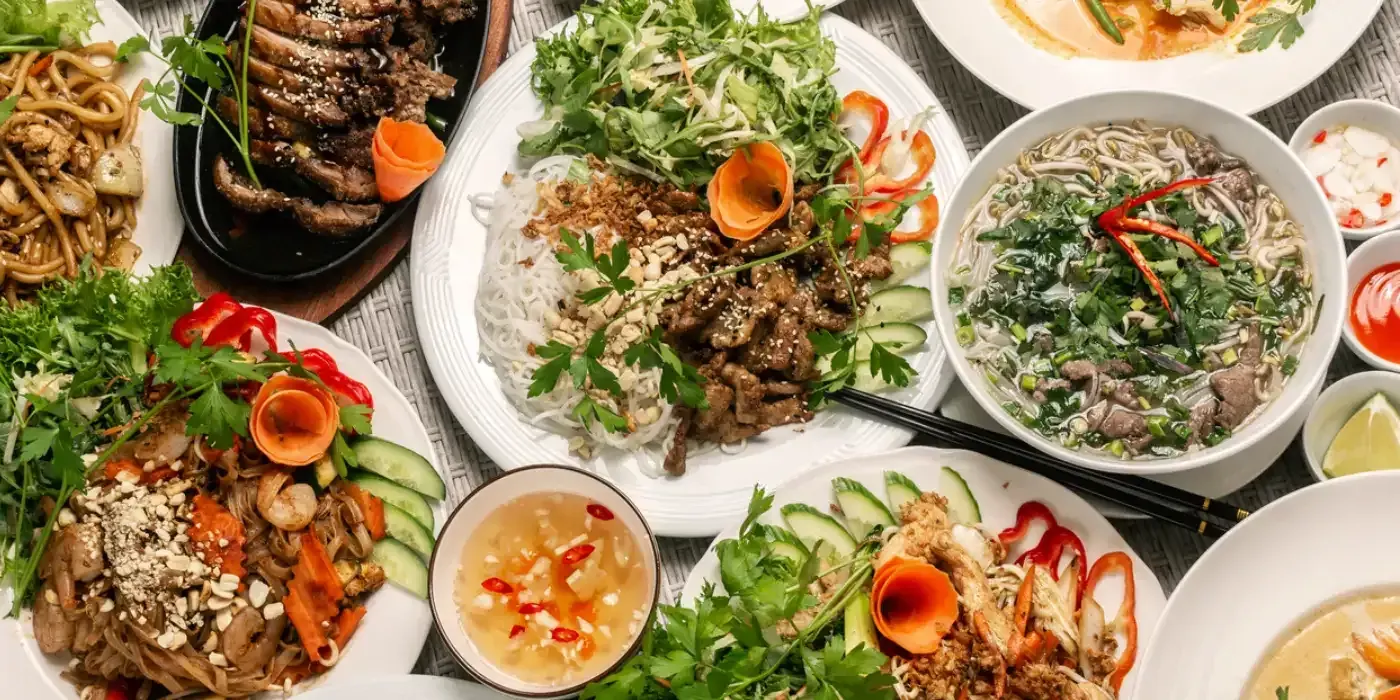
In this Guide:
#1- Pho: Northern & Southern Style
#2- Bánh Mì: Vietnamese Baguette Sandwich
#3- Bún Bò Huế: Spicy Hue Beef Noodle Soup
#4- Gỏi Cuốn: Fresh Spring Rolls
#5- Cao Lầu: Hoi An's Unique Noodle Dish
#6- Bánh Xèo: Sizzling Vietnamese Crepe
#7- Chả Cá Lã Vọng: Hanoi-Style Turmeric Fish with Dill
#8- Cơm Tấm: Broken Rice with Grilled Pork
#9- Bánh Cuốn: Steamed Rice Rolls
#10- Chè: Vietnamese Sweet Dessert Drinks
#Essential Tips for Eating Well in Vietnam
I thought I knew what good food tasted like before I went to Vietnam. I was wrong. The moment I slurped my first bowl of pho on a plastic stool in Hanoi at 7am, steam rising into the cool morning air and a chaos of motorbikes humming past, I understood. Vietnamese food isn't just cuisine. It's culture, history, and community in a bowl.
Whether you're planning your first trip or you're a seasoned traveller putting together your Vietnam travel itinerary, food has to be at the centre of the experience. This guide covers the 10 Vietnamese dishes you simply cannot leave without eating, what they are, where to find them, and why they'll stay with you long after you've flown home.
#1- Pho: Northern & Southern Style
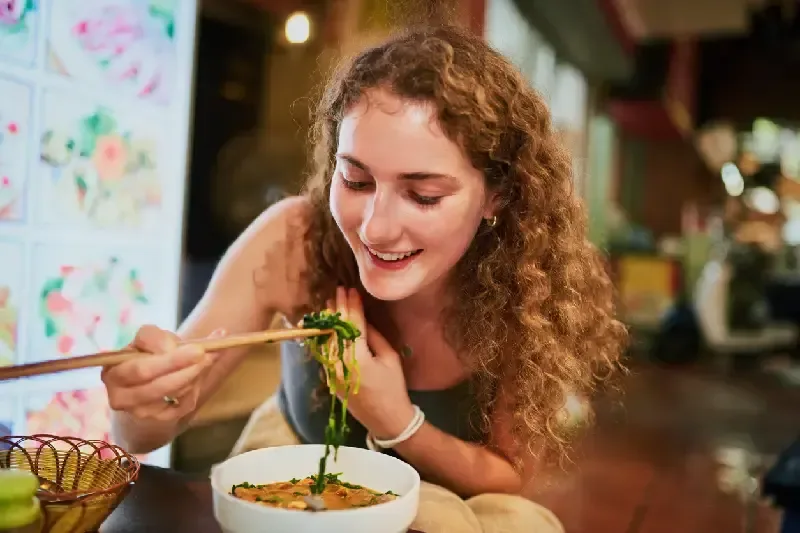
If Vietnam has a national dish, it's pho. I ate it for breakfast every single morning I was in Hanoi, and I'd do it again without hesitation. It's a deeply aromatic broth, simmered for hours with star anise, cinnamon, charred ginger, and beef bones, poured over silky flat rice noodles and topped with thin slices of beef (or chicken in the South).
But the magic of pho is in the table condiments. Bean sprouts, fresh basil, lime, hoisin sauce, chilli paste, you build it yourself. No two bowls are ever the same.
Quick Facts
- Origin: Hanoi, early 20th century, likely influenced by French pot-au-feu
- Best eaten: Morning, on a small plastic stool at a street stall
- Northern vs Southern: North = cleaner broth, fewer herbs; South = sweeter, more garnishes
- Where to try: Pho Thìn (Hanoi), Pho Hoa (Ho Chi Minh City)
Customize Your Dream Vacation!
Get in touch with our local experts for an unforgettable journey.
Plan Your Trip
#2- Bánh Mì: Vietnamese Baguette Sandwich
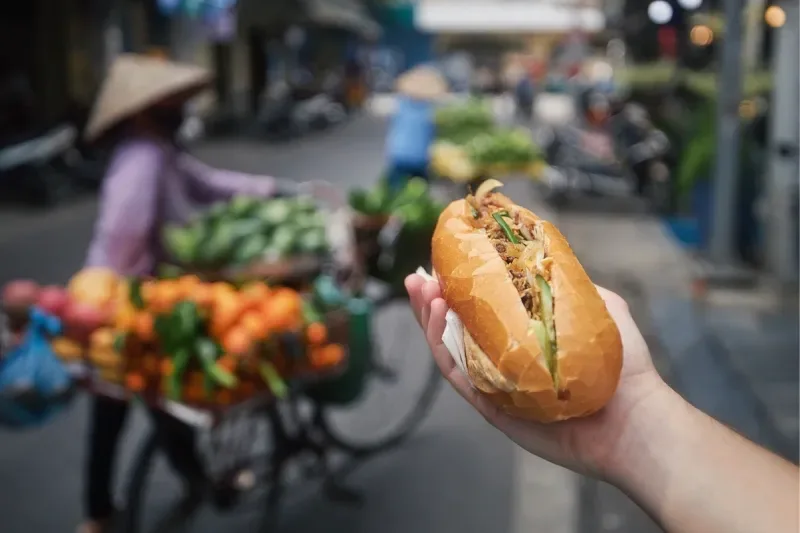
This is what happens when French colonialism meets Vietnamese ingenuity, and the result is one of the greatest sandwiches on earth. A crispy, airy baguette (lighter than a French one) stuffed with pâté, pickled daikon and carrots, cucumber, coriander, sliced chilli, and your choice of filling: grilled pork, cha lua (Vietnamese cold cut), tofu, egg, or sardines.
I grabbed one every afternoon as a snack for around 25,000 VND, less than a dollar, and it was absolutely perfect every single time. The Banh Mi in Hoi An is particularly legendary.
Quick Facts
- French-Vietnamese fusion born from the colonial era
- Best in Hoi An: Banh Mi Phuong, Anthony Bourdain famously loved it
- Vegetarian-friendly: Just ask for tofu or egg filling
- Best enjoyed: As a mid-morning snack or quick lunch on the go
Ready to Taste Vietnam for Yourself? Check our expertly crafted Vietnam tours!
#3- Bún Bò Huế: Spicy Hue Beef Noodle Soup
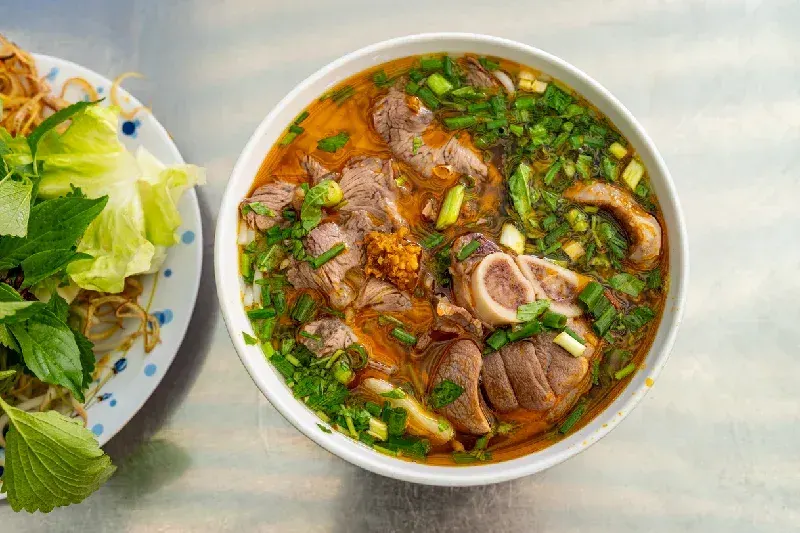
This is pho's fiercer, more complex cousin, and honestly, once you've had it, you might prefer it. Originating in the imperial city of Huế, this soup has a rich lemongrass-and-shrimp-paste broth that's bold, funky, and deeply satisfying. The noodles are round and thick (not flat like pho), and it's typically served with sliced beef shank, pork hock, and a cube of coagulated pork blood.
Quick Facts
- Spice level: Medium–high (chilli oil on the side to adjust)
- Key flavour: Lemongrass, fermented shrimp paste, chilli
- Best found in: Hue city, or specialist restaurants across Vietnam
- Don't skip: Adding the fresh banana blossom garnish, it's a game-changer
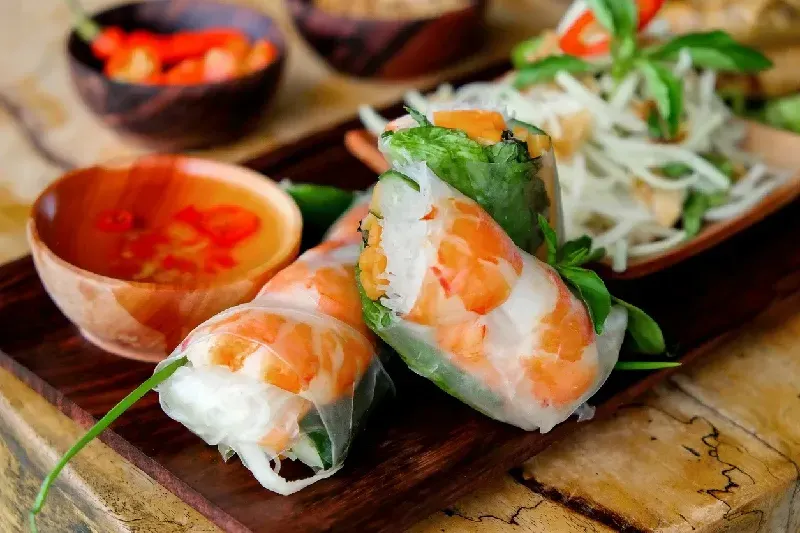
#4- Gỏi Cuốn: Fresh Spring Rolls
These are nothing like the deep-fried spring rolls you might know from Chinese takeaway. Gỏi Cuốn are fresh, light, and almost meditative to eat, translucent rice paper wrapped around vermicelli noodles, prawns, pork, fresh herbs (mint, perilla, lettuce), and served with a thick peanut hoisin dipping sauce.
I ate these constantly in Saigon as a healthy counterbalance to all the rich soups. They're also an excellent introduction to Vietnamese food for people who are nervous about unfamiliar flavours, everything is clean and fresh.
Quick Facts
- Served cold/room temperature, no cooking needed
- Dipping sauce: Peanut hoisin (nuoc leo) or nuoc cham (fish sauce, lime, chilli)
- Great for: Vegetarians (just ask for tofu instead of meat/prawns)
- Also known as: Vietnamese summer rolls
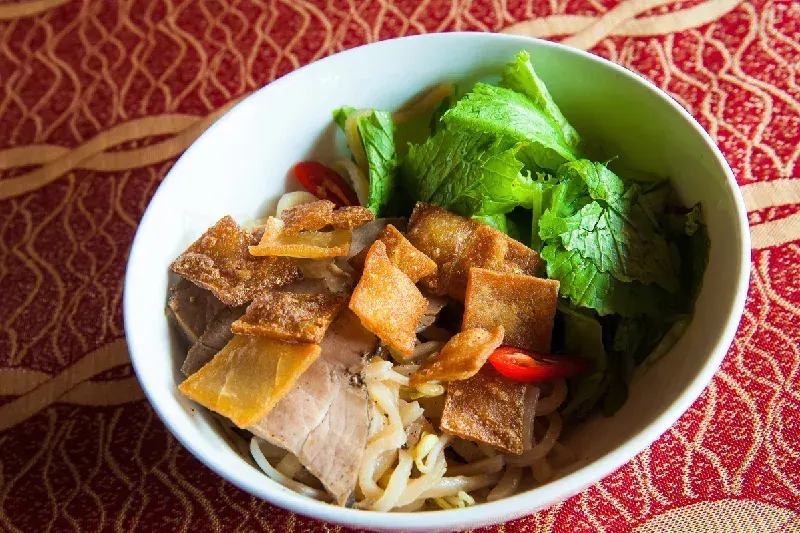
#5- Cao Lầu: Hoi An's Unique Noodle Dish
Here's the thing about Cao Lầu, you can only truly have it in Hội An. The thick, chewy noodles are made with water specifically drawn from local wells, and the dish has Japanese, Chinese, and Vietnamese influences layered into it. You get thick noodles, sliced roast pork, crispy crouton-like rice crackers, fresh greens, and a small amount of rich, concentrated broth.
It's not a soup, it's something in between. And it's one of the most quietly spectacular things I ate in all of Vietnam.
Quick Facts
- Exclusive to: Hoi An Ancient Town (traditional recipe)
- Influences: Japanese udon, Chinese char siu pork, Vietnamese herbs
- Texture: Chewy, dense noodles, unlike anything else in Vietnam
- Best spot: Trung Bac Restaurant or the covered market in Hoi An
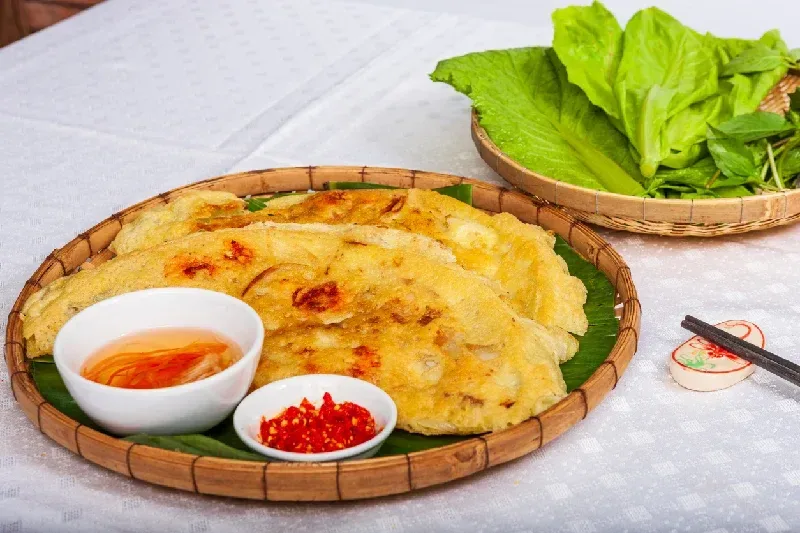
#6- Bánh Xèo: Sizzling Vietnamese Crepe
The name means "sizzling cake" and that sound, the dramatic hiss as batter hits a screaming-hot pan, is half the experience. Bánh Xèo is a crispy, turmeric-yellow rice flour crepe filled with bean sprouts, pork belly, prawns, and sometimes mung beans. You tear off pieces, wrap them in lettuce and mustard leaves with fresh herbs, and dip everything into fish sauce.
Quick Facts
- Turmeric gives the crepe its bright yellow colour
- Eaten by: Wrapping in lettuce/herbs (not eaten whole like a Western crepe)
- Regional variation: Central Vietnam makes smaller, crispier versions
- Best in: Da Nang, Hoi An, or Ho Chi Minh City's street markets
Want a Curated Food-Focused Vietnam Experience? browse our Vietnam travel packages!
#7- Chả Cá Lã Vọng: Hanoi-Style Turmeric Fish with Dill
I had never eaten fish with dill before Vietnam, and now I can't imagine why not. This Hanoi speciality is turmeric-marinated fish (traditionally hemibagrus catfish) pan-fried at your table in a sizzling skillet with a mountain of fresh dill and spring onions. You eat it over rice noodles with roasted peanuts, shrimp paste, and fish sauce.
There's a whole street in Hanoi, Chả Cá Street, named after this dish. That alone should tell you everything about how beloved it is.
Quick Facts
- Iconic Hanoi dish, over 100 years of history
- Cooked tableside in a small charcoal or gas skillet
- Dill: Unusual in Southeast Asian cooking, likely a northern Vietnamese signature
- Best restaurant: Chả Cá Lã Vọng, 14 Chả Cá Street, Hanoi
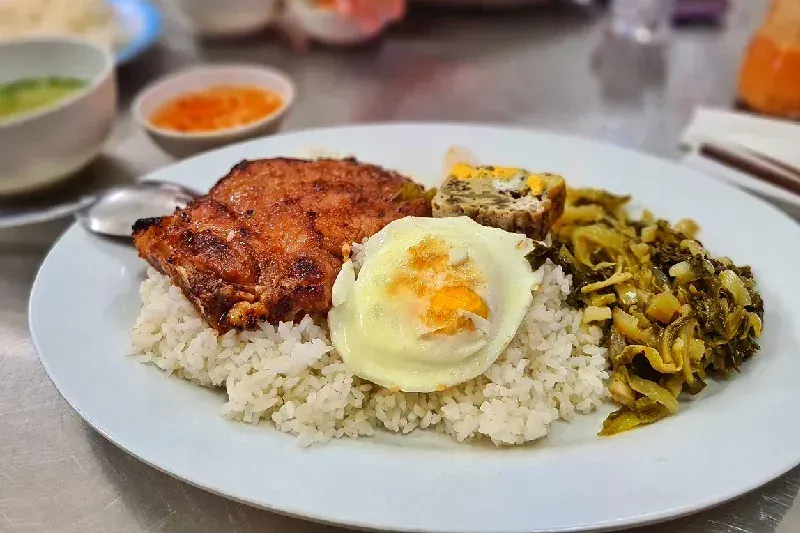
#8- Cơm Tấm: Broken Rice with Grilled Pork
Cơm Tấm is the breakfast and lunch dish of Ho Chi Minh City, full stop. Broken rice, smaller grain fragments that were historically discarded, is grilled over charcoal with rich, marinated pork chop (sườn nướng), topped with a fried egg, shredded pork skin (bì), pork paste (chả), and a fried shallot-cucumber garnish. A small bowl of fish sauce broth comes on the side for dipping.
Quick Facts
- Originally a dish of the working class, now beloved across all social strata
- Best eaten: For breakfast or lunch in Saigon/HCMC
- "Broken" rice: Fractured grains with a different, satisfying texture
- Open 24/7: Many Cơm Tấm stalls in Saigon operate around the clock
#9- Bánh Cuốn: Steamed Rice Rolls
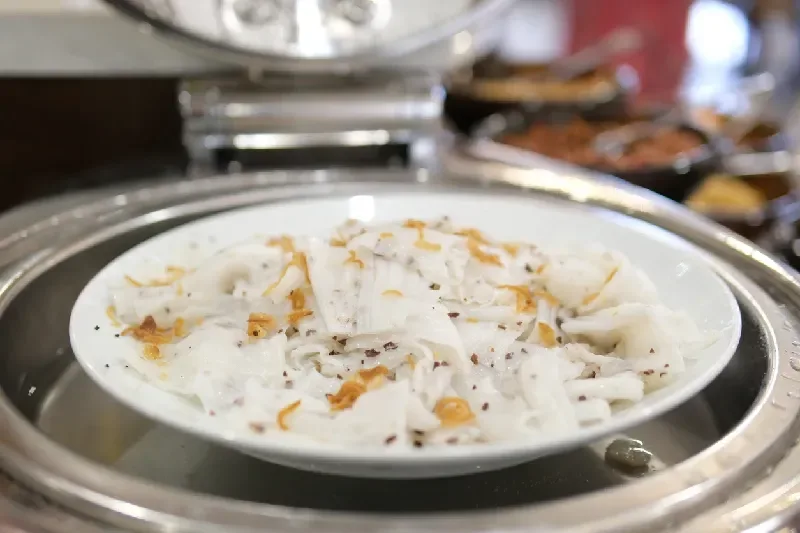
Watching Bánh Cuốn being made is almost as good as eating it. A thin sheet of rice batter is steamed on a stretched cloth over a pot of boiling water, then gently peeled off and filled with seasoned minced pork and cloud ear mushrooms, rolled into a soft, silky tube. It's served with crispy shallots, fresh herbs, and a light fish sauce dipping broth. The texture is ethereal, impossibly delicate and smooth. A perfect Hanoi breakfast.
Quick Facts
- Made to order, you can watch the whole process at street stalls
- Gluten-free (rice-based batter)
- Vegetarian versions available without the pork filling
- Best in: Hanoi old quarter, early morning market stalls
#10- Chè: Vietnamese Sweet Dessert Drinks
No food guide to Vietnam is complete without dessert, and Chè is the word that covers a whole universe of Vietnamese sweet treats. From chilled coconut milk with mung beans and tapioca pearls, to warm black sesame pudding, to layered glasses of coloured jellies and red beans, Chè is eaten as a snack, dessert, and afternoon treat across the country.
On a 38°C afternoon in Saigon, a glass of Chè Ba Màu (three-colour sweet drink) served over crushed ice was one of the best things I've ever consumed in my life.
Quick Facts
- Hundreds of regional varieties across Vietnam
- Chè Ba Màu: Three-colour dessert drink, mung beans, pandan jelly, red beans
- Served hot or cold depending on the type and region
- Where to try: Any Chè stall in Saigon's District 5 (Chinatown area)
#Essential Tips for Eating Well in Vietnam
- Sit at local street stalls for the most authentic food experiences
- Eat early, many famous dishes are mainly served for breakfast or lunch
- Say “ít cay” if you prefer less spicy food
- Drink bottled water and avoid tap water
- Use Google Maps and check ratings when searching for local food spots
- Join a street food tour to discover hidden local restaurants and specialties
Explore our curated Vietnam tours across Southeast Asia!
FAQs
Phở (pho) is internationally the most recognised Vietnamese dish, a fragrant beef or chicken broth soup with rice noodles and fresh herbs. It's considered a national symbol and is eaten for breakfast across Vietnam.
Vietnamese food is generally less spicy than Thai or Indian cuisine. Many dishes are mild and herb-forward, with chilli added at the table to taste. Central Vietnamese food (from Huế and Đà Nẵng) tends to be the spiciest region.
Generally yes, especially at busy stalls with high turnover. Look for places with locals eating, that's the best quality signal. Avoid pre-cooked food that's been sitting out for hours, and stick to bottled water.
Hanoi excels at northern dishes (pho, Bánh Cuốn, Chả Cá), Ho Chi Minh City is king for southern dishes (Cơm Tấm, Bánh Mì), and Hội An offers the most unique regional specialities (Cao Lầu, White Rose Dumplings). Each city has a distinct food identity.
Vietnam's food culture is vibrant year-round, but February–April (post-Tet, before summer heat) is a particularly pleasant time to eat your way through the country. Street life is busiest in cooler morning and evening hours regardless of season.