Hue Vietnam Guide

Hue (pronounced 'Hway') is a historic city in central Vietnam and the capital of Thua Thien Hue Province. Sitting on the banks of the Perfume River (Song Huong), it served as the imperial capital of Vietnam under the Nguyen Dynasty from 1802 to 1945, making it one of the most historically significant cities in all of Southeast Asia.
Today, Hue is a UNESCO World Heritage Site and one of the most visited destinations in Vietnam. It strikes a rare balance between ancient grandeur and laid-back charm, offering travellers a window into Vietnam's royal past while remaining refreshingly uncrowded compared to Ho Chi Minh City or Hanoi.
Hue's history stretches back over 700 years, but its golden era began in the early 19th century when Emperor Gia Long, founder of the Nguyen Dynasty, chose it as the seat of power for a newly unified Vietnam.
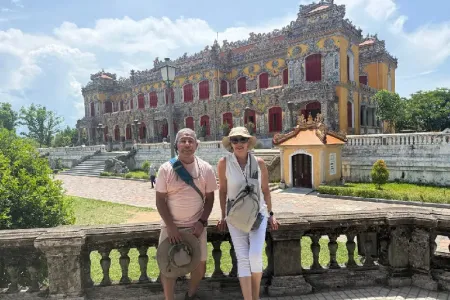
Thirteen emperors ruled Vietnam from Hue over roughly 143 years. The dynasty built a sprawling imperial complex modelled partly on Beijing's Forbidden City, complete with a citadel, palaces, temples, and an elaborate network of royal tombs scattered across the surrounding hills.
In 1945, Emperor Bao Dai (the last Vietnamese emperor) abdicated, formally ending the Nguyen Dynasty and the city's role as an imperial capital.
Hue suffered devastating damage during the 1968 Tet Offensive, one of the bloodiest battles of the Vietnam War. The Battle of Hue lasted 26 days and left much of the Citadel in ruins. Decades of reconstruction efforts have since restored many of the key monuments, though some areas still bear the scars of the conflict.
In 1993, UNESCO inscribed the Complex of Hue Monuments on the World Heritage List, recognising its outstanding universal value as a well-preserved example of a late feudal East Asian capital. This designation helped accelerate restoration work and cemented Hue's status as a must-visit destination on any Vietnam tour.
The centrepiece of any visit to Hue, the Imperial Citadel is a massive walled complex covering over 500 hectares on the northern bank of the Perfume River. Inside, you'll find:
Budget at least 2–3 hours to explore the Citadel. Morning visits are best to avoid the midday heat.
Get in touch with our local experts for an unforgettable journey.
Plan Your Trip
Scattered across the wooded hillsides south of the city, the royal tombs of the Nguyen emperors are architectural masterpieces combining palaces, temples, lakes, and courtyards. The most-visited tombs include:
Perched on a hill overlooking the Perfume River about 5 km from the city centre, Thien Mu is one of the oldest and most iconic pagodas in Vietnam. Its seven-storey Phuoc Duyen Tower is the unofficial symbol of Hue and appears on countless postcards. The complex includes a temple, garden courtyard, and a famous Austin car that carried the monk Thich Quang Duc to his self-immolation in Saigon in 1963.
The Perfume River is as much a part of Hue's identity as its monuments. Named after the flower-scented waters that flow from the hills upstream, the river is best explored by boat. A dragon boat cruise is a quintessential Hue experience, gliding past pagodas, tombs, and rural villages. Sunset cruises are particularly popular and often include a performance of traditional Hue court music (Nha nhac).
If you want to experience everyday Hue life, head straight to Dong Ba Market on the northern bank of the Perfume River. It's Hue's largest market, selling everything from fresh produce and spices to local handicrafts and traditional Ao Dai fabric. The street food stalls on the ground floor are the real draw, more on that below.
Hue has one of the most distinctive and celebrated food cultures in Vietnam. Royal court cuisine (Am thuc cung dinh) was historically prepared for emperors and shaped the city's cooking style, dishes are smaller, more refined, and presented with great attention to colour and form.
Essential dishes to try during your visit:
The best spots to eat are along Nguyen Dinh Chieu Street (often called 'Banh Khoai Street') and around the Dong Ba Market area.
Hue's climate is notoriously wet, it sits in a unique microclimate that receives significantly more rainfall than Da Nang or Ho Chi Minh City, even in the so-called dry season.
Phu Bai International Airport (HUI) is served by Vietnam Airlines, VietJet, and Bamboo Airways with direct connections to Hanoi, Ho Chi Minh City, and Da Nang. The airport is approximately 15 km south of the city centre; taxis and ride-share apps (Grab) take about 20–25 minutes.
The Reunification Express runs the length of Vietnam and stops in Hue. The train journey from Da Nang takes around 2.5–3 hours through spectacular coastal scenery including the Hai Van Pass. From Hanoi, the journey is approximately 13–14 hours (overnight sleeper trains are popular and comfortable).
Sleeper buses connect Hue to Hanoi, Ho Chi Minh City, and Da Nang. The Da Nang–Hue leg takes about 2.5–3 hours. Budget operators like Phuong Trang (FUTA) and The Sinh Tourist are reliable options.
Many Vietnam travel packages route travellers through central Vietnam overland, connecting Hoi An, Da Nang, Hue, and the DMZ (Demilitarised Zone). The drive over the Hai Van Pass between Da Nang and Hue is considered one of the most scenic roads in Southeast Asia and is a highlight for many travellers.
Hue has accommodation for every budget, from riverside luxury to family-run guesthouses in the historic quarter.
Most visitors choose to stay on the south bank of the Perfume River, which is closer to restaurants, cafes, and transport links. The Citadel and the majority of monuments are a short taxi or cycle ride away.
Hue is famous for its historic imperial citadel, royal palaces, ancient tombs, and vibrant cultural heritage. You’ll also find beautiful pagodas and the Perfume River running through the city.
You should explore the Imperial City, Thien Mu Pagoda, royal tombs, and Dong Ba Market. A boat trip along the Perfume River is also a great way to see the city.
For most travelers, 2–3 days is enough. This lets you see the major sites like the citadel, tombs, and temples while leaving some time to enjoy local cuisine and river views.
Yes, you’ll find that Hue is worth visiting for its rich history, UNESCO World Heritage sites, and cultural experiences that give you a deep understanding of Vietnam’s royal past.
You should go between February and August when the weather is warm and relatively dry. Avoid the rainy season (September–January) for smoother travel and sightseeing.
You should start with the Imperial Citadel, Thien Mu Pagoda, Tu Duc Tomb, and a cruise along the Perfume River. Don’t miss trying local dishes like bun bo Hue.
You can fly to Phu Bai Airport (near Hue) from Hanoi or Ho Chi Minh City, or take a train or bus for a scenic journey through Vietnam’s central region.
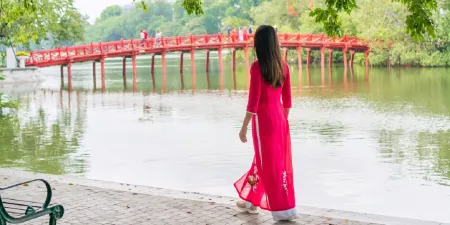
Experience Hoan Kiem Lake in Hanoi: stroll the historic paths, admire temples, and enjoy the cultural heartbeat of Vietnam.
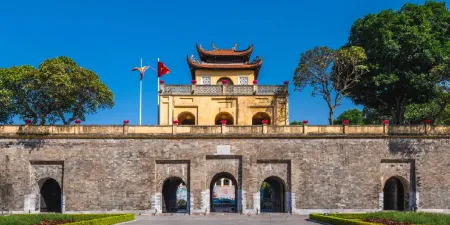
Visit the Imperial Citadel of Thang Long, Hanoi's iconic UNESCO landmark featuring ancient architecture, royal relics, and rich history.
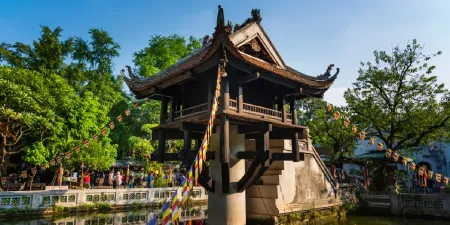
Visit One Pillar Pagoda in Hanoi, a famous Buddhist structure built in 1049, offering rich history and a peaceful cultural experience in Vietnam.
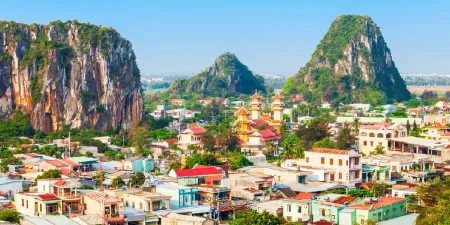
Find the best things to do in Da Nang, from relaxing on sandy beaches to exploring temples, mountains, and vibrant nightlife.
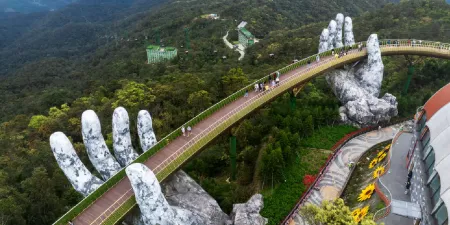
Experience Ba Na Hills in Vietnam with stunning views, the Golden Bridge, Fantasy Park, plus tips on tickets, timing, and key highlights.
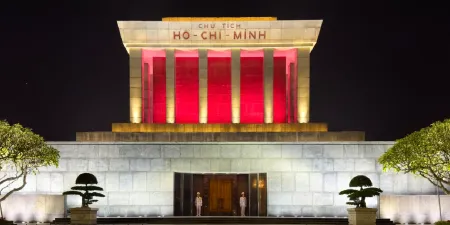
Explore Ho Chi Minh Mausoleum in Hanoi, including opening hours, etiquette rules, history, and travel tips for first-time visitors.
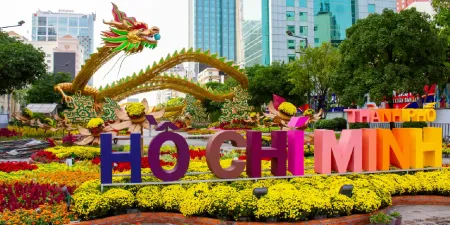
Ho Chi Minh City travel guide: top attractions, local food, and must-see experiences in Vietnam’s largest and most exciting city.
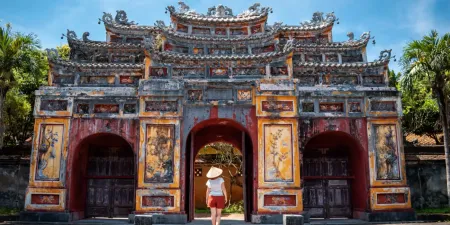
Discover Hue with our complete travel guide, including must-see sights, historic landmarks, and cultural experiences in the former imperial capital.
Visit the Mekong Delta: explore river villages, floating markets, tropical fruits, and unique wildlife in southern Vietnam.
Discover the mesmerizing UNESCO World Heritage site in Vietnam, Ha Long Bay. Boasting thousands of limestone karsts and islets emerging from emerald waters. Explore hidden lagoons, kayak through stunning caves, and cruise among iconic rock formations.
Ninh Binh travel guide: explore Trang An, Tam Coc, Mua Cave, and Hoa Lu with practical tips, best time to visit, and itinerary ideas.
Experience Mai Chau’s green valleys, traditional villages, and mountain views with this complete travel guide from Hanoi.
Visit Hanoi, Vietnam’s heart of culture and history, from Hoan Kiem Lake and Old Quarter to street food and ancient temples.
Pu Luong Nature Reserve travel guide covering weather, things to do, trekking, culture, accommodation, and how to get there.
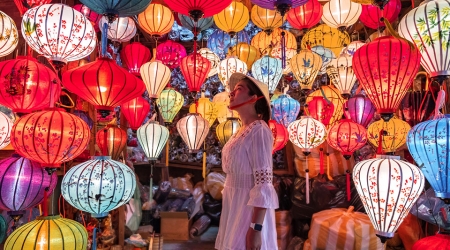
Discover the enchanting allure of Hoi An, a UNESCO World Heritage Site renowned for its well-preserved ancient architecture and vibrant culture. Lose yourself in the labyrinth of narrow, lantern-lit streets, explore bustling markets, and soak in the tranquil beauty of the Thu Bon River. Experience the perfect blend of tradition and modernity in this captivating Vietnamese city.
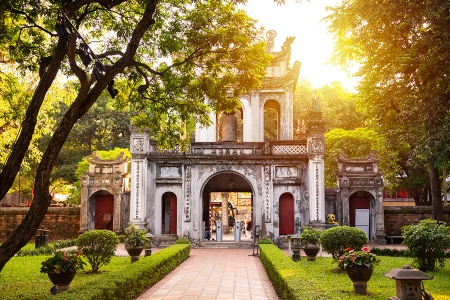
The Temple of Literature in Hanoi stands as one of Vietnam's most cherished historical sites. This ancient complex, dedicated to Confucius and learning, has been a symbol of education and wisdom for nearly a thousand years. As one of the most significant Hanoi landmarks, it offers visitors a glimpse into the rich cultural heritage and intellectual traditions of Vietnam.
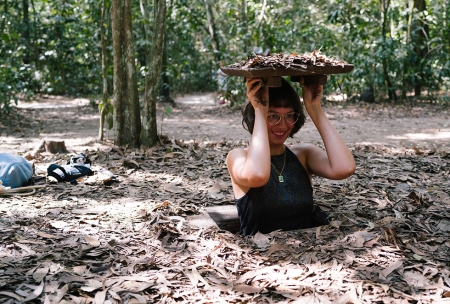
Discover how the Viet Cong utilized these tunnels for survival, communication, and military operations. Learn about the challenges faced by those who lived and fought within the tunnels, and witness firsthand the ingenuity and resilience of the Vietnamese people. Explore the intricate network of underground tunnels that played a crucial role in the Vietnam War.