Imperial Citadel of Thang Long
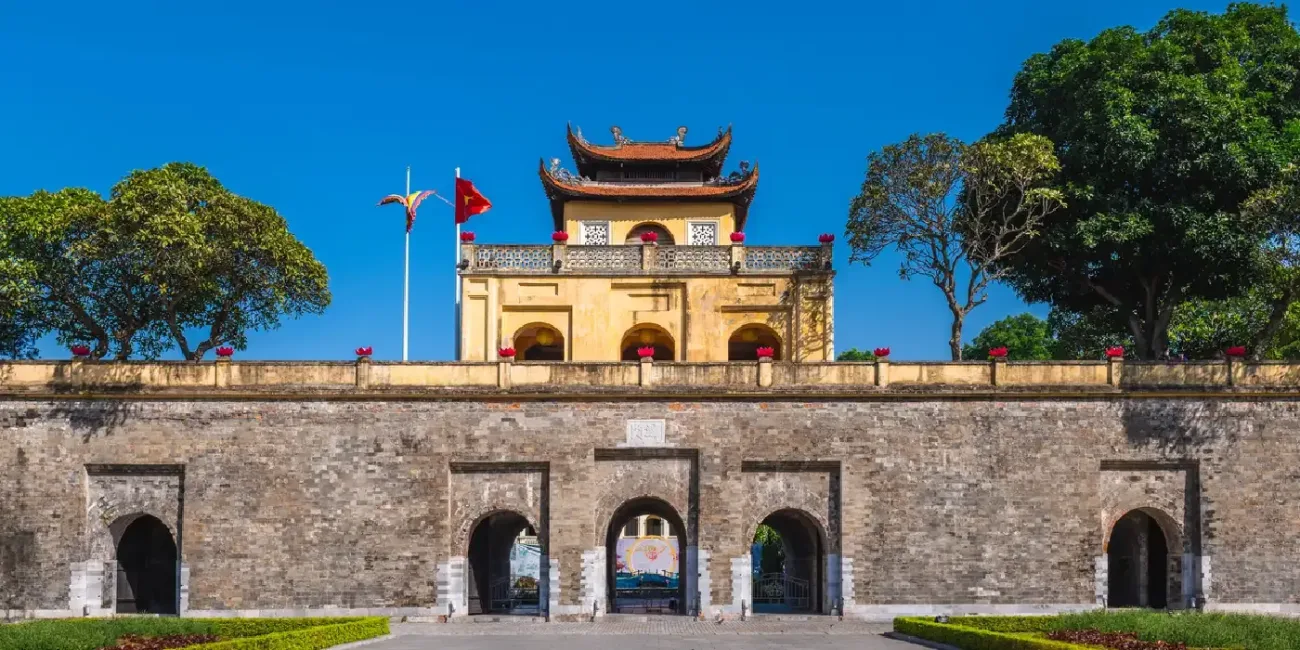
The Imperial Citadel of Thang Long is one of Vietnam's most remarkable historical and cultural landmarks. Located in the heart of Hanoi, this UNESCO World Heritage Site served as the political center of Vietnam for more than 1,000 years, from the Ly Dynasty through successive royal dynasties.
The citadel witnessed some of the country's most significant events, including imperial rule, foreign invasions, and modern military operations. Today, visitors can explore ancient gates, archaeological excavations, royal relics, and historic buildings that reveal the rich heritage of Vietnam's past. A visit to the Imperial Citadel of Thang Long offers a fascinating journey through centuries of history and is a must for anyone interested in Vietnamese culture and heritage.
The story begins with Emperor Ly Thai To, who relocated Vietnam's capital from Hoa Lu (in Ninh Binh) to Thang Long in 1010. According to legend, he saw a golden dragon rising from the Red River, and took it as a divine sign to build his court here.
The Ly kings constructed a grand citadel with three concentric layers:
Successive Vietnamese dynasties expanded and modified the citadel. The Tran Dynasty (1225–1400) maintained it as their seat of power, famously using it as a base during their three successful campaigns against the Mongol invasions in the 13th century.
After a brief period of Chinese Ming occupation (1407–1427), the Le Dynasty recaptured Hanoi and restored the citadel to its former glory, adding new palaces and ceremonial halls. The complex became a center not just of governance but of Vietnamese arts, literature, and Confucian scholarship.
When the Nguyen Dynasty unified Vietnam in 1802, they moved the capital south to Hue, and Thang Long's political significance declined. The French, who colonized Vietnam in the mid-19th century, demolished many of the original structures to build their own military garrison. Much of what stood for 800 years was lost in this period.
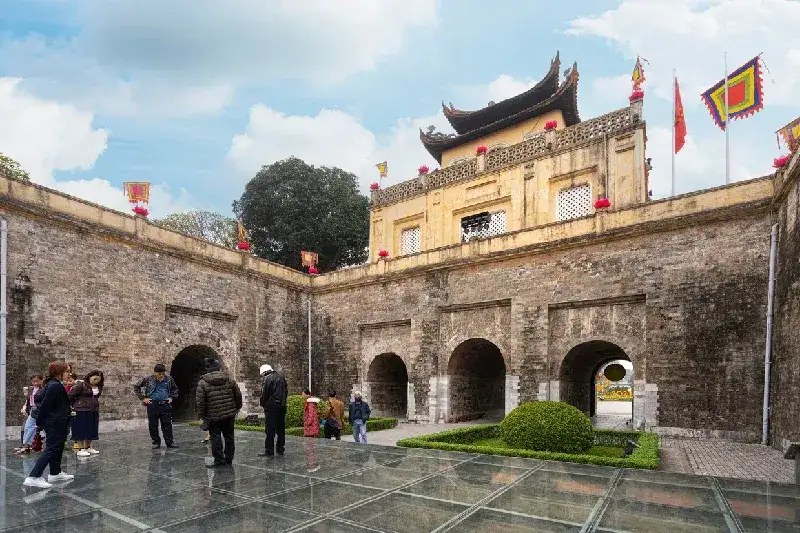
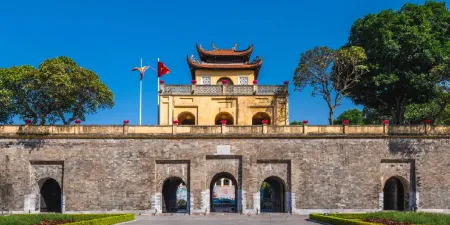
This is the main ceremonial entrance and one of the best-preserved original structures on the site. Built during the Le Dynasty, it features five archways, the central one reserved exclusively for the emperor. Standing in front of it today, you get a genuine sense of the scale and formality of imperial Vietnamese court life.
Get in touch with our local experts for an unforgettable journey.
Plan Your Trip
The Kinh Thien Palace was the most important structure in the complex, where emperors held court, conducted ceremonies, and received foreign envoys. Although the palace itself no longer stands, its stone dragon staircases, carved during the Le Dynasty in the 15th century, are considered among the finest examples of Vietnamese royal architecture. The dragons are particularly beautiful: fluid, scaly, and deeply expressive.
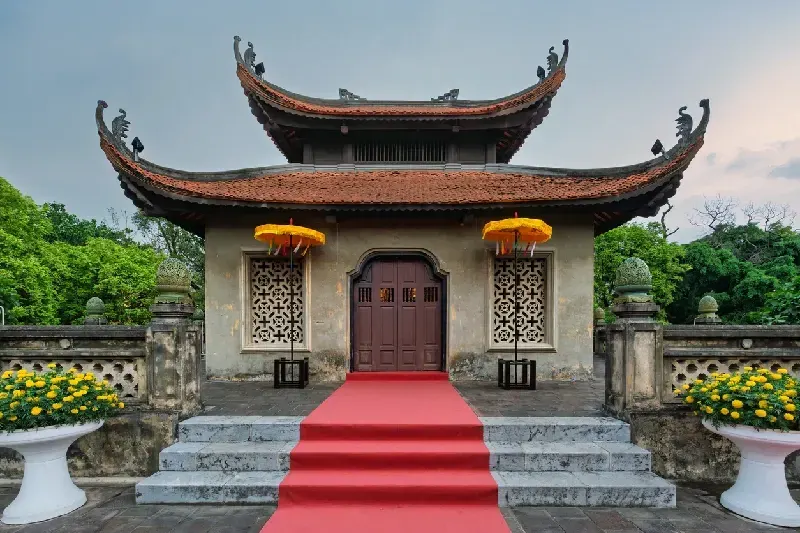
This French-era building sits within the citadel grounds and reflects the colonial overlay that reshaped so much of Hanoi. It's a curious architectural hybrid, a three-story structure that the French built over the ruins of an older Vietnamese pavilion. It's sometimes called the "Observation Tower" and gives a sense of how layers of history have been literally stacked on top of each other here.
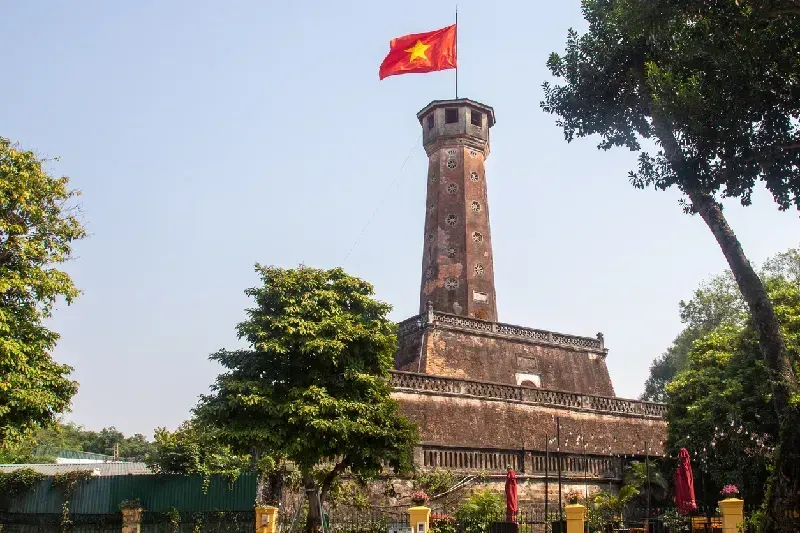
Technically just outside the main citadel walls but considered part of the complex, the Flag Tower is one of Hanoi's most recognizable symbols. Built in 1812, it stands 41 meters tall and remains one of the few Vietnamese-built structures the French left intact.
This is genuinely unmissable. The D67 Command Bunker was built in the 1960s and served as the nerve center for North Vietnam's military planning during the American War. Visitors can walk through the actual rooms where General Giap and the Politburo made decisions that would shape world history. It's sober, atmospheric, and deeply thought-provoking.
In 2003, construction workers accidentally uncovered a massive archaeological site beneath the citadel. Excavations revealed artifacts from every major dynasty, ceramic tiles, bronze tools, decorative objects, structural foundations, spanning over 13 centuries of continuous occupation. The site, housed under a modern protective canopy, is still being studied and is one of the most significant archaeological finds in Southeast Asian history.
The Imperial Citadel of Thang Long was inscribed on the UNESCO World Heritage List in 2010. UNESCO recognized it for:
Most Vietnam tours follow a well-worn path: Ho Chi Minh City, the Mekong Delta, Hoi An, Da Nang, and then Hanoi as a final stop. Within Hanoi, visitors often rush through the Old Quarter and Hoan Kiem Lake, missing the deeper historical sites entirely.
The Imperial Citadel of Thang Long is different from the temple-heavy, pagoda-dense sites you'll encounter elsewhere in the country. It's a place where you can stand in a medieval imperial gateway in the morning, and look at 13th-century dragon carvings that were buried and forgotten for centuries.
Parts of the site date back more than 1,300 years, with continuous use from the 7th century through modern history.
Visitors can explore ancient gates, archaeological layers, royal relics, excavation sites, and historic structures used by Vietnamese dynasties.
Most visitors spend around 1 to 2 hours exploring the main areas and museum sections.
Yes, it is one of Hanoi’s most important historical landmarks and offers deep insight into Vietnam’s royal and political past.
A guide is recommended to better understand the historical layers, but self-guided visits are also possible with informational signage available.
The best time is early morning or late afternoon, especially in cooler months (October to April) for a comfortable experience.
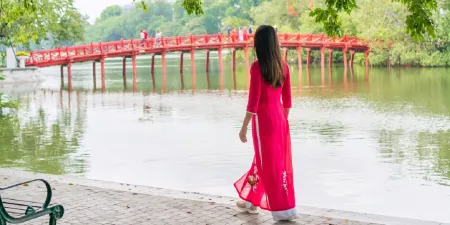
Experience Hoan Kiem Lake in Hanoi: stroll the historic paths, admire temples, and enjoy the cultural heartbeat of Vietnam.
Visit the Imperial Citadel of Thang Long, Hanoi's iconic UNESCO landmark featuring ancient architecture, royal relics, and rich history.
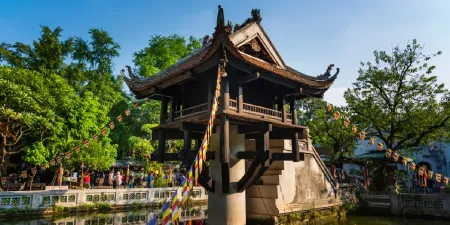
Visit One Pillar Pagoda in Hanoi, a famous Buddhist structure built in 1049, offering rich history and a peaceful cultural experience in Vietnam.
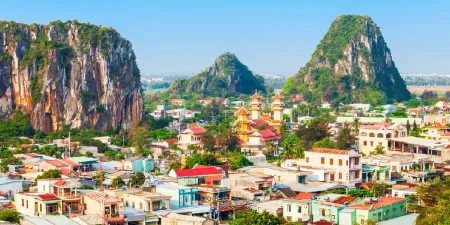
Find the best things to do in Da Nang, from relaxing on sandy beaches to exploring temples, mountains, and vibrant nightlife.
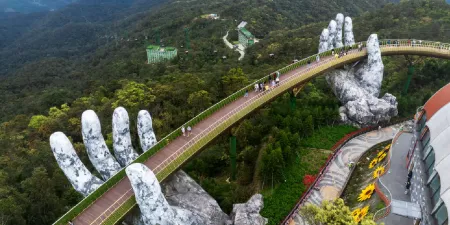
Experience Ba Na Hills in Vietnam with stunning views, the Golden Bridge, Fantasy Park, plus tips on tickets, timing, and key highlights.
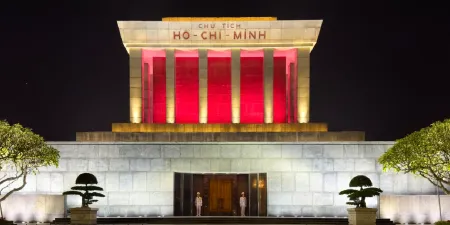
Explore Ho Chi Minh Mausoleum in Hanoi, including opening hours, etiquette rules, history, and travel tips for first-time visitors.
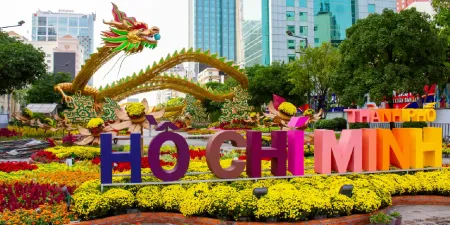
Ho Chi Minh City travel guide: top attractions, local food, and must-see experiences in Vietnam’s largest and most exciting city.
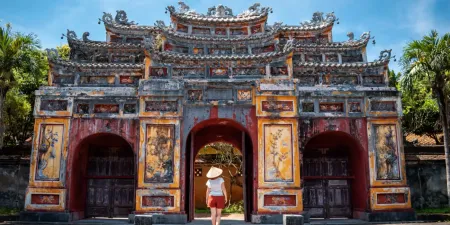
Discover Hue with our complete travel guide, including must-see sights, historic landmarks, and cultural experiences in the former imperial capital.
Visit the Mekong Delta: explore river villages, floating markets, tropical fruits, and unique wildlife in southern Vietnam.
Discover the mesmerizing UNESCO World Heritage site in Vietnam, Ha Long Bay. Boasting thousands of limestone karsts and islets emerging from emerald waters. Explore hidden lagoons, kayak through stunning caves, and cruise among iconic rock formations.
Ninh Binh travel guide: explore Trang An, Tam Coc, Mua Cave, and Hoa Lu with practical tips, best time to visit, and itinerary ideas.
Experience Mai Chau’s green valleys, traditional villages, and mountain views with this complete travel guide from Hanoi.
Visit Hanoi, Vietnam’s heart of culture and history, from Hoan Kiem Lake and Old Quarter to street food and ancient temples.
Pu Luong Nature Reserve travel guide covering weather, things to do, trekking, culture, accommodation, and how to get there.
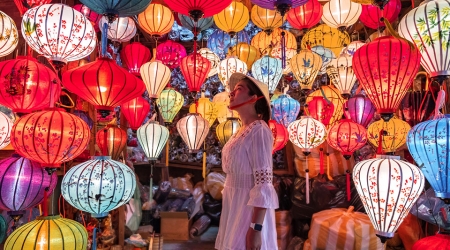
Discover the enchanting allure of Hoi An, a UNESCO World Heritage Site renowned for its well-preserved ancient architecture and vibrant culture. Lose yourself in the labyrinth of narrow, lantern-lit streets, explore bustling markets, and soak in the tranquil beauty of the Thu Bon River. Experience the perfect blend of tradition and modernity in this captivating Vietnamese city.
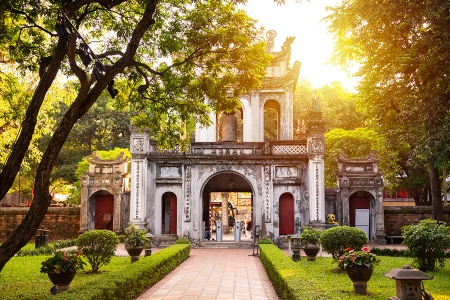
The Temple of Literature in Hanoi stands as one of Vietnam's most cherished historical sites. This ancient complex, dedicated to Confucius and learning, has been a symbol of education and wisdom for nearly a thousand years. As one of the most significant Hanoi landmarks, it offers visitors a glimpse into the rich cultural heritage and intellectual traditions of Vietnam.
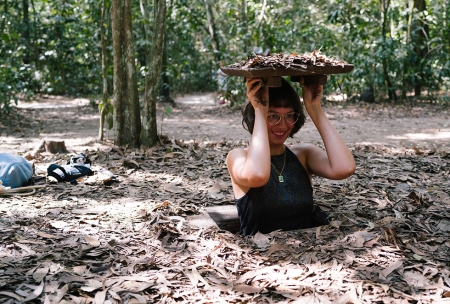
Discover how the Viet Cong utilized these tunnels for survival, communication, and military operations. Learn about the challenges faced by those who lived and fought within the tunnels, and witness firsthand the ingenuity and resilience of the Vietnamese people. Explore the intricate network of underground tunnels that played a crucial role in the Vietnam War.